The city with the most dispensaries based on its population figure is Missoula, Montana.
When most Americans pass by a store selling liquor, beer, or wine, they barely think twice about it. That’s because its existence isn’t novel; we all know plenty of folks who drink and buy alcohol. Outside of a few select cities, seeing a marijuana dispensary on a street corner still causes heads to turn.
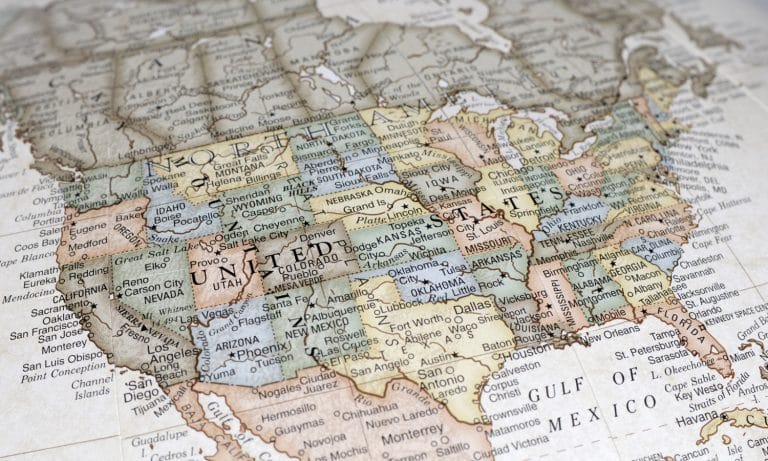
Anecdotal evidence and analytics paint a different story about how often an individual might witness a dispensary in their city. Los Angeles and Seattle might seem like obvious choices to an outsider, as they are the biggest cities in states well associated with recreational marijuana. But neither city ranks among the top 30 cities with the most marijuana dispensaries per capita, according to Verilife data.
The city with the most dispensaries based on its population figure is Missoula, Montana. Cities following Missoula with most dispensaries per capita all come from Oregon and Colorado, as you might expect: Medford, Pueblo, Eugene, Denver, Portland, in that order.
When it comes to which state holds the top spot for dispensaries per capita, it’s Oregon. But the following two states on the list aren’t California or Massachusetts — they’re Oklahoma and Montana, respectively.
Photo by LPETTET/Getty Images
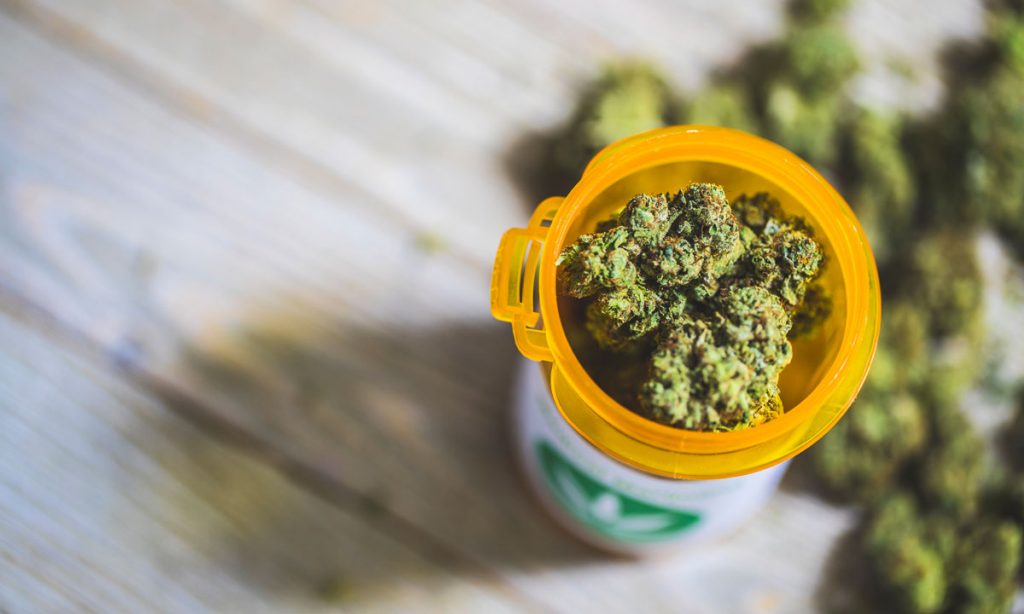
Oklahoma has 15.6 dispensaries and Montana has 15.1 dispensaries per 100,000 people. Oklahoma only legalized medical marijuana in summer 2018 but the state has been flooded with dispensaries almost immediately. That doesn’t mean all those dispensaries are making that much more money for the state.
“It’s interesting to note that while Oklahoma has the most marijuana dispensaries per capita, it has generated the least amount of tax revenue from cannabis out of all the states where marijuana is legal,” Verilife analysts wrote. “The state is home to nearly 600 dispensaries but generated only $70,000 from marijuana in 2018.”
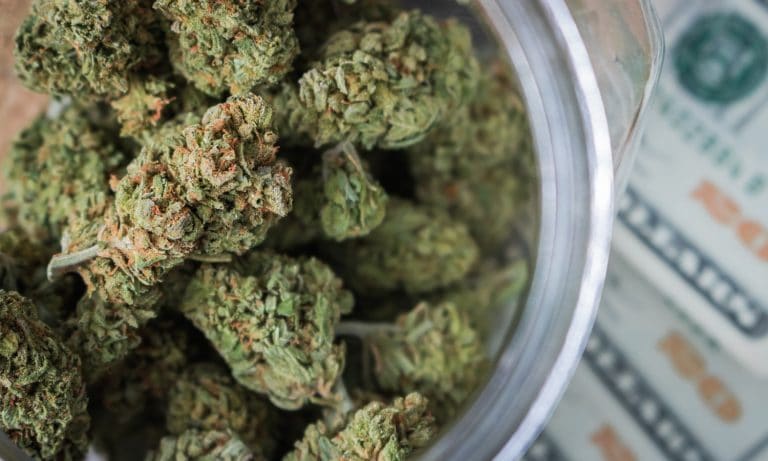
To no one’s surprise, California raked in the highest tax revenue through marijuana sales. In 2018, California accrued $345 million in marijuana tax revenue. Washington and Colorado were close behind, with $319 million and $266 million respectively. What will be interesting to see is if states that recently legalize marijuana will continue to house so many dispensaries, or if the lack of revenue will balance the equation out in years to come.
While Bernie Sanders has promised to legalize cannabis through executive order, it remains unclear if he has the authority to do so.
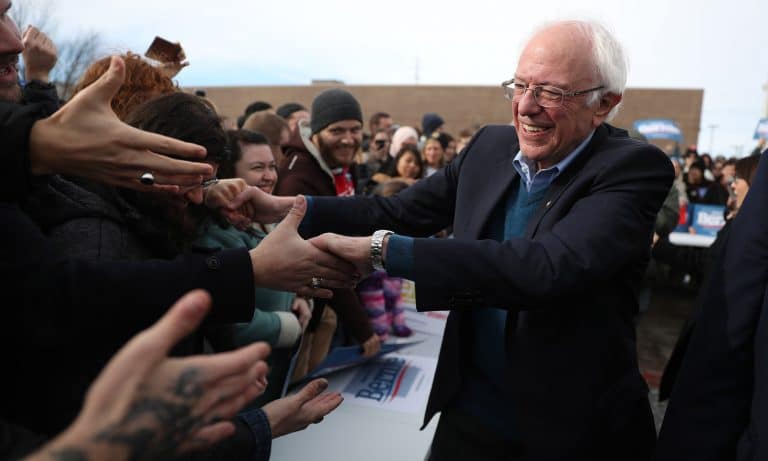
Bernie Sanders vows to waste no time legalizing marijuana if he becomes president. While the majority of leading candidates for the Democratic presidential nomination support ending cannabis prohibition — Joe Biden is the notable exception — Sanders announced his intention to make it among his first priorities in office.
Many multi-state operators in the cannabis industry might be pleased to hear this announcement, as it would allow them to list their companies on the U.S. Stock Exchange. However, Sanders wants to make sure the cannabis industry “is not controlled by a handful of corporations” and instead empower those minority communities disproportionately impacted by the war on drugs.
“We will move forward to expunge the records of those arrested for possession of marijuana,” Sanders said. “And we will make certain that the legalized marijuana industry is not controlled by a handful of corporations, but that those people — the African-American community, the Latino community, the Native American community — those people who have suffered the most will get help in order to make money through a legalized marijuana industry.”
We must finally put an end to the disastrous, so-called "War on Drugs."
This includes legalizing marijuana, releasing those imprisoned because of it, expunging their records, and investing in the communities devastated by this decades-long assault.
It’s important to remember that only Congress can remove marijuana from the Controlled Substances Act, which classifies the plant as Schedule I illegal drug. Sanders can, however, appoint his own Attorney General and health and human services secretary, positions that play key roles along the way. The process remains complicated, though, as the United States has agreements through international treaties to classify marijuana and its commerce as illegal.
Thus far, states have been the driving force in marijuana legislation. A president has little to no authority in forcing states to roll back prohibition or decriminalize a substances like cannabis.
The Canadian and U.S. cannabis stock marketshave reached their lowest point since October, 2017, after peaking in January 2018.
Check the charts of these cannabis companies in the Canadian and U.S. stock market: Tilray, $148.30 a share in October 2018, now $18.97; Canopy Growth, $51.53 a share in September 2018, now $23.43;MedMen, $6.49 a share in October 2018, now $.40; MassRoots $2.04 a share in September 2015, now $.0050, losing nearly $50 milliondollarsby the middle of 2017 alone.
Wow. The mightiest companies in the cannabis industry have taken drastic falls over the last few years, most of them coming since late 2018, and the bottom is still not in sight.
The Canadian and U.S. cannabis stock marketshave reached their lowest point since October, 2017, after reaching a peaking in January 2018.
These big cannabis business are founded and managed by men who represent two different bro cultures: the financial world bro culture,which are venture capitalists just making a buck off the latest business bounce, and the canna-broculture, a startup hustler in a state of almost disbelief as their hobby-turned-goldmine was looking like a billion dollar-plus easy money take.
While these two bro cultures both saw a lot of happiness coming their way at first (insert awkward fist bump here), they are now pointing fingers at each other to assign blame for the serious crashing of the cannabis stock market.
At first, industry insiders thought that the cannabis industrywould be another dot.com run, which was essentially a tech geek bro culture. Tech geek bros like Steve Jobs and Steve Wozniak, Bill Gates and Paul Allen, all in their early 20s, fiddled with digital magic and changed the world, becoming billionaires along the way. There were massive failures early on, but eventual corrections.
Photo by FatCamera/Getty Images
Startup and investor bros in the tech geekworld adopted habits of reckless spending and excessive partying during those heady early days, where bad behavior was not just tolerated but even encouraged, according to an article in the New York Times.
Now it’s the cannabusinesses turn. Fast-moving canna-bros took the industry to unbelievable heights, partying like dot.com billionaires-to-be. But as the stock prices show, the correction has begun. The party is over.
What went wrong? As tricky as it is to create the next greatest software, the dot.com guys never had to face a dozen or so of the obstacles that the canna-bros face: Cannabis is a federally illegal substance, a plant that is not easy to grow. Plus, banks don’t serve the industry, insurance is not available, small business loans are not available, you can’t advertise even on Facebook, you can’t distribute across state lines, taxes are so high that consumers go back to the black market, which continues to thrive, and Congress refuses to move the needle on legalization which would fix nearly all of those issues.
Yikes. Talk about an impediment to success. Jumping into a game like that is not for the faint of heart. Or the killer business builder.
Tilray’s stunning decline came under the watchful eye of President and CEO Brendan Kennedy,an avid Ironman competitor, and an engineer graduate with an MBA from Yale.
This nascent industry is full of trapdoors like no other industry, and an entrepreneur and whatever bro-crew he can put together,with solid backgrounds in business management or retail or manufacturing,is up against a new kind of monster, Yale MBA be damned.
Cannabis is a state-by-state mash-up of messy business rules and regulations. Prices go up, taxes go up, packaging and grow regulations change and the investor or startup guru has to retool or rework an entire network of properties or lose an entire crop, spending millions, borrowing more, scaring off investors, while constantly trying to scale up the business and somehow make it profitable.
Photo courtesy Medmen
That ain’t what canna–bros expected. They expected cool parties, wide-eyed respect from business people in other industries, Hollywood celebrities texting them while they lift weights and tan in their local gym showing off their tattoos before jumping into their Maserati.
MedMen was one of the first huge cannabis businesses, led by cannabis bro guru CEO Adam Bierman,who says he is a canna-bro of Kennedy at Tilray, which was the first U.S. cannabis company to sell shares to the public, and knows the seven canna-bros (who are actually brothers) at Stanley Brothers, makers of Charlotte’s Web cannabidiol oil.
Interviewed on stage during the 2019 National Cannabis Industry Association (NCIA) Seed to Sale show in Boston in February, Bierman was, as bros are wont to be, still loud and proud about his business.
Bierman’s favorite song is Eminem’s “Lose Yourself,” which he described as “the soundtrack to my life.” He says that some of these cannabis companies, like Canopy Growth, have crashed because they just “managed stock” with narratives about the industry, instead of concentrating on business fundamentals and building equity with brands.
The cannabis culture is faced with things that the tech geek culture didn’t have to face, like social media, he says. “We are a public startup coming up in a brand new age of fake news and Twitter and noise and nonsense like that.” That social media noise factor recently jumped up a notch for MedMen.
A lawsuit by the company CFO, James Parker, who was fired in November, 2018, outlined a classic canna-bro bad behavior scenario at MedMen,involving new houses, private jets, and a custom Tesla, all while Bierman was taking a $1.5 million annual salary.MedMen recently announced layoffs.
Meanwhile,other class action lawsuitsagainst Tilray, Canopy Growthand others are piling up, and canna-bros are scrambling for cover. Seems like the party is over, broham—at least for now.
Getting busted with anything more than an ounce of cannabis in most parts of the U.S. is destined to get an unsuspecting traveler arrested and jammed up in the criminal justice system.
The legalization of marijuana in just a handful of states has made Americans gutsy when it comes to breaking drug trafficking laws. Ever since the Transportation Security Administration (TSA) came out and said that they “do not search for marijuana,” more toking travelers have been using the airways to smuggle weed from legal states into areas of prohibition.
And why wouldn’t they, huh? It is relatively easy to get small amounts of weed through security checkpoints, and there are no repercussions for those who get caught. What’s more is once the weed clears TSA personnel, there is no chance of it being found before it reaches its final destination.
Or is there?
It appears that law enforcement in states that have not yet legalized marijuana has made it part of their mission to try and stop travelers from bringing weed in from legal states. Police are now visiting airports and turning drug-sniffing dogs loose on people’s luggage before they are sent to the baggage claim. They want to make sure that the pot being purchased legally in 11 states is not finding its way to their neck of the woods. It’s a practice that, just last week, led to a few travelers, including a Little Rock attorney, getting arrested on possession charges, reports Arkansas Online.
The article states that police were at Bill and Hillary Clinton National Airport last week using a K-9 unit to inspect baggage from incoming flights when the pooch alerted on six suitcases. The baggage was eventually claimed by three people. Two of the bags were picked up by a local attorney, another two by a California woman, and two more by a Little Rock resident. A total of 126 pounds of marijuana was found in the bags.
Photo by rawpixel.com
All three suspects were charged for possession with intent to deliver — a felony that carries hefty fines and years in prison. In Arkansas, “possession of between 25 pounds and less than 100 pounds of marijuana with the intent to deliver it to another individual is a Class B Felony, punishable by a mandatory 5-year minimum sentence, up to 20 years, and a fine not to exceed $15,000,” according to NORML.
The main takeaway is that law enforcement is getting more proactive in combatting all of this domestic drug trafficking business. Sure, these random airport checks might be another failed attempt at fighting the so-called drug war, but rest assured the cops in prohibition states are going to continue catching a few people, here and there, who dare try and benefit from the country’s conflicting marijuana laws. Let’s hope their little reefer roundup doesn’t include you or a member of your family.
This news should be enough to at least strike paranoia in those people who have grown complacent about traveling with weed — especially those who sometimes carry amounts that could get them in deep trouble. Getting busted with anything more than an ounce of cannabis in most parts of the U.S. is destined to get an unsuspecting traveler arrested and jammed up in the criminal justice system. There is also the possibility that these offenders could get slapped with federal drug trafficking charges. After all, despite the changing marijuana laws in some states, the federal government still considers weed an outlaw substance. And they are sending people to prison for it.
While the TSA might not care about someone taking marijuana on a plane, the police forces back home might. And they are watching. So, be sure to familiarize yourself with local marijuana laws and understand that there could be consequences for those who use the airlines to smuggle weed.
If recent studies on mice are any indication, CBD will someday be in the toolbox of every healthcare practitioner and in the homes of every health and weight-conscious consumer.
One way to categorize the fat in our bodies is by its color: white or brown. The vast majority of our body fat is white fat, also called white adipose tissue (WAT), which is the stored fat. Categorizing this fat a step further is visceral fat versus subcutaneous (under the skin) fat. Visceral fat is stored in the abdomen and around organs, such as the stomach, intestines, and liver.
Referred to as “active fat,” visceral fat is associated with chronic diseases such as diabetes, heart disease, and metabolic disorder. White, visceral fat is the unhealthy fat that accumulates in obesity and the fat that you want to reduce in weight loss to improve health.
On the other hand, brown fat, also referred to as brown adipose tissue (BAT), gets its color from iron-rich mitochondria, the powerhouse of the cell. When brown fat burns, a process called thermogenesis happens, which creates heat without shivering. Guess what else happens? Calories in the form of white fat are burned for energy. Not surprisingly, individuals at optimal weights have more brown fat than those who are overweight.
The next question: Is there a way to turn white fat into brown fat?Because brown fat gets activated when your body is cold, keeping the heat down in winter, getting outside during the cold weather, and taking ice baths may be helpful.In the field of obesity, exercise is recommended to maintain weight loss, while changing food intake is recommended for weight loss. It appears that exercise can incite brown fat production and adequate sleep can theoretically promoting weight loss.
Photo by IRA_EVVA/Getty Images
There may be one more lifestyle factor that can potentially create brown fat. You guessed it, CBD. In one mouse study, CBD was found to increase the expression of multiple genes that are involved in the browning of fat. Gene expression is the process where DNA in our genes is translated into instructions for making functional gene products, such as proteins or other molecules.
Multiple factors can impact gene expression, including diet, nutritional status, stress, physical activity, and much more. If these animal studies can be replicated in humans, CBD will be in the toolbox of every healthcare practitioner and in the homes of every health and weight-conscious consumer.
You can catch Laura speaking about the interaction among the endocannabinoid system, eating behavior, and cannabis at Villanova University on March 6.
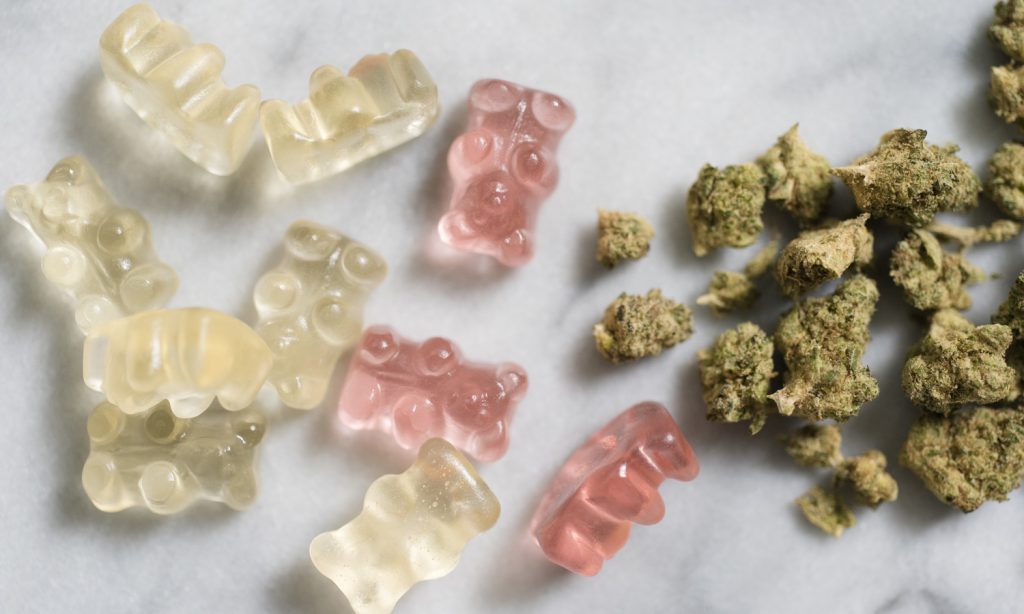
The time it takes for an edible to hit and the variances in your digestive system on any given day can result in an overdose.
Among the myriad ways of consuming cannabis, edibles are the most unpredictable. Resulting in powerful highs that take their sweet time to get there, edibles produce an equal amount of love and fear from cannabis veterans and newbies alike. Here’s why these products are so different than smoking or vaping cannabis.
For starters, edibles are eaten, which makes almost all the difference. Like medication and food, edibles are absorbed through the stomach lining and your intestines. After the food is broken up, the THC in the edible is absorbed and slowly makes its way to your bloodstream. In contrast, when cannabis is smoked, the effect is almost instantaneous, with the smoke traveling to your lungs and then quickly seeping into your bloodstream. Smoked highs are fast in every sense of the word, entering and leaving your system within just a couple of hours.
Depending on your meals, it can take your body longer to process edibles; if you had a weed gummy after a big dinner, it’ll take you longer than if you’d eaten the gummy on an empty stomach. You might fall asleep before you feel the high and wake up thinking you’ve traveled to a different planet. Not a nice feeling.
Andrew Stolbach, a toxicologist from Johns Hopkins Hospital in Baltimore, explained to Eating Well that the time it takes for an edible to hit and the variances in your digestive system on a given day can result in an overdose.
Photo by Jamie Grill/Getty Images
“Something that’s important to remember about edibles is that absorption is unpredictable,” he says. “People don’t experience peak effect for a while after eating, [which can be] minutes to hours—but usually hours.”
The symptoms of an edible overdose are the same as a smoking overdose, only stronger and longer lasting. The standard side effects of marijuana like paranoia, anxiety and fast heart rate can present themselves for 6 to 12 hours after overdosing on an edible. These effects can become more pronounced if you get scared and start to panic.
Like all things, it takes practice to master edibles, whether you purchased or prepared them in your kitchen. Before consuming an edible, make sure you’re with a person you trust and that you know the dosage that you’re putting in your body. Take your time with it, eating small amounts at first. Let a couple of hours pass and see how you feel.
States where sports gaming is legal are already generating millions of dollars in tax revenue. And they are doing it without much risk.
The cannabis industry is making impressive strides across the United States, swelling into a collective multi-billion dollar beast. But the legalization of marijuana might not be the most outstanding rockstar in the realm of economic saviors in America. Sports betting, however, could be.
In Illinois, for example, the state recently raked in a whopping $20 million during the first couple of weeks of legal cannabis sales. It was the kind of financial boost the state needed to begin tackling an enormous budget deficit, and it is one that will undoubtedly inspire more states to follow suit.
Still, the real money, the funds that some officials are most excited about, could come from fans trying to win a few bucks by betting on their favorite sports teams. States where sports gaming is legal are already generating millions of dollars in tax revenue. And they are doing it without much risk.
Gambling and marijuana have a lot in common. For years, both were considered products of degeneracy, the recreational path to deep downtrodden in the United States. They were almost exclusively for druggies, the debauched and the immoral swine coursing through the veins of this nation, all of them hellbent on leaving it in an empty state of godless decay. But that is no longer the case.
Marijuana is making some headway among mainstream society. It is now legal in 11 states like alcohol, and it is being used frequently by people of all races and social classes. Sports betting has experienced a similar coming out in the past year or so. Now, 14 states have forged a path allowing the existence of this gaming sect, with the odds in favor of more joining the fun very soon.
Photo by Sharon McCutcheon via Unsplash
All of this progress is due to a 2018 U.S. Supreme Court verdict that found the federal government’s Amateur Sports Protection Act (PASPA) to be unconstitutional. Until then, the law mandated that states could not “sponsor, operate, advertise, promote, license, or authorize by law or compact” sports betting. Now the market for such activity is starting to open up.
Many believed the ruling not only carried enormous implications for sports betting, but also marijuana. After all, since the nation’s highest court basically determined that the federal government could no longer ban states from passing their own laws, it was conceivable that more jurisdictions would muster the guts to get involved with legal weed without the fear of backlash.
But we really haven’t seen a lot of movement with marijuana that can be attributed to the ruling. Most states are still leery of a cannabis industry, perhaps continuing to hold on to antiquated ideas that legal weed will lead to some strange uprising of apocalyptic mayhem. This, of course, cannot be said about the arena of sports betting. State lawmakers are beginning to recognize that it is a much larger cash cow than marijuana, and it’s one that doesn’t come with immediate social harms such as increased minor consumption and stoned driving. And it is extremely profitable.
Photo by nattanan23 via Pixabay
In fact, in the first four months of legal sports betting in Indiana, the state saw nearly $440 million in wagers, according to the Indiana Gaming Commission. And all of this cash was generated, too, without making much change to the current infrastructure. There also weren’t any long lines to contend with, like we’ve seen in states with legal weed, and no product shortages either.
“Indiana went from nothing to…this is effectively found money,” Max Bichsel, group vice president of U.S. business for Gambling.com, told the Indianapolis Star. “The state is making money. The operators are making money. Everyone is making money.”
By all accounts, sports gaming seems to be a safer bet than marijuana. Indiana isn’t even considering allowing dispensaries to open anytime soon. It is content with its almost $4 million tax haul from gambling.
Still, Illinois may initially fare better with legal marijuana than it does with sports betting when it officially launches this gambling sector later this year. The law will, at first, require people to place their bets at casinos or other larger sports venues.
So the take might not be as impressive as it was at the beginning in Indiana. After all, the bulk of the bets made in the Hoosier state from September through December last year (nearly 64%) were through online apps like DraftKings and FanDuel Sportsbook. But once Illinois residents are given the freedom to make wagers from the comforts of home, we could easily see sports betting giving legal weed a run for its money.
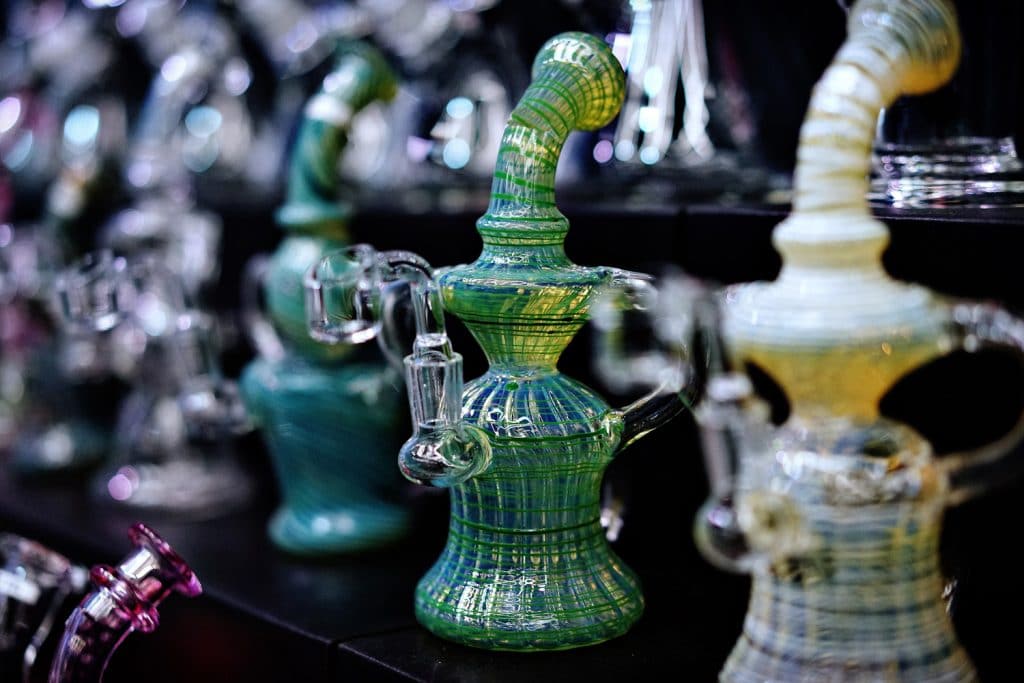
A lot of people let their bong water stew without thinking about all the germs that are growing there.
The maintenance and upkeep of weed paraphernalia is largely dependent on the person. You might clean your bong every two weeks or, if you’re that type of person, when the water starts to smell funky. If you belong to the latter group then you’re about to read some bad news. How often should you change your bong water?
While there’s no need to be obsessive, cleaning your pipe and bong is important. At the end of the day, these are the instruments that are handling elements that go inside your body, improving or messing with your experience. When it comes to the water in your bong, some people say switching out the water once a day is what you’re supposed to do, even if it sounds excessive.
Dirty bong water could lead to lung infections, especially if the bong is being used regularly. This water can quickly develop biofilm, which is filled with bacteria, yeast and all sorts of little creatures. Then there’s the fact that if the bong tips over and some of that water leaks onto any fabric, you’ll have a really tough time getting rid of the smell. Don’t do it.
Photo by secret agent mike/Getty Images
For casual marijuana consumers — those who spend some times or weeks without using their bongs — it’s important to empty out your device after each use and to clean it with boiled water. If you know you won’t be using it anytime soon, let it dry completely before putting it away in a safe place that is warm and that will limit the chances of developing mildew.
When it comes to people who use their bongs every day, Westword recommends changing the water every 24 hours, unless you’re burning more than a quarter-ounce every day.
It’s also important to clean your bong at least every two weeks, utilizing alcohol and salt in order to prevent resin buildup get rid of other gunk that won’t melt away with hot water and soap.
If you’re bad at keeping track of your bong use and the state of your water, it’s pretty easy to know when you should give it a quick rinse. Avoid water that’s dark, that has resin, that’s moldy or that smells bad. If any of the above are occurring, you’ll most likely have a gross hit.
For a long time, scientists didn’t totally understand how psychedelics caused these changes in mental health. However, preliminary research published in the Journal of Contextual Behavioral Science may give clues as to how psychedelics reshape brain behavior. It has to do with something called “psychological flexibility,” which the researchers described “as an essential set of processes that help people manage stressors and engage in adaptive behaviors that promote values-driven action.”
According to the study, psychedelics increase psychological flexibility in individuals, explaining why psychedelics often allow for spiritual breakthroughs and renewed energy to life in users.
“Emerging evidence support the possibility that psychological flexibility is an important theory that could inform clinical practice with psychedelic assisted psychotherapy,” study author Alan K. Davis told PsyPost.
Photo by eskymaks/Getty Images
“We conducted this study to test the theory that psychedelics would increase a person’s psychological flexibility and that such changes would be associated with improvements in depression/anxiety.”
To test their theory, researchers created an online anonymous survey seeking those who had had a moderate to strong psychedelic experience. Of the 2,120 individuals who participated, 985 participants said their psychedelic experience — ranging from psilocybin mushrooms, LSD, or DMT — led to changes in their anxiety or depression.
Those that experienced meaningful psychological insight during psychedelic experiences, including the epiphany that current emotions were tied to previous life event, ultimately reported having increased psychological flexibility afterwards. That led to drops in users’ symptoms of depression and anxiety.
“Increases in psychological flexibility fully mediated the effect of mystical and insightful experiences on decreases in depression and anxiety following a psychedelic experience,” the study’s authors wrote. “This suggests that psychological flexibility may be an important mediator of the therapeutic effects of psychedelic drugs.”
Scientists stated their intention to further this research under laboratory settings to better understand their theory, as well as our knowledge of psychedelics.
It’s cold and flu season, which means it’s never been more important to treat your body well and give it what it needs to fight off any virus that comes near it.
Flu season is upon us and this year the risk seems to be especially high. Whether kids are bringing germs home from school or the contagion of the communal fridge at work is putting a hamper on your weekends, know that the best ways to stay healthy are often the easiest.
Remember, viruses and bacteria thrive on dehydration and exhaustion so getting a good night’s sleep, eating well and drinking often is a MUST for this year’s flu and cold season. With coronavirus beginning to spread to new areas, here are five ways to boost your health on a minimal budget with maximum payout:
Hand washing
Your best defense against germs is hand-washing for at least 20 seconds. While hand sanitizers can be convenient, experts recommend what you’re using has at least 60% alcohol to be most effective at stopping spread disease. The Centers for Disease Control (CDC) states on their website, “Regular hand washing, particularly before and after certain activities, is one of the best ways to remove germs, avoid getting sick, and prevent the spread of germs to others.” While twenty seconds can seem like an eternity, taking the time to really lather and scrub can eliminate the germs on your hands and under your nails. Don’t forget to grab a towel or use an elbow to open the restroom door- germs love the handle!
Healthy foods
Eating well is one way to not only have a healthy body and mind but keep the common cold and flu at bay as well. By eating fruits and veggies, you’ll boost the immune system and give your body extra power to fight germs that come your way. Allina Health, a national health organization, recommends eating foods that are probiotic (think yogurts and unpasteurized sauerkraut,) along with keeping a healthy diet that includes fruits, veggies, and lean proteins.
One of the most common complications of sickness is dehydration; not all beverages are created equal! Coffee and soda can weaken the body, while water and decaffeinated green tea can help the body retain (and regain) important fluids.
To stay well, Mayo Clinic recommends about 2.7 liters of fluids a day for women and 3.7 liters for men, which can seem like drinking an ocean. Mayo explains their logic by stating that foods rich in hydration (juicy fruit, for instance,) can count as liquid as well. While Mayo stated 8 glasses of water each day was a good start, they added the caveat, “for some people, fewer than eight glasses a day might be enough. But other people might need more.
Sleep
A lack of sleep can wreak havoc on your immune system. The National Sleep Foundation believes that sleep is one of the best defenses against the common cold or flu. They recently shared on their website, “Poll data shows that on average, newborns to l0-year-olds don’t even meet the low range of recommended hours of sleep each night, while two-thirds of older adults say they suffer from frequent sleep problems, including insomnia, which often prevent them from getting a good night’s sleep.”
Most experts suggest at least 7 hours for the average adult, offering advice to pay attention to your body and sleep more as necessary. While getting a truly good night’s sleep can be difficult, it’s one of our best defenses against sickness.
Be cautious of germs
How often do you wipe the items you use every day? From phones to doorknobs, germs can live on surfaces sometimes for days. In a pinch and looking for items that are anti-bacterial to clean with? Vodka, white vinegar, lemon, and hydrogen peroxide all have anti-bacterial elements. A simple cleaner of white vinegar and distilled water works well for most surfaces and leaves no smell. Add a few drops of essential oil or leave as-is when cleaning light switches, doorknobs, phones and toilet handles.