Thursday, June 25, 2026
Home Blog Page 699

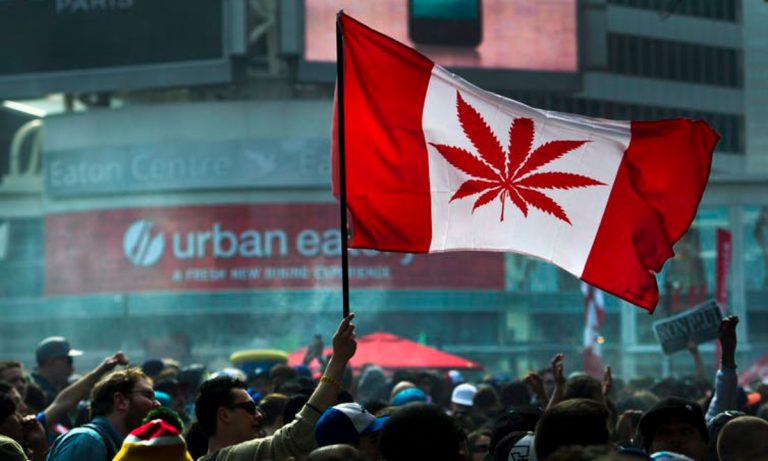
Canada’s Legalization Of Weed Edibles Is Another Global Social Experiment

This October, cannabis-infused edibles will be fully legal on the Canadian market.

Despite claims that broader cannabis legalization would change the social, economic and cultural fabric of the country, there is little evidence to suggest that this is the case.

The government itself claimed initially that its primary intent was to legalize cannabis without normalizing it. That’s exactly what it delivered. Allowing Canadians to have access to legal cannabis while keeping the social stigma against routine marijuana use alive was arguably the result the government was looking for.

The rollout of commercially available dried cannabis flower was relatively uneventful, though shortages and high price points still allow the black market to thrive. Beyond the hoopla, nothing has significantly changed. As illegal vendors continue to prosper, the social stigma has remained, evidenced by a recent study by Dalhousie University.

RELATED: Canada: Cannabis Legalization Must Include Cannabis Equity

This recent study released in May suggests that Canadians remain supportive of legalized cannabis, but their enthusiasm for legalized cannabis and edibles has dropped in recent months.

Now, edible cannabis policy is in the spotlight as Western countries around the globe look to capitalize on this frontier market. Canada is once again acting as a global social experiment, demonstrating to international political and business communities best and worst market practices.

Edibles are big business

Generally, consumers remain open to the edible cannabis market. In American states where cannabis is legal for recreational use, edibles account for 12 to 15 per cent of the market. In Canada, sales of cannabis-infused edible products are projected to reach $4.1 billion by 2022.

While the edible market offers opportunities for prosperity for cannabis producers and retailers, there remain challenges ahead for those looking to enter this market. Negative media portrayals have raised concerns among consumers who have yet to sample edibles. Cannabis ingestion among children presents a serious public health issue, expected to increase with the advent of legally available edible products, such as gummy candies and baked goods that appeal to kids.

Some consumers who currently want to integrate cannabis-infused food into their diets without turning to the black market for edibles — and without increasing their sugar intake — cook with cannabis. But that carries great risks that aren’t being given any consideration by regulators.

RELATED: Feds Are Blowing Smoke About Canada’s Ample Pot Supplies

The effects of cannabis-infused edibles vary greatly and are dependant on dose, gender, weight and metabolism. For novice users, edibles present a chance of accidentally consuming too much as they experiment in getting the dosage right for their own personal circumstances.

There are multiple social media how-to videos on baking and cooking with cannabis, but these aren’t monitored for the accuracy of the information provided, further leaving consumers open to cannabis-related mishaps.

‘Walking a fine line’

And so the government is walking a fine line between public safety and promoting the sale of cannabis as a recreational intoxicant, particularly when it comes to edibles.

As uncertainty grows among consumers about edibles, how much of it is fed by public service messaging is unclear. Certainly, mixed messaging does little to alleviate confusion. Health Canada guidelines and recent media coverage may be contributing to an increase in uncertainty about experimenting with edibles. Health Canada’s uncompromising regulatory framework is making many feel that edibles are welcomed in Canada, to a certain degree.

While public safety campaigns target sober driving and address child safety regarding cannabis-infused candy, businesses looking to market cannabis must adhere to strict guidelines that limit the scope and reach of what they can promote.

RELATED: Canadian Marijuana Shortages Could Go On For Years

The regulations set by the federal government surrounding the legal sale of cannabis edibles are confusing to retailers. There are of course mandatory regulatory requirements regarding testing and dosage. Labelling guidelines will be the same as those for food and pharmaceuticals. However, the low THC limit of 10 milligrams per edible, and the lack of clarity around how much THC is allowable per package, has the potential to cut into a business’ bottom line.

The Dalhousie survey revealed how illiterate Canadians are about cannabinoids. Only 31 per cent of respondents were able to detect the non-psychoactive, therapeutic nature of CBD. CBD is of great interest to the food industry, but few understand it. More public education is needed.

Overall, the legalization of cannabis in October 2018 allowed for new markets in cannabis distribution. Adding edibles to the mix this fall isn’t likely to fuel broad cultural changes in the way Canadians imbibe in the short term. Canadians, by and large, have accepted cannabis, but policies are preventing businesses from catching up and leading the rest of the world in cannabis production and distribution. So far, that’s a missed opportunity.The Conversation

Sylvain Charlebois, Director, Agri-Food Analytics Lab, Professor in Food Distribution and Policy, Dalhousie University and Janet Music, Research Associate at Agri-Food Analytics Lab from the School of Information Management, Dalhousie University

This article is republished from The Conversation under a Creative Commons license. Read the original article.

Guess Which Racing Animal Can’t Take CBD Anymore

Look, we understand the interest around CBD and animals. We’ve dug into the truth behind CBD for your pets, and the difference between the CBD you take vs. the CBD you might give your dog. We’ve even advised readers on how to keep your pets safe from marijuana poisoning and the moral dilemma facing veterinarians who want to give animal patients CBD, but legally can’t recommend it.

But a new controversy in the equestrian world has really thrown us for a loop. As Marijuana Moment first reported, the U.S. Equestrian Federation (USEF) issued a press release telling its members that humans might be able to legally consume CBD thanks to the 2018 Farm Bill, but horses still can’t. The USEF, which establishes rules and regulations for most official equestrian-related events in the country, warned that horses caught with CBD in their systems after September 1 will be subject to repercussions.

RELATED: Are Tiger Woods And Phil Mickelson Chewing CBD Gum While Golfing?

“CBD, both natural and synthetic forms, are likely to effect the performance of a horse due to its reported anxiolytic effects,” the USEF announced in the release. “This substance is no different than legitimate therapeutics that effect mentation and behavior in horses. It is for these reasons that USEF prohibits CBD and all related cannabinoids.

“Horses competing under USEF rules who test positive for natural cannabinoids, synthetic cannabinoids and other cannabimimetics will be considered in violation of GR4 beginning September 1, 2019,” the organization added.

First, it’s worth mentioning the USEF does not oversee the world of thoroughbred racing. Second, we’re not sure how the group will effectively test horses for having CBD in their system. Most standard cannabis drug tests primarily detect the presence of THC, as Marijuana Moment also mentioned. The press release did state, however, “analytical methods are being implemented to detect CBD and similar cannabinoids.”

RELATED: 4 CBD Products Marathon Runners Should Add To Their Training ASAP

Also confusing was the USEF pointing to the World Anti-Doping Agency’s Code for the human regulation of cannabinoids in competition. WADA, which oversees Olympic drug testing as well as other international sports, has previously approved the human use of CBD in competition, though THC remains banned.

So a rider can ingest CBD but their horse cannot? Seems like a double standard, USEF. Hopefully we’ll have clearer answers soon.

Billionaire Busted With $1 Million Worth Of Weed On Private Jet

Now we know the answer to the question “Can I Fly With Weed On A Private Jet?” thanks to Coca-Cola billionaire Alkiviades “Alki” David. The heir to a Greek Coca-Cola bottling treasure chest was caught with $1.3 million worth of cannabis after a search of his private jet in the Carribean island of St. Kitts.

David was placed under arrest after authorities found 5,000 cannabis plants, as well as seeds and other marijuana goodies, under charges of importing a controlled drug into the country, Possession of Controlled Drugs, and Possession with Intent to Supply. After posting a bail of $30,000, David was ordered to give up all his travel documents.

RELATED: Joe Biden’s Marijuana Views Are Stuck In 1989 — Literally

But according to David, all the plants and seeds were hemp. In an interview with the St. Kitts & Nevis Observer, David denied doing anything illegal. Instead he attested he had “handshake” deals in place with local farmers to grow hemp for him, which he’d later buy and use to produce legal cannabis products through his company SwissX.

“We’re bringing an opportunity to St Kitts which is going to benefit my business, which is to buy as much biomass of hemp we can grow here,” David said. “We’re bringing an opportunity to St Kitts which is going to benefit my business, which is to buy as much biomass of hemp we can grow here.”

Although David dismissed any accusations of lawbreaking as “one or two politicians whose opinions means nothing,” it’s not that clear. According to a local attorney, David’s possession may not be illegal, but his attempts at growing it was. “The mere possession of marijuana seeds is not a crime,” Dr. Henry Browne said. “What is a crime is to have the seeds and to come to an agreement to plant the seeds. Planting the seeds for the purpose of cultivation is a crime.”

Browne also mentioned the Federation of St. Kitts and Nevis doesn’t distinguish between marijuana and hemp, or plants with THC vs. those that don’t. Authorities view it collectively as “cannabis” and it’s all illegal under current law.

RELATED: What Is ‘California Sober’ And Is It Really A Thing?

Following David’s arrest, the Office of Prime Minister Dr. Timothy Harris released a strongly worded press statement that didn’t explicitly reference the Greek billionaire by name, but clearly regarded this story. Dr. Harris warned that “non-nationals would not be permitted to secure advantages over nationals as we set about to build out a marijuana industry.” The statement added that “the government has not granted any license to anyone to import plants or seeds into the Federation and that [the] administration has not had any conversation with any foreigner about setting up businesses to trade in cannabis.”

Media was barred from David’s trial, though we expect more answer will soon come. Until then kids, remember you can’t just fly to Caribbean islands with $1.3 million worth of cannabis aboard. It is, if we learned anything from David’s story, illegal.

Uber Offers Quiet Mode For Passengers Who Don’t Feel Like Talking

Finally there’s a polite way of letting your Uber driver know that you’re not in the mood for chit chat. The catch is that it’s only available for Uber Premium users, which is limited to Uber Black and Uber Black SUV.

These new preferences introduced on Tuesday are numerous and a little funny. Whenever you order a premium car, one that’s a luxury vehicle with a professional driver, you’ll be able to select the amount of talking that’ll take place. The options are: no preference, quiet preferred or happy to chat. You’ll also have a say in how much your driver assists you with your luggage and how warm or cold the car’s temperature will be. It’s a control freak’s dream.

Other features added onto Uber Premium are extended pick-up times, phone support and consistent vehicle quality.

RELATED: Uber Acquires A Bike-Share Start Up And It Will Change The World

When questioned by employment laws and possible controversies regarding these new features, Aydin Ghajar, Uber’s senior product manager, said that drivers’ silence was not mandatory. “The driver is an independent contractor. We’re just communicating the rider’s preference. The driver can have that information and do with it what they want,” he said.

What about the rest of us, Uber? When is quiet mode going to be available for those of us who can’t afford limos?

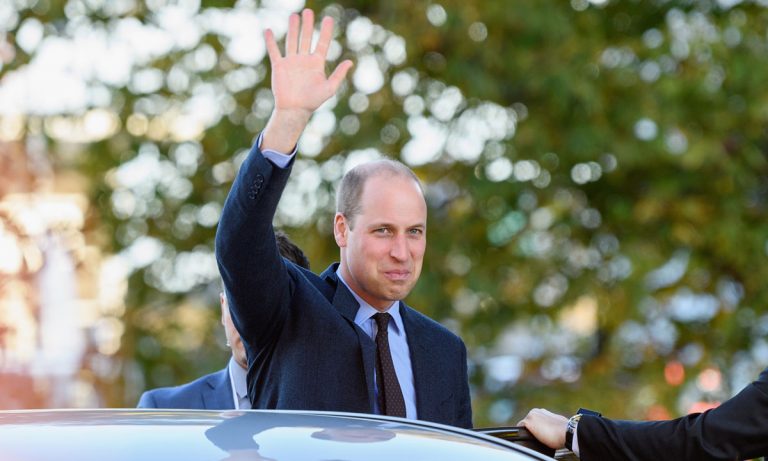
The Sad Way Prince William Found Out He Was To Be King

Being a kid in school is tough enough. There seems to be endless teasing, competition on the playground, and trying not to get yelled at by your parents for getting random stains all over your clothes. And if you’re Prince William, there is an extra layer of roughness: finding out you’re the future King of England.

When he was in school, William had no idea he was “different” from his classmates, according to one royal author, who says the Prince didn’t know any better because he was brought up as a “normal” kid.

Like his younger brother, Harry, William’s  mom and dad, Princess Diana and Prince Charles, tried to shelter him from most of the glitz, glam and endless media attention that comes with being a royal. But Will’s whole outlook on life changed with his schoolmates started treating him like an outsider.

RELATED: Baby Sussex Is Already Rich. Here’s His Estimated Worth

According to Express.co.uk, author Andrew Morton explores this time of William’s life in his 2011 book “William and Catherine: Their Lives, Their Wedding,” writing:

“Before William attended school, he genuinely had no idea that he was any different from anyone else.

“His innocence of his position was soon ended by fellow pupils, who left him in no doubt who he was.

“On one occasion a classmate reportedly asked him: ‘Don’t you know the Queen?’

“William looked at him and replied: ‘Don’t you mean Granny?’”

RELATED: Prince Harry Is Shunning This Major Royal Tradition To Give His Kid A ‘Normal’ Life

According to Morton, Harry of all people was one of his brother’s antagonists. “When William said once that he would like to be a policeman and look after his mother, Harry told him emphatically: ‘You can’t, you have to be King.’”

Harry has gone on record recently saying that he and Meghan Markle will be giving their newborn, Archie, a chance at a normal life. And that begins with skipping the traditional title. Instead of Earl of Dumbarton, Archie will simply be known as Master.

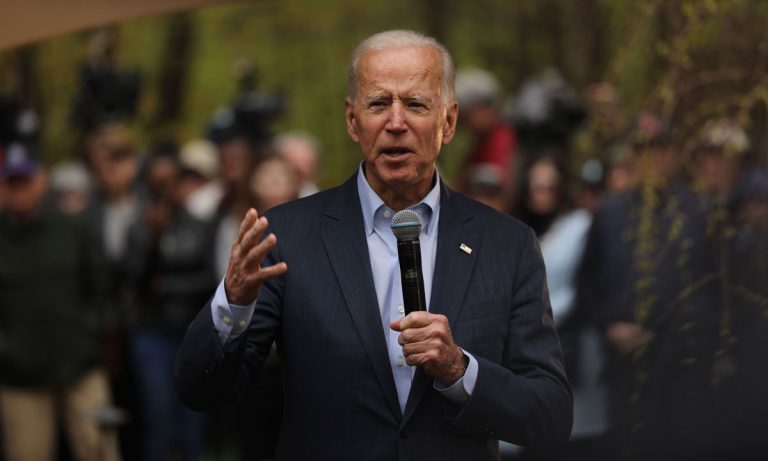
Joe Biden’s Marijuana Views Are Stuck In 1989

Ever since Joe Biden announced his 2020 presidential run, the former Vice President has been the object of intense scrutiny. Questions around Biden’s criminal justice record has drawn serious criticism, in addition to establishing himself as the only prominent Democratic nominee not gung-ho around cannabis reform. And thanks to a newly surfaced video clip from Mother Jones, the latter point of contention isn’t going away anytime soon.

As a United States senator and chair of the Senate Judiciary Committee in 1989, Biden was scheduled for a talk with students about how the country nominates and confirms federal judges. At one point, a student asked Biden about legalizing and regulating cannabis “like booze.”

“It is a legitimate argument, one which I reject,” Biden responded.

The then-Senator explained that “you cannot be a recreational user” of “certain [other] drugs,” unlike alcohol. He lumped “synthetically produced, mind-altering drugs or cocaine or heroin or marijuana” together, conceding legalization would reduce the profits and violence associated with the drug trade, but questioned “significant moral hurdle” this reform would cause the government.

“Is it proper and legitimate for a government to take an action which we know expressly will lead to the mental and physical demise of an individual?” Biden asked. “I say no.”

RELATED: WATCH: Where Does Every Presidential Candidate Stand On Marijuana?

Now, it’s important we parse Biden’s comments here. He’s including coke and heroin, as well as marijuana, in his statement about “the mental and physical demise of an individual.” His belief those drugs were all bad agents wasn’t out of step with many uninformed politicians and citizens at the time, who also likely didn’t differentiate between the ills of heroin and cannabis.

That’s not the problem here. The issue, as Mother Jones points out, is that Biden’s views and policy ideas around cannabis haven’t really evolved since that day in 1989. At a time when his competition, including President Donald Trump, have opened the door to varying levels of cannabis reform, all while educating themselves on the plant’s potential efficacy as medicine, Biden remains stuck in the past.

“If this is an issue that you care about, there couldn’t be a worse candidate to support at this moment than Joe Biden,” Erik Altieri, executive director of NORML, told Mother Jones.

“He feels like a relic of a different era when you listen to him talk about marijuana issues,” Altieri added. “Just in the past several years, he’s reiterated that he believes marijuana is a gateway drug that leads to harder drugs and that he thought legalization was generally a bad idea.”

RELATED: What In The Hell Is Texas Doing With Medical Marijuana And Decriminalization?

While advocates hope Biden will eventually change his tune on cannabis reform, or at least join us in 2019 with the current research and statistics indicating the potential positive effects of decriminalization, the former VP is making it all too clear he isn’t the guy for marijuana advocates.

As Michael Collins, director of national affairs at the Drug Policy Alliance, said, “fundamentally he’s someone who cannot be trusted on this issue.” He also added: “I would not be confident that Joe Biden…would select somebody who would be open-minded on marijuana policy as attorney general.”

Michael Pollan Praises Psychedelics In His Book, But Cautions Against Widespread Psychedelic Reform

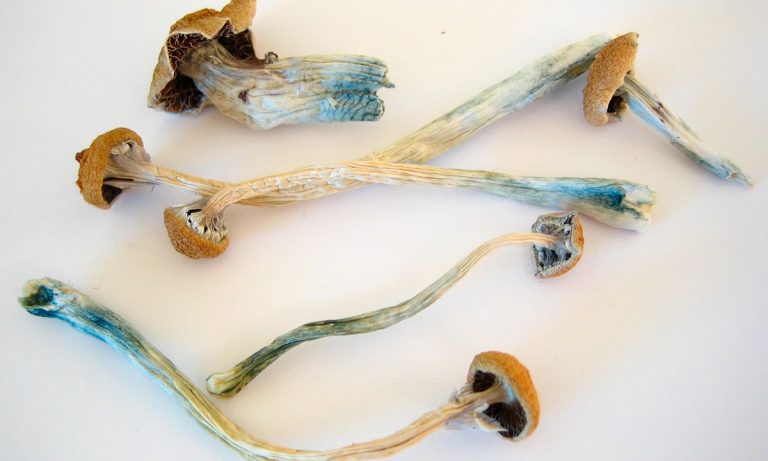
Leave it to the guy who wrote an entire book exploring the misconceptions of psychedelics and their long-term therapeutic potential to have one of the more even keeled takes around Denver’s recent decriminalization. Michael Pollan, who authored the popular How To Change Your Mind, penned a New York Times op-ed following the news of Denver’s successful ballot initiative that cuts against the roaring cheers of the cannabis and psychedelic communities.

Pollan commented that while he supports decriminalization, “ballot initiatives may not be the smartest way” to approach psychedelic law reform. Those reading this blog might be true believers in psilocybin or read research around the efficacy of its medical usage, but many Americans likely remain in the dark about what’s so magic about these mushrooms.

RELATED: Universities Should Study Marijuana, Says Congressman

“We still have a lot to learn about the immense power and potential risk of these molecules, not to mention the consequences of unrestricted use,” Pollan writes. “It would be a shame if the public is pushed to make premature decisions about psychedelics before the researchers have completed their work.”

Many advocates were quick to overreact to Pollan’s column stance, as some felt its messaging reminded them of the political condescension previously peddled around marijuana reform. We need more research. Reform can’t happen until we know more. Just keep waiting as patients can’t receive the medicine they need and others are locked up. But Pollan isn’t pushing that position. He believes in decriminalization but is cautioning against advocates forcing the hands of voters into broad medical legalization.

“No one should ever be arrested or go to jail for the possession or cultivation of any kind of mushroom—it would be disingenuous for me to say otherwise, since I have possessed, used and grown psilocybin myself,” he writes.

RELATED: Magic Mushrooms Could Help Treatment-Resistant Depression

He goes onto cite research from Johns Hopkins, New York University, and others that have discovered psilocybin’s ability to help treatment-resistant depression as well as having long-lasting positive effects on those suffering with anxiety or addiction. Pollan also mentioned the Food and Drug Administration’s decision to grant psilocybin “breakthrough therapy” status, which could open the doors for other psychedelic researchers.

“I look forward to the day when psychedelic medicines like psilocybin, having proven their safety and efficacy in F.D.A.-approved trials, will take their legal place in society, not only in mental health care but in the lives of people dealing with garden-variety unhappiness or interested in spiritual exploration and personal growth,” writes Pollan.

Kevin Federline Won’t Allow His Sons To See Britney Spears Until She’s ‘Stable’; John Stamos Just Shared Cryptic Instagram Of Lori Loughlin

John Stamos Just Shared Cryptic Instagram Of Lori Loughlin

Via iHeart Radio:

The cast of Fuller House has made no secret of the fact that they’re supporting longtime cast member Lori Loughlin through the college admissions scandal. Candace Cameron Bure has publicly defended Loughlin twice since her involvement in the bribery scam became public. Bob Saget has also thrown his support behind his on-screen sister-in-law. John Stamos, however, has remained relatively quiet on the subject. His recent, cryptic Instagram post about Loughlin, though, is getting dragged by his followers.

Stamos shared a group shot of the Fuller House cast, including Saget, Bure, Jodie Sweetin, Dave Coulier, Andrea Barber…and Loughlin. “Gearing up for the 5th and final. @fullerhouse,” Stamos captioned the photo. Loughlin was the only one not tagged in the photo. She deleted her Instagram in March after news of the scandal broke.


View this post on Instagram


Gearing up for the 5th and final. @fullerhouse

A post shared by John Stamos (@johnstamos) on


Stamos’s decision to post a cast photo featuring Loughlin to promote the fifth and final season of Fuller House is interesting because it’s been reported that the 54-year-old actress will not be returning to the show. A Fuller House source spoke about Loughlin to Deadline back in March and they did not mince words. “She’s toast, it’s over,” the source said, adding that the “writing is pretty clearly on the wall.”

So, is Stamos cryptically hinting that Loughlin is actually returning to the show? Possibly, but his followers are so not here for it. “Y’all gonna be visiting Aunt Becky in jail?” one of his followers wrote, while another added: “Uncle Jesse should sing ‘Jailhouse Rock’ to Aunt Becky.”

“Aunt Becky goes to jail sounds like a great episode,” another commenter said. “I just don’t think Aunt Becky will make it to the 5th season,” wrote another.

What do you think: did Stamos reveal Aunt Becky will be returning to Fuller House? Or was he just subtly showing support for this friend?

Kevin Federline won’t allow his sons to see Britney Spears until she’s ‘stable’

Via US Weekly:

Amid Britney Spears’ conservatorship drama and following her mental health treatment, Kevin Federline wants his ex-wife’s condition to improve before he gives her any additional time with their two sons, 13-year-old Preston and 12-year-old Jayden.

“Britney’s immediate concern has been in having increased visitation time with her boys,” a source exclusively tells Us Weekly. “Kevin won’t allow the boys to spend more time with their mother until Britney is once again stable and therapeutic on medication. He allows the boys to spend time with Britney, but it’s at his discretion.”

The “I Wanna Go” singer, 37, checked herself into a California wellness center in April after grappling with her father Jamie Spears’ recent health scare, and the decision had Federline’s support. “Kevin commends Britney for recognizing that she needs to take a step back and that she is taking the reasonable steps to deal with her situation in a responsible way,” an attorney for the 41-year-old told The BlastOpens a New Window. at the time.

The pop star checked herself out of the center on April 25, and the following day, she reunited with Preston and Jayden, who had been staying with Federline. At the time, TMZ reported that while Britney and her ex-husband were meant to trade custody of the boys every three days in accordance with their joint custody agreement, Federline had done most of the caregiving in the months leading up to Britney’s treatment.

In recent weeks, Britney has been trying to wrest her personal life out from under Jamie’s conservatorship, which has been in place since her breakdown in 2007 and 2008. Her mother, Lynne Spears, has become more involved in the conservatorship and wants Britney back in treatment, but the Grammy winner is ready to make her own decisions.

Canada Marijuana Legalization Must Include Equity

Canada marijuana legalization must include equity.  The federal government is currently working to pass a bill that would provide pardons for people convicted of minor cannabis possession. With a federal election around the corner, it may be too little, too late.

As a result of mounting pressure, Canada’s federal government is now struggling to pass this bill before politicians leave the capital for the summer break.

If the bill does not pass, it is unlikely to do so before a national election this fall, leaving tens of thousands of lives hanging in the balance.

Racialized law enforcement

It has been a little over six months since Canada legalized recreational cannabis, and by most accounts this national experiment has been a relative success. What Canadian legalization still lacks, however, are the important measures needed to repair the damage caused by almost a century of prohibition.

American legislators should take note.

As is the case in many other jurisdictions, Canadian drug law enforcement is heavily racialized. Data gathered from Toronto and other major Canadian cities show that Black and Indigenous people have been arrested for minor cannabis possession at rates as high as five and nine times that of whites, respectively.

RELATED: Feds Are Blowing Smoke About Canada’s Ample Pot Supplies

This means that Black and Indigenous people have been disproportionately burdened with the outcomes of a criminal record — reduced educational and employment opportunities, poorer housing prospects and travel restrictions — for engaging in an activity enjoyed by a significant proportion of the Canadian population.

A lesson for the United States

Unlike the narrative now dominant among the U.S. 2020 Democratic hopefuls, Canada’s move towards legalization was never about social justice or reparations. Having promised recreational cannabis as part of his campaign platform, Prime Minister Justin Trudeau’s government rushed to draft and pass the Cannabis Act in time to help them secure a political win.

Addressing the racialized harms of cannabis prohibition barely featured in political debates over legalization in Canada. Instead, the focus was on promoting public health and diverting profits away from the illicit market.

While we dither over whether to provide pot pardons, equally substantive equity measures such as the reinvestment of cannabis tax revenue into the communities most harmed by prohibition, and the incorporation of the drug war’s victims into the legal cannabis industry go largely unrealized. For legalization to be a true success, these measures must be forthcoming.

RELATED: Canadian Marijuana Shortages Could Go On For Years

Opponents were right to derail legalization in New York state last month because the proposed bill failed to adequately address social justice issues up front.

Given the nature of the political process, it can be all too easy for politicians to satisfy themselves with half-baked policies. If there is one thing that American lawmakers can learn from the Canadian example, it is that cannabis equity must be incorporated into legalization from the outset.

Given the lack of racial and economic diversity in established cannabis industries, not doing so is likely to further entrench the inequalities created by the war on drugs.The Conversation

Akwasi Owusu-Bempah, Assistant professor, University of Toronto


Science Does Not Support Your Coffee Addiction

Plug your ears if you basically hydrate with coffee and drink it throughout the day. A pair of new studies reveal that you should limit the amount of coffee you drink if you want a healthy heart. One study pegs it at no more than 4 cups, while another says 6. That may seem like overkill to some, but for those addicts who basically mainline the stuff, this is hard news to swallow. Science does not support your coffee addiction.

A study published in The American Journal of Clinical Nutrition and conducted by the University of Southern Australia, finds that more than half a dozen cups a day can be bad for your heart. Like, increasing your risk of heart disease by as much as 22% bad.

RELATED: 19 Hilariously Awkward Things New Baristas Have Done On The Job 

“Most people would agree that if you drink a lot of coffee, you might feel jittery, irritable or perhaps even nauseous – that’s because caffeine helps your body work faster and harder, but it is also likely to suggest that you may have reached your limit for the time being,” said UniSA researchers Professor Elina Hyppönen of the Australian Centre for Precision Health.

“We also know that risk of cardiovascular disease increases with high blood pressure, a known consequence of excess caffeine consumption.

“In order to maintain a healthy heart and a healthy blood pressure, people must limit their coffees to fewer than six cups a day – based on our data six was the tipping point where caffeine started to negatively affect cardiovascular risk.”

RELATED: What Are The Benefits Of Mixing CBD And Coffee?

Another new study published in European Journal of Epidemiology recommends even less coffee a day, around 2-4 cups. Researchers found this is the sweet spot for caffeine’s positive effect of boosting longevity. Researchers from Kyung Hee University and Harvard TH Chan School of Public Health looked at 40 previous coffee-related studies, which analyzed more than 3.8 million individuals and 450,00 deaths. They concluded that the lowest risk was an intake of 3.5 cups per day for all-cause mortality, 2.5 cups a day for cardiovascular disease mortality, and 2 cups a day for cancer mortality, “while additional intakes were not associated with further lower mortality.”

Dr. Bob Arnot recently came out with a book called The Coffee Lover’s Dietin which he examines all of these types of (potentially) confusing studies on coffee and its effects on our health. Not to mention, he and his team performed more than 40 studies to reach their own conclusion as to which beans and best.

Dr. Arnot emphasizes that the most important part of our coffee ritual is the level of polyphenols, the anti-inflammatory, antioxidant-rich micronutrients that are also found in wine and green tea (and why there are so many studies that boast the positive effects of drinking both).

He suggests looking for 5 things when ordering coffee:

    • Know Where Your Beans Come From: “The best regions are at high altitudes, have rich, volcanic soil, and are close to the equator.”
    • Choose A Light Roast:  “We roasted beans in five degree elements and found the lightest ones were the highest in polyphenols.”
    • Don’t Get Distracted By The Brew Method: “Don’t let fancy terms distract you from where the coffee beans are coming from.”
    • Choose Quality Over Quantity: “For some people, caffeine can make them jittery, anxious, or keep them up at night. It’s important to pay attention to your body to see how much makes you feel your best.”
    • Don’t Dilute It: Sugars and creamers are all fine and good, but the more stuff you add, the lower the amount of polyphenols.

So enjoy that cup(s) of coffee. Just be smart about it, like everything else in life.

Don't Miss Your Weekly Dose of The Fresh Toast.

Stay informed with exclusive news briefs delivered directly to your inbox every Friday.

We respect your privacy. Unsubscribe anytime.