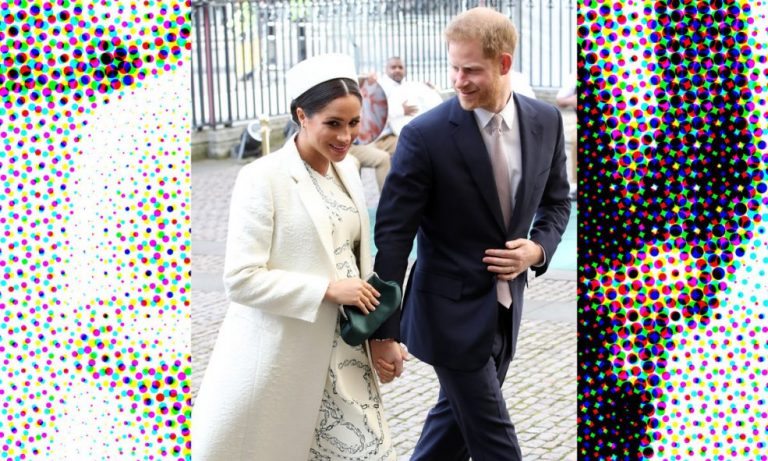
It’s nearly time for the world to be introduced to the next royal. Prince Harry and Meghan Markle are expecting their first child any week now.
From reading all of the magazine and tabloids out there, we know Meghan plans to breast feed (in public!), eschew traditional gender stereotypes (no blue or pink!), potentially hire a manny, and possibly name her kid Victoria or Diana if it’s a girl, and Albert if the rumors are true that she’s having a boy.
But all signs point to Meghan and Harry being great parents as well. Good Housekeepingspoke to Patti Wood, body language expert and author of SNAP: Making the Most of First Impressions, Body Language, and Charisma, to find out what the couple’s body language suggests about their parenting style. Here are 3 signs that they’ll be great at it!
The way Meghan cradles her bump
The way Meghan cradles her bump is important, says Wood. “I love that she has one arm on top and one arm on bottom, both holding up and cradling her bump. It says that she’s going to support — all that energy underneath is supporting — and then on top, she shows tenderness and protection.” Wood also says Meghan’s bump cradling style shows she’s totally centered on her baby. “The hands come out from the heart, so they symbolically represent where the heart is, so the fact that she has her arms and hands wrapped around the baby, on both top and bottom, says, ‘This is where my heart is right now.'”
https://www.instagram.com/p/BrTc4f9HXNH/
Harry naturally connects with children
Even though he has reservations about bringing a kid into the world, Harry is often seeing chatting it up with the younger set. He is able to quickly bond to them. The way he gets down on the ground to be eye-level with kids says a lot, according to Wood. “The playfulness comes through in the fact that he’s going to get down on the ground and put his hands on the ground, even as a royal. And you can tell it’s spontaneous. The energy is forward energy: he’s forward on his feet, he’s forward at the knees, and his fingers, head, and shoulders are forward. Forward motion shows where you want to be. He wants to be connected to that child.”
“It just seems to be very easy for them. If you look at the eye focus, it’s very naturally on the children,” says Wood, who takes notices that both Meghan and Harry always seem very focused on the children they meet. “Even though their bodies are down on the ground, their upper bodies are stretching up and forward to the kids. It shows that they’re going to be able to stay in the moment with their future child.”
Wood adds that because the couple is able to tune out the paparazzi easily shows that they’ll be able to do the same when they become parents. Keeping the focus on their baby, not the cameras.
In unexpected but understandable news, an artist is to carve a giant wooden bong for an Australian town. Paul Pearson who creates wooden bongs in the town of Woodenbong. He wants to build a giant wooden bong as a giant Woodenbong tourist attraction to save the town, but the residents of Woodenbong aren’t all that amused at the idea of a wooden bong representing Woodenbong. This might sound like a stoner’s Dr. Suess story, but it’s all very true, according to the Australian Broadcast Company.
“I’ve always had an interest in bong-making and art,” Pearson told ABC last week. “I’ve been doing it all of my life.”
“Tourism is our only option for survival [in] this dying village,” he added.
Screenshot via ABC North Coast/Facebook
While Pearson tried to create a petition for residents to support his project of building a humongous wooden bong, the town only has a population of 361 residents and most of them lean toward the conservative side. For some reason, they do not think the idea of a wooden bong in Woodenbong is so hot, even though it seems like the most obvious proposition in the world.
“I haven’t spoken to one person that thinks it’s a good idea,” Chris Reid, the head of a local fundraising group, told the New York Times. “We don’t want to promote drug use.”
“It’s quite a conservative community,” added Mayor Danielle Mulholland.
In addition, the wooden bong concept has also offended some indigenous Aboriginal tribes in the area. Apparently, Woodenbong is a westernized version of an Aboriginal word that loosely translates to “duck on the water.” In fact, “the name Woodenbong has nothing to do with a bong,” a Githabul elder told the Times.
Pearson, however, is undeterred in realizing his dreams of a giant wooden bong in the town, possibly one that towers higher than 50 feet in the air. Should the town not agree to pay for the project to draw tourism, Pearson has considered finding funding other ways. “I don’t think I need to convince people,” he told ABC. “It’s pretty obvious.”
On your weekly bingo card, but you didn’t have artist to carve giant wooden bong.
My family and I were on vacation in Florida recently and took advantage of a free afternoon to do some gift shopping for local memorabilia – not your ordinary T-shirts and key chains. Our adventure took us to St. Armand’s Key, part of Sarasota, and the many unique shops there.
While meandering between shops around the outdoor circle, my daughter, 14, was often quick to ask the locals, “Can I pet your dog?” She was missing her dog, Belle, who was being boarded back home and thought it would be a good idea to get her something too.
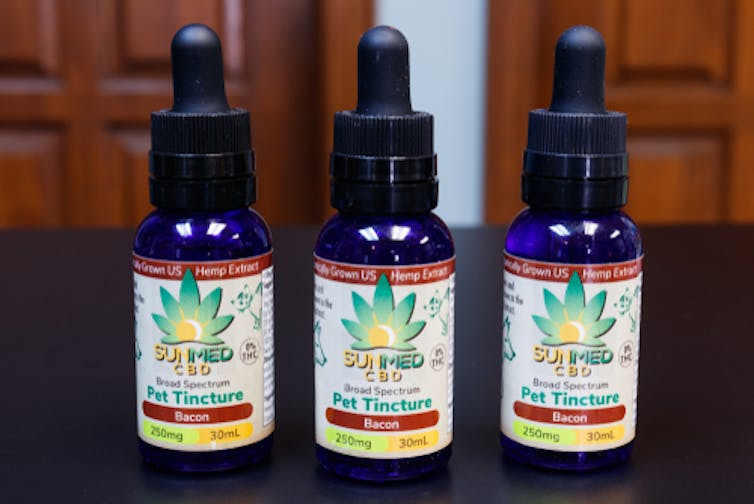
In our efforts to find Belle a gift, we stumbled upon the most unlikely of shops – a store that proudly advertised CBD (cannabidiol) for you and your pets. CBD is a chemical derived from the cannabis plant, but it does not contain THC, the chemical in pot that makes people high. Nonetheless, CBD appears to be the molecule of the moment after the Food and Drug Administration approved a drug in June 2018 that contains a CBD derivative to treat some forms of epilepsy.
Now, in all honesty, I was quite hesitant to make my way in, but there were quite a few dogs and their owners entering and exiting with various products – not all appearing to be CBD-related. So, I looked at my wife and said, “Why not?”
As a board-certified toxicologist at a major veterinary diagnostic laboratory, I have had experience working with a broad spectrum of poisoning incidents in all types of animals, including our companions. Recently, our lab has seen an increase in the number of positive tests for marijuana in dogs, many of whom may have accidentally ingested edible forms of marijuana. The American Society for the Prevention of Cruelty to Animals has reported a more than 700 percent increase in calls related to marijuana to its poison center in 2019.
As a dad and as a toxicologist, I welcomed the idea of answering my daughter’s questions about CBD and other chemicals in marijuana that are making their way to our pets. But, of course, I had to start with providing her with some context.
Several items caught my daughter’s attention and, of course, she chuckled with amusement. In that moment, though, she began to ask some great questions: “What is CBD and hemp, and why would people give it to their pets?”
I first reminded her of the most recent election. In 2018, we saw the number of states that legalized marijuana for medical and recreational use expand to 33, including our home state, Michigan. Because of this legalization, there was also a marked expansion in the quantity and types of marijuana-related products available to people and pets, including hemp and CBD oils and pet treats.
So, what is the difference and significance of these products? Marijuana – also known as Cannabis sativa – is comprised of somewhere between 66 and 113 different cannabinoid compounds. Of these, recreational use of marijuana is sought after for the psychotropic “high” produced by delta-9-tetrahydrocannabinol, or THC. Humans either smoke marijuana or convert it into butters or oils for baked products – most notable of these are the often joked about “brownies” – or other edibles such as candy, or they may use the oil itself.
These edible formulations are more problematic for our household companion animals as these are more likely to contain higher concentrations of THC. And, they often include other ingredients that may independently cause harm to your pet such as chocolate, sugar and xylitol, a sugar substitute.
We have received cases at the veterinary diagnostic laboratory in which animals have been either inadvertently or intentionally exposed to marijuana products.
THC is known to be toxic to dogs. According to the Merck Veterinary Manual, common signs of marijuana toxicosis that owners may notice include inactivity; incoordination; dilated pupils; increased sensitivity to motion, sound or touch; hypersalivation; and urinary incontinence. A veterinary exam can reveal depression of the central nervous system and an abnormally slow heart rate. Less common signs include restlessness, aggression, slow breathing, low blood pressure, an abnormally fast heart rate, and rapid, involuntary eye movements. In rare cases, animals can have seizures or become comatose.
Hemp differs from marijuana in that it has a significantly lower THC content with predominantly more CBD. In a sense, this lessens the chances that an individual or pet will experience the negative side effects of THC, as CBD doesn’t exert the same psychoactive potential. However, there are no regulations on the chemical makeup of hemp products and therefore no way of really knowing, apart from relying on manufacturers’ labels for batch-to-batch variability in THC content. Additionally, very little is known regarding the long-term health effects of chronic exposure to these products, or about their use in conjunction with other medications.
Last, many CBD oils have claims of even higher purity than hemp. Similarly, though, these products are not regulated and therefore may still exhibit variability in chemical makeup. Additionally, many of the claims about cannabinoids’ effectiveness are anecdotal and have not yet been scientifically proven. This means that doctors of humans and animals remain somewhat skeptical about the potential benefits to their patients.
Why you shouldn’t give pot to your pets
So, why do people give these products to their pets?
For marijuana itself, my answer to my daughter was blunt. It is simply ignorance, or an abusive behavior that spawns from negligence. There are no good reasons to give your pet a “high” regardless of whether the product is legal for human medical or recreational purposes.
Pets are not people. Many prescription and over the counter drugs as well as foods that are safe for humans are not safe for pets. For example, alcohol is also toxic to pets and while some owners may think it’s funny to let their pets drink their beer or liquor, it can in fact be quite dangerous for the animal.
As for hemp and CBD oils – as a toxicologist, I am skeptical at best.
It is difficult to watch our pets suffer through anxiety or pain from ailments such as cancer. However, although these products have been touted for their therapeutic potential, none of them have gone through the rigor of an FDA approval. Anecdotal findings and limited case studies in humans do not constitute the wealth of information that is needed to establish these products as “safe” for our pets.
For people, there is an inclination to deem products that originate from plants as being “natural,” and thus rather arbitrarily “safe.” This, too, can be harmful. Simply put, “natural” does not always equal “safe.”
There is something to be said about the doctor-patient relationship in treating the whole patient – this goes for pets and their veterinarians as well. When we choose to use supplements, this needs to be disclosed to a licensed professional so as to allow for conversations about risks and continued health monitoring. It is not wise to bypass our trained professionals for the ill-trained Dr. Google.
As I continue to see more of these products show up in veterinary diagnostic samples, our interpretations will continually be guided by future scientific studies and case-based outcomes. Hopefully, a fuller understanding of these products and their associated benefits and risks will be had.
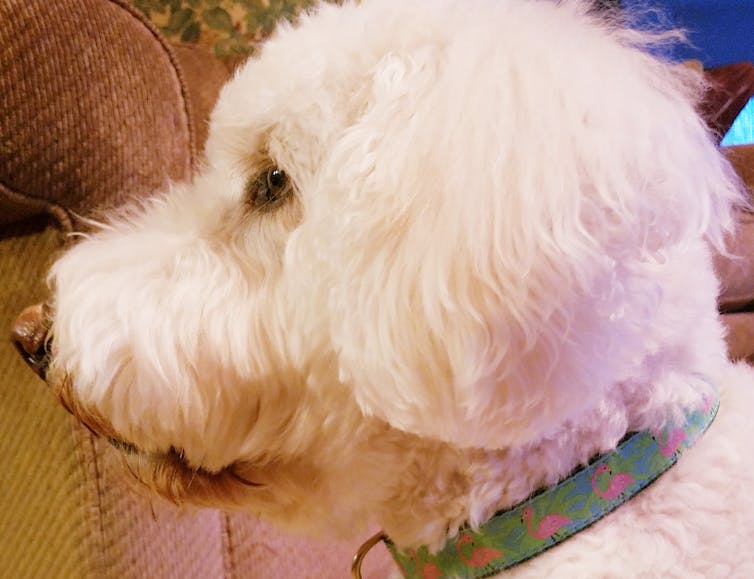
As for Belle – we purchased her a brightly colored new collar.
The author’s dog, Belle, with her new collar from St. Armand’s Key. Dr. John Buchweitz, CC BY-SA
Data seems to indicate, older marijuana users are more productive. Research conducted in states where marijuana is legal found that users aged 51 and older experienced a significant reduction of pain and an increase in their work productivity.
The study, conducted by the John Hopkins Bloomberg School of Public Health and Temple University, looked into the effects of marijuana legalization in labor and work environments. The research had a particular focus on older adults, a sector that is often ignored in most medical marijuana studies and who could theoretically reap the majority of benefits of medical marijuana treatments.
The survey was conducted in over 100,000 patients over the age of 51 who qualified for medical marijuana programs. Subjects reported a 4.8 percent decrease in pain and a 6.6 percent increase in “excellent health.” Researchers concluded that medical marijuana in legal states increases productivity in full time jobs, with the positives outweighing the negative side effects of legalization.
“Three principle findings emerge from our analysis: First, active state medical marijuana laws lead to lower pain and better self-assessed health among older adults. Second, state medical marijuana laws lead to increases in older adult labor supply … Third, the effects of medical marijuana laws are largest among older adults with a health condition that would qualify for legal medical marijuana use under current state laws,” reveals the study.
These results are promising for marijuana legalization, especially now that people are expected to work more and that retirement age is being pushed back significantly. According to a survey conducted by the AARP, financial stress is at an all time high, with half of respondents having trouble sleeping at night because of their debts and worries. 11 percent of them believe that they’ll have to continue to work well past their 80s. Yay, legal marijuana?
As if the U.S. marijuana movement needed a sign beyond the constant yammering about pot stocks and pet-friendly CBD to show that weed is really just becoming another cleanly shaven product of popular culture, a new poll released this week finds that the majority of Republicans favor marijuana legalization. They are now pledging unwavering support for the herb. That’s right – the same party that has continued to sandbag the progress of legalization for the past several decades is now prepared to give the cannabis industry a shoe shine, a $50 haircut and a good old fashion lesson in capitalism.
A survey from the Associated Press-NORC Center for Public Affairs Research and the General Social Survey finds, of course, that most folks (61 percent) in the United States are ready for legal weed. No big surprise there. For the past several years all of the national polls on this subject have turned out similar results.
But the main takeaway is the elephant-eared support on the matter of marijuana legalization now resides at 54 percent, which is up nearly ten points since 2016.
Republicans have a long way to go, however, before they are rolling with the cool kids on Capitol Hill. Democrats are still showing the most support for pot reform, with 76 percent now in favor of legalizing the leaf in a manner similar to alcohol and tobacco.
Cannabis advocates say they are confident that the moment when marijuana finally goes legal nationwide is on the horizon.
“Our time has come,” Justin Strekal, political director for the National Organization for the Reform of Marijuana Laws (NORML), told the AP. “Never in modern history has there existed greater public support for ending the nation’s nearly century-long experiment with marijuana prohibition.”
Well, we’d say it is about time that more than four decades of extensive outreach pays off. It was getting to the point where NORML was going to have to slap the slogan don’t hold your breath on their business cards.
But positive change takes time.
There are now more than 30 states that have legalized for medicinal use, while 10 states and counting have passed laws making it fully legal to possess and buy marijuana in a way similar to alcohol. The latter is the route the nation seems to be gunning for as of late. The most recent pushes in Congress have all included paths to eliminate the cannabis plant from the confines of the Controlled Substances Act and thereby allowing the individual states to legalize how they see fit.
Still, there are plenty of snags.
Sure, the majority of Republicans are showing support for pot reform, but it’s not the right Republicans. The U.S. Senate, where GOP domination is in full effect, does not share in this enthusiasm for legal weed, we assure you. But eventually, they will join in, that is a given. It’s just a matter of getting Senate Majority Leader Mitch McConnell on board. Come to think of it, maybe the next poll (pole) should be one that can be used to knock some sense into him. Because once McConnell supports legal weed, the end of federal marijuana prohibition is as good as a done deal.
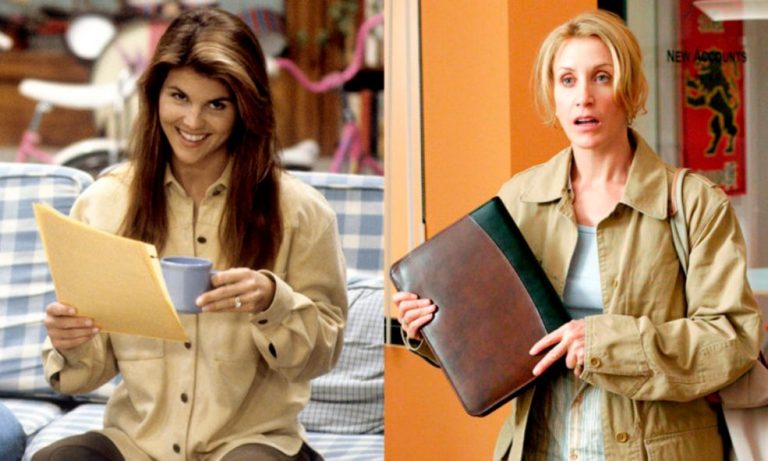
The college admissions scandal marks a steep fall from grace for two women who made careers out of playing relatable moms: Full House’s Lori Loughlin and Desperate Housewives’ Felicity Huffman.
“Neither actress knew this would become so serious,” a Huffman source says exclusively in the new issue of Us Weekly. “They haven’t fully grasped the extent of their alleged crimes or the possibility of prison time.”
Loughlin, 54, and Huffman, 56, were among the 50 people who were charged on March 12 in connection with the alleged nationwide scam that involved faking students’ test scores and bribing college officials.
The momager, 63, was up bright and early for a date with hairstylist to the stars, Chris McMillan, in Beverly Hills. Jenner, who once documented a facelift on Keeping Up With the Kardashians, shared a photo mid snip of their salon shenanigans (“we are silly together”), but her bare face is what we were fixated on.
And it wasn’t just us. Her followers loved seeing her without her typical super glam — and commented all about Kris’s stripped look. One commenter was “proud” of her for the revealing photo while another applauded her for “showing this side of you.” More than one noted that they had “never seen” her without makeup — which is a big deal considering how much we’ve seen of her on TV and off. Kris was also told she looks “so much better without makeup” and more than one hopes it’s a regular thing.
Singer Jennifer Lopez and former baseball star Alex Rodriguez are “really happy” following their engagement after two years of dating.
The singer and actress recently opened up about her engagement to the former New York Yankees player to People magazine, telling the publication the couple has “an appreciation for where we are in our lives today.”
“And that’s what we’re enjoying the most,” she added.
They also have a new partnership with Quay Australia, a sunglasses and eyewear company, Lopez said, noting everything she and Rodriguez do, “we do together.”
“He knows my dreams and I know his dreams, and together we feel like we’re stronger,” she told the outlet.
The power couple took to Instagram earlier in March to announce their engagement. They each shared a similar photo which shows an impressive 15-carat emerald-cut diamond ring on the singer’s hand, which Rodriguez used to pop the question while the two vacationed in the Bahamas. Their engagement came just weeks after celebrating their second anniversary.
“We’re constantly supporting each other in our individual endeavors and thinking about all the things that we can build together,” Lopez added, while Rodriguez noted the couple is “very grateful.”
It’s already quite sweltering in Barbados, but it just got a little hotter thanks the United Kingdom’s Crown Prince in his swim trunks. People are going crazy over Prince Charle’s beach bod! During a whirlwind 13-day tour of the Caribbean as part of his royal duties, Charles and his wife Camilla hit up Barbados on Monday for a little beach therapy. And wouldn’t you know it, the 70-year-old grandfather of three (soon to be four) strutted all over the beach sans shirt, proving he’s still pretty fit.
Camilla, a year old than Charles, doesn’t look too bad either.
You can click through RadarOnline’s gallery to see the pics, but here are some shots we pulled from Instagram (the saving grace of the internet during times like this):
https://www.instagram.com/p/BvOVavDFERv/
According to Radar, after their Barbados fun, the couple will travel to St. Vincent, Grenadines, St. Kitts, Nevis, Grenada and Cuba before capping off the entire royal tour with a trip to the Cayman Islands. But the trip may already be sullied for the prince.
The Press Association said that Charles’s solicitor (his legal aid) sent a letter to various press organizations in the U.K. to remind them of the Prince’s “reasonable expectation to privacy.”
A source revealed that the images were taken during a “brief off-duty moment on a major international tour” in circumstances where they would have expected privacy, according to Royal Central.
Clarence House has declined to comment on these reports.
For now, let’s pay homage to the floral print shorts, as we may never get to see them again.
https://www.instagram.com/p/BvOYxvQFFP1/
Glad the British has a bit of fun and respect and it is good to see people are going crazy over Prince Charle’s beach bod!
Japan has a notoriously strange relationship with drugs. The country’s zero-tolerance policy towards illicit narcotics, which stems from a post-WWII drug abuse and addiction problem, leads to an overreaction every time a national celebrity is caught with drug possession. Currently the country is struggling with rising cannabis use in Japanese youth who want to be “like foreign musicians,” and a recent advertisement showcases just how tone-deaf Japan can be when dealing with drug problems, despite being world leaders in various other categories. Now Japan says if you’re addicted to drugs, eat Udon instead.
As first reported by SoraNews24, a recent print advertisement teaches kids how to say no to drugs by just eating the famed noodles. Now, udon is wildly delicious, but maybe offering thick noodles isn’t the best solution to stop would-be addicts.
Here’s what the Japanese text reads in translation:
How to Say No to Drugs
Use our SUTEKI (wonderful) method to say no:
Slurp udon instead of slurping drugs
Use caution when picking what you consume, like choosing good tempura
Take some udon instead of taking drugs
Eat the udon happily
Kindly go home after you’re done eating
Instead of another white powder, have some wheat flour
You can either get worked up about something like this or laugh at how comical it is. Personally, my strongest reaction is that “Instead of another white powder, have some wheat flour” would be a fire rap line. Clearly none of this would help anyone struggling with addiction whatsoever.
Two important caveats to mention: One, the poster is from Kagawa Prefecture, which is famous for its udon noodles and two, the ad is the result of a competition to create an acronym through “SUTEKI,” as one Twitter user pointed out. That doesn’t excuse the officials who thought it was a good idea, but it does explain some things.l
A guy by the name of Anatoly Shashkin recently Tweeted a photo of a decades old coupon that someone used to buy Crisco oil.
Shashkin, who says he’s worked in the grocery business for 13 years, shared the photo on Tuesday, and it’s already racked up nearly 12,000 likes and 2,000 retweets as of press time.
Of course, Twitter had a field day. How often do you see an ancient coupon like this? Especially if you weren’t even born in the early 80s when the coupon was issued?
Odds are the coupon itself is worth more to a collector…
— It is I, Niels; Queervidual. Knight of Autumn (@MtgKaylesh) March 19, 2019
A little over a year since Denver launched its High Costs youth education campaign, a survey released this week indicates that the program has been a success. Of the students that have heard of High Costs, which teaches about the consequences of adolescent marijuana use, 75 percent say it has discouraged them from using cannabis.
High Costs was launched by the city and county of Denver, using tax revenue generated by retail cannabis sales. Denver commissioned the research from Insight Labs to test the effectiveness of the program, which utilizes creative strategies to teach kids facts around early marijuana use instead of old-school scare tactics.
High Costs emphasizes placing those facts in contexts familiar to adolescents, ranging from social media campaigns, an online game show called “Weeded Out,” school bus signage, and digital radio.
“Teens want facts and they want to be able to make their own decisions,” Denver Mayor Michael B. Hancock said. “When we give teens the facts and equip them with knowledge, they make smarter choices about using marijuana.”
The survey ran from mid-November to mid-December of last year, and involved 502 teenagers to represent Denver’s youth population. According the research, 78 percent of teens were familiar with the High Costs program while 83 percent of teenagers believed it was educational and contained clear messaging. To build upon this success, the report recommended High Costs continue to grow its online footprint while devising nontraditional marketing strategies, like product giveaways.
In addition, the survey found that 18 percent of Denver teenagers currently use marijuana, with 1 percent admitting to daily use. These users were more dubious of the High Costs campaign and were less likely to spread the messaging.
“This audience is going to be difficult to reach, as they’ve already decided to use and naturally are going to reject information that contradicts their decision,” the report says. “For now, focus on the core audience of non-users and past-users, and evaluate the opportunity to target this segment again in a year.”