Have you ever wondered, while stuck in your car on the highway, just how many hours of your life you spend in traffic? It’s kind of daunting to think about, and, most likely, incredibly depressing to boot. Fortunately, someone else did the math on this, so we all know just how much of our precious life is spent going nowhere.
According to the U.S. Census Bureau, (by way of Best Life), the average American spends nearly a half-hour (26 minutes) getting to work. That number is nearly five minutes more than it was in the early 80s. And if you work 50 weeks out of the year, that means you spend 9 days commuting, and even more if you live in the city.
What’s even scarier than crumbling infrastructure, urban sprawl and everything else that contributes to traffic congestion, is that those who commute by car every day are at greater risk for weight gain. According to a study published in the American Journal of Preventive Medicine:
Over 4 years, those who used cars daily for commuting tended to gain more weight than those who did not commute by car. This relationship was pronounced among those who were physically active during leisure time. Reducing sedentary time may prevent weight gain among physically active adults.
But, wait! Things are looking up. More people are getting work done outside of the office these days, which could actually make a dent in traffic. According to a study out of the U.K., research showed that public transportation equipped with wi-fi (like trains) “may ease commuter pressure on peak hours and allow for more comfort and flexibility around working times.” Now, how can we get our bosses to pay us for these off-hour work sessions?
Looking for an amazing job? See the woman in charge of the Canadian sexual health movement. At just 23-years-old, Antuanette Gomez is a name to be recognized in the Canadian cannabis scene for snagging this position.
Just a handful of years ago, she quit her job, relocated to Peru, and then ended up enrolling in school in Canada for holistic nutrition. While on that path, she turned her attention to cannabis.
Gomez now is the CEO of Pleasure Peaks — a company she created that is dedicated to the sexual health benefits of cannabis — as well as an industry consultant, and the former director of Canada – Women Grow. She also recently was invited as a scholar to the Forbes 30 Under 30 summit.
“I help women and minorities specifically [get businesses off the ground], usually pro bono, because we have a lack of inclusivity in the industry—and it’s always kind of been like that and it’s getting progressively more dominated by men,” Gomez explained. “The opportunities available to women are scarce.”
Gomez is not only known for her expertise in cannabis and sexual health, but also in tantra.
“In a partner situation [using cannabis], you’re being able to connect with your truest self and leaving a lot of barriers behind; cannabis is also known to be an aphrodisiac as well, because it’s known to heighten sensitivity and arousal,” Gomez said.
When used topically, Gomez explained that cannabis can cause more blood flow to the genitals as well as lubrication and increased sensitivity to touch for those with vaginas.
She created Pleasure Peaks “because of the need for sexual healing education, products, community and awareness.” Her company not only will be selling fun cannabis sex products like lube and CBD-infused candles come legalization, but will also focus on holistic sexual health benefits, such as products like suppositories for women suffering from such ailments as endometriosis, chronic yeast infections and even cervical cancer.
Currently, Pleasure Peaks is developing a line of 16 different products and has secured a licensed producer partner in Canada that will help take the company to the next level upon Canada’s legalization on October 17.
Gomez referenced “underground compassion clubs” in Canada back in 2012 that worked with doctors across the country. She began working at one. It was there that she learned how to work with cannabis for different diagnoses.
“I was seeing hundreds of patients and was dealing with many MS patients; cannabis is incredibly effective for MS,” Gomez said.
Then, she ended up meeting a woman who was diagnosed with the notoriously painful condition endometriosis.
“Putting two and two together… I gave her a nice, simple coconut oil topical base to start with, and she said she was able to have sex again,” Gomez said.
She then made her patient suppositories, which they found were “incredibly effective.”
The woman and her husband thought she would never be able to have kids. But, after treatment with suppositories and four months’ time, Gomez’s patient got pregnant.
“It was a miracle baby,” Gomez said.
After that, Gomez knew there was something there that no one else had really honed in on. “I thought that I was the best person to take this on,” she explained of her decision to make a cannabis sexual health brand for women by women.
“There were so many barriers not only for me, but for other women as well, that I could see,” she said.
Pleasure Peaks Cannalube | Photo courtesy Antuanette Gomez
Diversity, the Cannabis Industry, and the Future
Recently, Gomez found herself a lone female speaker on panels at a major cannabis event in Toronto.
“I had to say ‘vagina’ a hundred times, and I could feel how uncomfortable the room was,” Gomez recalled. “‘Vagina’ is not a dirty word.”
“It’s incredibly disheartening. Even though I have six years in the industry, I’m in Toronto Life as a most influential woman in the cannabis industry…I’m in Forbes. Even me, I still have issues getting involved in the cannabis industry.”
Gomez said her quest to get a licensed producer for her company took her four years.
She said it’s been “a struggle being a minority” in the industry but that her passion for the business has gotten her to where she is today.
“There’s no playbook: There’s an industry that doesn’t exist yet, so there’s really nothing to run off by but your gut,” Gomez said. “You really just need to be adaptable.”
Gomez thinks it’s “amazing” that Canada is legalizing recreational use come October 17.
“I honestly didn’t think it would happen in my lifetime,” she said. But, she said, there’s some lacking on the social responsibility side in regards to pardons for those facing criminal records in Canada related to previous cannabis activity. Gomez referenced Oakland, California’s weed reparations as a model that could be looked to.
Gomez hopes to soon take her company global.
“It’s truly a calling. I know that nobody else can really do Pleasure Peaks justice… I do this because I just know I need to,” she said.
MedMen (MMNFF) continues its spending spree. This week the company is buying Pharmacann in a deal valued at $682 million. Pharmacann is a medical marijuana operator with 10 retail stores and three cultivation and production facilities across multiple states. MedMen’s network nearly doubles with this deal and will now have a portfolio of cannabis licenses in 12 states to operate 79 cannabis facilities.
Seed-to-sale technology provider MJ Freeway has agreed to a merger with MTech Acquisition Corp., which is the first US-listed Special Purpose Acquisition Company focused on acquiring a business ancillary to the cannabis industry. MTech and MJ Freeway will become subsidiaries of a newly-formed holding company to be listed on the NASDAQ (NDAQ) Stock Market.
A report from Canada suggested that tobacco giant Altria is considering a minority investment in Aphria. Both companies were evasive when asked if they were considering a deal, but it seems Altria folks were spotted at the Aphria headquarters.
Aurora Cannabis Inc. (ACB) announced that it has filed an application to list its shares on the New York Stock Exchange (ICE). The company said that it expects to begin trading on the NYSE by the end of October under the symbol “ACB.”
Green Acre Capital has announced that it has received more than $75 million for the initial closing of Fund II. With funding in hand, the company said that it will begin making investments and plans to stop taking capital within the next 30 days; focusing on ancillary cannabis companies
Vivien Azer of Cowen & Co reiterated her Outperform rating on both Canopy Growth and Tilray. Azer lifted the price target for Tilray from $62 to $172 and raised the price target for Canopy’s Toronto-traded shares from the U.S. dollar $57.17 to $63.35.
Next week on October 17th Canada will begin selling legal adult use cannabis, so get ready for an avalanche of cannabis news from the great white north.
Following the taping of the Marijuana Money video Aphria (APHQF) first fiscal quarter of 2019 ending August 31 revenue rose 117% to C$13,392 from $6,120 for the previous year for the same time period. The company said that adjusted gross profit for the first quarter was $8,458, with an adjusted gross margin of 63.6%, compared to $9,468 with an adjusted gross margin of 78.7% in the prior quarter. The decrease in the adjusted gross margin and adjusted gross profit from the prior quarter largely relates to an internal decision to dispose of 13,642 plants prior to harvest.
Net income was $21,176 or $0.09 per share, as opposed to $15,041 or $0.11 per share in the prior year. The increase in net income for the quarter relates to gains on our long-term investment portfolio, primarily our investments in Liberty Health Sciences and Hiku Brands Company Ltd. and the increase in fair value of biological assets caused by the production increase associated with our Part III Expansion project.
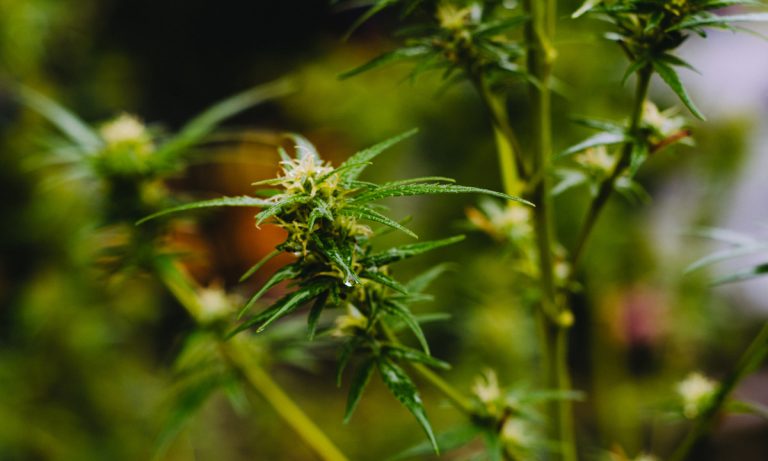
Cannabis legalization looms large in Canada, officially going into effect on Wednesday. In anticipation of the historic repeal of prohibition, we’ve put together a short list of some of Canada’s legendary and top strains.
Chemo or UBC Chemo
Urband legends claim UBC Chemo is named for the University of British Columbia, where David Suzuki allegedly bred this indica hybrid strain on campus in the 1970s.
It is also named for alleviating the side effects of chemotherapy in cancer patients including nausea, loss of appetite, pain, and insomnia. Chemo is a powerful strain with THC levels as high as 29 percent.
Island Honey
This rare but legendary strain was for a time carried by Emerald Health (formerly Thunderbird) on Vancouver Island, British Columbia. Urban legend rumors it to be a Jack Herer descendant bred with genetics brought into British Columbia by a draft dodger in the 1970s. According to Renee Gagnon, founder of Thunderbird, It was high CBD and smelled like honey if it was cured in a glass jar.
Manitoba Poison
According to I Love Growing Marijuana, credit goes to Great White North Seed Company for breeding Manitoba Poison. Since its release, it has become popular in the region. MP is a 50/50 hybrid that contains approximately to 14-16 percent THC. It is a great strain for relaxation and alleviating stress, but will probably give you cotton mouth.
Jean Guy
This strain was bred in Quebéc and quickly gained notoriety in the Montreal Compassion Clubs. It is a Sativa-dominant 60/40 hybrid, described by breeders House of Great Gardener as a “pungent euphoriant.” It is also described as an energizing and uplifting strain. However, those prone to anxiety or paranoia should probably skip it, because it is sharply cerebral. The THC content can be as high as 25 percent.
Rene
Named after longtime cannabis activist Renee Boje, the breeders at the House of Great Gardener created this strain by crossing Himalayan with Skunk #1. Rene has an 80 percent Sativa profile. Her namesake strain is stress-relieving and is also commonly used to treat inflammation and pain.
Rene’s moderate THC levels range between 15-18 percent. Rene is purportedly beneficial For people who suffer from seasonal depression, severe depressive disorder, or bipolar disorder. However, it is not recommended for PTSD or anxiety sufferers or those prone to paranoid thoughts.
Jack Herer
This strain gets an honorable mention because even though it did not originate in Canada, it was produced heavily out of Montreal. Toronto-born Paul Glavine, president of the cannabis farm Livity Naturals Jamaica in Westmoreland, cites Jack Herer as the strain he grew up with that eventually inspired him to run a ganja farm.
Prince Edward Island’s Jewell family of generational farmers run Canada’s Island Garden. CIG proudly produces some decent strains, just in case you want to celebrate legalization day, Canadian style.
Has always held a fascination for man…an old friend far far away. So it’s exceptionally fitting that in 2018 a celestial body would be named after a meme.
Scientists are always questioning things, this time wondering if moons have little moons that orbit them. The question was prompted by the son of Luna Kellner. She’s a scientist who works for the Observatories of the Carnegie Institution of Washington, who recruited the help of an astronomer in order to write a paper on the matter.
In the study, both scientists argued that it is possible for moons to have little moons. In more formal words, they explained that a few conditions have to be met, such as the primary moon has to be big enough and far away enough from the planet it orbits in order for the smaller moon to survive.
Even though we don’t know if the Earth’s moon has a moon of its own, the paper shows sufficient evidence that suggests that this could be a possibility. Further research on this matter could also inform us on how planets and their moons are formed.
Moon Moon got famous on the internet in 2013, and can still be seen every once in a while on Tumblr and Instagram.
Other equally interesting name suggestions for little moons include submoon, minimoon, binary moons, meta-moon, and moon2.
Now, do these moon-moons have an even smaller moon that’s orbiting them, like the space version of a Russian nesting doll? It’s all very cute and confusing.
This Week’s Music is a weekly column that discusses the weeks’ best, worst, and most interesting songs. We try to select songs of different artists and genres to keep things interesting and to please a variety of music fans.
For this week’s music column we decided to highlight three of the country’s most popular genres: pop, R&B, and country. Check them out:
Pop
Robyn – Honey
Swedish superstar Robyn made a comeback this year with her infectious single “Missing U,” marking the first time she’s released a single in eight extremely long years. “Missing U” is fun, sexy and everything you expect from a Robyn song, setting a high bar for the rest of her album. Luckily, “Honey” is more than up to the task. Initially teased in March, 2017, and featured in an episode of the HBO series “Girls,” fans have been waiting for over a year to hear this freaking song. Rest easy. It’s amazing.
While “Boo’d Up” wasn’t released this week, Ella Mai’s new album was so it’s only logical to add its best song on this column’s R&B slot. Ella Mai is a British singer and songwriter who’s been having a pretty great year in terms of success and making good music. She recently performed on the AMAs where she was also nominated for several awards. Her first album is a big deal and could serve as an introduction to a much needed voice in the R&B genre.
Country
Seth Ennis – Call Your Mama
Seth Ennis is a relative newcomer with his latest and biggest single, “Call Your Mama.” The music video, which was released this week, draws inspiration from the U.S. Marine Corps and has been viewed hundreds of times. The song has attracted the attention of fans and country music veterans Little Big Town, who provided their voices as back up.
In a new study recently conducted by Green Market Report in conjunction with Consumer Research Around Cannabis and their partner Local Sports Insights (LSI), the sports preferences of cannabis consumers around the country resulted in a win for the NFL and football overall.
Professional football beat out other sports by far with 55.1 percent of interviewees saying they regularly follow the NFL. It defeated professional baseball (MLB), which 36.2 percent of consumers confirmed watching, pro-basketball (NBA), which was chosen by 36.1 percent of consumers, and pro-hockey which raked in 27.8 percent of the vote.
According to the study, the most popular college sport among consumers was also football, which 31.6 percent of consumers watch, followed by college basketball, which 25.7 percent are fans.
“The NFL has been the most successful professional sports league over the past couple of decades – supplanting Major League Baseball. In many ways the league’s success mirrors our nation when it comes to income, age, and education,” said Vice President of Consumer Research Around Cannabis, Jeffrey Stein.
Some of the cannabis consumer averages were on par with national averages, according to a recent Gallup study. Gallup found 57 percent of the population to be professional football fans found that very close to the Green Economics average for cannabis users of 55.1 percent. The national average was also close for professional basketball (40 percent) and ice hockey (28 percent), but the rest had significant differences.
“I was surprised that football was number one,” said Co-Founder and CEO of the Green Market Report as well as recognized cannabis influencer, Debra Borchardt. “I really thought basketball would’ve been number one since it’s a sport followed by more young people and is growing in popularity, while ratings have been falling for football.”
According to Local Sports Insights, 26.4 percent of adults over 18 follow professional basketball. And 36.1 percent of cannabis users follow the NBA. So, technically LSI found that NBA popularity is indeed 37 percent higher among cannabis users than the average person.
The numbers shouldn’t be that surprising considering how much legal cannabis delivery sales increase before the Super Bowl. In 2016, Eaze reported there was a 47.5 percent increase in cannabis deliveries in California from 2-3PM, the hour before kick-off. When the Denver Broncos were in the Super Bowl in 2016, Sally Vanderveer, President of Denver’s largest dispensary, Medicine Man, told Forbes: “We saw a 30-40% uptick in sales from Thursday to Sunday [before the Super bowl]”. Interestingly, Local Sports Insights found 50.5% of Broncos fans have used marijuana in the past year.
What may be surprising is the profile of NFL fans who also consume cannabis. Green Economics found the average age is 37 with a median household income of $60,387. In addition, 33.2 percent of NFL fans are college graduates and 13.5 percent are business owners.
Local Sports Insights found that 48 percent of all surveyed women follow professional football. There were more men than women who follow the NFL that use cannabis: 65.5 percent were men and 34.5 percent were women.
This research not only kills the stereotype that “stoners” don’t like sports, but shows how Americans are choosing to relax in states where cannabis is legal. Considering the popularity of alcohol during sporting events, cannabis could be a safer alternative and help prevent drunk driving, domestic abuse, and hangovers associated with NFL games.
The NFL still doesn’t allow its players to consume cannabis, although many activists are fighting to change that, like former lineman for the Chicago Bears, Eben Britton.
“Cannabis can help NFL players on multiple levels,” said Britton. “First and foremost our federal government owns a patent on cannabinoids ‘as neuroprotectants and antioxidants’… cannabis should be at the top of the NFL’s list of substances to help combat concussions and CTE. The second way cannabis could directly benefit NFL players is as an alternative to opiates. In most cases, I believe pro football players would rather consume cannabis than opiates. Cannabis may also be used in conjunction with opiates to help mitigate negative side-effects and ease withdrawal symptoms.”
Using cannabis as an alternative to opioids for pain is becoming a popular idea. Plus, many believe cannabis can help opioid addicts wean off the powerful substance in the midst of an epidemic in the U.S.
“This study was encouraging because the most vocal advocates for allowing cannabis as an alternative to deadly pain medications are professional football players,” said Cynthia Salarizadeh, Co-Founder of the Green Market Report. “The NFL helps provide an appropriate platform for their fight with their massive visibility. Hopefully their owners will listen and allow their players the right to choose what medication they use for their pain management.”
The NFL is worth $9 billion annually, but they could still benefit from allowing cannabis brands to sponsor teams and events. Not to mention, the benefits the plant can have for its players. Considering cannabis’ popularity spreading into more mainstream communities, I wouldn’t be surprised to see a cannabis commercial during the SuperBowl this year.
The Canadian faction of Walmart said Tuesday that it’s exploring cannabis based products on their shelves, but it’s not happening anytime soon. Though they might hurry things up a little if the dollars make sense. The company’s stock rose 3 percent after the announcement.
Walmart is the biggest mainstream conglomerate to show interest in carrying cannabis products and they’re certainly not going to be the last. Big companies in the U.S. like Coca Cola and Constellation Brands have already made moves in that direction, with Constellation having invested $4 billion in the burgeoning Canadian market already. They say they won’t expand into the U.S. until the federal ban is lifted.
Walmart spokeswoman Diane Medeiros told Reuters, “Walmart Canada has done some preliminary fact-finding on this issue, but we do not have plans to carry CBD products at this time.” At this time is a very telling statement. Though it may first come off as negative, if you read the tea leaves, they wouldn’t even be having a public discussion if it weren’t a good possibility.
The products Walmart is considering carrying will contain the non-psychoactive cannabinoid CBD, not THC, which accounts for an elevated state. Which is still exciting, seeing as Walmart consumers tend to be Republican. Though cannabis isn’t really a partisan issue, Democrats tend to poll in favor of progressive pot laws more than their counterpart.
Canada becomes a legalized nation in merely a few days, ending 90 years of prohibition, and there are bound to be many massive chains that will want to join the industry and cash in on what is projected to be a 2.38 billion dollar industry by 2022 in Canada, that market projection is according to Statista, but could be bigger or smaller depending on if there’s a bubble or a consistently growing market.
The move to legalize cannabis for adult use by Canada could kick other countries into gear to also legalize adult cannabis use. “An investment blueprint has been established in Canada that we believe will play out internationally very similarly,” said Roth Capital Partners analyst Scott Fortune.
In the U.S., the majority of residents live in a state with either medical or recreational cannabis laws, however, with its Schedule I status still in effect federally, it’s highly unlikely that many big companies like Walmart are going to be considering carrying cannabis products in the U.S. until the federal ban is lifted.
The Oscar nominated movie Call Me By Your Name was an incredible success, launching the career of Timothée Chalamet and solidifying Luca Guadagnino as a director worthy of our time and recognition. The movie, based on a beloved and critically acclaimed novel, has an ending that’s somewhat open ended. It’s sad and beautiful, and, if done right, might allow for a great sequel.
Guadagnino and the leading actors have been receptive to the idea, claiming that they’d already know what to do if the sequel is green lit. It’s safe to say that film people are excited and wary over this possible sequel.
Guadagnino says that the only problem he sees is naming the film, which obviously can’t be called Call Me By Your Name 2, because the movie is not a thriller and that name is just ridiculous.
Since Twitter can’t resist a moment to answer a question, preferably in the form of a joke, thousands of users came forth with their suggestions for titles. Some of these suggestions are funny, others were awful, and there were even ones that were helpful. Guadagnino should keep an eye out and snatch some of these names for potential inspiration material.
CALL ME BY YOUR NAME 2: PRINCESS PEACH
CALL ME BY HER NAME I KNOW IT’S WRONG BUT IT’S HOT
CALL ME BI YOUR NAME
CALL ME BY YOUR NAME: TOKYO DRIFT
CALL MY BY YOUR NAME: THE LEGEND OF GOLD’S CURLIES
It obvs should be called ‘And I’ll Call You By Mine’ but I guess people who haven’t seen the first one wouldn’t get it. How about
Call Me By Your Name AGAIN;
Call Me BACK By Your Name;
2 Call Me By Your Name;
or, of course, my favourite
Hi By Your Name I’m Dad https://t.co/KkvsatpFi0
In a statement put out by Customs and Border Protection (CBP), the agency stated, “U.S. Customs and Border Protection enforces the laws of the United States and U.S. laws will not change following Canada’s legalization of marijuana.” Not two weeks earlier, there had been a contradictory statement by CBP that Canadians in cannabis would no longer be able to travel to the U.S..
The new statement is encouraging, but If you read down a little further, it reads, “A Canadian citizen working in or facilitating the proliferation of the legal marijuana industry in Canada, coming to the U.S. for reasons unrelated to the marijuana industry will generally be admissible to the U.S. however, if a traveler is found to be coming to the U.S. for reason related to the marijuana industry, they may be deemed inadmissible.”
It’s too bad, too. There are international cannabis business conferences across the U.S. every year and not having the voices of the country that legalized the latest takes away from the discussion and certainly limits the amount of voices, opinions and ideas that Canadian pot professionals have to offer.
Another thing to note is that due to federal U.S. laws surrounding the plant, there is no reciprocity. For example, you can’t drive buds from B.C. into Washington state just because it’s legal in both places. Trying to travel across the U.S. border with cannabis will not only keep you from getting in, it could land you with fines or even detainment.
All in all, it is good news that our neighbors to the north who work in the industry will most likely be able to come in at the Ports of Entries. With less than a week to go before Canada legalizes cannabis for all adult citizens, the U.S. is finally coming around with sensible policies.
With a stipulation, however, “Generally, any arriving alien who is determined to be a drug abuser or addict, or who is convicted of, admits having committed, or admits committing, acts which constitute the essential elements of a violation of (or an attempt or conspiracy to violate) any law or regulation of a State, the United States, or a foreign country relating to a controlled substance, is inadmissible to the United States.”