Friday, December 19, 2025
Home Blog Page 852

No One Knows Why Drinking And Drug Use Is Declining Among Teens

While the media is always the first to make incendiary claims suggesting that teens are more damaged now than ever, statistics show that, when it comes to drugs and alcohol, they’re doing pretty well. In fact, the decrease in drug and alcohol use has been so steady recently that researchers don’t know what to make of it.

Statistics from Australia claim that alcohol consumption is at it’s lowest point since the 1960s and that it’s all due to teens becoming less interested in drinking. Since the mid 2000’s there’s been a steady decline among alcohol use in teens. From 2004 to 2014, teens between the ages of 16 and 17 dropped their alcohol use from 48 percent to 33 percent. Follow-ups on teens as they age suggest that they’re maintaining these lifestyle choices, with young adults between the ages of 18 and 24 dropping their alcohol consumption rates from 32 percent to 22 percent.

While the previous stats were limited to one country, other researches from different areas of the world are reporting similar findings, suggesting that it’s a global trend. In Europe and North America, teens are consuming less alcohol on a weekly basis than they used to in previous years, and they’re not running towards cannabis and tobacco either. Despite the fact that cannabis is more accepted than ever before, use is still dropping among teens. According to a study, tobacco is a big contributing factor. Truth commercials and other advertisements have made it their mission to target teens and to highlight the perils of smoking. It seems like younger generations are finally reaping the benefits of all that hard work.

This trend, along with a switch into a more health-oriented way of living, has affected all of us. But it’s hit teens hardest, perhaps because social media affects them so deeply; Instagram, Snapchat, and other sites provide a source of distraction, making teens focus on other things and changing they way in which they’re socializing and interacting with the world. We’ll have to wait a few years to know what that means  longterm.

Oklahoma Universities Ban Medical Marijuana

Oklahoma may have legalized medical marijuana this summer, major state universities are still up in arms. In a joint statement, Oklahoma universities ban medical marijuana. OK Unveristy  and Oklahoma State University are prohibiting students and faculty from growing, processing, or smoking cannabis on its properties.

The universities say that because they receive federal funding, they must comply with the Federal Drug-Free Schools and Communities Act (DFSCA), which bans the usage of federally illegal drugs on campus or school-sponsored events. OSU and OU are also bound by the Federal Controlled Substances Act (FCSA), which “criminalizes the growth and use of marijuana.”

“Despite the recent passage of State Question 788, the DFSCA requires OSU and OU to adopt and adhere to policies prohibiting the unlawful use, possession or distribution of illegal drugs, including marijuana,” the universities announced in a joint statement. “Moving forward, OU and OSU will adhere to federal law prohibiting the use, possession, distribution or cultivation of marijuana for any reason at their campuses across the state.”

Last month, Oklahoma legalized medical marijuana through a ballot measure (SQ 788). The measure was notable because it created one of the most liberal medical marijuana programs in the country, as patients didn’t have to qualify for a set of conditions approved by the state. Instead Oklahoma’s program allows medical marijuana to be prescribed based on the recommendation of individual physicians.

It’s worth noting that SQ 788 does not ban the usage of medical marijuana on college campuses. Students caught with cannabis will not be punished by state laws. Instead they’re likely to receive “disciplinary or administrative sanctions from OSU or OU, not criminal charges,” according to Tulsa World.

The issue regarding college campuses and medical marijuana usage doesn’t only exist in Oklahoma. Lawmakers in Arizona tried to create an amendment where it would become illegal to be in possession of cannabis in certain spaces, including college campuses. After an Arizona State University student sued, the Arizona Supreme Court ruled the amendment unconstitutional, making it illegal in the state to arrest medical marijuana patients who were on campus and in possession of the drug.


WATCH: ‘Sesame Street’ Parodies ‘Fresh Prince Of Bel-Air’

Among the most iconic intro songs to a TV show, “The Fresh Prince of Bel-Air” stands a cut above the rest. Next time you’re at a bar or party, wait until everyone’s a few drinks or puffs in, and start sing-rapping, “In West Philadelphia, born and raised.” See how long it takes until the room starts singing along.

Perhaps that’s what makes the song so ripe for parodies. One of the more memorable parodies in recent memory is SNL’s absurdist crime reinterpretation, where Will Smith’s (Chris Redd’s) past catches up to him. But it goes off the rails near the end, somehow involving the yakuza, FBI, and Philly street gangs.

A more faithful and delightful parody, in our opinion, is this recent one from “Sesame Street.” Yes, of all places “Sesame Street” decided to playfully use the “Fresh Prince” theme song to explain how the friendship between Bert & Ernie started. Included amongst the reimagined lyrics are bananas in your ear, having a kind attitude, and learning letters and numbers.

In other words, it’s classic “Sesame Street.”

“Sesame Street” also parodied NSYNC’s “Bye Bye Bye” for a Fourth of July theme song, so maybe this is a new thing they’re doing? Apologies for not being completely up to date on plot developments in “Sesame Street”. And if you just want to listen to the original “Fresh Prince” theme song, we embed it for your convenience below.

CBD Oil May Eliminate The Need For Insulin Shots

The federal government claims there are more than 100 million Americans either living with diabetes are or on the verge of becoming full-blown diabetic. This means millions more people will be diagnosed with this condition within the next five years, according to the Centers for Disease Control and Prevention.

Thos unfortunate souls who have this disease are unable to produce insulin in the same way as a healthy individual. Basically, the pancreas either ceases insulin production or no longer provides the body with optimal output. Either way, man-made medicines are typically employed to keep the person alive.

The treatment program for diabetics can range from modest changes to regimented treatment. Some can get away with changing their diets and incorporating exercise into their daily routine, while others must lean on regular prescription insulin shots to stay healthy. Anyone who has self-administered insulin will tell you — it’s no picnic.

But there is now a small body of evidence suggesting that medical marijuana, specifically its non-intoxicating compound cannabidiol (CBD), may eventually eliminate the need for insulin shots.

There are two kind of diabetes. Type 1 is when the body no longer produces insulin. A virus is typically responsible for causing this version. It is said that around 5 percent of the population has Type 1 diabetes, appearing mostly in children and young adults.

There is also the more common Type 2 – affecting around 95 percent of the population — in which the body still produces insulin, just not enough for proper function. This version is brought on by a variety of factors, including a high sugar diet and obesity. Genetics also play a role.

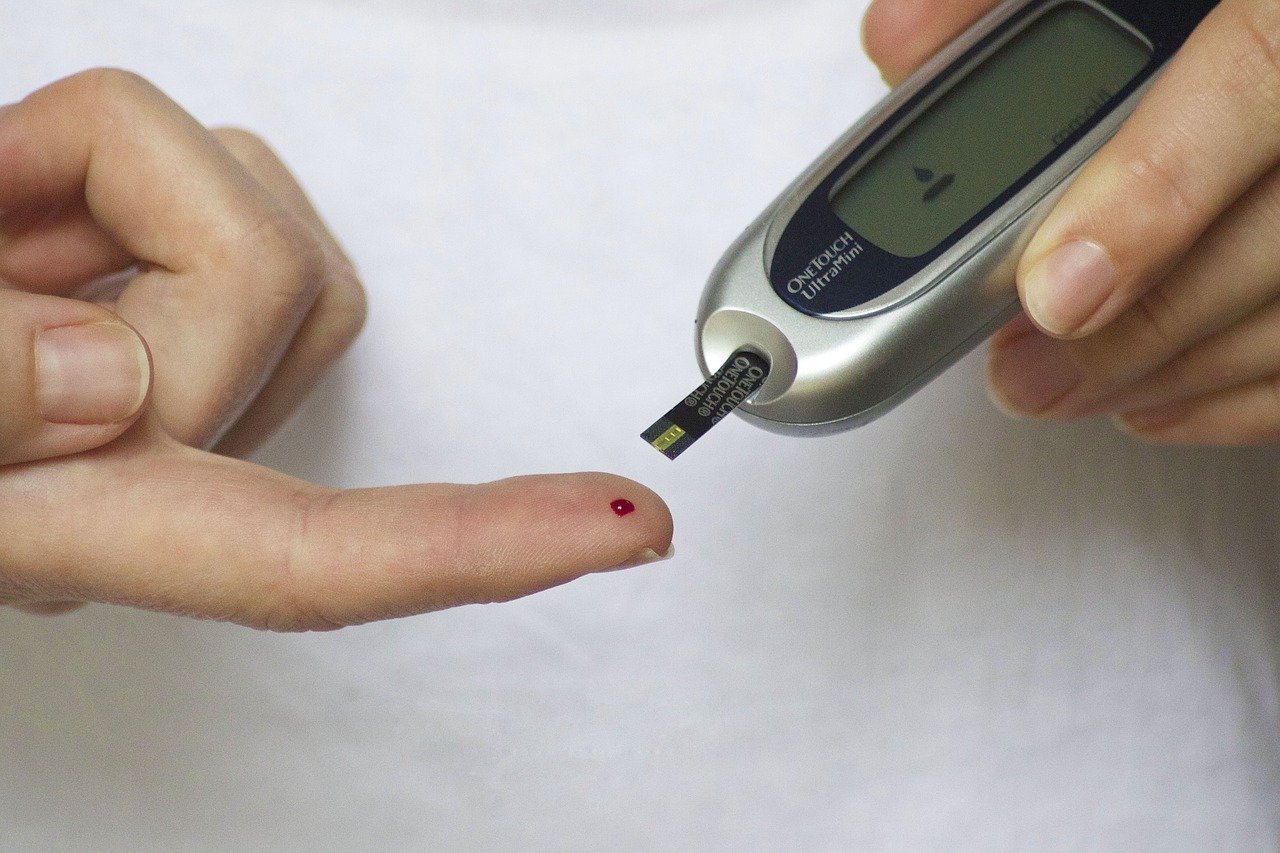
Most people diagnosed with diabetes are doomed to regularly prick their fingers to monitor their blood sugar levels. It may also be necessary for them to self administer insulin shots (Metformin or Avandia). But some medical professionals believe that CBD oil, which is produced by extracting nutrients from the cannabis plant, might be able help patients maintain healthy glucose levels.

Dr. Raphael Mechoulam at the Hebrew University of Jerusalem says CBD receptors, which are found all over the human body, are highly prevalent in the pancreas – where insulin is made. His preliminary studies have suggested that feeding these receptors with high doses of CBD may stimulate insulin production without prescription drugs.

Although these results have not been proven without a shadow of a doubt, the concept has inspired additional funding for diabetes research in the United States.

There is also evidence that CBD’s anti-inflammatory properties could help treat underlying medical conditions associated with diabetes. The compound is beneficial in improving metabolic function and repairing nerve damage – both of which can have a nasty affect on diabetics.

But when considering CBD oil, it is important to discuss it with a medical marijuana professional. Not all oils are created equally, so open dialogue with dispensary staff is a crucial first move. Some diabetics have experienced success with CBD, while others not so much. It is really about finding the medical marijuana product that works best for the individual.

The Weird Reason Meghan And Harry Won’t Have Custody Of Their Kids

0

First, Meghan Markle isn’t pregnant (at least there have been no reported sightings of a royal baby bump). But there has been some interesting chatter revealing just how bizarre royal tradition can be when it comes to royal offspring.

One royal expert revealed that when Markle and Prince Harry do decide to have a family, their children won’t technical be in their custody. This strange tidbit harkens back 300 years, when a law was put into place giving the heads of the monarchy custody of lesser royals.

How messed up is that?

“The sovereign has legal custody of the minor grandchildren,” royal expert Marlene Koenig told news.com.au.

According to her, Queen Elizabeth has full legal custody over Markle and Harry’s kids, as well as Kate and Prince William’s. If you’re keeping score at home, it also means that both Harry and Will were never actually in the sole custody of their parents, Princess Diana and Prince Charles; it’s a fact referenced in the couple’s split.

“Custody is not included [in those divorce documents] because they did not legally have custody of their children to begin with,” Koenig said, who adds:

This goes back to King George I [who ruled in the early 1700s], and the law’s never been changed. He did it because he had a very poor relationship with his son, the future King George II, so they had this law passed that meant the King was the guardian of his grandchildren.

This law was passed by a majority of judges back in 1717, who decided the monarch’s “right of supervision extended to his grandchildren and this right of right belongs to His Majesty, King of the Realm, even during their father’s lifetime”.

Koenig says the archaic law still stands today, and has even affected the way the royals parent their children.

“When [Princes Harry and William] were little, Prince Charles asked the Queen if both children could fly on a plane together to Scotland, to which the Queen said yes,” she said.

“Technically, they needed permission for travel. The Queen has the last word on parenting decisions like that.”

How Often Do People Who Use Dating Apps Lie?

0

Nearly one-fourth of young adults are looking for love through dating websites or apps.

This relatively new form of courtship can give you access to a large pool of potential partners. It also presents a unique set of challenges.

For example, you’ve probably heard about – or have personally experienced – a date that was planned online but didn’t go well for one of the following reasons: He was shorter than his profile said he was, she looked different in person than she did in her photos, or he was talkative over text but it was like pulling teeth at dinner.

In other words, a person’s profile – and the messages sent before a date – might not capture who a person really is.

In a recent paper, my colleague Jeff Hancock and I wondered: How often do people who use dating apps lie? What sort of things are they prone to lie about?

‘My phone died at the gym’

Our studies are some of the first to address these questions, but others have also examined deception in online dating.

Past research focused largely on the dating profile. Studies have found, for example, that men tend to overstate their height and lie about their occupation, while women understate their weight and tend to have less accurate photos than their counterparts.

But profiles are only one aspect of the online dating process. Only after messaging your match will you decide if you want to meet him or her.

To understand how often people lied to their partners and what they falsified, we evaluated hundreds of text messages exchanged after daters swiped right, but before they met – a period we call “the discovery phase.” We recruited an online sample of over 200 participants who provided us with their messages from a recent dating conversation and identified the lies, with some participants explaining why these messages were deceptive and not jokes.

We found that lies could be categorized into two main types. The first kind were lies related to self-presentation. If participants wanted to present themselves as more attractive, for example, they would lie about how often they went to the gym. Or if their match appeared to be religious, they might lie about how often they read the Bible to make it seem as if they had similar interests.

The second kind of lies were related to availability management, with daters describing why they couldn’t meet, or giving excuses for radio silence, like lying about their phone losing service.

These deceptions are called “butler lies” because they’re a relatively polite way to avoid communication without completely closing the door on the connection. If you’ve ever texted, “Sorry I went AWOL, my phone died,” when you just didn’t want to talk, you’ve told a butler lie.

Butler lies don’t make you a bad person. Instead, they can help you avoid dating pitfalls, such as appearing always available or desperate.

Purposeful or pervasive lies?

While deceptions over self-presentation and availability accounted for most lies, we observed that only 7 percent of all messages were rated as false in our sample.

Why such a low deception rate?

A robust finding across recent deception studies suggests that the majority of people are honest and that there are only a few prolific liars in our midst.

Lying to appear like a good match or lying about your whereabouts can be completely rational behaviors. In fact, most people online expect it. There’s also a benefit to lying just a little bit: It can make us stand out in the dating pool, while making us feel we’ve stayed true to who we are.

However, outright and pervasive lies – mentioning your love for dogs, but actually being allergic to them – can undermine trust. One too many big lies can be problematic for finding “the one.” There was another interesting result that speaks to the nature of deception during the discovery phase. In our studies, the number of lies told by a participant was positively associated with the number of lies they believed their partner told.

So if you’re honest and tell few lies, you think that others are being honest as well. If you’re looking for love but are lying to get it, there’s a good chance that you’ll perceive others are lying to you, too.

Therefore, telling little lies for love is normal, and we do it because it serves a purpose – not just because we can.

David Markowitz, Assistant Professor of Social Media Data Analytics, University of Oregon

This article was originally published on The Conversation. 

Canadian Cannabis Stocks Are Soaring, But Which Ones Will Make The Cut?

Canopy Growth made major headlines this past week when the enormous beer producer Constellation Brands invested $4 billion in their company. Constellation is the maker of such popular beverages as Corona, Pacifico and Modelo, so it’s not likely a shaky investment and the stock market had every reason to go wild over Canopy Growth and their quick surge in evaluation.

Hydropothecary experienced similar fortune when the Canadian beer brand Molson Coors invested in a joint venture with the cannabis conglomerate to make non-alcoholic, cannabis infused beverages. Their stock shot up with the news. Cannabis brands matching up with beverage makers is becoming a trend that’s getting a lot of positive fiscal attention.

Another canna-brand making big money moves, though not beverage-centric ones, is the Cronos Group, which is in the process of building out a 40,000 kilogram per year greenhouse in Ontario. The savvy group has also paired with the popular U.S. cannabis brand MedMen, which currently operates dispensaries in the U.S. and is looking to start opening stores across Canada.

One hot pot stock that’s getting a lot of attention, but also raising some eyebrows, is Tilray. They’ve been compared to other megastocks like Cronos and rank high in the Canadian medical marijuana market, but they’re the smallest of the new pot stocks to crop up and they don’t have major backers like the other brands.

There’s also the potential that the global cannabis market could impact Tilray negatively. If the market doesn’t expand as quickly as expected, the stock will become more unstable and could potentially fall. Still, optimists and adventure seekers are investing in all of the aforementioned companies with zeal, which bodes well for the cannabis market in general.

Tilray did get a boost this week when Ontario Cannabis Store announced supply agreements with 26 different cannabis companies, one of which is Tilray. Their stock saw an 8.8 percent surge after the news was announced, but if it will be enough to keep them in the top tier remains to be seen.

There are not a lot of pot stocks to invest in as of yet, but the ones making the cut are great bets at best, and fascinating to watch at the least. While past performance and product promises do not a future make when it comes to stocks, it’s still probably a good time to reevaluate your portfolio and turn it a little greener in the best possible of ways.

1 in 15 Americans Smell Odors That Aren’t There

Ghost smells are real. While they have always been around, it wasn’t until recently that a study proved how common they are. One in 15 Americans over the age of 40 report smelling scents that don’t exist.

While smelling things that aren’t there sounds innocent enough, the study discovered that phantom smells can affect your life negatively and that there’s a correlation between people who have poor health and who are of low economical status.

Phantom smells are almost always bad, with the most commonly reported ones including rotten eggs, garbage and spoiled food. Women are affected twice as often as men, and they’re more common among older people. The smells can occur among people who suffer from a tumor, head injury, epilepsy, and sinus infections, but they can also affect patients that are seemingly healthy.

“Problems with the sense of smell are often overlooked, despite their importance. They can have a big impact on appetite, food preferences, and the ability to smell danger signals such as fire, gas leaks, and spoiled food,” reports Science Daily. Another scientist claims that patients who perceive strong phantom odors often have a “miserable quality of life,” and that they “sometimes cannot maintain a healthy weight.”

This study is one of the first that focuses on phantom odors, so not much is known about where it comes from and why it occurs. Kathleen Bainbridge, the doctor that lead the study, claims that the research is an important first step to understanding this medical condition, giving future doctors context and information that may help them understand why it happens.

Oprah’s Sleep Doctor Advises Not To Do This Before Bed

We all took notes when Oprah Winfrey’s personal trainer told us how to shed pounds, and then again when her personal chef told us how to…shed pounds… and now, O’s personal sleep coach has some advice on how to ace your nightly slumber.

In an exclusive interview with FEMAIL, Oprah’s sleep doctor, Michael Breus, says he has a nightly routine that will ensure you a solid sleep.

Contrary to what you may have heard, your sleep routine starts way before you turn off the lights and set your alarm. Dr. Breus says we all need “wind down” time before our heads hit the pillow.

‘The secret to sleep is to pay attention to what you’re doing in those precious hours before bedtime,’ he told Daily Mail Australia.

“One hour before you are going to try and sleep, break up your time accordingly,” he said.

Dr. Breus says in addition to brushing your teeth, washing your face, and engaging in other nightly hygiene tasks, it’s important to give yourself time to relax, which is why it’s essential to avoid anything intense before bed. He explained:

Having big emotional discussions with your partner right before bed is one of the worst things you can do before trying to fall asleep. It sets off this whole level of autonomic arousal, you’re angry, you’re upset and you can’t stop thinking right before bed.

He says it’s also a good idea to avoid things like caffeine, nicotine and alcohol, which are known to disrupt your sleep cycles. Instead, focus on decompressing your body.

“Whether it’s muscle relaxation, Tai Chi, stretching or doing something for your mind like meditation or prayer, make sure you use this time for you,” he said, adding that failing to do so can lead to insomnia.

“Regular exercise can be tremendously helpful in alleviating insomnia too,” he said, “as can mindfulness practices and relaxation therapies.”

He says aim for 7.5 hours of sleep a night, which he refers to as the “sweet spot” for a good night’s rest.

New Bill Would Allow Students With Past Drug Convictions To Receive Federal Aid

Federal aid makes it possible for an untold number of college students to afford steep tuition fees. Each year, around 1,000 students lose that financial assistance because of a “yes” response to a specific question on the Free Application for Federal Student Aid (FAFSA) form: “Have you been convicted for the possession or sale of illegal drugs for an offense that occurred while you were receiving federal student aid (such as grants, work-study, or loans)?”

A bill introduced by New Jersey Sen. Cory Booker would remove that question from the FAFSA form and would allow those with prior drug convictions to still receive federal aid to attend college. Federal aid can be the difference between college dropout and college graduate for some, particularly those coming from low-income families.

Politicians and civil rights groups have fought to remove the question for that very reason.  The bill introduced by Booker, along with other Democratic Senators, would accomplish that goal, in addition to simplifying the FAFSA process and making FAFSA available to DREAMers. As a somewhat recent college graduate who relied on federal aid to get me through four years, I can attest to the baroque and confusing nature of the FAFSA form.

“We know that when a student completes the federal financial aid form, he or she is more likely to receive aid, attend college, and graduate from college,” Booker said in a release. “But sadly, less than half of today’s high school students complete the form, and students from underserved backgrounds complete the form at even lower rates than their peers. We must make the process of obtaining aid for higher education easier.”

Booker has been one of the most vocal pro-cannabis advocates in Congress. He introduced the Marijuana Justice Act in 2017, which would have effectively legalized cannabis at the federal level.

Don't Miss Your Weekly Dose of The Fresh Toast.

Stay informed with exclusive news briefs delivered directly to your inbox every Friday.

We respect your privacy. Unsubscribe anytime.