Sunday, July 5, 2026
Home Blog Page 865

Does Marijuana Make You Fat


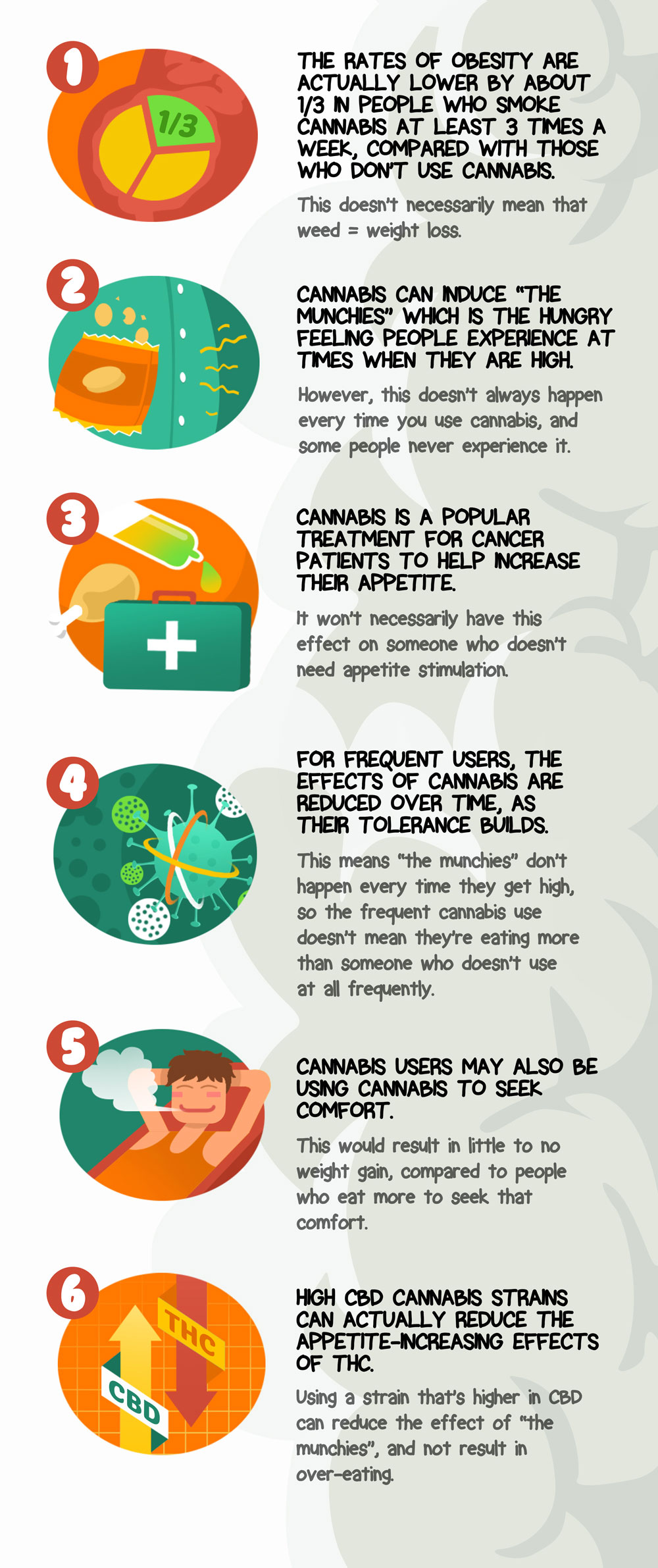
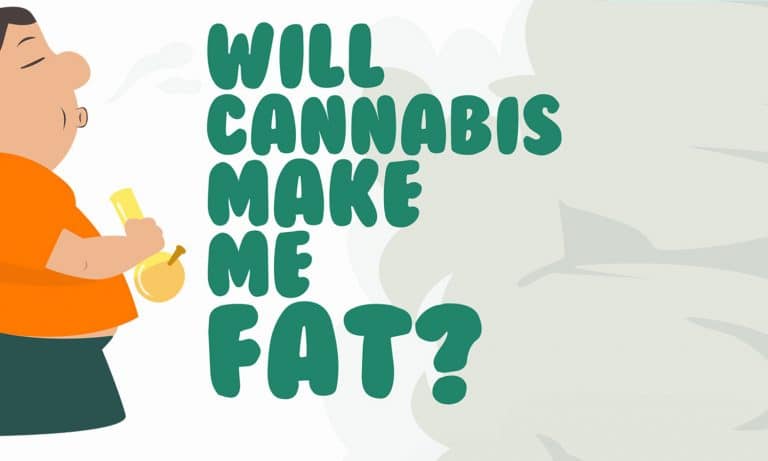
You’ve likely heard of the munchies. Perhaps you’ve even experienced them. The term is frequently used to describe the cravings for highly-caloric and sometimes very sweet foods after using cannabis, which contains tetrahydrocannabinol (THC). With this trait, does marijuana make you fat?

RELATED: Science Says Medical Marijuana Improves Quality Of Life

will-cannabis-make-me-fat-1
Infographic by Platypus

Well, according to a study published in the American Journal of Medicine, marijuana users are less likely than non-users to develop metabolic syndrome, which is a significant risk factor for obesity, type II diabetes, and heart disease.

Conducted by scientists at the University of Miami in Florida, this study examined the relationship between cannabis consumption and the individual components of metabolic syndrome, such as high blood pressure, increased abdominal fat, elevated blood sugar, and unhealthy cholesterol levels.

Nearly 8,500 people from age 20 to 59 provided survey data for the study. Participants were separated into three categories—current marijuana users, past users, and those who had never smoked the herb. Whereas metabolic syndrome afflicts 22 percent of the U.S. adult population, less than 14 percent of current cannabis-using adults in this study had metabolic syndrome.

Hopefully this answers the question of will marijuana make you fat.


Bob Dylan Turned The Beatles Onto Weed

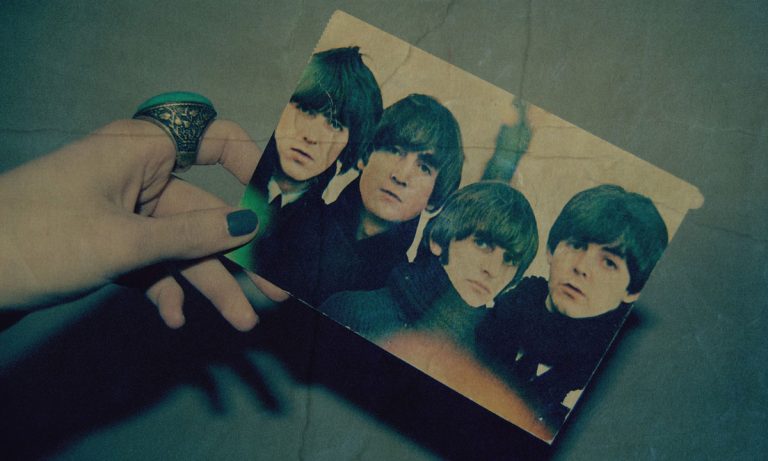
Move over 420. August 28 should be a national cannabis holiday. On this day in 1964, folk legend Bob Dylan ascended the elevator of the Delmonico Hotel on Park Avenue in Manhattan for a momentous first meeting with the Beatles, who were touring the United States. Beatlemania was then at its peak, and twenty police stood guard in the corridor as Dylan and his entourage entered the Beatles’ sixth-floor hotel suite.

After an exchange of courtesies, Dylan suggested that they all smoke some grass. He was surprised to learn that the Beatles were marijuana virgins. Dylan had a bag of weed with him and he tried to roll a joint. But Bob was all thumbs, so his driver and close friend Victor Maymudes did the deed. Blinds were drawn and towels carefully placed before locked doors to hide the smell. Dylan lit a reefer and a few minutes later everyone was laughing uproariously. It is a music nirvana, Bob Dylan turned the Beatles onto Weed

“We were kind of proud to have been introduced to pot by Dylan,” Paul McCartney later remarked. “That was rather a coup.”

Cannabis was quite different from the purple hearts and other uppers that the Beatles had taken to keep pace with the rigors of the late-night club circuit in Germany and the UK. Marijuana eased them into a soft yet lively space, a cushioned reprieve from the bizarre fishbowl sensation—the hysterical fans, the constant media attention—that accompanied their vertiginous rise to rock stardom. From that day forward, the Beatles would consume cannabis on a regular basis. And whenever John Lennon felt like getting stoned, he would say, “Let’s ’ave a larf!”

Cannabis opened the door to new dimensions of popular music, and the Beatles carried the youth of the world with them across the psychoactive threshold.

After the Beatles got into grass, they began to think of themselves as artists, not just performers. The herb triggered a creative surge that altered their approach to writing and recording songs. (“We were smoking marijuana for breakfast,” Lennon jibed.) Cannabis opened the door to new dimensions of popular music, and the Beatles carried the youth of the world with them across the psychoactive threshold.

Numerous Beatle songs contained subtle and not-so-subtle allusions to cannabis. “Got to Get You into My Life,” one of several weed-inspired tunes on the Beatles’ Revolver album, was “entirely about pot,” according to McCartney, who acknowledged that marijuana had a huge impact on the Fab Four in the mid-Sixties.

Drug references on the Beatles next album, Sgt. Pepper’s Lonely Hearts Club Band, were more explicit. Ringo Starr rhapsodized about “getting high with a little help” from his friends. McCartney “had a smoke” and “went into a dream.” And Lennon cooed: “I’d love to turn you on.”

“Do you know what caused Pepper?” McCartney told a reporter. “In one word, drugs. Pot.”

“But you weren’t on it all the time.”

“Yes, we were. Sgt. Pepper was a drug album,” McCartney insisted.

Cannabis had been banned in Great Britain since 1928, and recreational reefer remained on the margins, confined mainly to Caribbean migrants, until flower power blossomed in Merry Olde England. The Beatles were at the forefront of efforts legalize cannabis. In 1967, they paid for a controversial, full-page advertisement in The Times of London, which criticized Britain’s marijuana laws as “immoral in principle and unworkable in practice.”

Specifically, the ad called upon the British government to:

  • allow scientific research into cannabis
  • remove cannabis from the list of dangerous drugs and make possession punishable by a fine
  • permit the use of cannabis in private premises
  • and release everyone imprisoned for marijuana possession.

The ad was signed by sixty-five British dignitaries, including two members of Parliament, a dozen prominent physicians and clergymen, numerous writers and artists, a Nobel laureate scientist, and the four Beatles.

The following year, the British Parliament’s Advisory Committee on Drug Dependence released a comprehensive study, known as the Wootton Report, which sparked a heated public debate by giving cannabis something very close to a clean bill of health. Headed by Baroness Wootton of Abinger, a social scientist of great repute, the advisory committee concluded that “the long-term consumption of cannabis in moderate doses has no harmful effects” and “the law is socially damaging, if not unworkable.”

Marijuana is “very much less dangerous than opiates, amphetamines, and barbiturates, and also less dangerous than alcohol [and] it is the personality of the user, rather than the properties of the drug, that is likely to cause progression to other drugs,” the Wootton Report asserted.

Those who had become habituated to viewing marijuana as a beastly menace were mortified by the report. As soon as Baroness Wootton presented her study, stodgy British officials denounced its findings. For the Beatles and millions of their pot-smoking fans, it was just another day in the life.


This Woman Lives Rent Free In Perfect Homes Thanks To Pet Sitting

0

Jena Chambers makes a living out of traveling the country and taking care of pets and homes without charging a fee. “I only like coasts,” she says in an interview with the New York Post, explaining that she only takes jobs located in coastal homes.

Chambers has experienced a life of living in gorgeous and practically unaffordable homes by pet sitting cats, dogs, and even hermit crabs. “For three summers, I stayed at a house and took care of a rose garden, and it was like living in the garden of Eden,” she told the NY Post.

Pet sitting has allowed her to travel the country and develop her own business. Chambers created Pandora’s Pops, a company that sells aphrodisiac lollipops infused with minerals, which have become her main source of income. She also has an apartment in the East Village, which she sublets when she’s away on a job.

When asked why she doesn’t charge people for pet or house sitting, she explains that it wouldn’t feel right for her. “I would feel like I was on the staff of some of these people.”

A post shared by Pandora’s Pops (@pandoraspops) on

Chambers is originally from Manhattan, where she’s pet and house sitted throughout the different boroughs. “It’s like playing tourist in your own town.”

Despite the fact that pet and house sitting sounds like a relaxing and stress free job, Chambers explains that it does come with a set of responsibilities that can get intense since you’re involved directly in people’s lives. She’s had to deal with pets that have gotten injured and even a wildfire that came close to the home she was taking care of in Northern California.

Before becoming a full-time pet and house sitter, Chambers used to work for a private equity firm. So, if you love to travel and take care of pets, just know that it’s not too late to find your dream job.

Nickelodeon Classics Will Soon Hit This Streaming Service

If you’re a millennial hankering to relive your youth, or if you’re just nostalgic for the 90s, then might we suggest binge-watching some old Nickelodeon shows? But how is this possible you might be asking. It’s all thanks to the wonderful streaming platform VRV and its NickSplat channel, which will soon offer episodes from your favorite old-school Nick shows.

According to the Hollywood Reporter, NickSplat will feature:

300 episodes from the likes of ‘All That,’ ‘Are You Afraid of the Dark?,’ ‘Clarissa Explains It All,’ ‘Doug,’ ‘Kenan & Kel,’ ‘Legends of the Hidden Temple’ and ‘Rocko’s Modern Life.

But that’s not all! We’ll also see episodes from other fan-favorites like “AAAHH!!! Real Monsters,” “The Angry Beavers,” “The Wild Thornberrys,” and “CatDog.” More shows are expected to be added in the coming months.

The NickSplat channel will be available through VRV for just $6 a month. If you’re already a subscriber to VRV’s premium membership, NickSplat will be available through your bundle. VRV’s premium membership, by the way, only costs you $10 a month and also includes Crunchyroll, Funimation, Rooster Teeth, MUBI, Nerdist, and more. We feel comfortable calling that a really good value.

“VRV, with a sophisticated user base that loves the best in animation, is the perfect platform to launch our NickSplat channel,” Viacom executive Sam Cooper told THR. “Viacom’s content—including our deep library of genre-defining television—is highly in demand, and our audiences are always looking for new and innovative ways to enjoy our programming. We’re committed to finding the best partners to bring our individual brands direct to the consumer, and this relationship with VRV is an exciting step forward in our strategy.”

This move is also notable because it’s the first time NickSplat’s offerings have been bundled together for digital distribution. Previously it was just a late-night block viewing on Nickelodeon, akin to Adult Swim on Cartoon Network.

But if you don’t want to add another subscription to your streaming bundles, don’t worry. Viacom also hinted that NickSplat could be made available on other platforms in the future.

Elizabeth Warren Reveals How Jeff Sessions ‘Catalyzed’ Marijuana Legalization 

The STATES Act has emerged as one of the most prominent and important pieces of federal legislation affecting cannabis legalization. Acting to replace the Cole Memorandum that Attorney General Jeff Sessions revoked last year, the bipartisan bill would effectively end cease the federal ban on cannabis, turning all cannabis legalization decisions over to the state level. Each state could decide their policies on cannabis without fear of federal prosecution, in short.

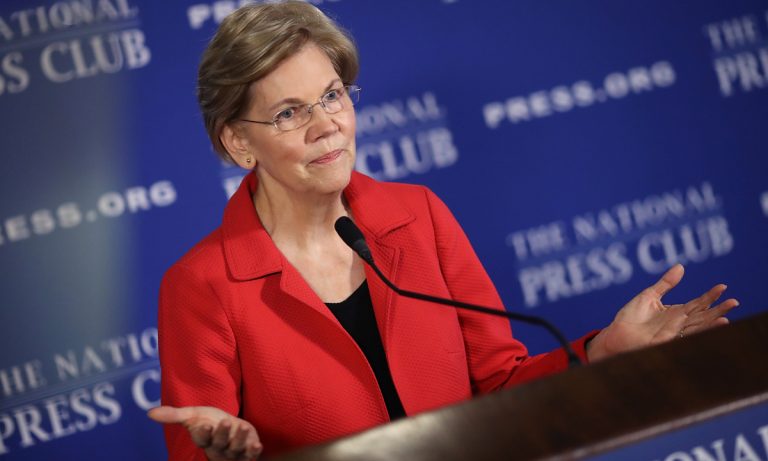
The bill has received support on both sides of the aisle and even found an ally in Donald Trump. As one of the bill’s original sponsors, Massachusetts Sen. Elizabeth Warren is enthusiastic about its passage. But as she revealed in a recent Rolling Stone interview, the legislation has stalled since its introduction last summer because of Senate Majority Leader Mitch McConnel, who has remained adamant about cannabis retaining its Schedule I drug classification and continuing cannabis prohibition.

Warren has latched onto the cannabis legalization movement in recent years, supporting the STATES Act, as well as Sen. Cory Booker’s Marijuana Justice Act. In talking with Rolling Stone, one of the more illuminating nuggets Warren shared was how “Sessions has acted as a catalyst in getting people up off their rear ends and moving on this issue.”

“Let me describe it this way: We are in a moment when Jeff Sessions highlighted aggressive law enforcement on marijuana and a lot of folks here in Congress looked at each other and said, ‘That’s a bad idea.’ What Cory [Gardener] and I have done is give them a place to channel that where we can make real change. Now we just need to get a vote from Mitch [McConnell],” Warren said.

Warren also revealed that when Sessions revoked the Cole Memo, Colorado Sen. Cory Gardner called a meeting with senators whose states would be affected. Though the Cole Memo had its drawbacks—marijuana businesses couldn’t access legal banking for examples, said Warren—its protections were valuable to states with legalized cannabis. How would the senators respond?

Via Rolling Stone:

So we’re all sitting around a table. A few people show up—maybe 10 show up. And people are talking about it, and they’re talking about how hard it would be to legalize it at the federal level and what could we do. And I said, ‘Why not just use a state’s rights approach?’ That is, if the state acts, then the federal government backs off. If the state doesn’t want to act they can leave federal law in place but leave this up to the states. And Cory’s eyes lit up, and he said ‘That’s an interesting approach. We might be able to do something with that.’

So Cory and I left the meeting, kept working on it, hammered out a bill. And Cory went out and talked to a lot of Republicans about it, and I’ve talked to some as well. We’ve got plenty of colleagues on the Democratic side who will support this, and Donald Trump said it sounded like a good idea to him. He’s said it, I think, three different times now. So I’m pretty hopeful that if we could get a vote in Congress that we could actually get this passed.

However, Warren’s pro-cannabis views have been an evolution a few years in the making. She told Rolling Stone she publicly endorsed and voted for Massachusetts legalizing adult-use cannabis in 2016, but that wasn’t exactly the case. As has since been debunked, Warren dodged publicly endorsing or condemning the legislation, repeating that she was “open to the possibility of marijuana legalization.”

But criticizing Warren on such an issue is trivial at best. Warren has demonstrated the hope we reserve for all public officials—that they may allow their views to grow and be shaped over time as they digest new information and listen to their constituencies. In becoming a leader of the marijuana movement in Washington, Warren has done precisely that.

You can read the rest of Warren’s interview with Rolling Stone here.

The Good, Bad And Ugly With Marijuana Concentrates

Concentrates, generally, are manufactured by extracting THC, most commonly by using a solvent such as butane.

If you have ever stepped into a dispensary, you may  have noticed the huge shelf space reserved for various marijuana concentrates. Shatter, butter, wax, ice hash. The names are a bit daunting if you are new to the concentrate culture. The intoxicating effect can be absolutely dizzying if you don’t do your homework first. Here is the good, bad and ugly with marijuana concentrates.

What Are Concentrates?

Concentrates, generally, are manufactured by extracting THC, most commonly by using a solvent such as butane. The end product is a potent oil often referred to as wax, honey, shatter, budder, crumble or butane hash oil (BHO).

As the name suggests, these are highly concentrated forms of cannabis. The THC content is exponentially higher than most anything else you’ll find at a retail outlet.

The THC levels in most concentrates can reach 70-90 percent THC. For context, a typical marijuana joint contains about 15 percent.

The Good

Most doctors would consider concentrates an acceptable method for administering medical marijuana, but there are many patients who prefer this route because it is more affordable, faster to relieve pain and longer lasting.  For those dealing with severe or chronic pain or intense nausea may find concentrates effective.

Cost is another positive factor for purchasing concentrates. Sure, the upfront cost is much higher than buying dried flower. But a small amount goes a long way. And the effect of concentrates is longer lasting.

The Bad

There is very little wiggle room when it comes to dosage. I can’t stress this enough. Start slowly. Don’t try to keep up with others in the group.

For most newbies, one hit of concentrate is sufficient for an enjoyable, long-lasting high. But two hits may result in an awful experience.

It takes a while for your body and your brain to adjust to the rush of THC to the system.

Light-headedness, dizziness, blackouts and disorientation are common side effects of using concentrates. Other possible side effects include a rapid heartbeat, paranoia and hallucinations.

If you feel any of these symptoms, hydrate, lay down and close your eyes. Remember, you can’t suffer a fatal overdose from cannabis — and that includes concentrates. But you can harm yourself if you should fall down. It is intense, but not deadly.

The Ugly

When you read negative stories about concentrates, it usually about an apartment or house exploding. These news events have nothing to do with ingesting concentrates. The stories almost always detail an uneducated person trying to manufacturer the concentrate. Butane is one of the most common solvent utilized to extract the THC from the plant. Butane is highly flammable and requires sufficient ventilation.

So you no doubt have read a lot about the hazards of butane honey oil (BHO). Do yourself and your neighbors and the fire department a huge favor: NEVER under any circumstances try making it at home.

Should You Try It?

It is not recommended for newcomers to marijuana. If you have an understanding of how your body reacts to cannabis, give it a try. It’s a different experience than smoking or vaping dried herb.

Paul Armentano, the deputy director of NORML, cautions that it is riskier than smoking a joint. “When a product is more potent, and when the route of administration is conducive to people experiencing a very strong high very quickly, then one can argue that the risk of abuse goes up,” he said.

Legal Marijuana States Beg Congress For Banking Protections

0

One of the most dangerous aspects of the cannabis industry is that it is forced to operate as a mostly cash businesses. This puts employees and countless others at risk for violence and theft. But because marijuana is still considered a Schedule I drug in the eyes of the federal government, most, larger financial institutions simply refuse to accept deposits from the legal pot trade. The fear a relationship with weed could result in charges for money laundering. It is for this reason that a number of states, including Pennsylvania, are now pleading with Congress to pass protections that give banks and credit unions the piece of mind needed to move beyond the apprehension.

Earlier this week, Pennsylvania Governor Tom Wolf’s administration fired off a letter to Congressional leadership, asking for them “to consider legislation that creates a safe harbor for financial institutions to serve a state-compliant business, or entrusts sovereign states with the full oversight and jurisdiction of marijuana-related activity.”

The letter, which was addressed to U.S. Representatives Paul Ryan, Nancy Pelosi and U.S. Senators Mitch McConnell and Chuck Schumer, was also supported in ink by banking authorities in Alaska, Connecticut, Hawaii, Louisiana, Michigan, Montana, Nevada, New York, Oklahoma, Oregon, and Washington state, according to The Inquirer.

To be fair, the federal government has yet to investigate or prosecute any bank choosing to work with cannabis-related businesses. But it’s a schizophrenic business environment. Some of the smaller financial institutions, those that were initially comfortable enough to offer bank accounts to pot businesses, got spooked back in January when U.S. Attorney General Jeff Sessions rescinded a non-binding Obama-era guidance (Cole Memo) that allowed states to experiment with marijuana legalization without federal interference. Accounts all across the nation were closed due to the uncertainty created by this move.

As it stands, approximately 70 percent of cannabis companies are operating without a bank account.

“The well-documented conflict between federal and state law creates barriers for banks desiring to serve businesses involved in state-licensed marijuana activities,” said Pennsylvania Secretary of Banking and Securities Robin L. Wiessmann. “This raises concerns with respect to public safety, increases difficulty tracking the flow of funds, and contributes to a loss of economic activity, workforce development and community development opportunities.”

Aside from the clear obstacles, operating a “cash and carry industry” also threatens the bottom line of cannabis companies. It is easy for a marijuana dispensary to have hundreds of thousands of dollars on hand on any given day. Yet, insurance only covers a cash loss of $20,000, according to Philadelphia-based cannabis banking attorney Steve Schain.

Sadly, some state lawmakers are not even trying to help their own. In California, which launched its recreational marijuana sector at the beginning of 2018, a bill designed to establish a proper banking system for the cannabis trade was recently killed in committee. The proposal, which was introduced by Democratic Senator Bob Hertzberg, would have paved the way to state-licensed charter banks for the sole purpose of serving the cannabis trade. However, while the bill would have ensured banking services for those who cultivate and sell weed in the Golden State, it would not have shielded any of them from federal prosecution,” reports the Associated Press.

Banking protections have been introduced in Congress in the past, but they have so far failed to go the distance. It remains to be seen whether the issue has gained any ground this year.

Cannabis Coffee Shop Conversions Already In The Works For Canada

0

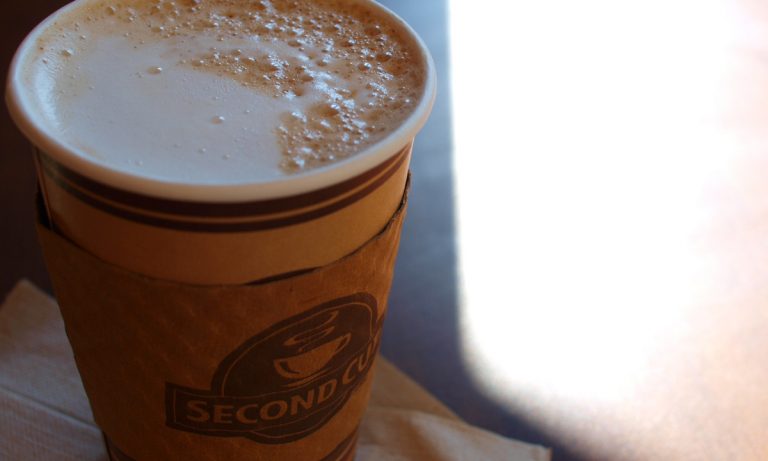
Second Cup is the second largest coffee chain in Canada and it’s looking to convert a portion of its more than 130 shops in the province of Ontario into cannabis dispensaries by spring of next year. Because of considerations like proximity to schools and whether or not a municipality will allow pot shops is deciding the number, at this point, it looks to be around 50 locales.

They’re not slated to be the coffee shops of Amsterdam’s fame, as public consumption hasn’t been approved – yet – but they do represent a trend that could spread like wildfire. There’s nothing stopping any chain store from converting their brick and mortar locations into cannabis dispensaries, and that’s where the money is really going to be coming in.

With Ontario alone making up over 30 percent of the country’s population, it sounds like the country is getting a shot in the arm of cannabis cafes, ahem, dispensaries and it’s not likely the buck will stop there.

Second Cup strategically partnered with National Access Cannabis Corp. (NAC), which are a network of cannabis clinics in Canada. The idea is to convert the existing coffee shops into Meta Cannabis Supply Co. branded recreational marijuana dispensaries. It’s not clear if you’ll still be able to enjoy a cup o’ Joe while perusing your pot, but these new shops are geared up to be the latest “it” thing.

Canada has been a marijuana mecca for decades, despite actual legalization finally going to be in effect on October 17, 2018 making them the first G7 member to make the historic move. In Vancouver B.C. pot coffee shops were a norm and definitely a tourist attraction for years and years and in July 2001 Health Canada allowed access to medical cannabis. So whomever is building has a rich history on which to build upon.

The parade of elephants in the room include that, despite protests that they will “only” be dispensaries, these things in the works already sound an awful lot like the beginnings of the next marijuana tourism hot spots. Said elephant parade also includes companies likely already making plans to follow Second Cup’s suit and convert their own coffee shops and existing retail stores into pot destinations, as regulations allow.

There’s the word, “destination.” As stores continue to brand and expand themselves in preparation for the country’s own already growing green rush, it will be interesting to see how much of the county’s overarching conversations are going to be taken over by cannabis for the foreseeable future.

5 Spas That Use CBD Topicals For Holistic Well-Being

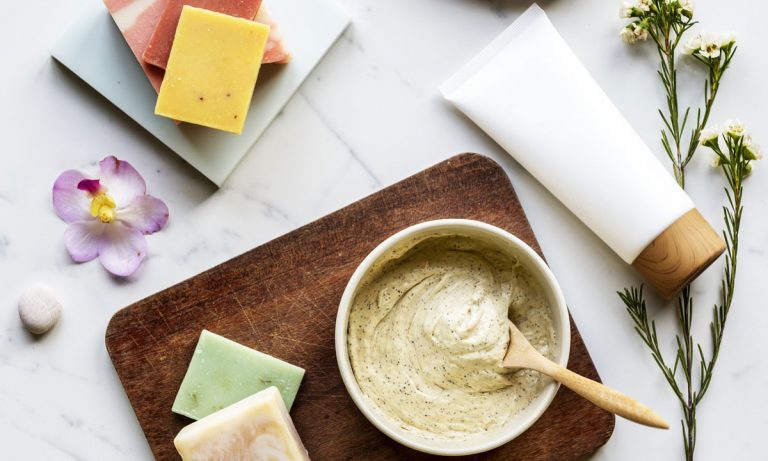
The discovery of cannabinoids and their non-psychoactive properties has opened up new worlds to those who were once completely against the use of cannabis, including the marvelous measure of CBD massage. By isolating that particular cannabinoid or by growing cannabis/hemp with a high-CBD, low-THC content, important options arise for those simply looking for relief.  A CBD rubdown might be just what the doctor ordered.

One thing that really sets CBD apart, aside from its health benefits, is its availability. Though all components of the cannabis plant are considered illegal at the federal level in the U.S., CBD is carried in headshops, gas stations and mom-and-pop stores across the nation. CBD is infused into our morning coffees, our candies, but especially into our skin and muscle products, as its main known course of action is the reduction of inflammation.

Inflammation is the reason for so many of our aches and pains, for joint flare ups and for stiff bones and muscles. Massaging CBD-infused topicals into the skin and tissue where it hurts is a powerful analgesic and spas everywhere have caught on. If you’re lucky enough to live near one of these five high-minded spots, take advantage. Your body will thank you.

Ohm Spa and Lounge—New York, New York

This spa offers “some of the best massages…in NYC,” which is quite the statement. NYC is known for its massages, but at Ohm you’ll find a CBD massage on the menu, so they do have that going for them. They describe the experience as, “The infused massage cream is rubbed into the skin throughout the session to provide a unique sense of calm and relaxation.” $189 for one hour.

The Green Tea Spa—San Diego, California

According to their site, this is “The CBD Spa Experience.” They promise to massage away your worries and pamper you with hemp-derived CBD. The “Get Lit” package is an ever-so-relaxing steal, with a two-hour facial and massage package for $115. (First-time visitors only.)

Lodo Massage Studio—Denver, Colorado

You probably can’t go wrong with an experience called the “Mile High Massage.” It includes a choice of creams, one of which is “Apothecanna’s Pain Crème,” infused with CBD, Arnica, Peppermint and Juniper.

The spa states that as a natural pain reliever and anti-inflammatory, the lotion is perfect for deep, therapeutic work. $75 for one hour.

Blue Marigold Massage—Portland, Oregon

After a few weeks of trials using CBD lotion on their fortunate clients, Portland’s Blue Marigold Massage now offers the infused massage to the masses. Their formula uses other relaxing essential oils and has an infinitesimal amount of THC in it, which is cool, because adding even a little bit, though not nearly enough to get high off of, is enough to create an entourage effect of healing cannabinoids. $105 for an hour.

Interlocks Salon—Newburyport, Massachusetts 

As of June, Interlocks offers their own CBD massage. Their techniques have already won them awards, so imagine the anti-inflammatory properties of CBD melting in with an award-winning massage focused on relieving muscle soreness. Using handcrafted salve from The Healing Rose, these massages are $113 for an hour and can be booked online.

What Is The Scar On Kate Middleton’s Scalp?

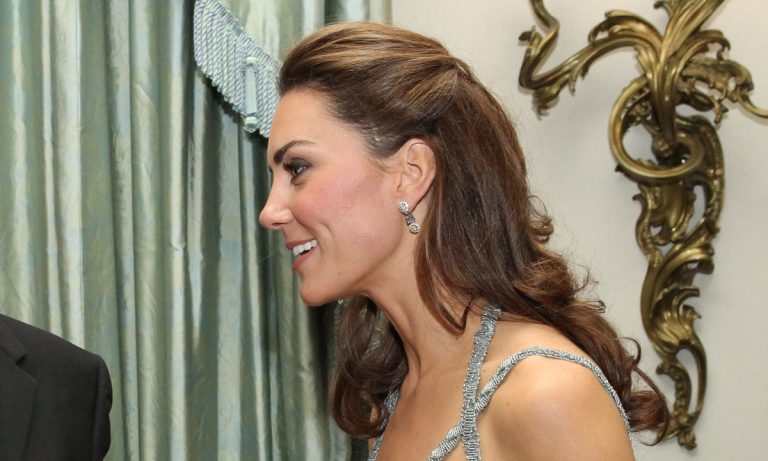
If you’re just now noticing the Duchess of Cambridge has a situation on the left side of her head, we’re hair, er, here to explain. What is the scar on Kate Middleton’s scalp? In 2011, shortly after she married Prince William, Kate was photographed during her first solo engagement as a royal and it was obvious she had a suspicious mark that was visible when she pulled her hair back.

RELATED: Weed And The Royal Family?

At the time, there was some speculation that it was a bad weave, specifically, an extension track. Seriously? This is the flawless, not-a-hair-out-of-place Duchess of Cambridge we’re talking about. She’s like a walking can of hairspray.  V was later dismissed when a palace spokesman confirmed that the mark was actually…a three-inch long scar.

“The scar is related to a childhood operation,” they told the Daily Mail.

https://www.instagram.com/p/Bm6Xl3MBwyE

Though the childhood operation Kate underwent was not disclosed, the Daily Mail  said that senior royal sources confirmed that it had been “a very serious operation,” However, John Scurr, a consultant surgeon at the Lister Hospital in London said the exact opposite:

I really doubt it was any serious medical condition and I would say it is as a result of an arteriovenous malformation – a birthmark – being removed.

Catherine Elizabeth Middleton was born to Michael and Carole Middleton at the Royal Berkshire Hospital, Reading, on 9 January 1982. The Princess of Wales is the eldest of three children, and was christened at the parish church of St. Andrew’s Bradfield in Berkshire on 20 June 1982.
On 29 April 2011, Prince William and Miss Catherine Middleton were married at Westminster Abbey. The couple are now known as The Prince and Princess of Wales, having formally been known as The Duke and Duchess of Cornwall and Cambridge.

Don't Miss Your Weekly Dose of The Fresh Toast.

Stay informed with exclusive news briefs delivered directly to your inbox every Friday.

We respect your privacy. Unsubscribe anytime.