Sunday, December 21, 2025
Home Blog Page 869

Benefits Of Having A Medical Marijuana Card In A Rec State

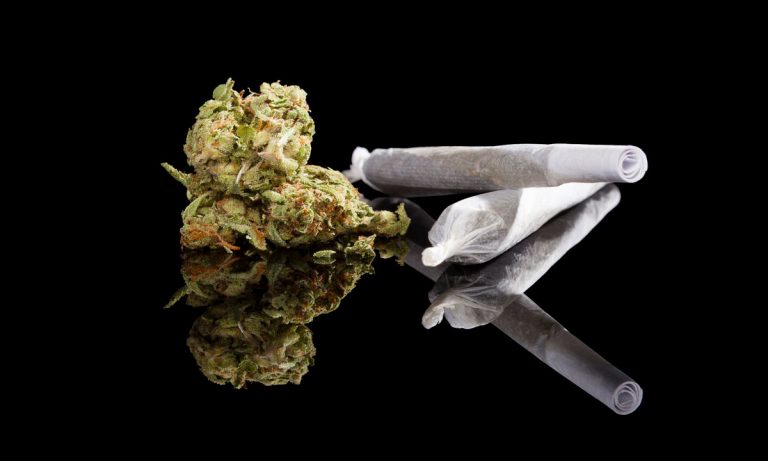
Medical marijuana has been a part of life in California for over the past two decades. But now that the state has legalized the leaf for recreational use, adults 21 and over can simply walk into their local dispensary and purchase a variety of pot products without a medical marijuana ID. But while it is no longer necessary for a person to make up a phony excuse to get a doctor to provide them with a recommendation to smoke weed, this doesn’t mean there are not still some benefits to being a medical marijuana patient.

Availability is still a concern in some areas. This is because not every municipality in California is onboard with all of this recreational marijuana business. In fact, more than 300 cities have opted out of the commercial cannabis scene. There are actually more jurisdictions statewide that allow medical marijuana dispensaries than retail fronts for the recreational side.

Beyond that, the state’s medical marijuana program allows patients the freedom to keep higher possession limits and places fewer restrictions on purchase limits. Patients also do not have to wait until they are 21-year-ol to take advantage of medical marijuana. This sector is open to anyone 18 and older. Furthermore, in some parts of the state, patients are even allowed to grow more cannabis at home for personal use.

Although it is easier now to procure pot, as it is available for sale throughout California in a manner similar to alcohol, the medicinal side is still the only way to avoid paying taxes. A recent report from NuggMD indicates that going through the process of actually getting on the Medical Marijuana Identification Card (MMIC) program is one of the smartest ways to buy weed in the state.

“Most people just go for a marijuana recommendation and never bother with a MMIC since it doesn’t require state registration (sharing personal info scares some),” the article reads. “However, a MMIC is the only way to get a sales tax exemption.”

But enjoy medical marijuana while it lasts. These programs are struggling to survive in states that have taken it up a notch by welcoming in a recreational sector. It seems that fewer people are concerned about saving a few bucks on taxes and have become more enthusiastic about the convenience and product selection available through retail outlets.

The biggest decline in medical marijuana sales has happened in Oregon. The state has experienced a 42 percent decline since recreational sales began in 2015. In Nevada, which has only been selling weed on the recreational side for a little over a year, patient numbers have dropped 32 percent. In Colorado, the first state to go fully legal – it is much of the same. Medical marijuana patient numbers have fallen 22 percent.

Although there are some benefits to frequenting the medical marijuana market, recreational sales will eventually take over. As The Fresh Toast pointed out in a recent article, “although “medical marijuana” was how legalization was originally packaged, it is now on its last leg.” All it will take is for the U.S. government to end prohibition nationwide and medical marijuana will become nothing more than a footnote in the history books.

Medical Marijuana 2020 Could Turn Mississippi Into A Green State

Mississippians For Compassionate Care want access to medical marijuana for chronically, very ill or otherwise untreatable persons who could benefit from medical marijuana if they were to have access to it. They are the organization behind Medical Marijuana 2020, the campaign to legalize medicinal use in Mississippi.

Mississippi was once considered an unlikely state to go green at the ballot box, but as medical and recreational laws spread across the country and public opinion continues to grow more and more positive toward pot, there’s getting to be no really unlikely states. Oklahoma just enacted a new law, Utah is working up to it, Texas has one of the strongest NORML chapters on the map and the times they are a’changin’.

The proposed ballot measure needs to get more than 100,000 valid voter signatures by September 2019 to qualify for the November 2020 ballot. If it makes it and is then voted in by the people of Mississippi, the law would change to allow for physicians to certify medical cannabis for debilitating conditions and then patients would be able to obtain the marijuana at State Department of Health licensed and regulated treatment centers.

Qualifying conditions for Mississippi medical cannabis would include: “cancer, epilepsy and other seizures, Parkinson’s disease, Huntington’s disease, multiple sclerosis, post-traumatic stress disorder, HIV, AIDS, chronic pain, ALS, glaucoma, Crohn’s disease, sickle-cell anemia, autism with aggressive or self-injurious behavior, spinal cord injuries and similar diseases,” according to the campaign website.

The website for Medical Marijuana 2020 also focuses on cannabis being a safe alternative to opiates and as an important line of treatment for veterans, especially those who are currently using multiple prescriptions to combat PTSD, chronic pain and/or depression. Veterans account for around 20 percent of suicides in the U.S. and medical marijuana has proven to be a lifesaver for many in that respect.

Residents of Mississippi are being called upon by Medical Marijuana 2020’s site to help gather signatures on petitions to meet the 2019 deadline. Feet on the ground and grassroots measures are what got us to the point we’re at in the world of cannabis legality and Mississippi seems, at least on the surface, to have a good shot at choosing medical marijuana in 2020.

Rihanna’s Thin Eyebrows Are Surprisingly Popular

If there’s someone who can make even the most unlikeliest of things fashionable, it’s Rihanna. Apparently, that even includes thin eyebrows, which, against all odds and historical evidence, manage to look good on her.

Rihanna is featured on the cover of British Vogue‘s September issue, posing with some crazy flowers in her hair and sporting minimal pencil line eyebrows. According to Mashable, this marks the first time a black woman has appeared on the cover of Vogue‘s famous September issue since the magazine’s inception 102 years ago.

Rihanna’s looks and attitude drove the Internet crazy as expected, with some people praising her looks and imitating her, and some drawing the line at the thin eyebrows.

While a lot of people were really stressed out over the eyebrows, the majority of media and users were just proud that Rihanna was featured on British Vogue’s most important issue of the year.

The Country Of Georgia Just Decriminalized Marijuana

Radio Free Europe reports from Tbilsi that Georgia has decriminalized marijuana consumption. Georgia — a former territory of the Soviet republic — resides at the intersection of Europe and Asia, in the Caucuses. Georgians refer to their country as Sakartvelo.

The July 30 decision only applies to cannabis consumption. Selling and cultivating cannabis is still a criminal offense.

The ruling added the caveat that if an individual’s cannabis consumption endangered or put someone else, such as a child, at risk, then “punishing an individual for consuming cannabis would comply with the constitution,” according to RFE.

The ruling was induced by a lawsuit filed by activists of the liberal Girchi party. Girchi is an extra-parliamentary political party in Georgia that splintered off from the United National Movement. Girchi was founded in November 2015, after four lawmakers— Zurab Japaridze, Giorgi Khachidze,  Giorgi Meladze, and Pavle Kublashvili— quit the UNM, the formerly ruling and then parliamentary minority group. The name Girchi means “pine cone.” It was chosen as a symbol of greenery — like cannabis.

“According to the applicants [Zurab Japaridze and Vakhtang Megrelishvili], the consumption of marijuana is not an act of social threat. In particular, it can only harm the user’s health, making that user him/herself responsible for the outcome. The responsibility for such actions does not cause dangerous consequences for the public,” the court said.

“The Constitutional Court highlights the imposition of responsibility of marijuana consumption when it creates a threat to third parties. For instance, the court will justify responsibility when marijuana is consumed in educational institutions, public places, such as on public transport, and in the presence of children,” the court added.

The lawsuit stated in part that cannabis, “Can only harm the health of the consumer, who is responsible for the results of the action.”

Legalization activist Zurab Japaridze, who initially filed the lawsuit with the constitutional court told reporters that the ruling was a victory for a freer Georgia, RFE reports.

“This was not a fight for cannabis; it was a fight for freedom.,” he said. “Administrative punishment for consumption of marijuana was revoked by the Constitutional Court, which means that consumption of marijuana in Georgia is now legal,” he explained.

The Constitutional Court previously decriminalized consumption of Cannabis in November of 2017; however, it was still punishable by a fine.

Prior to that, Georgia’s Criminal Code outlined repeated cannabis consumption and possession of more than 70 grams of dried flowers as a crime. If caught, consumers could potentially be punished, but not incarcerated.

Not everyone was happy with the high court’s decision. “I do not agree with the decision of the Constitutional Court,” said Akaki Zoidze, member of governing party Georgian Dream-Democratic Georgia and chair of Georgia’s parliament’s healthcare committee.

“Cannabis consumption should be allowed only for medical purposes. Our aim was not to make marijuana accessible for everyone, but to reduce the number of drug addicts.,” Zoidze said.

The Girchi party has been at the forefront of marijuana reform action for the past seventeen months. Its members vowed that they would continue to fight for full marijuana decriminalization in Georgia.

Which Way Will Supreme Court Nominee Brett Kavanaugh Rule On Marijuana?

With the nomination of Brett Kavanaugh for the Supreme Court, Americans are rife with speculation on how he feels about cannabis. Kavanaugh has never ruled directly on cannabis matters.

Democrat Jeff Hauser wrote a meandering op-ed in the Daily Beast, which said in part that the obvious way to trump the POTUS’  Supreme Court nominee Brett Kavanaugh, is for Democrats to focus on Marijuana. “Democrats have a potent card to play against Brett Kavanaugh,” wrote Hauser, “So why aren’t they playing it?”

Hauser’s argument, however, is unsubstantiated. Which way Kavanaugh would lean as a Supreme Court Justice regarding marijuana is anybody’s guess.

The U.S. Constitution is the prism by which Kavanaugh reflects his legal interpretations. The constitution does not say anything about marijuana, which was legal until 1937, when the  Marihuana Tax Act was passed, beginning prohibition.  As a strict constitutionalist, he should be of the opinion that marijuana laws should be left to the individual states to decide.

The 10th Amendment to the constitution states, “The powers not delegated to the United States by the Constitution, nor prohibited by it to the States, are reserved to the States respectively, or to the people.” The 10th Amendment was included in the Bill of Rights to further define the balance of power between the federal government and the states. In a nutshell, if a law is not in the constitution, it is up for the individual states to decide. Hence, medical and recreational marijuana legalization.

Kavanaugh is a strict constitutionalist, but he is also likely to support the FDA.  The FDA recently approved Epidolex, after years of stating that marijuana had no medicinal value. If the FDA changed their tune, will Kavanaugh follow suit? These variables should factor in while predicting which way Kavanaugh will rule on cases that involve cannabis.

A 2007 case in which he sided with the majority, holding that the US Constitution does not provide terminal patients a right to try experimental drugs with limited clinical trials that haven’t been proven safe and effective;

A 2012 case A 2012 case in which he wrote a dissent to the majority decision – which was declared unconstitutional on Fourth Amendment grounds a random drug testing policy of all employees of a federal agency regardless of their responsibilities and requirements of their position;A 2013 case in which he penned the opinion that deferred to FDA discretion/oversight, stating that “courts must be careful not to unduly second-guess an agency’s scientific judgments.”

“I am vehemently against Kavanaugh’s appointment. That being said, I think it would be prudent to look across his judicial decisions to figure out where he would likely come out on a SCOTUS cannabis case before the Democrats can leverage anything related to cannabis to block his appointment,” said Cristina Buccola, of the New York Cannabis Bar Association.

“I agree that he is unlikely to expand patient rights or side with a party who looks to challenge the authority of the FDA.  Moreover, two of these cases certainly underscore that Kavanaugh has no problem chipping away at individual rights (which is also in step with his abortion dissent last year).  However, if a cannabis case reaches SCOTUS dressed as a states’ rights or pro-corporate matter, he could conceivably rule in favor of cannabis,” said Attorney Buccola.

“Cannabis has become so popular among law-abiding, productive members of society that it has rightfully forced politicians to take a position on the once taboo topic. Unfortunately, politics comes with the hidden agendas of the far right and the far left. Our hope is that an appointment of a new Supreme Court Judge, Kavanaugh or someone else, would be close enough to the middle of the road that justice would prevail; and at the least the high court would leave the decision of legalization up to each state,” said Bob Ronalter CEO and Co-Founder of Classy Joints.

“If a cannabis case is dressed up as states rights or corporate interest, we do not know how he would rule,” said Attorney Buccola.

Danny Davis, Managing Partner of Convectium, an ancillary cannabusiness said, “Kavanaugh explained his approach this way: ‘A judge must be independent and must interpret the law, not make the law.’ If we take that to mean he will evaluate cannabis with an independent interpretation and an eye on the science, health benefits, and widespread public support, then we can see it being great for the industry. When comparing the positive health benefits of cannabis to substances that offer no health benefit like tobacco and alcohol, we see a logical path to legalization nationwide. We believe Kavanaugh favors logic and his appointment will bring continued positive progress for cannabis.”

“Brett Kavanaugh’s appointment to the U.S. Supreme Court does not have a major predictable effect on the growing marijuana industry, as Kavanaugh has historically deferred to the FDA on rulings of this nature,”  said Jordan Friedman, CEO of payment platform Zodaka. That means FDA commissioner Scott Gottlieb is also one to watch keenly. Gottlieb released a statement on June 25 following the FDA’s approval of a purified form of CBD. His statement supports continuing research into medical marijuana, while also emphasizing the need for rigorous long-term testing on the effects of cannabis’ various compounds.

Gottlieb has also mentioned -coinciding with President Trump- that he believes in using investigative medicine for the terminally ill as a way to test new treatments. This line of reasoning is in direct contradiction to the ruling Kavanaugh made in the 2007 case. Therein lies the conundrum.  Have Kavanaugh’s opinions on the matter evolved in the past eleven years?

President Trump has consistently stated that he is open to letting states determine cannabis policy within their jurisdiction and potentially removing the federal ban on marijuana

“I feel that Brett Kavanaugh will likely support and maintain Trump’s current line of thinking as a Supreme Court Justice, but it is impossible to say for certain how this will all play out,” said Friedman (especially considering Trump’s unpredictable and mercurial policy-making process).

Let’s hope someone like Kamala Harris or Corey Booker has the foresight to ask Supreme Court Nominee Kavanaugh about his feelings towards marijuana during his confirmation hearings.

Smoking Marijuana Is Now Decriminalized In Manhattan

Manhattan District Attorney Cyrus Vance ushered in a refurbished policy that will allegedly end criminal prosecution of marijuana, including possession and burning in the borough of Manhattan. However, this is not Manhattanites’ first time around the decriminalization block.

Vance’s “new” policy revelation a new policy that will supposedly remarkably reduce marijuana prosecutions on the tiny, 13.4 mile (21.6 km) long by 2.3 mile (3. 7 km) wide island that houses over 1.665 million people.

According to a statement from Vance’s office, decriminalization would account for a significant drop in Manhattan’s marijuana prosecution cases per year.

“Every day I ask our prosecutors to keep Manhattan safe and make our justice system more equal and fair,” Vance said. “The needless criminalization of pot smoking frustrates this core mission, so we are removing ourselves from the equation.”

Additionally, Vance said that data mined by his office shows “virtually no public safety rationale” for marijuana arrests and ensuing prosecution, whether for possessing the plant or for public consumption, referred to as “burning.”

In 2014, the city made a legal differentiation between ‘using marijuana’ and ‘burning marijuana.’

In March 2018 the NYPD’s chief of crime control strategies, Dermot Shea, told a captivated and incredulous City Council board that since 2014, 90 percent of arrests for marijuana are for ‘burning,” and it ostensibly was the primary cause of racial disparities in marijuana arrests.

Burning was a misdemeanor punishable by a $250 fine and up to 90 days in jail.

Vance’s announcement vanquishes burning arrests. However, it is still somewhat confusing, considering that in New York City — all five boroughs including Manhattan — possession was already decriminalized over four decades ago, in 1977.  Possession of up to 25 grams of cannabis may have resulted in a $100 violation (similar to a traffic ticket) for a first offense. A second offense was $200, and a third offense was $250 and a possible 15-day stint in jail.

In 2017, 18,525 people were arrested for cannabis-related offenses in New York City.

Vance used the opportunity while announcing the updated marijuana policy in Manhattan, to explain that being caught with a personal amount of pot is no longer an albatross in young people’s lives or a career killer.

“Tomorrow, our office will exit a system wherein smoking a joint can ruin your job, your college application, or your immigration status, but our advocacy will continue,” Vance says in the statement. “I urge New York lawmakers to legalize and regulate marijuana once and for all.”

Even though possession was decriminalized decades ago, Chief Shea explained away consistent upticks in possession arrests by insisting that possession of cannabis was being committed in conjunction with other crimes.  However, he provided no data or proof to support this claim in repeated City Council hearings.

Starting in September, the NYPD will allegedly no longer arrest most individuals who are caught burning and will issue them summonses instead,  unless, they are caught smoking while committing additional crimes.

Exceptions to the new guidelines are cases where pot is being sold or is the underlying cause of a threat to public safety.

What’s It Like To Stop Shaving After Having Shaved Your Entire Life?

0

Body hair has become a prominent topic for feminists and women in general. The existence of it, or lack thereof, sparks a lot of conversations that can get heated in seconds. Why should women have to shave? Why is hair an important factor for feminists? Why is it even considered a political statement?

While there are no easy answers, activists and feminists of all sorts explore women’s complicated relationship with body hair and the effect it has on their image and self-esteem. In an interview with Bustle, Dana Suchow, a public speaker and educator, talks about her body hair and what it felt like when she decided to stop shaving after having done so her entire life.

Suchow is prominent on social media, having over 33k followers on Instagram. Her brand specializes in fueling conversations about feminism and self-image. In the interview, she explains that she started shaving her legs and body when she was 12-years-old, and decided to stop doing so during one winter when she was single. “There was no reason for me to shave every Friday night like I had been doing for years,” she said.

While Suchow still fits into society’s beauty standards and has an easier time than some, she claims that having body hair does influence other aspects of her life. “It’s interesting. While I’m scared to show my hairy body to a man, I have zero problem sharing pics of it to thousands of people on Instagram. A thousand comments from strangers is still less scary than one comment from a man in the bedroom.”

Suchow claims that even though the amount of body hair in her body doesn’t dictate how much of a feminist she is, she is still sticking to not shaving until she can finally feel comfortable in her own skin and not feel like her hair is something that’s repulsive or that has to follow certain societal norms. You can check out the full interview on Bustle, and see some of Dana’s work on her website.

Can Pot Brownies Guard Against Getting Diabetes?

0

You might intuitively think that eating tons of sugar can’t be good for you and may even lead to developing diabetes. But au contraire. In fact, pot brownies may even guard against it.

How’s that, now?

Regular marijuana users don’t seem to lead necessarily to the munchies, but smoking pot will always give them an urge to snack. That’s one of the reasons why cannabis works so well helping AIDS and chemo patients put back on lost pounds. And yet there is an anomaly: While regular marijuana users tend to have a higher calorie intake than nonusers (the munchies effect), they also have lower body mass index as well as lower rates of obesity and diabetes.

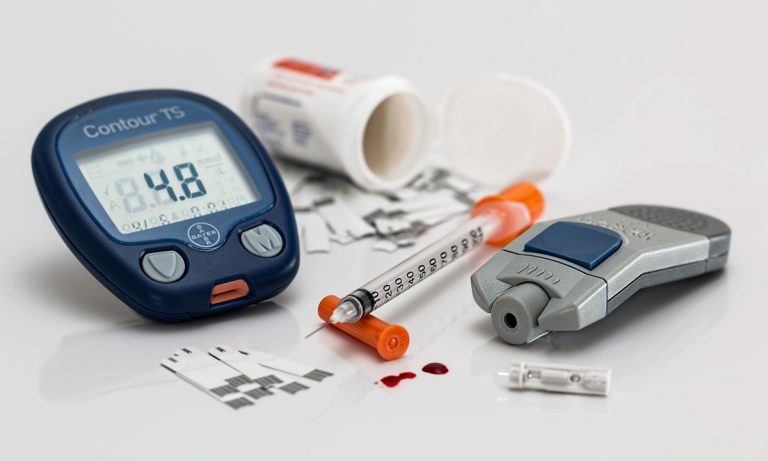
A 2013 study took a closer look at that paradox and found evidence suggesting that regular cannabis use may stabilize blood sugar and ward off diabetes. Compared with nonusers, the cannabis achievers had on average 16 percent lower fasting insulin levels and 17 percent less resistance to insulin. Higher levels of both are associated with adult onset diabetes, which is itself associated with obesity. Moreover, users were an inch and a half slenderer than nonusers and had higher levels of high-density lipoprotein (that’s the “good” cholesterol that protects you from heart disease).

The results of the study were clear (“Bite it, abstainers!”), but the explanation still is not. One avenue of speculation focuses on neurological tolerance. While regular users might never habituate to the munchies, receptors in the brain become less responsive to other signals from cannabis, including the ones that tell the body to fatten up. There was, in fact, a weight-loss drug that acted precisely on this idea, by offsetting the body’s natural cannabinoids. (It worked but was pulled from the market because it made users want to kill themselves.)

If we understand this interpretation of the evidence correctly, it means that regular cannabis use protects you from diabetes by simulating the way your brain works without cannabis. Which is a seriously heavy head-trip. Perhaps this calls for a meditational marijuana brownie.

Hops Cross-Pollinated By Cannabis Make For Legal CBD

Though they’re not the hops used to make beer, the specisis humulus yunnanensis, native to Southern China, is garnering a lot of attention right now. Originally due to cross-pollination with wild cannabis plants, these hops took some cannabinoids into their working systems, including CBD. Dr. Bomi Joseph selectively bred the found plants for maximum CBD production and said derivative is called ImmunAG.  So it seems hops cross-pollinated by cannabis make for legal CBD.

Medical Marijuana, Inc. and Peak Health have now partnered to dispense this unique hops-derived CBD oil through Medical Marijuana, Inc.’s subsidary HempMedsⓇ. Ironically, this non-cannabis based cannabinoid is being exclusively distributed by Medical Marijuana, Inc. as Real Scientific Humulus or RSHO, one deceptive letter away from the whole plant cannabis extract RSO a.k.a. Rick Simpson Oil.

Because the CBD is harvested from a hops plant and the cannabinoids that cross-pollinated did not include THC, the psychoactive component is completely absent, meaning that there is no risk that the CBD extraction will go over the .3 percent THC limit required by law to be considered hemp – and now hop – derived.

Dr. Stuart Titus, CEO of Medical Marijuana, Inc. has stated his belief that the, “non-cannabis based product will not only provide new evidence of the benefits of CBD, but will also help people understand the value of phytoceuticals. We also look to introduce and educate people/consumers on the new concept of ‘bioactivity’ into CBD’s potential health and wellness benefits.”

Phytoceuticals are plant derived and though they are not considered necessary for human existence, they are believed to have health benefits and properties. CBD has gained that sort of reputation for itself as of late, especially for its reported anti-inflammatory properties. When paired with a miniscule amount of THC, however, an entourage effect occurs that is commonly thought to greatly magnify the benefits and usages of CBD.

It remains to be seen if Medical Marijuana, Inc., which is also the first publicly traded cannabis entity in the U.S., made a brilliant decision in this federal legal workaround or if the majority of people will reject the idea of non-cannabis derived cannabinoids. At the very least, studies into the benefits of the hops derived CBD won’t have to jump through so many hoops to get approval and funding.

Here’s Why Your Phone Battery Dies So Fast

Why do batteries die? And, why can they only be recharged so many times before they won’t hold a useful amount of charge? My young son asked me about that years ago when his battery-powered toy car stopped moving, wondering about what he called an “everlasting battery.” And this same question has probably crossed the mind of every cellphone user trying to send one last text before the screen blinks off.

Research, like mine, continues around the world to make batteries that charge faster, last longer, and can be recharged and discharged many more times than today’s. But as much as you and I would like, it’s impossible to make a truly everlasting battery. I have taught thermodynamics for more than 30 years. So far, there is nothing that suggests we can break the fundamental laws of science to get that elusive battery.

Battery scientists and engineers call the main problem “capacity fade.” Regular people wonder about it with questions like “Why won’t my battery hold a charge?” and complaints like “I just recharged this thing and it’s already out again!”

It’s a result of the second law of thermodynamics, which states that whenever some real process happens, it creates a certain amount of wasted energy along the way that can never be recovered. Any time a battery is charged or discharged, there’s a little bit of wasted energy – a little bit of wasted capacity in the battery that cannot be recovered.

To envision how this works, think about battery use like transferring water between two cups. Using a battery is like emptying the water from one cup into the other, and charging the battery involves pouring the water back into the first cup. Even if you do it one or two times without spilling a drop, there’s always just a little tiny bit left in each cup that you can’t pour out.


Now imagine pouring back and forth hundreds or even thousands of times over a period of two or three years (for a cellphone battery) or 10 to 20 years (for an electric car). Over time, all the thousands of little and big things that go wrong add up to quite a bit of water going missing. Even spilling a barely visible drop – say one-tenth of a milliliter – adds up to an entire liter if it happens 10,000 times. That doesn’t even include the possibility of one cup failing in some way that loses even more water – like springing a leak or heating up and causing evaporation.

Just as water inevitably goes missing when pouring from one cup to another, more energy is required to charge the battery than it actually stores, and less energy comes out than is stored in it. The proportion of wasted energy to stored energy grows over time.

In fact, the more you use a battery, the more energy gets wasted, and the sooner the battery will reach a point where it’s dead and can’t usefully be recharged. I and others are studying ways to have those discharging-recharging cycles run more smoothly to reduce the amount of waste, but the second law of thermodynamics will always make sure that there’s no way to get rid of it entirely.

Steve W. Martin, Professor of Materials Science and Engineering, Iowa State University

This article was originally published on The Conversation. 

Don't Miss Your Weekly Dose of The Fresh Toast.

Stay informed with exclusive news briefs delivered directly to your inbox every Friday.

We respect your privacy. Unsubscribe anytime.