Friday, June 19, 2026
Home Blog Page 880

Why Your Doctor Won’t Prescribe Medical Marijuana

Here is our doctor’s take on why your doctor won’t prescribe medical marijuana.

Patients turn to their physician hoping for a diagnosis, guidance and treatment for their symptoms. Many come up with a question as to whether cannabis is an option for treatment. It is not unusual that they feel as if they hit a brick wall with discussing this as a treatment option.

I think it is important that patients are able to see the handcuffs that medical physicians are in with the cannabis discussion. We should first look at the acceptance of medical marijuana by my medical colleagues. 

In 2013, a New England Journal of Medicine survey reported that 76 percent of North American physicians felt that medical marijuana should be used in certain circumstances. 

The case in point was a 68-year-old woman with metastatic breast cancer who might have improvement in symptoms with medical marijuana. This is an extreme case looking at end of life decisions and palliation (relief of symptoms) as opposed to patients with curable diseases who have years to live. On both sides of the discussion, physicians called for more research of cannabis to have a stronger basis of evidence for or against the use of medical marijuana.

Medical physicians are held to a higher standard than other caregivers when it comes to making a diagnosis and treatment options. This is a good thing in that it requires a more scientific approach to diseases and treatments. This, however, can handcuff physicians when treating patients.

We are trained in pharmaceuticals as part of medical school. We are taught both the science and the art of medicine. At this time, we know of anecdotal side effects of cannabis, but we cannot give our patients a complete list and percent chance of side effect based upon FDA guidelines. 

Physicians take a malpractice risk whenever prescribing any medication. This risk increases when prescribing medications off label from FDA guidelines. If a patient suffers from a side effect after receiving a prescription of an FDA Schedule I medication (heroin, LSD, marijuana), there would be no legal defense. Furthermore, prescribing a Schedule I medication would be breaking federal law unless under a very unusual circumstance or in a FDA-controlled study.

It takes years of study and national board testing to obtain an FDA license. One felony conviction would threaten that along with the loss of a medical license. Would it be responsible for an M.D. to risk losing the ability to care for a large population of patients by breaking the law in prescribing cannabis?

When cannabis is federally legalized and studied by the FDA, we could then have proper medical education for our physicians who can then prescribe it with less fear of clinical errors and legal ramifications. A study in 2016 revealed that none of the American medical schools had a structured course in endocannabinoid science.

I have been asked by patients to discuss the use of medical marijuana for diseases for which there is little scientific or anecdotal evidence for use in the disease. Should I encourage them to try it just in case it improves the symptoms? Could this delay other treatment options until it is too late for them to be effective? How should I decide upon a combination of CBD and THC? What dosage should I encourage them to try? Can I rely on the provenance of the marijuana sold in all medical marijuana shops?

Most medical physicians who want to consider the option of medical marijuana do so by referring their patients onto other caregivers who hold medical marijuana licenses.

It is my responsibility as a trained caregiver to attempt to alleviate symptoms and cure disease within the realm of my training. It is not proper medicine to delay treatment options that we know are effective in order to offer more psychologically acceptable options without scientific basis.

I look forward to the time that we have federal acceptance of marijuana, proper studies of the drug and improved education of its effects and side effects.
Alexa Can Now Let You Know If It Figures Out An Answer It Didn’t Know Before

It’s common to get no answers from Alexa at times, either because you didn’t phrase the question the right way or your word choice was off base. But this issue is one of the main drawbacks of the device, making you feel like it’s not as smart and useful as Amazon claims it is.

Voice enabled devices are very sophisticated, yet they’re still a work in progress, constantly trying to improve their services and learning about the many layers that make up the basis of communication between humans.

Over the next week, Amazon is rolling out a new feature called Answer Update, which will alert users when Alexa has found an answer to one of the questions they asked and didn’t get an initial answer to. According to TechCrunch, this is done to let users improve and interact with Alexa’s Knowledge Graph — an informational database that contains general knowledge facts and figures that Alexa uses to answer users’ questions.

To turn on the update, say “Alexa, turn on Answer Update.” Once this is done, Alexa will reply by saying,“”If you ask me a question and I don’t know the answer but I find out later, I’ll notify you.” The feature can be turned off by saying “Alexa, turn off Answer Update.”

While Alexa is still the leading voice assistant in the industry, the Google Home has been improving steadily, gathering acclaim due to Google’s large Knowledge Graph. This makes a lot of sense; Google is the largest and most reliable search engine in the world, linking you to all parts of the Internet.

According to a study conducted by AdWeek, the Google Home is six times more likely to answer a question than Alexa. CNBC predicts that the consumption of the Google Home will grow in the US and abroad in the coming months.

In order for Amazon to remain at the top of the AI business, Alexa needs to become smarter and more reliable as soon as possible.

Lead Art: www.quotecatalog.com

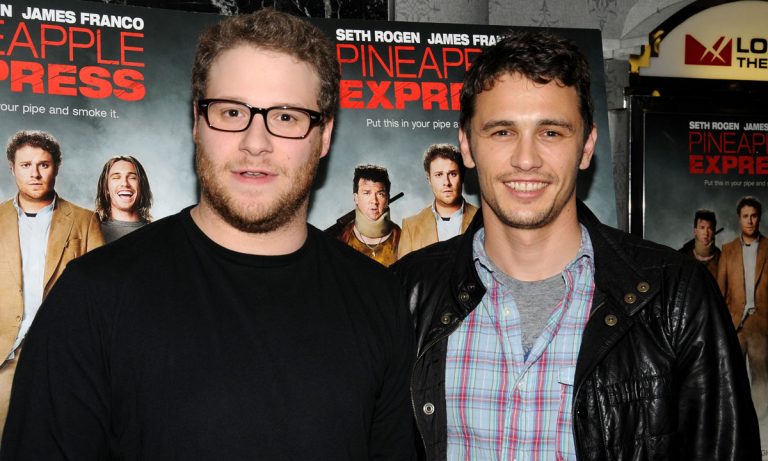
Seth Rogen Shares Priceless ‘Pineapple Express’ Stories For Movie’s 10th Anniversary

It’s hard to remember a time when Seth Rogen wasn’t America’s favorite stoner comedian. Starting with the back-to-back releases of Knocked Up and Superbad in 2007, Rogen’s star launched sky high (pun-intended), with both movies quickly becoming cultural touchstones. But is was with 2008’s Pineapple Express that Rogen cemented his status as the sincere goofball stoner that everyone loved.

This week marks the film’s 10th anniversary and so Rogen decided to share some behind-the-scenes tales and fun facts on Twitter. You might not believe this, but some funny stuff went down while filming a movie that includes cross joints, James Franco smashing a bong on Danny McBride’s head, and Bill Hader describing being stoned as feeling like “a slice of butter melting on top of a big ol’ pile of flapjacks.”

Scroll below to read about all the injuries actors suffered on set and how Judd Apatow deemed everyone’s favorite meth kingpin as “not scary enough” to play a drug dealer.

How It All Started

The Injuries

Danny McBride And Stormy Daniels

Bryan Cranston

https://twitter.com/JuddApatow/status/1026635008382038017

Random Notes

NFL Introduces Its First Male Dancers This Season

0

The NFL is making history this season and chances are you’ll appreciate the reason why, even if you’re not a football fan.

For the first time ever, the Los Angeles Rams and New Orleans Saints will have male dancers joining the cheerleaders on the sidelines.

Quinton Peron and Napoleon Jinnies found out they made the Rams squad in March.

https://www.instagram.com/p/BguwjDSnh6L/?taken-by=itsaquintonthing

https://www.instagram.com/p/Bl4Zs3PATVU/?taken-by=napoleonjinnies

The fact that Peron and Jinnies made the cut inspired 25-year-old Jesse Hernandez to try out for the New Orleans Saints’ Saintsations cheerleading team. He’s the first ever male dancer to join the squad.

He told CNN affiliate KATC that his mom persuaded him to try out. “She told me it was my time to shine,” he said in a video posted before his final audition. “The process has been great, everyone has been really nice to me and I can’t wait to see where this goes.”

But Hernandez says his road to the tryouts wasn’t easy.  A dancer his whole life, he told WDSU News back in April that it was “very difficult” growing up being a male dancer, “But I never gave it up because it’s something that I love to do and I wanted to pursue it when I got out of high school. There was always just little negative things here and there, and of course it kind of hits the ego”.

Said Hernandez, “Of course, there will be some people that may not agree with me being in that dome, but if that happens, I’m there and I’ll smile and wave and live life.”

Study: Dispensary Locations Don’t Impact Teen Cannabis Use

One of the main stipulations for cannabis dispensaries across the United States is that they not be located within a certain distance to schools. The main reason, of course, is that close proximity to cannabis could theoretically encourage youth use. Not so, says a study from the Journal of Adolescent Health.

The researchers found that out of 117 random schools that fell in districts with different specifications for medical marijuana, not one was impacted in the way of youth cannabis use rates from the past month. It didn’t matter how close in proximity the school and dispensary were, the prices of pot didn’t factor in, nor did the variety of strains.

These are astonishing statistics to many people, especially anti-drug warriors who are quite often asking the seemingly pertinent question, “What about the children?” but they come as less of a surprise to the cannabis community as a whole. And the statistic that seems most surprising is that the number of dispensaries in an area also has no influence over youth usage. So there could be as many dispensaries as McDonald’s and the results remain the same.

The conclusions contradict anti-cannabis legalization proponents’ most valuable talking points. Another of which is that having dispensaries around causes an increase in crime. Communities could do much worse than have a dispensary in their midst, according to The New York Post.

Dispensaries just aren’t crime magnets and they usually have measures that go beyond what’s required to protect their money, merchandise and especially people. Often there are guards or some type of security system in place. Plus, dispensaries are generally clean, regulated, inviting places – for adults. And it is probably in part because of the added security that kids aren’t getting in with fake or no IDs.

In states with medical marijuana, which make up the majority at this point, a patient must not only have a valid ID, but a doctor’s recommendation either on them or on file. Either way, by the results of the Adolescent Health study, kids aren’t even trying to get into the dispensaries. That doesn’t mean that some of them aren’t smoking pot, that’s a given, but the fact that there’s a dispensary around the corner doesn’t make any difference.

Now We Know Why Princess Charlotte Always Wears Dresses

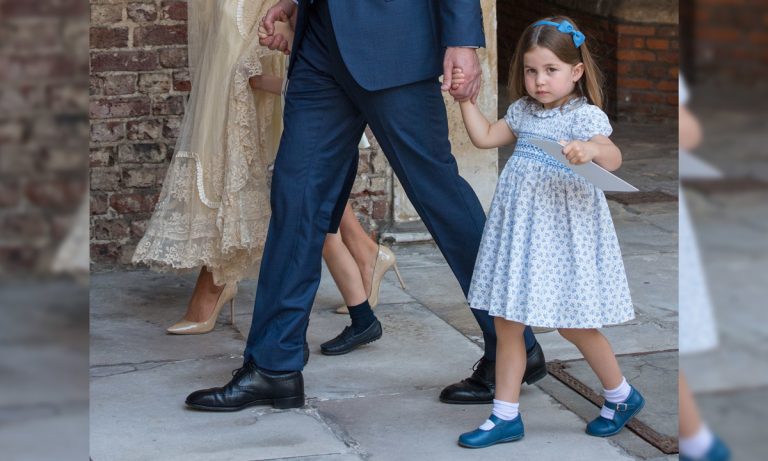
Little Princess Charlotte has already developed a “style” that many of us work for our entire lives to achieve. At just three-years-old, the young lady has mastered the art of pairing frilly frocks with Mary Janes. That’s great and all, but what’s happening here? Is someone grooming her to be the future ruler of the GapKids kingdom? Is she allowed to wear pants? Is she the Palace’s full-time Polly Pocket? We need answers.

https://www.instagram.com/p/BmJu7f6Be6q/?tagged=princesscharlotte

According to those in the know, Charlotte’s mom Kate Middleton intentionally chooses these types of outfits for her daughter, because she wants her baby girl to look timeless. “They have chosen a very traditional look and are a traditional family,” Rachel Riley, a designer who has dressed Prince George on several occasions, told The Telegraph. “We have been doing very similar things for 18 years in that our collection is classic.”

Riley says the reason she designs the clothes that she does it because you can’t “really date a specific photo or put them in something that seems out of date.” She says she believes Will and Kate are going to for a “classic and timeless” look with their children.

Royal expert and Royal Musings blog founder Marlene Koenig explains to Harpers Bazaar  that, “If you look at photos of young royal girls – from Princess Anne to Charlotte, you will notice that they tend to wear smocked dresses as little girls when they are in public with their parents.” She says that a “clean, traditional look” is important for Royals, especially for outings.

And while Charlotte isn’t technically banned from wearing pants, just like Meghan Markle or her mom Kate, there’s a high likelihood the public will only ever see her wearing dresses because, “If the Duchess is in a dress in public and Charlotte is with her, most likely Charlotte, at this age, will be in a dress – also in formal portraits, or on the balcony for the Trooping of the Colour,” said Koenig, adding:

I expect that when the kids are at home, playing in the nursery or in the backyard, they are wearing more casual clothes.

In fact, Charlotte has been snapped wearing shorts, so it’s not that big of a deal.

Marijuana Legislative Roundup Week of July 30

Here is the marijuana legislative roundup for the week of July 30. Although Congress has adjourned for its August recess, last week saw a number of significant legislative developments in relation to marijuana reform, including: a call by state legislators nationwide for the freedom to regulate cannabis, and the announcement of a new panel to draw up a bill to legalize recreational cannabis in New York state and some noteworthy policy decisions in California.

National

On Wednesday, state lawmakers from across the nation passed a resolution directing Congress to allow states to regulate marijuana without federal interference. The resolution, which was drafted by Oregon delegates and passed by the National Conference of State Legislators, notes that a majority of states have now legalized medical marijuana and that a growing number have also legalized recreational marijuana for adults. It then urges Congress to remove the threat of prosecution for businesses engaged in state-legal marijuana activities and allow them access to banking services.

To facilitate these objectives, the directive calls on Congress to remove cannabis from scheduling under the Controlled Substances Act. While the measure has no binding effect on Congress, it offers an indication of the broad support marijuana reform enjoys and could help to convince members of Congress who are uneasy about taking steps toward legalization due to political concerns.

New York

On Thursday, New York Governor Andrew Cuomo announced his appointments to a new panel tasked with drafting comprehensive legislation to legalize recreational marijuana in the state. The 20-member task force, comprised of criminal justice and drug reform advocates, law enforcement, teachers, academics, substance abuse counselors, and other stakeholders. The move comes in the wake of the release of a New York Department of Health report commissioned by the governor in January to study the impact of a regulated cannabis on public health, criminal justice, and the economy. The report, released in June, found that the positive effects of legalization would significantly outweigh the negative, which was the basis for Como’s convening of the panel.

California

On July 25, the California Cannabis Control Commission released a memo expressing its stance that the production and sale of marijuana-infused alcoholic beverages remains illegal under state law. While this had been assumed prior to the memo, it had not been stated explicitly as a matter of policy.

The Los Angeles City Council on Tuesday withdrew a ballot proposal to increase taxes on marijuana-related sales. The ballot question would have increased taxes on retail cannabis sales by 1 percent in the city, and imposed a $5 surcharge on tickets to marijuana events and on cannabis lab tests. The move comes as the city began accepting its second round of applications for marijuana business licenses.

How This Army Veteran Cashed In On The CBD Market

U.S. Military veterans may still be prohibited from using medical marijuana by the federal government, but that doesn’t mean they can’t strike it rich in the cannabis industry. Craig Henderson, an Army vet who served in Iraq, is one of those soldiers going this route, building a multi-million dollar company through the distribution of cannabidiol-infused products. His business, Extract Labs, which is based in Boulder, Colorado, was launched in December 2016. It now employs 25 people and recently opened a second location in Louisville, Kentucky, according to a story from Military Times.

Cannabidiol (CBD) is the non-psychoactive component of marijuana. This means it is still considered a Schedule I dangerous drug with “no known medical value” in the eyes of the federal government. But it has been shown to have a variety of medicinal functions, including helping people with depression, insomnia and epileptic seizures.

Last year, the World Health Organization published a report suggesting that CBD be removed from its Schedule I classification because its use “could have some therapeutic value.” In June, the U.S Food and Drug Administration approved the first ever CBD-based pharmaceutical drug for distribution in the United States. This move could lead to a CBD reschedule on the Controlled Substances Act, according to Forbes.

As for Henderson, he got into the business of slinging CBD after “watching a bunch of marijuana documentaries” and “following the laws changing in Colorado and California.” His first thought was to get a job in the cannabis industry, so he began “emailing people my resume and calling different companies.”

“But no one called me back,” he said.

He was eventually pulled on to work with Ohio-based Apecks Supercritical, where he spent several years “teaching people how to process marijuana with CO2.” It was during that time that Henderson recognized a unique opportunity working with hemp farmers and decided to go out on his own. Extract Labs was created.

Henderson’s company deals in hemp-based CBD products, like tinctures, creams, shatter and vape juice. Because these items are not derived from the cannabis plant, many hempsters, like Extract, have been raking in the sales because patients in prohibition states can get their hands on these remedies without the threat of legal repercussions.

Although the FDA recently approved CBD-based Epidiolex for certain kinds of epilepsy, companies like Extract Labs cannot “make specific claims” about the medical powers of their CBD products. They are not FDA approved. Still, this has not stopped the cannabis entrepreneurs, like Henderson, from cashing in on high demand. The CBD market pulled in around $820 million in 2017. It is expected to grow 700 percent within the next the two years.

People Are Searching Bigfoot Porn Thanks To A Republican

0

Out of a scene from a movie, Virginia’s Democrat Congressional candidate Leslie Cockbun accused her Republican opponent, Denver Riggleman, of being a “devotee of Bigfoot erotica.” No one expected this seemingly random comment to have an effect on the real world or, you know, Pornhub.

Pornhub, loving every opportunity to make fun of someone through the use of porn, reported that the number of searches containing the word “Bigfoot” skyrocketed 8,037 percent within the 24 hours after the news broke. It’s completely understandable, people were curious. What does Bigfoot porn even mean?

Related Story: This App For Saving Water Can Help You Get Free Porn For A Week

In a statement to Mashable, Alex Hawkins, VP of xHamster, explained that Bigfoot porn has been around since the 1970s, when the creature first entered our collective unconscious. “In many ways the scenario — an ape ravaging an innocent woman — dates back to the 1930s with King Kong.”

Pornhub explained that there was a big difference between the local searches of the word “Bigfoot” and the nationwide searches. Virginia residents were 38% more likely to search for “Bigfoot” than other states.

Other porn sites reported that Bigfoot was also a pretty big hit after the Congressional Candidate’s accusations broke out.

Bigfoot, also commonly referred to as Sasquatch, is a large and hairy human-like mythical creature alleged by some to inhabit forests in North America, particularly in the Pacific Northwest, despite scientific consensus. Bigfoot is an icon within the pseudoscience of cryptozoology, and an enduring topic within popular culture.

At least we know that people, no matter what sort of porn they’re into, are interested in the news.

5 Things You Should Do During This Summer’s Mercury Retrograde

Three or four times a year, Mercury leaves its orbit. Some believe this moment is the perfect time for energies, relationships and, for some reason, electronics to go crazy. In the midst of all this turmoil, your life can hit a rut — at least, that’s what some people say.

This year’s second Mercury retrograde began on July 26, and the period will end by August 19. Before you go and hide for almost an entire month, remember Mercury retrograde is a great opportunity to heal and improve yourself during tough times. Bustle compiled a list of all the things you could do during this period of time to make the most of Mercury’s annoying wanderings. Check out five of our favorites:

Use your journal

https://giphy.com/gifs/heyarnold-hey-arnold-nicksplat-26Ff3yy1PePpHquVW

Journaling is great, especially in times of stress and turmoil. This tool works best when you feel like something is off in your life and can’t find the source or the imbalance. Write out your feelings for a few days and you might start to notice a pattern.

Buy cute notebooks and pens to help you get inspired and commit to spending a few minutes a day with your new journal.

Spend time in nature

Since you can’t trust your electronics, try going outside and unplugging from them completely. Hikes and walks are great ways to stay in shape while also providing scenery that’s not as boring and repetitive as hitting the gym. These spots are also great for reading or self-reflection.

Make resolutions

https://giphy.com/gifs/real-housewives-of-orange-county-rhoc-lauri-peterson-VYNbT8PourTTa

It’s like New Years except it’s not. Try to think about your past resolutions and whether you accomplished any of them. If you did, that’s awesome. If you didn’t, welcome yourself to the club and try  one more time. It’s never too late to improve and to work for your goals, no matter how difficult they might seem at first.

According to Bustle, Mercury retrograde can help you find honesty, which is great when you’re making resolutions that are realistic and helpful for your life.

Figure out your real passions

Take a look at your life and see if everything you’re doing and everything you’ve achieved is something you truly want and feel passion for, or if it’s simply where life has taken you. You don’t have to quit your job or do anything extreme; try a new hobby, or find something new that makes you happy and fulfills your life in one way or another.

Keep track of your finances

https://giphy.com/gifs/catastrophe-amazon-206-3oGRFz3MfYQxNjSuEU

It’s hard to log into your bank account and take a deep breath and look into where you spent your last paycheck, but Mercury retrograde is the perfect time to be honest about your expenses without experiencing any judgement. Set limits for yourself if you’re spending too much money. Make a list of all the expenses that aren’t necessary and that do more harm than good.

Don't Miss Your Weekly Dose of The Fresh Toast.

Stay informed with exclusive news briefs delivered directly to your inbox every Friday.

We respect your privacy. Unsubscribe anytime.