Friday, June 19, 2026
Home Blog Page 883

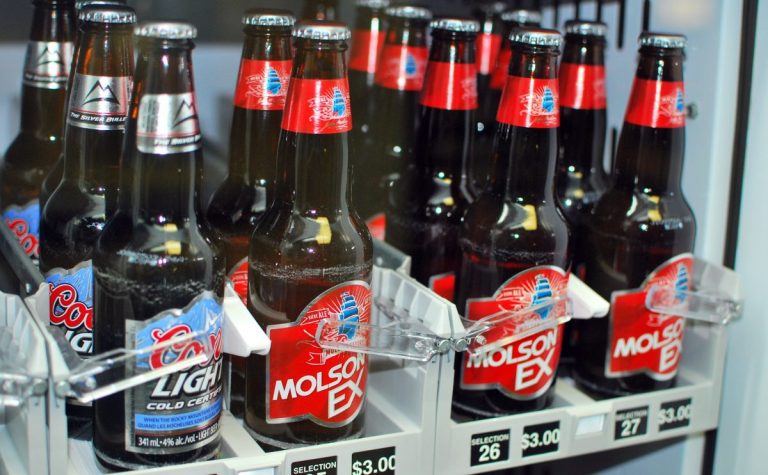
Molson Coors Beer Company Gets Into Cannabis

There is no question about it – brewing giants are getting into the business of marijuana. Just last year, Constellation Brands, maker of Corona and Modelo, invested millions into the design of cannabis-infused beverages to be sold on the Canadian market. Heineken-owned Lagunitas has also jumped in with its IPA-inspired, THC-infused sparkling water Hi-Fi Hops. This brew is now available in California.

But now, Molson Coors has joined the ganja game. The second largest brewing company in the U.S. and Canada announced earlier this week that it had officially partnered with Hydropothecary Corporation to develop a line of THC-infused, non-alcoholic beverages that it plans to sell in the northern nation later next year.

Related: Genetically-Engineered Cannabis: Growing Trend In North America?

The brewery told investors during a recent earning call that it was considering a move into marijuana, but had not yet made an official determination. Company executives said the decision to move forward was a matter of “do we want to be a spectators or a participant.”

Canada recently legalized a nationwide recreational pot market. It is set to get underway in October of this year. However, edible cannabis products, which include THC-infused drinks, will not be allowed on dispensary shelves until sometime in 2019. The law only allows the distribution of smokeable forms of marijuana until then.

“Canada is breaking new ground in the cannabis sector and, as one of the country’s leading beverage companies, Molson Coors Canada has a unique opportunity to participate in this exciting and rapidly expanding consumer segment,” Frederic Landtmeters, president and CEO of Molson Coors Canada, said in a statement.

“This new venture is consistent with our growth strategy and our commitment to being first choice for consumers and customers by ensuring that Canadians have access to high-quality products that meet their evolving drinking preferences.”

Beer companies getting into marijuana is a no-brainer. The recent decline in domestic sales as more customers spend money on craft beer and hard liquor has given major brewers no choice but to expand or die. Even Anheuser-Busch, the largest brewer in the world has felt the hit. In fact, the company, while not yet making a move to cannabis, has indicated that it plans to put more focus on its non-alcoholic beverage line to attract the Millennials and those deemed Generation Z that are no longer consuming alcohol with as much enthusiasm as those who came before them.

Related: Hops Cross-Pollinated By Cannabis Make For Legal CBD

In reality, all of the brewing companies dabbling in the Canadian cannabis industry are just preparing for the time when the United States government finally ends marijuana prohibition. Molson Coors Brewing CEO Mark Hunter says the Canadian deal is intended to be a “test” for products that could one day be available all across the Land of the Free.

“We believe potentially it’s got really significant potential and we’re going to learn a lot,” Hunter said. “If other markets start to open up in due course and this becomes federally legal, then we’ll be in a good place at that point in time.”


New York Governor Takes Major Step Toward Marijuana Legalization

New York Governor Andrew Cuomo has moved one step closer to legalizing recreational marijuana in the state. Cuomo appointed a committee tasked with drafting legislation around the recreational usage of cannabis. The committee will use recommendations from the State Health Department to inform the bill, with an expectation that legislators will vote on it in the upcoming session.

“As we work to implement the report’s recommendations through legislation, we must thoroughly consider all aspects of a regulated marijuana program, including its impact on public health, criminal justice and State revenue, and mitigate any potential risks associated with it,” Cuomo said in a statement.

Cuomo also urged the drafting committee to start a dialogue with the State Senate and State Assembly, as well as cannabis advocates and sponsors who supported medical marijuana legislation in the state. Alphonso David, who serves as counsel to the governor, will oversee the working committee. The group will “consist of individuals with specialized knowledge, including experts in public health, public safety and economics, and the leaders of relevant state agencies,” according to the press release.

In January Cuomo commissioned a report from the New York State Department of Health to weigh the effects of legalizing recreational marijuana. The 75-page study recommended in favor, stating, “The positive effects of a regulated marijuana market in New York State outweigh the potential negative impacts.” One of those positive impacts included a projected $700 million tax revenue from cannabis sales, depending on tax rates and buying figures.

The report also found through regulation of marijuana, including government oversight of the production, testing, labeling, distribution, and sales, would benefit public health. With proper legislation and the inception of a legal cannabis market, New York would be allowed to control licensing, assure quality control and consumer protection, as well as set age and amount limits.

The report also concluded that legalization would reduce racial disparity in enforcing cannabis laws and decrease the incarceration rate in the state.

This support of cannabis legalization can be seen as a change of heart from Cuomo, who previously labeled marijuana as a “gateway drug.” Cynthia Nixon, Cuomo’s opponent in the state’s gubernatorial race, has created pressure for the incumbent to consider legalization, as she has continually attacked Cuomo for his stances on marijuana.

Cannabis Flower Now Available In Pennsylvania

As of August 1, Pennsylvanians with medical marijuana cards were able to purchase dried buds for the first time. Sixteen medical cannabis dispensaries opened on the 1st to throngs of people who were beyond glad to have the actual cannabis option.

Though SB 3 was signed into law on April 17, 2016, it wasn’t until April 2018 that dispensaries opened and then it was with extremely processed forms of cannabis, such as oils, tinctures and salves. As cannabis continues to gain momentum across the states, these processed products have become popular, many with very good reason and especially vape pens, but the lines to buy bud are the proof in the pudding, people love their weed.

Dried, cured, trimmed marijuana is still the one, still the most familiar and still the way most imbibers are comfortable taking it. There is one stipulation in Pennsylvania, however, the cannabis cannot be smoked, but vaporized. Special pens, boxes and the infamous Volcano are all available to assist, though, and for many, breathing in the vapor just feels right.

An amazing aspect to cannabis is the amount of people who are able to wean themselves off of addictive prescriptions, like benzos and opiates. Patients on line described their victories over pharmaceuticals to Philly.com and their stories, though full of suffering and pain, became uplifting and on the verge of miraculous when they got to the parts about medical marijuana and how it intervened in their lives.

Around 32,000 patients have registered for medical cannabis in Pennsylvania so far, and if the dispensary lines were any indication, adding full plant cannabis to the list of wares will likely bring in many new patients. Aside from being the more familiar choice, dried bud also costs less than most cannabis products. Some dispensaries were selling high quality grams for as little as $12.

The rush to buy greens is encouraging in another way. As the cannabis industry becomes more homogenized and corporatized, many older school activists and those who follow history have had concerns that cannabis itself was going to morph into a variety of isolated pharmaceuticals. Period. This latest showing by Pennsylvanians makes it clear that that’s just not what the people want. Though what they really, really want is to probably spark up a joint.

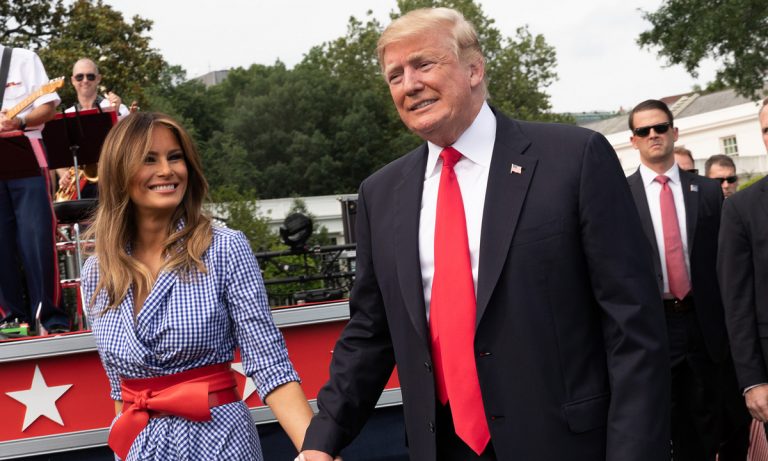
What Would Happen To The Cannabis Movement If Trump Left Office

I’ve been asked several times recently what would happen to cannabis reform if President Donald Trump were to leave office—either by resignation or removal. For industry and for the advocacy community, it is a critical question, as President Trump—at least rhetorically—has been the most pro-cannabis reform-minded president in history.

First, let’s be clear. The likelihood of the president resigning or being removed is extraordinarily low. The president’s pride and self-conviction that he has done nothing wrong vis-à-vis the current investigations his administration and campaign face are clear. What’s more, the president’s historically high popularity among Republican voters means that it would take a cataclysmic event or discovery of information for a sufficient number of Republican senators—currently 18—to join all 49 Democrats (assuming they vote in unison) to vote to remove Mr. Trump—if the House impeached.

But what would happen if the unthinkable happened?

The elevation of Vice President Mike Pence to the presidency would likely be a dark day for cannabis policy. Mr. Pence is an avowed social conservative who has shown himself to be no friend to the cannabis movement. When given the chance as a congressman, Mike Pence voted against legislative measures that sought to prevent the Justice Department from spending funds to enforce against state-legal medical marijuana programs in 2005 and 2007. And in an Indiana Governor’s debate in 2012, Pence opposed cannabis decriminalization, noting “I would not support the decriminalization of marijuana. To be candid with you growing up in the Hoosier state, I’ve seen too many people become involved with marijuana and have their lives sidetracked as a result or to see marijuana become a gateway drug to even worse addictions on their part…Decriminalization is not the right path.”

The very opponents in the Trump administration—appointees like former Health and Human Services Secretary Tom Price and Attorney General Jeff Sessions—are the same social conservatives with whom Mr. Pence is most aligned ideologically. Moreover, Mr. Pence’s core ideology—religious and social conservatism—finds its greatest support among older, white, conservative Republicans, a demographic group least supportive of cannabis reform. The irony, of course, is that a President Pence’s political viability at the national level would depend on his ability to grow his base. He would need to appeal to conservatives of the non-social stripe and moderates, a feat at which Mr. Trump has excelled. However, Mr. Pence has spent a career appealing to that core group as a congressman and governor. His transformation on the cannabis issue may be beyond his reach and if he attempted it, it may not seem legitimate or believable, given his record.

Yet, despite this reality, little would change in terms of substantive policy under a Pence administration. While President Trump’s words have been supportive of cannabis reform, his administration’s only actions—save the technical, apolitical FDA approval of Epidiolex—have been anti-reform. One would imagine a Democratic House of Representatives working with a closely divided Republican Senate to deliver cannabis reform legislation to the president’s desk.

Such legislation would likely face a different face in Mr. Trump’s Oval Office than in Mr. Pence’s. But beyond this hypothetical, little actionable difference is evident.

However, depending on who the Republican president is in 2020 will matter much in the next presidential race. President Trump can largely disarm the Democratic nominee on the issue, arguing that he has a similar position to Democrats and that Congress hasn’t given him legislation to sign, but that he would, given the opportunity. (Although Democrats could still attack the president for the rescission of the Cole Memo, regardless of its policy impact or lack thereof.)

RELATED: Which One Of These 6 States Will Legalize Marijuana Next?

President Pence would be different. A Democratic nominee could have a very public debate with Mr. Pence over the issue, using it as a springboard to discuss the man related issues such as states’ rights, medical efficacy, economic growth, job opportunities, trade, criminal justice, etc. Any 2020 Democratic presidential nominee would chomp at the bit to debate Mr. Pence about cannabis legalization—an issue about two-thirds of Americans support—to paint him as out of touch. Such a fight would elevate and mainstream the cannabis policy debate in a way a contest with President Trump may not.

Ultimately, the extremely unlikely event of a pre-2020 Pence presidency may have little effect on policy, even if it means replacing a cannabis reform supporter with an opponent. Yet, come 2020, the presidential race will either be between two cannabis supporters or be one that elevates the cannabis conversation.

John Hudak is a Senior Fellow at the Brookings Institution and Senior Advisor at Freedman & Koski, Inc. He is the author of the 2016 book Marijuana: A Short History.

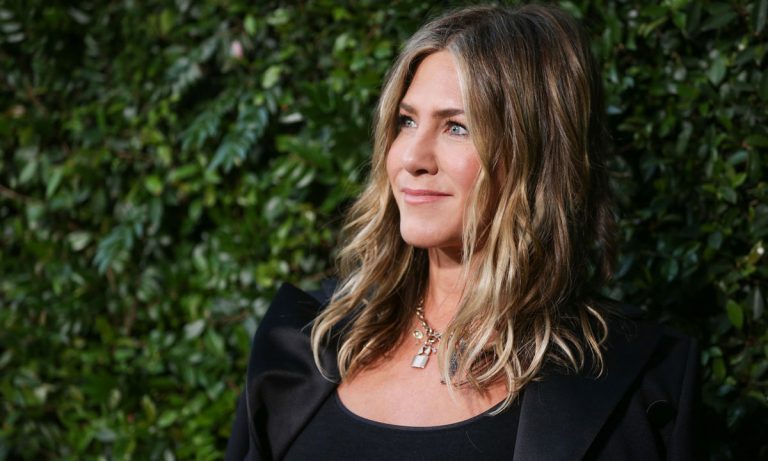
Jennifer Aniston Might Be Secretly Creeping Your Instagram

Jennifer Aniston is a creeper. How do we know this? Because she cops to it in a recent InStyle profile, where the actress covers everything from the never-ending rumors about her love life to the #MeToo movement.

Aniston doesn’t have any public social media accounts. Not Twitter, Facebook, or Instagram. She believes negativity breeds in these online spaces, though the actress “will totally admit that I can dip into Instagram and sort of be a secret voyeur.”

The interviewer—none other than Molly McNearney (Jimmy Kimmel’s wife and co-head writer)—accuses Aniston of being a creeper and the actress did nothing to deny the accusation.

“I’m a creeper,” she told InStyle. “There are times when I’ll look through and think, ‘Oh my god, what a time suck!’ I’ve been with people who spend maybe an hour figuring out this one post, and you’re like, ‘That just took up an hour of your life, and it’s gone in 60 seconds.’

Though she creeps, Aniston doesn’t participate because she believes “iPhones and Snapchat and all this stuff is just fueling narcissism.” She worries what effect the technology has on younger generation, who are “are using filters and all sorts of tools to mask who they really are.”

“It feels like we are losing connection. I think we’re losing conversation,” Aniston told InStyle. “It’s hard enough being a teenager and feeling like you fit in. Now we’re actively creating an environment and a platform for you to tell someone, ‘I like you’ or ‘I don’t like you.’ That seems like an unhealthy formula for already-insecure adolescents. We’re pouring fuel on a fire.”

You can check out more of the actress’ thoughts on our current affairs, and her own, here.

Manhattan Is Loosening Its Cannabis Laws, But What About The Rest of NYC?

On September 1, officially, smoking or possessing pot in public will not be considered a jailable crime in Manhattan, instead there’ll be summons issued and people will stop having college funding taken away or spending time locked up for cannabis.

There are a few stipulations, like if the person has a warrant or is on probation they will still be arrested, but already there has been a steep drop in prosecuted cannabis cases since the new legislation was announced.

However, there are five boroughs that make up The City That Never Sleeps, and not all are on board with the looser approaches to marijuana. In Queens, The Bronx and Staten Island a person will still face criminal prosecution and all the downfalls that come with it.

Manhattan District Attorney Cyrus R. Vance Jr. is behind Manhattan’s move to make pot not a crime and he projects that cannabis prosecutions will go from around 2,000 annually to less than 200. Of those 200 will be those who are on parole or probation, those making a nuisance of themselves, i.e. sparking up on a public bus, and those who are otherwise already breaking the law.

So as it stands, there’s not much to worry about as a pot enthusiast in Brooklyn and Manhattan as long as your ducks are in a row. In all truth, these two boroughs are ahead of the curve in New York. As the gubernatorial primary approaches with wafts of weed in its debates and current NY Governor Andrew Cuomo educates himself more and more about weed, it’s likely that the state will be legalized in the not too distant future.

In the meantime, while summons are not crimes and don’t carry with them stigmatized background checks, they do carry fines and a day in court. There’s no mailing in of a check and having the initial fine of $100 (Second time offenders are looking at $250) taken care of, instead a day must be taken away from childcare, work or school in order to pay the fine, not to mention $120 in court fees.

They’re still a steps in the right direction and is line with the positive cannabis progression across the nation that seems to have something new happening every day now. New York has always been on the cutting edge; it’s high time they left cannabis users alone and focused resources elsewhere.

Facebook Just Cut Off User Data Access To Hundreds Of Apps

A recent Facebook blog post claims that hundreds of apps have just lost the ability to access Facebook’s user data.

The post — dated July 31, and written by Ime Achiborg, VP of Product Partnerships — explained that these apps were deactivated due to the fact that on March, the company announced that all apps using Facebook’s API would now have to provide  more detailed information for them to remain active on the site and to have access to users’ personal data. These apps had until August 1st to provide the required information.

The post continued by explaining that all apps, even the ones that were approved, will be submitted to periodical reviews, even though they’d still have access to Facebook’s API. Developers of the app would have a limited amount of time to respond and to provide the required information.

Via Facebook:

Our goal with all these changes is to ensure that we better protect people’s Facebook information while also enabling developers to build great social experiences.

After Facebook’s troublesome year, the company has faced backlash from all directions and have been forced to up their security measures while assuring users that their private information is not being mishandled. Even though the company has made all sorts of statements and invested a lot of money on ads, people can’t seem to trust them anymore. A 2018 study conducted by the Ponemon Institute claims that only 27 percent of people think that Facebook would protect their data. In 2017, that number was much higher. Back then, 79 percent of users trusted Facebook with their information.

Prince Harry Is Selling His Audi On Auto Trader For A Cool $94K

The car that made headlines last year when Prince Harry was seen driving (then girlfriend) Meghan Markle to Pippa Middleton’s wedding reception is for sale. The Duke of Sussex is selling his like-new Audi RS6 Avant for $94,000.

The car is being sold on Auto Trader after only a year.

According to the Daily Express, the car only has 4,500 miles on it and is in excellent condition, adding that the Audi RS6 4.0 Avant Tiptronic Quattro 5-door is the sportiest in its range and is equipped with nearly $15,000 of hand-picked extras, such as a panoramic sunroof and privacy glass.

https://www.instagram.com/p/Bl-816vHOPs/?tagged=audirs6avant

Erin Baker, Auto Trader’s editorial director, told the Express that the Audi is a “smashing car perfectly suited to any aspiring royal.”

The car boasts a 17 reg and low mileage, so it begs the question why is the prince selling so soon? Maybe he’s on the market for a bigger family car, in which case we’d recommend a Skoda Superb. Maybe he’s after an electric car, having driven Meghan away after their wedding in an electric Jag?

The car’s original list price was $119,117.

Meanwhile, The Queen is selling her vintage Rolls Royce. It’ll be auctioned off in the U.K.. next month. According to CNN:

Among the most anticipated lots is a 1953 Rolls-Royce Phantom IV State Landaulette, used by the Queen on state occasions and kept by the British royal family for more than 40 years. The vehicle, which has a top estimate of $2.6 million (£2 million), is the same model as the one used by Meghan, Duchess of Sussex, on her wedding day in May.
A 1985 “Centenary” Silver Spur Saloon used by Princess Diana is expected to sell for as much as $197,000.

The Time Seth Rogen Introduced Tom Cruise To Internet Porn

Back in 2006, Tom Cruise was interested in making a romantic comedy, so he approached director/screenwriter Judd Apatow about possible ideas. Apatow’s usual collaborator Seth Rogen was in the room and the Knocked Up star exploded Cruise’s mind. Yes, it was the time Seth Rogen introduced Tom Cruise to internet porn.

“So we’re talking to him and I don’t know how it came up, but it usually comes up with Seth where he starts talking about marijuana and pornography,” Apatow said on “The Late Show With Stephen Colbert”, adding:

And he starts talking about watching adult films on the internet and Tom Cruise goes, ‘What? Wait, you’re saying that there are adult films on the internet?’ And Seth is like, ‘Yeah, there’s all these movies on these websites.’ And Tom Cruise is like, ‘Wait a second, you’re saying if I go on the computer, on the worldwide web, there are people having sex on this [information super] highway?

Apatow says he couldn’t determine if Cruise seriously didn’t know about internet porn or if he was “being very polite.” He assumes it’s the latter, but, “Who knows? We’ll never know.”

Rogen confirmed the story to Vulture. While attending the premiere of the Netflix film Like Father, which is directed and written by his wife, Laura Miller Rogen, and features the actor in a supporting role, Rogen expounded upon the Cruise meeting.

“I didn’t remember that until I heard Judd tell that story,” Rogen said. “I obviously had no recollection of that, and then when I saw him tell it, I was like, ‘Oh, yeah! I told Tom Cruise that internet pornography exists, and he didn’t know.’ Which is crazy!” Don’t worry, Rogen told Cruise how wild this revelation was. “I probably was like, ‘This is crazy you don’t know this.’ I mean, I can’t remember—it was like 12 years ago or something like that. I think generally my reaction was, ‘You are a very sheltered man.’”

In true Rogen fashion, there’s more hijinks involved in his meeting with Cruise. Note to anyone about to meet Tom Cruise at his house: use the bathroom before you arrive.

“That day in Tom Cruise’s driveway, I got to his house, and I had to pee so bad,” he told Vulture. “I very vividly remember this, and he has a very long, winding driveway, and I didn’t want to show up at his house and just pee right away, because I thought it would be an awkward thing,” he said. “So as I was driving up his driveway, I stopped halfway through it and peed in a Snapple bottle I had in my car. And then sealed it up and finished the ride up the driveway, and greeted Tom Cruise and Katie Holmes and his newborn baby, Suri.”  So you know about the time Seth Rogen introduced Tom Cruise to internet porn.

Illinois Now Allows Medical Marijuana In Schools

Governor of Illinois Governor Bruce Vincent Rauner signed legislation Wednesday allowing the use of medical marijuana in schools. House Bill 4870, also known as Ashley’s Law, amends the Compassionate Use of Medical Cannabis Pilot Program Act.

House Bill 4870 was originally filed on February 14th by Representative Lou Lang (D) 16th District. Representative Kelly M. Cassidy (D) of the 14th District was the chief co-signer on February 27th.

The bipartisan initiative of House Sponsors includes Reps. Lou LangKelly M. CassidyCarol Ammons, Nicholas K Smith and Laura Fine while Senate Sponsors include Cristina CastroLaura M. MurphyLinda HolmesIris Y. MartinezPatricia Van Pelt and Neil Anderson.

According to the bill’s status on the Illinois General Assembly’s website, House Bill 4870, “Amends the School Code. Requires a school district, public school, charter school, or nonpublic school to authorize a parent or guardian of a student who is a qualifying patient to administer a medical-cannabis-infused product to the student on school premises or a school bus if both the student (as a qualifying patient) and the parent or guardian (as a designated caregiver) have been issued registry identification cards under the Compassionate Use of Medical Cannabis Pilot Program Act.”

House Bill 4870 will bring relief to students who suffer from a host of disruptive and debilitating medical afflictions such as epilepsy, Autism, Tourette’s Syndrome, and ADHD. 

Medicines to treat such conditions derived from cannabis include cannabidiol (CBD) or Epidolex, which treat rare forms of epilepsy, Lennox-Gastaut syndrome, and Dravet syndrome.

Medical marijuana can be more effective and have fewer side effects than other medications when treating some conditions, as medical marijuana naturally reduces inflammation, which is the root of many ailments.

The bill includes a caveat that “a parent or guardian may not administer a medical cannabis infused product if the administration would create disruption to the school’s educational environment or would cause exposure of the product to other students.“

Members of the school’s staff are not required to administer a medical cannabis infused product to a student.

House Floor Amendment No. 1 describes that in addition to a parent or legal guardian of a registered and qualified medical marijuana patient, an adult individual registered with the Department of Public Health as a designated caregiver may also administer medical cannabis infused product to that student.

The provision is referred to as Ashley’s Law, after an 11-year-old girl from northern Illinois who attends school in Schaumburg. Ashley’s school denied her medication, prompting her parents to sue their local school district.

“Children should not have to choose between their medication and their education,” said Senator Cristina Castro. “Qualified patients have the right to have access to their medicine no matter where they are. I am happy to see this measure signed into law.”

House Bill 4870 passed the Senate and House with unanimous support and went into effect immediately in the state of Illinois.

Don't Miss Your Weekly Dose of The Fresh Toast.

Stay informed with exclusive news briefs delivered directly to your inbox every Friday.

We respect your privacy. Unsubscribe anytime.