Thursday, June 18, 2026
Home Blog Page 888

The Trump Administration’s Approach To Opioid Reduction Is Borderline Dangerous

If you watch TV, you’ve likely seen the Trump approved advertisements regarding opiate use and just how far people will go to get more. From getting into intentional car wrecks to slamming limbs in doors, the horrific scare tactics are likely doing more harm to the movement to quell opiate abuse than good.

In a recent commentary by the Cato Institute, it is pointed out that, “while anti-drug media campaigns are a perennial favorite of politicians, little evidence suggests this advertising has any significant effect in reducing drug use.” In fact, numbers show that the failed National Youth Anti-Drug Media Campaign, which focused on stigmatizing cannabis use, had a reverse effect of that which was intended. It normalized marijuana use rather than demonizing it. As in, “See, I’m not the only one toking.”

The stakes are much higher with the opioid epidemic, however. Whereas there has never been a recorded death from cannabis use, opiate overdoses are plaguing our nation. Unfortunately, the country’s leadership doesn’t seem to know how to approach the problem. From threatening to give drug dealers the death penalty to reducing opiate prescriptions being written, the ideas and commercials coming out of the White House simply fall short and verge on detrimental.

As Sam Black Crow said in Neil Gaimon’s masterpiece American Gods, “I believe…there’s nothing wrong with the death penalty if you can trust the legal system implicitly, and that no one but a moron would ever trust the legal system.” Every system has its flaws and the death penalty for dealers certainly isn’t the answer, but neither is cutting down on prescriptions.

If someone is truly addicted to opiates, cutting off prescriptions is likely to drive them to the black market, where heroin is the star, and often laced with its extra potent opiate counterpart Fentanyl. Plus, there are many, many legitimate uses for opiates and the majority of those who have a prescription are not abusing their medicine, but managing chronic or severe pain and doing their best to maintain quality of life.

The horrifying images playing across America at the direction of the White House carry on failed traditions like the Reagan era “Just Say No” campaign and the aforementioned National Youth Anti-Drug Media Campaign. Perhaps Trump should read some of the promising studies that show cannabis as a pathway to health that veers away from opiate use and often quells a habit entirely. Offering medical marijuana in replacement of opiates or as a reduction technique is a much safer way to address the crisis and raise awareness than scare tactics ever will be.

New Jersey Cannabis Prosecutions Put On Pause

On Tuesday, the New York Attorney General Gurbir S. Grewal told prosecutors to hold off on all cases of arrest that revolved around cannabis — and to hold off on any more convictions until August at the earliest — while marijuana law is further discussed and put into place.

Though it isn’t legalization, it’s an important and positive step for the cannabis community and imbibers as a whole. The heart of the legalization movement has always been about keeping people out of jail and getting them released when they did and do go down. Cannabis possession is known to be a victimless crime that mucks up our prison and courts systems. Not to mention the lives it destroys.

In many places where cannabis is yet criminalized, the possession of a simple joint can mean the difference between student funding and outright rejection, public housing and homelessness and even freedom and the loss of freedom. The New Jersey AG’s move to halt convictions and jail sentences – for now – is a step in the right direction, no matter if it does or doesn’t lead to legalization through legislation.

The move comes after Jersey City, NJ tried decriminalizing the plant in their city borders, freeing up courts and jail space and cracking down on the racial disparities that so often occur in cannabis arrests. Though the AG saw that particular move as premature, it is likely that it contributed to the decision to suspend prosecution of pot.

New Jersey is the projected contender to be the 10th state to legalize recreational cannabis and only the second to do so via legislation. Governor Phil Murphy platformed on the issue and though his lofty promise of legalization within his first 100 days didn’t come true, he remains pot’s champion.

Not only did Gov. Murphy expand the medical marijuana laws to sufficiently cover most New Jerseyans by the inclusion of chronic pain and anxiety as qualifying conditions, though there are still a few hoops that must be jumped through to get a medical marijuana recommendation and then card, Murphy made even the process more streamlined.

This latest move by Grewal is another step toward the social reform that we have been fighting for from the beginning of the movement to remove pot’s stigma and criminality. It shows guts, but it also shows the face of progress and a movement with momentum behind and before it.

Gwyneth Paltrow Explains GOOP-Condé Nast Failure; Kelly Osbourne Opens Up About Addiction

GWYNETH PALTROW SAYS GOOP-CONDE NAST DEAL FELL APART WHEN COMPANY WANTED TO FACT-CHECK GOOP ARTICLES


Anna Wintour, editor in chief of Vogue and Condé Nast’s artistic director, was initially “excited” for Paltrow to bring “her point of view to the company.” However, the deal fell apart after Condé Nast insisted on fact-checking Goop magazine articles, among enforcing other rules.

The publishers did not want Goop magazine to use its platform “as part of their contextual commerce strategy.” Goop also wanted to sell its products in the magazine, but “Condé Nast insisted that they have a more ‘agnostic’ editorial approach.” Paltrow said she wanted readers to be able to buy products through the magazine.

“They’re a company that’s really in transition and do things in a very old-school way,” Paltrow told The New York Times Magazine. “But it was amazing to work with Anna [Wintour]. I love her. She’s a total idol of mine. We realized we could just do a better job of it ourselves in-house. I think for us it was really like we like to work where we are in an expansive space. Somewhere like Condé, understandably, there are a lot of rules.”

Paltrow said she didn’t understand why Condé Nast insisted on fact-checking.

KELLY OSBOURNE OPENS UP ABOUT HER PAST STRUGGLES WITH ADDICTION: ‘REHAB DOESN’T FIX YOU’


Kelly Osbourne is opening up about her past struggles with addiction, following Demi Lovato’s hospitalization on Tuesday from an apparent drug overdose.

The 33-year-old TV personality appeared on the British talk show Loose Women on Wednesday, where she admitted that she knows “what it’s like” to have a relapse, and be in the public spotlight while trying to climb out of a dark place.

“I will never speak on behalf of Demi, because that wouldn’t be right,” Osbourne explained as the conversation came to focus on her friend’s recent relapse and subsequent medical emergency. “I can only share about what I’ve been through and what I know from myself, and that is relapse is one the hardest things we face as an open addict who has gone through the program and turned their life around.”

Sleeping With A Fan On Is Bad For You

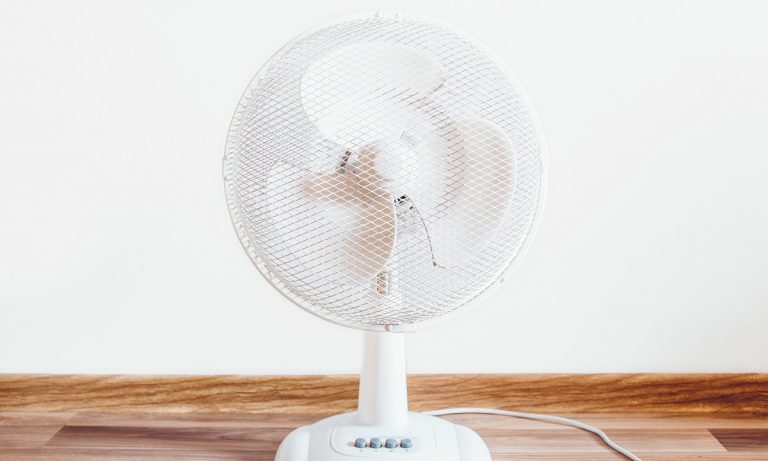
During these hot summer nights, sometimes the only thing that comforts us at night is a fan that circulates the air and keep our bodies cool enough that we can actually get some sleep. For some of us, it’s the difference between needing one cup of coffee in the morning and an entire pot.

But new research says that there are some downsides to sleeping with the fan on. Here are four ways sleeping with an electric fan in your room can be bad for your health, according to the sleep experts over at Sleep Advisor.

Allergic reactions

Have problems breathing? Perhaps a little asthma? A fan may make your night more of a living hell than necessary. Says SleepAdvisor.com:

As a fan moves air around the room, it causes flurries of dust and pollen to make their way into your sinuses. If you’re prone to allergies, asthma, and hay fever, this could stir up a whole lot of trouble.

They also advise taking inventory on your fan’s dust build-up. If the blades are coated with grossness, it’s probably not a good idea to turn it on before it’s cleaned.

Dry air

It’s kind of a given that having constant air blowing on your body can cause dry skin. But it can also interfere with things you thought were protected from circulating air, like your mouth and eyes. According to the SleepAdvisor.com, there are some people who actually sleep with their eyes open, which, of course, becomes a magnet for dryness. It’s especially problematic for those who wear contacts to bed.

Also, according to the site, “Some people also sleep with their mouth open, and the excess airflow will potentially dry out their mouths and throats. Keeping a glass of water nearby can help, but do you really want to be woken up because of a dry mouth?”

Sinus irritation

SleepAdvisor.com says the same air that can irritate your eyes and mouth can irritate your sinuses:

If the dryness is particularly extreme, it can result in your body producing excess mucous to try to compensate. Then, you’re more susceptible to blockage, stuffiness, and sinus headaches.

Sore muscles

Be you never saw this one coming. Constant air blowing on you can cause you to wake up with…a stiff neck. Say, what? Says the site:

People who sleep with a breeze directly on them may wake up with stiff or sore muscles. This is because the concentrated cool air can make muscles tense up and cramp. This problem is especially common for people who sleep with it near their face and neck. If you’ve been waking up with a stiff neck in the morning, it might be because of the constant breeze.

Now, for those of us who need a fan to create white noise and block out all the nighttime sounds, especially in the city, the hum of a fan can actually improve our sleep. It’s also helpful if your partner snores.

Using a fan has also been shown to benefit newborns. Says SleepAdvisor.com:

According to some studies, they can even help prevent SIDS (Sudden Infant Death Syndrome). The reason is that high temperatures and increased CO2 levels put babies at risk. Running a fan lowers the temperature and decreases the air’s concentration of carbon dioxide.

What We Already Knew: Cannabis Is Much Safer Than Cigarettes, Poll Shows

A new Gallup poll asked U.S. citizens about six different types of products, five of which were nicotine-based and one cannabis as a whole. With every substance it was asked if the consumer saw it as “very harmful,” “somewhat harmful,” “not too harmful” or “not at all” harmful. Though cannabis wasn’t seen as “not at all” harmful across the board, it is clear that public opinion about weed is much higher than that of cigs.

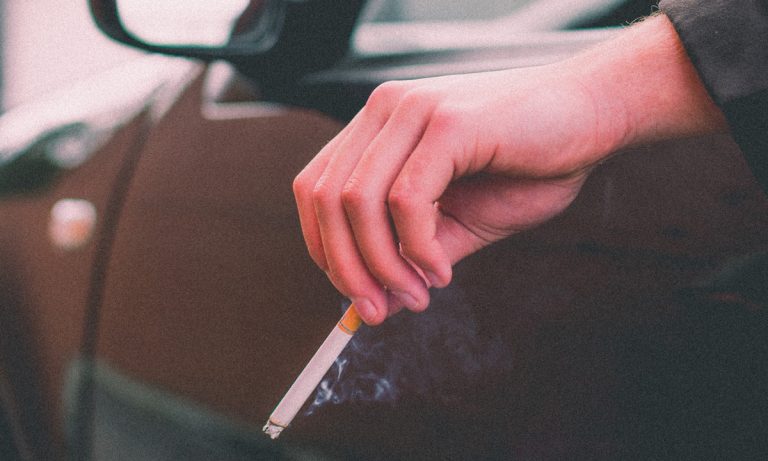
By far, cigarettes were perceived to be the most harmful, with 82 percent of respondents saying that they are very harmful, another 14 percent somewhat harmful and an outlying 1 percent who said that they are not at all harmful. The most surprising thing about these stats is that only 82 percent see cigarettes as very harmful. It’s a jump from the 1950s, when smoking was more the norm, but these days, the Truth Campaign has done due diligence and scared most of the population with their gruesome commercials

The most socially acceptable form of ingesting nicotine was not chewing tobacco or cigars, but e-cigarettes or vaping, which makes sense. There is also an argument being made on the cannabis side of things that vaping weed is a healthier delivery system than smoking it outright.

Though cannabis wasn’t broken down into categories in the poll, maybe it’s not quite time to ask America about their opinions on things like edibles, tinctures, salves, vaping and smoking respectively. There really hasn’t been enough research in those arenas to back up anecdotal evidence, mostly because of pot’s status as a Schedule I drug, meaning it has no medical use and a high potential for abuse, which is utter bull no matter how you take it.

The folks over at Gallup thought that cannabis in general was a fit for the survey, however, and the results, though mixed, showed that U.S. residents don’t see cannabis as being all that harmful and certainly not as harmful as cigarettes. 42 percent said not too harmful or not at all, leaving 29 percent with some concerns and 27 percent still pounding the drug war path with very harmful.

Some concern is natural, though, and the important thing to take away from this survey is that public opinion has changed drastically over the last two decades. Marijuana went from public enemy number one to a plant that not everyone’s quite sure about, but that is being seen in a brighter, clearer light that illuminates its not at all harmful qualities.

Here Are 5 Of The World’s Most Extreme Marathons

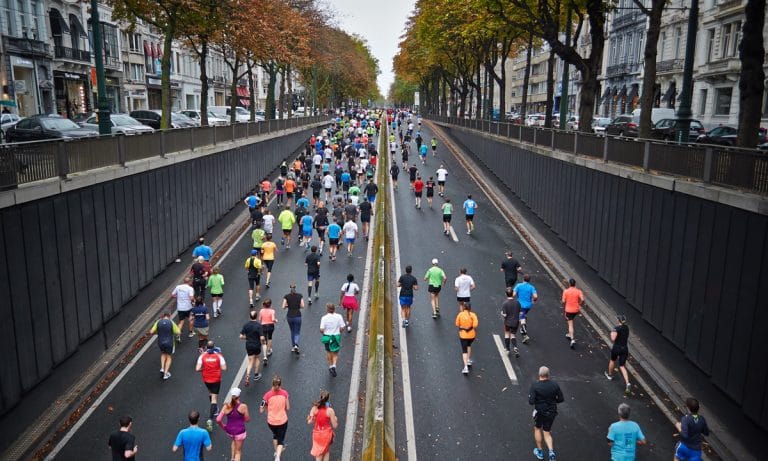
The journey of a thousand miles begins with a single step. And those who are into extreme marathons are up for every one of those steps. These are the folks who participate in extreme physical challenges around the world to complete the most physical of tests. Okay, maybe not the test of 1,000 miles, but certainly the mental equivalent.


via GIPHY

The market for mega marathons has gone global, with countries on every continent creating challenges more extreme than the next. It seems every year the courses and qualifications become that much more intense, and that much more attractive to those looking for their next conquest. It’s actually pretty remarkable what humans can do when the put their minds to it, and you won’t believe some of the marathons mankind has made in this day and age.

Marathon des Sables

If walking 154-miles on concrete ground wasn’t hard enough, try doing it on sand. Every year for six-days a group of marathoners set out on a physical and mental challenge in the Sahara desert. The sand in southern Morocco is so fine that it consumes the foot’s momentum, and the temperatures during the April marathon reach well over 100 degrees. This route is in fact so dangerous that three runners have died on the route. To this desert journey we say: enter at your own risk.

Polar Night Half Marathon

From hot and dry to cold and icy, the Polar Night Half Marathon poses different kinds of challenges. For starters, the entire half-marathon is done in darkness. The event takes place in January during the Polar night-period, when the sun never rises above the horizon. Yes, that is a real thing. And If that wasn’t quite intense enough for you, the course is only lit by torches. It’s safe to say the Polar Night Half Marathon is no joke.   


via GIPHY

Jungle Ultra

Does a 142.6 mile run through the Peruvian jungle sound like a good idea to you? For Jungle Ultra marathon lovers, it’s more than a good idea, it’s something to look forward to all year. The five-stage, self-supported race will take you on a 10,500 feet drop to the jungle floor and over more than 70 rivers and streams. Which you will probably need to jump in considering the humidity levels that are known to reach 100 percent. If you’re ready to get your Rambo on, this could be the run for you.

The Great Wall of China Marathon

Running through nature can be overrated, so why not a run through history? One of the world’s largest and most famous monuments sets the stage for this 26.2 mile marathon. The Great Wall of China Marathon takes you on a journey through a structure so large it can be seen from space. Climbing up 5,164 steps has become so popular that it sells out each year, allowing an impressive 2,500 to take part per marathon.

Spartathalon

May the odds be ever in your favor. Welcome to the real-life Hunger Games-esque marathon. Modeled after the journey that Pheidippedes ran in 490 BC, the 153-mile course spans from Athens to Sparta. The only difference between runners and Pheidippedes is that they only have 36 hours to complete the course; and if they fail to make it to one of the 75 control points in time, they’re out. Spartathalon allows a mere 350 competitors to enter the race, and only the fittest will actually cross the finish line.


via GIPHY

How Texas Cannabis Activists Are Battling Stoner Stereotypes

Promoting medical marijuana and educating skeptics can be tough anywhere across America, including legal states. Advertisement restrictions are vast, and politicians routinely turn toward social media to advertise marijuana initiatives. But how do you target a different type of voter, one with entrenched attitudes toward cannabis, in areas like rural Texas?

The answer: A man in a cowboy hat. He’ll tell you what’s on his mind and it’s simple. “Medical cannabis isn’t legal for most Texans, and that’s just not right.”

Such a man exists and he’s part of a political ad campaign from Foundation for an Informed Texas and its executive director Jax Finkle. The group is fighting to have the state’s cannabis laws expanded. Under the Compassionate Use Act, only patients suffering from intractable epilepsy may access low-THC cannabinoid oil to treat their symptoms.

“So we’re working on an education campaign focused on rural Texas so that we can go to people in rural areas so they can understand what kind of program we have in Texas and then understand what medical cannabis really is,” Finkle told Texas Public Radio.

Hence the man in the cowboy hat. He goes unnamed throughout the video, as we watch him fix a tractor and attend to this country homestead. He relates tales of dealing with pain after working in the oil and renewable energy industries, and how he was prescribed opiates, which didn’t work for him. That’s why he turned to cannabis.

“It’s important to understand that it really is a medicine—it’s a plant-based medicine,” he says. “I like to work outside; I want to hunt; I want to fish; I like to be out on the farm. It truly improved my quality of life.”

The goal of the advertisement, according to Finkle, is to combat negative attitudes Texans may hold against legalizing cannabis ahead of the state’s 2019 legislative session. Whether Texas politicians will respond to such an initiative remains up for debate, but these are the workarounds activists must pursue in a large state like Texas. With its neighbors to the north in Oklahoma legalizing medical marijuana recently, and Texas Republicans and Democrats adding medical marijuana to its party platforms, medical marijuana in Texas could be closer than we think.

Ryan Reynolds Is Producing A Stoner Revival Of ‘Home Alone’

In basketball we have what’s called a “heat check.” The premise is simple: A player gets “hot,” swishing every basket he shoots, and momentarily appears unstoppable. The confidence becomes contagious and said player actually believes he can’t miss. To test his own surging momentum, the player will fire any shot from anywhere on the court. Usually this involves a “bad shot,” like being guarded by three defenders, or launching a shot just after passing the half court line. This is the “heat check” moment — if he makes the shot, the player truly is an unstoppable superhero like Superman, but if he misses, he returns to Earth as a mortal, the miss representing a suggestion to stay in his lane.

Ryan Reynolds is having a heat check moment. Following his career reinvention as Deadpool, and the commercial success of Reynolds projects like Life and Hitman’s Bodyguard, you’d be forgiven for thinking the actor can’t miss. Reynolds is in that rare moment in a movie career where an artist can make any content they want and someone will give them the money necessary to do so.

So what’s Reynolds doing? An inspired revival of Home Alone, one of the most successful comedies ever, but instead of the adorably sadistic Macauley Caulkin stopping the would-be robbers, defending the home will be…a paranoid stoner. The R-rated movie, no joke, is called Stoned Alone.

Here’s the description from Deadline:

Stoned Alone is reminiscent of that hallowed comedy classic. It centers around a twenty-something weed growing loser who misses the plane for his holiday ski trip. He makes the best of things by getting high. Paranoia sets in and he believes he hears someone break into his house. Turns out thieves have broken in. Fully stoned and fueled by paranoia, he tries to thwart the thieves and defend his castle.

While Reynolds remains renowned for his boyish looks and antics, he doesn’t appear to be starring in Stoned Alone. Instead, Reynolds will produce the film through his production banner at Fox. Directing will be Augustine Frizzell, whose debut film Never Goin’ Back will premiere later this year.

Veterans Still Fighting For Legitimate Access to Medical Marijuana

Millions of U.S. military veterans could benefit from using medical marijuana, according to survey from the Department of Veterans Affairs. That is, if they were allowed to. The VA still mostly prohibits patients from participating in statewide medical marijuana programs since cannabis is illegal under federal law. The department even refuses to conduct research to explore its potential therapeutic benefits.

Vets could easily be one of the largest patient sectors for this alternative medicine. Anyone who needs proof of this should look no further than the compassion programs happening on the west coast.

Local growers there have been donating portions of their crops to former military service members who prefer it to the prescription drugs doled out and paid for by the federal government. So far, thirty states have legalized marijuana for medicinal purposes. Yet veterans in those areas, at least those who exclusively lean on the VA for medical care, are getting jammed up when it comes to getting their hands on medical marijuana.

The herb is a Schedule I dangerous drug in the eyes of Uncle Sam. This means the plant has “no known medical value,” putting VA doctors in a position to bypass this option when consulting with patients. The problem, many physicians say, is a lack of research. Although the VA has conducted a number of studies to expose the negative sides of pot consumption, not much research has been done to reveal its therapeutic potential.

There is a push in Congress to change that. A proposal introduced earlier this year in the House of Representative would force the VA to find out more about the medical powers of cananbis with respect to the treatment of chronic pain and PTSD. Still, lawmakers on the Hill seem to have forgotten that they hold the key to ending this on-going debacle. All they have to do is eliminate from the Controlled Substances Act and the attitude of the VA would change. But forcing the VA to conduct research will do very little to increase access for vets, Curt Cashour, a spokesperson for department told The New York Times.

“The opportunities for VA to conduct marijuana research are limited because of the restrictions imposed by federal law,” Cashour said. “If Congress wants to facilitate more federal research into Schedule 1 controlled substances such as marijuana, it can always choose to eliminate these restrictions.”

As it stands, the VA is conducting a couple of smaller cannabis-related studies. It is looking into whether cannabidiol (CBD), the non-intoxicating compound of the cannabis plant, might be useful for patients suffering from PTSD. It is also examining the use of cannabis is hospice.

Former Secretary of Veterans Affairs David Shulkin believes the government should be doing more. “We have an opioid crisis, a mental health crisis, and we have limited options with how to address them, so we should be looking at everything possible,” he said.

With or without permission from the government, veterans are going to continue using marijuana. A VA survey found that close to 10 percent of vets have used pot in the past year—half of them for therapeutic purposes. Still, these men and women need the federal restrictions to be lifted so they can have legitimate conversations about medical marijuana with their doctors. Unfortunately, lawmakers are passing the buck.

“You may be a big advocate of medical marijuana, you may feel it has no value,” said Representative Tim Walz of Minnesota. “Either way, you should want the evidence to prove it, and there is no better system to do that research than the VA.”

Jeff Sessions Threatens Federal Law Trumping State Marijuana Legislation

Jeff Sessions couldn’t stay quiet for long, could he? As marijuana legalization continues on an upward trajectory, with Oklahoma recently legalizing medical marijuana, you can’t imagine Sessions would sit out contently. During a press conference in Massachusetts Thursday, the Attorney General asserted that while states may legalize, the Department of Justice will enforce federal prohibition policies.

“Personally, my view is that the American republic will not be better if there are marijuana sales on every street corner,” Sessions said. “But states have a right to set their own laws and will do so.”

Sessions was in Massachusetts for an unrelated press conference on fraud prosecutions. During the conference, a reporter asked about the federal stance in regard to legalization in Massachusetts. Though voters legalized recreational marijuana two years ago, legal sales have yet to begin, though they are expected later this year.

“We’ll enforce the federal law,” Session said in response to the reporter’s question. “I mean, the federal law remains the law of the United States.”

Sessions’ comments appear to be fangless, however, as a Department of Justice spokesperson clarified to MassLive this wasn’t a change in policy for the Attorney General. Attorney Andrew Lelling, a top federal prosecutor who reports to Sessions, said in a statement that the feds remained focused on prosecutions that would stop the opioid epidemic. Despite Sessions rescinding the Cole Memo—the Obama-era policy that instructed federal prosecutors not to pursue marijuana-related cases in legal states—Lelling said regulators were acting like the policy was still in full effect.

Federal reform also appears on its way. Momentum is building for the STATES Act, which would recognize states’ marijuana laws and make it impossible to prosecute those compliant with their state laws for marijuana-related offenses. Donald Trump voiced support for the bipartisan bill earlier this summer as well.

Don't Miss Your Weekly Dose of The Fresh Toast.

Stay informed with exclusive news briefs delivered directly to your inbox every Friday.

We respect your privacy. Unsubscribe anytime.