Thursday, June 18, 2026
Home Blog Page 887

Gossip: Chrissy Teigen Slams Meghan Markle’s Dad; Is Brad Pitt Crushing On This Married Actress?

MEGHAN MARKLE’S DAD SLAMMED BY CHRISSY TEIGEN FOR ’EMBARRASSING’ COMMENTS


Meghan Markle’s dad slammed by Chrissy Teigen for ’embarrassing’ comments

Chrissy Teigen just wants Meghan Markle’s father to be happy for the Duchess of Sussex.

Teigen slammed Thomas Markle after the 74-year-old called Meghan “cold” and criticized the royal family again in an interview with The Mail on Sunday. The cookbook author said Markle’s comments were “embarrassing.”

“this guy…this guy sucks. what is wrong with him? let your daughter be happy, please. this is embarrassing,” Teigen tweeted Sunday along with screenshots of the interview.

BRAD PITT HAS A MEGA CRUSH ON THE MARRIED MARGOT ROBBIE


CRUSH …. Sources on the set of their new movie say that Brad Pitt has a MEGA crush on the married Margot Robbie.

A set insider says “it’s obvious that Brad’s completely smitten!” But we should NOT expect any drama! The insider adds, “Brad insists he knows she’s off limits and that he’s just awed by her talent.”


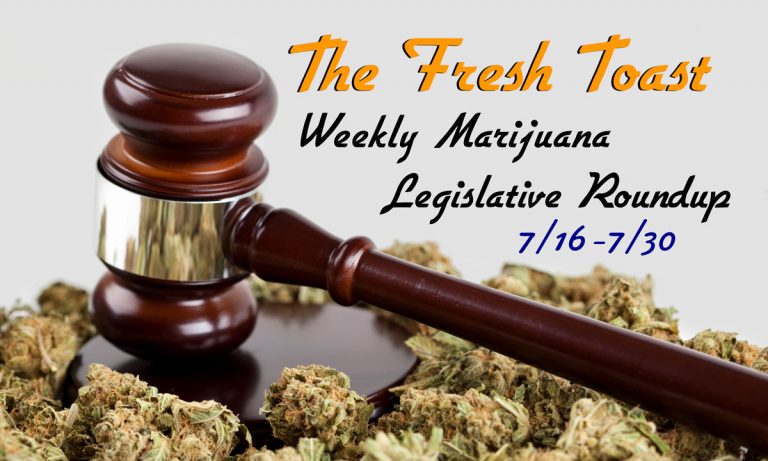
Marijuana Legislative Roundup Week of July 23

0

Here is your marijuana legislative roundup for the week of July 23. It brought little in the way of notable developments, last week saw a flurry of legislative activity with regard to recreational and medical marijuana, with proposals under consideration that would allow marijuana use by federal employees, a series of measures to tighten up regulations in Oregon and Vermont, and the delay of ballot referenda in Oklahoma.

National

A new bill introduced in the House of Representatives Thursday would essentially make it legal for federal employees to use marijuana in states where the plant is legal under most circumstances. At present, federal employees who consume marijuana are subject to termination, irrespective of where the consumption occurred and any differences in state and local law. The bill would not cover those applying for high-level clearances.

Vermont

On Monday, the Office of the Vermont Attorney General issued a legal advisory designed to address efforts by some businesses to circumvent the state’s prohibition on selling marijuana by taking advantage of a seeming loophole in the recreational cannabis legalization measure enacted in April.

While any transfer of money, services, or anything else of monetary value in exchange for marijuana remains illegal, the law allows adults 21 and older to “gift” up to an ounce of cannabis products to other adults for free. This has resulted in the emergence of businesses specializing in such “gifts,” providing “free” cannabis to adults in exchange for delivery fees roughly equal to the street value of the plant. Under another model mentioned in the document, businesses sell a bracelet or beverage for at a marked-up price that includes the “free gift” of marijuana of equal value. Such advisories are often released by state or federal regulatory or law enforcement agencies to make the government’s interpretation of the law clear in advance of taking any potential action against those responsible for perceived violations.

Oklahoma

Oklahoma Secretary of State James Williamson told Tulsa World Monday that it is unlikely that either of two proposed marijuana reform measures are likely to make the November ballot this year due to time constraints and a likely legal challenge. One measure would legalize recreational marijuana for adults 21 and older and task the legislature with writing more detailed regulations. The other proposal would essentially transform the medical marijuana program approved by voters during the June 26 primary election from a mere statute to a constitutional amendment.

The legislation would protect the law, among the most permissive in the country, from significant alteration by the legislature. The latter proposal is in part a response to efforts by lawmakers to impose much tighter restrictions on medical marijuana than was envisioned by voters, including an attempt to require a licensed pharmacist in each dispensary and a ban smokable forms of cannabis altogether, which were later abandoned following the state Attorney General’s opinion that the restrictions were unconstitutional. Williamson noted that the deadline to submit the more than 120,000 signatures necessary is April 9, and then governor would have to review and approve it. That process usually takes around 60 days under normal circumstances, and with the expected legal challenge to the state Supreme Court it could take considerably longer.

Oregon

The Oregon Liquor Control Commission last week imposed tough new restrictions on legal cannabis businesses that are intended to curtail the flow of cannabis from legal growers onto the black market. Almost since its inception, Oregon’s recreational cannabis market has suffered from a supply glut that has made it exceedingly difficult to sell all of their supply. Consequently, there has been a steady stream of marijuana produced by licensed growers ending up on the black market, creating fears that cannabis is being grown legally and ultimately being sold to children. Growers will now be required to inform the Commission prior to harvesting their crops, and anyone caught selling to a minor will have their license revoked.

And that is your your marijuana legislative roundup for the week!

3 Easy Ways To Eat That Will Improve Your Workout

It seems strange, the notion of eating to lose weight. But if getting fit is only 20 percent physical and 80 percent what you eat, there have to be eats that increase your chances of shedding some weight.

In fact, there are a lot of ways you can alter your diet to reflect a physically active lifestyle. While there are arguments to increase and decrease a lot of different nutrients into your diet, we found three in particular that are often misinterpreted. You may be surprised by the positive effects of these contended items.

via GIPHY

Coffee

Controversial coffee gets another add on the pros list as a workout enhancing supplement. Aside from giving you the ability to get up in the morning and deal with the world, it can also help you get the most out of your workout. In fact, the caffeine in coffee can enhance physical endurance and stamina. This means that the daunting run or cycle you had plan, can feel slightly easier with the help of a good old cup of joe.

Don’t overdo it though! Your pre-workout caffeine intake shouldn’t exceed your usual amounts. For optimal results, try having your regular dose around two hours prior to your workout. If you’re not too into coffee, an article by SHAPE suggests, “Iced or hot green tea works too. Feel free to add milk, but skip the sugar, which can negate the caffeine kick.”


via GIPHY

Bananas

Coffee may be good in getting you to the gym, but bananas will help your body produce the best post-workout results. Potassium plays a key role in muscular energy, and according to Prevention, a single banana can give you up to 9% of your daily potassium needs.

Your potassium reserves after merely an hour of working out can be significantly affected, leading to potential cramping and unwanted kinks. Making sure you get the right amount of potassium will ensure your muscles are left toned, not damaged.

Natural Yogurt

If you’re serious about building your dream body, there is one nutrient you’re going to have to get to know. Introducing your new best friend, protein. While there are seemingly limitless ways to consume protein from powders to shakes, one obvious carrier is often overlooked.

Natural yogurt is primarily comprised of proteins and carbohydrates. We know that word carbohydrates scares a lot of us away, but actually a healthy dose can actually increase the results of our workout and weight loss. They are fundamental in building up our energy reserves after an intense workout. Carbohydrates are only a small part of the protein packed benefits of natural yogurt. Protein will help aid your body in accelerating muscle repair.

According to LIVESTRONG you should “Choose a yogurt that’s low in fat and sugar, that contains active cultures and that has less than 250 calories per serving, recommends Colorado State University.”


via GIPHY

Genetically-Engineered Cannabis: Growing Trend In North America?

Have you heard of ‘genetic engineering’ and/or ‘genetic modification’? These terms are being used more often regarding food production, especially in America. So far, genetic-engineering of plants and animals is becoming one of the largest environmental challenges of the 21st century. Currently, in America, up to 92 percent of corn is genetically engineered, 94 percent of soybeans, and 94 percent of cotton. Since this is happening with our food, who’s to say that this isn’t happening with different plants like cannabis? As time goes on, various biotech and pharmaceutical companies are utilizing genetic modification techniques in the production of cannabis compounds.

FDA Approval Of Cannabis-Based Drug Epidiolex

In the U.S., the cannabis plant remains illegal even though thirty U.S. states and the District of Columbia have medically legalized it. Currently, the whole cannabis plant and its different cannabinoids are illegal under U.S. federal law via a Schedule I classification. However, in many U.S. states, cannabidiol (CBD) can be legally sold, purchased, and consumed. Since CBD is non-psychoactive, non-addictive, and medically beneficial, it has become a more accepted cannabinoid in mainstream society and the medical community.

Due to CBD’s increasing popularity, usage, and vast medicinal properties, the U.S. Food & Drug Administration (FDA) made a groundbreaking move recently. Specifically, the FDA approved of a cannabis-based drug called Epidiolex. On June 25 of this year, the FDA released an announcement regarding their approval of this cannabidiol-based drug, which aims to help treat epilepsy and seizures. Epidiolex contains cannabidiol as its base rather than the psycho-active cannabinoid, THC. As a result of this drug approval, it’s possible that legal obstacles regarding studying cannabis’s medicinal properties could fall and become less strict.

Potential Re-classification Of Epidiolex & Cannabidiol

Moreover, the U.S. Drug Enforcement Administration (DEA) has the opportunity to re-classify Epidiolex until September 24th of this year. If this reclassification occurs, it’ll legally allow doctors to prescribe Epidiolex to patients throughout the U.S. However, numerous researchers are hoping that the DEA will re-classify cannabidiol rather than only Epidiolex. If this occurs, researchers will face less limitations and hurdles regarding studying the cannabis plant.

According to Daniele Piomelli, the director of a new cannabis research center at the University of California in Irvine, the following was stated about the FDA’s approval of Epidiolex: “We have a clear recognition that this plant has more potential than people credited it for and that has reverberations that are scientific as well as legal.” Currently though, the amount of research that’s legally conducted on cannabis and various cannabinoids in the U.S. is quite limited.

Adjusting Cannabis Research Restrictions

Since more people are consuming various cannabinoids for medical and therapeutic purposes, additional research should be conducted to learn more about these compounds. However, the U.S. federal government must give their stamp of approval on research studies first, which has led to an accumulation of limited cannabis research thus far.

Overall, though, there are several positives regarding the reduction of restrictions on studying cannabis, cannabidiol, and other cannabinoids.

Introduction Into Genetically-Engineered Cannabis

Furthermore, one positive consists of biotech startups learning more about the cannabinoids they’re producing via genetic-engineering. With the allowance of additional research, cannabinoid products produced through genetic-engineering could be purer and also more affordable as compared to cannabinoid products produced via older extraction methods from the cannabis plant or chemical synthesis. On the same note, Ziva Cooper, a Columbia University neuroscientist in NYC mentioned that it takes a significant amount of endurance to study cannabinoids. In the future though, if U.S. legal blockades lessen or fall entirely, numerous researchers and scientists will most likely explore high-quality cannabinoids that are created via different mediums like genetic-engineering.

Genetically-Engineered Cannabis in Canada

Currently, different cannabis compounds are being produced via genetic-engineered bacteria and yeast. If research restrictions progressively change in the U.S., then, cannabis compounds produced via these mediums could help meet the demand for cannabis products in general. One country in which the U.S. can learn from is Canada and several of their pharmaceutical and biotech companies. In particular, a Vancouver, Canadian pharmaceuticals company (InMed Pharmaceuticals) is working on cultivating the creation of rare cannabinoids in the bacterium known as Escherichia Coli. Additionally, Kevin Chen, the biotech head of Hyasynth Bio in Montreal, Canada mentioned that researchers have been clear on their interest in purchasing the company’s genetically-engineered cannabidiol once they scale up their production.

At some point, if the U.S. DEA removes only Epidiolex from the country’s list of Schedule I substances rather than cannabidiol itself, American researchers will be unable to closely study different cannabis compounds and products. As a result of this, many cannabis compounds and products will most likely drift into Canadian laboratories in which recreational cannabis will become legal there this October 17. Although genetically-engineered cannabis compounds are taking off in general, this hasn’t been the norm in the U.S. due to extensive cannabis research and experimental restrictions. First things first, once the U.S. DEA removes cannabidiol from its Schedule I classification, additional research and experimental opportunities will be available. For now, though, let’s learn from Canada’s research model and the genetic-engineering work they’re conducting at this time.


The NHL Might Commission Study On Marijuana’s Therapeutic Benefits

The ripple effect of Canada legalizing recreational marijuana reaches many cultural institutions. That includes the National Hockey League, which has nine franchises located in Canada. Though marijuana isn’t currently on the league’s banned substances list, meaning players aren’t tested for cannabis usage, will the NHL’s official policy change in any way toward cannabis?

NHLPA executive director Don Fehr was asked just that while attending an​ NHLPA golf outing​. Fehr admitted conversations have occurred internally about Canada’s marijuana legalization and hinted that the NHL and NHLPA may come to an informal agreement regarding player policy. However, we shouldn’t expect any official legal change anytime soon.

“Our policy relating to marijuana remains unchanged despite recent changes to the law in some jurisdictions.  Any change in policy would necessitate discussion and agreement between the NHL and the NHLPA,” NHL deputy commissioner Bill Daly told The Athletic via email.

Because the NHL has teams located in states without legalized marijuana of any kind, the NHL would face some serious legal issues should it officially allow players to use marijuana. But as The Athletic reports, a possibility could present itself with regards to medical and therapeutic usage.

Via The Athletic:

As of now, team physicians located in Canada and states in which it is allowed can legally treat players with medical marijuana; however, there may be some practical issues posed and a reluctance to treat using that option given the diverging legal standards among the different cities within the league and the frequent travel across state and country lines. One former NHL trainer also told The Athletic that the NHL’s security division performs an audit on how specific drugs are dispensed, which may also provide pause. It’s possible that an informal agreement between the two sides could help form some sort of guidance.

[…]

And that is likely the most logical next step for the NHL and NHLPA to explore — commissioning a scientific study to further examine the potential therapeutic benefits. This would go through the Health and Safety committee and any change in current policy would have to be agreed upon by both the league and NHLPA. While it is believed that there would have to be some proven benefit, it’s also likely that shifting societal norms and attitudes toward marijuana would be considered as part of the calculus.

The NHL already stands at the forefront of marijuana policies in sports. Any official studies that demonstrate the plant’s effectiveness in treating pain or traumatic brain injury—like the recently discussed cannabis-derived “concussion pill”—could influence the rest of the sport world. Nothing’s confirmed yet. But Canada is already poised to become a research center for studying marijuana, so an NHL/NHLPA partnership on studying these issues doesn’t appear all that ludicrous.

UK Legalizes Medical Marijuana For Some Patients

Some patients in the United Kingdom could soon qualify for the use of medical marijuana. The British government announced on Thursday that it is was eliminating some of the restrictions associated with the cannabis plant. The move would give physicians the ability to prescribe cannabis products to those who do not respond to traditional treatments.

Health Secretary Sajid Javid said that patients with drug-resistant conditions would be given permission to use medicine derived from the cannabis plant. In order to make this possible, the UK plans to downgrade the Schedule I classification of the plant to a Schedule II, according to the Guardian. This will be done “by the autumn,” the Home Office said.

It was high-profile cases like Billy Caldwell, the 12-year-old with severe epilepsy who almost died as a result of having his CBD oil confiscated by authorities, which prompted the government to make this decision.

“Recent cases involving sick children made it clear to me that our position on cannabis-related medicinal products was not satisfactory,” Javid said. “Following advice from two sets of independent advisors, I have taken the decision to reschedule cannabis-derived medicinal products—meaning they will be available on prescription.”

Although the Health Secretary asserts the amended rules “will help patients with an exceptional clinical need,” he is quick to point out that the change is in “no way” “a first step” in ending cannabis prohibition. Javid remains adamant that recreational pot use is not something that is on the horizon with the coming of this reclassification.

Still, it remains to be seen just how many medical conditions will qualify for cannabis care under the new rules.

There will, however, be one added benefit because of this action—more research. Right now, it is difficult to study a potential medicine that has been lumped into the Schedule I classification. But by reducing the plant to a Schedule II, Dr. Tom Freeman, a senior academic fellow at King’s College London, says it will have a “substantial impact on research by facilitating the development of safer more effective medicine.”

Meanwhile, despite 30 states having legalized the leaf for medical use, the United States government still refuses to downgrade the Schedule I status of the cannabis plant. Even though there is a growing body of anecdotal evidence suggesting it has a variety of therapeutic functions, the Schedule I label has made it difficult for researchers to prove it. The closest they’ve come is through the pharmaceutical industry. The U.S. Food and Drug Administration (FDA) recently approved the first cannabis-based drug (Epidiolex) for distribution in the states. Federal agencies are being forced to downgrade the Schedule I classification of the non-intoxicating compound cannabidiol (CBD).

Does The TSA Care About Flying With Weed?

Ever since states began legalizing marijuana for medical and recreational use, there has been the question of whether it can cause a person any trouble to try and smuggle legal weed on a plane. There have been countless reports published on this subject over the past few years, most of which seem to indicate that it is a relatively riskless feat to challenge airport security to sniff out a bag of dope – at least in legal jurisdictions.

Regardless, most folks in possession of marijuana still get pretty nervous during the pre-flight screening process. But is there really any cause for concern?

In Massachusetts, for example, it is now perfectly legal for adults 21 and over to be in possession of up to an ounce of marijuana. A recent report from the Boston Globe indicates that there are no rules at Logan International Airport prohibiting peopl>e from bringing weed onto airport property. But since marijuana is still illegal in the eyes of the federal government, the Transportation Security Administration (TSA), a federal agency, cannot allow anyone to bring weed aboard a plane. Instead, anyone caught with pot is simply referred to the state police. Still, as long as the passenger is at least 21-years-old and the amount they are holding does not exceed the possession limit, the cops have to let them go. What’s more is they cannot seize the weed or paraphernalia.

So now the matter is back in TSA’s court. But the agency still has absolutely no interest in cracking down on people for pot.

“We would not retain drugs in the same way we wouldn’t retain fraudulent IDs or credit cards — we would kick those over to law enforcement,” Mike McCarthy, a spokesman for the TSA, told the Globe. “Our agents do administrative searches, not criminal searches.”

“Our officers are looking for any item that could cause catastrophic harm to the aircraft,” he continued, “but, as part of their duties, if they detect anything that they believe to be illegal, they will refer the passenger and the baggage over to local law enforcement, and it is up to local law enforcement how to respond.”

So if law enforcement in a legal state cannot do anything about marijuana found at an airport and TSA agents are unwilling to deal with it, then is the passenger simply free to board a plane with marijuana after the heat dies down? Probably not. TSA agents would certainly prevent that person from traveling until they have ditched the weed.

A couple of years ago, “amnesty boxes” began to appear in a Colorado airport in an effort to give travelers a chance to dispose of marijuana before entering the security gates. Interestingly, a month after this system was implemented, all of the boxes remained unused – completely empty. Apparently, people would rather risk a slap on the wrist than not travel with marijuana. Either that or they are simply leaving it at home.

So here’s the rub: As long as a traveler is flying out of a legal state, the worst-case scenario is that dealing with police and TSA over the matter could cause them to miss their flight. If the weed happens to be discovered in an area of prohibition, however, that person could be arrested and/or fined.

Pete Davidson Blasts Anti-Weed Commercials

While Pete Davidson isn’t yet a beloved marijuana icon on the level of Snoop Dogg or Willie Nelson, he’s certainly on his way. Think of the “Saturday Night Live” comedian as a cannabis prince of sorts. His association with the plant runs deep, both in “SNL” sketches like “New Marijuana Policy” and in using marijuana to treat his Crohn’s disease and Borderline Personality Disorder. Now watch as Pete Davidson blasts anti-weed commercials.

You would think we’ve heard every weed joke from Davidson by now, but you’re wrong. Thanks to a resurfaced stand-up comedy set he performed in Montreal, we have Davidson riffing on New York’s anti-marijuana commercials and making us howl with laughter.

“I don’t have a problem with anti-weed commercials. There are negative side effects to weed. It’s just like, you should make real ones. Use me and my friend,” Davidson says.

Davidson then goes on to describe his buddies on the couch, hanging out and smoking. His buddy tries to grab Davidson’s attention by saying, “Yo, Pete!” but he doesn’t respond. After a few moments, he repeats his name again, and still no response. Finally, he yells, “Yo!” and Davidson replies, “What?” Then across the screen flashes, “WEED.”

Related Story: Joe Rogan Gets Heated With Ted Nugent Over Marijuana Usage

“That’s the whole entire commercial, very low budget,” Davidson says, before launching into a second commercial where him and his buddy go shopping in the mall while high. They pass a Crocs store and grow ecstatic about how “mighty comfortable” the shoes are. After buying the shoes, “WEED” appears on the screen again.

The whole set lasts about 10 minutes and worth your time. Davidson jokes about how mean approach their health, especially their penis health, and how quiet he is during sex. Guess we’ll have to ask his new fiancée Ariana Grande to confirm such rumors.

Study: This Nighttime Activity Makes Us Happier Than Money

Getting a good night’s sleep and having a satisfying sex life are both strong indicators of a person’s well being. And it makes a great case for having high thread-count sheets.

This news comes courtesy of a new “Living Well Index,” created by researchers at Oxford Economics and the National Center for Social Research. They interviewed more than 8,000 Brits, asking them questions related to nearly 20 topics ranging from finances to the environment. Each was then given a score of up to 100. The average score was 62.2. Not terrible, but not great. Sleep quality alone added 3.8 points, while a 50-percent pay raise made less than a one point difference to the overall wellness score. Money can’t buy a good night’s rest.

The UK-based research authors say that better sleep is the single biggest contributor of living better, adding “Over 60-percent of the group living very well felt rested most or all of the time after sleep, but less than 5-percent of the group struggling felt this way.”

They also explain that there is a huge difference between feeling rested “some of the time” and feeling well-rested in general.

“This improvement would exceed even the benefits of quintupling someone’s disposable income.”

Those who scored high on the Living Well Index also reported having a more satisfying sex life

The happiest people were also more likely to report being highly satisfied with their sex life — almost two-thirds. That’s twice the average.

Researchers also found that, right behind sleep and sex, a sense of community was important for well-being. For those addicted to social media, that means IRL relationships — face-to-face interactions. A whopping 73-percent of those who ranked high on the Index reported strong support networks.

Money can’t buy happiness after all. But it can buy you some new bedding.

California Restaurants And Bars Not Allowed To Serve CBD Infused Food And Drink

Crackdowns are happening amid California’s Green Rush. The targets? Restaurants and bars.

According to the Orange County RegisterCoffee Dose, a Costa Mesa coffee shop was offering trendy CBD lattes until two months ago, when health officials made it clear that even though California legalized cannabis in January, CBD infused food and drink is not allowed. Jeni and Oscar Castro, the owners of Coffee Dose, were told they could face a civil fine if they didn’t follow the rules.

Earlier this month, the California Department of Public Health issued a statement explaining that: “Although California currently allows the manufacturing and sales of cannabis products (including edibles), the use of industrial hemp as the source of CBD to be added to food products is prohibited. Until the FDA rules that industrial hemp-derived CBD oil and CBD products can be used as a food or California makes a determination that they are safe to use for human and animal consumption, CBD products are not an approved food, food ingredient, food additive, or dietary supplement.”

According to Eater LA:

The new rules affect far more businesses than the Coffee Dose, as many LA restaurants and bars serve CBD cocktails, offer it as a supplement, or add it to menus. Gracias Madre was one of the first LA restaurants to serve CBD cocktails as early as 2016, and Pattern Bar followed suit last year.Bondi Harvest and Moon Juice offer CBD shots in any drink, and at The Spring in Downtown, owners Tony Esnault and Yassmin Sarmadi are staunch believers in CBD. The husband and wife team began serving a CBD power lunch in Downtown beginning in early 2017.

Supporters of the change want order in the burgeoning industry, and believe the “green” explosion has opened the door for too many questionable businesses that use CBD as a gimmick. How will the health department deal with $59 CBD shakes in West Hollywood, or a hemp taco stand in Downtown? It’s unclear at the moment.

You can also add Seattle to that (presumably) growing list. Café Hitchcock was told to stop selling its popular CBD lattes in April. Owner Brendan McGill told Seattle Magazine at the time:

Unfortunately, King County Public Health has decided to take a regressive stance on the use of CBD as a food additive. Although cafés in many other Washington counties as well as in Oregon, California, Washington D.C. and NYC are not regulating its use, as it is federally legal, traded across state lines and internationally with no special permitting, is demonstrably not psychoactive and offers tremendous health benefits as well as its signature relaxing effect, we have been instructed to immediately stop serving the extract. I have reached out to discuss this and find out the reasoning behind the decision but as of yet have not heard back from Public Health.”

The Castros say they’ve noticed a 30 percent decrease in business since removing CBD from their menu. Meanwhile, their attorney, Dana Cisneros, with Cannabis Corporate Law Firm in Anaheim Hills, says she’s helping the couple fight back by seeking corporate sponsors.

Don't Miss Your Weekly Dose of The Fresh Toast.

Stay informed with exclusive news briefs delivered directly to your inbox every Friday.

We respect your privacy. Unsubscribe anytime.