Saturday, July 4, 2026
Home Blog Page 889

The NHL Might Commission Study On Marijuana’s Therapeutic Benefits

The ripple effect of Canada legalizing recreational marijuana reaches many cultural institutions. That includes the National Hockey League, which has nine franchises located in Canada. Though marijuana isn’t currently on the league’s banned substances list, meaning players aren’t tested for cannabis usage, will the NHL’s official policy change in any way toward cannabis?

NHLPA executive director Don Fehr was asked just that while attending an​ NHLPA golf outing​. Fehr admitted conversations have occurred internally about Canada’s marijuana legalization and hinted that the NHL and NHLPA may come to an informal agreement regarding player policy. However, we shouldn’t expect any official legal change anytime soon.

“Our policy relating to marijuana remains unchanged despite recent changes to the law in some jurisdictions.  Any change in policy would necessitate discussion and agreement between the NHL and the NHLPA,” NHL deputy commissioner Bill Daly told The Athletic via email.

Because the NHL has teams located in states without legalized marijuana of any kind, the NHL would face some serious legal issues should it officially allow players to use marijuana. But as The Athletic reports, a possibility could present itself with regards to medical and therapeutic usage.

Via The Athletic:

As of now, team physicians located in Canada and states in which it is allowed can legally treat players with medical marijuana; however, there may be some practical issues posed and a reluctance to treat using that option given the diverging legal standards among the different cities within the league and the frequent travel across state and country lines. One former NHL trainer also told The Athletic that the NHL’s security division performs an audit on how specific drugs are dispensed, which may also provide pause. It’s possible that an informal agreement between the two sides could help form some sort of guidance.

[…]

And that is likely the most logical next step for the NHL and NHLPA to explore — commissioning a scientific study to further examine the potential therapeutic benefits. This would go through the Health and Safety committee and any change in current policy would have to be agreed upon by both the league and NHLPA. While it is believed that there would have to be some proven benefit, it’s also likely that shifting societal norms and attitudes toward marijuana would be considered as part of the calculus.

The NHL already stands at the forefront of marijuana policies in sports. Any official studies that demonstrate the plant’s effectiveness in treating pain or traumatic brain injury—like the recently discussed cannabis-derived “concussion pill”—could influence the rest of the sport world. Nothing’s confirmed yet. But Canada is already poised to become a research center for studying marijuana, so an NHL/NHLPA partnership on studying these issues doesn’t appear all that ludicrous.
UK Legalizes Medical Marijuana For Some Patients

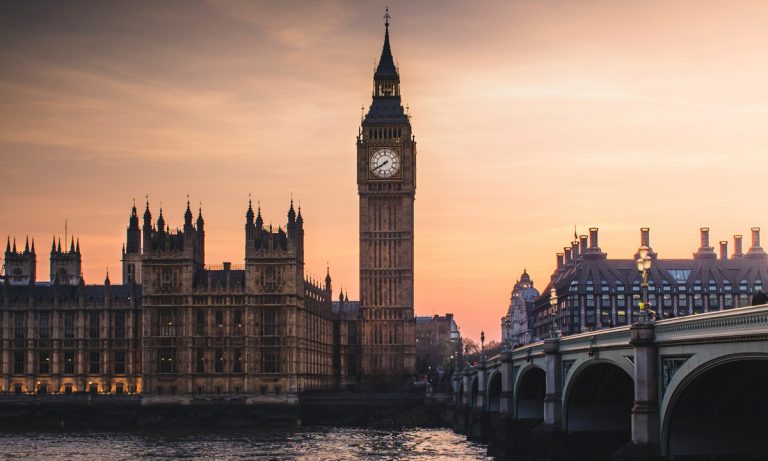
Some patients in the United Kingdom could soon qualify for the use of medical marijuana. The British government announced on Thursday that it is was eliminating some of the restrictions associated with the cannabis plant. The move would give physicians the ability to prescribe cannabis products to those who do not respond to traditional treatments.

Health Secretary Sajid Javid said that patients with drug-resistant conditions would be given permission to use medicine derived from the cannabis plant. In order to make this possible, the UK plans to downgrade the Schedule I classification of the plant to a Schedule II, according to the Guardian. This will be done “by the autumn,” the Home Office said.

It was high-profile cases like Billy Caldwell, the 12-year-old with severe epilepsy who almost died as a result of having his CBD oil confiscated by authorities, which prompted the government to make this decision.

“Recent cases involving sick children made it clear to me that our position on cannabis-related medicinal products was not satisfactory,” Javid said. “Following advice from two sets of independent advisors, I have taken the decision to reschedule cannabis-derived medicinal products—meaning they will be available on prescription.”

Although the Health Secretary asserts the amended rules “will help patients with an exceptional clinical need,” he is quick to point out that the change is in “no way” “a first step” in ending cannabis prohibition. Javid remains adamant that recreational pot use is not something that is on the horizon with the coming of this reclassification.

Still, it remains to be seen just how many medical conditions will qualify for cannabis care under the new rules.

There will, however, be one added benefit because of this action—more research. Right now, it is difficult to study a potential medicine that has been lumped into the Schedule I classification. But by reducing the plant to a Schedule II, Dr. Tom Freeman, a senior academic fellow at King’s College London, says it will have a “substantial impact on research by facilitating the development of safer more effective medicine.”

Meanwhile, despite 30 states having legalized the leaf for medical use, the United States government still refuses to downgrade the Schedule I status of the cannabis plant. Even though there is a growing body of anecdotal evidence suggesting it has a variety of therapeutic functions, the Schedule I label has made it difficult for researchers to prove it. The closest they’ve come is through the pharmaceutical industry. The U.S. Food and Drug Administration (FDA) recently approved the first cannabis-based drug (Epidiolex) for distribution in the states. Federal agencies are being forced to downgrade the Schedule I classification of the non-intoxicating compound cannabidiol (CBD).

Does The TSA Care About Flying With Weed?

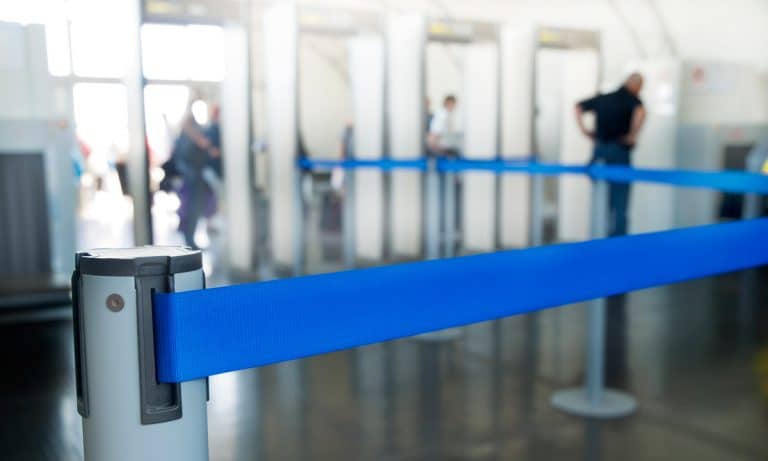
Ever since states began legalizing marijuana for medical and recreational use, there has been the question of whether it can cause a person any trouble to try and smuggle legal weed on a plane. There have been countless reports published on this subject over the past few years, most of which seem to indicate that it is a relatively riskless feat to challenge airport security to sniff out a bag of dope – at least in legal jurisdictions.

Regardless, most folks in possession of marijuana still get pretty nervous during the pre-flight screening process. But is there really any cause for concern?

In Massachusetts, for example, it is now perfectly legal for adults 21 and over to be in possession of up to an ounce of marijuana. A recent report from the Boston Globe indicates that there are no rules at Logan International Airport prohibiting peopl>e from bringing weed onto airport property. But since marijuana is still illegal in the eyes of the federal government, the Transportation Security Administration (TSA), a federal agency, cannot allow anyone to bring weed aboard a plane. Instead, anyone caught with pot is simply referred to the state police. Still, as long as the passenger is at least 21-years-old and the amount they are holding does not exceed the possession limit, the cops have to let them go. What’s more is they cannot seize the weed or paraphernalia.

So now the matter is back in TSA’s court. But the agency still has absolutely no interest in cracking down on people for pot.

“We would not retain drugs in the same way we wouldn’t retain fraudulent IDs or credit cards — we would kick those over to law enforcement,” Mike McCarthy, a spokesman for the TSA, told the Globe. “Our agents do administrative searches, not criminal searches.”

“Our officers are looking for any item that could cause catastrophic harm to the aircraft,” he continued, “but, as part of their duties, if they detect anything that they believe to be illegal, they will refer the passenger and the baggage over to local law enforcement, and it is up to local law enforcement how to respond.”

So if law enforcement in a legal state cannot do anything about marijuana found at an airport and TSA agents are unwilling to deal with it, then is the passenger simply free to board a plane with marijuana after the heat dies down? Probably not. TSA agents would certainly prevent that person from traveling until they have ditched the weed.

A couple of years ago, “amnesty boxes” began to appear in a Colorado airport in an effort to give travelers a chance to dispose of marijuana before entering the security gates. Interestingly, a month after this system was implemented, all of the boxes remained unused – completely empty. Apparently, people would rather risk a slap on the wrist than not travel with marijuana. Either that or they are simply leaving it at home.

So here’s the rub: As long as a traveler is flying out of a legal state, the worst-case scenario is that dealing with police and TSA over the matter could cause them to miss their flight. If the weed happens to be discovered in an area of prohibition, however, that person could be arrested and/or fined.

Pete Davidson Blasts Anti-Weed Commercials

While Pete Davidson isn’t yet a beloved marijuana icon on the level of Snoop Dogg or Willie Nelson, he’s certainly on his way. Think of the “Saturday Night Live” comedian as a cannabis prince of sorts. His association with the plant runs deep, both in “SNL” sketches like “New Marijuana Policy” and in using marijuana to treat his Crohn’s disease and Borderline Personality Disorder. Now watch as Pete Davidson blasts anti-weed commercials.

You would think we’ve heard every weed joke from Davidson by now, but you’re wrong. Thanks to a resurfaced stand-up comedy set he performed in Montreal, we have Davidson riffing on New York’s anti-marijuana commercials and making us howl with laughter.

“I don’t have a problem with anti-weed commercials. There are negative side effects to weed. It’s just like, you should make real ones. Use me and my friend,” Davidson says.

Davidson then goes on to describe his buddies on the couch, hanging out and smoking. His buddy tries to grab Davidson’s attention by saying, “Yo, Pete!” but he doesn’t respond. After a few moments, he repeats his name again, and still no response. Finally, he yells, “Yo!” and Davidson replies, “What?” Then across the screen flashes, “WEED.”

Related Story: Joe Rogan Gets Heated With Ted Nugent Over Marijuana Usage

“That’s the whole entire commercial, very low budget,” Davidson says, before launching into a second commercial where him and his buddy go shopping in the mall while high. They pass a Crocs store and grow ecstatic about how “mighty comfortable” the shoes are. After buying the shoes, “WEED” appears on the screen again.

The whole set lasts about 10 minutes and worth your time. Davidson jokes about how mean approach their health, especially their penis health, and how quiet he is during sex. Guess we’ll have to ask his new fiancée Ariana Grande to confirm such rumors.

Study: This Nighttime Activity Makes Us Happier Than Money

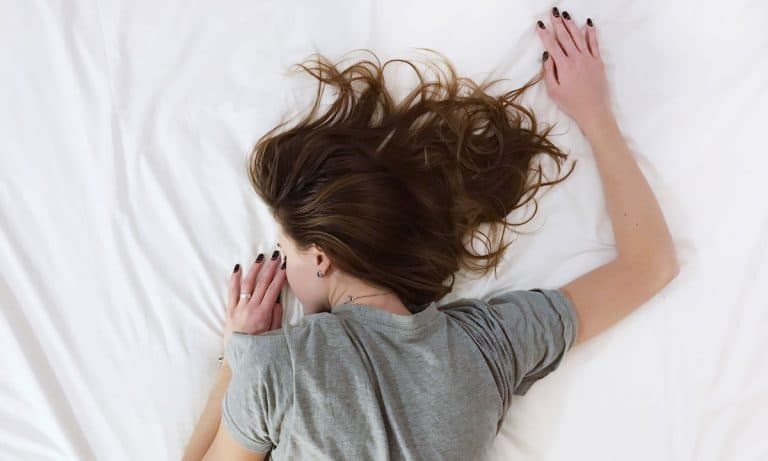
Getting a good night’s sleep and having a satisfying sex life are both strong indicators of a person’s well being. And it makes a great case for having high thread-count sheets.

This news comes courtesy of a new “Living Well Index,” created by researchers at Oxford Economics and the National Center for Social Research. They interviewed more than 8,000 Brits, asking them questions related to nearly 20 topics ranging from finances to the environment. Each was then given a score of up to 100. The average score was 62.2. Not terrible, but not great. Sleep quality alone added 3.8 points, while a 50-percent pay raise made less than a one point difference to the overall wellness score. Money can’t buy a good night’s rest.

The UK-based research authors say that better sleep is the single biggest contributor of living better, adding “Over 60-percent of the group living very well felt rested most or all of the time after sleep, but less than 5-percent of the group struggling felt this way.”

They also explain that there is a huge difference between feeling rested “some of the time” and feeling well-rested in general.

“This improvement would exceed even the benefits of quintupling someone’s disposable income.”

Those who scored high on the Living Well Index also reported having a more satisfying sex life

The happiest people were also more likely to report being highly satisfied with their sex life — almost two-thirds. That’s twice the average.

Researchers also found that, right behind sleep and sex, a sense of community was important for well-being. For those addicted to social media, that means IRL relationships — face-to-face interactions. A whopping 73-percent of those who ranked high on the Index reported strong support networks.

Money can’t buy happiness after all. But it can buy you some new bedding.

California Restaurants And Bars Not Allowed To Serve CBD Infused Food And Drink

Crackdowns are happening amid California’s Green Rush. The targets? Restaurants and bars.

According to the Orange County RegisterCoffee Dose, a Costa Mesa coffee shop was offering trendy CBD lattes until two months ago, when health officials made it clear that even though California legalized cannabis in January, CBD infused food and drink is not allowed. Jeni and Oscar Castro, the owners of Coffee Dose, were told they could face a civil fine if they didn’t follow the rules.

Earlier this month, the California Department of Public Health issued a statement explaining that: “Although California currently allows the manufacturing and sales of cannabis products (including edibles), the use of industrial hemp as the source of CBD to be added to food products is prohibited. Until the FDA rules that industrial hemp-derived CBD oil and CBD products can be used as a food or California makes a determination that they are safe to use for human and animal consumption, CBD products are not an approved food, food ingredient, food additive, or dietary supplement.”

According to Eater LA:

The new rules affect far more businesses than the Coffee Dose, as many LA restaurants and bars serve CBD cocktails, offer it as a supplement, or add it to menus. Gracias Madre was one of the first LA restaurants to serve CBD cocktails as early as 2016, and Pattern Bar followed suit last year.Bondi Harvest and Moon Juice offer CBD shots in any drink, and at The Spring in Downtown, owners Tony Esnault and Yassmin Sarmadi are staunch believers in CBD. The husband and wife team began serving a CBD power lunch in Downtown beginning in early 2017.

Supporters of the change want order in the burgeoning industry, and believe the “green” explosion has opened the door for too many questionable businesses that use CBD as a gimmick. How will the health department deal with $59 CBD shakes in West Hollywood, or a hemp taco stand in Downtown? It’s unclear at the moment.

You can also add Seattle to that (presumably) growing list. Café Hitchcock was told to stop selling its popular CBD lattes in April. Owner Brendan McGill told Seattle Magazine at the time:

Unfortunately, King County Public Health has decided to take a regressive stance on the use of CBD as a food additive. Although cafés in many other Washington counties as well as in Oregon, California, Washington D.C. and NYC are not regulating its use, as it is federally legal, traded across state lines and internationally with no special permitting, is demonstrably not psychoactive and offers tremendous health benefits as well as its signature relaxing effect, we have been instructed to immediately stop serving the extract. I have reached out to discuss this and find out the reasoning behind the decision but as of yet have not heard back from Public Health.”

The Castros say they’ve noticed a 30 percent decrease in business since removing CBD from their menu. Meanwhile, their attorney, Dana Cisneros, with Cannabis Corporate Law Firm in Anaheim Hills, says she’s helping the couple fight back by seeking corporate sponsors.

The Trump Administration’s Approach To Opioid Reduction Is Borderline Dangerous

If you watch TV, you’ve likely seen the Trump approved advertisements regarding opiate use and just how far people will go to get more. From getting into intentional car wrecks to slamming limbs in doors, the horrific scare tactics are likely doing more harm to the movement to quell opiate abuse than good.

In a recent commentary by the Cato Institute, it is pointed out that, “while anti-drug media campaigns are a perennial favorite of politicians, little evidence suggests this advertising has any significant effect in reducing drug use.” In fact, numbers show that the failed National Youth Anti-Drug Media Campaign, which focused on stigmatizing cannabis use, had a reverse effect of that which was intended. It normalized marijuana use rather than demonizing it. As in, “See, I’m not the only one toking.”

The stakes are much higher with the opioid epidemic, however. Whereas there has never been a recorded death from cannabis use, opiate overdoses are plaguing our nation. Unfortunately, the country’s leadership doesn’t seem to know how to approach the problem. From threatening to give drug dealers the death penalty to reducing opiate prescriptions being written, the ideas and commercials coming out of the White House simply fall short and verge on detrimental.

As Sam Black Crow said in Neil Gaimon’s masterpiece American Gods, “I believe…there’s nothing wrong with the death penalty if you can trust the legal system implicitly, and that no one but a moron would ever trust the legal system.” Every system has its flaws and the death penalty for dealers certainly isn’t the answer, but neither is cutting down on prescriptions.

If someone is truly addicted to opiates, cutting off prescriptions is likely to drive them to the black market, where heroin is the star, and often laced with its extra potent opiate counterpart Fentanyl. Plus, there are many, many legitimate uses for opiates and the majority of those who have a prescription are not abusing their medicine, but managing chronic or severe pain and doing their best to maintain quality of life.

The horrifying images playing across America at the direction of the White House carry on failed traditions like the Reagan era “Just Say No” campaign and the aforementioned National Youth Anti-Drug Media Campaign. Perhaps Trump should read some of the promising studies that show cannabis as a pathway to health that veers away from opiate use and often quells a habit entirely. Offering medical marijuana in replacement of opiates or as a reduction technique is a much safer way to address the crisis and raise awareness than scare tactics ever will be.

New Jersey Cannabis Prosecutions Put On Pause

On Tuesday, the New York Attorney General Gurbir S. Grewal told prosecutors to hold off on all cases of arrest that revolved around cannabis — and to hold off on any more convictions until August at the earliest — while marijuana law is further discussed and put into place.

Though it isn’t legalization, it’s an important and positive step for the cannabis community and imbibers as a whole. The heart of the legalization movement has always been about keeping people out of jail and getting them released when they did and do go down. Cannabis possession is known to be a victimless crime that mucks up our prison and courts systems. Not to mention the lives it destroys.

In many places where cannabis is yet criminalized, the possession of a simple joint can mean the difference between student funding and outright rejection, public housing and homelessness and even freedom and the loss of freedom. The New Jersey AG’s move to halt convictions and jail sentences – for now – is a step in the right direction, no matter if it does or doesn’t lead to legalization through legislation.

The move comes after Jersey City, NJ tried decriminalizing the plant in their city borders, freeing up courts and jail space and cracking down on the racial disparities that so often occur in cannabis arrests. Though the AG saw that particular move as premature, it is likely that it contributed to the decision to suspend prosecution of pot.

New Jersey is the projected contender to be the 10th state to legalize recreational cannabis and only the second to do so via legislation. Governor Phil Murphy platformed on the issue and though his lofty promise of legalization within his first 100 days didn’t come true, he remains pot’s champion.

Not only did Gov. Murphy expand the medical marijuana laws to sufficiently cover most New Jerseyans by the inclusion of chronic pain and anxiety as qualifying conditions, though there are still a few hoops that must be jumped through to get a medical marijuana recommendation and then card, Murphy made even the process more streamlined.

This latest move by Grewal is another step toward the social reform that we have been fighting for from the beginning of the movement to remove pot’s stigma and criminality. It shows guts, but it also shows the face of progress and a movement with momentum behind and before it.

Gwyneth Paltrow Explains GOOP-Condé Nast Failure; Kelly Osbourne Opens Up About Addiction

GWYNETH PALTROW SAYS GOOP-CONDE NAST DEAL FELL APART WHEN COMPANY WANTED TO FACT-CHECK GOOP ARTICLES


Anna Wintour, editor in chief of Vogue and Condé Nast’s artistic director, was initially “excited” for Paltrow to bring “her point of view to the company.” However, the deal fell apart after Condé Nast insisted on fact-checking Goop magazine articles, among enforcing other rules.

The publishers did not want Goop magazine to use its platform “as part of their contextual commerce strategy.” Goop also wanted to sell its products in the magazine, but “Condé Nast insisted that they have a more ‘agnostic’ editorial approach.” Paltrow said she wanted readers to be able to buy products through the magazine.

“They’re a company that’s really in transition and do things in a very old-school way,” Paltrow told The New York Times Magazine. “But it was amazing to work with Anna [Wintour]. I love her. She’s a total idol of mine. We realized we could just do a better job of it ourselves in-house. I think for us it was really like we like to work where we are in an expansive space. Somewhere like Condé, understandably, there are a lot of rules.”

Paltrow said she didn’t understand why Condé Nast insisted on fact-checking.

KELLY OSBOURNE OPENS UP ABOUT HER PAST STRUGGLES WITH ADDICTION: ‘REHAB DOESN’T FIX YOU’


Kelly Osbourne is opening up about her past struggles with addiction, following Demi Lovato’s hospitalization on Tuesday from an apparent drug overdose.

The 33-year-old TV personality appeared on the British talk show Loose Women on Wednesday, where she admitted that she knows “what it’s like” to have a relapse, and be in the public spotlight while trying to climb out of a dark place.

“I will never speak on behalf of Demi, because that wouldn’t be right,” Osbourne explained as the conversation came to focus on her friend’s recent relapse and subsequent medical emergency. “I can only share about what I’ve been through and what I know from myself, and that is relapse is one the hardest things we face as an open addict who has gone through the program and turned their life around.”

Sleeping With A Fan On Is Bad For You

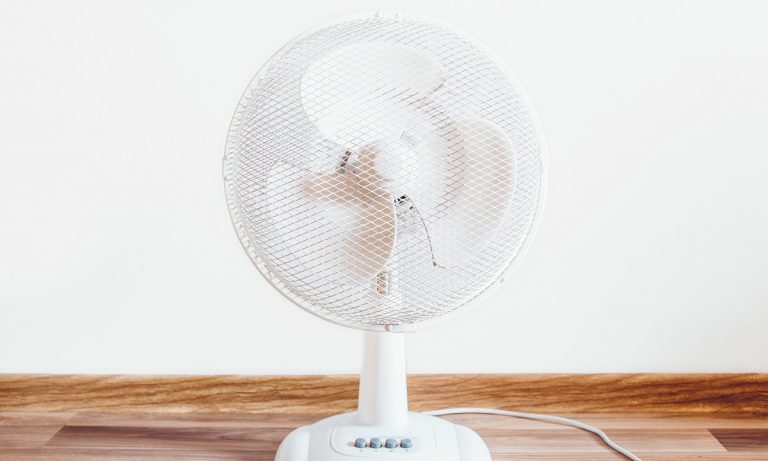
During these hot summer nights, sometimes the only thing that comforts us at night is a fan that circulates the air and keep our bodies cool enough that we can actually get some sleep. For some of us, it’s the difference between needing one cup of coffee in the morning and an entire pot.

But new research says that there are some downsides to sleeping with the fan on. Here are four ways sleeping with an electric fan in your room can be bad for your health, according to the sleep experts over at Sleep Advisor.

Allergic reactions

Have problems breathing? Perhaps a little asthma? A fan may make your night more of a living hell than necessary. Says SleepAdvisor.com:

As a fan moves air around the room, it causes flurries of dust and pollen to make their way into your sinuses. If you’re prone to allergies, asthma, and hay fever, this could stir up a whole lot of trouble.

They also advise taking inventory on your fan’s dust build-up. If the blades are coated with grossness, it’s probably not a good idea to turn it on before it’s cleaned.

Dry air

It’s kind of a given that having constant air blowing on your body can cause dry skin. But it can also interfere with things you thought were protected from circulating air, like your mouth and eyes. According to the SleepAdvisor.com, there are some people who actually sleep with their eyes open, which, of course, becomes a magnet for dryness. It’s especially problematic for those who wear contacts to bed.

Also, according to the site, “Some people also sleep with their mouth open, and the excess airflow will potentially dry out their mouths and throats. Keeping a glass of water nearby can help, but do you really want to be woken up because of a dry mouth?”

Sinus irritation

SleepAdvisor.com says the same air that can irritate your eyes and mouth can irritate your sinuses:

If the dryness is particularly extreme, it can result in your body producing excess mucous to try to compensate. Then, you’re more susceptible to blockage, stuffiness, and sinus headaches.

Sore muscles

Be you never saw this one coming. Constant air blowing on you can cause you to wake up with…a stiff neck. Say, what? Says the site:

People who sleep with a breeze directly on them may wake up with stiff or sore muscles. This is because the concentrated cool air can make muscles tense up and cramp. This problem is especially common for people who sleep with it near their face and neck. If you’ve been waking up with a stiff neck in the morning, it might be because of the constant breeze.

Now, for those of us who need a fan to create white noise and block out all the nighttime sounds, especially in the city, the hum of a fan can actually improve our sleep. It’s also helpful if your partner snores.

Using a fan has also been shown to benefit newborns. Says SleepAdvisor.com:

According to some studies, they can even help prevent SIDS (Sudden Infant Death Syndrome). The reason is that high temperatures and increased CO2 levels put babies at risk. Running a fan lowers the temperature and decreases the air’s concentration of carbon dioxide.

Don't Miss Your Weekly Dose of The Fresh Toast.

Stay informed with exclusive news briefs delivered directly to your inbox every Friday.

We respect your privacy. Unsubscribe anytime.