Thursday, June 18, 2026
Home Blog Page 895

Ohio Medical Board Adds More Doctors To Medical Marijuana Program

The Ohio State Medical Board recently added 46 more doctors to the approved medical marijuana program list.

It seems the physicians are being put in place more quickly than any other aspect of Ohio’s medical marijuana program.

It will be several more months before any dispensaries open. A registry where patients can sign up for the medical marijuana program is still not in place yet either.

However, local media Cleveland.com offer a database where aspiring patients can find a local participating doctor to consult with, regarding joining the program. However, it is better for aspiring patients to see if their current doctor is a participant, rather than attempt to pick a new doctor out of a database, just for certification.

When recommending cannabis for their patients, participating doctors must certify they have an actual, authentic doctor/patient relationship. They must also attest that the patient has a legitimate, qualifying condition. Doctors are required to look up the patient in the state’s controlled substances database to review their history with narcotics, to reconcile any potential red flags of substance abuse.

Substance use disorder (opioid or heroin addiction) is not a qualifying condition. Medical Marijuana cannot be prescribed to treat withdrawal symptoms, or help provide harm reduction to patients seeking to transition away from narcotics.

Doctors are also required to discuss the positive and negative aspects of marijuana use with their interested patients; however, it is debatable whether they are in a qualified  position to accurately do so.

It is quite easy for any doctor in Ohio to become a certified medical marijuana provider. Doctors must complete only two hours of continuing education credits regarding cannabis, and which medical conditions qualify to receive it.

Perfunctory knowledge of cannabis strains is outside the scope of the total training necessary for certification.

A self-medicating marijuana user based in Ohio, who wished to remain anonymous, candidly told Fresh Toast that he and many others who share his views are not interested in Ohio’s budding medical marijuana program.

“It is pretty easy to get marijuana now, so you will never get me to go the legal route. I won’t pay a higher price in the store. The new medical marijuana laws that still haven’t affected me as a patient or a user. I use cannabis because I have anxiety, which isn’t even a qualifying condition.

“There is a category of people who use it, and don’t know why it is helping them; it just does. Some people use it recreationally, but know it helps them for undiagnosed, underlying conditions. They know herb makes them feel better, and they’re never going to go to a doctor to get it. Is a doctor even going to know the difference between an Indica and a Sativa?”

He went on to say that his compatriots do not trust the state’s medical marijuana program. “I don’t need to have a card, or to be put on a watch list, to use marijuana.  I’ve heard rumors that, once you go on their [medical marijuana program] list, you can’t ever qualify for a loan or join the army,” he said.

By his estimation, perhaps only 18 percent of cannabis users obtain it from a doctor.

John Erminio, Cleveland native and co-founder of Artisans on Fire, a cannabis-focused marketing agency, thinks it is critical for future patients to know that products purchased on the regulated market are tested for quality and safety. “The price points will certainly be higher, but you’re purchasing a higher quality product that goes through a stringent testing program and eliminates the chances of consuming any harmful matters such as yeast, mold, heavy metals or pesticides,” he said.

The medical marijuana doctors’ database is updated monthly, after the state medical board approves new physicians, according to Cleveland.com. The recent approval of 46 physicians brings the current total to 185 doctors approved since April.
Cher Announces Album Of ABBA Covers; Are Ariana Grande And Pete Davidson Getting Married In A Month?

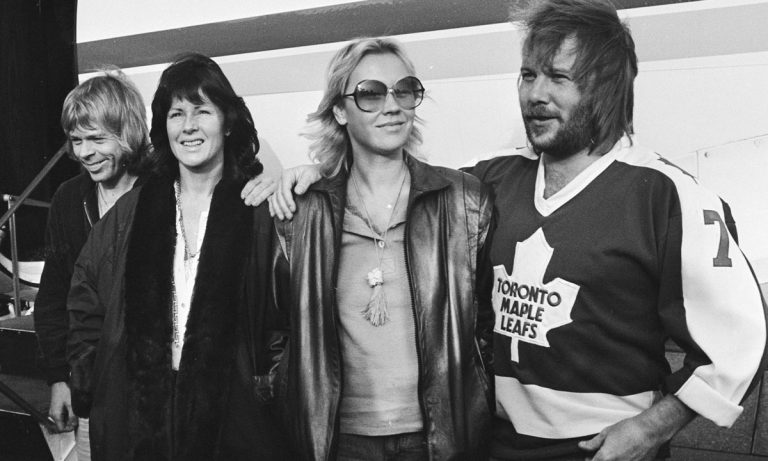
During an interview promoting Mamma Mia! Here We Go Again, Kathy Lee Gifford from “The Today Show” asked Cher what is exciting her right now. Cher answered, “After I did ‘Fernando,’ I thought, it would really be fun to do an album of ABBA songs, so I did. It’s not what you think of when you think of ABBA because I did it in a different way.”

She didn’t detail when fans can expect her to release the album. But in June, she tweeted that she is expecting to release her new album sometime in September.

Are Ariana Grande and Pete Davidson getting married in less than a month?

There’s speculation that Ariana and Pete are going to pull a Beyonce and Jay-Z and get married on a date that’s significant to them, which would of course be August fourth of this year, coinciding with Pete’s late dad’s badge number.

More Violent Crimes Solved Under Legal Marijuana

It has been said legalizing cannabis gives police forces more time to focus on real crime. Considering that some the latest national data shows that cops spend most of their days dealing with drug offenders, while a large portion of violent crimes, like rapes, go unsolved, it stands to reason that pulling officers off marijuana cases would give them no choice but to do real work. Well, there is now some data to support this claim. The study reveal more violent crimes solved under legal marijuana.

It seems that police are solving more non-drug-related crimes in states that have legalized marijuana. A new study published in the journal Police Quarterly shows that this phenomenon is most prevalent in Colorado and Washington, the first two states to end pot prohibition several years ago. It is there that cops are now more efficient at bringing violent offenders to justice, as well as those criminals connected to theft and burglaries. In other words, police is legal states are starting to do their jobs.

“While our results cannot specifically explain why police clearance rates have increased in Colorado and Washington, we think the argument that legalization did in fact produce a measurable impact on clearance rates is plausible,” researchers said, according to journalist Kyle Jaeger.

“Our models show no negative effects of legalization and, instead, indicate that crime clearance rates for at least some types of crime are increasing faster in states that legalized than in those that did not.”

The study shows that violent crime was experiencing an uptick before marijuana was legalized in Colorado and Washington. But the situation has improved post-legalization. The findings suggests “that right around the time of legalization, clearance rates trends seemed to increase for violent crime in general for both Colorado and Washington, though no similar shifts are noted for the country as a whole.”

When it comes to property crime, the citizens were also better served following legalization. The clearance rates for these types of crimes in Colorado and Washington increased while the nation experienced a decline.

Although researchers say they cannot prove that police departments are doing better at their jobs solely because weed is legal, it is certainly a major factor.

“We cannot offer with absolute certainty that these changes are entirely the result of marijuana legalization, though we are quite certain that legalization has not unduly hampered police performance, at least as measured by clearance rates,” researchers said. “Moreover, in the absence of other compelling explanations, the current evidence suggests that legalization produced some demonstrable and persistent benefit in clearance rates, benefits we believe are associated with the marijuana legalization proponents’ prediction that legalization would positively influence police performance.”

You May Be Jinxing Your Relationship By Playing Hard To Get

0

If you’re familiar with the phrase, “like is attracted to like,” then you will understand the theory behind why playing hard to get in a new relationship is utter nonsense.

Business Insider spoke to relationship expert Claudia Duran, a Miami-based matchmaker. She says in order for a relationship to work, both partners need to be vulnerable. And that means letting each other in on your feelings, even if doing so makes you totally uncomfortable.

“Even if you’re smart and successful and beautiful, we all want to be liked,” Duran said. “It’s just human nature.”

Duran says the most common complaint she hears amongst her clients is lack of communication entirely, whether it’s “He [or she] hasn’t called” or, “Why hasn’t he [or she] made a date?” —  all of which could be cleared up with a simple admission of interest.

“People like that, and they respond well to that,” she said.

Easier said than done, right? Most people out in the dating world have a hard time admitting their feelings for someone out of fear of rejection or looking stupid. Duran says you need to suck it up, pointing to dating apps like Tinder as a “nice excuse to hide behind because it’s safe and we don’t have to feel rejected and we don’t have to be accountable.”

According to Business Insider, there is research to back up this “admitting feelings” thing.

As for romantic contexts, Business Insider’s Lindsay Dodgson reported on a 1973 paperfrom the University of Wisconsin that explores the nuances of “playing hard to get.” As the authors write, “a woman can intensify her desirability if she acquires a reputation for being hard-to-get and then, by her behavior, makes it clear to a selected romantic partner that she is attracted to him.”

…A 1979 paper published in the Journal of Research in Personality found that people who are discriminating but indicate that they like you are seen as more appealing.

So there you have it. If you have a crush on someone, let them know. If they don’t share your sentiment, move on. It probably wouldn’t have happened for you anyway. Plus, their loss.

Wyoming City Officials Grew Marijuana Without Realizing It

The city of Powell, Wyoming is responsible for growing marijuana — they just weren’t aware they were doing so. Powell park department employees discovered budding marijuana plants blooming from decorative planters in the downtown area last week. Almost a month went by with no one realizing the plants amid the zinnias and marigolds were illegal cannabis plants, which workers had been watering and tending to, none the wiser.

It all begs the question of where did the plants come from? A pranksters planted the marijuana seeds in the 100-gallon flower, so believes Powell Police City Chief Roy Eckerdt, according to the Powell Tribune. City workers only “recognized what [the plant] was once everything started to leaf out,” said Eckerdt.

The marijuana plants were “discovered” on June 29 when city workers pulled the cannabis plants and took them to police. The planters where the plants were found resided about a block away from the police department. A few days later, more cannabis plants were discovered in a different planter.

“They [the workers] just mentioned to me this morning that in the course of watering, they think—though we’re not sure yet—that there may be some additional ones popping up,” Parks and Recreation Superintendent Del Barton told the Powell Tribune last week.

But Barton told the Billings Gazette this wasn’t the first time a cannabis plant appeared amidst city landscaping and flower pots.

We’ve had incidents in the past where, for some unknown reason, people decide to put pot seeds in the downtown—we have these large 100-gallon flower pots—and for some reason people like to put weed seeds in the flower pots,” Barton said.

Eckerdt told the Billings Gazette he’d tossed around the idea of collecting DNA evidence around the flower planters and plant leaves to potentially scare any would-be pranksters.

A similar incident occurred in Japan last month when marijuana plants were discovered rowing amidst flower beds on government property. Japanese authorities said at the time they believed bird poop was the cause of the cannabis seeds blooming where they did.

Anthony Bourdain Shared Weed Thoughts In Final Interview

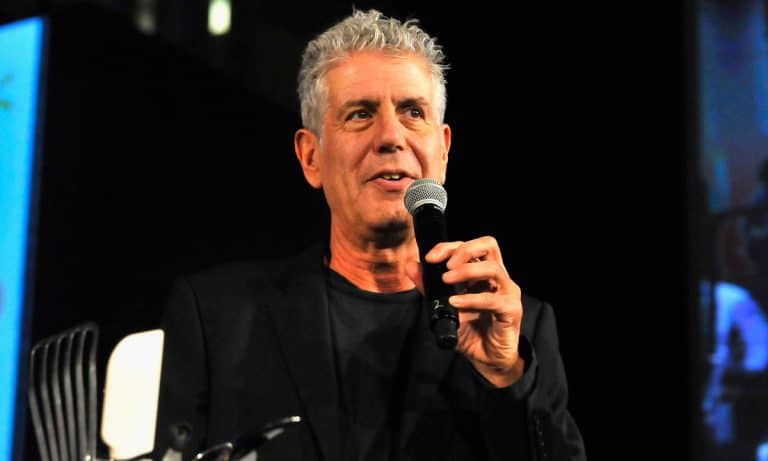
He was someone who seemingly had this “life on Earth” thing figured out. That was the impression, at least, watching his TV show, as he dropped into whatever dot on the globe that fancied his attention and allowed locals — and his stomach — to guide him ever onward. And Anthony Bourdain shared weed thoughts in final interview.

In a newly published interview with Popula, Bourdain revealed what the “happiest moments” of his life were. And it had nothing to do with the luxury he experienced while traveling, or the access his fame brought him. Instead, it was spending quiet moments with others.

Related: CBD Oil Is Good For Even More Than You Thought

Via Popula:

If I spend a couple thousand dollars on sushi for two, I don’t feel guilty about that. I do find that my happiest moments on the road are not standing on the balcony of a really nice hotel. That’s a sort of bittersweet — if not melancholy — alienating experience, at best. My happiest moments on the road are always off-camera, generally with my crew, coming back from shooting a scene and finding ourselves in this sort of absurdly beautiful moment, you know, laying on a flatbed on those things that go on the railroad track, with a putt-putt motor, goin’ across like, the rice paddies in Cambodia with headphones on… this is luxury, because I could never have imagined having the freedom or the ability to find myself in such a place, looking at such things.

To sit alone or with a few friends, half-drunk under a full moon, you just understand how lucky you are; it’s a story you can’t tell. It’s a story you almost by definition, can’t share. I’ve learned in real time to look at those things and realize: I just had a really good moment.

That wasn’t all the “Parts Unknown” host shared with interviewer Maria Bustillos. The wide-ranging conversation covered the #MeToo movement, travelers following Bourdain’s episodic itineraries, and his fantasies of how Harvey Weinstein could die (it involves bathtubs and falling). But Bourdain also touched upon smoking weed and how different the drug was from back in the day.

Related: Why Does Cannabis Make You So Happy 

“I can smoke weed at home when I don’t need my brain anymore but like as far as socially interacting with people, or being any situation where I might be called upon to answer the phone or make a decision? I’m not gonna do it!” He also added, “Now the stuff is devastating, you can’t leave bed.

Anthony Michael Bourdain was a celebrity chef, author, and travel documentarian. He starred in programs focusing on the exploration of international culture, cuisine, and the human condition. Known for being a bit salty, his first food and world-travel television show A Cook’s Tour ran for 35 episodes on the Food Network in 2002 and 2003. In 2005, he began hosting the Travel Channel’s culinary and cultural adventure programs Anthony Bourdain: No Reservations (2005–2012) and The Layover (2011–2013). In 2013, he began a three-season run as a judge on The Taste and consequently switched his travelogue programming to CNN to host Anthony Bourdain: Parts Unknown. Although best known for his culinary writings and television presentations, along with several books on food and cooking and travel adventures, Bourdain also wrote both fiction and historical nonfiction. On June 8, 2018, Bourdain died while on location in France.

Can Jay-Dar Work On Photos? Science Says Yes

In a new study, cannabis users and non-users alike examined photographs of people to decide if they smoked cannabis or not based on appearances alone. However, according to the study, “these findings utilized a small sample of photographs that was not balanced on user status or gender.” Still, the results were fascinating.

A 48.6 percent female sampling looked at photos and based on age, gender and the likelihood that the person shown used cannabis and made their calls. They were shown 36 photos, 18 cannabis users and 18 non-cannabis users and then were asked to guess who the tokers were. These respondents also wrote in any other factors they considered and wrote about their own cannabis use.

The study showed that if a person is a non-user and looking at pics, they are more likely to choose males as imbibers over females. People who use cannabis didn’t have the same bias and thus picked males and females equally.

In the study abstract, it concludes as thus, “Results suggest individuals do rate cannabis users as more likely to be users, relative to nonusers, based upon appearance alone. These findings have important implications, not only for research on chronic cannabis use effects, but also for social and achievement factors such as potential stigma.”

It would be interesting to watch a series of these studies over the years as more states go legal to watch the stigma dissipate and have both cannabis enthusiasts and straight and narrow types guessing right because of the kindness they can see permeating off the strangers’ pictures, whether sober or high.

If you’re reading this, you’ve likely at least tried cannabis and we bet we could pick you out of a photo for it, but it also means that your own jay-dar is likely working just fine. Next time you want to ask the group next to you at a concert if they want to toke, trust your gut a little more. Though still tread with caution.

One of the coolest parts about this study is that it took place. As cannabis becomes more mainstream and stigmas do indeed fall away, people are curious about the little plant making all the big waves and want to explore it in every way possible.

New York Health Department Recommends Marijuana Legalization

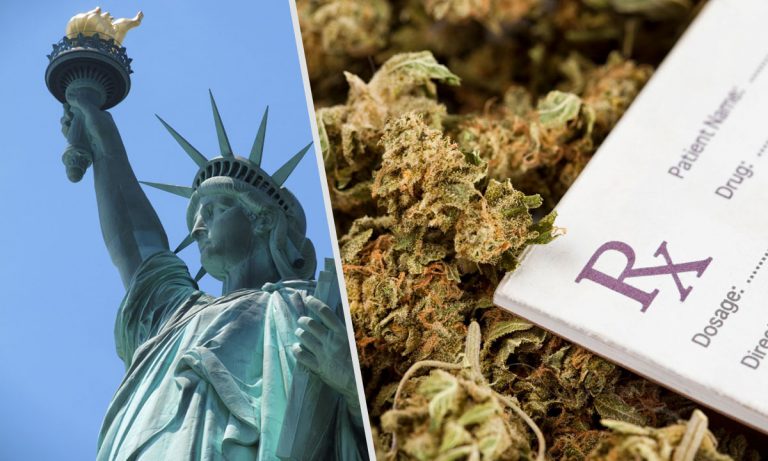
Although New York Governor Andrew Cuomo has spent the past few years arguing against the legalization of marijuana for recreational use, a new report from the state’s Health Department, which suggests, “The positive effects of a regulated marijuana market in New York State outweigh the potential negative impacts,” may have changed his tune.

The report, which was commissioned by Cuomo back in January, recommends the state put an end to pot prohibition in a manner similar to nine other states and Washington D.C..

The 74-page study shows that New York could rake in around $700 million in tax revenue by imposing a taxed and regulated pot market. Contrary to Cuomo’s “gateway drug” theory, researchers also found no reason to suspect that legalization would bring about a significant increase in overall consumption rates. But it could, however, prevent the types of arrests that have been shown to disproportionately affect minorities.

The report also shows that marijuana legalization might be in the best interest of public health, as it could patients an alternative to prescription medications, especially opioids.

Still, in order to make it work, the study suggests the development of a “well-thought-out” regulatory scheme that puts an emphasis on educating the public about the pros and cons of pot consumption.

“It is imperative that a regulated marijuana program contain all necessary safeguards and measures to limit access for individuals under 21, minimize impaired driving, provide education and tailored messaging to different populations, and connect people to treatment if needed,” the report reads.

But will the report lead to change?

Governor Cuomo said last week that he plans to assemble a team to figure out how marijuana should be dealt with in the Empire State. Saying “the devil is in the details,” Cuomo voiced concerns about how marijuana would be sold – a topic that was not addressed in the report. Cuomo pointed to Massachusetts, which is on the verge of launching a recreational marijuana market, and New Jersey, a state that is working to legalize in the near future, as reasons that New York should take comparable action.

“You have more control and there’s a possibility for revenue when you regulate it and in this context, where you have New Jersey and Massachusetts legalizing it, it’s not really an option of preventing it because you can go over a bridge and over a border,” he said.

Cannabis advocates were pleased with the outcome of the report. They hope now that legislative controls will seriously consider bringing an end to decades of prohibition.

“Marijuana prohibition has devastated our communities, saddled hundreds of thousands with criminal records, acted as an easily accessible tool for racially biased policing, and stunted the opportunities for entire generations of mostly New Yorker’s of color,” Chris Alexander of the Drug Policy Alliance, said in a statement. “Now that the report has been released and its conclusions presented, we are hopeful that the governor and the Legislature can shift from the ‘if’ to examining the ‘how’ to legalize marijuana.”

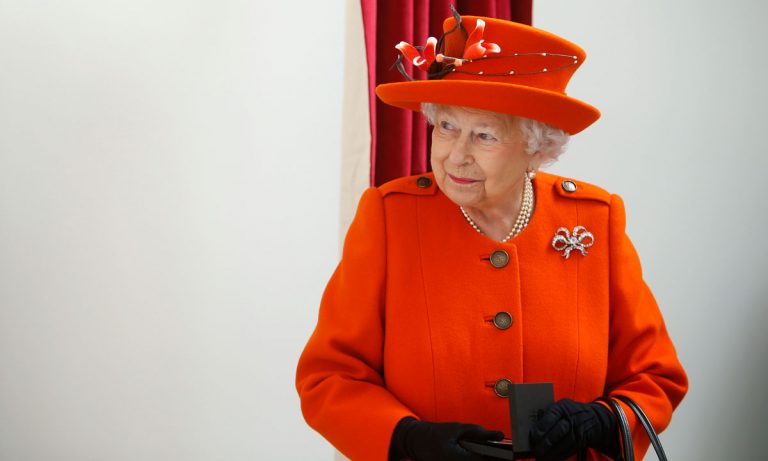
Royal Fans Think The Queen Was Sending Messages With Her Jewelry During Trump’s Visit

There’s a theory going around on Twitter that Queen Elizabeth was trolling President Donald Trump during his recent visit to the U.K.. Her weapon of choice? Brooches.

Twitter user @SamuraiKnitter, with the help of Her Majesty’s Jewel Box blog, took note of the unusual brooch choices Her Majesty made when meeting with Trump. And she Tweeted all of her findings.

The thread plays out like this:

“She wore three brooches while she and Trump were both in town. The day he arrived, the day of the banquet, and the day she actually met him for tea.”

“Arrival day was the one that got the most attention. That day, she wore the brooch the Obamas gave her on their last visit to England.”

https://twitter.com/SamuraiKnitter/status/1018572399225331714

“Next day, next brooch. This was a day of audiences with people, she does that to maintain the Commonwealth at least one day a week. That day was the King and Queen of Belgium for tea as well. She wore a sapphire brooch. ”

“It’s called the Sapphire Jubillee Brooch, and it was given to the Queen of England as a gift for ruling for eleventy billion (okay, 65). From Canada. You know, who Trump’s been screaming about and insulting.”

She also points out that the brooch could also be construed another way, tweeting: “You know, that Canadian brooch of Elizabeth’s could be considered a SPECIAL SNOWFLAKE.”

https://twitter.com/SamuraiKnitter/status/1018574354978889728

“And for the day of the tea, QE wore an innocuous ‘nice but not holy shit, considering what’s in the vaults’ diamond brooch she inherited from her mother.”

“Nice way to get in a dig again without having to say a word.”

“And for the day of the tea, QE wore an innocuous ‘nice but not holy s***, considering what’s in the vaults’ diamond brooch she inherited from her mother.”

https://www.instagram.com/p/BlOnDtQhgkb/?taken-by=queen_elizabeth_fanpage

https://twitter.com/SamuraiKnitter/status/1018575367282614274

“QE rolled up to tea with the Trumps wearing the brooch her mother wore to her father’s STATE FUNERAL.”

Are you a believer?

How Marijuana Does More For Age-Related Osteoporosis Than Calcium

Osteoporosis is a condition in which bones become weak and brittle. It’s typically due to loss of tissue, which happens as we age and hormonal changes occur. In a normal body, bone tissue is constantly being absorbed and replaced. However, in someone with osteoporosis, the new bone creation works at a slower pace than the bone removal.

Osteoporosis is the type of illness that can’t be undone or cured. However, certain remedies like healthy dieting, exercising and even medication can slow down the process.

But you know what else is good for Osteoporosis? (If you guessed drinking more milk, you’re not completely wrong, but the answer we were looking for is cannabis).

Here’s why: Our body is complete with our own cannabinoid system called the endocannabinoid system (aptly named). Therefore, areas where cannabinoid receptors (CB1 and CB2) are located interact better with cannabis cannabinoids.

In a 2009 study published in Cell Metabolism, scientists compared rats with different level of cannabinoid receptors. CB1 receptors regulates reduced bone formation and fat accumulation also known as osteoporosis. Rats deficient in CB1 receptors had more fat accumulation leading researchers to conclude: CB1 receptors protects the bones by regulating bone tissue absorption and creation.

In other words, researchers are leaning towards cannabis as a possible treatment for age-related osteoporosis since it’s regulated by our endocannabinoid system.

Cannabis works in many other ways for people with osteoporosis. First, the condition isn’t necessarily detected until a broken bone or fracture occurs. Luckily, in a 2015 study researchers at Tel Aviv University and Hebrew University found that cannabis’ non intoxicating compound, cannabidiol or CBD, may help heal broken bones.

In an experiment conducted with rats, researchers administered either CBD alone or CBD and THC (cannabis’ psychoactive ingredient) to rats with broken thigh bones and observed the effects over a controlled period of time.

Researchers concluded that THC didn’t appear to have much of an effect, but the rats treated with CBD alone healed faster and were less likely to have fracture in the same place because the CBD produced a much stronger “fracture callus” or bridge that builds between the broken area.

Weak bones AND broken bones? Cannabis seems to be the gift that keeps on giving.

Don't Miss Your Weekly Dose of The Fresh Toast.

Stay informed with exclusive news briefs delivered directly to your inbox every Friday.

We respect your privacy. Unsubscribe anytime.