Thursday, June 18, 2026
Home Blog Page 894

Where Are The Recreational Cannabis Dispensaries In Massachusetts?

We are halfway through July and there are still no recreational cannabis dispensaries in Massachusetts. Though slated for a July 1 opening celebration that was a long time coming already, the shops are yet mired down by delays and it’s still unclear when they’ll be able to start opening.

Steve Hoffman is the chairperson for Massachusetts’ Cannabis Control Commission and he told reporters last week that a completed application for a cannabis testing laboratory had been received. The first completed application in the state and one of the main reasons why recreational pot shops still haven’t opened.

Hoffman predicts that if the three existing medical marijuana testing labs apply for the positionings that they should be ready to hit the marketplace along with the newest application in a relatively timely manner. The commission’s next vote on such things is July 26, but even if everything goes smoothly and testing facilities are at the ready, recreational cannabis is still a month or more away. And that’s optimistic.

Locally, things aren’t much better in the hurry up and wait department. Recreational and now even medical cannabis dispensaries are required to get a Host Community Agreement to be signed off on by local officials. Unfortunately, the community isn’t held accountable to complete the agreements in any sort of timeframe, so some have chosen to really drag their feet.

Dragging their feet is better than digging them into the dirt and not giving an inch, however. As is written in the law, if a community wants to ban cannabis operations from taking place inside their little borders, they can do so, thus another lack of licences to be signed off on.

Representative Mark Cusack and Senator Patricia Jehlen, both chairs of the Joint Marijuana Policy Committee, wrote a letter to Hoffman and the commission as a whole regarding the committee’s concern for both the delays and the communities opting out of the marijuana marketplace.

“Of particular concern to us is what we understand to be the wide-spread practice by municipalities and prospective applicants to enter into host community agreements that undermine state statute and our collective efforts to disincentivize and successfully migrate the illicit substance of marijuana within the Commonwealth into a legalized, well-regulated, tested, and taxed system,” they wrote in no uncertain terms.

Indeed, the Commonwealth, for the most part, still waits with great anticipation, and likely will continue to do so for the foreseeable near future.

‘Walking Dead’ Producer Is Developing A TV Reboot Of ‘Creepshow’

0

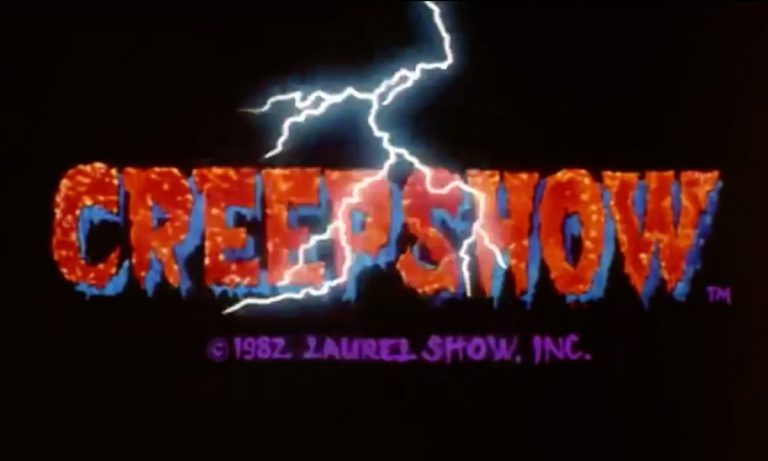
The unending stream of reboots has no end in sight, with Greg Nicotero helming a TV adaptation of the 80s movie Creepshow.

Nicotero, known for his make-up work and producing role on “The Walking Dead,” announced that the show will be developed with Shudder, a horror streaming service owned by AMC. “Creepshow is a project very close to my heart! It is one of those titles that embraces the true spirit of horror…thrills and chills celebrated in one of its truest art forms, the comic book come to life! I’m honored to continue the tradition in the ‘spirit’ in which it was created,” stated Nicotero in a press release.

This will be Nicotero’s first time directing but he’s had a lot of experience in the industry, working in the make-up department with George Romero, the original director of the 1980s movie, along with other directors of blockbusters such as Robert Rodriguez and Michael Bay.

The Creepshow TV adaptation will be an anthology series which will focus on telling stories that are original, fun and scary. It’ll be interesting to see the places the show will go considering that the original film was an homage to the horror comic books of the 50s.

Even though the movie is a cult classic, spawned two sequels, and was Warner Bros. most successful film in 1983, it’s mostly memorable because it was Stephen King’s first screenplay. He also had a pretty amazing cameo in the final version of it. The series is scheduled to debut on Shudder in 2019.

Oklahoma AG To The Board Of Health: Hands Off MMJ Laws

Even though Oklahoma Attorney General Mike Hunter didn’t support State Question 788 (legalize the use of medical marijuana), he does support the law when the people have spoken. The AG told the State Board of Health that they should not amend the law to include more stringent rules, including an imposed ban on any form of dried cannabis flower being sold in a dispensary.

“The current rules contain provisions that are inconsistent with the plain language of State Question 788 and the State Board of Health acted outside of its authority when it voted to implement them,” Hunter stated in no uncertain terms.

In response to the lengthy scrutiny of their changes, the Board of Health said, “The legal analysis by the Attorney General provides clarity on several rules and the legal authority we have to construct a regulatory framework for a state-wide medical marijuana program.” The Board is to hold a special meeting to “consider these changes as soon as possible.”

Hunter set a good example in his release and letter, coming out in support of the people he serves rather than an agenda. However, his recommendations are simply that, they do not have the weight of law behind them per se. Still, it would be beyond ballsy for the Board of Health to ignore said recommendations.

“The board has not been given any express or implied statutory authority to impose additional requirements on licensees,” Hunter wrote in a letter while responding to the idea that a pharmacist must be present at each dispensary. “Thus, the board rules improperly require every licensed dispensary to have ‘a current licensed pharmacist’ present ‘on-site at least 40 hours per week.’ Nothing in the text of State Question 788 expressly or impliedly authorizes this rule.”

The law of the land seems to have a true champion in Hunter, and cannabis activists across the state are probably enjoying a little relief that the newly imposed rules were met without support.

In his letter to the Board, Hunter also took issue with other rules being imposed, such as restricting dispensaries to limited locations, setting hours of operation and limiting the amount of THC in the “flower, leaf or concentrate.”

“Nowhere does the text of SQ 788 expressly or impliedly authorize these regulations,” wrote Hunter.

Tips For Using Cannabis Pain Patches For The First Time

Aside from cannabis’s wide range of medicinal properties that can work to help treat different diseases and medical conditions, cannabis has been used to help treat wounds for centuries.

When it comes to consuming cannabis, there are several different delivery methods to choose from. Some cannabis users prefer the inhalation method via vaping or smoking. Whereas, others prefer orally ingesting cannabis via infused edibles, drinks, or tablets/capsules. Here are some tips for using cannabis pain patches for the first time.

However, many users would rather use topical cannabis products for localized relief. There’s another delivery method available though, which is known as transdermal patches. Aside from cannabis’s wide range of medicinal properties that can work to help treat different diseases and medical conditions, cannabis has been used to help treat wounds for centuries. Nowadays, this particular form of medicine has evolved into a new and improved version—transdermal cannabis pain patches. Read on to find out how effective these transdermal patches are and what to know before purchasing them.

Progression Of Topical Products & Transdermal Patches

Based on presented research by cannabis researchers, Robert Clarke and Dr. Mark Merlin, topical cannabis products have been utilized for centuries to help treat various ailments. Although variations of topical cannabis products have existed for hundreds of years, currently, they’re making a trending comeback. Instead of topical products in the form of oils, salves, lotions, and creams, the latest innovation is the transdermal cannabis pain patch. Cannabis pain patches share similarities with both birth control patches and nicotine patches—they’re all transdermal patches that serve a purpose, and they’re available to customers.

About Cannabis Pain Patches

Currently, individuals can purchase cannabis pain patches, which are often marketed for their pain-relieving properties, especially for the treatment of fibromyalgia and diabetic neuropathy. How are these transdermal patches made though? It’s actually pretty simple. An adhesive patch is infused with cannabis oils and/or isolates. Cannabis pain patches are made to deliver a gradual release of cannabinoid medicine through the body’s skin, which flows into the capillaries. This allows the medicine to enter the body’s bloodstream.

Although no large-scale clinical trials have been conducted on these patches yet, several companies have already released their own cannabis-infused transdermal patches onto the market. One example is Cannabis Science, Inc., which released a cannabis patch prototype with the intention of controlling fibromyalgia and diabetic neuropathy better. Despite the lack of large-scale clinical trials that have been conducted thus far, anecdotal success has been reported by cannabis consumers and medical cannabis patients.

Benefits Of Cannabis Pain Patches

As compared to other cannabis delivery methods, these transdermal patches can be quite effective and beneficial. Did you know that when cannabis is inhaled or orally ingested, 33 percent or less of the total cannabinoid content of that product can be used by the body? When it comes to transdermal patches though, the cannabinoids can enter the body more easily and used more efficiently. Transdermal cannabis patches have additional benefits, which includes the following: slow-release relief, long-lasting effects, and simple dosage control.

Do you consume cannabis and certain cannabinoids for localized or general relief? If your reason of usage is for localized relief, then, cannabis pain patches might be the way to go because they work to deliver a more targeted dosage and effects gradually over time. As a result, the patch’s effects can be more mild than other delivery methods.

For individuals looking for a cannabis delivery method that’ll provide them with the longest-lasting effects and relief, transdermal patches are an ideal choice. What may come as a surprise is that one transdermal cannabis patch can deliver eight hours of gradual relief to users.

On the same note, cannabis users won’t have to worry much about dosages and finding the right one for them when using transdermal patches. This is the case because transdermal patches contain pre-loaded measured doses of cannabinoids. Thus, users have more specific control over the quantity of medicine they plan on consuming. Also, if the effects caused by the patches become too strong, all the individual has to do is remove the patch.

Tips For First-Time Cannabis Transdermal Patch Users

When first using cannabis transdermal patches, it’s suggested to read the product’s directions closely and speak to a doctor about it. From here, it’s recommended to place the pain patch on a body part that’s close to an accessible joint. Keep in mind that location matters when it comes to transdermal patches. To receive the most relief possible, try placing the patch on a region that’s near the affected area where you wish to feel relief. In general, the body’s joints are the best spots to apply the patch since the joints have a thin layer of fat tissue, on average. Two optimal places are near your knee or shoulder.

However, if one wants to feel general relief rather than localized, it’s suggested to place the patch on your wrist, shoulder blade, or lower abdomen area. These places are ideal because they contain the most optimal access to blood vessels. As long as you do your research beforehand, spend time reading the patch’s instructions, and discuss this form of treatment with a doctor, you could have much success and long-lasting relief from this particular delivery method.

NJ Is Primed For Marijuana Legalization, So What’s Taking So Long?

While New Jersey Governor Phil Murphy continues to push for broad legalization, lawmakers can’t seem to agree on passing a bill that would do so. Medical marijuana is alive and well and making new strides, but where is the promised recreational use?

It does seem to be coming, just ever so slowly compared to the first 100 days promise. Murphy says that once cannabis is legalized, he’d like to see sales on day one, which would mean permitting existing medical marijuana dispensaries to sell to the general public once they’d secured enough pot for their patients.

Opening up in dispensaries that are already here could easily cause a shortage problem for them and the patients that rely on them. And that could be a problem, but it’s not the holdup. One would think that in a predominantly democrat controlled state legislature that marijuana would have been a slam dunk for Murphy, but he couldn’t get it past recent budget hurdles, so we’ll see again come August when there may be a special vote.

There are also intraparty arguments going on and not everyone sees legalization as the answer. Senator Ronald Rice is the chairman of NJ’s black caucus and is of the opinion that decriminalization is a better route. Murphy fears, however, that decrim would be keeping the cannabis in the hands of criminals, even if it did keep nonviolent offenders out of jail.

“Decriminalization for me doesn’t get it done,” Sen. Murphy told The New York Times, “because it leaves the business in the hands of the bad guys, it leaves our kids exposed, and it leaves the industry unregulated and untaxed. So while social justice and protecting our kids might be of paramount importance, if there’s a way for the state at the end of the day to make some revenues out of this, we should accept that.”

“Some revenues,” is a grand understatement to boot. In Murphy’s projected budget, legalized cannabis is to create $80 million in yearly tax revenues for the state. Money that could go toward education, roads, law enforcement and more.

Trenton is where the New Jersey laws are made, and so far 19 separate interest groups have cropped up to push for recreational cannabis. Four other groups have formed in opposition.

5 CBD Coffees And Cold Brews To Help Chill

Morning coffee, that daily ritual that wakes us up and gives us a reason for living, is now also a major consideration for those who want to chill out big time. Coffee drinks infused with CBD are all the rage because while the non-psychoactive compound won’t get you high, it promotes relaxation — the exact opposite of what your morning caffeine routine is used to providing. CBD also has the power to decrease inflammation, anxiety, bad moods, and a host of other ailments, making it a favorite new superfood. Here are 5 CBD coffees and cold brews to help chill.

Chill Brew

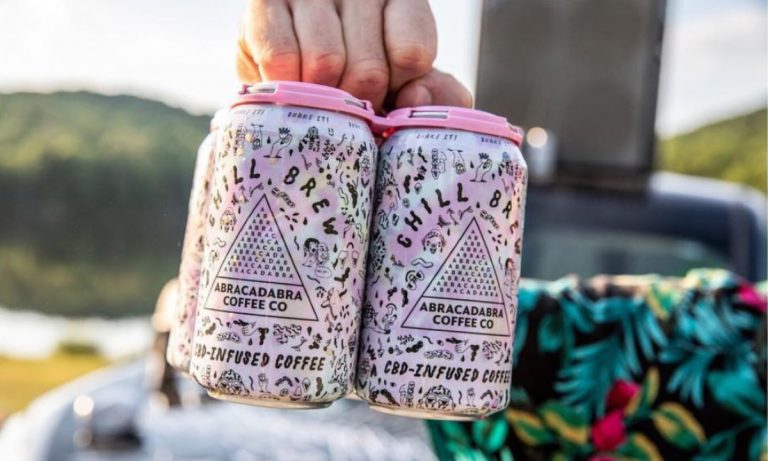
Abracadabra coffee roasters out of  Woodstock, Vermont just released their first batch of infused cold brew, featuring 20mg of full spectrum CBD oil infused in a “super juicy Ethiopia Gedeb cold brew.”

According to Seven Days: “The new beverage is dubbed Chill Brew and packaged in a can combining artwork by Abracadabra artist friend Dang Olsen and local designer Andrew Plotsky. The beans come from a small farm in Ethiopia; the CBD oil, from Luce Farm in Stockbridge.”

https://www.instagram.com/p/Bk25CabDkKd/?taken-by=abracadabracoffeeco

Legal Espresso Mocha

From Mirth Provisions comes one of Seattle’s most popular drinks: coffee. While it doesn’t actually contain any coffee, it tastes like the real thing, albeit, with a lot of extra sugar. It’s easy to overindulge in this product, especially if it’s poured over ice, so be careful.

In addition to coffee, Legal makes some refreshing sparkling tonics, like Rainier Cherry and Lemon Ginger.

https://www.instagram.com/p/Bea-X6OlQRv

Kickback 

This organic, no added sugar cold brew out of Los Angeles comes in several summery flavors: matcha, peach, coffee date, golden cashew, and the O.G. — regular cold brew. Each bottle contains 20mg of CBD.

https://www.instagram.com/p/BjfkWlnB4PU/?taken-by=drinkkickback

Hellion Cold Brew

Speaking with Chicago Tribune, Hellion’s co-owner, Ben Houtkamp, said: “We all kind of agreed that CBD makes sense to go with coffee. It kind of sounds counterintuitive at first, but there’s a nice juxtaposition between the two, like getting the caffeine but without any anxiety or jittery-ness, because it can be easy to overdo it with caffeine.” Each bottle, sealed with a green wax stamp imprinted with a marijuana leaf, contains 30mg of CBD.

https://www.instagram.com/p/Bhwc3TtAyjl/?taken-by=hellioncoldbrew

Tommy Chong Reflects On 40 Years Of ‘Up In Smoke’

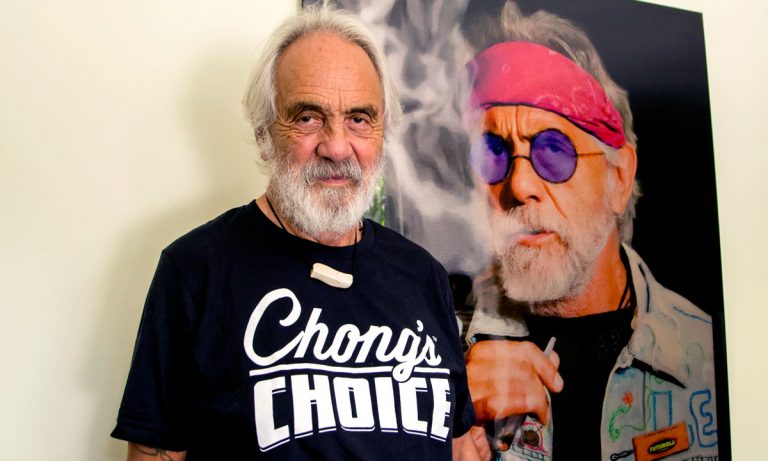
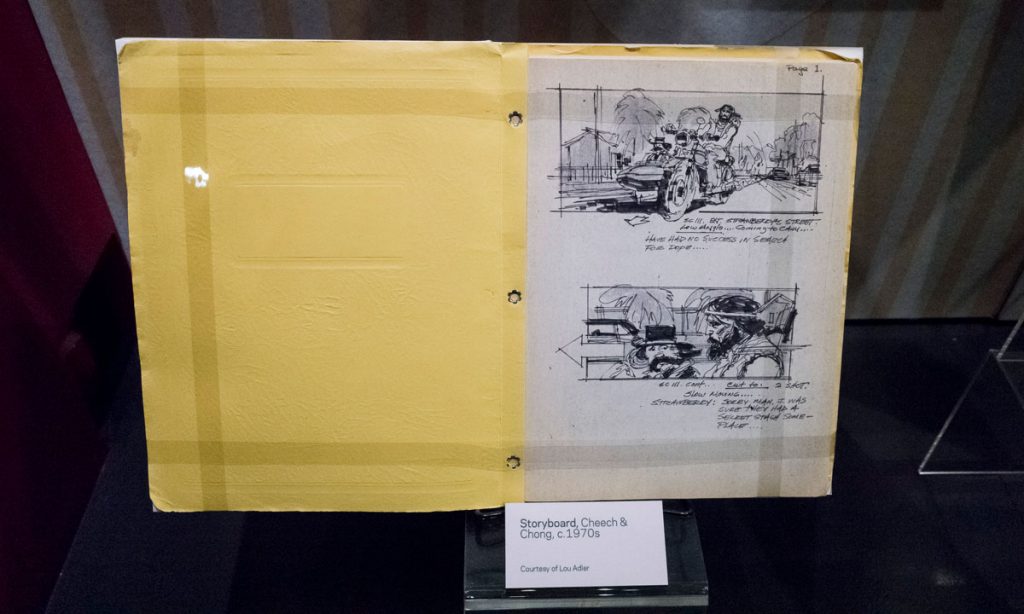
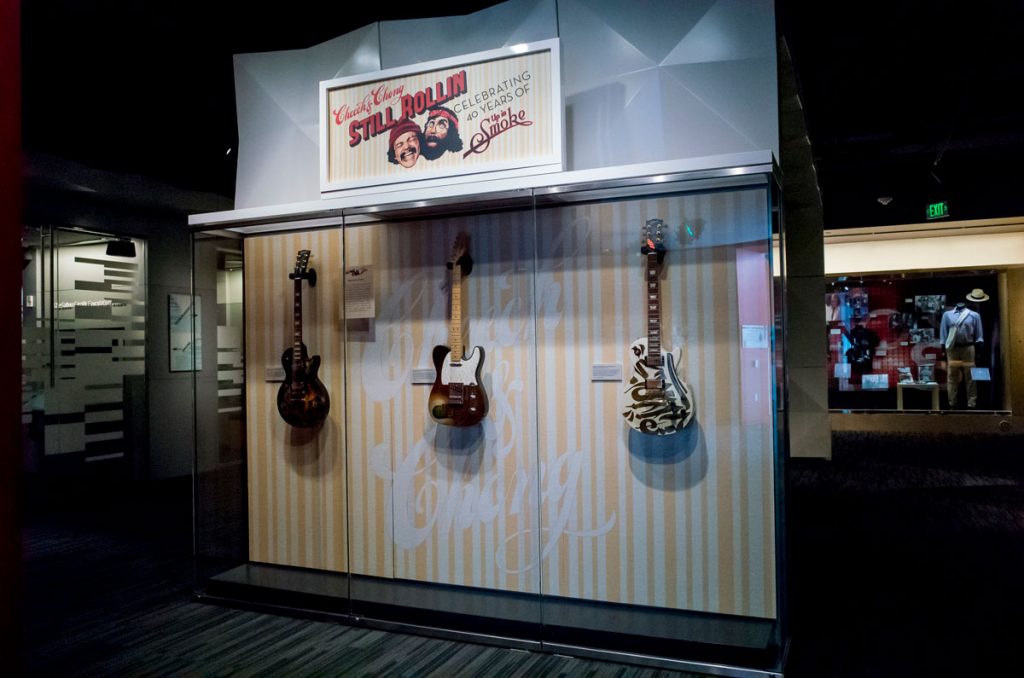
Cheech and Chong’s Up in Smoke has definitely aged in the 40 years since its release, and so has the prohibition creating its environment for contextual comedy. Commemorating this anniversary as well as the first year of cannabis legalization in California, Los Angeles’ Grammy Museum is showing off the archives of Tommy Chong, Cheech Marin, and Lou Adler — the think tank behind the stoner comedy template.

After peeking the Grammy Museum’s selection with curator Nwaka Onwusa, we got the vibe that this exhibit had a message for the millions of tourists who visit Los Angeles: This is a part of the local culture, not just a blip, but an entire keystone of many forms of comedy — the slow breakdown of prohibition, and California’s place in this paradigm.

Related Story: Cheech & Chong Say Stoner Comedy And Cannabis Culture Is Over

Onwusa showed us details that are not apparent at first glance, such as the Bambu album with a giant rolling paper, or the jacket that was actually smokable paper. One of the best points Onwusa and the Grammy team curated was a sense that this was the foundation of their work, the work of so many others, and that comedy as a recorded format used to be the only way it made it into our lives. Stand up recordings were bestselling media, and Cheech Marin and Tommy Chong were Grammy winning comedians, despite being entrenched in the cannabis taboo.

Photos by Maria Penaloza

Linking with Tommy Chong after seeing all of this, we had to ask what his favorite piece of memorabilia in the exhibit was,

“There were some roach clips in there that we presented Virginia Graham, we went on her show, “The Virginia Graham Show”.  She didn’t know what they were, they’re Cheech and Chong heads with [clips], and so we had to explaIn it to her,” said Chong.

There’s so much merch out there from this movie franchise, but seeing counterfeit stuff really gave them a kick. Chong remembers, “There’s so many bootleg shirts out there, I would take pictures of them if i could then copy the bootlegs and put them out ourselves.”

When the subject turned to cannabis history, Chong’s lifelong advocacy informs his discussions. After noting the historical importance of cannabis to make canvas sails, rope, and other vital exploration supplies, Chong really illuminates the long term context of cannabis as a commodity of the ages, “Here’s a little tidbit for you. The word drug store, ever wonder why they call it a drug store? The word drug comes from the Dutch word droog which means ‘to dry’. So what they would do is they would harvest cannabis, and take it to the drug store to dry it out before they sold it. So cannabis has been a part of our life forever, we don’t even realize it.”

Photos by Maria Penaloza

Chong also speaks freely and openly about politics like all comedians should, dumping on Trump & co’s latest indictment batch:

“FBI, they’re like Comey, think about it. They’re professionals. All they do in their life is to figure out how to put criminals away. They’re experts at it. So when they meet a Trump who lies like Trump does, and is as crooked as Trump is? Trump confesses everything on twitter! He confesses, he can’t help it! He’s only good at one thing and that’s destroying himself. That’s the only thing he’s good at.

By the way the rest of the people that were supporting Trump like Nunez and Pence and all those guys, they’re dirty too. They’re going to go down too, because think about it, if, and they know already that Manafort has been colluding with the Russians and paying off people like Sean Hannity. The Russians have been paying him and paying him cash money, laundered money, and all of this all gonna come up probably with [Michael]Cohen, the papers that Cohen’s got. They’ve probably got a list of payments from Russia. All of those guys are going to be indicted. They’re going to go to court. They’re going to flip on each other and they’re going to go jail. So we’re riding very high right now.”

Riding high is a great way to put both Chong’s outlook and hopefully the future of the US, may they legalize it ASAP.

Photos: Maria Penaloza

How To Stay Within The Lines Of Oklahoma’s New Medical Marijuana Program

As Oklahomans wait for the voted medical marijuana laws to go into effect on July 26 under State Question 788, questions as to what is and isn’t allowed under the program’s rules are tricky to navigate. Here are some basic do’s and don’ts of Oklahoma medical cannabis.

The “Oklahoma Medical Marijuana Authority” is under the state health department’s umbrella and thusly the rules that are set forth are pretty much written in stone.

Any licenses – excluding patient and entity – must have applicants 25 years or older. This means growers, dispensary owners, edibles makers and other entrepreneurs will have to be at least 25 to ride. If you’re not 25 yet and have a great idea, yesterday was the time to start, so get on it so that you have a fleshed out plan as your birthday present to yourself.

Criminal history background checks will be conducted on any dispensary, grower, processor, transportation or researcher applying for a license to do so in the cannabis sphere.

Board registered physicians must file a registration with the department and be in good standing with the licensing board. There must be an, “Establishment of a bona fide physician-patient relationship in which physician has ongoing responsibility for the assessment, care and treatment of a patient’s medical condition or an aspect of the patient’s medical condition,” as well as other provisions laid out in SQ788.

Patients under 18 must have recommendations from two doctors, both of whom must either be pediatricians or pediatric subspecialists. The recommendations must be for the same diagnosis and be within 30 days of each other. The physicians cannot work together in any capacity.

All smoked or vaped cannabis falls under the same restrictions as tobacco, the rules of which are commonly referred to as “Smoking in Public Places and Indoor Workplaces Act.” So no smoking in public places or around minors.

Here’s the doozy: “Medical marijuana product may not be dispensed to a patient or a caregiver in flower, dry leaf or plant form.”

Being able to make one’s own edibles, tinctures, oils, salves, rubs and other infusions should not be illegal, nor should smoking the cannabis flower, which in its long existence has never killed a single person. Maybe it’s a sign of the times, that flower is getting to be a less profitable commodity and only craft growers will exist at some point in the future.

‘Bon Appétit’ Is Freaking Out Over These CBD Strips

You know cannabis has gone completely mainstream when Bon Appétit is writing about CBD strips. Yes, it’s true, pretty much everyone is buzzing about cannabis’ non-psychoactive cannabinoid CBD, but to get into one of Condé Nast’s behemoth glossies is a feat.

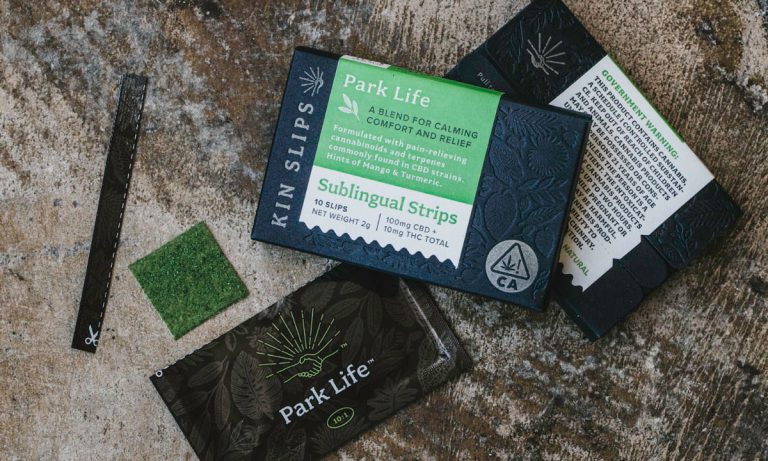
The reporter Aliza Abarbanel is clearly already a CBD fan, as she admitted to keeping CBD tinctures at her desk to abate stress throughout the day. However, she also pointed out that other high-anxiety moments, like waiting on a crowded subway or sitting in traffic, aren’t exactly conducive to fumbling with a dropper. Hence these little, easy to carry, individually wrapped sublingual strips.

Kin Slips have 10mg of CBD and 1mg of THC in every strip. Though there’s little to no chance that the 1mg of THC will get you high, there is a very important factor to cannabis called the entourage effect, where the combination of cannabinoids, even in low, low doses, create a much more effective product.

https://www.instagram.com/p/BjITnS2F_tv/?taken-by=kinslips

Abarbanel reported, “I find that it helps ease some of the sensations of anxiety—tight chest, tense back, clenched stomach—that I tend to feel in high stress situations. A sense of calm sets in behind my eyes, and the sharp, anxious edges of my mind soften.”

It’s high praise for the CBD strips and she also says that she loves the flavor, which is predominately mango with some tumeric added for an “earthy” kind of flavor. Abarbanel hasn’t stopped using her droppers, though.

CBD is most effective when used daily, so the Bon Appétit writer still relies on the tinctures throughout the day. The tincture is a whole flower California offering of CBD and was also featured on the pages of the same magazine in an article by Martine Thompson titled “This CBD Tincture Makes Me Super Productive… In A Chill Way.”

https://www.instagram.com/p/BjNw_B1F9ei/?taken-by=kinslips

Of course the tincture is also infused with all natural lemon and mint flavors, making it delicious as well. Bon Appétit is certainly on the cutting edge when it comes to CBD, and that’s a great thing for newstands and browsers everywhere. For a full list of the magazine’s cannabis articles, click here and enjoy the delicious reading materials.

Here’s How You Can Stop Snoring And Finally Allow People To Get Some Sleep

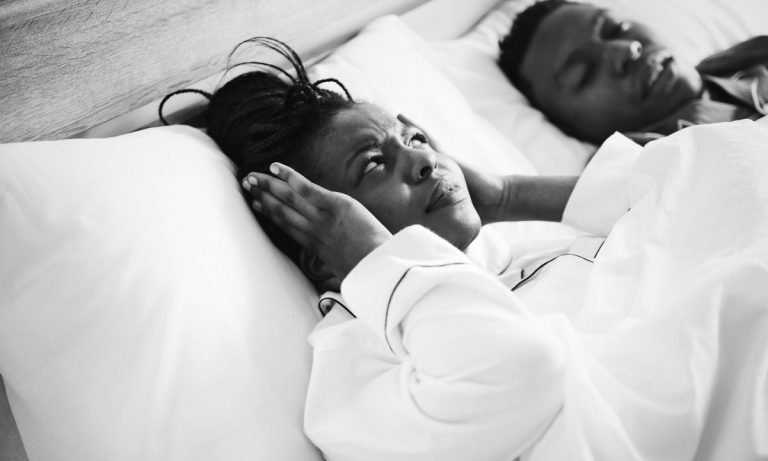
Snoring is one of the most common and annoying problems your bedtime can encounter. You’ve probably snored once or twice, or have slept next to someone whose chest rumbles like a dying old car. According to a study that surveyed thousands of people, around one fifth of them snored regularly. Even though this problem is very typical, if it’s particularly strong, it can affect your sleeping habits, which in turn affect your overall health.

Popular Science reports that snoring occurs when the tissues in the back of people’s throats obstruct their airways, vibrating as they inhale and exhale and producing that low rumbling sound.

While snoring is different than sleep apnea, the former is a symptom of the latter. Sleep apnea is much more serious, and it occurs when peoples’ airways close completely, leaving their brains depleted of oxygen for a few seconds which then jars them awake. The more this brain shutdown occurs, the larger the damage is.

According to sleep physician Neil Kline, differentiating sleep apnea from common snoring can be done by paying attention to certain factors. “If you have snoring accompanied by excessive daytime sleepiness, witnessed pauses in breathing during sleep, gasping during sleep, or the presence of other health disorders, a visit to the doctor is recommended,” he says.

If you’re experiencing some traditional good old snoring, there are a few things you can do to help you stop it or control it a much as possible. Changing your sleeping position can help, especially if the snoring is mild. Most snorers sleep on their backs. Consuming alcohol also increases the likelihood of snoring, especially when consumed before bedtime, so try to avoid doing that if you’re sleeping with someone and they’re exhausted of the sounds you make while sleeping.

Other factors that influence your snoring is being overweight because more tissue surrounds your airways, causing stronger vibrations. There are also anti-snoring mouthpieces, which won’t make you look cute, but will widen your airway and help manage your breathing.

Don't Miss Your Weekly Dose of The Fresh Toast.

Stay informed with exclusive news briefs delivered directly to your inbox every Friday.

We respect your privacy. Unsubscribe anytime.