Thursday, June 18, 2026
Home Blog Page 899

‘Rick and Morty’ Fans Are More Diverse Than You Think

Fans of “Rick & Morty” aren’t typically discussed in positive terms. In fact they’ve become a symbol of the toxic fandom the internet can breed, thanks to tantrums over Szechuan sauce at McDonald’s and harassing the show’s women writers. GQ even wrote a profile of the show’s co-creator Dan Harmon as he grapples with the success and fans of the show.

But “Rick & Morty” itself remains brilliant, an intoxicating—and intoxicated—space ride into the exciting and meaningless possibilities in the universe. Which is why, perhaps, the actual fans of the show may be more diverse than you think.

Hulu just released Season 3 of the show to its streaming platform. According to Hulu’s internal data and analytics team obtained by Mashable, the audience is more equal than previously assumed, with women making up 40 percent of the show’s viewers via the streaming service.

Of course these numbers don’t represent the entirety of the show’s fans. Nowadays, everyone accesses content in a myriad of ways, so to rely upon one platform’s data would result in paltry conclusions. But it does showcase something we often choose to ignore on the internet—the most vocal minority of a group doesn’t typify that group’s ideology or demographics.

Basically, just because you like “Rick & Morty” doesn’t make you an asshole. And that’s worth noting, as last year the show exploded and became the No. 1 show for millennial viewers. So enjoy “Rick & Morty” with the knowledge there are other normal fans like you.

World Cup Fan? Here’s How It’s Affecting Your Brain And Body

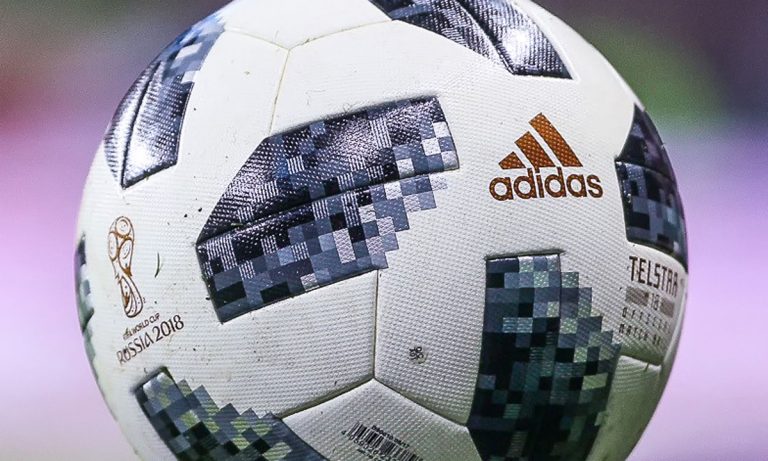
If you’re a soccer fan, you know that when your team wins, you also feel like a winner. But while fandom is good, creating a sense of belonging, camaraderie, and a spike in mental well-being, World Cup is another animal.

Newsweek reports that this international event is “especially impactful” because of it’s size, where the team is basically a stand-in for the country it represents, which can boost a fan’s national identity, according to Susan Whitbourne, a psychological and brain sciences professor at University of Massachusetts, Amherst.

“The emotional boost really can’t be overemphasized,” she told Newsweek. “I feel that [national identification] can really enhance a person’s overall well-being.”

But in the case of  “superfans,” their reliance on a team for their self worth can interfere with their everyday life. There’s a condition specifically related to sports fans called deindividuation, that is basically a crowd mentality. There are things you’d do when you’re just another face in a sea of people that you’d never do solo. And that can lead to obnoxious behavior (you know who you are).

Whitbourne tells Newsweek:

It’s enjoyable, fun, exciting, stimulating, but when it starts to bleed into your relationships or makes you unable to work or concentrate then yes, I think it’s time to take a break. It can enhance your identity, but when it starts to crowd out other aspects of identity, that’s when it starts to turn the corner a bit.

And if you’re super into soccer, it can actually hurt your health. According to Newsweek, cardiac emergencies in men tripled during the 2006 World Cup, and nearly half of those 9-1-1 calls corresponded to the day the patients’ favorite teams played.

Now, for the good news. Dopamine, that adrenaline precursor, is prevalent during positive outcomes and, according to Whitbourne, the occasional dose of adrenaline can “add some spice” to the lives of sports fans. But you already knew that.

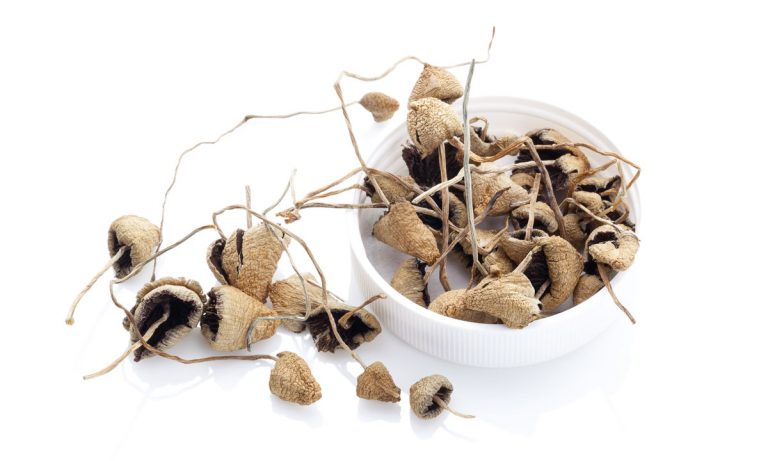
Third Time’s A Charm? Denver Keeps Trying To Decriminalize Magic Mushrooms

In a city known for its progressive drug policies, Denver has yet to decide if it wants to decriminalize magic mushrooms. If marijuana is acceptable, why not psychedelics?

Supporters of the Denver for Psilocybin campaign, which includes cannabis doctors, can’t seem to catch their footing since announcing their push for decriminalization earlier this year. And here’s why.

Legal Framework

The as-yet-unnumbered, fungus-facilitating bill has gone through various iterations of its language to make sure it is affording the kind of protection its backers want for the public in Denver.

The bill’s two previous attempts for recognition were rejected, the most recent one in My.

All bets are now on refining the language of its latest draft petition. Devin Alvarez, CEO of Denver-based Straight Hemp and his colleague Kevin Matthews, Director of the Denver for Psilocybin campaign (Dev & Kev as they are known about town) are working with some of the top attorneys in the field, refining the language to resubmit the bill to the Denver elections next week.

“We want to make sure there aren’t any loopholes, or paradoxes, as well as understanding that this can work as a model for future space,” said Alvarez, the first signer of the original petition to attempt decriminalization of the funky fungus.

A prominent law firm is currently reviewing it for a May, 2019 vote, which will give Alvarez and his cohorts an appropriate amount of time to further their campaign. New York City-based attorney Noah Potter is the principal legal consultant working together with the campaign to draft the revised language of the bill.

Alvarez supports the bill on moral, as well as personal, grounds. He experienced trauma related to drugs and alcohol. “I’ve lost family members and friends, and it has been painful,” he confesses. “I knew there was a better way to help them heal.”

Alvarez used mushrooms to treat his college alcoholism. “People should have access to natural therapies that promote health, happiness, and harmony. Hemp is one of those things. I’ve always supported plant medicine. It is ancient technology. We are meeting a growing number of challenges in our world that require something better. I am supporting this initiative for my family and loved ones,” he says.

Whether it is an all-out medical model, or a natural rights model, Denver is a place where decriminalization could likely occur, so it is an excellent place to start.

The campaign’s third attempt to get approval to start collecting signatures is underway. Approximately 5,000 signatures are needed by May, 2019; it’s not the group’s initial goal of November, however, they remain cautiously optimistic.

The Denver Elections Division will review the bill for legal efficacy, and ensure the language is not confusing and is transparent to voters. The previous two submissions were rejected because the bill might cause voter confusion.

“We could have made a few small tweaks, but we started over from the ground up. We want to make sure that the DED will approve it, and it will be understandable and accessible to the general population,” says Matthews.

If and when the Denver Elections Division approves, the campaigners will have six months to collect the necessary signatures. If their submission is supported by the end of July, or early August, they will have until February, 2019 at the latest to collect the signatures.

“We anticipate being able to collect the required signatures in a few months, by let us say October. That is our target,” said Matthews.

Once the signatures are collected and validated by the city of Denver’s Elections Division, the bill will be assigned a number and will appear as a question on the May 2019 ballot.

Medical efficacy

Alvarez points out that Selective Serotonin Reuptake Inhibitors, or SSRIs (also known as “antidepressants”), are losing functionality in the population, and treating trauma and depression is “an important piece to the human puzzle.”

Matthews wholeheartedly concurs. “In many ways, we have a mental health crisis in our country. Traditional therapy models SSRIs or SSNIs, for some reason, don’t seem to be working when you look at the data over a 50-year period. The rates of anxiety and depression are increasing annually. There has been a rash of high-profile suicides. We need alternatives to pharmaceutical interventions,” he says.

The FDA is currently considering a phase 3 clinical trial for Psilocybin, to explore its efficacy as a treatment for major depression in the US. When a drug is being examined for therapeutic use, it is a 3-phase process for FDA approval. Phase 1 examines the safety of the drug for human consumption. Phase 2 uses a small population with a specific set of symptoms and a control group in double-blind, placebo-controlled studies, at major research institutions and universities. Phase 3 opens the clinical investigation to a broader portion of the population to test its efficacy.

The Phase 3 MDMA studies, for example, sponsored by the Multidisciplinary Association for Psychedelic Studies, or MAPS, were tested primarily on veterans with PTSD. Phase 3 studies are now open to the public.

MAPS’ mission is to develop medical, legal, and cultural contexts for the careful and beneficial use of psychedelics. In these contexts, no one would be criminalized for the possession or use of psychedelics, or any drugs.

“We support ballot initiatives decriminalizing psychedelics and other drugs in principle. However, MAPS believes that, in this political climate, resources would be better spent on FDA-regulated research aimed at medicalizing psychedelic-assisted psychotherapies, science-based education campaigns, or other harm reduction interventions aimed at improving the safety of vulnerable psychedelic users,” said Rick Doblin, PhD, Executive Director of MAPS.

Criminal data and risk assessment to public health and safety

In addition to clinical trials, gathering anecdotal evidence of positive experiences while on magic mushrooms is essential research. “It is time for people to come out of the psychedelic closet,” says Matthews.

While the clinical and medical data are relevant to the campaign for decriminalization, risk assessment, public health & safety are also a concern.

The campaigners are also examining the relationships of classic psychedelic use with criminal behavior in the United States adult population.

Concerning arrests and seizures for drug-related offenses, Psilocybin is identified in 1 in 400 occurrences in metropolitan areas nationwide, according to data analyzed in 2017, by the National Forensic Laboratory. The same process demonstrated 1.3% of drug arrests in Denver, specifically, were Psilocybin-related in 2011.

The group is actively compiling research behind the scenes, while dealing with the bureaucracy of seeing their campaign come to fruition. During the tedious revision process, they want to keep their campaign to decriminalize a mind-expanding mushroom at the forefront of public consciousness.

[h/t/ Westword]

Why Do We Procrastinate Sleep Even When We’re Tired?

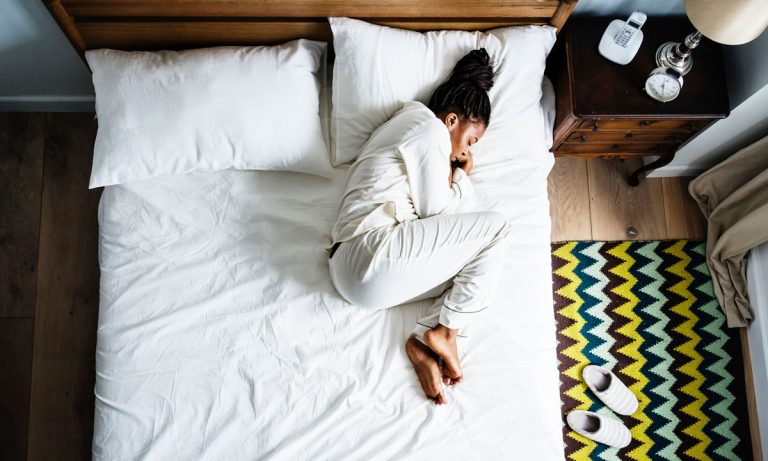
Everyone has avoided going to bed even when tired, no matter how delicious it feels to rest after a long day. You know you should be going to sleep, yet you find something meaningless to distract you. This phenomenon varies from person to person, with some experiencing it repeatedly and with others succumbing to sleep without much of a fuss.

While this problem with sleep has existed forever, Popular Science reports that psychologists are only just now giving it a name. “Bedtime procrastination” is a common, yet largely misunderstood phenomenon. It’s not insomnia or the fact that you have a pressing issue that keeps you awake; it’s just delaying the inevitable and staying up for no particular reason.

Groups of scientists from different areas have different perspectives on why this phenomenon occurs. A team of psychologists from the Netherlands, who were the first to coin the term, chalk bedtime procrastination to poor self-regulation. Another group of scientists from Germany recently published a study that claims that night owls delay going to bed because they have a genetic predisposition to do so. Both groups of scientists have a point.

Researchers stress the importance of the lack of self-control. These researchers surveyed over 2,400 people and found that 53 percent of them went to bed later than they wanted to at least twice a week. These people also admitted to procrastinating in other areas of their lives and having lower self-control. These researchers theorize that even though sleep is pleasant, some people put it off in order to avoid dealing with the last chores of the day (teeth brushing, setting an alarm, etc.), which can sometimes feel impossible to get through.

The German scientists have a different stance, putting most of the blame on our inner body clocks. They claim that some people are genetically predisposed to be alert at night. Jana Kühnel, a psychologist from Ulm University, says that delaying your bedtime is different than other forms of procrastination, because with sleep, you don’t have full control of failing to go to bed. “The intention to go to bed earlier is not enough. Biological processes need to support this intention.”

While more research is needed to fully understand bedtime procrastination, it’s clear that a lot of factors need to be taken into account, and that there’s a decision making process involved. Due to people’s internal body clocks and their habits, some have an easier time than others when it comes to getting enough sleep.

Forbes Gets Called Out For Labeling Kylie Jenner A “Self-Made” Billionaire

Forbes recently released its 2018 “Self-Made Women” edition, discussing women who’ve built successful businesses on their own. The cover features Kylie Jenner and describes her as a “self-made billionaire”; it’s a surprising choice of words considering we’ve been watching her wealthy family all over our TV screens for the past decade.

https://www.instagram.com/p/BlFtWmIh_1V/?taken-by=forbes

Dictionary.com’s Twitter account replied by simply defining the word “self-made.”

While it is true that Jenner has achieved something incredible in building a $900 billion dollar empire out of a large social media following, the word “self-made” implies that Jenner did everything on her own, which isn’t the case. Starring on a reality TV show since she was a teen clearly bolstered her popularity, helping her get to where she is now. And that’s without taking into account the fact that her family was wealthy before she developed her line of cosmetics.

People all over Twitter were quick to join in on the conversation, laughing over Dictionary.com’s “shade”, which seems like another inappropriate word to use since the site was simply defining a word that was used incorrectly. What’s most surprising is the fact that a renowned publication like Forbes put out this cover without anticipating some backlash.

Florida Prisons Seeing Rise In Synthetic Marijuana Deaths

0

Authorities throughout Florida’s correctional facilities are seeing a spike in the number of inmate deaths associated with synthetic marijuana.

But before we get to the story, what exactly is synthetic marijuana?

As The Fresh Toast has previously reported, synthetic marijuana is not marijuana. And it’s not just one substance, either.

In essence, it is a concoction of man-made chemicals that are sprayed onto ground plant matter, that has a vague appearance of marijuana.  These man-made chemicals act similar to THC in that they interact with the cell receptors in your brain.

The problem is that each product varies widely and the consumer has no idea which chemicals are present. The chemicals are toxic. And once one of the chemicals is identified and banned, a similar, nearly identical chemical is created. It becomes a never-ending battle of law enforcement vs. chemists.

When an inmate overdoses on synthetic marijuana, they either have a seizure, a heart attack or become unconscious. And it’s a scenario that’s playing out more and more in Bay County, Florida, where correctional officers, inmates and visitors are managing to smuggle in huge amounts of this fake weed that’s been doused with chemicals  — some poisonous.

Synthetic marijuana, also known as “K2” or “Spice” (which both have the same effect, but are a different combination of chemicals) is chemically similar to THC and other natural cannabinoids. But what many people think they’re smoking, they’re not.

“We’ve looked into the roach spray,” Whit Majors, director of the 14th Judicial Circuit Medical Examiner’s Office, told CorrectionsOne. “The pest control companies provided the name of the chemical, and our labs don’t have a way to test for it.”

According to CorrectionsOne:

In the 14th Judicial Circuit, the MEO (Medical Examiner’s Office) has confirmed four inmate deaths related directly to K2 in the past year. About 18 more suspected K2-related deaths are pending death investigations over that same period of time, bogged down in the toxicology testing phase. The suspicion is based on surveillance and the death not being attributed to stabbing, hanging or beating.

Majors said the main difficulty in determining whether K2 played a direct role in an inmate’s death is because of all the chemicals — such as roach spray, bath salts and even seizure medication — added to the synthetic marijuana. While most K2 is doused with chemicals before entering the prisons, Majors said, inmates sometimes will wait for pest control companies to spray the building so they can soak up the insecticides off the floor.

Last year around this time, the Medical Examiner spent around three months determining a cause of death. Now, according to Majors, there are inmate deaths that are backlogged a year out.

Synthetic marijuana is the go-to for inmates, because it’s hard to detect and it’s relatively cheap. According to DOC press secretary Patrick Manderfield, “Recipes are readily available online, and the Department has intercepted homemade versions of it made with household chemicals through inmate mail.”

Psychedelic Ayahuasca Found To Treat Debilitating Depression

Ayahuasca, or “The God Vine”, has been used for centuries if not millennia in the Amazonian jungle to treat a variety of ailments, one of them being severe depression. While the vine and its preparation with other plants and herbs has now spread across the globe, so have the ceremonies that are meant to cure deeply seated issues.

A new study in Psychological Medicine found that traditional pills used for depression were found ineffective for about one third of patients; even with switching medications to try and achieve better results, they seem to be treatment resistant.

Encouragingly, however, the study also found that some psychedelics are making breakthroughs where pharmaceuticals have failed. “…recent open-label trials show that psychedelics, such as ayahuasca and psilocybin, hold promise as fast-onset antidepressants in treatment-resistant patients.” The study then goes into great detail on the spread of ayahuasca to urban centers in Brazil and then around the world, its healing reputation thrusting the anti-establishment medicine into the mainstream.

An ayahuasca treatment lasts several hours and though severe vomiting and sometimes diarrhea are reported during most trips, it has been proven to be a safe experience. Damaging thoughts and practices are often addressed while seeing visuals such as snakes pouring out of one’s mouth while purging or perhaps a communal meeting with an ayahuasca produced puma that could last for hours.

For the “double-blind parallel-arm randomized placebo-controlled trial” the doctors assessed the changes in the severity of depression, comparing a baseline of seven days after the experience. “Data from 29 patients were included in the analysis: 14 in the ayahuasca group and 15 in the placebo group.”

The depressed persons had been so for approximately 10 years and had all tried using antidepressants. The study analyzed many different data points, but the result that mattered most was, “patients treated with ayahuasca showed significantly reduced severity [of depression] when compared with patients treated with placebo.”

The world at large is finally opening its eyes to the benefits of plants that can seem scary or overwhelming on the surface, but that have potential and actual clinical usages that help a variety of ailments. Severe depression can be deadly and if you’re experiencing symptoms, be sure to reach out to your doctor, family and friends whether or not you are able to get yourself an ayahuasca treatment quite yet. Just know that the doors of perception are opening wider and wider and the results are speaking for themselves.

Americans Are Not Here For Your Ridiculous Online Security Questions

You’re trying to find out how much money you have in your checking account and then, bam, you’re hit with a such a gross amount of of security questions that crossing your fingers becomes a more enviable option than actually knowing if you have enough money to float your rent.

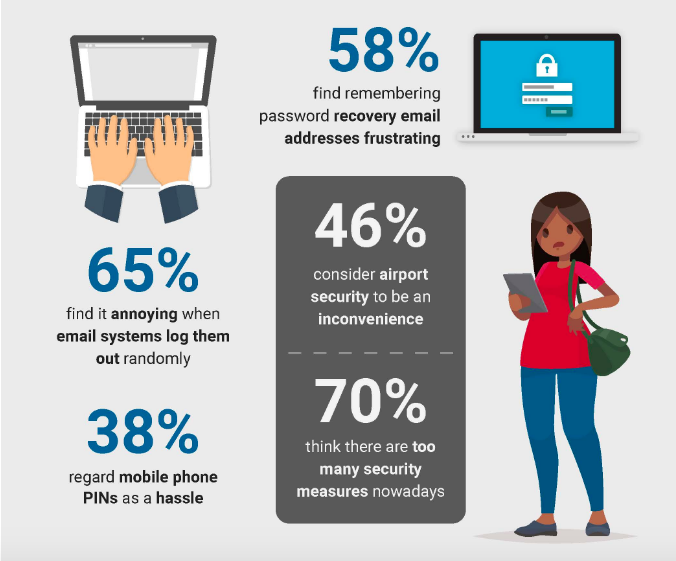
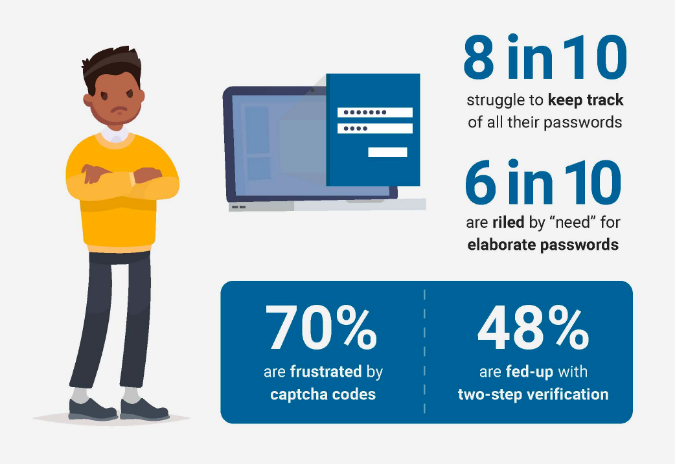
A new study backs this up, revealing what we already know: the amount of security that currently exists, especially online, is exhausting. Analytic software firm FICO commissioned a study of 2,000 American adults and the overwhelming majority (81 percent) said there are way too many unnecessary security measures acting as a barrier to what they need to do online.

Photo by Fico.com

The biggest pet peeve is being kicked off email. Sixty-five percent hate it when they get randomly logged out of their account. And almost as many groan at the idea of having to create a super complicated password to protect that same account. And when you realize that the average person has 34 different online accounts, ranging from banking to social media to email, it’s no surprise that most have a hard time remembering their passwords.

Nearly half of respondents are tired of the two-step verification process, and 71 percent are just as tired of those pesky captcha codes, which they say feature illegible codes. Forty-seven percent of people are tired of answering endless security questions when they’re on the phone with a customer service rep.

Photo by Fico.com

What about banking? According to the survey, 22 percent would try another bank or give up entirely if they had to go through too many steps to open an account. And while the majority of respondents think their bank is solid on account verification and fraud prevention, 55 percent reported being the victim of banking fraud.

“There’s a real discrepancy here – consumers are glad their bank is protecting them, but they’re frustrated that the protection is making it harder for them to open accounts and make purchases,” says TJ Horan, who oversees fraud solutions at FICO. “When it comes to digital transformation, a smooth customer experience is going to be vital. The winners will be the firms that can balance this against the need to stop fraud.”


Oklahoma Bans Smokable Flower In Its Medical Marijuana Program

Controversy has erupted in Oklahoma this week as the state’s Department of Health voted on emergency rules to implement the state’s new medical marijuana program. Criticism revolves around a number of restrictions placed upon medical marijuana patients, chief among them the removal of smokable marijuana from the approved delivery methods. The draft rules also require dispensaries to hire a full-time pharmacist.

Critics of the draft rules say these moves directly violate the will of Oklahoma voters when they approved State Question 788, which legalized medical marijuana in the state with a 56 percent majority. Board members did acknowledge prior to voting that voters who approved SQ 788 probably believed that would include smokable marijuana, according to Tulsa World.

Home-growing remains legal, on the other hand, which would still allow residents to access smokable marijuana on their own. However, this move would prohibit the sale of smokable marijuana in dispensaries.

“In banning all smokeable forms of medical cannabis in Oklahoma, the Oklahoma Health Department just guaranteed litigation. This is completely inconsistent with #SQ788 & a responsible medical cannabis program,” Oklahoma ACLU director Ryan Kiesel tweeted.

Via NewsOK.com:

Julie Ezell, the Health Department’s general counsel, cautioned board members that the two new rules they added to the proposed rules might not be allowed under State Question 788, which legalized medical marijuana. That could invite a court challenge, she said.

Tom Bates, interim commissioner of the Health Department, said the department had expected some court challenges, regardless of whether the board added the dispensary restrictions. The board will continue to revisit the rules over the next months, while Health Department staff continue working out the logistics surrounding legalization, he said.

Among the few to shout satisfaction for the new rules was a coalition of health groups that advocated for the provisions, including the smokable marijuana ban. Dr. Jean Hausheer, president of the Oklahoma State Medical Association, voiced support of.

“We are pleased with the rules adopted today by the Oklahoma State Department of Health and look forward to working with them to promote public health throughout the state,” she said in a news release.

Oklahoma could find itself in a similar position to Florida. The state has found itself in numerous court battles after Florida’s Health Department banned smokable marijuana in framework for medical marijuana. What’s more, Florida has been on the losing end of these legal battles, with one judge ruling the smokable marijuana ban as unconstitutional.

Once finalized, the draft rules will go to Gov. Mary Fallin for approval. Application for licenses will be made available starting July 26, and the Health Department will accept completed applications starting Aug. 25.

IHOP Announces That It’s Not Changing Its Name To IHOB

0

Maybe it was the relentless criticism they received or maybe it was the restaurant’s plan all along, but IHOP has announced that they’re not changing their name to IHOb after all. The pancake chain says that it was all a just publicity stunt in order to advertise their new burger menu.

IHOP claims that reverting to their original name is a way of showing their customers how committed they are to pancakes, while also advertising that they’ll be selling them for 60 cents on July 17.

This 60 cent promotion will be valid for one day only in celebration of  IHOP’s 60 year anniversary.

Reactions over IHOP’s marketing strategy have varied widely, with some people mocking the name change because it’s pointless, and others claiming that the restaurant is now using “fake news” for advertising. Fast food restaurants had a lot of fun on Twitter and social media when the news first broke.

At the end of the day IHOP’s advertising got people talking. YouGov, a site that tracks the perception of different brands, reports that the restaurant’s “Word of Mouth” score rose in the week that followed the announcement.

“We knew we had a very tough job to do to convince people that we take our burgers as seriously as we take our pancakes,” said Stephanie Peterson, IHOP’s executive director of communications. “So, we went bold with the campaign.”

While the campaign was definitely far-fetched, we won’t be forgetting it any time soon. Well played, IHOP.

Don't Miss Your Weekly Dose of The Fresh Toast.

Stay informed with exclusive news briefs delivered directly to your inbox every Friday.

We respect your privacy. Unsubscribe anytime.