Americans and English speaking people have strange perceptions about the French.
Americans and English speaking people have strange perceptions about the French. These people are seen as alluring and sometimes rude. They’re also smooth and are known for their delicious food. Culture really seems to believe that the French are really romantic and into sex. While most of these are stereotypes, they exist for a reason, and for outsiders the French are very mysterious.
Maia Mazaurette, from GQ France answered a few questions for The Local, clearing up a few beliefs and proving that cultures aren’t all that different when it comes to sex. Check out 4 of main differences between Americans and French when it comes to sex:
Sex Is Pretty Chill In France
While in America we tend to be pretty conservative with the way we portray sex in the media and in our lives, the French are different. According to Mazaurette, there are no “moral hang ups” about having sex in France. She also says that there’s less of a“hook up” culture and thus, no stress over having sex with someone you met a little while ago. In France, first date sex doesn’t take away from the potential of a serious relationship.“We have sex because it’s a cool activity. If something physical is happening, just enjoy it”
What’s Are The Dating Rules?
In America the 3 date rule used to be pretty popular, even though Tinder and dating apps have complicated things further (you can hook up with someone on the first date but it might make you seem like you’re not “the serious type”). In France, “things can happen quickly, especially if people are a little bit drunk. I don’t want to have to wait for sex and play the game if I have a crush on someone. I don’t want to have to wait until the end of the evening for sex, I want to go home immediately.” Of course, this depends mostly on the person and not the country.
Oral Sex Isn’t Expected In France
Women are sometimes expected to give oral sex to men without asking anything in return. Mazaurette is really shocked by this, claiming that she finds it “completely weird that women [from America or UK] would give a guy blow job and get nothing in return. It’s implying that he should be rewarded just for speaking to you. In France you never owe sex to anyone”. That seems smart.
When Do French People Know That They’re In A Relationship?
In France, there’s no such thing as having “the talk.” In America, after people have kissed, slept together, and hung out a couple of times, they have a conversation where they make it clear to each other that they’re dating exclusively. Like children.
French partners will expect you to be faithful from the beginning, deleting your profile from dating sites and such. If you’ve reached the point where you’re having sex with someone without using a condom, then it’s pretty much expected that you aren’t sleeping with other people.
Have you ever heard of the Mile-High Club? No, not the one that involves shedding clothes and bathroom tomfoolery. We’re discussing the club where you’re high while traveling in the air. Here is what happens when you consume marijuana on an airplane.
Well, one Southwest Airlines passenger was so eager to join that Mile-High Club they decided to spark one up mid-flight. That’s right. On Flight 1250, a man ducked into the lavatory to smoke a blunt. You might be thinking this was a particularly long flight to warrant such reckless behavior, but you would be wrong. This was a flight from San Francisco to Los Angeles, with a total travel time of an hour and a half.
The pilot diverted the plane for an emergency landing at San Jose Mineta International Airport, about 50 miles south of San Francscio, after announcing a “mechanical difficulty.” Smoking on an airplane is illegal and the man was handed over to law enforcement. The remaining 32 passengers hopped aboard other planes to continue their flight plan. Some passengers said they could smell the weed smoke emanating from the bathroom.
“It looked like that someone needed to smoke a joint on a plane, and he went into the bathroom, smoked his blunt, and set off the fire alarm,” passenger Jonathan Burkes told CBS Los Angeles.
Southwest Airlines Flight 1250 with scheduled service from San Francisco to Los Angeles landed safely after diverting to San Jose following indications a Customer was allegedly smoking in the aft lavatory.
The flight landed without incident[,] was met by local law enforcement, and the Customer in question was turned over to local authorities. Our Employees in San Jose worked hard to accommodate the remaining 32 Customers on other aircraft to continue their journeys.
If you’re wondering the penalty involved here, it isn’t cheap. According to 49 U.S. Code 41706, “Civil fines for smoking on an airline flight range from $2,200 for smoking in an airplane seat or cabin to $3,300 for smoking in an airplane lavatory.” We can almost guarantee that’s the most anyone’s paid to smoke a blunt in California this year.
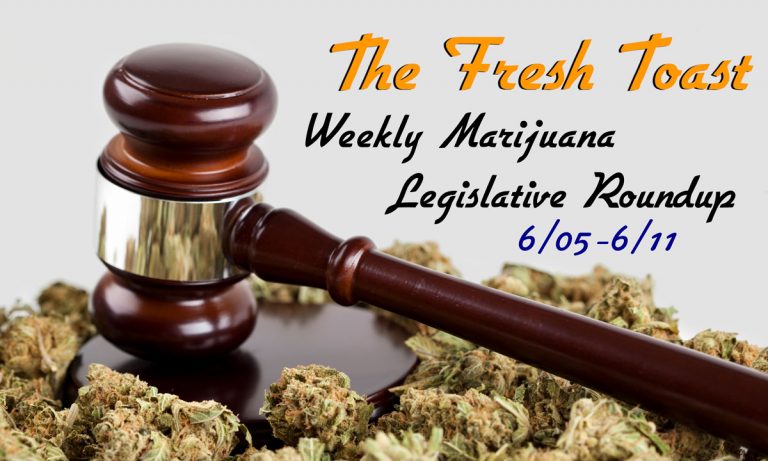
Last week was a busy one for cannabis legislative news. On the federal level, a bill was introduced in the Senate to give states more power to establish their own marijuana laws and President Trump says he endorses the plan. In Colorado, legislation that would have allowed “tasting rooms” was vetoed by Gov. John Hickenlooper. News out of California and Florida were a bit more upbeat. Find out more in our weekly marijuana legislative roundup.
National:
On Thursday, legislation was introduced in the U.S. Senate that would give states more autonomy over marijuana policy and shield state-legal cannabis businesses from federal prosecution. The Strengthening the Tenth Amendment Through Entrusting States Act would allow each state to decide whether marijuana should be legal, while exempting state-legal marijuana programs from federal drug laws. Cannabis businesses in compliance with state law would also be able to take tax deductions like other businesses and put their proceeds in federally-insured banks, with such proceeds considered lawful. While the bill is unlikely to pass anytime soon due to the upcoming midterm congressional elections, it does have bipartisan support and President Trump indicated last week that he would likely sign the bill if it reaches his desk. A companion bill is also being introduced in the House of Representatives.
On Monday, Governor John Hickenlooper vetoed legislation to permit so-called cannabis “tasting rooms” similar to those operated by craft breweries in Colorado. The bill would have allowed currently-licensed recreational marijuana retailers to open a separate facility within the same jurisdiction where customers could buy and consume cannabis products on the premises, though smoking would remain prohibited in accordance with state law. Hickenlooper’s veto represents the latest in a series of failures for similar bills in several states that have legalized the plant for recreational use. Colorado would have been the first state to explicitly legalize marijuana social-use clubs on a statewide basis, though some cities such as Denver and San Francisco have recently implemented similar legislation.
On Tuesday, the California Bureau of Cannabis Control released a new draft rule loosening restrictions on recreational marijuana deliveries. Under the regulatory package issued in May, cannabis delivery drivers would have been permitted to carry only the amount of product ordered in advance by customers. That was intended to outlaw the so-called “ice cream truck” model, in which delivery vehicles drive around with the equivalent of an entire retail store of product and fulfill orders as they are placed. The new proposal would seem to allow such a system. It now faces public comment before final approval by the end of the year.
Florida:
On Tuesday, a Florida state judge handed down a ruling that overturned the state’s ban on smoking medical marijuana, arguing that the ban is unconstitutional. Unless a temporary restraining order is granted by an appellate court, licensed patients will be allowed to smoke medical cannabis starting Monday, June 11, 2018.
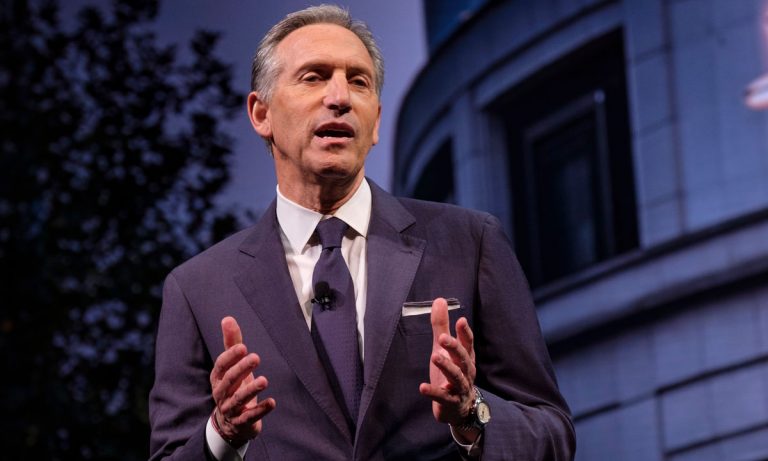
The unofficial “President of Coffee” is now considering a run for President of the United States, as he steps away from the company he helped transition into an empire. Howard Schultz, the outgoing Chairman (and former CEO) of Starbucks teased a presidential run when he spoke to The New York Times last week, saying he intended to “think about a range of options, and that could include public service” when specifically asked if he’d consider a POTUS candidacy.
Here are 9 things to know about the man behind the global coffee brand.
His parents were considered “working poor.”
They lived with their three children (Howard is the oldest) in the projects of Brooklyn, NY. When Schultz earned a letterman’s jacket for playing football, his folks couldn’t afford the $29 to buy the jacket, so Schultz borrowed the money from a friend and hid the jacket from his parents until they could afford it.
Schultz was the quarterback of his high school football team.
According to his book Pour Your Heart Into It, it made him a Big Man on Campus among the 5,700 students of Canarsie High. “The school was so poor that we didn’t even have a football field,” he wrote. All of their games were away games.
Then, it was on to Xerox to sell personal computers. His first big paying gig was as VP for a Swedish company called Hammarplast, where he was basically selling fancier IKEA housewares and kitchen equipment. He made $75,000 a year. And this was back in 1980!
Schultz first discovered Starbucks in 1981 during his first trip to Seattle.
He was taken aback by the fact that this small retailer (at the time, there were only 4 stores that sold strictly bags of whole bean coffee) was a temple for coffee worship. By the time his plane landed back home in New York, he had decided to make Starbucks his next career move.
His initial attempt at getting hired at Starbucks in 1982 backfired.
Schultz’s vision was to expand and the founders feared change. Wrote Schultz in his book Pour Your Heart Into It, They also thought my style and energy would clash with the existing culture.” He was devastated. Two days later, not taking no for an answer, Schultz convinced them otherwise and got the job.
He has Italy to thank for his success.
During a business trip to Milan, Italy in 1983, he found, in his words, “the inspiration and vision that have driven my own life, and the course of Starbucks, from quiet Seattle to national prominence.” Overcome by the ritual and the romance of Italian coffee bars, he had an epiphany: Starbucks needed to start offering coffee by the cup!
His first latte was during that same trip to Italy.
He mimicked someone else’s order and asked for a “caffe latte” expecting just coffee and milk. What he got — a shot of espresso with steamed milk and foam — blew his mind. “No one in America knows about this,” Schultz wrote in Pour Your Heart Into It. “I’ve got to take it back with me.”
https://giphy.com/gifs/starbucks-vER8rSZTjKpag
He purchased the Seattle Sonics in 2001.
He sold the team to an investment group from Oklahoma City five years later. Goodbye, Supersonics! Seattle has held a grudge every since.
How much space you put between your words, how loopy you make your letters, and even how much pressure you put on the tip of your pen are all insights into your personality. So when we get a chance to examine the handwriting of some of the most successful people on the planet, we are drawn in, so to speak.
Business Insiderconsulted two handwriting experts — Kathi McKnight and Elaine Charal — to analyze the handwriting of 15 of the most successful business leaders. Here are five of the most interesting reads:
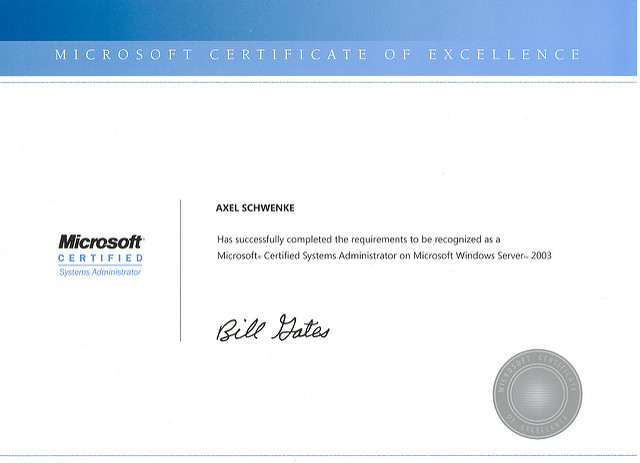
Bill Gates
McKnight says:
“There is no wimpy pressure in that T-bar crossing: He is determined! The closed (retraced) L’s reveal he is no pie-in-the-sky dreamer but keeps a close check on reality.
“The open loop in the T reveals a sensitivity to sensitive to criticism so when engaging with him personally or professionally, choose your words carefully or he may take offense.”
Photo by Flickr user Axel Schwenke
Jeff Bezos
McKnight says:
The left slant of his first name shows someone who will need to pull away from the maddening crowd from time to time and withdraw to his cave for some introspection. The 45-degree angle of the final stroke in Bezos reveals he will come out with a new insight one that is full of courage and a philosophy that says, ‘there are no problems, only solutions.’
Charal says:
The final stroke of his signature zooms upward, indicating optimism, ambition and an ability to ‘shoot for the stars.’ His signature moves up on his page, indicating his optimism.
Heartily congratulations @amazonIN on your 5th anniversary. I feel you should ensure @JeffBezos's signature on this homepage letter to be smooth and neat. It looks like a very low pixel image has been used. @amazon I can see three colors. pic.twitter.com/fjCLOwLhuE
“Oprah’s dynamic initials indicate good self-confidence (high capital letters) as well as excellent self-image (wide capital letters). The needle point on her letter ‘r’ in her first name as well as the same stroke in her family name indicates sharp mental perceptions.
“The ‘stick’ stroke on her letter ‘p’ indicates her love of debate and discussion, and her love of being effective at making her point. Her letter ‘a’ in her first name is open at the top, indicating her love of sharing her ideas and thoughts with others.”
The rounded top of the capital ‘M’ in Mark’s first name suggests he will be patient and methodical when he is doing what he is interested and invested in. The mid-portion of his capital ‘M’ is suspended above the baseline, indicating Mark’s ideas are visionary and that he will carve his own reality. The k-buckle at the end of his first name towers over the other letters — This is a ‘defiant k’ that indicates Mark will need to be his own authority figure.
McKnight says:
Privacy is the name of the game with this signature. He guards his personal privacy as his own business.
Richard’s signature is vertical-slanted, indicating his poise, objectivity and ability to stay outwardly calm under pressure. His very high capital letters indicate his confidence and healthy ego strengths. His fully-looped ‘h’ in his first name indicates Richard’s active imagination.
McKnight says:
Large first letters to each name in a signature reveal a person with a strong sense of their own worth. The tiny letters that fall after show he has strong powers of concentration. The vertical slant reveals that Branson trusts his brain over his gut feelings. He is logical and practical in his business savvy.
California legalized marijuana in 2016, and this past New Year’s Eve eager customers lined up in the darkness outside medical marijuana dispensaries across the state, ready to start shopping at the stroke of midnight.
The effect has gone beyond the cannabis cash register. Everyone has seen the ads or heard the chatter — and that includes minors, though marijuana remains illegal for those under 21.
“Coming out of SFO [San Francisco] airport, there are billboards for Eaze [a weed delivery service] that say ‘Marijuana is here,’” said Danielle Ramo, a psychologist who conducts research at the University of California-San Francisco on adolescent drug use. “I’m not sure parents were expecting to see so many images of cannabis all over.”
The rollout of legal recreational marijuana in California and other states doesn’t appear to have led to any big changes in substance abuse prevention yet.
But drug prevention education in schools has evolved significantly since the “Just Say No” days of the ’80s — and now typically takes an approach that’s more appropriate for the era of ubiquitous weed access. It’s one that emphasizes decision-making and critical thinking skills instead of abstinence.
One approach is the Being Adept curriculum — an evidence-based course of study that has been used in about 20 schools in the San Francisco Bay Area.
It, and other drug abuse education today, draws on decades of rigorous effectiveness research and the newest teaching techniques.
The PSAs that Gen-Xers may remember — the egg in a frying pan (“This is your brain on drugs“), or the boy calling out his dad’s drug use (“I learned it by watching you!“) — live on as memes but are no longer used in information campaigns.
“Those scare-tactic-based programs have tended to quite clearly not work, based on most of the research that evaluated its effectiveness,” Ramo said. “Today, there is an entirely different mindset about school-based prevention.”
In a nutshell, the focus now is on facts, not fear. Also conspicuously absent are simplistic dictates like “Just say no.” Instead, teachers spur students to examine data, speculate on motives, discuss risks and deliberate on their own goals and values.
Ashley Brady, a Being Adept instructor, was completely open about her method when she stood in front of the eighth-graders at Marin Primary and Middle School, a private school in Larkspur.
“I’m not here to tell you what to do today. Not at all,” she began. “I’m here to give you the most up-to-date information possible so that you can make your own healthy, informed decisions.”
Brady then jump-started a fast-paced, fact-filled discussion on brain chemistry and physiology. She showed an animated video about how marijuana affects dopamine pathways in the brain. Then she led a discussion about marijuana “edibles” and how the liver metabolizes them.
“It can take up to 30 minutes to maybe even an hour or two before it really hits you,” she said. “When somebody eats an edible and they don’t really feel the effects, what do you think happens?”
“They eat more!” a student called out.
“They eat more,” Brady nodded. “Yeah, an hour, an hour and a half later? Boom! Like a freight train, they’ve been hit, and, you know, can barely move or can barely talk, that kind of thing. So they may have to go to the hospital.”
True, that sounds a little scary, but it’s presented neutrally, as a consequence at the end of a sequence of decisions.
Where the legalization of the marijuana industry has affected the content of these lessons is on the subject of potency. Brady told the students that legalization has spurred competition and innovation among suppliers, to the point where they’re now churning out extremely potent and precisely calibrated forms of pot called “concentrates,” which comes in various forms.
Brady ran through their names: oil, bubble, shatter, wax and dabs.
“They call it a ‘dab’ because one tiny little nail head [of it] — I mean I’m talking like the end of my pinky — one tiny, little nail head is the same as three joints hitting the system all at once,” she said. “So it’s a lot stronger than it used to be.”
Tests of THC levels in marijuana samples over the years back this up. Whereas a typical joint in the ’70s probably had a THC level of 4 to 5 percent, at best, growers are now breeding strains of cannabis that produce buds with THC levels as high as 20 to 30 percent.
The concentrates are in another category altogether. Processed concentrates sold at dispensaries now regularly test at 80, even 90 percent.
“It’s not the same drug,” Brady told the students. People sometimes vomit from concentrates. Some people hallucinate and have even become psychotic.
And yes, she added, it can be addictive. Not just psychologically, but physically. People do go into THC withdrawal and do go to rehab for pot addiction.
Still, as she described the transformation of marijuana from a relatively mild intoxicant to a potentially debilitating one, Brady never once said “that’s why you shouldn’t” or even “so please be careful.”
Afterward, the students applauded this approach.
“It made you feel more mature, and that you’re in control,” said Devon Soofer, 13. “This [class] was actually telling you the long-term effects and what it can actually do to you. So it actually made you feel like, ‘Wow, this is actually really bad,’ and not just being forced not to do it.”
Subsequent units in the Being Adept curriculum give students concrete tools: They rehearse what to do or say at parties, and talk about better ways to cope than using cannabis — or any substance.
Ramo, who serves as a scientific adviser to Being Adept, decried “the overwhelming stress, anxiety, depression, suicidality that is so pervasive among teens in the United States today, especially in high-intensity educational areas, like a lot of schools in the Bay Area are.”
“Addressing that problem is key,” she added, as is “having teens come up with solutions to manage their stress, that they actually would use.”
‘Delay, Delay, Delay’
So if drug educators aren’t telling students “Don’t!” anymore, what are they telling them to do? Overtly, they’re not demanding teens do anything, because teens are naturally resistant to the authoritarian approach — and some of them may resist to the point of doing the opposite.
Jennifer Grellman, a psychotherapist in Kentfield, Calif., and the founder of Being Adept, summed up the strategy in three words: “Delay, delay, delay.”
“The way to handle that with your kids is to say: ‘You know, you don’t have to use this now. Maybe you want to use it someday, but not today, not now. It will always be there.’ Just tell them to wait.”
Grellman said that advice may be more palatable for some teens, and therefore easier for parents to deliver.
They’re not forbidding something (and possibly making it more enticing). They’re not saying “never.”
The instructors put a special emphasis on a less visible risk: the potential damage to their brains.
“More research is coming out looking at the ways in which all different kinds of substances can hijack normal brain functioning, and particularly so in adolescence,” Ramo explained.
“In heavily cannabis-using teens, there are some particularly important implications of using cannabis on the frontal lobe, and that interrupts a type of thinking called ‘executive functioning.’”
Also worrisome is a substantial body of research showing that using any potentially addictive substance while the brain is still developing — whether alcohol, marijuana, nicotine or other drug — triggers neurological changes that can lead to addiction.
“The earlier teens start using, the more heavily they use in adolescence, the more likely it is that they’ll go on to have problems throughout their adulthood,” said Ramo.
Being Adept instructors don’t say it outright, but the message is clear: If you’re not going to abstain, just push it off for a while. Your brain is too vulnerable right now.
The Role Of Parents
Grellman said parents should talk about drugs and alcohol with their kids often — as early as fourth grade. For California parents, she suggests using the new billboards or marijuana ads as a prompt to bring up the topic.
Broach the subject obliquely: What do people at your school think about those ads? Do any of your friends know what a dab actually is? Did you see this article on the seventh-grader getting expelled for pot in his locker? What do you think about that?
She said to listen to what they say and discuss it — try not to lecture, but be clear about your expectations, and your values around drugs and alcohol.
At every school where Being Adept is taught, Grellman offers a “Parents Night,” where parents can learn how to navigate those conversations. It’s not just what parents say, she said, it’s what they do. Children are always watching how their parents use substances.
“Don’t glamorize it,” she advised. “It doesn’t mean you have to become a monk and never have a drop of alcohol, but please drink responsibly.” And, she said, don’t use it for stress control.
“This idea of coming home from the office and saying ‘I’ve got to have my glass of wine’ — if you want to have your glass of wine, have your glass of wine, but don’t announce it! That you’re just at wit’s end, and you have to have this drink.”
Grellman said the modeling part becomes tricky when kids ask parents about their past: Did you party? What drugs did you use?
When she led the Parents Night in March at Marin Primary and Secondary, she advised parents to get ready for that moment and have answers prepared.
If you did party in high school, don’t lie, she told them. If a kid senses dishonesty or hypocrisy, they’ll shut down. The most important thing is to keep the conversations going. If your child knows they can talk to you, no matter what, they will create a “safety plan” with you. They will reach out to you when trouble comes.
“You don’t have to tell the full story,” Grellman said. “You could say: ‘You know, I did smoke and I did drink when I was 13.’ And if you loved it, I don’t know if I would advertise that.
“You could say, ‘I did smoke, or I did drink, when I was 13. And you know, frankly? It was too early for me, man. I made some stupid decisions and I got in trouble.’ You can give them the consequences of it.”
After the presentation, parents said they felt relieved to have concrete suggestions about how to talk with their kids, and how much was OK to bring up.
“It’s much more prevalent than it was when I was growing up in the ’80s,” said Joseph Sullivan, a physician from Larkspur, Calif.
“This is a different time, and so it’s nice to hear that we’re almost given permission to be talking about these different aspects of drug experimentation at different ages,” he added.
His wife, Dr. Sara Sullivan, said she’s glad that the “Just Say No” paradigm is dead.
“Just to give the kids more information, I think, is such a different way to approach it, and I really appreciate that. And we’ve kind of started to have conversations in our family because of that,” she explained. “To really kind of take that approach and not be like ‘You’re kind of out there on your own.’”
This story is part of a partnership that includes KQED, NPR and Kaiser Health News. KHN’s coverage of children’s health care issues is supported in part by the Heising-Simons Foundation.
Rather than duking it out in the streets, Congressional members sometimes resort to some rather passive-aggressive tactics to sell their colleagues on their respective agendas. This is no different when it comes to the world of marijuana… or even its non-intoxicating cousin.
Last week, as part of the dog and pony show on Capitol Hill paying homage to Hemp History Week, Senator Ron Wyden of Oregon brought a couple of baskets full of industrial hemp products to the floor of the U.S. Senate before giving a speech on the subject.
“It is Hemp History Week again,” he said, “and that is why I’m back on the Senate floor to talk about the only Schedule One controlled substance that you can sew into a t-shirt and wear through TSA.”
It was then that the Wyden’s assistant began holding up a variety of industrial hemp products. “He’s got a few Schedule One snack bars. He’s got some Schedule One hand soap. He’s even wearing a Schedule One necktie. The point is, they’re all perfectly legal products you’ll find on shelves in stores throughout the nation, but because the hemp had to be imported, none of it could be considered fully American-made,” he explained.
Wyden, who is part of the crew pushing the Hemp Farming Act of 2018, went on to express his disdain for the U.S. policy against hemp production. He told lawmakers that the nation was essentially putting the screws to American farmers by continuing to allow other countries supply us with hemp. “There can’t be many policies on the books that are more anti-farmer than that one,” Wyden said. “Hemp growers in places like Canada and China must just be laughing all the way to the bank. They’re cashing in, while our farmers have their hands tied by the current hemp restrictions.”
Earlier this week, the Senate adopted a non-biding resolution that acknowledges the economic potential of allowing the U.S. hemp industry out of its cage. Wyden, Senators Rand Paul, Jeff Merkley and Senate Majority Leader Mitch McConnell praised the action.
“Since Kentucky’s earliest days, industrial hemp has played a foundational role in our agricultural history and economy,” McConnell said in a statement. “With our Hemp Farming Act of 2018, I believe that hemp can also be an important part of our future. Removing hemp from the federal list of controlled substances will give our farm communities the opportunity to explore the potential of this versatile crop. I am proud to join with farmers, processors and manufacturers across Kentucky to celebrate Hemp History Week as we work together on the plant’s growing future.”
During his speech, Wyden said that hemp should not be lumped in with the cannabis plant, saying that “Hemp is not a drug, and treating it like one was wrong from the get-go.” He also explained that the product had a long history in America before it was met with prohibition.
“Before growing hemp was made illegal, hemp was among the predominant American crops for generations. It was grown in the fields of Mount Vernon,” he said. “It was threaded into the ropes and sails of the first ships made for the United States Navy.
“If hemp was easier to rhyme,” he continued, “it might even have its own lyric in ‘America the Beautiful’ right alongside the amber waves of grain.”
If you’re satisfied with the amount of sex you’re having, congratulations! Also, you’re in the minority. In fact, 60 percent of women (6 out of 10) report not having enough sex, according to a new survey conducted by the dating app HUD.
In order to understand why these women weren’t getting busy, Health sought the help of Holly Richmond, PhD, a sex therapist in Southern California, who has some advice on how to get down on the regular and it has everything to do with communication.
Don’t Be Afraid To Tell Men What You Want
According to Richmond, 60 percent proves that too many women aren’t getting their desires across. She tells Health, “That statistic shows that women really don’t know how to ask for what they want. There’s still some social trepidation around being a sexual woman and having a sexual appetite, [and] some women feel [this] doesn’t fit the norm.”
“Men don’t own the market on high libidos,” she added. “Libido is really a spectrum across the board for men and women.”
Be Up Front With Your Partner
“If you’re on that first, second, or third date and you decide you want to have sex, tell your partner, ‘I’d love to make this physical with you,’ ‘I’d love to have you over to my place,’ or ‘I’d love to go over to your place,’” she advises. “It’s important to have words around it and really verbalize it. Men might be a little more reluctant to ask, so perhaps it is more important in the wake of ‘Me Too’ to say, ‘I want to have sex. What do you think?’”
If You’re In A Long-Term Relationship, Have “The Talk”
“Go into the conversation with a sense of curiosity so they don’t have to be put on the defensive,” she tells Health. “Not ‘You’re such a disappointment.’ It’s about coming at it from a sense of curiosity in mutual wants and needs.”
But how do you even broach a subject like this? Richmond suggests starting with, “I’m curious if you’re happy with the amount of sex we’re having, because I’d totally be into the idea of having sex this many times per week.”
Find Someone Else
Without mincing words, Health advises to ditch your partner if you still don’t get the sex you need from your relationship because “it may be a sign your partner and you aren’t right for each other in the long run—and it’s time to find someone new who will make sure you’re not part of the 6 in 10 statistic ever again.”
The New York State Assembly voted earlier this week to pass a bill to seal marijuana convictions for individuals who have been unjustly and unconstitutionally arrested for simple possession of marijuana in public view. This is the third time the Assembly has passed this legislation, underscoring the chamber’s call for marijuana reform to center those who have been impacted by prohibition’s disproportionate enforcement.
The passage of this legislation comes at a time when marijuana reform and broader legalization is being regularly discussed by elected officials and candidates for elected office across the state, many of whom have spoken about and acknowledged the injustice that these arrests represent. Over the last 20 years, more than 800,000 New Yorkers have been arrested for simple possession of marijuana. Those convicted face significant barriers to accessing education, employment, housing opportunities, and other state services.
The Speaker of the Assembly, among others, called for the clearing of records to be a part of any discussion about legalization. The Governor, who earlier this year launched a study of marijuana legalization, has the ability to address this issue head-on by following the lead of Vermont Governor Peter Shumlin and pardoning those who were arrested under the public view loophole—despite marijuana decriminalization in 1977.
“As New York moves forward to reform marijuana enforcement and study the beneficial outcomes of legalization for the state, it is imperative that any efforts to legalize marijuana for adult use also address the mass criminalization of communities of color that has come as a product of the enforcement of marijuana prohibition,” said Christopher Alexander, policy coordinator at the Drug Policy Alliance.
The Assembly also passed legislation that would add opioid use disorder to the list of qualifying conditions for the state’s medical marijuana program — an important step forward for patient access across New York. This move is responsive to the current overdose crisis New York is experiencing and lack of effective patient access to medical marijuana. It has long been known that marijuana is an effective analgesic; moreover, there is some evidence to suggest that some people use marijuana to replace opioids. In states with medical marijuana laws research has shown decreased admissions for opioid-related treatment and dramatically reduced rates of opioid overdoses. There is a growing body of scientific literature suggesting the potential for marijuana to help reduce opioid withdrawal symptoms and therefore help ease patients away from opioid use.
Full marijuana legalization in New York for adults over 21 could be an additional important tool in combating the overdose crisis. Studies show a correlation between jurisdictions that have the most liberal legal framework for marijuana access (i.e., those that covered more conditions and created easier patient access) garnering the most significant benefit in reduced overdose deaths. A recent journal article suggests there are at least three major ways marijuana can play a role in reducing opioid use and misuse: as a treatment for chronic pain before turning to opioids; as part of an opioid reduction strategy for patients already using opioids; or in conjunction with methadone treatment to increase success rates.
“Studies have shown that patients see marijuana as a viable alternative to prescription opioid pain medication, with fewer side effects and lower potential for problematic use,” said Melissa Moore, New York Deputy Director, Drug Policy Alliance. “Clearly marijuana alone will not be the answer to America’s problem with opioid misuse and overdose deaths, but available evidence indicates that it should be used with other harm reduction strategies (such as expanding naloxone access, establishing safer consumption sites, and the decriminalizing all substance use) as part of a necessarily diverse and innovative approach to this combating this crisis.”
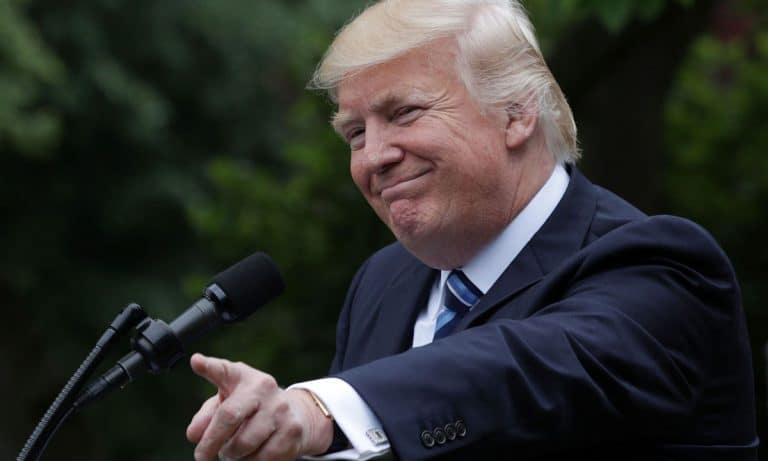
President Donald Trump and Attorney General Jeff Sessions clearly are not on the same page when it comes to cannabis legal reform. And this schism within the administration became more glaring on Friday when Trump stated that he “really” supports ground-breaking marijuana legislation filed by Sens. Elizabeth Warren (D-Mass.) and Cory Gardner (R-Colo.).
“I really do. I support Senator Gardner,” Trump declared when asked by a reporter whether he endorses the bill announced earlier this week. “I know exactly what he’s doing. We’re looking at it,” Trump said during a press conference on the White House lawn. “But I probably will end up supporting that, yes.”
Trump’s declarative statement demonstrates the clear divide between the president at Sessions, the nation’s top cop. The legislation being pushed by Warren and Gardner is called the Strengthening the Tenth Amendment Through Entrusting States (STATES) Act and it would essentially give individual states the ability to create their own cannabis regulations without fear of federal interference.
Nine states, as well as Washington, D.C., have legalized the adult recreational use of cannabis; 20 additional states have some sort of medical marijuana program in place.
Of course, some cannabis advocates remain circumspect when it comes to promises made by Trump. But his endorsement on Friday appears to be unequivocal.
“It is a positive sign that President Trump’s first cannabis comment as the Commander in Chief was support for the STATES Act. The real question is how will Speaker Ryan and Leader McConnell react,” NORML Political Director Justin Strekal told Marijuana Moment. “The burden is now on the congressional gatekeepers to pass the bill so we can finally end Attorney General Jeff Sessions’s legal ability to infringe upon the progress we have made in 46 states and unshackle state-lawmakers to end criminalization once and for all.”