Wednesday, June 17, 2026
Home Blog Page 924

Facebook Launches A Hub For Gaming Content

Facebook loves an opportunity to tackle a subject that’s popular, be that by buying a competing app or by creating a space of their own. Now, they’ve decided to create a gaming hub where users can find all sorts of gaming content, including videos, and streams. The hub is called fb.gg, and it allows you to stream videos of your own gameplay, or to follow and view at the content of other streamers.

The gaming hub has different categories, recommending users you should follow and the sites’ most popular streams, including those of Fortnite, Free Fire, and League of Legends, which are some of the most popular video games around. Once you follow a streamer, they’ll appear on the sidebar of your display and you’ll get a notification every time they upload up content.

Images courtesy of Facebook

The hub is very similar to Twitch, featuring a level up system called Facebook Stars where streamers’ work is rewarded with in-game tipping. After undergoing a verification process, which includes having over 100 followers and uploading at least four hours of streaming within the last 14 days, video creators can make money from the platform.

Mashable reports that fb.gg has already signed with prominent streamers such as MelonieMac, Darkness429 (really?), MissesMae, and others, and it’s unknown whether it’ll have an effect on other streaming sites such as Twitch and Mixer.

The creation of this space could be what Facebook’s been needing to recapture some of the interest they’ve lost of teens. According to the latest statistics, only 51 percent of teens between the ages of 13 and 17 use Facebook, preferring to spend their time on YouTube, Instagram, Twitter, and Snapchat.

Study: Vitamin Supplements Provide No Health Benefits

A study by the University of Toronto claims that the most consumed vitamin and mineral supplements don’t make a difference to your health, providing no benefits or damage. You’re basically just wasting your time and money when taking them.

This study, published on the Journal of the American College of Cardiology, reviewed existing data that spanned several years, from January 2012 until October 2017, and discovered that the most consumed vitamin and mineral supplements (calcium, vitamin D and vitamin C) provided no prevention of cardiovascular disease, heart attacks, strokes or premature death.

Science Daily reports that lead author Dr. David Jenkins was very surprised by finding so few positive effects from the world’s leading supplements. “Our review found that if you want to use multivitamins, vitamin D, calcium or vitamin C, it does no harm — but there is no apparent advantage either.”

These discoveries support the idea that, if you’re a person who has no deficiencies, nothing can replace a healthy diet of less processed foods filled with vegetables, nuts, proteins, and fruits. Researchers also capitalize on how important it is to stay informed, and to be aware of what’s inside of those pills. “People should be conscious of the supplements they’re taking and ensure they’re applicable to the specific vitamin or mineral deficiencies they have been advised of by their healthcare provider,” Dr. Jenkins said.

The only positive result the study found was related to folic acid, which could potentially help reduce the risk of strokes and heart disease.

Canadian Military Can’t Ban Troops From Smoking Weed

As Canada inches closer to nationwide legalization of adult use of recreational cannabis, the nation’s military will be compelled to change its policy regarding marijuana consumption. And it looks like good news for troops.

The Canadian military will be unable to impose a complete ban on cannabis consumption. Instead, the military restrictions would be similar to how the nation’s military force handles alcohol.

The new policy “allows us to respect the law,” Lt.-Gen. Chuck Lamarre, chief of military personnel, said in an interview with CBC. “But at the same time, I think Canadians are expecting our operational readiness and our ability to do our business must never be compromised.”

Lamarre does not foresee a jump in cannabis consumption among members of the Armed Forces when it becomes legal. “I don’t anticipate a whole whack of sparking up,” Lamarre told CBC with a chuckle. “There’s no total ban at this point,” he said. “We can’t do that. If the law says it’s no longer criminal to have it in your possession, it’s not a criminal act. You just can’t ban it outright.”

Under the Lamarre plan, branch commanders — for the army, navy, air force and special forces — has been asked to designate certain jobs which will be subject to restrictions. But the restrictions on personnel must be “very specific.”

The military’s former judge advocate general, Blaise Cathcart, has argued that banning marijuana in the military would be an onerous task once the federal government legalizes it.

Since 2007, the Canadian military conducted random blind drug tests for its troops. According to these tests, cannabis consistently has been the illegal drug of choice.

Vaping Is Up, Painkiller Use Is Down In Teens

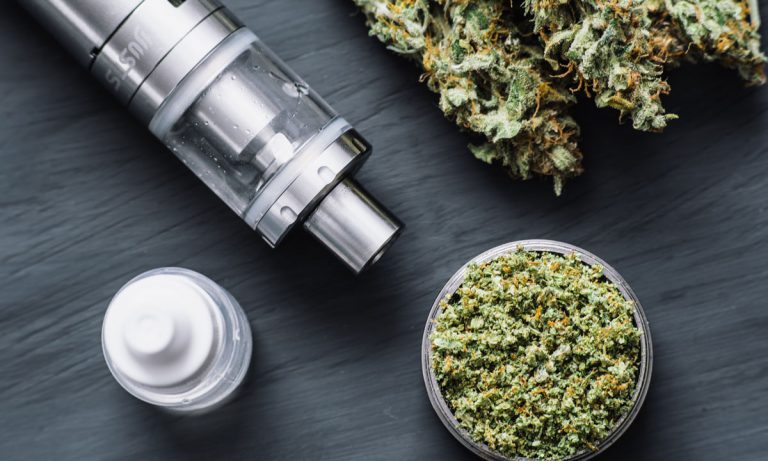
Back in December, the NIH released a survey that found that vaping e-cigarettes, THC cartridges and flavored vape juice is on the rise in teenagers, while the abuse of painkillers is down. Though the National Institute on Drug Abuse (NIDA) found the cannabis numbers disturbing, what do they really mean?

The study beyond implied that vaping THC cartridges was far more harmful than smoking cannabis the old fashioned way. Not because of the miniscule molecules going into young lungs, not because vaping is itself dangerous, but because the cannabinoids are more concentrated in a pen than in flower form.

There are many sides to this argument. Most cannabis imbibers agree that combusting plant matter is likely worse for one’s lungs (if that’s a concern at all) than vaping. Vape pens are supposed to be the chiller way to toke, discreet, easy to carry and, as long as it’s not turned up too hot, smoother. Others, however, argue that not enough research has been done on this form of ingesting cannabis.

Those arguments, however, are not what the D.E.A. is worried about. 27.8 percent of high school seniors vaped in some form or another in 2017, and though vaping nicotine has been shown to be less harmful than smoking the tar, carcinogens and chemicals in cigarettes, it could still be linked to cancer and addiction. Cannabis products, on the other hand, have never been shown to be detrimental to one’s health, though that information is not D.E.A. related.

There is always going to be concern about the development of young brains and what affects their progress. NIDA and the D.E.A. continue to insist that ingesting cannabis in any form stunts intellectual growth in youth and only time will mend the harshness of reefer madness. Though we would never suggest teenagers smoke anything, those are the years of experimentation and they’re not likely to stop being thus.

The survey also showed that though painkiller abuse was up in adults, that it was dropping in youth circles. It went on to say, “In overall pain medication misuse, described as ‘narcotics other than heroin’ in the survey, past year misuse has dropped significantly among 12th graders since its survey peak in 2004—to 4.2 percent from 9.5 percent.”

These are very encouraging numbers as the opioid crisis has claimed so many lives and doesn’t discriminate against age. And though the NIH survey had its own slant on all topics, at the very least the opiate news is grand.

Here’s Everything You Need To Know About The Marijuana STATES Act

“What do you do?”

When meeting someone for the first time this is a pretty standard ice-breaker. Usually, the responses are pretty innocuous: “I’m in sales” or “I’m in IT”. But if you add “…in the cannabis industry” to those answers, you’re bound to get a number of follow up questions.

When I tell people that I advise businesses, investors, and ancillary service providers in the marijuana industry, without fail the first question that I get is “Aren’t you worried about the federal government?” I then go into a discussion on the Rohrabacher-Blumenauer Amendment (formerly the Rohrabacher-Farr Amendment), the history of the Cole Memo (which although rescinded still plays an important role in banking), and the importance of complying with your state’s cannabis regulations.

Lastly, I talk about the change in the national discussion and perception of the cannabis industry. Gone are the days of the “lazy stoner” stereotypes (although perhaps not for U.S. Attorney General Jeff Sessions). Instead, we have sophisticated cannabis businesses providing products to a large and diverse section of America — with more and more states looking to legalize either medical or adult-use marijuana activities this year.

For those of us who follow cannabis bills in the U.S. Capitol and in our state legislative houses, it’s clear that there is momentum towards ending America’s shortsighted and draconian war on cannabis. While Republicans and Democrats in Congress can’t seem to agree on anything nowadays, support for individual states to regulate cannabis activities as they see fit for their constituents is one of the few areas where bipartisan support exists. Every day, more Republicans in Congress are signing on as sponsors to bills that will support the cannabis and hemp industries (we see yo, Mitch McConnell!). And now we can add to the list of cannabis supporting Republicans: President Donald Trump?

Just last week, the President, while boarding a helicopter for the G-7 summit in Canada, mentioned his support for what Senator Cory Gardner (R-CO) is doing. What exactly is Senator Gardner doing you ask? He, along with Senator Elizabeth Warren (D-MA), and Representatives David Joyce (R-OH) and Earl Blumenauer (D-OR), have introduced the Strengthening the Tenth Amendment Through Entrusting States (STATES) Act. You’ll recall that Senator Gardner didn’t take too well to A.G. Sessions rescinding the Cole Memo, so he vowed to block all Department of Justice appointments in return. After meeting with the President, Sen. Gardner put an end to his blockade (which we covered, here) when the President assured him that “he will support a federalism-based legislative solution to fix this states’ rights issue once and for all.” At the time of the meeting, there was no agreement as to what the “federalism-based legislative solution” would look like. Today there is. Here’s a list of what the STATES Act would and wouldn’t do:

  • It would amend the federal Controlled Substances Act (“CSA”) so that the CSA would not apply “to any person acting in compliance with state law relating to the manufacture, production, possession, distribution, dispensation, administration, or delivery of marihuana.”
  • It would also amend the CSA so that the same exclusion would apply to persons acting in compliance with the law of a federally recognized Indian tribe within its jurisdiction.
  • It would deschedule industrial hemp from the CSA entirely.
  • It would make access to banking easier for cannabis businesses as state legal cannabis sales and transactions would no longer be considered trafficking.
  • It would not change the law in states that continue to criminalize cannabis activities.
  • It would not apply to any of the other substances identified in the CSA.
  • It doesn’t guarantee that President Trump will keep his word.

That last point isn’t actually written into the bill, but it’s the 800-pound gorilla in the room that no one can ignore. The President, to be polite, has had a tenuous relationship with the truth and keeping his word, so it’s far from certain that he will throw his support behind the STATES Act. An off-the-cuff remark before meeting with G-7 allies (or are they adversaries now?) does not constitute unwavering support. We’ll have to see more consistent and direct support from the President before we can feel confident that the STATES Act will become law. The President’s support is necessary because he’s still very popular with the Republican base and can therefore give recalcitrant Republicans in Congress cover if they’ve been cannabis opponents previously.

Let’s keep our fingers crossed that the North Korea Summit meeting goes well (who cares about cannabis legalization if nuclear war’s broken out?), that Congress pushes this one through, and that the President carries that high over to the STATES Act.

Habib Bentleb is an attorney at Harris Bricken, a law firm with lawyers in Seattle, Portland, Los Angeles, San Francisco, Barcelona, and Beijing. This story was originally published on the Canna Law Blog

The Sex And The City Scene HBO Cut Because

0

If you haven’t heard by now, “Sex and the City” is celebrating its 20 year anniversary this year. That’s right. The pilot aired on HBO in 1998. And as tongue-in-cheek as the show was for its time, there was one scene in particular that was too harsh even for even HBO. This is the same network that airs “Game of Thrones” and “Tell Me You Love Me.”

Some of the show’s writers spilled some tea here is the Sex and the City scene cut because. well…

Show-runner Michael Patrick King told Vanity Fair there were only two times HBO censored the series. The first time was in Season One’s “The Monogamists,” a memorable early episode in which Charlotte plays “tug of war” with a man who’s desperately trying to get her to perform oral sex on him. Something she despises.

Related: This Is The ‘Sex And The City’ Scene That Devastated Cynthia Nixon

“It was really the end of the story line,” said Sex and the City creator Darren Star. “He basically was always pushing her head down to give him oral sex. And he had this golden retriever who was always around. In the final scene, she basically let him have it about being offended by his insistence on just wanting a blow job. She accused him of only liking her for that and kind of stormed out. And then she walked back in and saw that his golden retriever was going down on him.”

Writer Amy B. Harris added,

It’s sort of horrifying that we shot that. We shot him putting peanut butter on his penis, and Charlotte walks back in like, ‘Oh, I’m being unreasonable,’ and then she sees that. . . . I can’t believe we even thought about doing it.

The other scene that was censored? That happened in Season Three’s Attack of the Five-Foot-Ten Woman.” And it was a minor adjustment.

Related Story: This City Is Ranked Highest In Multiple Orgasms

Remember the scene where Miranda’s housekeeper, Magda, finds her “goodie drawer” and decides to replace her vibrator and condoms with a statue of the Virgin Mary? In the episode, Miranda confronts Magda who then places some fanned out some condoms on her nightstand. Originally, the script called for the Virgin Mary to be looking over the condoms, but that was apparently too much for network censors. Says King, “People were like, ‘That’s too far!’ So we took Mary out.”

For tons more inside gossip from “Sex and the City” staffers, check out the full article.

Let’s Talk About Justin Trudeau’s Eyebrows

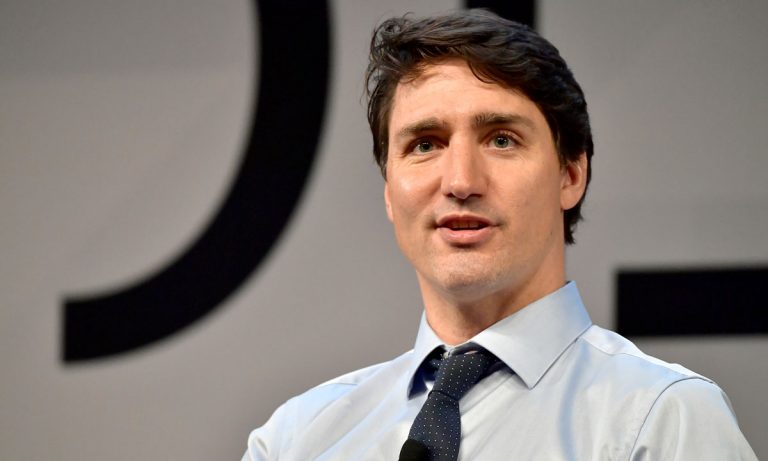
All eyes were on Donald Trump and the G7 summit over the weekend. All eyes, except for the ones that were mercilessly staring at Justin Trudeau’s wayward left eyebrow.

So much for the possibility of a trade war being the main focus.

Some people are speculating that the Canadian Prime Minister was wearing falsies. Because nothing says “take me seriously” like a set of fake eyebrows.

Before the meeting, Trudeau gave a joint press conference with French Prime Minister Emmanuel Macron and then all hell broke loose — much like Trudeau’s left eyebrow seemed to be doing.

Watch for yourself.

https://twitter.com/Doranimated/status/1005707571859283969

And in true Twitter form, Trudeau’s “fake” brows now have their own account.

https://twitter.com/TrudeasE/status/1005805593326751744

But if you look at past photos of Trudeau, his left brow has always looked a bit off.

As this publication points out, another video clip of Trudeau shot at a different angle tells another story entirely. It’s not a fake brow; it’s a brow that has a good and bad side, just like the rest of us!

https://twitter.com/iD4RO/status/1005927516190670848

In the video, as TheJournal.ie explains:

…you can see that Trudeau’s eyebrow looks normal and that there is a slight shadow cast on his left brow from poor lighting on the set. It becomes more noticeable when Trudeau looks down but then disappears when he address the audience straight on.

Canadian journalist Sean Craig notes that Trudeau’s left eyebrow is thicker, which gives off a “sloping” effect from certain angles.

https://twitter.com/sdbcraig/status/1005848918700093440

So, to sum up Trudeau’s brows:

https://giphy.com/gifs/seinfeld-fake-2Faz5pwGrne1B5kvC


Why Some People Are Fascinated By The “Bee Sex” Fetish

What Is Melissophilia? The Strange Bee-Related Fetish That Continues To Shock The Internet

There are countless unusual niche sexual interests discussed online, but here is why some people are fascinated by the “bee sex” fetish. Yes, one of the most bizarre and controversial may be Melissophilia — a fascination involving bees and sexual arousal. While the topic has circulated for years in underground discussions and internet forums, it continues to spark curiosity because of just how unusual and dangerous it sounds.

RELATED: Watch Police Drag A Confused Gator Through A Furniture Store

Melissophilia is a rare fetish tied to bees and the sensations associated with their presence, including the physical reactions caused by stings. The term comes from Greek roots meaning “honey bee” and “love,” though experts and commentators often classify it as an extreme and highly risky niche interest rather than a romantic fascination.

Unlike some pain-related fetishes that focus primarily on discomfort or adrenaline, Melissophilia is specifically connected to bees themselves. In many online discussions about unusual sexual behavior, the attraction centers around the insects and the heightened sensations produced through interaction with them.

Why Some People Are Fascinated By The “Bee Sex” Fetish
Photo by James Pritchett via Unsplash

The topic has occasionally appeared in books and documentaries examining uncommon sexual behaviors. One often-cited example comes from the book “Everything You Know About Sex Is Wrong,” which describes reports of individuals intentionally exposing sensitive areas of the body to bee stings. The theory behind the practice is that the sting may temporarily increase swelling and sensitivity, leading some participants to believe it enhances physical sensation.

Medical experts, however, strongly warn against the practice. Bee stings can trigger severe allergic reactions, infections, tissue damage, and even life-threatening anaphylaxis. What may begin as experimentation can quickly turn into a serious medical emergency, especially for individuals unaware they have bee sting allergies.

The internet’s fascination with bizarre fetishes has grown significantly in recent years as social media, podcasts, and streaming documentaries explore taboo subjects that once remained hidden from public discussion. From strange dating trends to unconventional lifestyles, curiosity-driven content often performs well online because audiences are drawn to shocking or unexpected topics.

Still, Melissophilia remains one of the more extreme examples discussed in modern fetish culture. Even within communities focused on alternative lifestyles, the practice is considered highly uncommon. Animal welfare advocates and medical professionals alike have criticized the behavior because it may harm bees while also placing participants at considerable physical risk.

RELATED: The Time An Uber Driver Drove Woman To Her Cheating Boyfriend’s Apartment

Psychologists who study human sexuality often note that fetishes can develop around a wide range of associations, experiences, or sensations. While many remain harmless fantasies, experts caution that activities involving physical danger, non-consenting animals, or serious health risks can cross into troubling territory.

As internet culture continues pushing unusual stories into the mainstream, Melissophilia has become another example of how curiosity about extreme human behavior drives clicks, conversation, and controversy online. For many readers, however, the idea of mixing bees with intimacy is likely to remain more unsettling than intriguing.

Alexa Recorded This Family’s Conversation And Sent It To A Coworker

One of the biggest issues people have with Amazon’s Alexa is the fact that it’s constantly eavesdropping in on your life. Think about it, how does the device know when you’re calling its name if it’s not constantly listening in on your conversations?

For all the disbelievers, this story proves just how aware Alexa is of everything you say and do. The Huffington Post published a crazy story where a private conversation between a couple in Oregon was recorded by Alexa and  sent to a random contact from their phones. Because the device got confused and thought it heard that command.

KIRO TV spoke with Danielle, one of the owners of the faulty Alexa, who said that she’d had her suspicions about the device who also handled their house’s security, heat and lights. “My husband and I would joke and say ‘I’d bet these devices are listening to what we’re saying,” she said. A few weeks ago, a coworker of her husband called them and said that they had to unplug their Alexa because they’d been hacked. He’d received a recording of a private conversation of the couple, where they were talking about hardwood floors. Luckily the conversation wasn’t scandalous.

The couple contacted Amazon for an explanation, and an Alexa representative began to investigate the issue. Amazon was transparent, claiming that their engineers were able to see the problem thanks to Alexa’s conversation logs. They issued the following confusing statement:

Echo woke up due to a word in background conversation sounding like ‘Alexa.’ Then, the subsequent conversation was heard as a “send message” request. At which point, Alexa said out loud “To whom?” At which point, the background conversation was interpreted as a name in the customers contact list. “Alexa then asked out loud, ”[contact name], right?” Alexa then interpreted background conversation as “right”. As unlikely as this string of events is, we are evaluating options to make this case even less likely.”

While this statement isn’t the least bit reassuring, Amazon apologized to their customers repeatedly, claiming that the incident was extremely unlikely. Their Alexa device simply went crazy.

In the scheme of things it was pretty harmless, and this is a pretty amazing story to add to the roster of “weird things Alexa has done.” At least this family can rest easy now; it’s better to have a faulty Alexa than to be hacked, right?

Pesticides In Your Marijuana: What You Need To Know

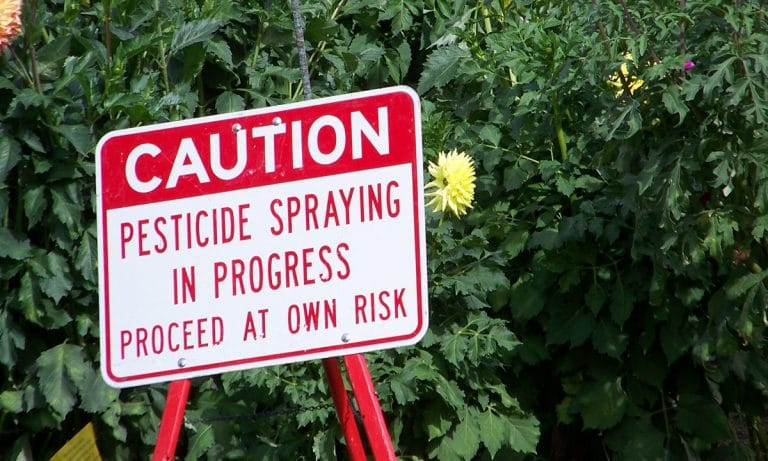
As cannabis is legalized for medical and recreational use on a state-by-state basis, safety regulations regarding cannabis products are becoming increasingly important and that includes pesticides in marijuana. One aspect of safety regulations involves setting maximal allowable limits on pesticides. Such regulations are particularly significant given that medical populations, including young and immunocompromised patients, are among the intended consumers of cannabis products.

The cannabis industry has a pesticide problem—actually, many problems. A number of studies have reported high levels of pesticides on cannabis samples taken from the medical markets in Washington and Colorado. There have been cannabis product recalls in both states and in Canada because of pesticide infractions.

The Environmental Protection Agency (EPA) sets pesticide standards and tolerance levels nationally. But the EPA has not approved any pesticides specifically for use on cannabis because it is a federally illegal substance. So, as of now, it’s up to each state to decide on a single “action limit” for each pesticide applied to cannabis. An action limit refers to the maximal allowable level of a pesticide. This limit is reported in units of parts per million (ppm). A 1 ppm limit on a pesticide means that up to 0.0001% of the product’s weight can be from the pesticide.

A state cannot set a pesticide action limit that is more permissive than regulations for general use on food crops established by the EPA. In some cases, the EPA’s limit for food products is adopted by state marijuana regulators. But in other cases a stricter limit is determined by the level of quantification that can be “reasonably achievable by analytical chemists.” In other words, action limits are often based on the ease of detecting chemicals rather than a prioritization of their dangers.

The same limit for a particular pesticide applies whether a product is meant to be smoked, vaporized, or ingested—even though different modes of administration can dramatically change the toxicity of the pesticides. Cannabis is still consumed primarily by smoking. Yet there is next to no information on the health effects of burning pesticides. This information vacuum is likely attributable to lobbying by the tobacco industry. According to the U.S. Government Accountability Office, the “EPA does not assess intermediate or long-term risks to smokers because of the severity of health effects linked to use of tobacco products themselves.”

In other words, because cigarette-smoking is already known to be harmful, federal officials decided that it’s not important to understand the adverse health effects of inhaling combustible pesticides. Consequently, state regulators are lacking crucial information about many pesticides. Two pesticides used in the cannabis industry, myclobutanil (generally sold as Eagle 20) and pyrethrins, underscore the inconsistency of current pesticide regulations.

Pyrethrins

Pyrethrins are a natural family of six pesticides produced by chrysanthemum. They break down quickly in sunlight or heat. They are highly toxic to aquatic life but have low toxicity to warm blooded animals, including humans. The EPA maintains that pyrethrins do not pose a chronic risk for mammals (including humans), except potentially for people who regularly spray them on crops. In commercial products, pyrethrins are generally sold with piperonyl butoxide (PBO), a compound that synergizes with pyrethrins, allowing them to be effective at lower doses. Pyrethrins should not be confused with pyrethroids, synthetic chemicals that are as different from pyrethrins as THC is from synthetic “spice” or “K2” bath salts.1

The action limit for pyrethrins is 1 ppm in every state that has set pesticide regulations for marijuana. California recently released proposed regulations, setting the pyrethrin limit at 0.7 ppm for edibles and 0.5 ppm for other cannabis products.2 Hearings will be held on this proposal four times in the month of June. The regulations can be found here.

But the European Food Safety Administration (EFSA) has concluded that it is safe for humans to ingest up to 0.4 mg pyrethrins per kg bodyweight every day. By this estimate, an average 135 pound human consuming state-approved cannabis could ingest 55 pounds of product in a day without toxicity due to pyrethrins.3 This calculation can be inverted, and an action limit can be determined from the maximal amount of cannabis products used in a day. For example, if one assumes that no one ingests more than 1% of their body weight in cannabis products (about 1.1 pounds for an average human), then 40 ppm is a stringent enough action limit to prevent pyrethrin toxicity, according to the EFSA.

While the European Food Safety Administration’s limit for pyrethrins does not take into consideration the synergistic toxicity between pesticides, it does provide a viable starting point to base action limits on safety.

Burning Pesticides

The toxicity of myclobutanil highlights the importance of considering how a cannabis product is consumed. When heated myclobutanil decomposes into hydrogen cyanide, a toxic compound that causes neurological, respiratory, cardiovascular, and thyroid problems at concentrations of 0.008 ppm. Smoking or vaping cannabis tainted with myclobutanil residue is a bad idea. This pesticide is now banned for use on cannabis in Oregon. However, in Nevada up to 9 ppm of myclobutanil is allowed on cannabis as of January 2017.

Since smoking is still the most preferred method of consuming cannabis, it is essential to know the safety of pesticides when heated. Vaporization leads to temperatures around 200˚C, while burning causes temperatures above 400˚C. Unlike myclobutanil, pyrethrins likely break down into two safer chemicals when heated without burning: chrysanthemic acid and a rethrolone. This breakdown may be reduced in the oily solution of a concentrate. When smoked it is not clear how pyrethrins will decompose and how dangerous these chemicals will be.

There’s ample reason for state officials to be cautious and to err on the side of safety with respect to pesticide regulations. But being stringent without a basis in science may have the unintended effect of pushing cannabis cultivators to use harder-to-detect pesticides that are more toxic.

It is paramount to study the effects of heating pesticides. Lacking pertinent data, regulations should at least be geared toward reducing the use of pesticides that we know burn to highly toxic compounds, and regulations should give some leeway to pesticides and growing practices that are safer. Moreover, regulations need to be malleable, so that as research provides us with a better understanding of pesticide toxicity, regulations follow suit.

Research for this article was supported by CannaCraft, a California-based medical marijuana company.

This story was originally published by Project CBD.

Don't Miss Your Weekly Dose of The Fresh Toast.

Stay informed with exclusive news briefs delivered directly to your inbox every Friday.

We respect your privacy. Unsubscribe anytime.