Throughout the New Jersey gubernatorial race, Phil Murphy reiterated his pro-cannabis legalization stance as a platform issue. His staunch support of recreational marijuana caused some to question if Murphy had ever lit up himself. Now, the NJ Gov finally reveals if he’s smoke marijuana.
Murphy successfully avoided the question throughout the election season and had remained elusive even when he become the New Jersey governor. But now it seems he’s willing to put the question to bed for good. He took to Twitter last week to reveal what many had been wondering.
“Here’s the deal: I’ve tried marijuana literally once or twice many years ago, and I don’t have any desire to partake again,” Murphy tweeted. “But this effort isn’t about me—this is about social justice.”
He added: “There are 24,000 marijuana-related arrests each year in NJ, with black residents arrested at three times the rate of white residents. NJ has the largest black-white incarceration gap in the nation—that’s shameful, and legalizing marijuana is critical to reducing that disparity.”
Here’s the deal: I’ve tried marijuana literally once or twice many years ago, and I don’t have any desire to partake again. But this effort isn’t about me – this is about social justice. https://t.co/OdT3LLrVks
Murphy’s tweets were in response to a similar question he faced the day prior when reporters had inquired, yet again, about his personal relationship to marijuana, to which his response was, yet again, obtuse.
“If this were [the] legalizing of scotch or Irish whiskey, I would not need any advice. I’d know exactly what to do,” he told reporters. “I’ve never been a marijuana guy. This is for social justice, overwhelmingly. And that has to be our driving reason.”
Though Murphy said he would strongly push legalizing recreational marijuana in his first 100 days, legislative leaders in his own party haven’t been so eager. However, New Jersey is still among the top choice among analysts to legalize marijuana this year.
Many women in various stages of life — from post-pubescent to post-partum and perimenopausal — may feel insecure about what they have going on down below. Votiva vaginal rejuvenation, or “revagination”, will give your sex life a confident boost. Vaginas already have their own self-cleaning, self-lubricating ecosystem. And with revagination, they can be self-improving, too.
Comedienne Kathy Griffin, who has never been shy about sharing shocking vaginal anecdotes, revealed that at a certain age, “your vagina starts to sag.” However, this humorously harsh reality can easily be handled.
Most working women, excluding any Kardashian or Real Housewife, do not have the disposable income for invasive labiaplasty. During a recent lecture at the United Nations Commission on the Status of Women, activist Ruchira Gupta blamed an over-abundance of pornography for creating insecurities and unrealistic body archetypes, especially among young women.
However, most modern women are willing to admit to themselves that they wouldn’t mind a little tune-up, especially after having a couple of kids. We’re not talking about creating a robot-sex-doll vaginal façade; more like having a vajacial.
According to Dr. Monica Grover, a Double Boarded Physician in Family Medicine and Obstetrics, who specializes in Integrative Women’s Health and Gynecology (OBGYN), lasers are a perfect way to perk up your lady parts, at any age.
Dr. Grover’s Westchester, New York based practice, Beauty Scripts, offers the Votiva laser, known for skin tightening as well as vaginal rejuvenation.
She says, “The Votiva delivers gentle thermal tissue remodeling,” which is as similar to a kitchen remodel as it sounds. Your pelvic floor will have a smoother, sleeker, shinier surface.
“The Votiva uses thermal energy to stimulate collagen regeneration. It causes a false injury to the cells, so they are re-awakened to bring in the body’s natural immune response to regenerate the cells, and grow proteoglycans which synthesize lubrication, and also increase concentrations of hyaluronic acid, which help to retain moisture within the cells,” Dr. Grover explained.
Hyaluronic Acid occurs naturally in the body, but as we age, it decreases. Hyaluronic Acid helps keep your skin appear plumper and retain moisture and is found in many modern skin creams. Do not, however, moisturize your vagina. Scented lotions and potions are to be avoided around and especially inside the vagina, at all costs (despite whatever contrary advice is spewed on Goop).
In laywoman’s terms, revagination helps improve laxity, dryness, and remodeling the labia. It uses thermal energy to tighten up and shrink any excess labial skin, to make the outside of the vagina appear smaller and sleeker, rather than hanging down (whereas a full labiaplasty requires surgery and plenty of painful downtime).
On the inside, laser revagination remodels the collagen to create more vaginal fluid, which enhances lubrication. This will obviously enhance your sex life. It tightens the muscles of the pelvic floor and increases muscle tone as well.
Votiva laser was created to treat post-menopausal, breast cancer survivors who needed rejuvenation for painful vaginal atrophy. In time, it was also offered to women who wanted vaginal tightening, such as post-partum patients. Women who lacked sensation due to either their partner’s size or vaginal atrophy are typical patients too.
Nowadays, any woman is a good candidate for this procedure, and it has quickly gained mainstream momentum, due to overwhelmingly positive results.
The procedure is performed in a series of two to three treatments, which are determined during a consultation. Each treatment takes about twenty minutes, done two months apart.
Dr. Grover recommends abstaining from sex for 24 hours after each treatment. Minimal side effects are itching or slight discomfort, as the tissue rebuilds, that can last for a day or two.
A patient of Dr. Grover’s who wished to remain anonymous told the Fresh Toast, “Forty may be the new 30, but I want the vagina of a 25-year-old. The procedure was less painful than getting a Brazilian, and my husband is thrilled with the results.”
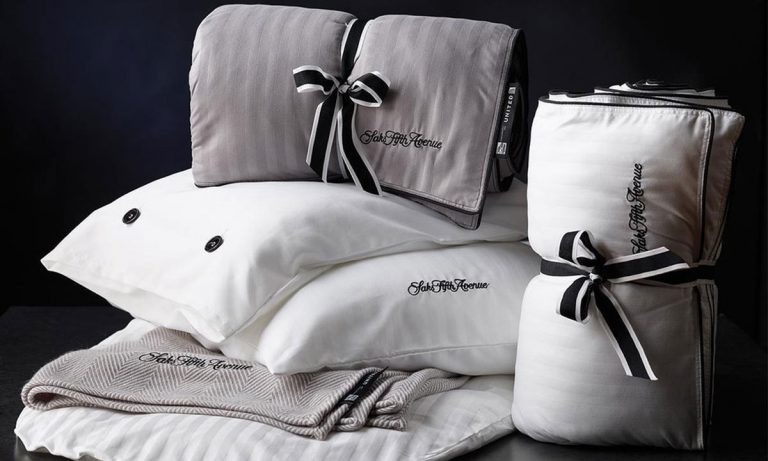
United Airlines has some really fancy bedding on their planes that passengers can’t seem to get enough of, even once they leave the plane. And now, United is getting pissed because that Sakes Fifth Avenue line is not cheap and have resorted to asking flight attendants to help police the situation.
Here’s what the bedding looks like. There’s also memory foam pillows upon request, as well as slippers and a premium amenity kit.
The amenity kit and slippers are for the taking, but there is no question that the airline would appreciate it if you left the other items behind when you deboard the aircraft as evidenced by this note that’s attached to all the goodies:
The premium amenity kit and slippers are yours to keep upon landing. We hope you’ll find our other comfort items and amenities make your flight more restful, but please leave them on board when you exit the aircraft.
Now, United Airlines has asked flight attendants to help police the situation with the following internal memo, which made its way into the hands of Live and Let’s Fly:
Our customers are continuing to enjoy United Polaris service, in particular our new high-quality bedding designed by Saks Fifth Avenue. However, recently we’ve noticed some confusion about which amenities may be taken off the plane at the end of the flight. We’d like to take this opportunity to clarify the policy regarding our new bedding and ask for your help to ensure its safekeeping on board the aircraft.
You can share with customers that all pillows and blankets are to be left on the aircraft at the end of each flight, including the cooling gel memory foam pillow. Even if only a small number of these items are taken off each flight, that can quickly add up to millions of dollars across our network over the course of a year. To help ensure we are able to continue offering these high-quality products, it’s important to remind customers that these items remain on board the aircraft after every flight. We will begin communicating this policy on board soon.
We launder and re-board pillows and blankets for several cycles before the product naturally degrades from wear and tear, and we replace it.
Of course, all United Polaris customers are welcome to take their amenity kits featuring Cowshed products with them at the end of the flight. Slippers and pajamas — on flights where they are offered — are also available for customers to take with them.
We are exploring offering certain amenities for sale on the United Shop in the future.
According to Travel + Leisure, United is now offering passengers the ability to purchase for these items on their website.
Should be a surprise – but the growing acceptance of marijuana is leading to a decrease in use from these two things.
As marijuana use is slowly becoming legal across the country, a healthier trend is emerging, cannabis consumers wean off these things. Canadian and Americans who make the switch to cannabis report a sharp decline in alcohol and over-the-counter drug use, according to a first-of-its-kind study. The study also revealed that older consumers are returning to the herb after a prolonged abstinence.
The study, published by consumer behavior experts High Yield Insights, is the first to shed light on the behaviors, product and format preferences, and demographics of the evolving cannabis consumer in the wake of legalization. Recreational consumers report using cannabis products for a variety of reasons, from relaxation to pain relief to sleep assistance, putting cannabis in direct competition with alcohol and pharmaceuticals.
“We are just starting to grasp how legalization has impacted consumer behavior, be it spending, usage occasions, or shopping habits. Understanding these changes will lead to new growth opportunities for cannabis and further disruption for other categories,” said Mike Luce, co-founder of HighYield Insights and a 15-year veteran in consumer and market research. “Our findings uncovered promising consumer niches for the industry as well. For example, many older consumers (55+) are re-engaging with marijuana, with 56 percent reporting a return to marijuana after having tried cannabis products at a younger age.”
The Recreational Cannabis Consumer report provides proprietary intelligence based on exclusive feedback from current recreational marijuana consumers in states where recreational use has been legalized. By limiting results only to current users, the findings best represent the mindset of today’s recreational consumer.
In addition to preferences on products, strains, and formats, High Yield Insights uncovered valuable data on consumers’ perspectives more broadly. While some express concern regarding issues such as underage usage, 65 percent view legalization as positive for their communities. The report points out this insight and other opportunities for the market as well as risks to ongoing growth.
There have been a lot of bizarre developments in the past six weeks that may, perhaps, signal that the United States is on the brink of ending marijuana prohibition once and for all.
Senate Majority Leader Mitch McConnell recently introduced legislation aimed at making hemp an agricultural commodity, while Senate Minority Leader Chuck Schumer is planning to file a bill designed to decriminalize the doobie all across the nation. Toss in the news of former Speaker of the House John Boehner’s entrance into the cannabis industry and President Trump’s promise not to crackdown on legal marijuana states and it sounds like some fairly influential folks are pushing for pot.
Although the incessant anti-marijuana babble coming from the mouth of US Attorney General Jeff Sessions sort of tricked the country into thinking that the nationwide marijuana debate was a dead scene for the next few years, 2018 is shaping up to be one of the best years in the arena of cannabis reform since Colorado became the first state to sell legal weed in a manner similar to beer. In fact, even Sessions said he believed in marijuana research a couple of weeks ago.
Now, some federal lawmakers believe that federal marijuana prohibition is finally at the end of its rope.
“I think the next Congress will finish the job of reform, and clean it up,” Representative Earl Blumenauer told Politico. “We’ve got the votes in the House and the Senate and there will be a huge shakeup in the next Congress.”
It could happen now if not for the same bill-blocking Republican shenanigans that have prevented pot reform from getting a fair shot over the years. “I think this Congress, if the Republican leadership would not stifle this bipartisan consensus of virtually every Democrat and several dozen Republicans, if they’d just allow the vote, it would pass [a number of measures],” Blumenauer explained.
A recent article from the American Prospect backs up the lawmaker’s claim. In the piece, journalist Paul Waldman predicts that marijuana will go legal nationwide within the next three years. This move, he says, will be due to a shift in overall party power.
“There’s a good chance that Democrats will take back the House this November, then win the presidency and control of the Senate in 2020,” he wrote. “With control of the government in hand, 2021 would see a raft of progressive legislation on a variety of issues, many of which will produce bitter, lengthy legislative battles. But ending the federal marijuana ban? That one will be relatively easy.”
Some of the latest data shows that a nationwide cannabis industry would generate $132 billion in federal tax revenue and create more than a million new jobs. If the predictions are accurate, this could be the scene across the United States sometime around 2025.
Thousands of herb aficionados marched through the streets of New York City on Saturday to demand full state cannabis legalization. Here are 5 fun facts from the NYC Cannabis parade.
The parade, which initially started to protest the “War on Drugs,” grew out of the hippie counterculture movement of the Lower East Side in the 1970s and is now an annual event.
It’s gone global
Initially called “The Fifth Avenue Pot Parade” and attracting just a handful of activists on the LES, the Cannabis Parade has grown into a global phenomenon, with participants in Rio de Janeiro, Brazil, Bogota, Columbia, Cape Town, South Africa and other cities.
Photo by Sara Brittany Somerset
‘Sex and the City’ star Cynthia Nixon wants to legalize it
Actress and Democratic gubernatorial candidate Cynthia Nixon called marijuana legalization “a number one priority for the state of New York” during her participation at the rally.
“Arresting people for cannabis, particularly people of color, is the crown jewel for the racist war on drugs and we must pluck it down,” Nixon said at the event. “If you are black or Latino, you are 10 times more likely to be arrested for cannabis than if you are white. And that’s not right.” The former “Sex and the City” star’s remarks were met with thunderous applause from the massive, multi-racial audience.
People love dressing up like marijuana
Who doesn’t love an excuse to dress up like a pot plant?
Photo by Sara Brittany SomersetPhoto by Sara Brittany Somerset
Hip hop of the highest order is usually in the house
The Cannabis Parade has a history of honoring hip hop. Legendary Brooklyn-based hip hop duo Smif n Wessun brought their Bucktown music to the masses in the parade’s past. This year, Immortal Technique performed.
Organizations like Women Grow and High NY provide a social context to keep the parade vibe going. While the parade started out in the 1970s by a few folks on the Lower East Side, it has risen in ranks to thousands of participants. This year, the Retail, Wholesale and Department Store Union joined the march. That is a significantly mainstream step!
Hope you enjoyed 5 fun facts from the NYC Cannabis parade, maybe you can march next year!
When scouring the internet in the final days before your corporate drug test, having finally put the bong in the closet until all is clear, you’ll come across thousands of articles on how to detox your body in time. If you’re searching for all natural solutions, green tea is likely to come up again and again, but does it work?
Green tea is a lot of things aside from a delicious, earthy tasting beverage. It’s primarily known as an antioxidant and it has about a third of the caffeine of a cup of coffee, which is really just right. But the amount of tea you’d have to drink in order to even get a one time joint out of your system would have you bouncing off the walls on a caffeine high and you’d still probably get flagged for dilution.
So the short answer is no, green tea is not the solution to your drug test. Unfortunately there are few on-the-fly options out there that actually work, and only one that works 100 percent of the time — urine substitution. It might sound tricky, but things have come a long way in the methods of delivery of clean synthetic urine. From discrete tubing to fake penises, look for these replacements at sex shops and online.
What about other types of drinks besides green tea? The masking method does work sometimes, but sometimes it doesn’t. There are a lot of factors that go into passing a drug test and one of the major players is your body mass index or BMI. Most people trying to pass a drug test are trying to get cannabis’ leading cannabinoid THC out of their systems and THC loves a comfy fat cell. It’ll stay lodged there for 30 days or more, depending on your BMI. The reason this matters with masking is that you can only mask so much. If your system is literally inundated with THC, you’re likely not going to pass using a head shop drink.
The best way to pass a drug test is to be lucky enough to know about it weeks in advance and to have the willpower to then stop cannabis (and other recreational drug use) and flush your body of the molecules over the course of time. Green tea does help in this scenario, as switching between tea and water will help you pee more and will speed up your metabolism with the touch of caffeine, which really gets things moving.
Abstinence for a good period or time and synthetic urine are your safest bets. Green tea is good for an afternoon treat and has health benefits beyond antioxidants even, but it’s not the ticket to passing a drug test.
A few months ago, director and comedian Kevin Smith was performing two shows that would be filmed for his upcoming stand-up special “Silent But Deadly”. Afterwards, when Smith was in his dressing room, he started feeling ill and an ambulance was eventually called. He was suffering a major heart attack.
Somehow Smith remained calm and under control throughout the process—an attribute that doctors say saved his life. You might ask how, considering the circumstances. Well, the noted cannabis enthusiast had lit up not two hours prior.
“Even though they tell me I had a heart attack, I didn’t feel like I was in pain, so I never panicked,” Smith told US Weekly. “I was super f—king calm. After I got out of the hospital, I said [to my doctor], ‘Hey man, I hate to admit this, but I was blazed as f—k the day I had the heart attack … Does smoking weed have something to do with a heart attack?’”
Much to Smith’s surprise, his doctor said quite the opposite. During an appearance on “The Late Show With Stephen Colbert” he revealed what happened, saying, “I honestly thought I was too high.” But, to his surprise, his doctor said the weed saved his life by keeping him calm.
Following the incident, Smith took his health more seriously. He’s lost 85 pounds by cutting sugar from his diet and replacing it with weed.
“Weed kind of actually works, believe it or not, as an appetitive suppressant to some degree,” Smith told US Weekly. “I don’t get the munchies … It just didn’t have that effect on me. I would smoke instead of eating. That became gratifying. Same way that I need to feel good, I was like, ‘You know what? I feel good smoking. Skip the cake and just have yourself a smoke.’”
You can tell a lot about our culture by the way we talk about marriage. Take the upcoming exchange of vows between Meghan Markle and Prince Harry. Press coverage will focus on aspects like the cost of the festivities, the size of the crowds and the fashion choices of the wedding party.
But since marriage represents one of the most important factors in predicting a person’s happiness, this marriage – and all marriages – deserve deeper reflection than the press tends to give them.
Marriage is increasingly described as an economic transaction, with marriage rates dictated by the conditions of the “marriage market” – whether matrimony will improve or worsen one’s financial outlook. It increasingly serves as a “status symbol,” a means for couples to signal their rank by sharing photos of expensive engagement rings and extravagant honeymoons on social media. Scholars also suggest that marriage is becoming less of a lifelong commitment, with spouses entering and exiting more freely based on their individual level of satisfaction.
Beyond status, money and personal gratification, none of these trends delineate what a good marriage should actually look like, and what expectations each partner should have.
Fortunately, one of the greatest novels ever published – Tolstoy’s “Anna Karenina,” which I teach regularly to my ethics students at Indiana University – provides deep insights on why some marriages thrive and others don’t.
The Pitfalls Of Restless Desire
“Anna Karenina” may have been published 140 years ago, but the doubts and desires of the characters ring true today.
The novel tells the story of four couples.
Dolly is the devoted mother of many children, while her husband, Stiva, cannot believe that he can be expected to devote his life to his family. The novel opens with a marital crisis precipitated by his infidelity.
Anna is a popular and astute socialite married to an honorable yet rather dry senior statesman, Karenin, who is 20 years her senior. Anna discovers that she longs for more.
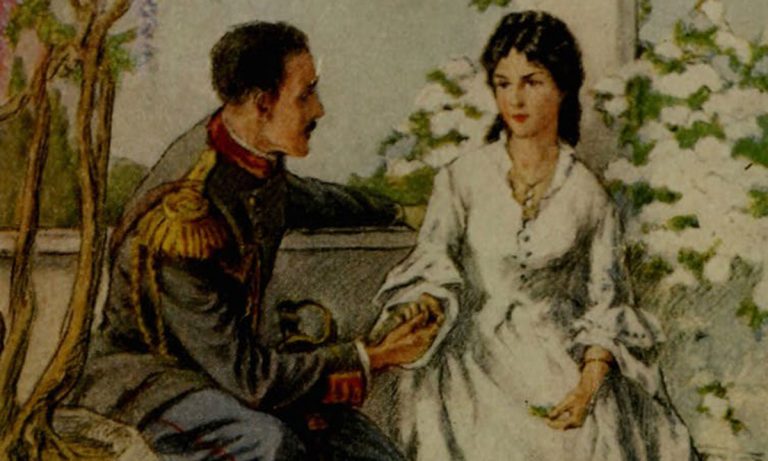
Anna falls in love with Vronsky, a dashing cavalry officer who grew up in a wealthy but failed family, with no meaningful family life. Anna eventually leaves her husband for Vronsky, which results in her fall from societal grace.
Kitty is a debutante and Dolly’s younger sister, and Levin is a landowner searching for the meaning of life. Though Kitty initially rejects Levin’s overtures, the two later marry and become parents.
The rich human panoply of the novel cannot be boiled down into a few simple rules for a happy marriage. Yet it brims with insights on the differences between happy and unhappy families.
Consider Anna and her brother Stiva. Both see marriage as a contract into which they can enter or leave at will. Stiva cannot understand how a young red-blooded, convivial man such as himself could possibly find contentment by completely devoting himself to his wife, “a worn-out woman no longer young or good-looking, and in no way remarkable or interesting, merely a good mother.”
Surely life owes him more than that, he thinks.
Anna also finds her highly regimented marriage to Karenin less than satisfying and seeks the adventure of romantic love with Vronksy, a man to whom genuine family life is unknown. But ultimately even the lover of her dreams cannot rescue her from her perpetual dissatisfaction.
Levin is one of the characters who most realizes the richness of marriage. In preparing for his wedding, he “had thought his engagement would have nothing about it like others, that the ordinary conditions of engaged couples would spoil his special happiness; but it ended in his doing exactly as other people did, and his happiness being only increased thereby and becoming more and more special, more and more unlike anything that had ever happened.”
Levin is continually surprised by what he discovers of his wife, of parenthood, and of himself as husband and father.
Family life turns out to be far more fulfilling than he ever imagined.
Disciplined Devotion Pays Off
One of the novel’s central insights is this: Marriage is far more than a relationship that merely fulfills the emotional, romantic and material needs of each partner.
In Tolstoy’s view, the best that partners can hope for from marriage is to be shaped by it in ways that make them better human beings. On the other hand, those who enter marriage thinking that it is all about their own satisfaction – supposing that their spouse and union both exist primarily to bring them pleasure – can expect to endure considerable unhappiness.
Anna, for example, thinks she has the right to be adored by all. When others, including her new life partner, Vronsky, seem to take interest in other matters in life, she is overcome by jealousy.
Another damning Tolstoyan criticism of Anna is her willingness to leave the care of her children to wet nurses and governesses. Though she indeed loves them in some sense, she is so preoccupied with her own needs that she has difficulty focusing on the role of a mother for any extended period of time.
While the novel doesn’t promote arranged marriage, it does suggest that a good union is less about picking your one true love from a crowded field of bad prospects than submitting to the requirements – the discipline, even – of loving your family.
A roving eye and a restless heart can always find something to long for elsewhere. But someone who operates from such a perspective will never grow fully into any relationship – precisely because they can always find others to long for. From Tolstoy’s point of view, such lack of dedication represents a form of immaturity.
The mission of being a spouse and parent, Tolstoy would say, is not to satisfy the longings people bring to marriage, but to allow marriage to develop and deepen our desires, enhancing our devotion to what is truly most worth caring about. To flourish in marriage and family life – no less than in life itself – is to learn to love the very things, such as family, to which good people dedicate their lives. In other words, a good marriage makes us better people.
A brief exchange between Stiva and Levin encapsulates this truth beautifully:
“Come, this is life!” said Stiva. “How splendid it is! This is how I should like to live!”
“Why, who prevents you?” said Levin, smiling.
“No, you’re a lucky man! You’ve got everything you like. You like horses – and you have them; dogs – you have them; shooting – you have it; farming – you have it.”
“Perhaps because I rejoice in what I have, and don’t fret for what I haven’t.”
It’s impossible to get inside of the heads of these couples, but I do wonder if they loved their own beautiful lives and their vision of love more than they loved their spouses and their children.
Like Stiva, Vronsky and Anna, did they give their hearts – above all – to what they saw in the mirror?
Ghosting is one of the more annoying phenomena of dating. If you’re not familiar (lucky you!), ghosting is when someone disappears on you, rather than having the uncomfortable conversation about why they don’t want to see you anymore. But a new study reveals that those who choose ghosting over other humane routes of actual communication aren’t necessarily cowards, they are true believers in soul mates.
Yup. As if finding “the one” is any more believable than actual ghosts.
Gili Freedman, a postdoc at Dartmouth college in New Hampshire, aimed to find out why people “ghosted” by giving questionnaires to more than 500 men and women that would reveal their beliefs about destiny and ghosting. According toPsychology Today, about a quarter of respondents reported having been ghosted in the past, with about one-fifth of respondents reporting that they had been the ones to ghost.
What’s more, volunteers with strong beliefs in destiny were more likely to think it was OK to end a relationship by ghosting, compared to those with weaker beliefs in destiny: 22% more likely in the case of a short-term relationship; 63% more likely in the case of a long-term relationship. Growth beliefs weren’t related to feelings about the acceptability of ghosting a short-term partner, but believers in growth were 38% more likely than non-believers to think it acceptable to ghost a long-term partner.
Freedman believes the results are “consistent with the possibility that destiny theorists [people who believe that the ideal relationship partner is our “soul mate”] are more likely to act decisively on their relationship once deciding it is not ‘meant to be.'”
https://giphy.com/gifs/aziz-ansari-cPQDzwSnQrWFy
Translation? Why give any attention to someone who serves no purpose in your romantic life. I mean, who needs friendship, right?










 Like Stiva, Vronsky and Anna, did they give their hearts – above all – to what they saw in the mirror?