Tuesday, June 30, 2026
Home Blog Page 957

Someone Took Marvel Avenger To A Personal Intimacy Space

Internet Reacts To Marvel Avengers Reference In Unexpected Private Scenario

Let’s clarify something up front: this post is seriously NSFW. Because this story is about sex toys, specifically ones that involve some super popular superheroes. Last year, the Australian company Geeky Sex Toys launched a line of Star Wars-themed sex toys, in conjunction with the release of The Last Jedi. Never have you though C-3PO could be something so dirty.

In anticipation of Marvel’s upcoming Avengers: Infinity War, Geeky Sex Toys unveiled a similarly-themed product rollout. It’s for those of you who’ve ever wondered what happens to Bruce Banner’s dong when he morphs into the Hulk, or thought that the Infinity Gauntlet looked like the perfect object to shove up your booty hole. The whole collection has been dubbed “Indulgers: Pleasure War.”

It isn’t the first time the company has cross-referenced popular culture for sex toys. Previously, they’ve exploited Pokémon (or “Pokémoan”), Power Rangers (“The Mighty Moaning Anal Rangers”), Game of Thrones (“Game of Moans”), and another Marvel installment, Guardians of the Galaxy (“Orgasms of the Galaxy”). But these Infinity War toys really are in a whole different category.

Related: You’re Welcome: Here’s How To Make A Fruit Fly Orgasm

A useful breakdown via Gizmodo:

If [the] enormous green “Incredible Dong” does not appeal, Geeky Sex Toys is also selling: Captain Anal and Arse Reactor butt plugs; Agent Getsmeoff, a Black Widow branded fleshlight; and, uh…the HawkAss, an arrow-shaped dildo intended for pegging a target just like the world’s greatest marksman.

We’ll leave it at that. How Geeky Sex Toys gets away with copyright issues is a story yet uncovered. (Gizmodo reached out to the company, but they didn’t reply.) One thing’s certain: never has there been a better time to be a geek. You literally have everything you could possibly ever need!

4 Ways To Make Your Graduation Photos Stand Out

Graduation season is just around the corner and even though we stress over every aspect of the event, like clothes and parties, one of the most easily forgotten parts are the photos, which are really important once you’ve graduated. Graduation photographers don’t have time to stress over each individual photo; they take shots of the students, but whether you look good or not is mostly up to you.

In this era of smartphones, you really have no excuse for not snapping photos of yourself with your toga, graduation cap, family and friends. Here are 4 tips that’ll help you have the perfect pictures for your graduation ceremony:

Find A Good Editing App

https://giphy.com/gifs/ingridgoeswest-audrey-plaza-ingrid-goes-west-xUPGcj1pqR9hRt8YKY

Editing apps can solve simple or complex problems such as an ill-timed pimple or a photo bomb. These apps give you freedom to edit spontaneous photos and make them look like perfect snapshots of your graduation. Their filters also allow your images to look as if they were taken by a professional photographer.

Be Mindful Of Lighting

https://giphy.com/gifs/kylie-jenner-keeping-up-with-the-kardashians-kuwtk-WgWU1L8W0cow0

Take advantage of natural light and try to avoid using flash, leaving you with images that are much easier to tinker with on editing apps and that look much better than the average graduation photo.

Customize Your Cap

https://giphy.com/gifs/crafts-MuJLOLAAAXJEQ

While some people opt for decorating their cap and gown, that sounds like a lot of work and maybe not the best look for your graduation. A better and less demanding option would be to only customize your cap, allowing you to add some personality to your graduation look. Some good ideas for cap decorations include adding photos of friends, or pictures and drawings that remind you of your career.

Look For A Cool And Significant Backdrop

https://giphy.com/gifs/fallontonight-jimmy-fallon-tonight-show-nbc-3oEjHZhAXPNTHBfILS

Your graduation is probably one of the last times you’ll hang around campus so take advantage of this and try to snap pictures in the places that were most important to you and your friends. Ditch the popular areas and try to find places that have most meaning to you. These images will be much better and meaningful than the ones taken in front of a dark background.

Being A Night Owl Has Its Risks

Do you wake up bright-eyed and bushy-tailed, greeting the sunrise with cheer and vigor? Or are you up late into the night and dread the sound of your alarm clock? We call this inherent tendency to prefer certain times of day your “chronotype” (chrono means time). And it may be more than a scheduling issue. It has consequences for your health, well-being and mortality.

Being a night owl has been associated with a range of health problems. For example, night owls have higher rates of obesity, high blood pressure and cardiovascular disease. Night owls are also more likely to have unhealthy behaviors, such as smoking, alcohol and drug use, and physical inactivity.

We study the health effects of being a night owl. In our recent study published in Chronobiology International, we found even worse news for the owls of the world: a higher risk of early death.

Your Very Own Biological Clock

Our bodies have their own internal time-keeping system, or clock. This clock would keep running even if a person were removed from the world and hidden away in a dark cave (which some dedicated researchers did to themselves years ago!). We believe these internal clocks play an important role in health by anticipating the time of day and preparing the body accordingly.

For example, as humans, we typically sleep at night, and our bodies start preparing for our habitual bedtime even before we try to fall asleep. Similarly, we eat during the day, so our body is prepared to process the food and nutrients efficiently during the daytime.

Our chronotype is also related to our biological clock. Morning larks’ biological clocks are set earlier. Their habitual bedtimes and wake times occur earlier in the day. Night owls have internal clocks set for later times. But are there any problems related to being a lark or owl, other than scheduling difficulties? Research suggests that there are; night owls tend to have worse health.

And, in our new study, we compared risk of dying between night owls and morning larks. In this study, death certificates were collected for an average of 6.5 years after the initial study visit to identify those who died. We found that night owls had a 10 percent increased risk of death over this six-and-a-half year period compared to larks. We also found that owls are more likely to have a variety of health problems compared to larks, particularly psychiatric disorders like depression, diabetes and neurological disorders.

The switch to daylight saving time in the U.S. (or summer time in the U.K.) only makes things more difficult for night owls. There are higher rates of heart attacks following the switch to daylight savings, and we have to wonder if more night owls are at risk.

Why Do night Owls Have More Health Problems?

Night owls’ health risks could be related to drinking, but they also could be due to loneliness. Jacob Lund/Shutterstock.com

We researchers do not fully understand why we see more health problems in night owls. It could be that being awake at night offers greater opportunity to consume alcohol and drugs. For some, being awake when everyone else is sleeping may lead to feelings of loneliness and increased risk of depression. It could also be related to our biological clocks.

As explained above, an important function of internal biological clocks is to anticipate when certain things, like sunrise, sleep and eating, will occur. Ideally, our behavior will match both our internal clock and our environment. What happens when it doesn’t? We suspect that “misalignment” between the timing of our internal clock and the timing of our behaviors could be detrimental over the long run.

A night owl trying to live in a morning lark world will struggle. Their job may require early hours, or their friends may want to have an early dinner, but they themselves prefer later times for waking, eating, socializing and sleep. This mismatch could lead to health problems in the long run.

What Can Owls Do?

It is true that someone’s “chronotype” is (approximately) half determined by their genes, but it is not entirely preordained. Many experts believe that there are behavioral strategies that may help an individual who prefers evening. For example, gradually advancing your bedtime – going to bed a little earlier each night – may help to move someone out of the “night owl zone.”

Going to bed early is part of getting a good night’s sleep. fizkes/Shutterstock.com

A gradual advance is important because if you try to go to bed two to three hours earlier tonight, it won’t work, and you may give up. Once you achieve an earlier bedtime, maintain a regular schedule. Avoid shifting to later nights on weekends or free days because then you’ll be drifting back into night owl habits. Also, avoiding light at night will help, and this includes not staring into smartphones or tablets before bed.

On a broader scale, flexibility in work hours would help to improve the health of night owls. Night owls who can schedule their day to match their chronotype may be better off.

The ConversationIt is important to make night owls aware about the risks associated with their chronotype and to provide them with this guidance on how to cope. We researchers need to identify which strategies will work best at alleviating the health risks and to understand exactly why they are at increased risk of these health problems in the first place.

Kristen Knutson, Associate Professor of Neurology, Northwestern University and Malcolm von Schantz, Professor of Chronobiology, University of Surrey

This article was originally published on The Conversation. 

Is Michael Cohen, Trump’s Lawyer, Investing In Marijuana?

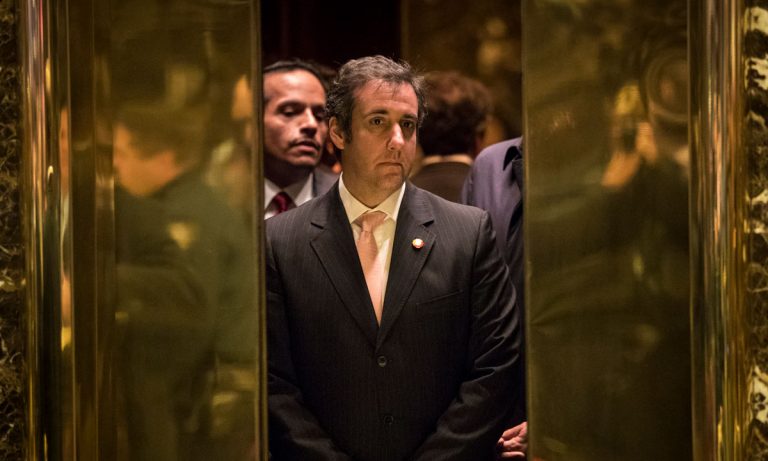
President Donald Trump’s so-called “fixer” and personal attorney Michael Cohen is under investigation by the FBI for alleged shady business dealings. Among Cohen’s business deals includes $26 million in loans to a Ukraine- born taxi kingpin who is getting into the legal cannabis industry.

According to a report by the Associated Press, Semyon “Sam” Shtayner, a longtime associate of Michael Cohen’s father-in-law, created Nevada-based Cannaboss LLC the day before the 2016 election. In the story, AP reports:

“He personally manages over 500 taxi medallions, but he is looking to transition from the medallion business to the cannibas (sic),” according to the personal narrative Shtayner submitted last October to city officials in Henderson, Nevada, that was obtained by the AP under the state’s public records law.

It’s not clear whether Shtayner used any of the loans — $6 million of which have come directly from Cohen since 2014 — to finance his grow operation.

FBI agents searched Cohen’s hotel, office and home seeking banking records, as well as records related to his dealings in the taxi industry, people familiar with the probe told the AP, speaking on condition of anonymity because they were not authorized to discuss the ongoing investigation.

Neither Cohen nor his attorney responded to phone messages or an email seeking comment about the loans. An attorney representing Shtayner had no comment.

Last year, Roger Stone, another associate of Trump, entered the legal cannabis business.

AP speculates that Shtayner has become disenchanted with his taxi empire as Uber and Lyft make inroads in major cities across the country. The value of taxi medallions has dropped in recent years from highs of over $1 million apiece in New York just a few years ago to nearly half that amount today.

A former manager of Cohen’s taxi business is being sued by creditors for hiding assets in financial disclosures to his bank — including a luxury apartment in a Trump skyscraper. Another former cab manager of Cohen’s has declared bankruptcy and is facing criminal charges from state prosecutors in New York, who accuse him of pocketing nearly $5 million in taxes.

Cohen has a fleet of 22 cabs in Chicago and, along with his wife and father-in-law, has owned some 30 medallions in New York after initially going into business with his father-in-law, AP reports.

Hemp Extract Inhibits Growth Of Ovarian Cancer, Research Finds

Stories about marijuana being used medicinally are ubiquitous these days. News about hemp is less prevalent. Two graduate students from Sullivan University School of Pharmacy hope to change that. Sara Biela and Chase Turner studied the possible therapeutic potential of hemp to attack ovarian cancer. They will be presenting the findings from a new study at the annual meeting of the American Society for Biochemistry and Molecular Biology.

There were two studies conducted. Both utilized a hemp-based extract. Hemp is the biological cousin to what is commonly referred to as marijuana. The important distinction is in the concentration of THC, the intoxicating compound responsible getting people high. Hemp, by definition, has only 0.3 percent of THC or lower, keeping any psychoactive activity too low to be noticed. While low in THC, hemp can be rich in CBD, cannabidiol, the non-psychoactive compound also linked to many health benefits.

In the first study, the extract was added in different amounts to ovarian cancer cells in a lab culture. The outcome was very apparent. The extract caused significant slow down of the growth of the cancer cells.

In a second study, the researchers studied the extract’s ability to protect against ovarian cancer. When it was introduced to ovarian cultured cancer cells it helped to slow the secretion of a substance known as interleukin IL-1 beta, which produces inflammation in association with the spread of cancer. 

This is not the first time that CBD and other compounds found in both hemp and cannabis have been linked to tumor reduction. This effect has been explored by scientists around the world including California, Ohio, India and Israel to name just a few.

The active ingredient used in these studies is KY-hemp, a Kentucky produced hemp extract that creators claim is special because of strain variety, cultivation and extraction techniques. The fact that it is one particular hemp strain and extract is likely of less importance than those who produce it would have you think.

Charlotte’s Web strain gained national prominence about five years ago. It was marketed by growers in Colorado who had helped a little girl named Charlotte Figi reduce her seizures from Dravet’s Syndrome from over 300 a week to less than a dozen. The strain was most likely special not because of brilliant growers but because of its high CBD content. Other strains with similar THC to CBD ratios have shown similar outcomes.

Has Kentucky found the one hemp strain extract that can produce these anti-ovarian cancer outcomes? Probably not, but it has identified one with a profile that others will want to seek out and do more research on. 

While we must be careful to not let a marketing message interfere with science, the published results of these two studies don’t mince words: hemp helped inhibit the growth of these particular cancer cells. Though it may take years for research to be completed on large sample sizes of human subjects, there is hope. And while the world of science figures this out, this news is likely to urge more cancer patients to seek to know more about both hemp and cannabis and speak to their doctors about it. That is progress.

Brawl At 30,000 Feet Shows What Can Happen With Careless Cannabis Use

If you are trying a new edible for the first time, start low and go slow is the mantra.

Joseph D. Hudek felt fine getting on the plane. He then took a cannabis edible. His flight ended with bottles smashed over his head and his arrest on felony charges.

In February he pled guilty to those charges and is scheduled to be sentenced in May. He faces up to 20 years behind bars. Hudek’s legal team used the edible as a defense for the rage that caused him to attempt to open the cabin door mid-flight from Seattle to Beijing.

Hudek was in First Class, using his mother’s benefits as a Delta employee. It took several passengers to restrain him as the 767 returned to Seattle, according to court filings. The FBI said, “Hudek did not seem impacted by the breaking of a full liter red wine bottle over his head, and instead shouted, ‘Do you know who I am?’ or words to that effect.”

Seattle weekly The Stranger looks back on the incident as a cautionary tale:

The problem may have been that Hudek ate more because he didn’t get high quickly enough; it can take over an hour for an edible to start to hit you, and in that time, many people make the mistake of overindulging. Who among us hasn’t made the mistake of eating too much pot and getting way too high? While the particulars of the violent mid-flight struggle are shocking, there is a familiar pattern at play here.

Thankfully for the future Hudeks of the world, pot edibles don’t have to be this way. It takes forever for an edible to get you high because those edibles must pass through your digestive system and your liver before the THC gets into your bloodstream.

The judge rejected his explanation of mental incapacity, ruling he consumed the cannabis voluntarily, said one prosecutor.

From famed New York Times columnist Maureen Dowd’s horror-show experience to Hudek attempting to walk out on his flight, there have been numerous tales in the media about new, and seasoned users, succumbing to anxiety and paranoia because they didn’t know how to properly dose the cannabis. Impatience is, after all, a defining American trait.

The solution is practical. If you are trying a new edible for the first time, start low and go slow is the mantra. Be in a safe, calm place, preferably among friends (you know, kind of the opposite of a tans-Pacific flight). And most importantly: Don’t get impatient.

Jamaica Opens First Medical Marijuana Facility

It has been a couple of years since Jamaica’s legislative forces approved a measure allowing patients to have access to medical marijuana. But now the progressive program is finally starting to take shape. The Caribbean island country recently opened its first medical marijuana dispensary — bringing legitimacy to the area’s deep-seated canna culture.

Kaya Farms is now officially up and running, according to a report from the Jamaica Observer. The facility, which is located in St. Ann, is, in some ways, a medical marijuana mega-service, featuring several different facets of cannabis wellness, including the Kaya Herbhouse, Kaya Spa, Kaya Café and Kaya Tours. It’s an endeavor that many believe will boost the local economy and, God willing, resurrect the spirit of the Jamaican Dream that some of the islanders claim has been hanging by a thread.

“It has been an arduous journey for all involved in making this dream a reality. We cannot forget the Indians who brought the plant, the Rastafarians that fought to advocate it, University of Technology, Government officials on both sides and corporate Jamaica that have all helped to steer this through the political landscape,” said chairman and chief ganja officer, Balram Vaswani.

“It is an exciting step for me and the country as we move forward to build an industry which I am sure that we be side by side the Canadians, British and the United States. I’m sure as Jamaican farmers we can compete internationally as ganja becomes a commodity,” Vaswani added.

Although some reports surfaced last month suggesting that Jamaica was selling medical and recreational marijuana to tourists, this claim is untrue. The Cannabis Licensing Authority (CLA) recently issued a statement saying, we “would like to further reiterate the fact that all licences granted are for medicinal purposes only and not for recreational.”

This means anyone wishing to purchase cannabis from the Kaya facility must first have a recomedation from a doctor. But this aspect of obtaining legal weed while in Jamaica is not exactly a major snag.

Similar to the set up back when California was medical marijuana only state, where anyone with a headache could get certified, Kaya has a doctor on site to provide potential patients with the documentation necessary to relish in the reefer without being forced into the black market. The facility is even equipped with a “smoking room,” so patrons can consume their cannabis purchases without ever leaving the farm.

The scene is much different than the medical marijuana programs in the United States. Both locals and non-Jamaican citizens (18 and older) can purchase up to two ounces of medical marijuana.

A Linguist’s View On The Way We Talk About Marijuana

For decades, the marijuana industry operated underground, outside the confines of the law.

But even though at the federal level, possession and the use and sale of marijuana remain illegal, 29 states and the District of Columbia now allow medicinal marijuana to be sold for the treatment of specific diseases. Moreover, nine states now permit its recreational use.

As a linguist, I’ve been interested in exploring how legalization has changed the way we talk about the drug – specifically, how new dispensaries are marketing their product.

A Drug That’s Ripe For Slang

Marijuana terminology is vast, with as many as 1,200 slang words used to describe the drug and its various strains.

Slang develops for several reasons. It’s a form of in-group signaling – a way for people who share a similar set of interests to communicate with one another. But it also allows people engaged in criminal activities to conceal their illegal pursuits.

Slang can quickly change. Once the general population becomes aware of the meanings behind certain words – and they become adopted in everyday speech – users feel compelled to create new lingo in order to remain subversive (or mask unlawful behavior).

Given marijuana’s decadeslong status as an illegal drug – and its popularity relative to other drugs – it’s no surprise that a rich lexicon has developed over time.

Some of marijuana slang is ephemeral, while others have endured for decades and tend to still be used in popular culture. They can be organized into six categories: Strains that reference geographical designations (Kona gold, Texas tea), names that reflect the strand’s color (blue sage, green goddess), terms derived from the word “marijuana” (Juanita, Mary Jane), words that reference the effects of the strain (giggle weed, dry high), how the marijuana is packaged (bale, doobie) and deceptive code words (astro turf, broccoli).

These words are metaphoric and graphic, conjuring up striking images that allude to the distinctive features of the drug and its iterations.

Weed Goes Mainstream

But now that marijuana has become legalized, there’s been a shift in the way the drug is marketed and sold. No longer is it peddled in parking lots and apartments. Instead, storefronts are cropping up on main streets in cities and towns across the country. And many of these dispensaries have vague, clinical-sounding names that are the exact opposite of weed’s vibrant, slangy jargon.

A few years ago, linguist Will Styler wrote about a gift certificate he had received from a family member for a “Wellness Center” in Denver. He immediately thought it was a gift certificate to a marijuana dispensary, but it was actually for a therapeutic massage. He wondered why he had made the assumption. After looking up how often the word “wellness” was used by dispensaries, he found that 65 out of Colorado’s 424 dispensaries (at the time) used the word.

His blog post inspired me to write an article that analyzed the names of Colorado’s medical marijuana dispensaries.

I found that many have vague names that don’t exactly alert the passersby to the product being sold. If you were to drive by “Advanced Medical Alternatives,” “Alameda Wellness Center,” “Kind Pain Management,” “New Age Management” or “Colorado Care Facility,” you might think you were passing a doctor’s office, physical therapist or homeopathic treatment center.

Other dispensaries allude to the organic nature of marijuana – the fact that it’s a plant cultivated just like tomatoes and corn that you purchase at the market: Emerald City Organics, Lucky Farms and LEAF Locals Emporium Farms.

Why are dispensaries advertising themselves this way?

Terms that make reference to the organic nature of marijuana might be signaling the fact that the marijuana is locally grown, which is good for the community and environment. Other dispensary names – those that include words like “wellness” and “care” – could be highlighting the product’s medicinal value. Together, they signal that stores are serious, legitimate enterprises – which is a way to avoid antagonizing locals who might not be fully on board with legalization.

Nevertheless, there are still subtle nods to the drug’s linguistic tradition of deception. For example, two dispensaries – Tender Healing Care and Total Health Concepts – have the initials “THC,” an abbreviation for tetrahydrocannabinol, the active ingredient in marijuana.

And because Colorado was at the forefront of the legalization movement – in 2012, it was the first state to authorize the legal sale of marijuana for recreational use – some of the state’s dispensaries have quirkier names that could appeal to tourists: Happy Camper Cannabis Company, Smokey’s 420 House and Bud Hut.

Marijuana™

The potential branding of marijuana and its strains creates another new aspect of the language of cannabis. A brand name assigns a specific and unique personality to a product; it also creates a stable image so consumers know exactly what they are purchasing.

But since marijuana is an illegal drug at the federal level, the U.S. Patent and Trademark Office doesn’t grant requests from marijuana producers for trademarks.

Nevertheless, as a 2017 Forbes article points out, even though the trademarking of cannabis isn’t legal, the issue of branding will need to be addressed at some point. Without rules in place, it will be too easy for competitors to deceive consumers and advertise knock-offs, especially as competition grows.

In the meantime, from a linguistic perspective, these language tweaks taking place signify changes in not only how the public views marijuana, but also how marijuana marketers want the public to view their product: as a safe substance used to alleviate pain, nausea and anxiety.

The ConversationAs a once-illicit drug becomes folded into the mainstream, so does the language used to describe it. And so while people once needed to buy “dimebags” from their “kushman,” they can now purchase a package of cannabis cookies at their local “wellness center.”

Frank Nuessel, Professor of Spanish, Italian and Linguistics, University of Louisville. This article was originally published on The Conversation. Read the original article.

CBD Oil Is Secret Health Weapon Of These Celebs

Increasingly, the stigma surrounding CBD oil is fading away. People have finally stopped asking the question, “Will this get me high?” and recognizing the immense health benefits it has.  it has somehow become the go-to health supplement for the beautiful and famous to combat stress, anxiety, and more. Yes, CBD oil is secret health weapon of these celebs.

Jennifer Aniston

When the “Friends” actress was married to Brad Pitt, the couple were branded as stoners. That stigma fell by the wayside when the two split, but Aniston has touted CBD oil as a means to supporting her mental health.

Related: From Skin Health To Mental Health, 5 Ways CBD Can Help

“CBD helps with pain, stress and anxiety,” Aniston told US Weekly. “It has all the benefits of marijuana without the high.”

Michael J. Fox

The Back to the Future actor was diagnosed with Parkinson’s disease when he was 29-years-old. Fox’s condition forced him to semi-retire from acting at the turn of the century, though he continues to star in supporting roles and attend media events.

“If there is anything working with CBD oil has shown me, it’s that there is always hope. Even for the hopeless,” said Fox.

Alessandra Ambrosio

You may not think Victoria Secret  models would be  CBD oil supporters, but Victoria’s Secret Angel Alessandria Ambrosio swears by it.

“It helps me sleep when I’m anxious,” she revealed.

Related: Cannabis And Coconut Oil: The Wellness Power Couple

‘The most important thing to do [to prep for the Victoria’s Secret Show] is to sleep eight hours the night before but it’s hard because the mind gets anxious, so I try CBD oil and I think it helps.”

Olivia Wilde

Many are also turning to CBD as a natural health remedy for usual aches and pain accrued over the day. Instead of popping an Advil, celebrities are using CBD lotion or oil to treat their bodies.

“I’ve been using this body lotion that has CBD in it,” Olivia Wilde told the New York Times. “Recently I did a play on Broadway for six months, and my body was wrecked—my neck was really tight. The CBD has relaxing benefits, and the idea is to avoid using too many painkillers.’

[h/t Healthista]

Michigan Poised To Become 10th State To Legalize Recreational Cannabis

Michigan election officials certified the validity of the more than 250,000 signatures in support of a petition to place cannabis legalization on the ballot this November.

The Board of State Canvassers on Thursday voted 4-0 to allow the iniative to move forward.

“With polls showing nearly 60 percent of Michigan voters supporting legalization, it’s clear that the public is way ahead of the politicians on this issue,” Jeffrey Hank, executive director of MILegalize, said in a press release. “The people are tired of the failed policies of the past and understand that creating reasonable, responsible regulations is the way forward to tens of thousands of new jobs and opportunities in Michigan. This November the people will make their voice heard!”

Michigan could become the first state in the Midwest with an adult-use cannabis law and the 1oth state in the nation. The ballot proposal would:

  • Legalize the possession and sale of up to 2.5 ounces of marijuana for recreational use.
  • Impose a 10 percent excise tax on marijuana sales at the retail level as well as a 6 percent sales tax. The tax revenues are expected to be more than $100 million.
  • The revenues will go to K-12 education (35 percent) roads (35 percent), Communities that allow marijuana businesses (15 percent) and counties where marijuana business are located (15 percent).
  • Allow communities to determine permitting procedures.
  • Individuals would be allowed to possess up to 10 ounces of cannabis in their domicile.

“This November, Michigan voters will have the opportunity to replace the failed policy of marijuana prohibition with a system of taxation and regulation,” said Matthew Schweich, executive director of the Marijuana Policy Project. “With the certification process complete, we can now turn our attention to educating voters about why approving this initiative is a sensible public policy decision that serves the interests of the people of Michigan.”

The initiative is being certified at a time when national attention is focused on marijuana policy reform. Earlier this month, President Trump reiterated his position in favor of not interfering with state marijuana policies in a conversation with Sen. Cory Gardner and assured him that the Department of Justice would not target individuals and businesses that are in compliance with state marijuana laws.

“Congress is poised to effectively end federal marijuana prohibition this year or next, but states such as Michigan will still need to enact laws that dictate how marijuana will be regulated,” added Schweich. “Federal reform would not negate the need for this Michigan ballot initiative.”

Marijuana is currently legal for adults in nine states and the District of Columbia. Eight states have enacted laws legalizing and regulating marijuana for adult use, and marijuana possession and limited home cultivation are legal in Vermont and the District of Columbia. More than 20 states are considering bills to make marijuana legal for adults this year.

Scott Greenlee, executive director of an anti-cannabis political action committee, fought to keep the issue off the ballot because the federal government still considers it an illegal substance. “By putting this on the ballot, you’re disregarding federal law,” he said. “I recognize that other states have done it, but like my mom always told me, ‘Just because your friends jump off a bridge, doesn’t mean you have to do the same thing.’ “

Greenlee’s PAC, Healthy and Productive Michigan, currently has about $215,000 in its coffers.  The Coalition to Regulate Marijuana like Alcohol, after spending about $1 million on getting enough petition signatures, has less than $20,000 in available cash.

Don't Miss Your Weekly Dose of The Fresh Toast.

Stay informed with exclusive news briefs delivered directly to your inbox every Friday.

We respect your privacy. Unsubscribe anytime.