Tuesday, May 12, 2026
Home Blog Page 1006

6 Best Shows From NPR’s Tiny Desk Concert Series

All artists construct façades. This is what we call an aesthetic: how someone chooses to look and sound and act and be in this world. It is what compels us about many artists—think MJ’s Moonwalk, Prince’s fashion, Beyoncé’s everything.

The premise behind NPR Music’s Tiny Desk Concert Series is an exercise in watching the mask slip off. Strip away the artifice, the technology, the vocal correction, and show who you really are. Let’s take music back to its roots. Often it leads to interesting musical concoctions you didn’t know possible—T-Pain without auto-tune, Anderson .Paak drumming and singing simultaneously, or Tyler, the Creator with a band.

Even when it’s not excellent, it reveals a new wrinkle into a beloved artist you didn’t realize you were missing. You get to see a side of them rarely expressed otherwise.

As Tyler says in his Tiny Concert series, “The fact that you saw me even have the courage to be trash with a band means a lot.”

MTV used to do this with same concept with its Unplugged series, if you’re old enough to remember it or when MTV was actually cool. I find both compulsively addicting and once I stumble down a rabbit hole of these acoustic-style concerts, my whole afternoon is shot. I’m a fat kid at Golden Corral and will eat until I puke thank you very much.

To make up for lost time, I’m corralling the five best Tiny Desk Concert series. These are the ones that show you something about the artist you hadn’t seen previously and explains why the super great Sturgill Simpson Tiny Desk didn’t make the cut—everyone who’s seen footage of Sturgill play won’t be witnessing anything new.

Regardless these will get you started and then you can waste the rest of your afternoon exploring the archives. Good luck.

T-Pain

You probably didn’t know T-Pain could actually sing, right? Like really, really sang. Any doubts that auto-tune was T-Pain’s crutch should be banished after watching this video.

Adele

The London crooner knows how to put on a lush production. You’re pleasantly overwhelmed by the grandness of it all. Instead, her voice here sounds like a warm blanket coating your stiff shoulders on a cold winter night—comforting and nurturing, just what your weary spirit needed.

Anderson .Paak & The Free Nationals

Tell me you’ve ever seen someone drum and sing this well and deliver so much sway while doing both. That’s what I thought.

Billy Corgan

Mellow AF Billy Corgan. Enough said.

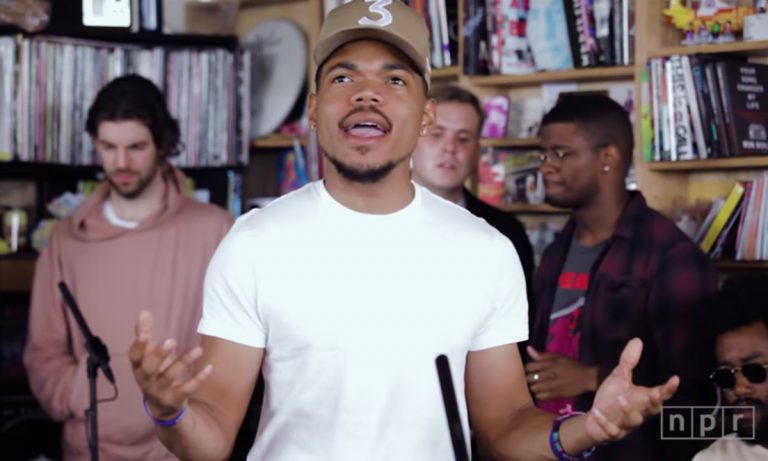
Chance the Rapper

Come for the Stevie Wonder cover, stay for an original poem by Chancellor Bennett.

Tyler, the Creator

The rapper, despite his worries, is very not trash here. Kudos to him for transforming the NPR offices into a childlike, pillow fort vibe with those funky lights.

7 Cannabis Products That Can Cure Your Insomnia

When it’s time for bed, sometimes our bodies just don’t agree. Whether you have regular insomnia or simply like the feeling of being gently rocked to sleep by cannabis, these seven products are sure to have you in dreamland in no time.

https://giphy.com/gifs/sleeping-SHEcjjdZz1tWU

Kiva Bars by Kiva Confections are the perfectly dosed, perfectly delicious chocolate bars for before bed. If you’re an experienced pro, go for the gold and eat an entire one about an hour before bedtime. That way you can appreciate a little of the altered state before heading off to bed. The nice thing is, though, that they come in squares and just a couple of the 5mg chocolate goodies are the perfect fix for insomnia.

Taking a bath is already relaxing, but imagine an organic, lavender infused epsom salt bath with a healthy dose of activated THC and all medicinal grade ingredients. That’s what you’ll find in a tub of Whoopi and Maya’s Soak, available in California and Colorado. This fragrant bath will fill your senses with ultimate goodness and is guaranteed to relax you.

Vape pens are a great way to go, as you can easily monitor your dosage and pick a nice indica strain to really get you in that dreamy mood. Gold Drop vapes are the gold standard and come in a variety of strains. Just remember that indicas and some hybrids are much better for catching some Z’s than a sativa.

https://giphy.com/gifs/bath-bathroom-al-pacino-QNnKbtl03OGsM

Cannabliss Care’s “Mellow Out is just as it sounds, a very mellow experience. Great for anxiety as well as insomnia, the tincture is easy to measure out and is infused with other great sleepy-time concentrates.

CBD oil is another fantastic option, especially for those who don’t want to feel elevated before bed. Green Roads is known worldwide for their CBD offerings. CBD won’t knock you out, but it will provide the relaxation necessary to calm your mind and body and hopefully drift off.

Consistent in almost every way, from dosage to flavor, Cheeba Chews have long been a favorite edible. They’ve been around since 2009 and are easy to get the dosage right with and even easier to get down as they’re absolutely delicious.

https://giphy.com/gifs/grace-and-frankie-bergstein-hanson-11JVvTB0tGjThu

Last, but certainly not least, Hippy Chick’s CBD Fudge is the perfect sweet treat before bed. These creamy confections are as relaxing as they are delicious. And as an added bonus, Hippy Chick ships right to your door. So if in the mood to really relax or even catch that fleeting sleep, pick some up. You’ll thank us later.

Are Meghan Markle and Kate Middleton BFFs? Rob Answers Your Juicy Questions!

We are just “thinking out loud” here but which English singer, songwriter, and guitarist has been invited to sing at the Royal Wedding? I’m sure his performance will be just “perfect.”

In this week’s episode, Naughty Gossip answers these questions and more when he breaks down all of this week’s headlines. Plus, he answers some of your questions!

Why You Need To Start Eating Raw Cannabis: 5 Reasons

Eating or drinking raw cannabis sounds kind of gross, but there’s enough evidence to back up unorthodox practice and make us think that the plant should become an important green in our diets. In it’s natural state, the THC in marijuana isn’t psychoactive, which means that the plant is just filled with nutrients that are begging to be consumed, but won’t get you high.

Here are 5 reasons why you should be eating raw cannabis:

Cannabinoid Acids

https://giphy.com/gifs/thebigmoon-big-moon-26FL2NwYBOq3Z6C6Q

Cannabinoids are unique to marijuana and hemp plants, and they offer an immense amount of goodness, providing anti proliferative and anti spasmodic effects. THCA is also present in raw cannabis, and research suggests that it’s a great cannabinoid for treating inflammation and pain regulation. The raw form of cannabidiol, known as CBDA, has also shown some promising results for epilepsy and preventing inflammation.

Fiber

Like all leafy greens, cannabis is filled with fiber and could work really well if drunk on a smoothie or eaten on a salad (as weird as that would look). High fiber foods help your digestion, your immune system and mental health. While this all sounds awesome, some users have reported that raw cannabis fan leaves can be rough on the stomach lining, so if you have a sensitive stomach try to drink it via smoothie, or add some leaves as a garnish on your dish.

Pain Relief

Cannabinoid acids share some of the benefits of over the counter medicines, like ibuprofen and aspirin, but without all the chemicals. Some medical cannabis patients use raw cannabis as a supplement to their treatments, easing the symptoms of diseases like fibromyalgia and arthritis.

Extensive research demonstrates that green juices are a great addition to the diets of people with arthritis and that also consuming foods that are rich in nutrients helps fight off all pain related illnesses.

Vitamins & Antioxidants

Leafy greens are rich in nutrients like folate, iron, calcium, vitamin K and vitamin C. Cannabis contains all of this plus cannabinoid acids. CDB and THC are also considered antioxidants, battling stress and helping with cancer prevention. 

Terpenes

https://giphy.com/gifs/botany-3KRHu71uphMGc

Terpenes are the aromatic bits of the cannabis plant, which mostly get burnt when smoked, denying you their health benefits. in their raw shape, terpenes have anti-convulsing and sleep-inducing properties, providing a sense of calm and relaxation to your entire system.

How Does Cannabis Factor Into Teen Usage and Opioid Overdoses?

Two new studies go after what have been considered myths by many. One, that teen cannabis use goes up as more states legalize it and two, that opioid overdoses go down in states that legalize medical usage.

The first study came as no surprise to cannabis activists and supporters, who have been watching the data for decades. California legalized medical marijuana in 1996 and since then 30 states plus the District of Columbia have legalized either medical or recreational with more on the way. Despite the ever challenging cry, “What about the children?” teen use has not gone up with legalization.

Deborah Hasin was the lead on the new study and she found that not only does legalization not send the message to teens that they should use, “it doesn’t seem that teens were impacted much by this,” she admitted, “perhaps because they didn’t find the legalization of medical use very relevant to them or didn’t even know about the laws.”

Or perhaps if they were going to use cannabis they were, and if they weren’t they weren’t, whether or not the adults were doing it.

On the opioid tip, researchers from America, Australia and Britain found “little” to suggest that cannabis quells the want for opiates. The colleagues cautioned, “it is premature to recommend the expansion of access to medical cannabis as a policy to reduce opioid overdose risks in the United States and Canada.”

However, the opiate study goes against other studies that show the opposite to be to be true. Not only do components of cannabis have pain relieving properties, they also provide another kind of relief that eases the need for prescriptions from opiates to benzos. Cannabis calms the mind (when using the appropriate strain) and that’s a big deal. Especially for our veterans, who are dying from prescription overdoses every day.

Every study done on cannabis is a step in the right direction. As we learn more and more about the plant and what it is and isn’t capable of, we find that it is a mellow herb for many, an aggressive one for others and is always the path of least harm when pitted against pills.

Everything You Need To Know About Marijuana’s CBD And Pain Relief

As cannabis becomes more widely accepted and scientific inquiries become more sophisticated, the findings of researchers give credence to the oft-repeated claim that cannabis is a “miracle plant.” But what about CBD?

As plant medicine, its recorded usage can be found in Chinese pharmacopeia dating back to 2,000 years before the birth of Christ. Other early cultures embraced it as well. In India, cannabis was used to treat leprosy; the ancient Greeks recommended it for earaches, edema and inflammation. Unfortunately, the rich history of medical marijuana was largely ignored during the 20th century due to federal prohibition policies of cannabis enacted in 1937. But today, with the easing of attitudes toward the plant, the discoveries of modern science have caused the medical community to take notice and forced politicians to reconsider their anti-cannabis positions.

In the 1960s, Israeli researcher Dr. Raphael Mechoulam and his partners were able to identify two of the 100-plus cannabinoids existent in the plant: CBD and THC.
What are cannabinoids? They’re chemical compounds secreted by the flowers of the cannabis plant; our brains have receptors that respond pharmacologically to them. cannabinoids. THC is the psychoactive cannabinoid, which binds to receptors in the brain, while CBD (cannabidiol) appears to bind to receptors throughout the body.

According to Project CBD, a California-based nonprofit dedicated to promoting and publicizing research into the medical uses of CBD (https://www.projectcbd.org): “Scientific and clinical research—much of it sponsored by the US government—underscores CBD’s potential as a treatment for a wide range of conditions, including arthritis, diabetes, alcoholism, MS, chronic pain, schizophrenia, PTSD, depression, antibiotic-resistant infections, epilepsy and other neurological disorders.”

Its anti-cancer properties are also being investigated at academic research centers in the United States and elsewhere.

CBD-rich strains are now being widely cultivated in states with medical marijuana laws on the books. A host of CBD products are on the market: edibles, topicals, suppositories, powders, oils, capsules, etc. But sadly, in order to legally use CBD medicine you must reside in a “legal” state. Uncle Sam may sponsor a large portion of the research, but whether it’s rich with CBD, loaded with THC or a crop of industrial hemp with nearly nonexistent levels of THC — all cannabis remains illegal in America on the federal level.

CBD’s benefits haven’t gone unnoticed by politicians. For many, its medical efficacy motivated them to change their policies toward the cannabis plant. However, other politicians have used the good news about CBD to demonize THC (thereby maintaining their drug warrior credentials), essentially proposing that the psychoactive properties of cannabis can at last be vanquished by allowing CBD products only in the marketplace.

But research again shows that CBD works best in concert with THC. In addition to CBD and THC, hundreds of compounds contribute to the cannabis experience – and we’re still finding out about many of them. Some are unknown. But they work together to heal. It’s called the “entourage effect.”

Martin Lee, the director of Project CBD, says: “Each of these compounds has specific healing attributes, but when combine the therapeutic impact of the whole plant is greater than the sum of its single-molecule parts.”

Lee also notes that the Food and Drug Administration “isn’t in the business of approving plants as medicine.”

Medical Marijuana Reducing Opioid Deaths Is Complex

It has been said that legal marijuana may be what eventually tames the deadly nature of the opioid crisis. It turns out this claim is more truth than fiction. A recent study shows that medical marijuana could actually be lowering opioid overdoses. But we’re dealing with a complex situation here, according to researchers. The issue is not cut and dry.

It was just a few years ago that a study was published showing how opioid overdose cases had diminished in states with legal marijuana laws on the books. Although this data has faced a certain level of scrutiny by anti-pot arms of the federal government, namely U.S. Attorney General Jeff Sessions, researchers now say the findings are real.

Researchers have confirmed that a 2014 study suggesting that marijuana could be a solution to the opioid epidemic is legit. The latest findings, which were published by the Journal of Health Economics, shows that people are using marijuana as a substitute to opioids. But the findings also give us a glimpse into something that is a bit bizarre. The study also found that medical marijuana programs eventually become less effective. It seems that opioid overdoses went down in times when regulations were less restrictive. But when tougher laws were applied, the result “completely disappears.”

Rosalie Liccardo Pacula, one of the lead researchers and co-director at RAND Drug Policy Research Center, says “this is a sign that medical marijuana, by itself, will not be the solution to the nation’s opioid crisis today.”

“While our study finds that medical marijuana dispensaries reduce some of the harms associated with the misuse of opioids, there is little evidence that this is happening because a large number of patients suffering from pain are using marijuana instead of opioid medications,” she added. “Either the patients are continuing to use their opioid pain medications in addition to marijuana, or this patient group represents a small share of the overall medical opioid using population.”

There is still a lot of work that needs to be done on this topic. The latest study only details the earlier stages of medical marijuana. Recreational laws do not fit into the equation. That is something that perhaps future explorations into this phenomenon might help clarify. But for now, researchers say the story of medical marijuana becoming a salvation’s wing for the opioid crisis is “complicated.” For example, passing medical marijuana laws for only a select group of patients is not likely to change anything. At the same rate, putting an ultra-restrictive program into place is not likely the solution either.

Said Pacula, “We need to fully understand the mechanism through which these laws may be helping and see if that mechanism still matters in today’s changing opioid crisis.”

This App Lets You Recover Deleted Photos From Your iPhone Without Backup

If you’ve ever accidentally deleted a photo only to find that it was MIA from your “recently deleted” folder, you’ll appreciate this app. Even if you don’t have backup from iCloud or iTunes, which comes with its own set of problems, you might want to check out a tool called dr.fone — Recover. The folks at Tech Advisor are big fans.

According to the site:

When you’re dealing with an iPhone, you should only use 100% trust-worthy third-party tools. That’s why we’re confidently recommending dr.fone — Recover. It’s a tool that has been rolled out by one of the world’s leading tech enterprises called Wondershare, which has received critical acclaim from leading media outlets such as Forbes and Deloitte. Furthermore, it also enjoys the faith of millions of users around the world. As such, you can put your faith in it completely.

Here’s how to recover deleted pics in 7 easy steps: 

  1. Connect your iPhone to the computer with a data cable.
  2. Install dr.fone onto your computer and launch it.
  3. Select the ‘Recover’ option from the main menu.
  4. Your iPhone will get detected automatically and you’ll be taken to the next window.
  5. You’ll find a blue panel on the left with three options. Select the option called ‘Recover from iOS Device.’ You’ll find a menu of the different types of data in the device, some of which fall under the ‘Deleted’ category. Choose ‘Photos’ and any other category that applies to you. Click ‘Start Scan.’
  6. Once the scan is done, you’ll be taken to a gallery.
  7. In this gallery, you can go through photos and images in the gallery and you can scroll through categories on the left-hand panel. Choose the categories that apply to you and then go through the images on the gallery. Select the images that you want to recover and then click on ‘Recover to Computer.’

Now, Tech Advisor has some screenshots and other details that might help you find your photos a little easier, especially if you’re a visual learner. They say once this 7 step process is done, you’ll find all your “lost” photos on your computer. Good luck!

Hershey’s Suffers Setback In War On Marijuana Edible Packaging

Despite the recent dismissal of one of its lawsuits against an edibles maker, Hershey seems ready to return to its legal war on edibles makers.

The company’s most recent day in court with the industry was a loss. A suit against an Oakland, Calif., dispensary was dismissed earlier this year after the retailer fought back.

Harborside Health Center, which operates two dispensaries in the state, was targeted by the candy giant. The retailer claims it spent months dealing with threats from the company’s lawyers. It finally countersued in December. The Hershey suit was dismissed in late January.

Hershey wanted Harborside to pay $20,000 for “liquidated damages” and an agreement with a confidentiality clause, Harborside attorney Henry Wykowski told Marijuana Business Daily.

“Harborside refused confidentiality, and I told Hershey’s that we were prepared to proceed with the litigation,” he said. “And guess what happened? They caved the next day.”

Earlier in 2017, Hershey had sued Good Girl Cannabis Co., a Northern California edibles maker. The owner told MBD that the legal action was settled quickly and amicably.

The legal actions came after it looked like Hershey had given up trying to chase the growing industry. In 2014, the company sued a Colorado edibles maker for infringement, citing products such as Ganja Joy bars and Dabby Patty. The candy maker produces Almond Joy and York Peppermint Patties.

Colorado-based medical marijuana manufacturer Tincture Belle settled the suit.

A second suit filed against Seattle dispensary Conscious Care Collective ended with the dispensary claiming it convinced Hershey that the dispensary was a reseller, not a manufacturer.

“At the end of it, we walked away not owing them anything,” Conscious Care co-founder Trek Hollnagel told MBD. The business closed in 2016.

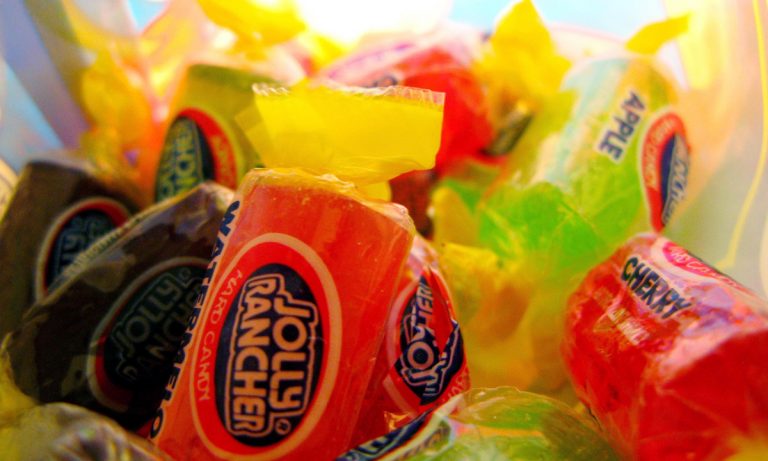
The Harborside suit didn’t involve chocolates, but rather “Jolly Meds,” a candy Hershey contended was a little too close in the marketing to Jolly Rancher. As with Conscious Care, the retailer claimed as a reseller, not a manufacturer, it wasn’t liable. The producer, changed the name of the goods to J:Meds late last year and has a trademark pending approval by the government.

Can Government-Approved Cannabis Beat Street Weed?

A key goal of legalizing recreational cannabis is squeezing out illegal suppliers. But how competitive will legal cannabis retailing be against established black markets?

That’s a key question for federal and provincial politicians. Governments don’t like cannabis consumers funding organized crime.

That question may also interest investors. They’ve pushed up cannabis stock prices and created demand for four cannabis exchange-traded funds. Alcohol and tobacco companies have bought stakes in cannabis growers. Suppliers of hydroponic equipment and online retailing software could benefit too.

To answer the question, consider the “four Ps” that marketers work with in every industry. Those are the product characteristics, price charged, place where sold and promotion activity. From this viewpoint, legal vendors have some potential advantages. But they face major challenges under current government plans.

Pricing Challenges

Price is the competitive element politicians mention most. In Colorado, cheap legal cannabis means black markets control only 20 per cent of state sales. But in Washington state, where prices are higher, black markets capture 50 per cent.

In Canada, governments agree cannabis prices must be competitive. They’ve suggested $10 per gram, including excise and sales taxes.

But Statistics Canada estimates market prices fell below $7.50 last year, and farther since then. Vancouver street prices reportedly are near $5. And street vendors don’t charge tax.

Meanwhile, most provinces lack confirmed supplies, so they risk product shortages initially. Growers might prefer exporting their limited stocks to Germany’s higher-priced medical cannabis market.

Provincial governments could face awkward choices. If they price high to cover costs, they’ll be uncompetitive. If they price low to compete, taxpayers may end up subsidizing drug users.

Longer term, more growing capacity will come online and enable lower prices.

Other pricing questions remain unanswered. Will all products share the same price? Or will prices differ by brand? Will each retailer set their own prices?

Retailers Lack Convenience

The places cannabis is sold also affect competitiveness. The western provinces will allow private-sector retailers. Ontario and its eastern counterparts are keeping retail in the public sector.

The public-sector plans lack convenience due to limited store numbers. That aids the black market.

For example, Ontario plans 150 outlets by 2020. That’s only one per 95,000 people, about as common as Walmart. It’s enough for planned shopping trips, but not for consumers who have unexpectedly run out.

By contrast, Ontario has 2,067 locations selling alcoholic beverages: One per 7,000 people. Those include liquor agency outlets, beer stores and wineries.

Quebec also expects 150 cannabis outlets eventually, or one per 56,000 people. New Brunswick plans 20, so one per 38,000.

Contrast those numbers with Colorado’s. It has more than 800 stores, or one per 6,250 people.

Private stores out West will likely be more numerous. But they’re banned from selling alcohol or tobacco. That specialization will restrict retailers’ revenue sources and the number of viable stores.

Provincial plans have barely mentioned on-site consumption. Countless bars and restaurants serve alcohol drinkers. Licensed cannabis “lounges” similarly could serve cannabis users, especially renters in non-smoking buildings and American tourists. Otherwise, those groups may stick with black markets.

Product Advantages

Consumers can’t evaluate cannabis products without smoking them. The cannabidiol (CBD) and tetrahydrocannabinol (THC) concentrations vary greatly. Consumers also can’t detect contaminants like pesticides and mold.

Quality-assurance measures therefore could give legal cannabis products a competitive edge. Each province except Saskatchewan plans a single public-sector wholesaler. That centralization will facilitate large-scale testing.

Consider Ontario’s liquor agency. Its Quality Assurance Lab examined 28,000 beverages last year, rejecting 11 per cent.

Quality assurance, combined with recognizable brand names, would help products develop performance reputations. Some may offer a mild buzz, others a powerful high. Consumers could learn to rely on consistently performing brands, instead of unpredictable street weed.

However, branding faces challenges. Federal law limits package designs. No people, animals or lifestyle images are allowed.

Some critics even want plain packages, to discourage cannabis adoption. But that would make it harder for growers to establish reputations, neutralizing a key advantage over illicit products.

It would also reduce growers’ incentive to boost quality, especially if prices are fixed. As near generics, they’d instead try to lower production costs. Or perhaps hike THC numbers to stand out. Should we encourage cheaper, stronger pot?

The lack of edibles, like brownies and beverages, is a glaring gap. Ottawa won’t legalize those for another year. Unlawful suppliers keep market control until then.

Promotion Limits

Federal rules also limit promotional activity. “Informational” ads are OK. But no evoking emotions, and no lifestyle depictions involving recreation or excitement.

Those clauses undermine legal cannabis’ competitiveness. Good ads evoke emotions. Lifestyle images explain complex products simply. And isn’t this law about “recreational” use? Growers consequently have proposed more flexible rules.

Because federal law prohibits self-service, sales staff will be important. Store ownership may matter here. Public-sector staff might be better at consumer education and harm reduction. Private-sector sellers may respond better to customer preferences and market trends.

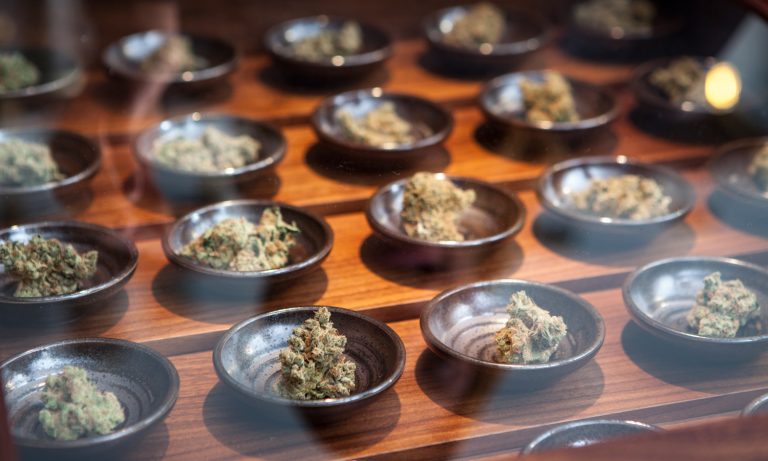
Regarding in-store promotion, New Brunswick will display products under glass. Consumers will see packaging, read labels and visually compare products.

But Ontario wants things “similar to how tobacco is now sold.” That implies customers won’t see or touch products before purchase. It’ll be tough for consumers to develop preferences, and for growers to build reputations. That further weakens legal products’ competitiveness.

Prognosis Is Mixed

Overall, governments’ retailing prospects look mixed. Legal cannabis could stand out on product quality if growers earn reliable reputations. But edibles remain absent for now. Promotion could give legal cannabis another edge, if governments loosen up the rules.

The ConversationBlack markets will initially out-compete the provinces with convenient places. That will decrease over time, especially out West. But it won’t disappear without legalized lounges. Illegal vendors may always have some price advantage. Provinces can minimize that by forgoing profits.

Michael J. Armstrong is an associate professor of operations research at the Goodman School of Business, Brock University

This article was originally published on The Conversation. Read the original article.

Don't Miss Your Weekly Dose of The Fresh Toast.

Stay informed with exclusive news briefs delivered directly to your inbox every Friday.

We respect your privacy. Unsubscribe anytime.