Tuesday, May 12, 2026
Home Blog Page 1007

William and Kate Pose With Long Term Fan

You’re never too old to be a royals watcher.

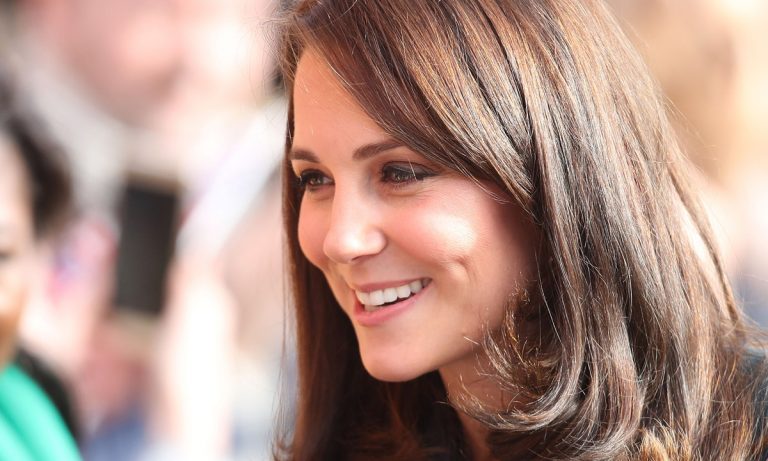
Earlier this week, Prince William and Kate Middleton met 101-year-old Jane Johnson when they made an appearance at the Fire Station, an iconic building in Sunderland, England that recently underwent a nearly $5 million overhaul to be converted into an arts and culture center. According to INSIDER, representatives from Springboard, a Sunderland community-based charity, helped ensure that Johnson had a special moment with the royal couple.

Related: World’s Oldest Woman Reveals Her Raw Egg Diet

At the 1:48 mark, you can see Johnson present Prince William and Kate with flowers and a quick chat.

According to this tweet from Sunderland reporter Sophie Brownson, Johnson’s brother used to work at the old fire station.

Charlotte Hunter, Springboard’s Fundraising and Events Officer, was standing next to Johnson’s granddaughter when she met Kate and Will and tells INSIDER, “They both leaned in close and spoke slower and sweeter with soft tones so she could understand them, then were very attentive with her and spent time to make sure she knew she was a special guest.”

William and Kate posing with long term fan is why the public has taken them to their hearts.

This Vibrator Will Order Domino’s Pizza After You Orgasm

0

There’s a vibrator on the market that not only gets you off, it gets you pizza. Is there another device that’s this considerate of your needs?

Developed by a company called CamSoda, RubGrub (yes, that’s the name) has an option to add your credit card information so that you can press a button that orders Domino’s pizza for you. Domino’s comes in 30 minutes. Do you?

The company’s vice president, Daryn Parke, predicts that they’ll add other pizza providers to their vibrator/delivery service enabler. Huffington Post reports that Domino’s knows nothing of this vibrator, and that the only way people with the device are able to order pizza is because the company’s API is public.

CamSoda released a statement explaining their device and why they decided to add this pizza feature. “Masturbation, while ultimately enjoyable, can be a strenuous physical activity during which an individual exerts a lot of energy and burns many calories. Inevitably, once someone has climaxed, they feel lethargic and hungry. Now, in order to enjoy your Saturday night, all you need is your RubGrub device. Get off and get stuffed, all with the quick click of a button.”

While it’s true that sex and all its related activities can make people hungry, the RubGrub makes us wonder, “why the preference for pizza?” Does CamSoda have some insider knowledge that the general public doesn’t? Also, why would you need a device that’s capable of getting you off and of ordering food? These are all very important questions prompted by a very unusual function.

The RubGrub is in its last stages of development, and it’ll be available in a few months for the price of $19.95.

How Canada’s Rec Marijuana Delay Hurts Residents And Investors

As Canadian legislators continued to stall and the infrastructure necessary to run a national recreational cannabis industry remained unbuilt, it seemed all signs pointed to Canada missing its proposed timeline of marijuana legalization. That original mark of July as the month legal recreational marijuana sales would start in Canada has now been pushed back at least a month by Canadian officials.

The problem relies on the provincial level. From a federal perspective, the Canadian Senate is expected to vote on legislation that will authorize recreational cannabis sales by June 7, 2018. In fact, the votes appear to be there as well and Canadian officials expect no delay in that regard.

The problem lies with Canadian provinces. Estimates state the provinces will need another 8 to 12 weeks to finalize recreational marijuana sales within their individual provinces, according to health minister Ginette Petitpas Taylor. The health minister further clarified that Canada intends to begin all marijuana sales simultaneously, meaning one province dragging its feet could put the whole country behind.

Canadian residents aren’t the only ones dismayed at such news. It’s also thrown the Canadian marijuana stocks in flux as pretty much all major Canadian marijuana growers saw drops. “Canopy Growth (NASDAQOTH: TWMJF) stock fell nearly six percent on the news of a delay. Aurora Cannabis (NASDAQOTH: ACBFF) and Aphria (NASDAQOTH: APHQF) slipped seven percent, while MedReleaf (NASDAQOTH: MEDFF) stock dropped eight percent,” according to Madison.com.

It hurts companies like Aurora Cannabis more than just a drop in stock value. By all accounts, Aurora paid a fortune to have first to market rights over competitors. Not only the expense to build its Aurora Sky facilities, they also claimed the largest marijuana acquisition in history with the $852 million buyout of CanniMed Therapeutics. That gave them an advantage to become a premium supplier when the July 2018 rollout started. Now the delay my give competitors a chance to catch up.

What remains a scary proposition for investors and citizens? A further delay of a proper release date is still a distinct possibility in Canada.

These Cities Have The Cheapest Marijuana In The World

Although the most expensive cannabis is in countries where it is illegal and penalties can be very harsh, the cheapest cities to buy a gram are more of a mixed bag. Some have stiff consequences, but others have an array of regulations or simply don’t enforce existing laws depending on circumstances. And even existing laws can be contradictory.

Seedo, a company that makes a device allowing users to grow cannabis plants at home, recently released a report that shows where the cost of a gram is cheapest in cities around the world. They compiled the list through crowdsourcing and cross-referencing it with the World Drug Report 2017.

5. Panama City, Panama

Price per gram: $3.85

Legal status: Medical only

The country banned the use and cultivation in 1923. But despite officials’ hard-talk about drug use, the country legalized cannabis for medical and scientific use in 2016.

Demand may be part of the reason prices are so low. According to the United Nations Office on Drugs and Crime, 3.6 percent of the country’s total population uses cannabis.

Penalties, when enforced, can be stiff. Possession of a small amount of cannabis can earn offenders a minimum of a year of incarceration. But as webehigh.org notes, if you are caught with that small amount, talking your way out of a ticket — and/or a bribe of $5 to $10 — is a distinct possibility.

4. Jakarta, Indonesia

Price per gram: $3.79

Legal status: Illegal

Indonesian law seems to have mixed emotions about the drug. Cannabis was banned during Dutch rule in 1927 and the law is still on the books. Possession can result in a sentence of four to 12 years in prison and up to a $896,000 fine — depending on the amount. For traffickers, a life sentence is possible or even death.

However, a 2009 law allowed that if a user — or their family — voluntarily reports violating the law to authorities, charges can be dropped.

3. Asuncion, Paraguay

Price per gram: $2.22

Legal status: Medical only

What country is one of the world’s largest producers of cannabis? Paraguay — second only to Mexico in Latin America and supplier to much of South America. Where can possession of the substance get you up to five years behind bars? Paraguay.

However, at a judge’s discretion, an offender caught with a small amount can go to rehabilitation instead of jail. The country approved the use of medical cannabis in 2016. Recreational possession wasn’t illegal until 2015.

Demand, again, may play a role more so than penalties anyway. Vice reported that less than one percent of the country’s population uses cannabis.

2. Bogota, Colombia

Price per gram: $2.20

Legal status: Mixed

The country made cannabis for medical use legal in 1986. But a patchwork of regulations prevented growing and producing it for patients on a national scale. The government cleared up the issue 19 years later.

In 2012, Colombia decriminalized cannabis, allowing for possession of up to 20 grams and growing up to 20 plants. But public use and selling the substance is still against the law. 

“That’s the catch,” said cannabis cultivator and manager at How High Smoke Shop, who goes by the alias Paco María. “It’s difficult to understand Colombian law because you can grow up to 20 plants, but if police catch you with more than 20 grams, you can be in very big trouble.”

It can put personal use growers under a lot of stress, especially considering the size that plants can grow outdoors in Colombia—they’re huge!

As with Paraguay actual use among the country’s population is low.

1. Quito, Ecuador

Price per gram: $1.34

Legal status: Mixed

Ecuador also has a mixed bag of cannabis regulations. Possession of 10 grams for personal use is completely legal. As is medicinal use. But selling and growing cannabis is illegal.

Foreigners may find actually closing the deal difficult or even dangerous. Because of kickback scams between dealers and the police, numerous publications warn about tourists making purchases on the street—webehigh.org says get it delivered.

….  and in the U.S.?

At number 36 on the list, Seattle, Wash., was the cheapest U.S. city at $7.58 a gram. The state was among the first in the nation to have state-controlled sale of cannabis for medical use. Voters made recreational use legal in 2012. The state licenses all retail businesses and growers. Growers may not sell directly to consumers.

The cheapest North American city was Vancouver, Canada. It ranked number 24 at $6.40 a gram. Medical cannabis was made legal in 2001. Recreational use and retail sale was approved by the government in 2017 and is supposed to go into effect this summer.


Could Blockchain Give Cannabis The Legitimacy It Seeks?

0

Chances are you’ve heard the words cryptocurrency and cannabis next to one another in financial investment circles. That’s because over the past five years these two properties have been the hottest assets within the investment world, producing dramatic ROIs and luring millennials, a generation previously lukewarm about trading stocks, into the trading world.

The success of these two types of assets are from different catalysts, however. Marijuana stocks and their newfound lucrative nature is more easily explained: As more states legalize, more business becomes available, raising more capital, and so forth. At the same time, Americans have never been more in favor of cannabis, especially as a medicine.

Cryptocurrencies have more complex reasons why they have risen so dramatically over the past year. As Business Insider notes, however, much of the success can be tied to the blockchain technology that underpins cryptocurrencies. “Blockchain is the digital, distributed, and decentralized ledger that underlies virtual currencies and is responsible for recording all transactions without the need for a third-party, such as a bank,” writes Business Insider.

While blockchain and cryptocurrencies have long flirted with replacing the problematic all-cash systems the cannabis industry currently uses, it appears one small-cap marijuana stock might have found a solution in Emerald Health Therapeutics, a Canadian cannabis company that’s  poised to become one of the biggest marijuana suppliers.

But this February, Emerald Health announced it was in the process of finalizing a joint venture with DMG Blockchain Solutions—named CannaChain Technologies—and will “provide blockchain-based supply chain and e-commerce marketplace for the marijuana industry.”

Here’s the important nugget from their press release:

The new solution will provide extensive plant, growing, third-party testing, and handling data, as well as offer enhanced trust of origin, quality, and safety based on the blockchain’s ability to maintain immutable records as cannabis products flow from seed to sale through the supply chain. Relevant stakeholders for this technology alone include producers, distributors, shippers, government agencies, and consumers.

Blockchain could provide a transparency and authenticity that would legitimize the cannabis industry to the larger business world. However, blockchain technologies are just as unproven as cannabis when it comes to scaling to the large proportions angled by the two companies. Already in Canada, the cannabis industry is struggling in its incipient stages. Because distributors, retailers, and growers aren’t yet in sync, the sale of legal marijuana could experience a three-month delay.

So while we’ll have to wait to realize the efficacy of such a plan, it remains another intriguing development in the relationship between blockchain and cannabis.

The Country’s First State-Licensed Cannabis Spa Is About To Happen

How great would it be to visit a spa where you could get cannabis-infused massages, ganja yoga and other wellness activities? It is looking like it might be a reality in Denver.

Owners of the Utopia All Natural Wellness Spa and Lounge have already submitted a social consumption application that, if approved, would make them the first fully licensed, state-legal cannabis spa in the nation.

If approved, Utopia will offer patrons “cannabis infused massages, ganja yoga, and other cannabis-friendly activities to patrons 21 and older, as well as meditation coaching, educational seminars, and patient support and networking groups,” according to a press release. It will not sell, however, any cannabis or cannabis-infused products.

Owner Cindy Sovine says she also plans to offer meditation coaching, educational seminars and support and networking groups, not to mention “cannabis-friendly cooking classes, corporate retreats and other private functions,” according to a press release. There will also be designated consumption areas (for 21 and older guests) for vaporizing, but smoking will not be allowed as it’s prohibited by the Colorado Clean Indoor Act.

“Our mission,” says Sovine, “is to provide a place of retreat for cannabis consumers and access to high-quality products and services for those who wish to explore natural options for self-care.”

She says she looks forward to opening the doors of Utopia, not just to cannabis consumers, but to all adults interested in natural self-care and making healthy changes to their lifestyle.

The Only Primer You Need: Butane Vs. CO2 Cannabis Extractions

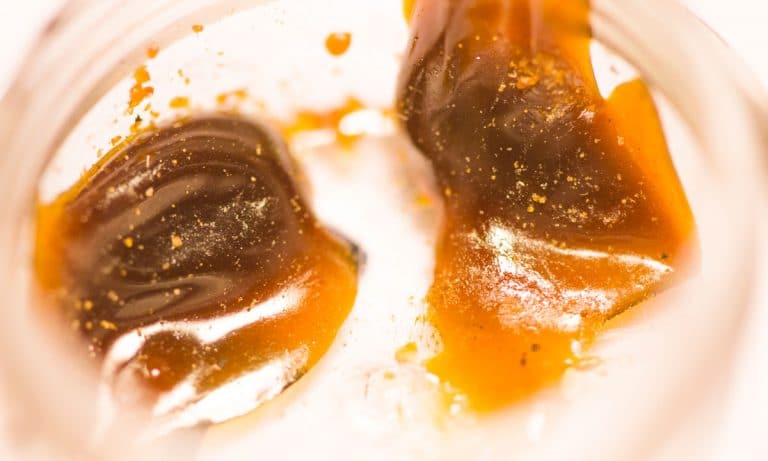
Butane, or butane hash oil (BHO), gets a lot of flack in the cannabis community and press for its volatility and health risks during and after extraction, yet it’s the most popular method of cannabis extraction. How does it really work and is CO2 really safer? Let’s examine the facts and evidence.

Cannabis extractions isolate the psychoactive components of the plant and fuse them into what’s known as dabs or oil. Dabs are most commonly extracted using butane, while vape pen oil is usually concentrated via CO2.

If you’ve never experienced either one, dabs are powerful sheets of concentrate that often come by the gram and have different consistencies depending on how they were treated post extraction. It only takes a little bit on the end on a dabber to be dipped onto a hot nail to get one flying into outer space. On the other hand, vape pens are discreet concentrates that come with greater control of the high.

One of the main concerns when making concentrates using the BHO method is that the producer may not allow for all of the butane to evaporate off and out. Having residual solvents in the final product is irritating to the lungs and can leave pollutants in the body. However, the method of making dabs has come a long way in the educational department and most extractors know the P’s and Q’s of making concentrates by now.

CO2 is a gentler extraction process, with less volatility, but it’s much harsher on the cannabis plant itself. Often this means missing out on terpenes that some say enhance the high and all say contribute to the flavorful aromas we love so much about cannabis. CO2 also does not extract as much THC as butane. For many, though, the pluses outweigh the minuses. CO2 extraction is cleaner with less of a chance of ingesting residual solvent, it’s more environmentally friendly and is nonflammable.

Not to imply that butane and CO2 are the only extraction methods out there. There are other solvents, like alcohol, that are used to make concentrates, but there are also solventless methods. Solventless is considered by many to be the superior way when it all comes down to it. There are no residuals, the flavors are out of this world and, though more difficult to press into dabs, it is more often than not worth the extra effort to go the solventless route.

Is This Meghan Markle’s Wedding Dress Designer?

We’re not experts on the fashion industry, but we can say with certainty that designing Meghan Markle’s royal wedding dress is one of the most important and sought after jobs a fashion designer could ever have.

Rumors of which designer will make the wedding gown abound. Vanity Fair reported that last week, people thought the designer would be Erdem, a British brand beloved by Kate Middleton, or Ralph & Russo, the brand responsible for designing Markle’s engagement outfit. This week, bets are on Alexander McQueen.

These rumors stem from Betfair, a betting website. Yes, the British like to bet on rumors, especially ones that relate to the royal family. They’re weird.

Via Vanity Fair

We previously had Ralph and Russo as the 2/1 [favorites] and there’s also been a lot of talk of Erdem as a big front-runner. However, we’ve now suspended this market after seeing some interesting betting on Alexander McQueen this morning who went from 16/1 to 8/1 in a very short space of time.

Kate Middleton wore an Alexander McQueen gown for her wedding, so it would make sense if Markle were to follow in her footsteps. Or maybe she’ll surprise us all with her decision in designer, going against royal traditions once more.

From The WTF Files: Inside Instagram’s Avocado Marriage Proposals

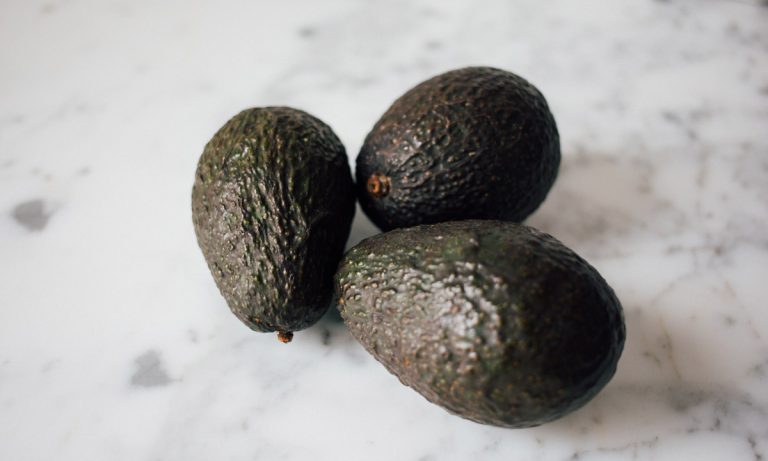
There’s a new relationship trend and it involves avocados and Instagram. Swoon, right? If that doesn’t have you nostalgic for Nora Ephron movies, wait until you hear about guys who actually use avocados, not to make their SOs avocado toast in the morning, but as a ring box. Surprise! You’ve been avocadoed!

It all started with this guy, @taylorselbyyoga, who, we assume, used the fruit to propose to his (still?) girlfriend last October.

PSA: If your guy is going to propose to you using an avocado, just make sure it’s at least fresh. A decaying avocado does not speak highly of your future together.

https://www.instagram.com/p/BL1IQMChEyw

Then this photo popped up recently.  It’s already garnered more than 100K “likes.” What’s to like?

https://www.instagram.com/p/BfAte9clPGC

Using avocados as engagement props may not be the most romantic maneuver, but it’s better than cutting your hand open while trying to deseed one or gauging whether or not you’re dateable using guacamole as your guide. And it sure is fun to watch social media suck the life out of this so-called trend. Once Twitter throws shade, your time is up.

https://twitter.com/MrSmithRadio/status/966444357980213248

British supermarket Asda is now putting stickers on avocados that are “perfect for proposals.” The dude above could have used this handy trick. As The Independent reports:

…the avocados are chosen based on Asda’s own version of the ‘four Cs’ – whilst someone choosing a diamond ring might look for colour, clarity, carat and cut, when choosing the avocados, Asda has assessed colour, complexion, cut and creaminess.

Avocado expert Adrian Kurzynski takes it one step further. And, no, this is not a joke:

From a soft, yet firm avocado to keep the ring in place, to a perfect pear-shape that allows for symmetrical slicing, our ‘Perfect for Proposal’ sticker system will help the increasing number of avocado proposals go as smoothly as the flesh of the fruit they’re holding.

Guys, just make sure when you cut open the avocado to remove the seed, you don’t actually slice your hand open. A brown avocado is better than a red one any day.

Meghan Markle Helping Kate Middleton During Difficult Pregnancy

It’s no secret that Kate Middleton has suffered severe morning sickness during her third pregnancy, forcing her to miss out on several royal engagements. Now seven months pregnant, the International Business Times reports that Middleton is experiencing these symptoms again, and that Meghan Markle has been at her side, helping her overcome these difficulties.

The two women next to each other in different apartments within the Royal Palace, where they visit and keep each other company during these stressful times. While Middleton is pregnant with her third child, Markle is entering the world of British royalty and has been using this time to adapt to her new life.

Both women have demonstrated nothing but support for each other during the past couple of months. Regarding Prince Harry and Markle’s engagement, Middleton claimed that she and William were “absolutely thrilled,” and that the news was very exciting; she gushed about how happy this time is for any couple, saying, “We wish them all the best and hope they enjoy this happy moment.”

It’s believed that Middleton will help Markle prepare for her role as a new member of the royal family. Earlier this month, People spoke to several of those close to the Duchess, including a source from her hometown of Bucklebury, England, who said, “I’m sure Kate will do all she can to help Meghan.”

Even though Middleton and Markle, both 36, grew up in wildly different upbringings — Kate on the English countryside and Meghan in Los Angeles — both have reportedly bonded over, you know, falling in love with a Prince.

Don't Miss Your Weekly Dose of The Fresh Toast.

Stay informed with exclusive news briefs delivered directly to your inbox every Friday.

We respect your privacy. Unsubscribe anytime.