Wednesday, June 24, 2026
Home Blog Page 1016

Ostracizing Drug Users Is Not Going To Solve The Problem

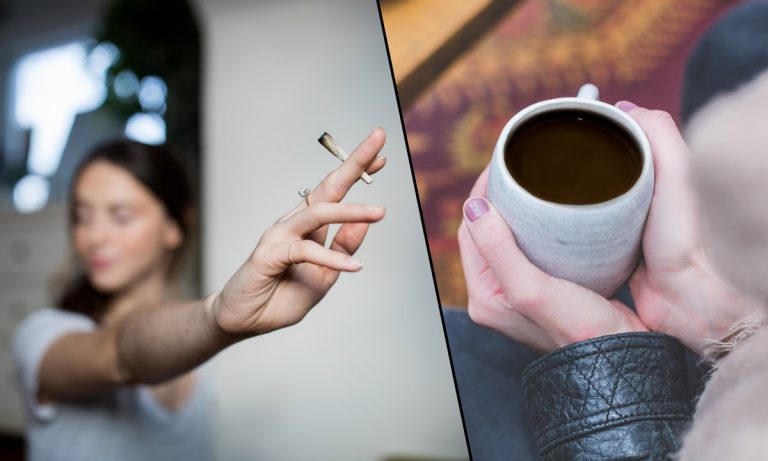
We are all drug users. Coffee, alcohol, cigarettes, weed, Viagra, ecstasy, anti-depressants, anti-anxiety pills and more – people are using these drugs on a weekly or even daily basis.

Why do we all use drugs? Because drugs work. We all have our personal reasons for using – whether for pleasure, or treating pain or otherwise. And of course, many people face challenges from their drug use.

Coffee helps me start my day and gives me a little boost in the afternoon. While I know how harmful my cigarette habit is, it also gives me pleasure. I enjoy my smoke breaks throughout the day, going outside and getting some space, clearing my head and doing my people watching as New Yorkers walk by. I really appreciate my vodka sodas after work. Whether I am kicking up my feet at home or hanging out with friends, it is pleasurable for me. Smoking weed can both relax me and also give me energy. I like watching movies or eating a nice meal after a smoke and also enjoy getting deep with friends or doing some creative writing while a little high.

It’s clear to me that some of my drug use is because of stress and an attempt to push down some anxiety and difficult feelings. Life can be hard. Most of us are stressed when it comes to jobs, money, paying bills and, god forbid, trying to save a little bit. Watch the news and you are inundated with scary, deadly fires, hurricanes and floods. There are wars happening around the world and people fleeing violence and oppression. We have a President who is constantly attacking women and marginalized communities and playing a game of nuclear war “chicken” with North Korea. We read about school shootings on a weekly basis. We are living in nerve-wracking times. I sometimes joke, if you are not self-medicating, you are not paying attention. There is a serious opioid overdose crisis in our country right now and the reasons are many and complex. But I would wager that people’s physical and spiritual pain is a major factor contributing to the widespread use and misuse seen today.

While most people use drugs, not everyone has the same relationship with these different drugs and some of us have different experiences with drugs depending on the night or what is going on in our life at that time. The majority of people can enjoy alcohol, but for some, alcohol is a harmful drug and causes real harm and destruction in their lives. Some people can enjoy a couple of cigarettes when they have a couple of drinks. For others, there is no moderation and a single cigarette easily turns into a pack a day habit. Some use their opioids in a healthy way for their pain, and for others it can lead to serious addiction that can become the focus of their life.

Despite being counterintuitive, it is worth pointing out that the overwhelming majority of people who use drugs don’t become addicted. Dr. Carl Hart, a neuroscientist and professor at Columbia University has done groundbreaking work around drug use and addiction and notes that, “80 to 90 percent of people who use illegal drugs are not addicts. They don’t have a drug problem. Most are responsible members of our society. They are employed. They pay their taxes. They take care of their families. And in some cases they even become president of the United States.”

While drug use and abuse don’t discriminate, our drug policies do. The war on drugs is a vicious war on people and African Americans and people of color feel the brunt of this war. Despite similar rates of use and sales, African Americans go to prison at 13 times the rates of whites for drugs. While marijuana legalization is becoming mainstream and entrepreneurs are getting rich, we still have hundreds of thousands of people getting stopped, frisked and arrested for marijuana – mostly young people of color. Last year, in “progressive” New York City, 18,000 people were arrested for marijuana possession with African Americans and Latinos making up 85% of the arrests. People who are arrested often face immediate and long-term consequences that can make it difficult to get and keep a job, maintain a professional license, obtain educational loans, secure housing, or even keep custody of a child or adopt.

So if we can agree that the majority of people in society are using drugs, and if most people who use drugs don’t have a problem, what should be done about it? The answer is not what Donald Trump is proposing. His proposals are building a wall along the border, telling people to “Just Say No” and doubling down on law enforcement and mass incarceration. I think it is pretty obvious that our 50-year war on drugs is not the answer.

How should our society deal with people who use drugs? I propose four simple solutions: 1) Offer treatment and compassion to people who want help for their drug problems; 2) leave people alone who don’t want or need treatment; 3) continue to hold people responsible for crimes that harm others; and 4) fight like hell to end the war on drugs and stop locking up our brothers and sisters.

1) Offer treatment and compassion to people who have drug problems

While our society gives lip-service to helping people struggling with drug misuse or addiction, 90 percent of folks who want treatment can’t get it. Meanwhile, thousands of people are forced into treatment every year simply because they were arrested for drug possession, even though many of them don’t meet the diagnostic criteria for substance dependence.

We should have free treatment available on request. We should remove barriers to entering treatment, which is far more effective and less expensive than putting someone in jail. We need to reduce overdose deaths by getting the overdose reversal drug Naloxone into the hands of people who use opiates and their family members. We need laws that allow people to call 911 when witnessing an overdose without fear of arrest. We need supervised injection facilities where people can use in safe places with medical staff on hand to make sure people don’t die from an overdose. We should make methadone and replacement therapy available to those who want it. We should acknowledge that relapse happens and not kick people out of treatment who slip up.

2) Leave alone people who don’t want or need treatment

As I mentioned earlier, the vast majority of people who use drugs don’t have problems from their use.

RELATED: What Does White Supremacy Have To Do With Marijuana Laws?

More than 1.5 million people are arrested every year in the U.S. simply for drug possession. The majority of these people don’t have drug problems and yet we are handcuffing them and saddling them with criminal records that will severely limit their opportunities in life.

3) Continue to hold people responsible for crimes that harm others

People who harm others, whether on drugs or not, need to be held responsible. Simply using or possessing drugs should not be cause for arrest, but if someone gets behind the wheel while impaired, or commits a predatory or violent crime against someone, they should continue to be held accountable.

4) Fight to end the war on drugs and stop locking up our brothers and sisters

The war on drugs is really a war on us. It is time to decriminalize all drugs and stop arresting people simply for using or possessing a certain substance. We are all using drugs, most non-problematically. How can we allow the police to target, arrest and lock up our brothers and sisters in cages for something we are all doing? Let’s help people with drug problems, leave in peace those without a problem, hold responsible those who harm others and end this tragic, inhumane war on drugs. Let’s get people to care about this.

Tony Newman is the director of media relations at the Drug Policy Alliance.
 

Proof That Marijuana’s CBD Reduces Seizures Of Childhood Epilepsy

Cannabidiol, known popularly as CBD, is a non-psychoactive cannabinoid produced by the marijuana plant. Researchers now have good reason to believe that it may provide much needed relief for a rare severe form of childhood-onset epilepsy affecting children as young as 2 years old.

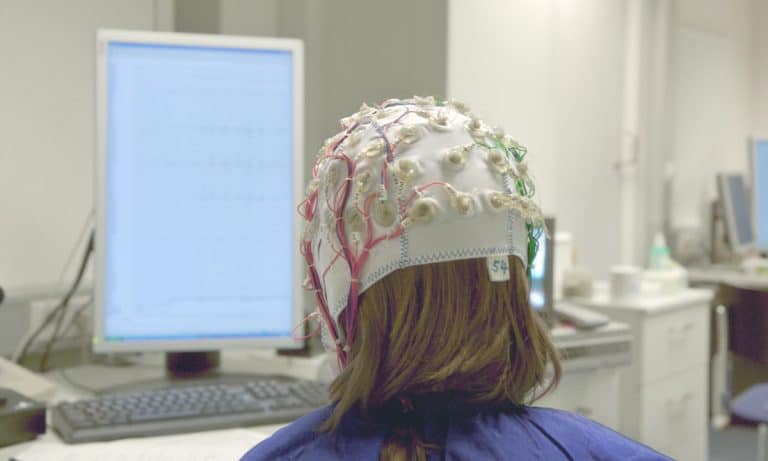
Lennox-Gastaut Syndrome, LGS, is a particularly harsh form of epilepsy. It is associated with multiple seizure types, cognitive impairment as well as an EEG showing abnormal brain activity. Those affected can experience seizures that include total loss of consciousness and full body convulsions, sometimes with multiple secondary injuries from falling.

The majority of children with LGS will experience cognitive, behavioral and social disabilities as a result of the syndrome. The continued electrical disturbance in their brains can help bring on unstable moods, attention-seeking behavior and challenges understanding information.

Side effects from current medical treatments including corticosteroids or drugs such as Valium, Depakote and Dilantin can further complicate the child’s situation. Some special dietary regimens have shown to be helpful.

There is no known cure.

In 2013, after several years of pre-clinical trials, the FDA approved Epidiolex, a product composed of 98 percent CBD and created by British-based GW Pharmaceuticals. Research on  rats to examine the effectiveness of CBD for reducing seizures is a well traveled research path dating back to studies in the 1970’s.

In a recent press release by the American Academy of Neurology, Anup Patel, MD, author of new research stated, “Our study found that cannabidiol shows great promise in that it may reduce seizures that are otherwise difficult to control.” 

The 225 subjects had an average of 85 drop seizures per month, had tried an average of six epilepsy drugs and were taking approximately three different prescription meds.

With the help of CBD therapy, nearly 40 percent of those with LGS studied experienced at least a 50 percent reduction in drop seizures.

“This is important because this kind of epilepsy is incredibly difficult to treat. While there were more side effects for those taking cannabidiol, they were mostly well-tolerated. I believe that it may become an important new treatment option for these patients,” said Patel.

A large, controlled, double-blind clinical study of humans is the standard bearer for researchers. While the majority of subjects didn’t experience such a dramatic reduction in seizures, the findings are strong enough to create a positive quake in the medical community. For 4 out of 10 patients hoping to radically improve their quality of life, those odds are good enough.

We Just Learned A Ton More Details About Meghan And Harry’s Wedding

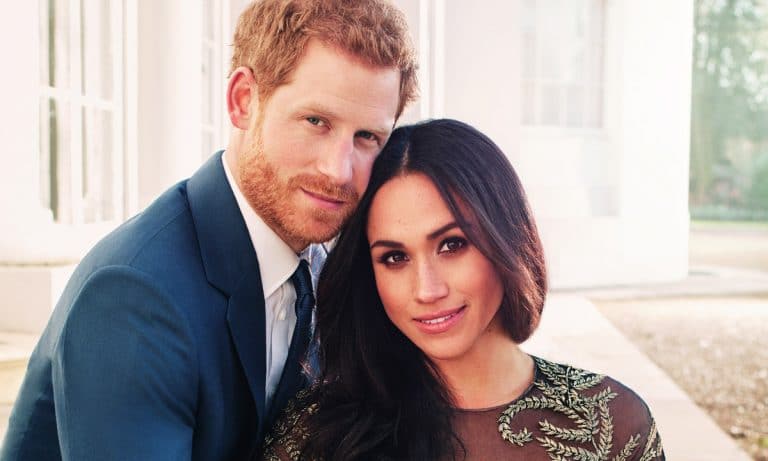
You’re going to want to set your clocks for the crack of dawn on May 19, if you’re a royals watcher. Kensington Palace has announced that Prince Harry and Meghan Markle will be getting hitched at 7 a.m. EST at St. George’s Chapel. That’s noon U.K. time.

In an over-the-top display of FOMO, the newlyweds will then catch a ride in a horse-drawn carriage through the streets of Windsor, just like Prince William and Kate Middleton did after their ceremony in 2011.

https://www.instagram.com/p/BfFyJT1ApvO


The Dean of Windsor will conduct the service and the Archbishop of Canterbury will officiate as the couple make their vows.

After the ceremony, the newlyweds, in their carriage, will undertake a traditional Carriage Procession from the Chapel through Windsor Town returning to Windsor Castle along the Long Walk (whatever that means). “They hope this short journey will provide an opportunity for more people to come together around Windsor and to enjoy the atmosphere of this special day,” said the statement from Kensington Palace.

Following the service, there will be a reception at St George’s Hall for the couple and the guests from the congregation.

Later that evening, Harry’s father, Prince Charles, will give a private evening reception for the couple and their close friends and family.

Every official update by Kensington Palace can be read through this Twitter thread.

Princess Eugenie will be the next young royal to get married. The 27-year-old will be walking down the aisle this fall, in the same Chapel that Prince Harry and Meghan will be married in. Eugenie is the granddaughter of Queen Elizabeth II and is eighth in line to the throne. She’s the second child of Andrew and Fergie, the latter of whom is not invited to Harry and Meghan’s wedding.

Olympic Tourists Can’t Get Enough Of South Korea’s ‘Penis Park’

Literally everything is shaped like a penis. That’s the draw for Olympic tourists visiting South Korea’s infamous Haesindang Park, otherwise known as “Penis Park,” which is only an hour away from Pyeonchang.

At Penis Park, you will find penis totem poles, penis chimes, penis benches, and even a penis cannon. Fair warning: Visitors are asked not to mount the penis cannon.

One world traveler told Reuters he’d “never seen anything like this.”

https://twitter.com/Reggy_rsa/status/964184144715624449

Though a bulging sight to behold, the origins of why Haesinding Park was erected in the first place has been lost on tourists.

Via Reuters:

The legend behind the park has been painstakingly chiselled into a row of stone penises. It tells of a virgin who died in a storm as her boyfriend collected seaweed from a rock in a nearby cove.

According to one version of the legend, the village was unable to catch fish after she died until one fisherman urinated into the sea. The fishermen later erected a shrine and a phallus on the cliffs of the village to satisfy the virgin’s spirit.

South Korea claims one of the lowest virility rates in the world. According to Reuters, just 1.17 babies per woman were born in 2016. Government officials said that rate is expected to drop 1.04 babies per woman this year.

“Young people face a harsh reality which includes high unemployment rates and an unstable job prospective so individuals choose not to have a child to sustain their own lives,” Ryu Yang-ji, director at the Presidential Committee on Aging Society and Population Policy, said to Reuters.

Haesinding, in fact, isn’t the only penis park in the country, though it markets itself as the biggest one on the East coast.

4 Reasons Why You May Have An Itchy Vagina

0

There are many reasons why you have an itchy vagina, but regardless, it’s a terrible time. Sex, tight jeans and even weather changes can influence what is happening inside your vagina, and can be a source of irritation. Soooo….if you experience periodical itchiness, don’t stress the mess.

If the itching is recurrent and you feel like something’s wrong, then you should definitely go to the doctor and have a checkup.

Here are 4 reasons why your vagina may be itching:

Infections

https://giphy.com/gifs/laura-clery-n1EQBCTrRDHIQ

Yeast infections are the most common source of itchiness, and they can be really uncomfortable. Symptoms of an infection include strange discharge, blotchy and red skin, and itchiness. These infections can be cured with over-the-counter medicines, but if it’s particularly intense, they might demand other types of medication and attention.

Hemorrhoids

https://giphy.com/gifs/J8IDX5TlkRfr2

Although hemorrhoids are in the butt, it can be easy to confuse the two, especially if the itchiness is super strong. These can be treated with creams and over-the-counter medications. Just, you know, make sure to find the source.

Skin Conditions

https://giphy.com/gifs/episode-5-season-9-bravo-3ohzdO2w4P9Lh4lIzu

Related: Here’s How I Got My Vagina High

There are tons of different skin conditions. One of them is Lichen sclerosis, where your vagina is affected and becomes very very itchy. This condition is chronic, but it can be treated by topical steroids or laser treatments.

Menopause

https://giphy.com/gifs/kinolorber-menopause-hot-flashes-vSplrFjXnaVJS

Menopause does a lot of things to your body, including the reduction of estrogen, which directly affects your vagina. This can lead to painful sex and irritation, making your skin more prone to infections and lesions. There are many supplements you can take to increase your levels of estrogen, and there are also different over-the-counter medications.  

Netflix Cancels Marijuana Sitcom ‘Disjointed’ After Just One Season

Netflix has decided to pull the plug on their marijuana workplace sitcom, Disjointed, after a single season.

Produced by TV veteran Chuck Lorre, Disjointed starred Kathy Bates as a lifelong cannabis activist who achieved her dream of opening a marijuana dispensary. It was created by former Daily Show head writer David Javerbaum and Warner Bros.

The show’s demise comes on the heels of Netflix releasing the second batch of episodes from Season 1. Disjointed received disappointing reviews from the comedy, TV, and cannabis communities, which has been the explanation for its cancellation. “Early indications demonstrate a show out of touch and tonally confused,” I wrote last year.

However, the studio plans to shop the show elsewhere, according to Deadline. Whether it will find a landing spot remains to be seen, though cannabis’ status as a trending topic could help the show’s chances.

Outside of Bates, Disjointed’s cast featured Aaron Moten, Elizabeth Alderfer, Tone Bell, Elizabeth Ho, Dougie Baldwin, and Betsy Sodaro. Chris Redd was also on the show, though he left to join Saturday Night Live.

Red Herring Alert: Should California Have A Public Cannabis Bank?

It seems like every state in its own way has tried to grapple with a state-legislated solution to the notorious banking issue across the cannabis industry. And now California is going to study its own banking solution that, in all reality, probably isn’t going to go anywhere.

California is predicted to take in $7 billion by 2020 because of adult-use legalization. Its licensed operators have nowhere reliable to put all of that cash, and you can be sure that the California Department of Tax and Fee Administration doesn’t want those operators trucking hundreds of thousands of tax dollars to Sacramento. Additionally, the cash epidemic was complicated by the fact that Attorney General Sessions’ rescission of the 2014 Department of Justice (DOJ) Financial Crimes memo, which allowed financial institutions to bank marijuana businesses in states with “robust regulation”, in concert with the 2014 FinCEN guidelines. Thankfully, those guidelines still exist, but the Department of Treasury is currently looking at them in the wake of Sessions’ decision.

Back to California.

This month, Treasurer John Chiang announced that his office (along with the California State Attorney General’s office) would undertake a two-part feasibility study around forming a state-backed bank to serve California cannabis businesses. In his office’s November 2017 report, Chiang admitted that creating and supporting a state cannabis bank would be a “formidable” task and that the “definitive solution” is for the federal government to either legalize cannabis or for Congress to create some kind of legal safe harbor for financial institutions that bank the industry.

Nonetheless, Chiang’s report proposed two options for a state cannabis bank:

  • “A public institution that would either (1) finance public infrastructure and expand banking for underserved groups, including the cannabis industry; or (2) take deposits, make loans, and provide other services primarily to cannabis producers, distributors, retailers, and related businesses.” Or,
  • “A privately owned bankers’ bank, supported by the state, which would not take retail or small business deposits, but instead provide financial services, compliance services, and technical assistance to financial institutions serving the cannabis industry.”

Chiang’s report goes into great detail about the pros and cons of choosing either a public financial institution or the banker’s bank model. The report runs the gamut of concerns over federal asset forfeiture risks, industry volatility, special problems with closed loop banking and the Federal Reserve, public costs, profitability, capitalization, federal and state regulatory issues, the inability to secure federal depository insurance, and various and complicated ownership structures over either model. Overall though, both models sound nearly impossible to create, capitalize, and sustain due to existing federal regulations that are insurmountable in every way, because “marijuana” is still a Schedule I controlled substance.

While we appreciate the state’s desire to find a banking solution for cannabis operators, a state-owned, operated, and financially backed bank would have a gargantuan task just to get started–just ask Massachusetts and Colorado. Federal deposit insurers want nothing to do with a bank that is focused on marijuana businesses, regardless of whether it is state-owned. The Federal Reserve also seems unlikely to grant a master account to any newly chartered financial institution whose reason for being is to serve marijuana businesses. Without that master account, the bank wouldn’t have access to the federal money transfer system, a key aspect of banking.

California would be wise to examine state-legal marijuana banking in the Northwest.  Washington and Oregon boast a small but stable number of banks and credit unions that provide services to state-licensed marijuana businesses. Private banking in those jurisdictions grew slowly as those states developed their regulations, and the vast majority of rules are promulgated by state government.

California has only just started, and banks that would serve marijuana businesses there would only now be in a position to start working with California cannabis operators. Additionally, with the level of control that California regulators allow local authorities, marijuana businesses in different, local jurisdictions still face significantly different hurdles from one another. It is more challenging for institutions in California to keep up with the myriad of state and local rules that have been promulgated, most of which are still untested and with new ambiguities being found daily.

Now that the 2014 DOJ Financial Crimes enforcement memo is gone, it’s anyone’s guess as to what Treasury will do going forward and whether increased MAUCRSA regulation will matter to banks and credit unions in California. If banks are going to participate, regulations need to be significant enough that banks believe that they are as “robust” as the Treasury guidance requires, but simple enough that a bank can feel confident about its ability to judge whether or not one of its account holders is complying with state law.

Ultimately, a public bank of any kind is a red herring for the cannabis industry. Instead, existing financial institutions need to be sufficiently supported by the states so that they feel comfortable taking on the risk of servicing cannabis accounts.

Hilary Bricken is a partner at Harris Bricken, a law firm with lawyers in Seattle, Portland, Los Angeles, San Francisco, Barcelona, and Beijing. This story was originally published on the Canna Law BlogA version of this post previously ran in the author’s Above the Law column.

This Denim Mini Skirt-Looking Thing Is Actually A $405 Belt

0

We can all appreciate that fashion comes in all shapes and sizes, and just like art, it doesn’t matter if we “get” it. But sometimes, fashion statements look more like a big case of lazy than creativity. And that’s true of a denim “belt” that’s really pushing the boundaries of the definition. What basically amounts to a chunk of old denim is available through Net-A-Porter for $405.

Listed on sale as a “waist belt,” the description reads:

Designed to appear like it’s been sliced from the top of your favorite jeans, this faded blue version has frayed edges and exposed pockets. It looks even cooler with a slim leather strap over the top.

Head over to Vogue to see how Unravel Project used their belts in a recent fashion show.

https://www.instagram.com/p/BbHxMM2H95b

Yes, this is a belt. Not a pair of short shorts or a skirt, but…a belt. The Internet is also confused:

https://twitter.com/shilohwalker/status/959210066288267265

The belt also comes in black and a blue-gray color. As the fashion editor at Bustle points out, the belt is not all bad:

The cool thing about these non-jeans jeans is that you are able to cinch your waist a la a nice high-waisted pair of vintage denim without actually having to wear jeans at all. If you want to wear leather pants, but add a little denim, there’s no need to grab a jean jacket (boring) when you can grab this belt instead. It makes no sense at all, but when it comes to layering, even I have to admit this is a possible game-changer.

But…but…think of all the second-hand jeans and scissors you could buy for $405.

Patients Rejoice As Medical Marijuana Finally Goes On Sale In Pennsylvania

More than 4,000 patients have been certified to use medical marijuana in Pennsylvania and Thursday they finally had the chance to receive their medicine. The first sales began in western Pennsylvania with the very first purchase by a woman who lobbied for the law’s passage.

Diana Briggs says medical marijuana limits her teenage son from 400 seizures a day down to 50. The $178 worth of product, including tincture and capsules, she bought Thursday will last through the month, she said.

“A very long and winding, four-year journey brought me here today,” Briggs told the Associated Press. “I have been crying all day.”

More stores eastward are expected to open throughout the following days.

However, activists maintain that Pennsylvania has one of the most limiting medical marijuana programs in the country. Pennsylvania law only allows for the sale of marijuana in oils, tinctures, concentrates, and extracts. Edibles and smokable flowers remains prohibited. Medical insurance currently doesn’t provide for medical marijuana, including doctor appointments and the drug itself.

Governor Tom Wolfe, who oversaw the law’s passage, announced Pennsylvania’s first day of sales as a historic event for the state. Qualifying conditions for the program include AIDS, autism, post-traumatic stress disorder, chronic pain, cancer, Crohn’s disease, and epilepsy.

A Look Inside Meghan Markle’s Favorite Pilates Class

While the royal wedding is three months away, sources claim that Meghan Markle hasn’t wasted any time getting ready for the event. She’s been working out and staying fit through a mix of yoga and some crazy Pilates that includes the use of a Megaformer.

Via ET:

“It’s hands down the best thing you could do for your body. You keep coming back for several reasons.”

“Your body changes immediately. Give it two classes and you will see a difference.”

ET really wanted to know what it felt like to be Markle, at least for an hour of torture, so they decided to try that Pilates class with that scarily-named machine. The Megaformer looks like a transformer, having a sliding carriage with several platforms, handlebars, and straps.

A post shared by Natalia (@nataliayogi) on

This total body workout makes you do a little bit of everything, from squats, to side planks, to lunges, and many other things that you probably didn’t even know existed. After warming up, you get to a point where you have to do “Lagree Shakes,” which sounds scary as it should, because it literally makes your body shake. This method causes your muscles to contract and relax with intense focus, which results in you shaking like a leaf.

Shakes and all, you can burn between 500 and 700 calories per class.

Don't Miss Your Weekly Dose of The Fresh Toast.

Stay informed with exclusive news briefs delivered directly to your inbox every Friday.

We respect your privacy. Unsubscribe anytime.