Sunday, May 10, 2026
Home Blog Page 1045

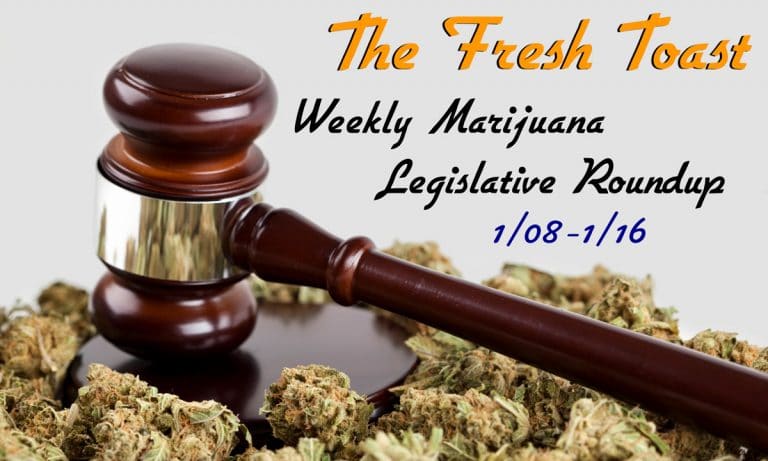
The Fresh Toast Marijuana Legislative Roundup: Jan. 16

Last week in marijuana legislative news, Vermont took another big step toward legalization, a bill to regulate cannabis was introduced in New Jersey and, in California, laws were eased to assist those with previous marijuana convictions on their records. Read all about these developments and more in The Fresh Toast’s Marijuana Legislative Roundup for Jan. 16.

National:  

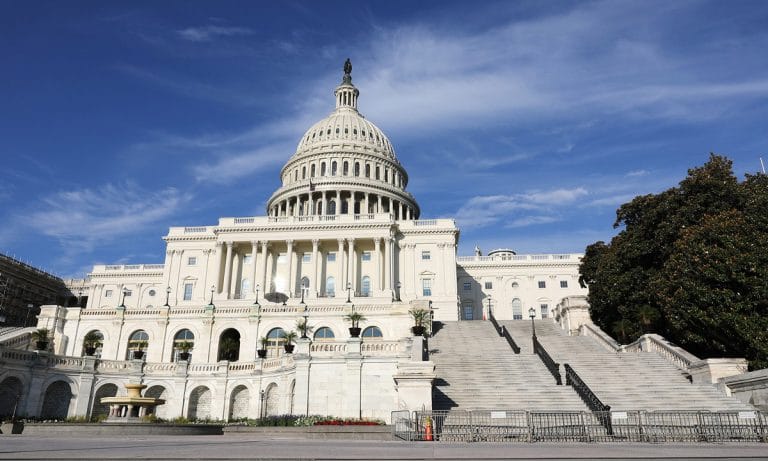
On Friday, 69 members of Congress released a letter urging lawmakers to include a measure known as the McClintock-Polis amendment in any future appropriations legislation to protect state-legal cannabis from federal law enforcement action. The amendment states, “None of the funds made available by this act to the Department of Justice may be used with respect to any of the [50 states], to prevent them from implementing their own laws that authorize the use, distribution, possession, or cultivation of marijuana on non-Federal lands within their respective jurisdictions.”

The proposed amendment is similar to the Rohrabacher-Blumenauer Amendment, which protects state-legal medical marijuana from federal law enforcement and has been included in every spending bill enacted since 2014. The letter comes in response to a memo circulated by Attorney General Jeff Sessions the prior week, in which he rescinded the hands-off federal policy toward state legalization efforts outlined in the 2013 Cole Memorandum. 

Vermont: 

On Wednesday, the Vermont Senate passed a bill to legalize recreational marijuana a week after the same bill passed the state House, sending the legislation to the governor’s desk for signature. If enacted, the bill would allow adults 21 and older to possess up to one ounce of cannabis and grow up to six plants at home, with a limit of two mature plants and four immature seedlings per household. Governor Phil Scott announced on Thursday that he will sign the legislation, which will make Vermont the first state to legalize recreational cannabis through the legislature, rather than a ballot referendum. However, the bill does not provide for marijuana business licensing or retail sales. 

New Jersey: 

On Tuesday, lawmakers in the New Jersey Senate introduced legislation to legalize recreational marijuana in the state. The bill would allow adults 21 and older to possess up to an ounce of marijuana, 16 ounces of edibles, or 7 grams of concentrate. Home cultivation would be prohibited, and a tax of between 7 percent and 25 percent would be levied on marijuana sales. The bill is identical to one introduced last year, which was fiercely opposed by Governor Chris Christie. Incoming governor Phil Murphy has been an outspoken supporter of recreational marijuana, and has said that he hopes to sign legalization into law in his first year.  

California:  

On Tuesday, California lawmakers introduced legislation making it easier for those with prior marijuana convictions to have their records expunged or reduced. The bill would require county courts to automatically expunge convictions for offenses made legal by the recreational cannabis law passed by voters in 2016. The ballot measure retroactively legalized some marijuana offenses and reduced others from felonies to misdemeanors. However, those seeking to expunge their records are currently required to petition the courts.  

4 Marijuana Products That Will Light Up 2018

It’s a brand new year and marijuana’s future continues to look rosy despite the deeds of Jeff Sessions. Cannabis is newly legal in California, a state that is now the biggest cannabis marketplace in the world. To celebrate we thought we would introduce you to some products that we love and that will make 2018 much sweeter in Cali and beyond.

A Special Gift For Someone You REALLY Like: CANNDESCENT

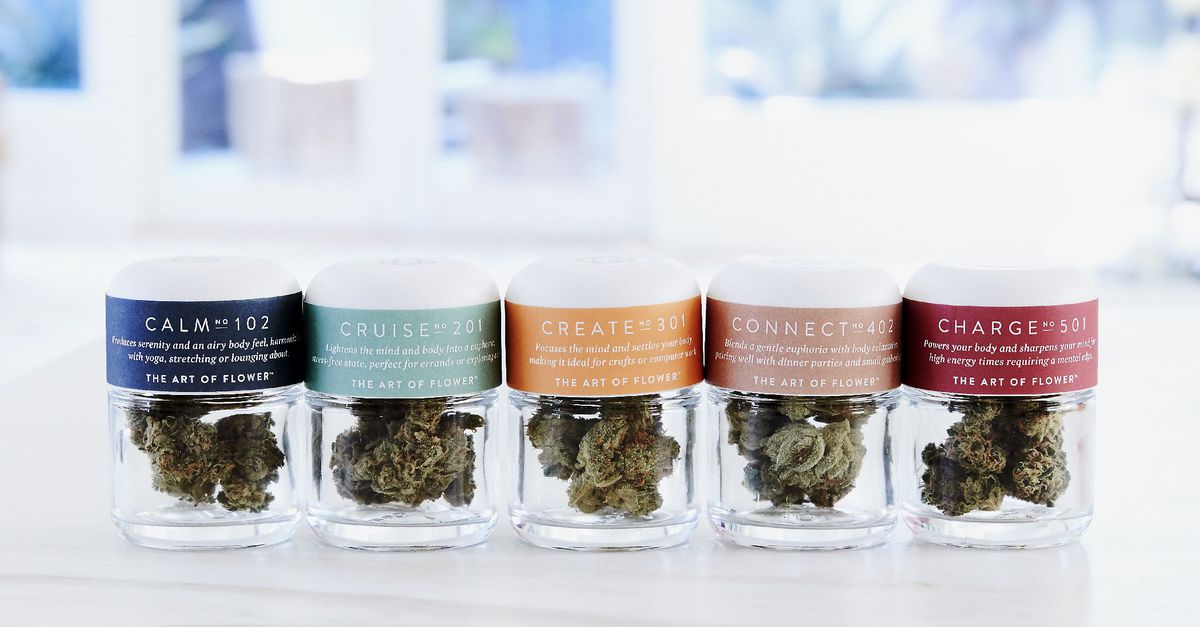
Canndescent is the perfect gift for the cannabis newbie. The first-ever, limited-edition gift sets come two ways: the small box holds two and types of marijuana; the large box holds five. Instead of naming the strains, they instead label the flower by effect it will have on your mood: Calm, Cruise, Create, Connect and Charge.

Each box is individually numbered and pretty enough to display. The boxes include everything you need for a luxe smoke sesh: virgin cannabis flower, organic hempwick, rolling papers, crutches and matches. Two-pack box: $120; Five-pack box: $299

Every Day Use For Aches, Pains And More: Mary Jane’s Medicinals

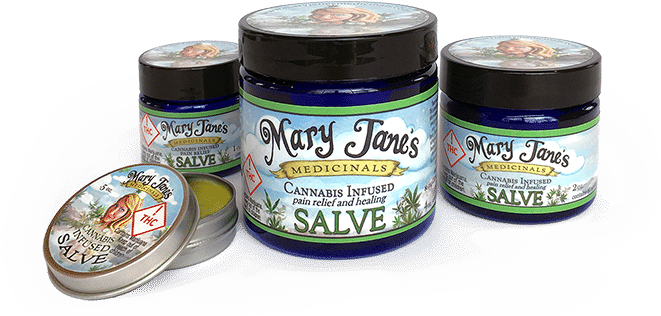
As friend of mine with bone-on-bone arthritis says, “This stuff works.” Mary Jane’s Medicinals produces some of the best-quality cannabis-infused topical products on the market and will help solve pain issues big and small. You can choose from a lip balm, massage oil, lotion, bath soak or salve. All have a natural scent that contains traces of cannabis aroma, but nothing stinky.

The topical application feels wonderful, and works well on pain while and improving skin health and appearance. The products are great to use before bed, but has no psychoactive effect so can be used during the daytime just as easily. $8-$45

Love This Gadget: AuxTools 

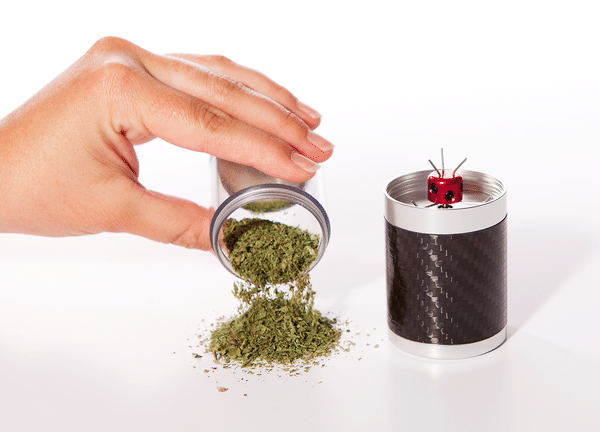
It’s going to be a lot easier to roll that perfect joint if you use this cool piece of tech right here first. The AuxTools E-shredder is super-cool looking, and is also small and discreet. The little gadget looks a little like a fidget spinner when going full tilt and takes only three seconds to shred the stickiest of bud so that it’s paper ready. Shred your herb for 10 or more seconds and you’re left with a fine powdery kief. $199

More Date Nights In 2018: The Collection by Jane West

Jane West has designed a collection of one-hitters that are sleek, cool, discrete and gorgeous. Each piece incorporates the Collection’s signature “soft square” silhouette, a striking, practical accent one won’t find in any other flower accessories.

All the pieces are beautiful, and you can choose the right one for you:

  • The Solo breathes new life into the discrete taster pipe with its kitchen-grade enamel coating to protect from wear and tear. The Solo combines a built-in custom cleaning rod and signature “soft square” taster created to provide a perfect-sized solo session puff. $18
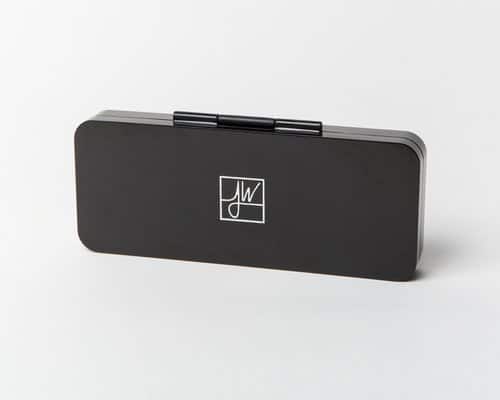
  • The Wand combines flower storage, a signature “soft square” Solo and a self-cleaning cap to allow users to load up and puff in one effortless motion, in a sleek jet case that mimics a glossy black tube of mascara. $38
  • The Compact holds a signature “soft square” Solo, a custom cleaning rod, dual removable flower compartments and any sized lighter in a glossy, streamlined jet case that boasts a mirror in the lid for post-puff touch-ups. $48
  • The Classic offers a polished take on the ubiquitous dugout, with its brushed stainless steel case swiveling open to reveal a signature “soft square” Solo in a spring-loaded chamber, dual dugout flower chambers and a custom cleaning rod. $58


When The VA Lies To Congress About Medical Marijuana, It Lies To Veterans

John Hudak is deputy director of the Center for Effective Public Management and a senior fellow in Governance Studies for the Brookings Institution. In this analysis, Hudak concludes that a VA Department unwilling even to conduct research into the possibility that marijuana could have medical value speaks loudly to veterans. It tells them that this administration will be tough on marijuana and that it has no interest in answering important medical questions—even those that could improve the lives and well-being of our wounded warriors. Here is his story

In October, the Democratic members of the House Veterans Affairs Committee wrote a letter asking VA Secretary David Shulkin why his department is not conducting research into medical marijuana. In the letter, Ranking Member Tim Walz (Minn.) and the other nine Democratic committee members note that in many states that have medical marijuana programs, cannabis is recommended for PTSD and/or chronic pain—conditions that afflict many of our wounded warriors. The members do not ask Mr. Shulkin to start dispensing medical marijuana from VA facilities. Instead, they ask the secretary why the department is not conducting rigorous research.

Here are copies of the committee letter and the response from Secretary Shulkin. That response is an unfortunate combination of false information, incomplete analysis, and incomprehensible logic. Rather than engaging in an honest, comprehensive discussion of the merits of the VA’s position, the secretary appears to wave off committee members’ concerns about an issue that affects the lives of millions of soldiers and veterans across the United States.

(Read the letters here.)

There are seven major problems with Secretary Shulkin’s response to the Democratic members of the House Veterans Affairs Committee. Those problems range from a mischaracterization of federal law to a faulty analysis of current medical research to a failure to put medical findings in context and more. The shortcomings in the secretary’s response should alarm Democrats and Republicans; House members and Senators; soldiers, veterans, and civilians alike.

What The Veterans Affairs Committee Wants

It is important to start by discussing what Ranking Member Walz and his colleagues request of the secretary. They do not say that they want VA to come out in support of medical marijuana or that they want VA to begin dispensing medical marijuana nationwide or in the states that have passed medical marijuana reforms. They are simply asking that VA’s research arm—the Office of Research and Development—conduct clinical research on the efficacy of marijuana as a therapy for veterans.

This is not a debate about whether states should legalize marijuana nor does it pit liberal reformers against conservative elements of the Trump administration. The request centers on an empirical question in science: can marijuana be used to treat conditions in soldiers? Americans want our veterans to have the best care possible—and they want to make sure the VA is doing all that it can to provide up-to-date, cutting edge, and effective medicines for patients. With hundreds of thousands of patients across the country reporting benefits from medical marijuana and with veterans self-medicating on a daily basis, VA owes it to veterans to conduct high quality, rigorous research into this substance.

No, Mr. Secretary, The VA Is Not Restricted From Conducting Medical Marijuana Research

In Secretary Shulkin’s response, he claims that “…Federal law restricts VA’s ability to conduct research involving medical marijuana…” That claim is simply false. Doctors and researchers at the VA or in VA hospitals could conduct research into the medical efficacy of marijuana while remaining completely compliant with federal laws, regulations, and the United States’ obligations under international agreements. Doctors and other researchers across the United States conduct research into the health effects, risks, and benefits of marijuana for medical purposes every day. Nothing under federal law treats a VA researcher differently than it does a doctor at Sloan Kettering or a researcher at the University of Michigan.

RELATED: Will Trump’s VA Chief Support Medical Marijuana For Veterans?

Yes, there is a protocol that must be followed in order to conduct such research. I have written extensively about how the bureaucracy surrounding the approval process for federally-approved medical marijuana research has a chilling effect on science, is inappropriately arduous, and puts the government between doctors and their patients who want answers. However, that arduous bureaucracy does not stop VA from conducting research.

f the secretary’s use of the word “restricts” is given the most generous interpretation, he may mean that the bureaucratic process is burdensome for VA. That would be accurate. However, it would be inappropriate for the VA secretary to claim that a challenging bureaucratic process is a reason to avoid research that may help our wounded warriors get well. What’s more, if that bureaucratic process is so onerous that it is preventing VA from conducting important research that should help veterans, it is incumbent upon the secretary to do something about it. Most of the red tape exists because of rules set by HHS and DEA with regard to registration, licensure, evaluation, and the supply of research-grade cannabis. Secretary Shulkin should not complain about bureaucracy, but instead work with leadership at HHS, DEA, and DOJ to create a workable process that puts veterans’ needs above bureaucratic inertia.

VA Analysis Of Existing Research Is Embarrassingly Incomplete

In his letter to Ranking Member Walz, Secretary Shulkin notes that his department “commissioned a report from its Evidence-Based Synthesis Program, which conducted a systematic review of research and literature on the ‘Benefits and Harms of Cannabis in Chronic Pain or PTSD.’” This program may have conducted a review; systematic it was not. In discussing the findings, Mr. Shulkin notes, “[t]he review found insufficient evidence to demonstrate benefits of cannabis use for patients with PTSD or chronic pain.” He also explains the review “identified 10 randomized, controlled trials of cannabis for chronic pain, and two randomized, controlled trials of cannabis for PTSD that are currently underway. For purposes of the review, the literature search included 12 systematic reviews and 48 primary studies.”

That review may seem significant, but one need look no further than another government entity for a review of the literature that is actually comprehensive and systematic. The National Academies of Sciences, Engineering, and Medicine published “The Health Effects of Cannabis and Cannabinoids: The Current State of Evidence and Recommendations for Research,” eight months before VA published their assessment. The National Academies report examined “10,759 unique articles, including 1,488 articles initially categorized as systematic reviews…After filtering…6,540 primary literature articles and 288 systematic reviews were left to be reviewed by the committee” (411-12). Granted the National Academies report focused on more conditions than simply chronic pain and PTSD; the disparity in numbers is still staggering.

RELATED: Research Deep Dive: Little-Known Health Effects Of Medical Marijuana

Moreover, the National Academies report notes in its conclusions that “There is conclusive or substantial evidence that cannabis or cannabinoids are effective for the treatment of chronic pain in adults” (14) and “there is limited evidence that cannabis or cannabinoids are effective for improving symptoms of posttraumatic stress disorder” (14). The latter statement on PTSD could square with the findings of the VA report. However, the National Academies’ findings with regard to the treatment of chronic pain precisely refute the VA claims, demonstrating the errors that can be made when a non-exhaustive review of important medical literature is passed off as comprehensive.

The Flawed Logic Surrounding Cannabis’ Side Effects

The VA’s limited review of cannabis’ side effects notes that epidemiological studies show “significantly increased odds of a suicide; an increased incidence of new-onset mania among populations without a diagnosis of bipolar disorder; and low-strength evidence of an association between cannabis use and development of psychotic symptoms.”

The National Academies report would suggest different findings such as “moderate evidence of a statistical association between cannabis use and increased incidence of suicidal ideation and suicide attempts with a higher incidence among heavy users” and “moderate evidence of a statistical association between cannabis use and increased mania and hypomania in individuals diagnosed with bipolar disorders” (20). However, it is critical to put this information in context—which Secretary Shulkin’s letter inappropriately fails to do. First, the findings to which the VA report points are statistical associations and not causal relationships. What does that mean? On the point of suicidal ideation or suicide attempts, we do not know if people attempt suicide because of the use of marijuana or if people who are suicidal are more likely to use marijuana in an effort to self-medicate or other possible causal relationships. Correlation does not equal causation. The secretary knows that, and as a science professional, he should have been far more forthcoming about that reality than he was in the letter.

Additionally, much of the research VA relies on is observational research. That is, it is research focused on observing individuals consuming marijuana on their own terms, at their own rate, and in the amounts that they choose. Such studies are not based on marijuana use in a controlled, clinical setting. Finally, statistical associations between the use of a substance should be studied thoroughly to assess causation. Many medicines have side effects including suicidal ideation or attempts, mania, as well as a host of other symptoms and behaviors. Finding out whether a substance causes those symptoms, how clinical dosing can minimize those symptoms, or understanding how specific subgroups (i.e., those diagnosed with bipolar disorder referenced above) tolerate a medicine are basic questions in medical and pharmaceutical research. If VA wants to commit itself to finding the most effective therapies for veterans it will assess the literature in a manner that is truly exhaustive—rather than a handful of studies—and support peer-reviewed, clinical research to find answers. We don’t want to give veterans medicines that will increase incidence of suicide. Nor do we want to take a medicine off the table because of pre-existing bias or incomplete information.

The Risk Of Impaired Driving Is No Excuse For Limiting Research

In discussing risks of harm, the secretary’s letter leads by noting “moderate-strength evidence from analysis of multi-national observational studies found that acute cannabis intoxication was associated with a moderate increase in motor vehicle collisions.” Secretary Shulkin is correct that individuals using marijuana should not drive a car. However, this argument is asserted as a reason not to conduct research into marijuana’s medical efficacy. That argument is nonsensical and undermines the medicine practiced in VA hospitals across the U.S. every day.

RELATED: What The New VA Marijuana Policy Actually Means For Veterans

There are numerous pharmaceuticals that can cause impairment or other symptoms that make the operation of a motor vehicle risky. In fact, many drugs prescribed by a doctor and/or dispensed at a VA hospital come with warnings such as “Do not drive or operate heavy machinery while taking this medication.” If the risk of impaired driving were the threshold for banning a substance, pharmacies would lose significant percentages of their supply. It is further unacceptable to suggest that such a risk serves as a basis for refusing to conduct clinical research on a substance.

VA has an opportunity to do cutting edge research

In his letter, Secretary Shulkin notes that “most of the studies were not specific to populations with PTSD or chronic pain” when examining risk of harm. It is true that many cannabis studies do not focus on populations with those conditions or the intersection of those conditions, or on veteran populations more generally. However, that reality is not a legitimate reason for refusing to conduct research into marijuana’s medical efficacy. In fact, VA has a significant opportunity to study the therapeutic benefits and risks not afforded to other research institutions. The secretary’s letter admits what everyone knows—veteran populations have significantly higher rates of PTSD and/or chronic pain than the general population. As a result, VA has an ideal population to study the effects of cannabis among those suffering from such conditions.

Further, some veterans are hesitant to enroll in cannabis-related clinical studies (of course conducted outside of VA hospitals) for fear that they may test positive for cannabinoids in a VA doctor visit or unrelated hospitalization, resulting in a disciplinary action or change in course of treatment from the facility. Even as VA has ended its prohibition on patients talking to doctors about their medical marijuana use, those fears still remain within veteran populations, and VA must be sensitive to the fact that cultural changes often lag policy changes in such situations. However, a VA-conducted trial will provide a safe space for veterans to enter such trials, knowing that the same institution will recognize the legitimacy of the clinical trial.

Veterans and non-veterans who suffer from PTSD and/or chronic pain can see benefits from VA-conducted clinical trials into the medical efficacy of cannabis. If research demonstrates medical efficacy, it can help change policy and improve lives. If research shows no relationship or a negative relationship between marijuana and specific disorders, the public will be better informed about the risks.

The Spillover Effects Of Jeff Sessions’ Marijuana Policy

Of late, VA has patted itself on the back for scrapping the so-called gag rule. The gag rule as mentioned above forbade doctors and patients from discussing medical marijuana use, even in states that have reformed their medical marijuana laws. While the rollback of that guidance has its skeptics in veteran populations, it was an important step toward ensuring that patients are being honest and forthcoming with doctors, providing physicians with a complete disclosure of their medical history.

However, Attorney General Sessions’ decision earlier this month to rescind the Cole Memo that protected state-legal marijuana businesses and consumers from federal prosecution reignited a concern among marijuana users about the administration’s position. While the repeal of the Cole Memo does not affect medical marijuana, Mr. Sessions has stated that he wants Congress to repeal the provision of law that restricts his ability to spend funds to prosecute medical marijuana companies and users. If marijuana users are skeptical of the administration, its position on marijuana policy, and its likelihood to change policy on a whim in ways that punish marijuana and medical marijuana advocates, problems can abound. Such concerns can and will have a chilling effect within veteran populations. That chilling effect will mean that more veterans will self-medicate, without physician consultation, and such behaviors can lead to some of the same risks the secretary lays out in his letter.

Combining concerns about the Attorney General, language from the White House supporting Mr. Sessions, and a VA Department unwilling even to conduct research into the possibility that marijuana could have medical value speaks loudly to veterans. It tells them that this administration will be tough on marijuana and that it has no interest in answering important medical questions—even those that could improve the lives and well-being of our wounded warriors. In fact, that message is amplified by a VA secretary who is not even willing to provide an honest assessment of the state of scientific research or the realities of American public policy to a Congressional committee with oversight.

Moving Forward

Secretary Shulkin has an obligation to do better. He should recommit that his own department examine the questions posed by the House Veterans Affairs Committee more carefully and rigorously than it has previously as outlined in his letter. He should have a frank conversation in-house that distinguishes between conducting research on the medical efficacy of marijuana and endorsing the legalization of marijuana. Conducting basic medical research is important for the advancement of therapies for our veterans and the VA has unique opportunities to advance such efforts. Instead, old-fashioned biases, incomplete evaluations of existing literature, and a mischaracterization of policy has, to this point, won the day at VA.

The irony in the secretary’s response to Mr. Walz’s query is that the department’s position and behaviors do not advance health care for our veterans. Instead, it adds further risk that frustrated veterans with a variety of conditions will self-medicate, procure medicine through illegal means and/or fail to be forthcoming with their VA doctors. Veterans deserve better than an administration that produces letters like the one sent to the Congress on December 21.

Here’s The Sad Reason Marijuana Farms Are Killing Spotted Owls

0

A new study has revealed a terrible side effect of marijuana farming in California, specifically the northwestern counties.

The endangered Northern Spotted Owl (NSO) is among several species that are being killed by ingesting rat poison second hand from their primary sources of food: rats and mice.

What’s worse, according to Live Science, is that the lethal chemical anticoagulant rodenticide (AR) is coming from unpermitted private marijuana grow sites in Humboldt, Mendocino and Del Norte counties.

Scientists from the University of California, Davis, and the California Academy of Sciences studied the carcasses of 10 northern spotted owls and found poison in seven of them.

According to Live Science, it’s not just the spotted owl that is ingesting poison. Barred Owls (BO) are also being threatened.

Of the 84 dead barred owls the researchers collected, 34 — about 40 percent — tested positive for the substance, which impedes the body’s ability to clot blood and can result in unchecked internal bleeding.

That’s compared to the 70 percent of northern spotted owls that tested positive for the substance.

According to the study:

Unfortunately, illegal clandestine marijuana cultivation complexes have been occurring on private, tribal, and public lands, are increasing throughout California and the Pacific Northwest, and often fall within NSO-designated ESA (Endangered Species Act) critical habitat and occupied NSO and BO territories.

…recently, in their final status review report to the California Fish and Game Commission regarding the conservation status and threats to NSO, the California Department of Fish and Wildlife stated that toxicants such as ARs from marijuana cultivation sites likely pose “a serious and widespread threat to northern Spotted Owls.”

Lead study author Mourad Gabriel of UC Davis tells Live Science, “If no one is investigating the level at which private marijuana cultivators are placing chemicals out there, the fragmented forest landscapes created by these sites can serve as source points of exposure for owls and other wildlife.”

Jack Dumbacher, curator of ornithology and mammalogy at the California Academy of Sciences, says the owl necropsies have allowed him and his team to understand the health of the entire regional forest system. “We’re using our collections to build a concrete scientific case for increased forest monitoring and species protection before it’s too late to intervene.”

FloridaMan Caught With Picnic In His Pants, Ribs Included

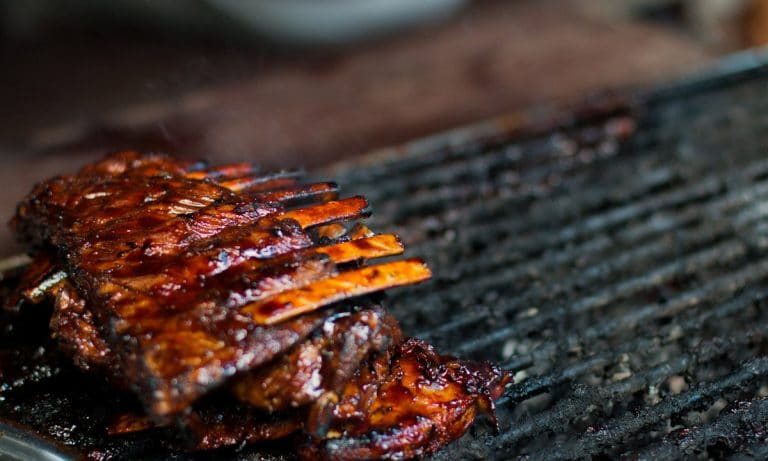
The hashtag #Floridaman has been the bane of the sunshine state, but just fits perfectly. Now a Floridaman caught with picnic in his pants, ribs included, is the latest to make headlines. That isn’t a “Johnson” joke. The man actually had a whole rack of ribs stuffed inside his waist band. According to one report, “it’s unclear whether the ribs were of the beef or pork variety.”

Maeli Aguilar-Alvarez was spotted by a sheriff’s sergeant leaving the market, where upon the ribs were discovered inside his trousers. “A further search yielded two packs of hamburger buns, nine pieces of fried chicken and some mashed potatoes, all of which investigators say Aguilar-Alvarez procured using the five-finger discount,” reads a story from TCPalm.

Related: Florida Man Blames Edible Marijuana For Assault On Flight Attendant

However, he didn’t have any condiments or drinks to go along with the picnic in his pants.

Reports indicate that Aguilar-Alvarez smelled of booze and was intoxicated upon detainment. The $32.49 heist resulted in arrest and retail theft charge for the Florida Man.

FloridaMan is an Internet meme first popularized in 2013, referring to an alleged prevalence of people performing irrational or maniacal actions in the U.S. state of Florida. Internet users typically submit links to news stories and articles about unusual or strange crimes and other events occurring in Florida, with stories’ headlines often beginning with “Florida Man…” followed by the main event of the story. Because of the way news headlines are typically written, they can be creatively interpreted as implying that the subjects of the articles are all a single individual known as “Florida Man”. There have been criticisms and concerns surrounding the “Florida Man” meme, with some suggesting that the trend perpetuates harmful stereotypes and may have racist undertones, especially when disproportionately highlighting stories involving people of color or those from marginalized communities.

Stoned Gamer Is The Best Thing That’s Happened To Gaming So Far This Year

0

Video games and marijuana are a wonderful pairing, providing fun and escapism like nothing else in the world. You can watch a movie, or listen to music while high, but it’s never as involving or as fun. Video games require a certain amount of skill, your input, and your choices, so adding marijuana into the mix results in gaming sessions that are hyper-focused and amazing.

Stoned Gamer was the first company to exploit both of these fields, cannabis and video games, which have only gotten bigger and acquired more followers as the years have gone by. Video games have become one of the biggest markets in the entertainment industry, evolving and increasing in users while also creating compelling stories and narratives that deserve our attention. They’re awesome, and the world is finally realizing that.

Stoned Gamer is a company that organizes tournaments where all sorts of gamers get together and play tons of games, all while smoking marijuana. Their tournament prizes have included trips to Thailand, a pound of weed, a contract with eSports managing and marketing company First Round Management, and much more. Suffice it to say, these competitions are legit.

Their first event ever was held in California in 2016, before marijuana was even legal. The cops barged in and took the tournament’s alcohol, and for some reason they didn’t care about the bongs and the clear use of marijuana. Zeus Tipado, founder of Stoned Gamer, explained that their players were so in the zone that not even the police could break their focus. LA Weekly reports that now that marijuana is completely legal, Stoned Gamer will open a 30,000 foot arena located in California on 4/20/18. Are we surprised?

Via LA Weekly:

“Stoned gaming is going to be like any other spectator sport. We’re looking at NFL, UFC … that’s kind of what we’re competing with.”

For 30 dollars a month, you’ll gain access to this subscription-based facility that’ll be open daily. You’ll have a swipe card and an app that’ll allow you to go inside the building and tackle challenges, collect points and rewards, and gain access to all sorts of games. While the company is still figuring out how they’ll sell and distribute marijuana, Tipado claims that the worst-case scenario would mean that members would have to bring in their own weed. Still sounds like a great deal.

You can find out more info about their app and 2018 plans, here.

Gossip: Queen Elizabeth II Having A Hard Time Handling Crown Jewels; Why Did Kim And Kanye Install Million-Dollar Panic Room?

The Queen has opened up about the literal weight of responsibility that comes with being the head of the monarchy — and wearing the crown.

In a rare conversation with Alastair Bruce, an expert on the crown jewels, Queen Elizabeth II reveals she is afraid of looking down while she’s wearing one of the crowns because it could break her neck.
“You have to keep your head very still,” Bruce reportedly says as the pair examine the Imperial State Crown and watch footage of the Queen’s Coronation in 1953.

“Yes,” the Queen agreed. “And you can’t look down to read the speech you have to take the speech up.
“Because if you did your neck would break, it would fall off.

“So there are some disadvantages to crowns, but otherwise they’re quite important things.”

According to UK’s The Telegraph, the footage is shown as part of an hour-long BBC One documentary “The Coronation” which airs in the UK this weekend and features behind-the-scenes footage of the Queen, capturing her sense of humor and life in the palace.

The Queen wore the Imperial State Crown following her coronation and often wears it when she reads the Queen’s Speech during the State Opening of Parliament.

One of the scenes shows the Queen describing the crown, which weighs almost 22 pounds as “very unwieldy,” to which Bruce adds: “It’s difficult to always remember that diamonds are stones and so they’re very heavy.”

After succeeding the throne after the death of her father George VI, the Queen explains how she had the crown adjusted to make it more feminine and smaller.

“Fortunately my father and I have about the same sort of shaped head. But once you put it on it stays. I mean it just remains on,” she said.

Bruce told reporters at a press screening of the documentary that the Queen seemed very at ease with the Crown Jewels, even grabbing a table the crown was resting and dragging it closer.

“She said, ‘Well, you know, it’s my crown,’” he said.

“She was very practical with the crown jewels in a way I wasn’t quite expecting.”

The Queen also reveals the Gold State Coach is “not very comfortable” and features footage of her speaking about her mischievous children and a dress so heavy she got stuck on the carpet.

Why Did Kim And Kanye Install Million-Dollar Panic Room?

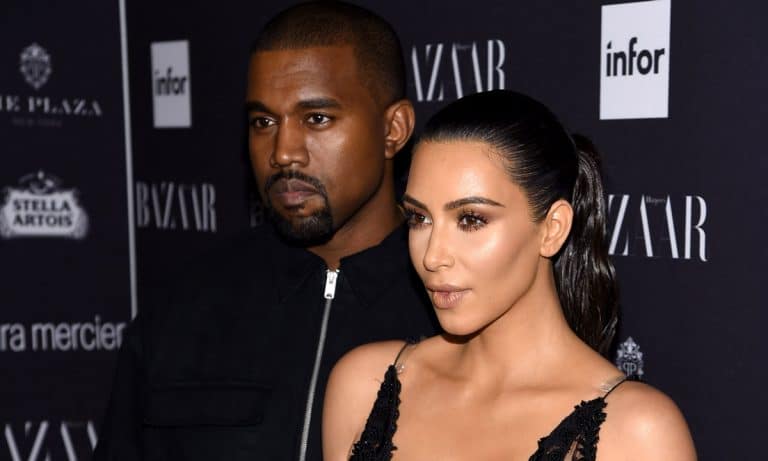
Kim and Kanye West are not messing around when it comes to building the perfect home for them and their expending family, which is why the couple have installed a state of the art panic room.

“Keeping the kids safe is the couples number one priority. After the Paris robbery, everything changed. They have round-the-clock security but that is not enough anymore. If something bad happens they cannot rely on others for protection and want to be in charge of their own destiny, which is why they installed the panic room,” sources tell Straight Shuter. “It is one of the most advanced in the world. Once they get into the room they will be safe and can call help. The structure is so advanced that even military personal have not yet used this technology.”

Love the fresh dirt we bring over daily from Naughty Gossip? Let us know in the comments!

Jeff Sessions Rescindment Of The Cole Memo Is A Disaster For California Banking

Right as California became a fully-legal cannabis state, right as support for marijuana reached an all-time high and right as banks should be more confident, Jeff Sessions rescinded the Obama-era Cole memo.

The Cole memo was a protection, even if a slightly shaky one, for compliant cannabis companies and the banks that chose to work with them. Now, with the Cole memo no longer there, many banks that were on the brink of opening their doors to cannabis companies have shied away.

Without the Cole memo in place and with marijuana still clocking in federally as a dangerous Schedule I drug, the Financial Crimes Enforcement Network, or FinCEN, can no longer advise banks to do business with the pot industry, putting the flourishing market and those who run it at risk.

California already operated on a mostly cash basis. Their medical marijuana program racked in approximately $2.7 billion dollars a year already, and is expected to nearly double with the legal market. Having an all-cash business is an enormous risk and as reported by CNBC, insiders are saying that if you weren’t already in the industry, now is probably not the time to join. A discouraging stance, especially with the newly taxed and regulated landscape.

All-cash businesses face many problems, especially the most obvious: There’s no safe place to store your earnings. Transporting massive amounts of cash from your business to your home, back to your business for payroll, to the tax collectors is dangerous. Popular opinion of the plant has never been higher and with 30 states plus the District of Columbia having passed some sort of legalization, the majority of Americans live in a state where pot has already been normalized.

As Sessions is unlikely to come out with a new memo supporting cannabis and FinCEN doesn’t know where financial institutions can stand without running their own risks, the only real solution to the problem is for cannabis to be descheduled from its federal status as a Schedule I drug.

Why Democrats Are Squeamish About Federal Marijuana Reform

Ever since US Attorney General Jeff Sessions launched a virtual crackdown on legal marijuana, there has been a lot of discussion surrounding the concept of federal legalization. Lawmakers are pushing a variety of proposals this year in hopes of pulling pot out of the pits of prohibition. Most blame the Republications for a lack in attention to this progressive issue. But it turns out Democrats are as much to blame for not taking legal weed nationwide.

Although California and Nevada have joined the ranks of those states that allow marijuana to be sold in a manner similar to beer, Democratic Senators on Capitol Hill are still squeamish about bringing this reform into the realm of federal policy. A recent report from Roll Call suggests that even those lawmakers representing states with pro-marijuana laws on the books are not willing to fight for this reform on a national scale.

For most of them, it is all about protecting states rights. As long as Sessions does not bring down the hammer on their respective jurisdictions by sending in flood of DEA agents in the name of his federal crackdown, everything will be copasetic. But a lot of these folks have no interest in being a voice for legal marijuana in Washington D.C. These lawmakers have made it clear that they will snap back in the event that the Trump administration gets serious about its war on legal weed, but that’s about as far as it goes.

Sadly, this “as long as everything’s peaceful in my backyard” attitude goes against the grain of the American people. In nearly all of the national polls over the past couple of years, more than 60 percent of the public has agreed that marijuana should be taxed and regulated, the same as alcohol and tobacco. This is a major advancement considering that only about a third of the population supported this reform in 2001.

Marijuana advocates say that Democrats are resistant to changing pot policies at the federal level because many of them are worried about been viewed as “weak on drugs,” and “soft on crime.”

Advocates argue that since the attorney general has taken such a vocal stance against America’s progressive pot laws is exactly why lawmakers should trying to change the law for all.

Some of them are.

Senator Corey Booker of New Jersey has been one of the strongest voices on Capitol Hill for marijuana reform. Last year, he introduced a piece of legislation aimed at ending marijuana prohibition across the nation. He has continued to use his platform to further the cause.

Other lawmakers, including Senator Sherrod Brown of Ohio, are still on the broken record that is “medical marijuana only.”

But there is still not enough like-minded support in the halls of Congress to bring this issue fully into the mainstream. Not this year.

Who Are The Doers And Who Are The Talkers For Cannabis Legislation?

When it comes to ending federal prohibition, some public officials are doers, and other are talkers. In Oregon, we are lucky enough to have Congressman Earl Blumenauer, who is a relentless advocate for ending prohibition. Blumenauer helped found the Congressional Cannabis Caucus, and appended his name to the Rohrabacher-Blumenauer Amendment (RBA), which prohibits the U.S. Department of Justice (DOJ) from spending money to interfere with state medical cannabis laws. We are also fortunate to have the likes of Ron Wyden and Jeff Merkley in the Senate, who introduced a marijuana banking bill as far back as 2015, and Governor Kate Brown, who has always been stellar on the topic of cannabis.

Those four individuals are Democrats, of course, but there are plenty of vocal Republican advocates for ending prohibition as well. Dana Rohrabacher (of RBA) gets an A+ rating from NORML, and Corey Gardner, the Republican Senator from Colorado, was one of the most strident critics of Jeff Sessions’ recent move to rescind the Cole Memo, pledging to block DOJ nominees until Sessions relents. All of this makes sense, given the status of the plant in these individuals’ respective states, but also the fact that a majority of Republican voters now support marijuana legalization nationwide.

At this point, you would think that every politician in a cannabis-legal state – especially adult-use states – would be pulling on the rope of ending prohibition. Some of our elected and appointed officials, though, are mostly just talk. These individuals give lip service to the notion that the federal government should stand down on cannabis, but they cannot be bothered to introduce legislation, let alone sponsor a bill or make any other attempt to re- or deschedule cannabis with respect to the federal Controlled Substances Act (CSA). President Obama’s Attorney General, Eric Holder, was sometimes criticized for this.

As DOJ head, Holder had the power to press Health and Human Services for an evaluation of cannabis, sufficient to remove it from the CSA. We explained how that works here. Whether Mr. Holder would have succeeded is an open question, but the fact that Holder is now one of the most vocal critics of Sessions and his cannabis policy, only lends credence to the argument that he should have done more when he had the chance.

Today, at this important time, there are other public officials who should be doing more to end the War on Drugs, but they too are mostly just talk. Case in point: California Democratic Senator Kamala Harris. There are several reasons why Ms. Harris has been catching significant flak for her half measures on cannabis, as compared to other officials: 1) she hails from California, the first state with a medical cannabis program and the world’s largest cannabis economy; 2) she comes from the executive side, having served as California Attorney General; 3) she is a celebrity national politician, who is often floated as a 2020 presidential candidate; and 4) she is constantly talking about the failed War on Drugs. In fact, she talks about it pretty much every single day.

But it’s all talk. As California Attorney General, Ms. Harris did little to advance her state’s interest pertaining to cannabis. In 2014, when she was asked for her opinion on legalizing adult-use cannabis, her response was dismissive laughter. As a state Senator, she has failed to sponsor or even co-sign any bill to re- or deschedule marijuana (and there are some good ones). Aside from lots of talking, Harris’ one big move has been to put together a petition to decriminalize marijuana nationwide (but not to revise the CSA). My eight-year-old niece could do that.

Industry advocates, cannabis users, and voters in general should all pay attention to which of their representatives are talking the talk, and which are walking the walk when it comes to ending prohibition and protecting state industries. Given her career arc and superstar potential, Kamala Harris has famously been referred to as “Eric Holder in a skirt.” When it comes to cannabis, unfortunately, that comparison looks like a pretty good fit.

Vince Sliwoski is an attorney at Harris Bricken, a law firm with lawyers in Seattle, Portland, Los Angeles, San Francisco, Barcelona, and Beijing. This story was originally published on the Canna Law Blog.

Don't Miss Your Weekly Dose of The Fresh Toast.

Stay informed with exclusive news briefs delivered directly to your inbox every Friday.

We respect your privacy. Unsubscribe anytime.