Sunday, May 10, 2026
Home Blog Page 1044

How A Texas Medical School Student Turned Into A Cannabis Advocate

Kyle Dijon Hill is a medical school student from Texas. She is currently attending the St. Martinus University School of Medicine in the Caribbean and wants to help patients fight opioid addiction with the help of cannabis. She knows how painful life on opiate medication is; she has been there.

After college Hill was on track to go to medical school.  An ordinary day turned nearly tragic when she was in a severe car crash that resulted in her living in a hospital bed for over four months. Bones had been broken in her neck, her femur was broken, as were the majority of her ribs and her head was secured with a halo brace that further limited her mobility. Hill had multiple surgeries and was in tremendous pain. Doctors had her on a regular regimen of Dilaudid, a professional grade opiate for months.

Hill went through difficult physical therapy, learning how to walk and move again through the pain. “Coming out of the hospital I was on Fentanyl patches, Oxycontin, Hydrocodone … the works. This is before I had any medical training. I just trusted my physician and took whatever he told me to take.” It resulted in her liver enzymes being out of whack, caused her emotional distress and severely diminished her quality of life. Said Hill: 

“I went through all of the terrible withdrawals … the fevers, the convulsions. It’s just bad. And I had no idea. When you are in the hospital and your care is as intensive as that they don’t really have the time to give you the rundown about the medications they are putting you on.”

Hill felt betrayed by the medical community she was about to train for years to join. She decided she needed to do something different. She took a radical departure to teach English and Science to students in South Korea. Among her students, was a doctor she tutored. The doctor specialized in naturopathic medicine which awakened Hill to the power of natural medicine. That is when she began reading up on available research about marijuana as a medicine. That is where her new passion began.

Hill came back to the states and connected with the Fight Opioid Addiction and Overdose with Medical Cannabis Project at La Clinica in Gardner, CO. While it is still in the development stage, the program plans to help patients exit opiate addiction with cannabis. Additionally, the program already has clout behind it. It will be supervised by Dr. Uma Dhanabalan, a Fellow of the American Academy of Family Physicians and a Diplomat Certified in Cannabis Medicine. 

In the meantime, Hill has about three more years of clinical experience between her and her medical degree. The difference is that she entered med school reinspired and determined to make cannabis education part of her professional training. With a fresh vision and a personal story that helps her connect with patients, she will no doubt be an educator on a mission. As she says:

“When people start understanding the science behind it, how the endocannabinoid system works in your body and how cannabis influences that system then they can start to understand why cannabis works for many ailments.” 

This University’s Attempt To Ban Pro-Marijuana Shirts Backfired Spectacularly

Back in 2012, the Des Moines Register wrote a fairly innocuous story regarding efforts to legalize marijuana. It included a spotlight on Iowa State University’s student chapter of NORML, the National Organization for the Reform of Marijuana Laws.

The reporter had quoted a student representative and featured a t-shirt made by the group that read “Freedom is NORML at ISU” with a small marijuana symbol attached. The school’s mascot was also depicted on the shirt. Because NORML ISU is a registered student organization, they had the legal right to include school iconography. In fact, the school also had approved the group’s shirt design.

But when the article was featured in the newspaper, former ISU President Steven Leath saw it as a potential public relations problem for the school. School administrators then prohibited the group from printing more of the shirt and blocked another shirt design that had marijuana leaves in it. Then they rewrote trademark guidelines so that any shirts that featured “drugs and drug paraphernalia that are illegal or unhealthful” could not use the school logos.

NORML’s ISU chapter and the university then engaged in a four-year-long battle over fair trademark policy, with NORML coming out on top. The U.S District Court for the Southern District of Iowa ruled the school’s action unconstitutional and permanently denied the school from discriminating against NORML in the future.

The school appealed, and another year-long legal battle ensued. But this week a settlement was reached between the parties, which will cost Iowa taxpayers hundreds of thousands of dollars. The State Appeal Board awarded two leaders of the university’s NORML chapter $150,000 in damages. In addition, the board voted to pay $193,000 to two law firms that represented the group in their defense against the university’s unsuccessful appeals. A judge will also decide further legal restitution owed to the lawyers for their trial work.

These payouts will come out of the state budget.

“It is an unambiguous win for our clients and for the First Amendment and for an understanding that violating people’s rights isn’t free,” the plaintiffs’ lead attorney, Robert Corn-Revere, told the Associated Press. “One reason we urge universities to settle early is to avoid these kinds of expenses.”

The injunction that bans Iowa State from acting in a discriminatory manner with its trademark policy and requires the university to permit NORML to create apparel that features marijuana will remain in effect.

Why Does Kate Middleton Get To Wear A Tiara But Not Meghan Markle?

0

Wearing a tiara has to be right up there on the list of perks of being a Royal. But those expensive pieces of headgear every little girl dreams of wearing someday actually comes with a set of rules.

The Queen’s jewel-studded tiaras are only on loan to married women, according to acting Royal Correspondent Tracy Schaverien, who tells Hello! Magazine:

 Back in the day, a tiara was a status symbol for aristocratic ladies and a sign that they were married and unavailable to suitors. The first time Kate was seen in a tiara was at her wedding in 2011 – although she has worn several since – and it will be the same for Meghan. There are various possibilities about which one she might wear and I wouldn’t be surprised if there is a connection to Princess Diana.
She says, “Once she’s married and officially a member of the royal family we’re likely to see Meghan wearing tiaras at events such as state banquets, as the other royal ladies do.”

That’s correct. All of those fantastic bejeweled tiaras are on loan from the Queen’s private collection.

The tiara Kate Middleton wore for her wedding to Prince William was, according to Schaverien, a loner from the Cartier ‘Halo’ Tiara that originally belonged to the Queen Mother.  It has also donned the crowns of Princess Margaret and Princess Anne.

https://giphy.com/gifs/royal-royals-tiara-3z7gAfqHObVYI

And if you’re thinking it’s now Meghan Markle’s turn to don the tiara, that’s a long-shot, according Ella Kay, editor of The Court Jeweller. She tells Hello!: “I have a feeling that if she wears a tiara, it may be a new piece created for her rather than a royal loan. That would follow the examples set by other brides of younger royal sons, such as Sophie Rhys-Jones and Sarah Ferguson.”

Kay says she imagines Meghan “borrowing numerous pieces from the royal vault during her marriage,” and thinks she’ll prefer to wear something custom tiara.

If we do see Meghan wear an existing royal tiara for her wedding, I’d like to see her pull something unusual out of the vaults, like the Queen Mother’s Art Deco Bandeau from Cartier, which consists of a trio of gem-set bracelets on a frame. That piece would fit nicely with her modern, unfussy style.

Markle will marry Prince Harry May 19.

Mayors Of Seattle And Denver Lead The Fight Against Jeff Sessions

While many leaders at the state and federal levels remain on the sidelines in the battle against the Jeff Sessions over cannabis regulation, the mayors of major cities are leading the way.

Seattle Mayor Jenny Durkan and Denver Mayor Michael Hancock — two big cities with the most mature legal marijuana industries — have joined forces with other local leaders to push back against Attorney General Jeff Sessions’ announcement for tougher enforcement of federal cannabis laws.

Last week, Sessions rescinded Obama-era guidelines referred to as the Cole and Ogden memos, which essentially signaled to states that the federal government would not interfere with their legal marijuana laws.

“Reversing course now is a misguided legal overreach and an attack on cities where legal, safe, and high(ly) regulated recreational sale and use occurs,” the mayors wrote in a Jan. 1o letter to Sessions.

Below is the full letter:

Dear Attorney General Sessions:

We write to express our deep concern with your decision to rescind the “Cole Memo.” This guidance clarified federal marijuana enforcement policy in states in light of legalization which, as you know, is now legal for some purposes in 28 states and the District of Columbia. 

When the Department of Justice (DOJ) clarified its policy on legal marijuana, it took a step forward in properly deprioritizing criminal enforcement of legal marijuana, and ensured that states had clear guidance on how to implement medical marijuana to help patients and end the black market. This allowed the federal authority, with state and municipal partners, to focus efforts on protecting children and targeting organized crime, and ending cartel-related activity. Reversing course now is a misguided legal overreach and an attack on cities where legal, safe, and highly regulated recreational sale and use occurs, and on the majority of states where the voters have made their voices heard loud and clear on this issue. 

With overdose deaths, primarily caused by opioids, at an all-time high throughout this country, the federal government should be a better partner to help combat this epidemic.  President Trump and DOJ should not waste our law enforcement resources and taxpayer money on prosecuting legal activity and instead prioritize their efforts on ending the scourge of the opioid crisis.

We will do everything we can within the rule of law to keep our residents safe, end the opioid crisis, and ensure our businesses, residents, and visitors are protected from this overreach.

The letter was signed by the following mayors:

  • Jenny A. Durkan, Seattle, WA
  • Michael B. Hancock, Denver, CO
  • Bill de Blasio, New York, NY
  • Jim Kenney, Philadelphia, PA
  • Robert Garcia, Long Beach, CA
  • Ted Wheeler, Portland, OR
  • Paul Soglin, Madison, WI
  •  Jonathan Rothschild, Tucson, AZ
  •  Karen Freeman-Wilson, Gary, IN
  •  Pauline Cutter, San Leandro, CA

Gossip: Prince Harry Planning A ‘Stag Do’ In Elite Ski Resort Town; Selena Gomez’s Mom Advised Her Against Working With Woody Allen

Like many busy grooms-to-be, Prince Harry is juggling a full-time job with wedding preparations ahead of the big day. But it appears the royal, 33, has still found time to plan his stag do – and he is heading off to the slopes. Harry is believed to be preparing to hold his stag party in the Swiss ski resort of Verbier, after royal protection officers were spotted in the upmarket bar La Vache.

According to the Daily Star, Prince Andrew has offered his £13 million Chalet Helora to Harry and his friends. It is also thought that Harry and Meghan, 36, will throw a second more civilized ‘stag-hen’ party together at a polo match.

A source told the Daily Star that Harry’s royal protection officers had been spotted in Verbier.

‘I have just seen Harry’s advance close-protection team come into La Vache for lunch. They are clearly on a recce,’ the source said. ‘Quite a few of the staff recognized the Royal Protection Officers who skied with Harry in 2016.’

Another insider added: ‘Prince Andrew cleared the diary of Chalet Helora as a gift from himself and the Duchess of York.’

The bar La Vache is owned by Harry’s friend Rob Sawyer, along with rugby star Lawrence Dallagio, James Blunt and superbike champion Carl Fogarty. Friends expected to be attending the stag party include Guy Pelly, Thomas van Straubenzee and George Stoy. Verbier is an exclusive ski resort that is popular with members of the royal family and celebrities.
[From The Daily Mail]

Selena Gomez’s Mom Advised Her Against Working With Woody Allen

When Billboard asked her about working with Allen last year, she gave a frustratingly evasive response. “To be honest, I’m not sure how to answer—not because I’m trying to back away from it,” she said. “[The Harvey Weinstein allegations] actually happened right after I had started [on the movie]. They popped up in the midst of it. And that’s something, yes, I had to face and discuss. I stepped back and thought, ‘Wow, the universe works in interesting ways.’”

What’s also interesting is that Gomez’s mother, Mandy Teefey, claims she advised her daughter against working with Allen. Here’s what Teefey said on Instagram when a fan asked Gomez to apologize for working with Allen: “Sorry, No one can make Selena do anything she doesn’t want to. I had a long talk with her about not working with him and it didn’t click. Her team are amazing people. There is no fall person here. No one controls her. She makes all her own decisions. No matter how hard you try to advise. It falls on deaf ears.”

This pointed statement comes days after Teefey revealed she is “not happy” about Gomez rekindling things with her ex, Justin Bieber.

Love the fresh dirt we bring over daily from Naughty Gossip? Let us know in the comments!

Can Cannabis Help NFL Athletes At Risk Of Developing Deadly Brain Disease?

NFL athletes are not the only players whose sport exposes them to potentially life-altering head trauma, but they have been getting a lion’s share of the media attention. The medical community continues to learn about the very real and present danger that concussions pose to the human brain. The effects can be deadly.

In the case of chronic traumatic encephalopathy (CTE), the results can also be lethal. CTE is a progressive degenerative brain disease linked to blows to the head. It gained much more notice thanks to the 2015 movie “Concussion” dramatizing the discovery of the condition by Dr. Bennet Omalu. Omalu, a forensic pathologist, was investigating high profile deaths of former NFL players.

The condition is characterized by loss of memory, mood instability, difficulty concentrating and progressive dementia. For some, it also means lingering thoughts of suicide. 

In one collaborative study between the Department of Veteran Affairs and Boston University, the findings were more concerning than most expected. The prevalence of CTE in the brains of former football players could not be denied. The brains of 177 American football players were examined after having been donated to science. 99 percent of the brains of NFL players showed signs of CTE as did 87 percent of Canadian pro players, 64 percent of semi-pro, 91 percent of college, and 21 percent of high schoolers.

The level of pathology also correlated with the amount of exposure to head trauma, with the younger brains showing less developed CTE and more experienced players much more degradation. Researchers have been careful to point out that all donated organs have been the result of families suspecting their loved ones had issues based on behavioral traits. So, the sample may be influenced in that way. Unfortunately, the gold standard for diagnosing CTE involves autopsy.

“We found cognitive, mood and behavioral symptoms were very common, even among players with mild CTE tau pathology. This suggests that tau pathology is only the tip of the iceberg and that other pathologies, such as neuroinflammation and axonal damage, contribute to the clinical symptoms,”  – Researcher Dr. Jesse Mez, BUSM assistant professor of neurology

What Can Be Done?

Of course, the best way to protect against brain injury is to reduce our incidence of having them, such as not playing contact sports. That answer is not an acceptable one for many athletes, though those same athletes have an interest in doing what they can to protect themselves.

We can use technology in new ways, like the innovative folks at VICIS who have reimagined the engineering of the football helmet to absorb more shock and displace some of the energy involved in a hit.

How Could Cannabis Help?

Of particular interest, cannabis has been shown to increase blood flow to damaged areas of the brain. Cannabis can help keep tissue healthier by improving circulation.

Not only that, but cannabis has also shown itself effective as a neuroprotectant. Both THC and CBD have been shown to mediate toxicity in the brain in rat studies conducted by the National Institute of Mental Health. 

Environment and social choices can have a positive effect on those already affected. Studies have shown that cannabis users are less likely to engage in violent or verbally abusive behavior than those who use alcohol. Those affected by mood irregularities may be able to protect themselves and those they love by simply choosing cannabis over alcohol.

We are a long way from the days of knee-jerk negative reactions to cannabis. As researchers continue to consider cannabis and its possible therapeutic effects on degenerative conditions like CTE, we continue to learn and have the opportunity to improve the lives of people.

If you believe you or someone you love may have symptoms of CTE there are good people like those at Concussion Legacy Foundation who can help you to learn more. 

Legal Marijuana States Plead With Congress To Legalize Banking For Cannabis Industry

Ever since California launched its recreational cannabis market at the beginning of 2018, it seems as though legal weed is truly becoming a part of American commerce. This, of course, is an illusion. Although most legal marijuana states will generate millions of dollars each month from the sale of various pot products, these businesses are still being forced to operate on a mostly cash-only basis. Despite what you may have heard, federal law continues to prevent the banking industry from getting into bed with any company associated with the cultivation and sale of cannabis.

It is for this reason that 18 attorney generals from both medical and recreational marijuana states have submitted a letter to Congress. The group is hoping to persuade the suits on Capitol Hill to take action that will allow the cannabis industry to have banking solutions, the same as any other legitimate business operating in the United States.

“The grey market makes it more difficult to track revenues for taxation purposes, contributes to a public safety threat as cash-intensive businesses are often targets for criminal activity, and prevents proper tracking of large swaths of finances across the nation,” the letter reads.

“To address these challenges, we are requesting legislation that would provide a safe harbor for depository institutions that provide a financial product or service to a covered business in a state that has implemented laws and regulations that ensure accountability in the marijuana industry, such as the SAFE Banking Act (S. 1152 and H.R. 2215) or similar legislation.

“This would bring billions of dollars into the banking sector, and give law enforcement the ability to monitor these transactions.”

Although the Obama administration put a non-binding policy into place back in 2013 that allowed the marijuana industry to function without much interference from the federal government, U.S. Attorney General Jeff Sessions recently tossed that memo in the trash. Now, the industry is concerned that any misstep might bring on the heat from the Justice Department.

To make matters worse, those banks that might have been willing to take a chance on marijuana-related companies now have cold feet.

“The withdrawal of the Cole memo really couldn’t have come at a worse time, because now is the time that the types of banks and credit unions that are willing to take on more risk would have been entering the market,” Robert McVay, partner at Harris Bricken, told CNBC.

Since marijuana is still considered an outlaw substance in the eyes of the federal government, banks can be hit with money laundering charges for accepting funds from the cannabis trade. This has given all of the larger financial institutions, like Bank of America and Wells Fargo, the jitters, while some credit unions and other smaller banks have been reportedly charging outrageous rates to take on the added risk. But now, even those types of high-priced banking options could be difficult for dispensaries to find.

“If you weren’t already involved, this doesn’t seem like the right time to start,” McVay said.

For the past few years, federal lawmakers have been working to pass a temporary budget amendment (similar to Rohrabacher-Farr) that prevents the federal government from cracking down on banks that choose to do business with legitimate members of the cannabis industry. But Congress simply isn’t hearing it. Whether that will change at some point this year is anyone’s guess.

5 Easy Tips That Will Keep You From Smelling Like Weed

The smell of marijuana is an acquired taste; once you’re into it, you’re into it. While it might be enjoyable to open a container of marijuana and take a deep sniff, it’s not something you want to carry with you all the time, letting everyone know that you love weed. It’s a smell that’s very distinct, easy to recognize, and hard to hide.

Luckily, there are a few tips that can help you avoid getting stared or sniffed at—not that you should care.

Here are 5 ways in which you can get rid of that weedy smell: 

When Indoors, Ventilate

https://giphy.com/gifs/season-17-the-simpsons-17×2-xT5LMwMOXx7ARK1jZS

If you’re smoking marijuana inside, it’s very important to let air in from any source. Crack open a window and use a fan. Don’t turn on the air conditioner though; this will only recycle the air and make everything reek of marijuana. Once you’re done smoking, use some air freshener to get rid of any extra smell.

Make A Sploof

https://giphy.com/gifs/movie-trailer-neighbors-2-xT5LMuJbKMNeXVNlgA

Sploofs are how people survive college dorms and while living with their parents. They’re easy to make and pretty foolproof. Just stuff a few dryer sheets into a toilet paper roll, or a paper towel roll if you’re really serious about the amount of smoke you’ll be putting in there.

Put Your Hair In A Ponytail 

https://giphy.com/gifs/hair-problems-popxo-OYgHBpEfKG4UM

If you have long hair, pull it back in a ponytail. Hair is one of the main places where different kinds of smells love to hide, so you’ll avoid a ton of trouble if you keep a scrunchie nearby whenever you smoke. You can also smoke with a hat on.

Keep Your Marijuana In An Airtight Space

https://giphy.com/gifs/ElijahandChristine-party-smoke-3ohs7IQ3o5SIWtBRIs

Airtight containers will keep your marijuana fresh and delicious, while also maintaining the smell where it’s supposed to stay.

There’s Always Edibles And Vaping

https://giphy.com/gifs/love-pizza-5dUWG7RxjaNEc

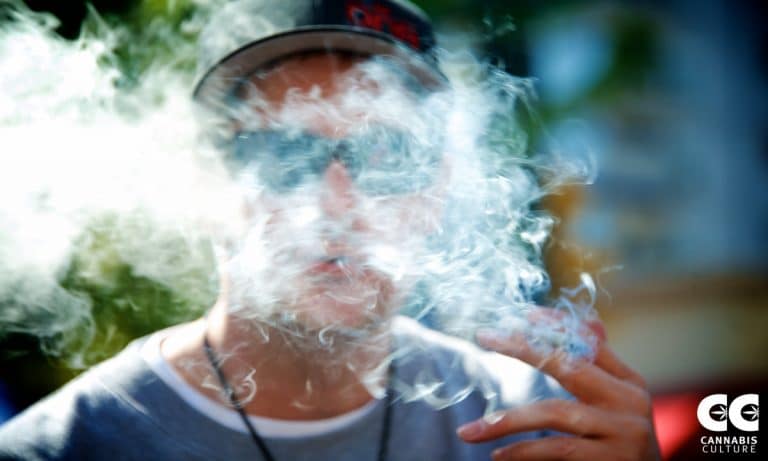
If the previous recommendations aren’t enough, you can always switch to vaping and consuming edibles. Vaping produces smoke, but it’s nowhere near as powerful as the scent you get from smoking a joint or from a bong. Edibles never smell, they’re just awesome.

Check Out What These 5 US Presidents Did To Stay In Shape

There are jobs, and then there’s the presidency. Being president is arguably the most important job anyone can ever have, no matter their priorities, their achievements, or their life goals. Even if the president sucks, we can all agree that it must be a pretty damn stressful job.

We’re not just saying this because we want to; there’s science to back all of this up. A study published in the British Medical Journal found that world leaders live an average of 2.7 years less than the average population. When these leaders were compared to their runner-ups, scientists discovered that the winners had a 23 percent higher risk of having a premature death.

The U.S. Leaders were the ones who fared the worst – surprising absolutely no one. According to the study, they lived 5.7 years less than their runner-ups.

Via Cheat Sheet:

“The increase in mortality among those leading a nation, relative to others in politics, may stem from the greater responsibility and stress of the job … The decisions are more impactful, the spotlight is greater, and I suspect the job is even more strenuous.”

While we’ve had our variety of presidents, with some of them buff and others not so much, here are some of the most interesting activities they did to stay in top shape:

Theodore Roosevelt

https://giphy.com/gifs/robin-williams-night-at-the-museum-natmedit-5tFQ4iWarax3y

Born as a sickly child, Theodore Roosevelt counter balanced his weaknesses with tons of activities and sports. According to Cheat Sheet, Roosevelt was trained in Jiu Jitsu under professor John O’Brien, and was very good. Historians also claim that Roosevelt’s fitness level saved him from an assassination attempt in 1912.

John Quincy Adams

https://giphy.com/gifs/10gaP8EGjglq0w

The White House’s Game Room has received a few renovations over the years, including Adams’ addition of a billiards table. He claims to have added it for purposes of “exercise and amusement.” We’re sure he had his fun, but we’re also sure that he didn’t burn a whole lot of calories.

Bill Clinton

https://giphy.com/gifs/celebs-golden-globes-bill-clinton-h0fNiwIkXDPGg

Bill Clinton was known for his jogs (re: his very short jogging shorts) which he wanted to be as private as possible, causing nightmares for the Secret Service who had to sit still as he jogged without much security. Cheat Sheet claims that he would follow these jogs with a quick stop at McDonald’s.

Barack Obama

https://giphy.com/gifs/obama-mic-drop-out-3o7qDSOvfaCO9b3MlO

Obama was once selected as one of Men’s Fitness magazine’s 25 Fittest Guys. He was known for playing Basketball and using treadmills. He was also caught Kite Surfing, because he’s from Hawaii and innately cool.

George Bush

https://giphy.com/gifs/funny-qpbYnCa4375F6

According to Cheat Sheet, Bush was a fan of riding bikes. He also worked out 6 days a week, jogging or doing some sort of cardio in the gym. Since he flew and traveled so much, he had a tread mill installed on an Air Force One aircraft.

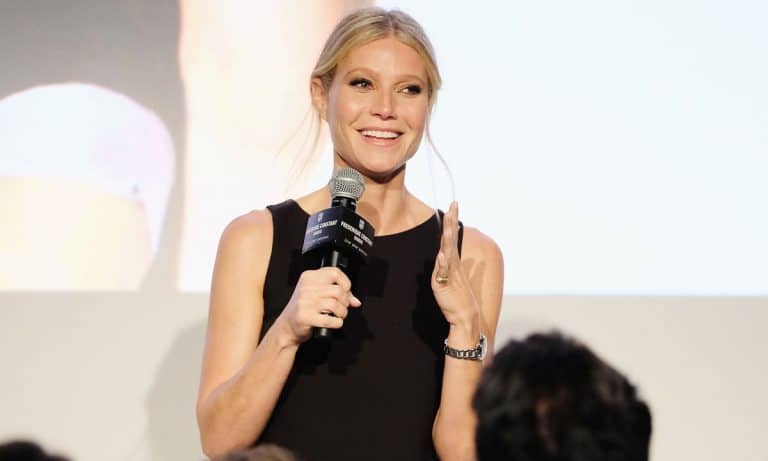
Gwyneth Paltrow Wants You To Try Coffee Enemas

On their first newsletter of the year, Goop released their yearly detox guide along with some of the best and most exciting beauty and wellness products of 2018. They obviously had to recommend something weird, because it’s Goop.

The Huffington Post reports that their list of wellness products includes extravagant items such as a $4,000 two-person, cedar sauna and a metaphysical colonic – don’t ask – while also including more traditional beauty products such as face masks, oils, and potions. You know, things we can pronounce. 

The item that caught most people’s attention, even more than the 4,000 dollar sauna, was the Implant O’rama, a coffee enema system that’s meant to be used at home. Let’s deconstruct all that we’ve just read. This device looks like a bottle with some tubes, which you’re supposed to put up your butt so you can pump some coffee up your colon. For detox purposes.

This type of colon cleanse, even though weird, has existed since the 1920’s. Supporters of this method claim that it drains the toxic bile from your gut and helps the liver’s filtering system. They also claim that it’s a good measure for treating cancer, arthritis, and heart disease.

While all of this sounds great, at home enema kits are complex and should be used by people who have experience with these sorts of devices. For the average Joe, it’s a little unrealistic to picture them putting tubes up their butts to pump some coffee up their colon. But that’s just my opinion.

Don't Miss Your Weekly Dose of The Fresh Toast.

Stay informed with exclusive news briefs delivered directly to your inbox every Friday.

We respect your privacy. Unsubscribe anytime.