It’s kind of an obvious stunt. In honor of the August 21 solar eclipse, Krispy Kreme (for the first time ever!) is outfitting one of their original glazed doughnuts in chocolate. Let’s take a look:
“The solar eclipse is a rare occasion providing a total sensory experience for viewers across the continental U.S. Chocolate will have the same effect as we introduce a first-time chocolate glazing of our iconic Original Glazed Doughnut,” said Jackie Woodward, Krispy Kreme’s chief marketing officer. “The Chocolate Glazed Doughnut is a delicious way to experience the solar eclipse – no matter where you are – and we can’t wait for fans to try it.”
Just like the eclipse, this special doughnut is basically a once in a lifetime event. It’s only available August 19-21.
Krispy Kreme recently announced that it will be partnering with Hershey’s to release a limited edition Reese’s Peanut Butter Cup doughnut. So, really, if you miss the eclipse doughnut, there’s a pretty great (better?) consolation prize to fall back on.
The number of children admitted to the ER for marijuana intoxication increased by 133 percent in France over an 11-year period, according to a new study.
According to the alarming study, increased availability — and potency — of marijuana in France is responsible for the uptick in toddler intoxication.
“I was surprised by the increase of admissions in my unit for cannabis unintentional intoxication among toddlers and by the increase of severe presentation after children had eaten part or a entire cannabis resin stick,” said lead author Dr. Isabelle Claudet, who heads the pediatric emergency department at Hopital des Enfants in Toulouse.
Marijuana sales, consumption and possession remain illegal in France, and yet the nation is the consumer of cannabis in all of Europe. The study also points out that the most popular form of cannabis in the country is hashish, a highly potent concentrated form.
Dr. Claudet suggests that the more potent hashish is getting in the wrong hands. According to the study, THC levels have increased from 4 percent in 2004 to 20 percent in 2014. Claudet offers one simple solution: Regulate the concentration of THC in cannabis products.
The researchers analyzed data from 2004 to 2014 on toddlers (under the age of 6) who were admitted to a pediatric emergency department. During that 11-year span, 235 children were admitted for intoxication. Among the most common symptoms (86 percent) of the children admitted were drowsiness and euphoria.
To put this all in proper perspective, visits to the ER for alcohol intoxication in the U.S. have increased by more than 50 percent over the past decade, according to a 2016 report. From 2010 to 2011, there were 3.8 million ER visits related to alcohol intoxication. That’s up from about 2.4 million visits in the years 2001 to 2002, the study found.
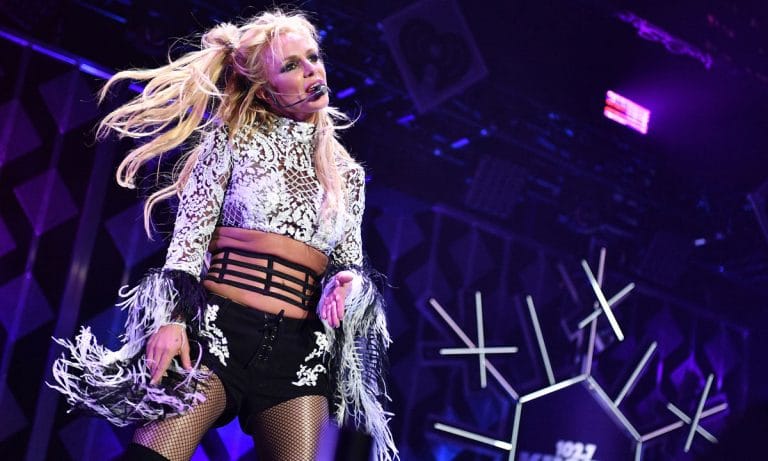
NOT HAPPENING …… Despite reports that former couple Britney Spears and Justin Timberlake are working on new music together, ET has confirmed there is currently no such collaboration in the works.
A source close to Timberlake exclusively tells ET that recent speculation about the pop stars teaming up are false.
New Movies From ‘Twilight’ And ‘Hunger Games’?
In a call with Wall Street analysts last week, Lionsgate CEO Jon Feltheimer said that the studio is hoping to bring more tales from Twilight and the Hunger Games to the big screen. Jon stated “There are a lot more stories to be told, and we’re ready to tell them when our creators are ready to tell those stories.” The creators in question, Stephenie Meyer and Suzanne Collins, aren’t on board yet. In fact, they’ve pretty much moved on from their best-selling YA novels.
There has been chatter in the past about possible prequels to the Hunger Games, but, if it does happen, Jennifer Lawrence is not interested in playing Katniss again, She recently announced “I wouldn’t be involved. I think it’s too soon. They’ve got to let the body get cold, in my opinion.” She’s right, you know. It’s only been two years since Mockingjay – Part Two and no one has really been clamoring for another film since then. Author Suzanne Collins has yet to weigh in on this subject as well.
Love the fresh dirt we bring over daily from Naughty Gossip? Let us know in the comments!
During the hottest, steamiest summer days, nothing hits the spot like ice cream. But until recently, most ice cream had a fatal flaw: it didn’t involve whiskey. Those times have changed. I’m spotting boozy adult milkshakes on bar menus all over the country, including many that prominently feature whiskey.
And why not? Whiskey and ice cream are one of those pairings where each component makes the other better. Ice cream’s bland, sweet creaminess benefits from the kick of whiskey, and whiskey benefits from ice cream’s tempering influence, especially on a warm afternoon.
https://www.instagram.com/p/BXrSy8Snvs_
When putting whiskey and ice cream together, you don’t need to use the finest whiskey in the cabinet; cold can mute the more subtle flavors of whiskey, and you don’t want to lose the nuance of something really special. However, it definitely behooves you to go premium on the ice cream. Premium ice creams are denser than the cheaper stuff, which means they don’t melt quite as fast, and they often have stronger flavors that stand up to big-bodied whiskeys.
There are a few main ways to bring whiskey and ice cream together: separate but near, or thoroughly blended into an adult milkshake. You can also go the buy it in a store route if you are feeling super lazy.
Separate But Near
A bowl of ice cream and a little nip of whiskey are a surprisingly perfect pairing, especially on a hot summer night. Try matching Cherry Garcia with bourbon, lemon sorbet with peated single malt, or dark chocolate with spicy rye.
Alternatively, few things perk up a bowl of plain old vanilla ice cream like a few drops of whiskey. And you really do need just a few drops – a half a teaspoon is enough. During a recent heat wave, I cooled off with a bowl of vanilla bean ice cream topped with a spoonful of peach jam and a light drizzle of Barrell Bourbon 010. Heaven.
Blended
Adding whiskey to milkshakes is easy, although it’s important to remember that alcohol’s higher freezing temperature will make a milkshake melt faster if you add too much (alternative: drink it fast!).
Malted milkshakes are a soda fountain classic, so why not take it a step further and add a bit of malt whisky next time? A simple recipe that serves two: Two cups ice cream, two cups ice, one cup milk, two tablespoons malted milk powder, two ounces single malt (Glenmorangie is nice, but any whisky with a sweet, rich, grain-forward flavor profile will do nicely). Whizz, serve, enjoy.
The state of California has the most long-standing, established cannabis-based economies in the entire United States, if not world. Starting back in the 1960’s and 1970’s, Northern California counties such as Humboldt, Mendocino, and Trinity replaced their once booming logging industries with outdoor marijuana farms.
This socioeconomic turn came as the result of an influx of hippies from the San Francisco Bay area moving north and “dropping out” of modern society coming in conjunction with depleted forest reserves for logging businesses on the California Coast. For approximately four decades, these counter culture transplants and Northern California locals alike took advantage of the premier outdoor cultivation climates in these regions—and established an entire economic base within the continental U.S. based solely on the illegal drug trade.
The passing of Proposition 215 in California in 2002—the first medical marijuana program in the United States—literally set the stage for the first-known cannabis “green rush” in history. As California cultivators, dispensary owners, and cannabis doctors realized the state was really going to let them conduct a legitimized marijuana market, word rapidly spread across the nation. The sizeable influx of wide-eyed cannabis industry enthusiasts flocking to California to make a living growing and selling medical marijuana can accurately be measured in the price fluctuations of marijuana pounds. In 2004, indoor marijuana pounds could be sold for $4,500 in the state of California—in 2017 this price has dropped to approximately $1,500.
The medical marijuana industry in California has continuously been manipulated and altered since its inception with Prop 215. For starters, the multi-billion dollar industry still operates almost exclusively within the realm of the grey and black markets. A vast majority of California grown “medical marijuana” is shipped to other regions of the nation for a hefty profit. Also, cannabis dispensaries in CA buy all of their products with cash, generally from unlicensed growers—often negating laboratory testing as well as standardized sales tax procedures. Also, within the California marijuana market there are great disparages between federal, state, and county laws concerning what is legal and what is not. These laws also change once, if not two times a year. Point being, the medical marijuana industry in California is a mess.
In the November 2016 elections, the citizens of California voted Proposition 64 into place—opening up California’s first recreational cannabis market. Included in Prop 64 are a number of measures that will force the long-standing underground cannabis market into the limelight, with commercial cultivation operations having to undergo expensive, thorough licensing procedures. Moreover, dispensaries will only be able to purchase cannabis products from licensed cultivators who have put their products through rigorous laboratory testing. Also, anyone over the age of 21 can now carry legally carry up to an ounce of cannabis products as well as grow six plants. However, the novel cannabis market initiatives of Prop 64 are not without their complexities. One of the primary complications with Prop 64 is that California state and county laws will still be at odds—with some counties embracing commercial cultivation and others outlawing it entirely.
The state of California has set a launch date of January 1, 2018 for the recreational cannabis program, its goal is to have the entire state compliant to the many legal nuances of Prop 64 within this ever-shrinking time frame. However, many feel that the implementation of Prop 64 will only serve to make an already confusing system and economic model even more complex. This is largely because, there are several “layers” of cannabis business culture in California that must be “peeled back” with this novel legislature. Policy makers and law makers alike must now attempt to uproot an underground business model that has supported families and communities alike for over four decades in areas like Mendocino County. Moreover, there is an overabundance of CA State medical marijuana green rush migrants who have now established a thorough economic foothold throughout the state—many of these individuals base the lively-hood of themselves and their families on cannabis cultivation. To sum it up, it is likely that for some time at least, the dawn of 2018 and Prop 64 in California will bring a slow, confusing, and painful evolution of the cannabis industry in the Golden State—with the realization of a mature, regulated market still on a distant horizon.
When Bernie Sanders announced he was in favor of removing marijuana from any schedule in the Controlled Substances Act, it was a big deal. He was the first serious presidential candidate in either a general election or a primary to take such a forward-looking stance, and it at least temporarily brought the issue of cannabis legalization to the front of voters’ minds.
In the general election, of course, neither Hillary Clinton nor Donald Trump supported legalization. Clinton’s position was to do more research and otherwise leave it to the states, while Trump waffled between supporting medical marijuana, to leaving it to the states, to outright hostility.
When 2020 rolls around, however, it is becoming increasingly likely that whomever the Democrats nominate will be vocally in favor of legalization. Less than a year into President Trump’s term, Democratic senators are already moving to position themselves as the party’s next nominee.
And, as reported in Politico, those candidates are increasingly moving in the direction of legalization. Senator Kamala Harris of California, a former prosecutor and state Attorney General, has voiced support for decriminalization. Senator Kirsten Gillibrand of New York has vocally supported various medical marijuana bills in the past few years.
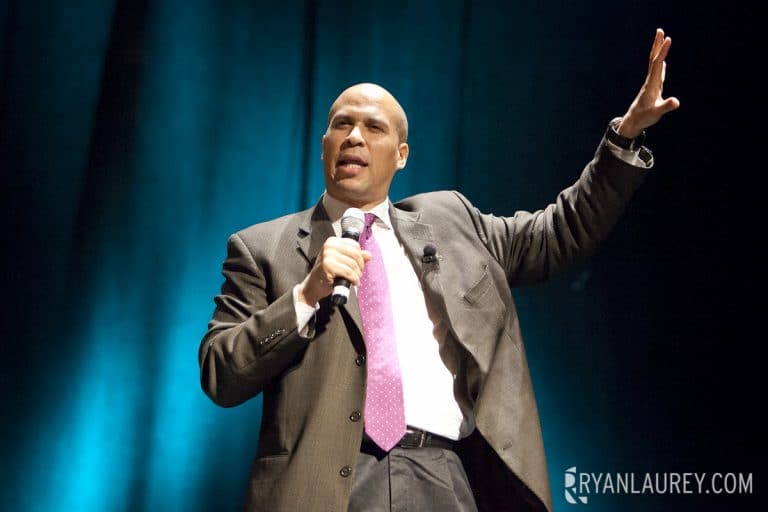
Finally, Senator Cory Booker of New Jersey has gone so far as to introduce a bill fully legalizing marijuana at the federal level. Booker’s bill would deschedule marijuana, retroactively expunge the criminal records of those convicted of federal marijuana possession or use charges, and withhold federal law enforcement dollars from states with arrest rates and incarceration rates for marijuana crimes that skew heavily against poor people and racial minorities.
Unfortunately, Booker’s bill has no chance of passing or even being debated while Republicans hold the House, the Senate, and the White House. But it does draw a clear line in the sand for all would-be 2020 contenders on the Democratic side.
The real story here is that the Democratic Party is getting to the point where it must support legalization to stay relevant. There seem to be three types of Democratic politician right now: Sanders-style social-democrats, Clinton-style Baby Boomer liberals, and Booker/Harris/Gillibrand style young liberals.
There are a few centrist/conservative Democrats still out there (e.g. Joe Manchin of West Virginia), but most of the rest of the party falls largely into one of the other alignments. The difference between the Clinton group and the Booker group isn’t based so much on policy as it is on candidate age and priorities. Baby Boomers (people born between the mid-1940s and the early 1960s) were the generation most influenced and susceptible to the War on Drugs.
For as long as the Boomers have made up the core of the Democratic party, the party has been unwilling to move strongly in support of marijuana legalization. But we are now seeing a shift in the political landscape. White working class voters were up for grabs in the past, but that demographic seems to be moving toward the Republican party in droves.
For Democrats to survive, they need to pull stronger numbers from their core demographics, including minorities disproportionately affected by the War on Drugs and millennials who never understand why marijuana was demonized, groups that overwhelmingly support cannabis legalization.
President Trump has always been shifty on policy, but his ardently anti-cannabis Attorney General, Jeff Sessions, presents an easy foil for pro-legalization Democrats to compare themselves to. Other than exceptions like Rand Paul and Dana Rohrabacher, the Republican party remains generally anti-marijuana.
And marijuana legalization is the kind of simple, understandable policy that Democratic politicians should point to as positive differentiators from their competitors. If Republicans start to see their stance against marijuana as a political liability, they too will start shifting in large numbers. Looking forward to 2018 and 2020, it is becoming increasingly clear that cannabis legalization will be both good policy and good politics.
Robert McVay is a partner at Harris Bricken focusing on corporate, finance, and transactional matters for clients both inside and outside the cannabis industry.
For a young man to finally mature and “get big,” he must first look at himself honestly. Even if it is through a slight haze of pot smoke and Jack Daniels.
Opening in select AMC Theaters, Get Big is the first feature film by USC film graduate Dylan Moran. It is an inspired and honest look at his own personal story of growth. Two immature college-age bros reunite in their hometown for a friend’s wedding, stumbling through the wedding preparations, tripping over their insecurities and eventually finding out they must be accountable to themselves to truly “get big.”
The hilarious misadventure that leads to their epiphany is spiked with relatable and occasionally cringe-worthy moments; cops, drugs, strippers, crude language and over-confident libidos play up the stereotypes that college-age boys try futilely to live up to during their college years. Whether you went to college or had friends that moved away, you’ll immediately connect with the characters and identify with real, modern struggles, laughing all the way.
“Get Big” follows the likes of Superbad (2007) and Swingers (1996) with its open and over-the-top look at boys being boys. The two main characters Alec (played by Tanner Stine, whom audiences may recognize from “NCIS”) and Nate (played by 23-year-old writer/director Moran) are accompanied by an experienced cast.
This film is proof that dorky stoner mishaps can lead to life-changing revelations. Grab your buds, reminisce and catch the Get Big premier this August 31 at AMC Sunset 5 in West Hollywood, or afterwards at select AMC Theatres across Southern California starting September 1. For more information visit www.GetBigMovie.com.
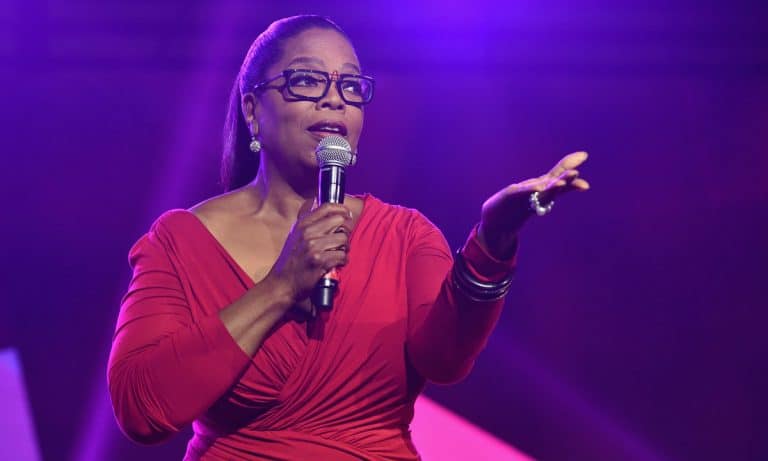
“Nobody believes it, but it’s true. The only time I brought it up was when I said to Stedman, ‘What would have happened if we had actually gotten married?’” Winfrey, 63, revealed to Vogue in an interview published on Monday, August 14. “And the answer is: ‘We wouldn’t be together.’ We would not have stayed together, because marriage requires a different way of being in this world.”
The talk show host added: “His interpretation of what it means to be a husband and what it would mean for me to be a wife would have been pretty traditional, and I would not have been able to fit into that.”
Khloé Kardashian Spills Juicy Details About Her Steamy Relationship With Tristan Thompson
Though Khloé Kardashian has only been dating Tristan Thompson for a year, she’s pretty certain the basketball player is The One for her. After suffering through a lot of heartbreak, the Keeping Up with the Kardashians star has finally found love — and she couldn’t be happier. In a new interview with Mail on Sunday’s You magazine, the 33-year-old opens up about her picture perfect romance, telling the publication things couldn’t be better for the two.
“My boyfriend is very protective of me. Feeling loved and validated and secure is a huge thing. Tristan is protective of my entire family, which is beautiful. And I love that everything we do is as a union,” she gushes. “When he speaks, it’s ‘us’ and ‘we,’ and that’s important because it shows that you’re sharing life. The best thing is that we’re able to communicate about anything, and I think a lot of relationships don’t flourish because people are afraid to voice their opinion, not wanting to rock the boat.”
Love the fresh dirt we bring over daily from Naughty Gossip? Let us know in the comments!
In his campaign rhetoric, Donald Trump said flat out that marijuana should be a state by state issue. Then he hired Attorney General Jeff Sessions, who abhors the plant, likening it as only “slightly less awful than heroin.” Sessions has gone against measures to continue limiting the federal government’s ability to interfere in compliant medical marijuana operations and has repeatedly said that the federal government has every right to interfere, regardless of state laws. This has naturally led to a level of anxiety for cannabis activists and anyone else who utilizes the herb. However, Sessions may not be the main problem.
With 29 states having medicinal laws and and nine having gone the full legalization route (with limits, state by state), plus another baker’s dozen having decriminalized the plant, one would think the community would be breathing easy. Yet cannabis remains a Schedule I drug and federally illegal.
Encouragingly, law enforcement doesn’t actually have the people power to crack down on all legal states or interfere in small scale operations. They focus on interstate trafficking and the sale of marijuana to minors, but not on Mr. and Mrs. Doe, who have their four state legalized plants and keep them discrete. Still, pot remains federally illegal. We cannot reiterate this important fact enough.
It doesn’t just mean that theoretically Sessions could come down hard and try and wipe out the programs we’ve put in place, it means that practical matters can’t be addressed and then become dangerous. Perhaps the best example of this is in the world of banking. Because of the federally illegal aspect, banks can’t and won’t work with cannabis businesses, which pulled in over six billion in revenue in 2016. That’s a lot of cash floating around and a lot of trouble that can bubble to the top. Not the least of which is personal safety and potential robberies.
A hanger on from the Obama era of presidency is the infamous Cole Memo, which basically tells Feds to cool their heels regarding state approved medical marijuana facilities and persons and to focus on those bigger issues like smuggling and sales to minors. However, even with the Cole Memo, federal law has the trump card and federal law says cannabis has no medical use and is classified as dangerous a drug as heroin.
In a spark of hope, Congress enacted appropriation riders to keep the DEA from spending its funding on cracking down on medical states. Sessions’ opinions be damned, one such rider was passed in the most recent spending bill that is valid through September 30th.
A bigger threat than even not being able to use a bank and having a cash only business is that possession and distribution of cannabis is also illegal under the Racketeer Influenced and Corrupt Organizations Act (RICO). This means that whether or not state law says we can build cannabis houses and smoke them in public, all marijuana activities are illegal and subject to civil RICO suits. And the appropropriations rider is null here.
It seems the only two options that are safe for the cannabis community are federal legalization or the actual letting alone of state’s rights. Though federal legalization is ideal, leaving the laws up to states has many benefits, one of which is the weighing of what works. Each legal and medical state has their own sets of regulations and so far, though they’re all for the most part functioning, there are some sets of guidelines that are working better than others. Some that bring in more taxes and state revenue and some that are simply keeping communities and patients safer.
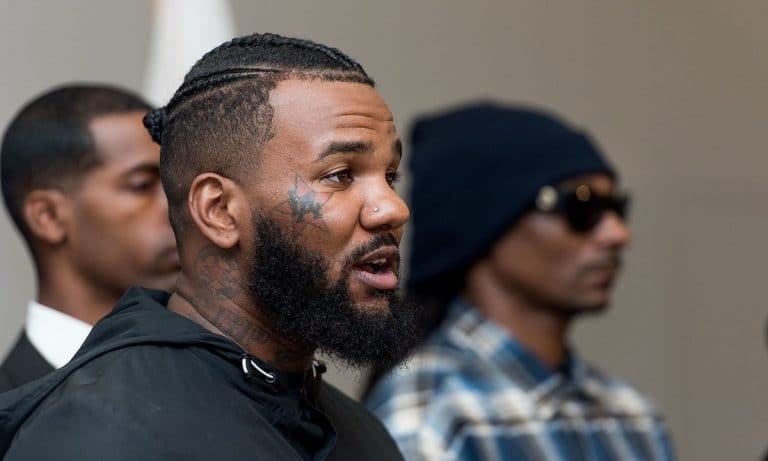
Rapper The Game wasn’t an early adopter into the cannabis industry, but has since proven himself to be a force since entering the space. He lays claim of being the first rapper to own a dispensary while him and Snoop Dogg amicably compete to become the industry’s first billionaire.
Now, with his latest venture, The Game is “preparing a cannabis revolution,” he says. He’s doing so by promoting Paragon Coin, a tech company that will utilize blockchain technology. Paragon intends to legitimize the cannabis industry through a cryptocurrency, though much of its plans remain under wraps.
It plans to release an initial coin offering (ICO) Aug. 15, according to a video released by The Game. Standing alongside The Game in the video is Paragon’s CEO Jessica Versteeg, a former model and Miss Iowa 2014.
This is not the first celebrity endorsement of a new cryptocurrency, nor a first in the cannabis space. Dennis Rodman’s highly publicized trip to North Korea was sponsored by PotCoin, another cryptocurrency utilizing blockchain technology to securely administer transactions throughout the cannabis space. This YouTube video serves as an explainer guide to blockchain technology and how it could impact the global economy.
Initial coin offerings are a new funding vehicle using blockchain, the technology behind bitcoin. The market for so-called ICOs is exploding, with over $1.86 billion raised via the method since the beginning of the year, according to data from Autonomous NEXT, a financial technology analytics provider. The massive growth of the ICO market has many people in the space thinking it’s a bubble with many firms using the method as a way to raise vasts amount of money without offering an actual product.
Versteeg told Business Insider that more information will be released soon. The Paragon CEO will host a live Facebook Q&A Aug. 16 where she will reveal how her firm will address “real problems in the cannabis industry.”
“This isn’t another Potcoin,” she told BI. “People will be pleasantly surprised with what we are doing.”