Tuesday, May 5, 2026
Home Blog Page 1190

Legal Weed: An Accidental Solution To The Opioid Epidemic

It’s hard to go a day in Canada without hearing about at least one of two types of drugs – but for vastly different reasons. One class of drug — opioids — kills four people a day in British Columbia. The other — cannabis — will be legal for adult purchase and consumption by this time next year.  The opioid epidemic is Canada’s gravest public health crisis since the emergence of HIV in the 1980s. With its roots in the over-prescription of high-potency painkillers, sparked by the contamination of the illicit drug supply with fentanyl and related drugs, the crisis has reached across demographic divides. Experts agree on the need for creative responses based in scientific evidence.

Could cannabis legalization be a part of this solution? Increasingly, this is what the latest scientific research indicates.

Fatal Overdoses

The opioid crisis is a product of the medical system’s over-reliance on opioids for pain relief. Almost one in five Canadians live with some form of chronic pain. Twenty years ago, pharmaceutical companies began to develop slow-release formulations of opioids (e.g. OxyContin) and marketed them as safe and effective medications for the treatment of chronic non-cancer pain.

We know now that these drugs carry an extremely high risk of dependence and fatal overdose. Despite this, more than 20 million opioid prescriptions are filled each year in Canada. Drug overdoses are now the leading cause of death among Americans under the age of 50. And prescription opioids are involved in nearly half of these deaths. It is also becoming apparent that opioids might be less effective than initially thought in treating certain types of chronic non-cancer pain (e.g. neuropathic pain).

Cannabis, derived from the Cannabis sativa plant, contains several compounds. These include tetrahydrocannabinol (THC, the primary psychoactive component of cannabis) and cannabidiol (CBD). Beyond the well-known psychoactive effects of cannabinoids, new research has shown that they also interact with systems in the body involved in the regulation of pain.

This discovery has led researchers to investigate the potential for cannabis to treat various pain conditions for which opioids are currently first- or second-line therapies. High-quality clinical research involving cannabis has been stunted by its prohibited legal status. But a recent review of clinical studies involving cannabis-based medicines (including smoked or vapourized cannabis) found strong evidence for relief of chronic non-cancer pain.

Ground Breaking Findings

The substitution effect is an idea from behavioural economics that describes how the use of one product might decrease when the availability of another increases. Substance use researchers have recently adapted this theory to understand the substitution potential between cannabis and opioids. In other words, does the use of opioids decrease with increasing access to cannabis?

In a landmark 2014 study, a team of researchers analyzed data from across the United States over a 10-year period. They found that states that had legalized medical cannabis saw 25 per cent fewer opioid-related deaths compared to states where medical cannabis remained illegal.

These findings broke ground for others in the field to find associations between U.S. medical cannabis laws and reduced state-level estimates of opioid use and dependence. But, because these population-level studies cannot observe individual-level changes in cannabis and opioid use, a closer look at these trends among different sub-populations of people affected by the opioid crisis is needed.

Not surprisingly, findings from surveys conducted among patients using medical cannabis across North America demonstrate a clear preference for cannabis over opioids. For example, roughly one-third of a sample of patients enrolled in Health Canada’s Marihuana for Medical Purposes Regulations (MMPR) program in B.C. report substituting cannabis for prescription opioids.

For chronic pain patients, this substitution effect appears even more pervasive, with cannabis substitution occurring in roughly two-thirds of a sample of former prescription opioid patients in Michigan who started using medical cannabis.

In the most recent study, 80 per cent of medical cannabis patients in California reported that taking cannabis alone was more effective at treating their medical condition than taking cannabis with opioids. More than 90 per cent agreed they would choose cannabis over opioids to treat their condition if it were readily available.

Illicit Opioid Use

But what about the relationship between cannabis and opioids among some of those most affected by the opioid crisis — people with long-term experience using illicit opioids?

Untreated pain and substance use have a high degree of overlap. Pain was reported by almost half of people who inject drugs surveyed in a recent San Francisco study. Research from our colleagues in Vancouver found that under-treatment of pain in this population is common. It results in self-management of pain by obtaining heroin or prescription opioids on the street.

This means there could be a role for cannabis even among individuals with extensive experience using illicit opioids. A study from California of people who inject drugs found that those who used cannabis used opioids less often. It’s still unclear if this difference is directly due to cannabis use and more research is needed.

Potential As Anxiety Treatment

Even without chronic pain, cannabis may prove an effective alternative among individuals wanting to reduce or stop their opioid use. There is growing evidence for the use of cannabis in treating opioid addiction. CBD, the non-psychoactive component of cannabis, is known to interact with several receptors involved in regulating fear and anxiety-related behaviours. It shows potential for the treatment of several anxiety disorders.

Research is also investigating CBD’s role in modulating cravings and relapses — behaviours that are tightly linked to anxiety — among individuals with opioid addiction. Recent preliminary studies suggest that CBD reduces opioid cravings. A larger clinical trial is now underway in the United States.

A Bold Response?

Canada will soon be the first country in the G-20 to introduce a legal framework regulating the use of cannabis by adults for non-medical purposes. This will create a country-wide natural experiment for the world to observe. Legalizing cannabis will break down traditional barriers to understanding the clinical and public health impacts of the drug.

This massive drug policy change could not come at a more desperate time. By increasing access to the drug for therapeutic and recreational purposes, we will have the opportunity to investigate substitution effects within different populations of people who use opioids.

The ConversationProtection of youth and removal of organized crime aside, the Cannabis Act may just be the unintentionally bold government response to the opioid crisis that our country so desperately needs.

Stephanie Lake, PhD student in Population and Public Health, University of British Columbia and M-J Milloy, Research Scientist, BC Centre on Substance Use and Assistant Professor in the Division of AIDS, UBC Department of Medicine, University of British Columbia

This article was originally published on The Conversation. Read the original article.
7 Refreshing Fruit Beers To Beat The Summer Heat

There are few things more reminiscent of summer than fresh fruit. You can picture it now: strawberries freshly washed, bursting in your teeth. A just-cut watermelon, dripping on the counter. Really, nothing could be better. Unless, of course, you added beer to the mix. Ah, beer, the joyous, populist beverage. The cartoon hand, curling its finger for you to follow down a lovely day drinking session. But, if you’re a lover of fruit and fruit flavors and you’re also a lover of beer, what blessed way is there to enjoy them both at the same time? No, don’t add grapes to your Pilsner! There are professionals who can do that kind of thing for you. Just keep reading.

Lucky Envelope Grapefruit IPA (Seattle, WA)

A new bright spot on the Seattle suds skyline. This beer is born out of Lucky Envelope’s delicious mosaic-hopped IPA. That recipe perfected, the brewery went on to make additions. Using real grapefruit, the IPA is accentuated by honest-to-goodness citrus. And, the brewery announced, they will soon be bottling the stuff year-round. (Lucky Envelope also has a Blood Orange Session IPA).

New Belgium Lemon Ginger Sour (Fort Collins, CO)

While most sours are too puckery, this one is perfect for the summer and punctuated by a light and bright kiss of lemon zest. When you think sun, summer and fruit, don’t you just see a gleaming yellow lemon tree? Well taste your vision quest, beer lover, and do it with a bottle of this delicious (though a bit sour) nectar.

https://www.instagram.com/p/BODqF5pBQoj

Founders Brewing Raspberry Ale (Grand Rapids, MI)

When you were a kid, your favorite fruit was likely a raspberry. Well, those little, fuzzy, squishy, bejeweled berries make a great addition to an ale – especially in this dazzling, slightly tart finishing gem of a pint.

Cascade Apricot Ale (Portland, OR)

A sour blond ale – or wild ale, as some know it – this brew is aged nine months and then aged again with fresh, buoyant apricots for another 180 days. It’s a wonderful blend of bright sunshiney fruit and tart aromas in the nose. Let the beer gods shine on you one afternoon with this one.

https://www.instagram.com/p/BW0rnK0Dzgo

Moody Tongue Sliced Nectarine IPA (Chicago, IL)

Maybe the most underrated fruit out there, the nectarine is pleasant and a bit sharper than its fuzzy peach counterpart. And this IPA benefits. The drink maintains its bite – thanks to hops and the fruit – but it has a rounder edge and offers a nostalgia to the mind, pushing you to remember that little plate handed to you in August with sliced stone fruit atop it.

Atlas Blackberry Cider (Bend, OR)

We’re cheating a bit here, since this a cider and not a beer. But this way you get two fruits – apple and blackberry – all in one. This cider from Atlas is tart and dark and uber refreshing. It’s the kind of cider you can sit down at a bar with and feel like you just got off work laying brick. It’s a hefty drink and one so delicious you’ll likely order another.

https://www.instagram.com/p/4qJYJhTOlD

Ravenna Brewing Jalapeno Kolsch (Seattle, WA)

Okay, okay, a jalapeno is not a fruit. We totally get that. But there are a myriad of other fruit beers to try out there in the world, but have you ever heard of a Jalapeno Kolsh? Something so light and fluffy and perfect for summer while also having a bit of a heated bite? They say the best way to cool down is to sweat a little. So why not have your (frosty Jalapeno Kolsh) cake and eat it too?

What You Need To Know About Two-Headed Sharks Before Your Next Vaca

It’s a terrifying image to be sure: that blue-coated creature with its underbelly splitting at the neck, two shark heads arching outward. The image has been circulating online recently, with claims that more two-headed sharks are appearing in the water and no one knows why.

Does a Deepwater Horizon oil spill or other water pollution explain such the genetic mutation? Has overfishing caused this? Or was it something in the air? The answer, it seems, isn’t so cut and dry.

Two-Headed Sharks: Keep Calm Everyone

First off, these images aren’t recent. They come to us from 2008, and is being recirculated due to a similar study appearing in October, as Popular Science reports. Those scientists discovered a two-headed cat shark, which is the first two-headed beast to appear in an oviparous shark species, a.k.a. a shark that lays eggs. This abnormal offspring likely wouldn’t have survived long, said researchers, and that’s why people haven’t found them previously.

Researchers believe the most plausible explanation was just a case of the old mutations. It not some wild science experiment, but just the randomness of nature. And for other shark species where two-headed offspring have been recorded like blue sharks, it’s just a matter of numbers. Blue sharks carry up to 50 embryos at a time, which is bound to create some anomalies and abnormalities.

One concern, then, is commercial fishing’s influence on the breeding process. Marine scientist Nicolas Ehemann told National Geographic he believes overfishing may cause the gene pool to shrink, and may possibly explain the increase in two-headed fetuses. Meanwhile Felipe Galván-Magaña, who led the 2011 study, suggests that two-headed sharks aren’t more common, but rather there’s just more science journals and media spotlight placed on weird news events like this one. By the way, this is from a guy who also saw a cyclops shark up close, which just sounds freaky.

So are two-headed sharks something you need to start worrying about? Probably not. It’s more fluke than future reading.

4 Small American Towns Saved From Collapse By Legal Marijuana

Cannabis is big business. Legal marijuana has officially become California’s biggest cash crop and many are eager to learn how they can participate in the green rush. That green rush has helped bring some rural communities, full of blue-collar workers disenfranchised by changes in the national economy, new life.

Here are four small towns that were saved by cannabis.

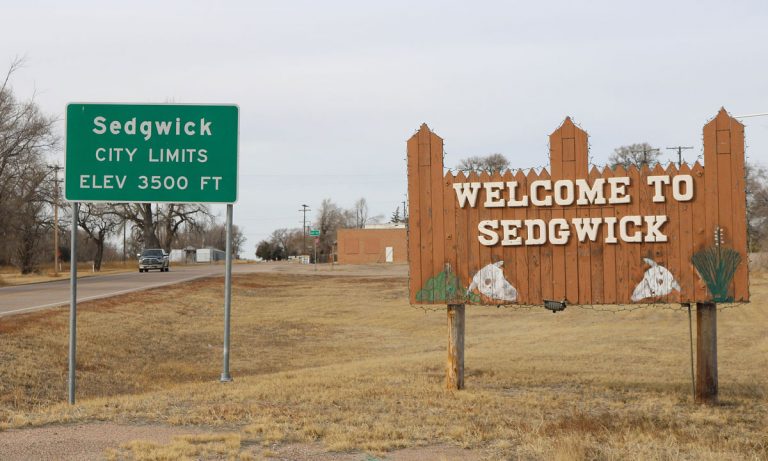
Sedgwick, Colorado

At one point, residents were calling this small town a literal “ghost town.” The economy had slumped, the buildings were in disrepair. There were talks of disbanding the town.

Then they opened a medical cannabis dispensary, drawing new tourists into their town and converting buildings into cannabis-related businesses like weed-friendly bed and breakfast.

Our Samantha Cole captured Sedgwick’s cannabis boom earlier this month as such: At first, older residents were skeptical and critical of marijuana’s place in their beloved town. But as dispensaries created jobs and tax revenue went up, there was no denying that legal weed helped save Sedgwick. It’s even created tourism and return visitor revenue.

Huntington, Oregon

Here’s how the Los Angeles Times captured Eastern Oregon border town Huntington when all hope seemed lost: “Its crumbling roads were like dried veins leading to houses and businesses starved for life. Across the main street, locomotives rumbled past on tracks; a station once gave weary steam engines rest and the city a purpose. The modern diesel trains don’t stop in Huntington anymore. They haven’t for decades.”

Then people in Huntington viewed cannabis as a chance for “economic rebirth.” As the Idaho Statesmen reported, the town of 435 people might serve up to as many as 600 people on a busy day. Many customers are driving across state border from neighboring Idaho, where weed remains illegal, and waits can last up to two and a half hours. All of which has been a boon to the local economy.

Trinidad, Colorado

A former mining town just 11 miles north of the New Mexico border, Trinidad has public pipes long in need of replacing and vacant stores lining street fronts. One resident claimed the town was on the brink of an “abyss of nothingness.”

The town would eventually open 16 dispensaries that drove more than $850,000 in tax revenue in 2015. Many patrons come from out of state, as Trinidad’s geographical location is easy access for those in non-legalized cannabis states. In 2016 Trinidad would receive more than double the tax revenue, all aimed at building back their town.

Adelanto, California

In this sleepy San Bernadino town, about 40% of the population live below the poverty line. Once he town’s main employer, an Air Force Base, left, Adelanto became a “drive-through town,” eventually landing in about $2.4 million in debt back in 2014.

But cannabis infused the town with a new economic prosperity. The first industrial-scale cannabis cultivation site opened in 2015 and the town’s deficit is now half a million dollars. As the LA Weeky wrote, “Marijuana is a rare opportunity to create thousands of well-paid jobs for workers without college degrees.” It has served Adelanto, and these other small towns, well.

Gossip: Queen Elizabeth Making Plans For Charles’ Regency In 3 Years; Wonder Woman Star Gal Gadot Wants A Lot More Money

Daily Mail contributor/royalist Robert Jobson claims that the Queen is moving ever closer to accepting a Charles regency. Some highlights:

She’s open to the idea of regency: With the Queen now into her 92nd year, and with the hard-working Duke of Edinburgh choosing to retire last month at the age of 96, plans are afoot which, if implemented, would see Charles appointed King in all but name. Palace sources have indicated that the Queen has told her inner circle that, if she is still on the throne at the age of 95, she will ask for a piece of legislation called the Regency Act to come into force – granting her eldest son full power to reign even while she still lives. I have spoken to a number of high-ranking courtiers who made it clear that preparations for a transition are moving ahead at pace. They have all confirmed that a Regency with Charles taking the lead is now, at the very least, a real possibility.

The courtiers are all a-buzz: One senior former member of the Royal Household said: ‘Out of the profound respect the Queen holds for the institution of monarchy and its stewardship, Her Majesty would want to make sure that she has done everything she can for her country and her people before she hands over. She is dutiful to her core. Her Majesty is mindful of her age and wants to make sure when the time comes, the transition of the Crown is seamless. I understand the Queen has given the matter considerable thought and believes that, if she is still alive at 95, she will seriously consider passing the reign to Charles.’

Charles isn’t saying anything officially: Clarence House – the household of Prince Charles – is making no comment about Plan Regency, as it has been called. However, it is understood to be a matter of increasingly open discussion at court. But Palace staff responsible for communications have been ordered to be ‘up to speed’ on the 1937 Regency Act, which grants power to the heir apparent ‘in the event of the incapacity of the Sovereign through illness, and for the performance of certain of the Royal functions in the name and on behalf of the Sovereign in certain other events’.

Transitioning the younger royals: Of course, the transition to a world in which significantly more Royal duties are undertaken by the younger generations is already well under way. Next month, the Duke and Duchess of Cambridge will step into their new roles as full-time working Royals, and Prince Harry will be expected to carry out more engagements at his grandmother’s side. ‘As ever, the Queen wants there to be the minimum of fuss,’ said the former member of the Royal Household. ‘Of course, for obvious reasons, abdication is not even a consideration.’

Interesting note about a regency coup: To safeguard against a coup, a Regent can only be installed once a decision is taken by at least three of the following: the Sovereign’s consort, in this case the Duke of Edinburgh; the Lord Chancellor, David Lidington; the Speaker of the House of Commons, John Bercow; the Lord Chief Justice, the incoming Sir Ian Burnett; and Master of the Rolls, Sir Terence Etherton.
[From The Daily Mail]

Wonder Woman Star Gal Gadot Wants A Lot More Money

SALARY WAR … Wonder Woman star Gal Gadot is said to be demanding an EIGHT FIGURE salary for the next installment of the mega hit!

Love the fresh dirt we bring over daily from Naughty Gossip? Let us know in the comments!

The Fresh Toast Marijuana Legislative Roundup: August 14

Last week in cannabis news, Vermont announced a new task force to study legalization a few months after the governor vetoed a measure to legalize possession of small amounts. In Nevada, the distribution issue becomes less confusing. Find out about this and more in our weekly marijuana legislative roundup.

Vermont:

Governor Phil Scott announced last week that he was creating a commission to study recreational marijuana legalization. The commission will research the impacts of legalization in states such as Washington and Colorado, and make recommendations to the legislature.

Governor Scott vetoed a legalization measure passed by the legislature in June, citing public health and safety concerns. The bill would have allowed adults 21 and older to possess up to an ounce of cannabis and grow up to six plants at home, and formed a commission tasked with producing a regulatory blueprint for recreational cannabis production and retail. Recreational marijuana sales are set to begin in neighboring Maine and Massachusetts next year.

Oregon:

On Monday, Governor Kate Brown released a letter from Attorney General Jeff Sessions in which Sessions expresses serious concern over the effectiveness of Oregon’s recreational marijuana regulation. The letter draws on an Oregon State Police report, which listed illegal cannabis trafficking, an increase in emergency room visits, and “pervasive illicit cannabis cultivation in the state” as major law enforcement concerns.

Sessions’ letter to the Oregon governor follows the release of similar letters addressed to the governors of Washington and Colorado the prior week, leading to mounting fears that the Justice Department is preparing a crackdown on states where recreational marijuana has been legalized. Sessions has expressed grave doubts over ability of states to abide by the conditions laid out in the Cole Memo, which was the foundation of the Obama administration’s largely hands-off approach to state legalization efforts.

Nevada:

On Thursday, the Nevada Department of Taxation voted to begin issuing cannabis distributor licenses to non-liquor wholesalers in order to meet overwhelming demand since the July 1 start of recreational sales. Under a provision of the ballot measure passed by voters in November, distributor licenses may only be granted to liquor wholesalers for the first 18 months.

However, the Department determined earlier this year that insufficient interest existed among liquor wholesalers to meet demand, leading to a legal challenge by a group of wholesalers seeking to maintain their monopoly on distributor licenses.

After a Carson City judge sided with the liquor wholesalers, the state issued a set of emergency regulations to address the judge’s procedural concerns. The Department of Taxation will now begin reviewing about 80 applications it has received from cannabis dispensaries and other businesses seeking the right to transport marijuana from growers to retailers.

Funny People Are More Attractive According To Science

0

That myth about the funny guy getting the hot girl might not be only limited to movies and fiction, new research suggests that having a good sense of humor helps people get dates more easily.

The study was conducted by Daniel Doerksen, a psychology student from the Simon Fraser University in Canada. He gathered two groups of people, 50 male students and 50 female students, and made them spend 4 minutes with each other in a speed dating setting. Before the experiment started, researchers who’d never met the subjects and who could be as objective as possible, ranked each one’s level of attractiveness and then averaged them out.

Each subject then met with 4 to 10 members of the opposite sex for a short period of time. After the “date”, test subjects answered a few questions regarding the encounter, including how attractive they found the other person, how funny they thought they were, and if they were interested in them romantically. After the experiment was over, researchers discovered that the more humorous the person was, the more their rating of attractiveness increased, especially compared to the initial ratings given by the researcher. For the men the results were more pronounced. Women found them much more attractive if they had a good sense of humor. When it comes to the women’s ratings, their attractiveness didn’t increase as much when they had a good sense of humor.

One thing that both groups had in common was that it’s never a bad thing to be funny, boy or girl. The least funny members of both groups were also considered the least attractive.

This Elderly Couple Went Viral For Their Moves At A Ludacris Concert

Nick and Emma, a couple in Fredericksburg, Va., have been together for 48 years. But being married for nearly half a century doesn’t mean things aren’t still exciting. Someone at a Ludacris concert caught them getting funky in the crowd, and posted a video of their dance moves to Facebook. The video has been viewed seven million times.

News station WUSA9 contacted the couple and asked them why they went to the concert in the first place. Their response: “if it’s got a beat, we’re in the street!”

https://www.facebook.com/jaimie76/videos/10213330397641803/

They continued:

The couple said they loved to dance and their connection also showed people that good marriages do exist, nearly 50 years strong. “When they see us dancing, they see what we feel. They see the love on the floor and how close we are together,” said Nick.

Inspirational, indeed.

Nicki Minaj Gets Hilariously Real About Smoking Marijuana

Nicki Minaj apparently smoked some real good weed recently. So good, in fact, she couldn’t help sharing so with her followers on social media.

“This weed had the clouds turning into actual ppl & they were doing things,” the rapper wrote on Twitter. “They were moving around & had a life of their own. like humans.”

We’re not exactly sure what strain might be smoking to get that high—perhaps Kurupt’s Moon Rocks?—but that is a candidly hilarious image to picture: Nicki Minaj laying on her back on a grassy hill, watching the clouds pass by, as she puffs a blunt.

Eventually the marshmallow clouds transform into people dancing or fighting or hanging out (we’re not sure what cloud people do). As Nicki discovered, cloud people are like real humans and just want to live their best lives too.

This isn’t the first time this year Nicki has been public regarding her marijuana usage. She posted a glam image of herself smoking a blunt back in February and was pictured with 2 Chainz smoking in March. Barbies smoke weed too, we guess.

https://www.instagram.com/p/BQdYhjvjq-p/

Gossip: Whitney Houston Doc Profiles Singer’s Struggle With Bisexuality; How Much Does Kim Kardashian’s Diaper Bag Cost?

“I don’t think she was gay, I think she was bisexual,” Whitney Houston’s longtime friend and stylist Ellin Lavar says in the film. He adds: “Robyn provided a safe place for her…in that Whitney found safety and solace.

“Robyn and Whitney were like twins,” says Kevin Ammons, who worked security for Houston. “They were inseparable. They had a bond and Bobby Brown could never remove Robyn. He wanted to be the man in the relationship.”

“Bobby Brown and Robyn Crawford were like fire and ice. They hated each other,” says David Roberts, Whitney’s former bodyguard whom The Bodyguard was loosely based.

“They’d battle for her affections. Bobby and Robyn had some physical altercations and there were times where he wasn’t always the winner. But then Whitney would always come and pour oil over troubled waters,” he adds.

After Robyn left, that’s when Houston’s “downfall” began, according to Lavar. “That was the downfall of of Whitney. Robyn was the person who was keeping her together,” Lavar recalls.

In 2013, Whitney’s mother Cissy Houston told Oprah Winfrey that it “absolutely” would have bothered her if her daughter was gay.

Cissy also wrote in her 2013 memoir, Remembering Whitney, about her daughter’s relationship with Crawford. “I just didn’t want her with my daughter,” she wrote. “I know nothing about a romantic relationship. That’s what everybody said but they didn’t know either.”

The family in the Showtime doc continue to dance around the notion that Houston and Crawford had an intimate relationship.

You’ll Never Guess How Much Kim Kardashian’s Diaper Bag Costs

In a new video shared on her app, the 36-year-old reality star confirmed her outrageous spending habits and revealed she uses a $23,000 Hermes Birkin bag as a diaper bag for her son. While the pricey purse is considered to be a splurge item for many fashionistas, the Selfish author said she uses the satchel for Saint’s diapers, wipes and snacks.

“But the thing is, it’s a really old bag,” she reasoned. “It was my first Birkin bag that I ever bought. You would never really buy that huge size, but that’s all they had and I just wanted one so badly and I’d saved and saved and that’s all they had and I took it.”

She continued, “When I got pregnant I was like, ‘Perfect! I’ll use it as a diaper bag.’”

Love the fresh dirt we bring over daily from Naughty Gossip? Let us know in the comments!

Don't Miss Your Weekly Dose of The Fresh Toast.

Stay informed with exclusive news briefs delivered directly to your inbox every Friday.

We respect your privacy. Unsubscribe anytime.