Sunblock is a must when heading outside into the sunny rays of summer, but did you know you can actually add another layer of protection with food? Here are 7 foods you can eat that will protect you from a summer sunburn and help you heal if it’s already too late.
Chia Seeds
Omega 3 fatty acids are essential for reducing (and preventing) the effect of sun, and are important in reducing the risk of some skin cancers all together. Studies have shown that these essential fatty acids also slows the rate of a sunburn, just like sunscreen.
Along with its superfood brethren flaxseeds, chia seeds contains 2,500mg of omega-3s in a single tablespoon. Plus, they can be added to ANYTHING: soups, cereals, smoothies…or just add some water or nut milk and let the seeds soak up the liquid to form a creamy chia “pudding.”
https://www.instagram.com/p/BXQ4IuFAAwY
Walnuts
Walnuts pack even more of an omega-3 punch, with 2,500 mg in 1/4 cup (that’s about a small handful of nuts). Both walnuts and almonds are high in vitamin E, which is a vital antioxidant found to help ward off skin damage when paired with beta-carotene rich foods (carrots, sweet potatoes and other orange plant foods).
https://www.instagram.com/p/BXQeNbigku-
Tomatoes
British researches found that consuming lycopene-rich tomato paste may protect against sunburn and sun-induced skin aging
https://www.instagram.com/p/BXOvpcWnxrl
Strawberries & Raspberries
Researches proved that strawberry extract added to skin cell cultures “acts as a protector against ultraviolet radiation as well as increasing its viability and reducing damage to DNA.”
Full of vitamin C, this antioxidant bomb of a fruit is a great skin protector.
https://www.instagram.com/p/BXNqVAVg5u1
Green Tea
One study found that: The use of polyphenols (the antioxidant found in green tea) in combination with sunscreens or skin care lotions may provide an effective strategy for mitigating the effects of UV radiation that will lead to the prevention of the skin from different skin diseases caused by excessive sun exposures including the risk of non-melanoma skin cancer in humans.
Nobody said you couldn’t add some cannabis to your green tea. Intrigued? We’ve got you covered.
https://www.instagram.com/p/BXRH1hYgCYT
Sweet Potato
Just like carrots, sweet potatoes are high in beta-carotene and vitamin C, which doubles the potency of this skin-protecting food. (And, yes, yams are sweet potatoes).
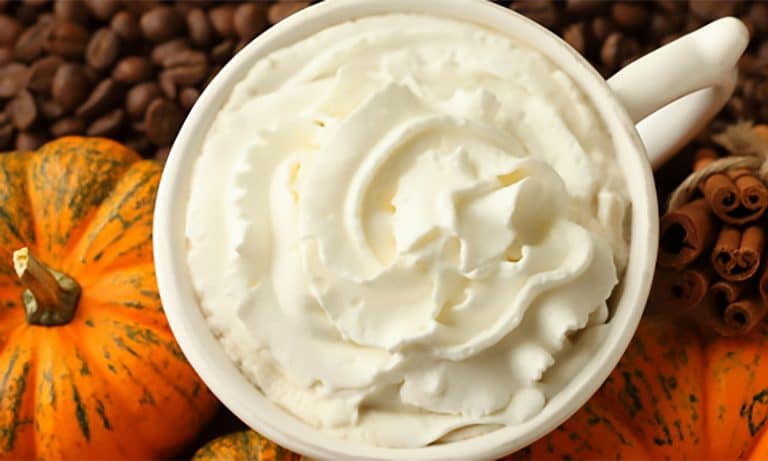
What better way to celebrate the first day of August than with pumpkin spice, right? I mean, who isn’t already wringing their hands in anticipation of cold weather, hot coffee and riding boots?
World Market decided that it’d get a leg-up on the cold weather competition by releasing this autumnal blend using the tagline, “It’s never too early for fall flavors!” But isn’t it? Really?
Get settled into your overstuffed chair with your Pendleton throw as you “sip subtle notes of pumpkin pie with hints of nutmeg, cloves and cinnamon.” Mmm…Thanksgiving!
Other flavors include Bourbon Pecan and Caramel Apple.
About 20 years ago, pumpkin spice and fall hadn’t found and fallen in love yet. Starbuck’s began working on a big fall beverage. Peter Dukes was part of the team to find an autumn beverage to delight the masses.
“We started with a huge brainstorm list and filled the wall with ideas,” Dukes said. “We probably had at least a hundred ideas up on the wall. And once we got those ideas, we started to whittle away at them and came down to a list of about 20 different flavors including chocolate and caramel – the most popular flavors to pair with coffee – and there was orange and cinnamon … and there was pumpkin there as well.”
When they asked potential customers what flavors they were likely to purchase, it was the chocolate and caramel beverages that reliably performed best. But there was something special about pumpkin. It scored high on “uniqueness.” Dukes and the team decided to explore it a bit further and keep it on their short list.
For the three months, the team refined the recipe, handcrafted with espresso, pumpkin spice sauce, and steamed milk – topped off with whipped cream and a dash of pumpkin pie topping. In a taste test alongside the chocolate and caramel beverages, pumpkin was the clear winner.
The NFL might be changing its mind on marijuana, if 2017 is any indication. News broke earlier this week via The Washington Post that the NFL offered to work with the players’ union to study marijuana as a form of pain management. The NFL Players’ Association hasn’t responded to the league’s offer, in part because the NFLPA is conducting its own study into the matter.
Now the NFL’s chief medical officer has come out in favor of marijuana research. Allen Sills is a Vanderbilt University neurosurgeon the NFL hired in March. He stated to the Washington Post that it’s “really important” the NFL and NFLPA work together in determining whether marijuana can be an effective and safe in managing players’ pain.
“I think we have a lot more to learn about that,” Sills told the Post. “Certainly the research about marijuana and really more particularly cannabinoid compounds as they may relate to the treatment of both acute and chronic pain, that is an area of research that we need a lot more information on and we need to further develop.
“I think that’s part of what we hope to accomplish together working together with the Players Association,” Sills said. “I think this is really important because I like to talk about that our approach to caring for players is really holistic. We want to talk about health and safety issues that affect the whole player experience. And certainly pain management is a big part of that.”
Just this year NFLPA executives and Dallas Cowboys owner Jerry Jones stated the NFL should relax its strict marijuana policies. (Though it should be mentioned Jones made his comments behind closed doors.) However, NFL Commissioner Roger Goodell made pejorative remarks regarding marijuana this April at the NFL Draft, stating cannabis has an “addictive nature” and could lead to “negative consequences,” minimizing the health benefits cannabis could have to its players.
Goodell reiterated throughout he was approaching cannabis usage from a “medical standpoint.” As he stated then, “So if people feel that it has a medical benefit, the medical advisors have to tell you that. […] To date, they haven’t said this is a change we think you should make that’s in the best interests of the health and safety of our players.”
Sills’ comments carry extra weight then, as the NFL’s chief medical officer. This could mean the league truly is willing to work with players on including marijuana as a pain management tool, or at least study its efficacy. Marijuana use currently remains banned under the league’s collectively bargained drug policy. Players who test positive for marijuana usage receive harsh penalties, including fines and suspensions.
“These really aren’t just football issues,” Sills said. “These are society issues, right? We know right now that as a society that the treatment of both acute and chronic pain is a huge public health problem. In fact, I think I just saw some recommendations of a congressional panel coming out asking that the president declare a national state of emergency about opioid use in this country. So these are societal issues. But I think that we in professional sports are in a unique position to help inform the public and to do research and really advance our state of understanding about this issue.”
Sandwiched between prison and freedom, 12 inmates briefly felt the call of the open air after using peanut butter to trick a guard into letting them out.
In a nutshell, the jailbirds squirreled away peanut butter from their sandwiches and used the sticky spread to partially conceal the number that identified the exit door.
AL.com spoke to Belinda Ann Weldon, an attorney who’s familiar with Walker County Jail and says it’s not hard to imagine how an inexperienced guard, watching inmates remotely, could be tricked.
“That placard has a number on it; it’s an off-white. They covered it in peanut butter. Say the number was an 8; they made it look like a 9,” she said. “He pushed the button for a door that instead of going into a dorm went to an outside door,” said Belinda Ann Weldon.
Six of the inmates were captured moments after their escape. Five more were caught within 24 hours. And the twelfth inmate, Brady Kilpatrick, was the one who made it the furthest by having his sister drive him all the way to Martin County, Florida. He was captured Tuesday night and faces additional charges in addition to his initial drug possession indictment.
Walker County Sheriff James Underwood told AL.com: “Look, I don’t like to brag, but we’ve never had an escape from the Martin County Jail. I can tell you this, he won’t be getting any peanut butter.”
In a fiery new interview, Christopher Ciccone has accused the pop queen of blacklisting him in Hollywood — and says he could have written another tell-all book about just how “horrific” she is.
“I could have written that book, the book about how horrifying she is or can be, but I didn’t write that book. I was just looking for a little recognition for the work I’ve done for 20 years with her, that it wasn’t one person.”
Ciccone says: “When I got back to LA my 500 acquaintances suddenly turned out to be four friends. She’s quite powerful in Los Angeles, in the industry. I was working in the industry doing music videos and tours and it was difficult to get work, if not impossible.”
He said: “Her performance lost its theatricality to me and lost its connection to the audience. That was disappointing. How many tours have there been since ’94? Five? It’s difficult to watch them because I know what she’s capable of. It’s all screens and projections and Kabbalah and all this other stuff that the audience doesn’t really connect to.”
He added: “I have nothing against Lady Gaga, she had some great tracks. I was never a fan of her performances or music videos as I always felt she was ripping us off.” He also shares his sister’s disapproval over Universal’s forthcoming Madonna biopic, “Blond Ambition.”
He insists the siblings have made progress, crediting their elderly father Tony for helping to repair their rift.
He said: “We’ve gotten past that, we talk. I just talked to her a couple of weeks ago when I was at my father’s vineyard. We email each other. Well, it’s passed for me, but I do know Madonna likes to hold grudges. There’s nothing I can do about that.”
Kristen Stewart On Whether She Would Ever Date A Man Again
“Yeah, totally. Definitely… Some people aren’t like that. Some people know that they like grilled cheese and they’ll eat it every day for the rest of their lives. I want to try everything. If I have grilled cheese once I’m like, ‘That was cool, what’s next?’”
Love the fresh dirt we bring over daily from Naughty Gossip? Let us know in the comments!
The New York Daily News was one of the guest stars at NYC Bubby’s Highline last night. The reason was The Fresh Toast milestone NYC media event to celebrate the first wave of content partnerships and significant traffic milestones.
The NY Daily News joins Salon, The Seattle Times, Pioneer Newspapers and Out magazine as the first mainstream media outlets that are syndicating content from The Fresh Toast.
“As part of the Daily News’ commitment to provide quality, entertaining and relative content to millions of our readers, we are delighted to be the first of many newspaper partners of The Fresh Toast for both cannabis and lifestyle content. Traffic demonstrates that our audience appreciates the daily dose of The Fresh Toast,” said Grant Whitmore, executive vice president of digital for the Daily News, which is reaches 40 million monthly users in digital and print.
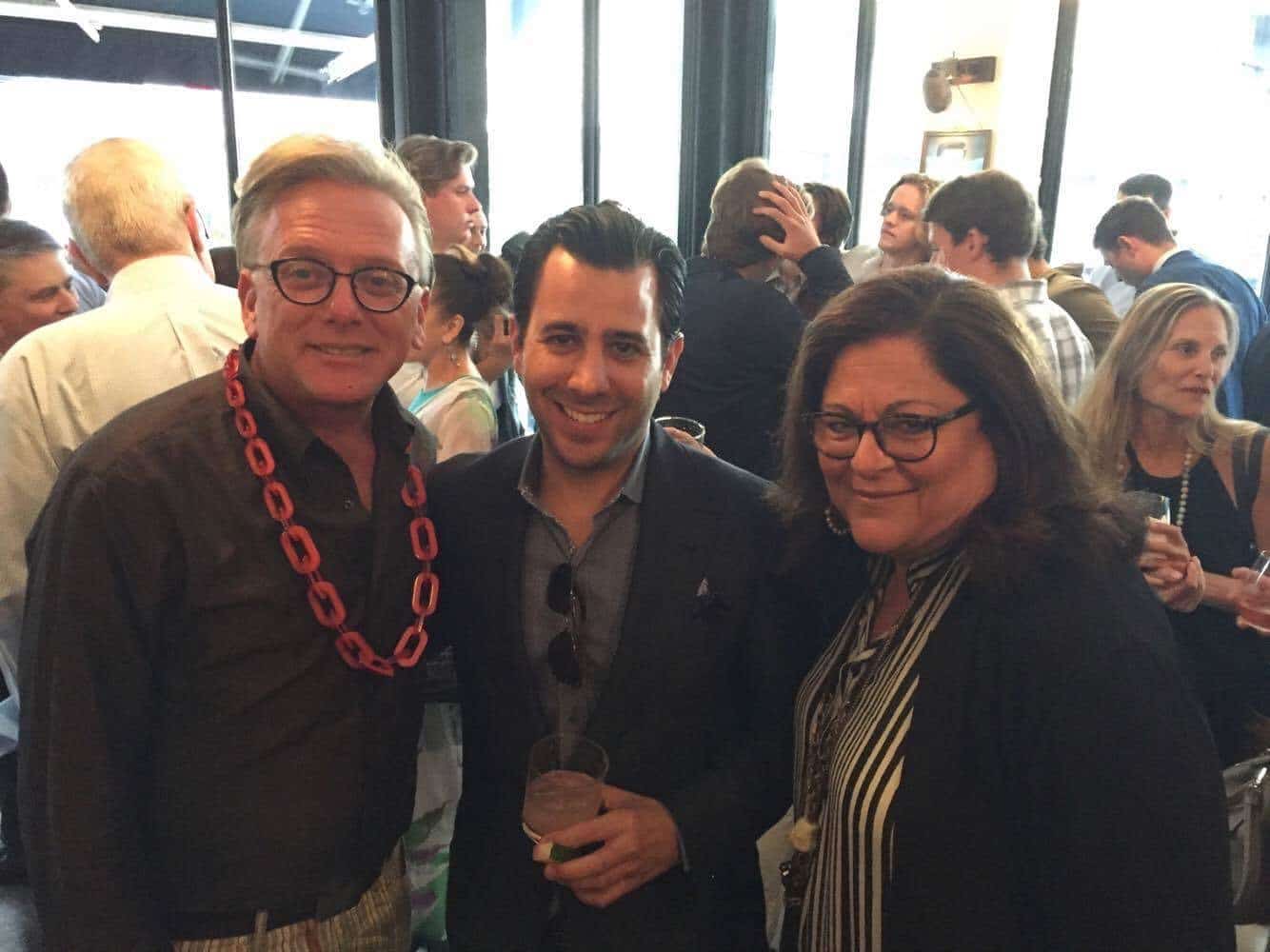
The Fresh Toast founder/publisher JJ McKay, President of Robert Graham Andrew Berg and fashion maven Fern Mallis.
Our other partnerships include Naughty Gossip (a very popular column among The Fresh Toast readers), CannabisClubTV, CannaLaw Blog, Whisky Wash and the Marijuana Business Association (MJBA). The Fresh Toast is positioning itself to be the trusted source for the mainstream, as well as a leader in the cannabis business community.
“The Fresh Toast is committed to producing engaging, fresh, trusted content daily, and we are forming partnerships to provide information our readers want and deserve,” stated JJ McKay, founder/publisher.
Jordon Hoffner, CEO of Salon Media Group has this to say about their partnership with The Fresh Toast: “We are excited about our partnership with The Fresh Toast as Salon continues its mission to be a beacon for independent journalism across the cultural spectrum.”
Nick Lucio, founder of Dolce Vita Shoes, Karen Duff Lambros
The posh media-filled crowd “toasted” key traffic milestones for The Fresh Toast. The site, which is barely eight months old, now reaches over 275,000 readers monthly, and boasts an almost-even split of men and women, both of which are consistently engaged on a daily basis.
Several The Fresh Toast investors were heard commenting on how glad they were to get in before the equity round. They were amused at the diversity of financial backers, who come from both the right and left of the political spectrum and include some very blue-chip names.
It was perfect summer weather as the crowd spilled out of the Southern hot-spot. During the evening, Naughty Gossip founder Rob Shuter kept the audience spellbound during his speech and sharing celeb stories. Comedian Robert Galinsky was heard talking about his new one-man play and The New Yorker executive Risa Aronson held court in a corner by the bar.
GoFire, a new vape that provides the perfect medical dose, was the sponsor of the event and CEO Peter Calfee regaled the crowd on the adventures of a fast-growing start-up. Ron Silver, owner of Bubby’s, was there with business partners discussing their new cannabis company Relevant Innovations.
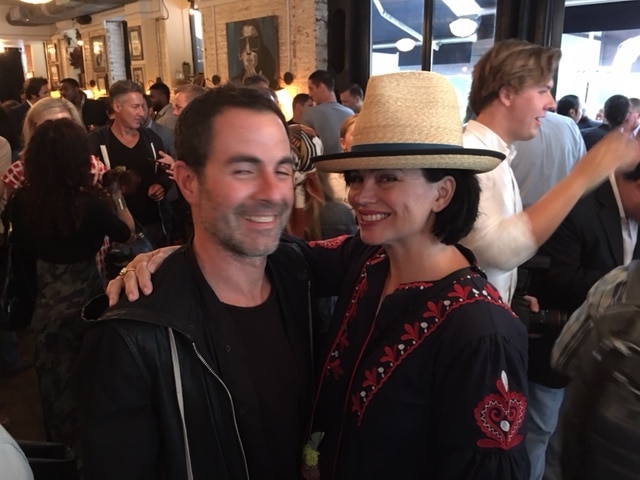
Founder/ Publisher JJ McKay was spoke and chatted with friends and industry leaders. Among the other celebrated attendees were NYFW maven Fern Mallis; Judith Regan; Andrew Berg; the president of Robert Graham; Real Housewives of NJ’s Kathy Wakile and husband Richard; Claire Aidem; former Jets safety and now health and sports talent Erik and Sabrina Coleman; Stacy Dreyfus; Cowen & Company’s cannabis expert Vivien Azer; Victoria Ashley; Revlon’s head of global public relations, Gareb Shamus; Valerie Greenberg; on air talent including “The Today Show,” Kate O’Brian; former head of ABC News and former Al Jazeera America; famed singer Anna Bergman; Luc-Henry Roussell; fashion industry executive Grace Cha; artist Richard Taittinger; Dolce Vita shoe founder Nick and Jessica Lucio; Consuelo Vanderbilt Costin Christopher Mason; Duff Lambos; Andrea Warshaw-Wernick; Cannabrunch founder Noa Kahner and her investment banker husband Andrew; Alan Valdes; Silverbear Capital partner and CNN commentator, Ronald Riqueros; and media executives from the New York Times, CNN, the Wall Street Journal, Men’s Health, Time, Conde Nast and Yahoo.
Media Executive Claire Adiem, Food & Travel Guru Stacy Dreyfus, Cowen & Company Executive Vivien Azer
Jeanne & John Sullivan
Alan Valdes, Silverbear Capital & CNN Commentator, Jared Blikre, Anchor at Yahoo Finance, Julie Ratner, Philanthropist, Grant Whitmore, EVP, Daily News
Daniel Short, Cannalaw Blog
Justine Underhill, Anchor, Yahoo Finance
Thomas Farley, Mr. Manners, the Today Show
Grant Whitmore, EVP Digital, NY Daily Nws & date
Model Mattheus Lian, Matthew Adams Dolan CEO Steven Threet, James Camp, Tipping Point Agency, Tom Bell, Gelband Captial, Jake Ellman, Daily Marijuana Observer Founder/ CEO
Jeffrey Beary, ValueWorks and Tristian Govignon, artist
Kate O’Brian, media executive & Joanna Molloy, journalist
Jeff Barish, Time Magazine, Elan Barish, Lucky Marketing, Risa Aronson, The New Yorker, JJ McKay, Founder/Publisher The Fresh Toast
Naughty Gossip founder Rob Shuter speaking to the crowd
Andrew Berg, President, Robert Graham, Erik & Sabrina Coleman, Luc-Henry Rousselle, LSH Partners, Richard Taittinger, artist
Real Estate maven Andrea Warshaw-Wernick & Consuelo Vanderbilt Costin
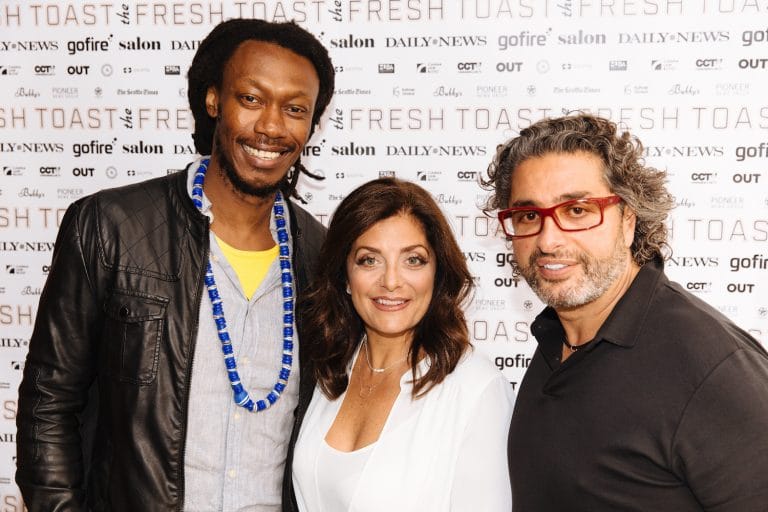
The Fresh Toast EIC Kelly Barbieri, Rob Shuter and marketing managerJake Silvestri
Stacy Dreyfus and Guy Heksch, Global VP, Marriott
Jimmy Chou, CEO of the World League Don Hartesell, On-Air Talent Natia Gvazava and Alan Valdes
Contrary to popular beliefs regarding subpar dining restaurants and avocado toast, millennials are not ruining everything. Instead millennials as a generation have demonstrated a changing value system, one not predicated on tradition. These cultural items don’t have value just because your elders say they do.
One shifting millennial lifestyle change focuses on beer. As the New York Post wrote, “Millennials more and more want to get wasted in style.” This trend has cost major American breweries dollars, as Goldman Sachs downgraded Boston Beer Company and Constellation Company this week. As Goldman reported, this comes as millennials opt for wine and spirts rather than beer.
This comes months after Cowen lowered its rating on Molson Coors, citing increased marijuana usage that would replace beer consumption as a factor. In that same report, Cowen noted that alcohol consumption declined amongst 18-to-25-year-olds while marijuana usage rose.
Goldman downgrading Boston Beer and Constellation seems to fall in line with that trend.
“As we explored back in 2014, we expected a cyclical rebound in total alcohol consumption post-recession,” wrote chief analyst Freda Zhuo in a note obtained by CNBC. “The cause [for shifts in beer and wine market penetration] is younger groups shifting away from beer.”
While the craft beer industry continues to expand its volume production, it has noticeably slowed from the explosive boom seen just a few years ago. The Brewers’ Association noted that mid-year production growth rose just 5% in 2017. To compare, the craft beer industry had a 16% production growth in 2015.
Marijuana legalization seems to have played a factor in both cases. As Cowen analyst Vivien Azer wrote back in April, “Coming out of the recession, alcohol’s recovery has been uneven, while cannabis incidence (and legal sales) have both risen markedly. We believe this sets up the alcoholic beverage category for another cycle of falling per capita consumption. With cannabis adoption accelerating, alcohol volumes will remain under pressure.”
I admit it: I love Cheez Whiz, Froot Loops and Oreos as much a the next person … especially after smoking weed. But getting the munchies does not mean you have to snarf down a bunch of junk food, especially in the summer.
As we roll into August, it’s a great time to combine cannabis with your favorite summer fruit. Nothing tastes better on a hot August night than a chilled slice of watermelon or a handful of cherries.
Add these some delicious seasonal fruits to your shopping cart the next time you’re at the corner grocery:
1. Watermelon
For most of us, cannabis causes the munchies and dry mouth. Watermelon is great for both. Not only does the fruit provide enough sugar to satisfy your sweet tooth, it is 91 percent water. For those who suffer cotton mouth, watermelon is the perfect antidote.
2. Cherries
If you’re not careful, you may mindlessly eat an entire basket of cherries while intoxicated. The best advice is to put a serving or two in a bowl and leaving the rest of the cherries in the kitchen. A serving of cherries is about 10-12. Cherries are 82 percent water, so it will help with dry mouth.
3. Mangoes
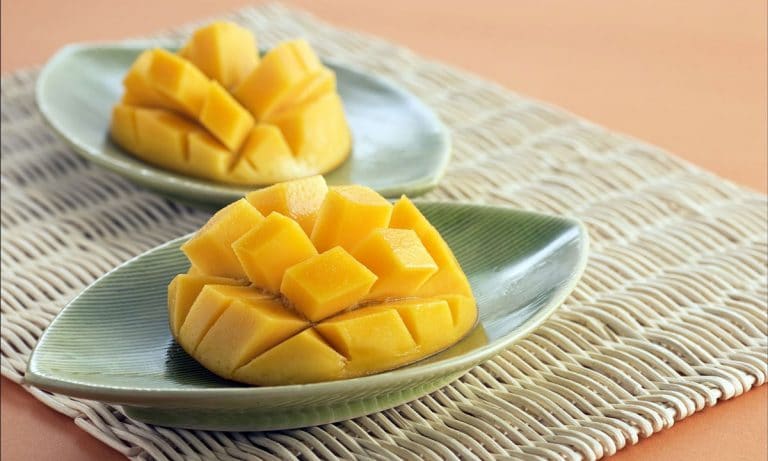
Mangoes and marijuana are the perfect together. Not only will you treat yourself with a taste of the tropics, mangoes will lengthen the euphoric feelings felt after smoking or vaping marijuana. Eating the tropical fruit 45 minutes or so before a cannabis session will allow the THC to absorb into your body quicker and the high will stay with you longer. For some, the intoxicating feeling will be slightly more intense.
4. Peaches
Stone fruit and cannabis are a great combo. Peaches, nectarines, apricots, plums … it doesn’t really matter. This is the time of year when these fruits are at peak availability. Stock up on some stone fruit and have them on hand when you, well, get stoned.
5. Pineapple
You’ll feel like you’re on a tropical island when you combine cannabis with pineapple. The sweet, juicy, messy fruit works perfectly with marijuana: lots of sugar to satisfy the sweet cravings and loaded with water to keep your mouth happy.
6. Avocado
Yes, technically, avocado is a fruit. The versatile avocado can be used to make guacamole, or toss some in a salad or spread some on toast.
Famed explorer and TV host Paula Froelich, who has saved rhinos in Africa, skied in Afghanistan, documented the ancient artifacts of Iraq and recently came back from an Arctic expedition was shocked when her fans alerted her to Chelsea Handler’s new segment on Netflix called ‘A Broad Abroad.’
“I own the trademark to A Broad Abroad,” Froelich tells Straight Shuter. “It’s a popular brand that I’ve worked very hard on for years. I’m a little shocked. I’m a fan of Chelsea’s and really like what she’s doing especially in the travel space. I’m just a little surprised no one on her team did a Google search.”
We are shocked as well. Froelich’s series, originally on Yahoo, has received millions of views and is considered one of the most respected and funny travel shows in the business.
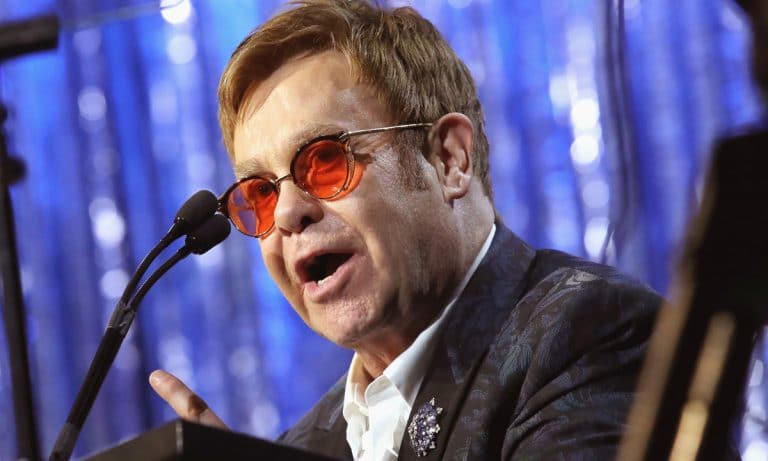
Elton John’s Husband Partying With Young Handsome Men
“The guys looked to be having an amazing time eating and drinking and laughing without a care in the world. At one point one of the guys had his arm around David as the others smiled. The only person who was missing was Elton,” sources tell Straight Shuter. “The group which seemed to consist of men only were having dinner at Nobu and some were also seen partying at VOID club – once again there was no sign of Elton.”
However, one pal adds that Elton and David often vacation separately. David has his handsome young male friends and so does Elton!
Love the fresh dirt we bring over daily from Naughty Gossip? Let us know in the comments!
Not known for being politically correct, it seems Coulter is willing to insult the vast majority of people by her use of the antiquated and offensive word ‘retarded,’ though, sadly, when she made her remark at the bipartisan Politicon over the weekend, she got some laughter. Perhaps mostly nervous twitter, but laughter nonetheless.
It’s enough to make one shudder. From the great, marijuana steeped mind of Carl Sagan to the athletic prowess of weed user Michael Phelps and all the other stony geniuses in between, to have used such a word was almost as ironic as it was offensive. Almost.
She made her remark after being asked if marijuana should be legalized in the U.S. Her exact answer was, “You can legalize all the drugs you want when there isn’t a welfare state. No, marijuana makes people retarded, especially when they’re young.”
Compounding the offensiveness is the implication that cannabis is contributing to the “welfare state” of Coulter’s dark imagination.
The exchange happened when fellow panelist Ana Kasparian pointed to the divide between blacks and whites when it comes to cannabis charges and arrest rates.
Coulter had something to say about that, too, claiming that a study showed that black people were more likely to lie about their cannabis use than the rest of the humans. The study source was never stated.
Luckily, Kasparian was there to talk sense, saying that persecuting people for pot possession is “a waste of our resources.”