Thursday, April 30, 2026
Home Blog Page 1257

Memorial Day: Veterans Need Access To Medical Marijuana

This Memorial Day, along with the beer and the barbecues and the beach parties, let’s take the time to reflect upon the falling American heroes who died while serving our nation.

But don’t stop there. Now is the time to let our elected officials know that taking care of our troops when they come home needs to be a national priority.

As we send our young men and women overseas to fight for our national interests, more and more of them are suffering not from bullets, but from post-traumatic stress disorder. An estimated 8,000 veteran commit suicide a year — 22 a day. These are deaths attributed squarely on our War on Drugs.

Our elected officials prevent doctors at the Veterans Administration from even mentioning with their patients the benefits of medical marijuana, despite the fact that research continues to suggest that it would help veterans struggling with PTSD.

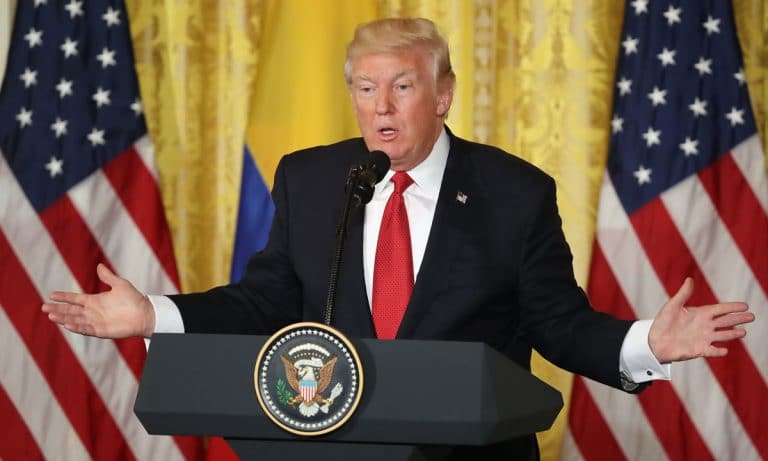
Just earlier this week, the American Legion, America’s largest veterans organization, urged President Trump to reschedule marijuana once and for all.

“We are not asking for it to be legalized,” Louis Celli, the Legion’s national director of veterans affairs and rehabilitation told Politico. “There is overwhelming evidence that it has been beneficial for some vets. The difference is that it is not founded in federal research because it has been illegal.”

The failure to act is a national disgrace. If we truly support our troops and want to keep them alive, it is time to end this senseless War on Drugs and provide medical relief to those who are fighting for us.

Instead of considering cannabis as a method to relieve those suffering from PTSD, VA doctors are left with opioids as the only remedy in their medical kit. And a disproportionate amount of veterans are suffering from opiate addiction. It’s an epidemic that cries out for a new solution.

“I have been deeply troubled about our inability to adequately deal with our returning veterans from Iraq and Afghanistan,” said Rep. Earl Blumenauer (D-Ore.). “A lot of them are suffering from PTSD, chronic pain, traumatic brain injury, and these are all conditions that have been shown to respond to medical marijuana.”

A study published by the American Journal of Public Health suggests that access to cannabis was associated with an 11 percent reduction in the suicide rate males aged 20 to 29 and a 1o percent reduction in the suicide rate of men aged 30 to 39. Another study shows deaths from opiate overdoses decreased 25 percent in those states with legally accessible cannabis.

Dr. Sue Sisley, a cannabis researcher who is studying the benefits of cannabis for sufferers of PTSD, said the American Legion’s support should be an impetus for change.

“I consider this a major breakthrough for such a conservative veterans organization,” said Sisley. “The American Legion has a tangible policy statement on cannabis that will allow them to lobby and add this to their core legislative agenda. The organization has a massive amount of influence at all levels.”

Sadly, these pleas are falling on deaf ears in Washington D.C. The new administration has been sending out mixed messages on its cannabis policy, but all signs point to a doubling down on the failed drug war.

This Memorial Day, ask yourself a simple question: Why are we denying effective treatment for our brave men and women in uniform who are desperate for comfort?

As we remember our fallen soldiers, it is incumbent among us to continue fighting for them.

It is time to end our insanity.

This Survey Says Millennials Have The Biggest Equipment

For all the negative attention millennials get for their immaturity or reliance on emojis to convey emotion or whatever it is this week, they do reportedly have one advantage over other generations: Bigger personal equipment.

Related Stories: 8 Sexy Pro-Tips For Handling Very Big Packages

As The Sun notes, a 2016 study by King’s College London of 15,521 men found that the average penis was 5.16 inches long when erect. But a 2017 survey by the condom company SKYN found that 8-to-34-year-olds reported having an average penis size of 6.1 inches when erect.

purple eggplant

One way to interpret these results is that somehow young men’s penises are growing larger, which would be wonderful news for anyone sexually attracted to men.  There is a phrase about mean and their toys.

But another way to read those results is to note the highly flawed way in which the survey was conducted. More than 3,000 people who claimed to be sexually active men filled out an online report for the “study,” which means there’s no way to independently verify the supposed men’s answer. For example, a man with a 5-inch schlong could have skewed the results by writing that he had a 7-inch schlong.

Related Story: People Who Use Weed Also Do More Of Another Fun Thing

green emoji standee

The millennial generation was also the first to have parents who told them everything they did was good and they received rewards for showing up.  So, thinking they are the best, and biggest would appear part of the mindset. While the survey says a generation may have bigger action items, chances are they aren’t. Nature just doesn’t work that fast.

Why Did These Germans Build A Literal Pipeline For Their Beer?

Organizers for the world’s biggest metal festival expect metal heads to consume so much beer they’re constructing a beer pipeline. The underground pipeline will be seven kilometers long and funnel 400,000 liters of beer to the festival. It will hold enough pressure to pump six beers in six seconds. To anyone who stood in line for a beer at concert, this will sound like a godsend.

Around 75,000 metal fans attend the three-day Wacken Open Air Festival each year. On average they consume about 5.1 liters of beer during the course of the festival, according to Statista. Festival spokeswoman Frederike Arns told Deutsche Press Agentur the pipeline will stop beer trucks from tearing up the land.

“In this way, we will no longer have to distribute truck loads of beer kegs across the premises each day,” Arns said.

The pipeline will be buried 80 centimeters and allow the festival land to be farmed normally throughout the year. It will also keep the beer cold, which we’re sure the metal heads will love.

Wacken Open Air will take place August 3-5 and feature more than 150 bands and headliners Megadeath, Alice Cooper, and Marilyn Manson.

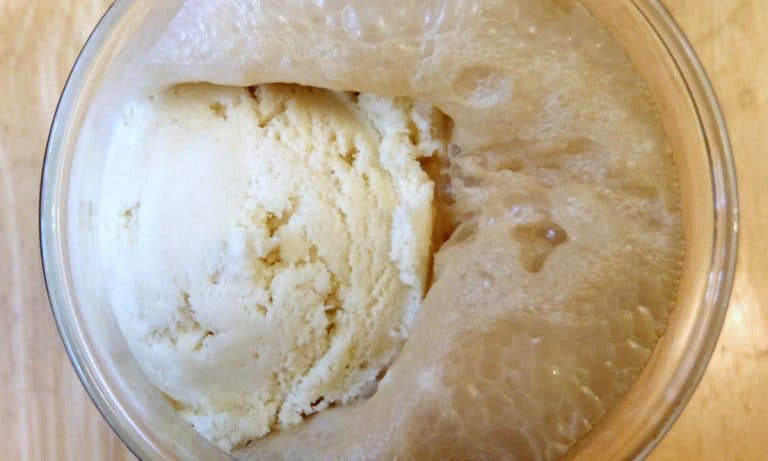
10 Sensational Boozy Ice Cream Floats For Sweltering Summer Days

Is there a better pairing than a bubbly drink and ice cream for warm days? We don’t think so. We picked out our 10 favorite boozy ice cream floats and paired them with their most delicious images, so be prepared to salivate over this countdown with us:

Champagne & Raspberry Ice Cream Float

Boozy floats are the perfect marriage of childhood nostalgia and being an adult. This float is pretty straightforward, with simple ingredients that include vanilla ice cream, raspberries, champagne and a simple homemade raspberry sauce that adds a delicious kick to your drink.

Prosecco & Pineapple Sorbet Float

Since this is a sorbet, it’s light and perfect for dessert or brunch, and its also super easy to use because you don’t even need ice cream. All the recipe requires is a blender, some pineapple and its juice and to let it freeze overnight.

Peach & Prosecco Fizz

Again, since this is a sorbet, the drink is very easy to make and it has a super fresh taste that’s perfect for hot summer days.

Strawberries & Cream Champagne Float

Strawberries and Cream are amongst the world’s most delicious and famous pairings, duplicated in ice cream flavors, cookies and everything delicious. By pairing strawberries with vanilla ice cream and some booze, you’ll have the best treat ever and get tipsy in the meantime. What’s not to love?

Mixed Berry Prosecco Float

This colorful drink can be prepped as a cocktail or a shot, both delicious and amazing.

Prosecco & Lemon Sorbet Float

Well as I was just passing …. #swiftbar #sorbetfloat #youcanbemynewhome #twr

A post shared by Cocktails and Lingerie (@cocktailsandlingerie) on

This recipe is perfect for when you’re craving for a float that’s not too sweet. By adding some mint, you can give it a sort of lemonade-ey vibe that’ll drive anyone crazy.

Mango Sorbet Float

A post shared by @serenam77 on


These sparkling floats look delicious and fancy due to bubbly champagne and the bright yellow of the mango sorbet.

Aperol Spritz Float

A post shared by @aperolusa on

Aperol is an Italian liquor that’s consumed after meals or as an aperitif. This recipe uses the liquor as a base for the ice cream and also as the alcohol part of the drink, so be prepared for some strong and yummy flavors.

Pink Grapefruit Champagne Float

A post shared by Regie S (@regie__s) on

Grapefruits are exotic and delicious, so be sure to use some really good grapefruit ice cream so your drink can be the most flavorful cocktail it can be.

Strawberry Lemonade Champagne Float

Strawberry lemonade is arguably the best drink in the world, so it makes a lot of sense that when paired with ice cream and champagne the results are otherworldly.

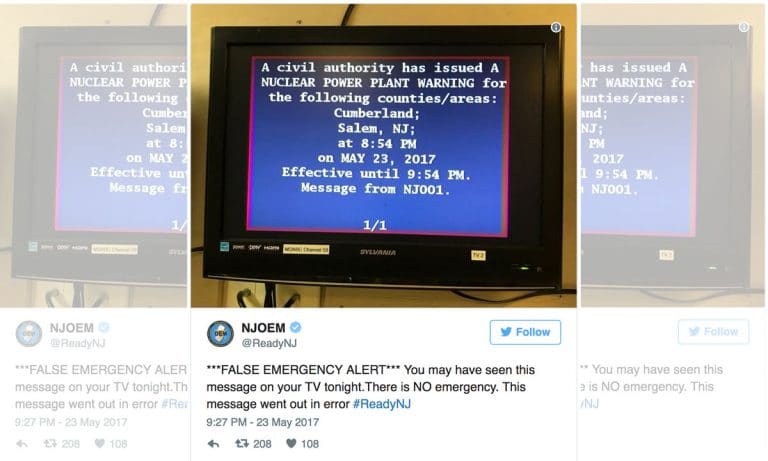
This Terrifying Emergency Warning Popped Up During Prime Time TV

Last week TV viewers from the southern area of New Jersey saw a sudden terrifying emergency warning message that interrupted their prime time scheduling. The warning included words like “nuclear power plant,” which obviously got people riled up.

The New Jersey Office of Emergency Management claimed that the warning was a training exercise and that there was no need to worry. The agency explained that the broadcast was meant to be seen by a small group of people who were participating in the exercise and that due to a coding error they ended up broadcasting the message to the whole area.

The warning was viewed by the residents of Salem County and Cumberland County, where there’s a population of 215,000 people. The Salem Nuclear Power Plant is located in that county and it’s one of the location’s main attractions.

I don’t know about the people from Salem or Cumberland, but I would’ve been super freaked out knowing that I live close to a nuclear power plant that’s entered an emergency status, whatever that means. It’s kind of a bad time to be making that sort of mistakes. You can’t kid around with anything that’s nuclear right now guys, come on.

The US Is Set To Be Left Out Of The $7.2 Billion Marijuana Industry

President Donald Trump prides himself on his business acumen. But his protectionism may get America a truly bad deal when it comes to North America’s next big market: marijuana. The Conversation

Fulfilling a campaign promise, on April 13 Canadian Prime Minister Justin Trudeau presented a bill to legalize cannabis for recreational uses (medical marijuana has been legal in the country since 2001).

Two weeks later, Mexico’s Congress followed suit, passing a bill to authorize cannabis use for medical and scientific purposes.

Two of three North American countries are now well positioned to unlock an industry that, according to Forbes magazine, was worth an estimated $7.2 billion in 2016 and is projected to grow at a compound annual rate of 17 percent.

In the US, on the other hand, a protectionist administration has threatened to withdraw from the “terrible” North American Free Trade Agreement (NAFTA) and actively relaunched the US drug war. It looks like America’s businessman president may allow his country to miss out on the cannabis boom.

Prohibition Is A Commercial Disaster

Medical marijuana research is a growth industry. Cannabinoids, a main (non-psychoactive) chemical component in marijuana, hold significant prospects for development in the pharmaceutical industry, as potentially does tetrahydrocannabinol (THC), the ingredient that makes users feel high.

Marijuana has been scientifically proven to soothe the effects of chemotherapy, treat glaucoma and ease some chronic pain. But many fields of inquiry remain untapped, thanks in large part to stringent US laws that classify cannabis as a Schedule I drug. That’s the most tightly restricted category, reserved for substances with “no currently accepted medical use.”

Pharmaceutical companies are keen to further disprove that thesis, knowing they will soon be able to patent cannabis-based medicines in both Mexico and Canada. Patients and doctors, too, have pleaded for restrictions on medical marijuana research in the US to be eased.

In the US, eight states and Washington, DC, have also legalized recreational marijuana. A total of 29 states plus the nation’s capital have legal medical cannabis.

But US Attorney General Jeff Sessions (who has declared that he “rejects the idea that America will be a better place if marijuana is sold in every corner store”) and Homeland Security chief John Kelly (who has erroneously called marijuana a “dangerous gateway drug”) consistently overlook this fact.

The Trump administration is determined to revamp prohibitionist policies. In a radical rollback of Barack Obama’s compassionate approach to nonviolent drug offenders, Sessions has actually ordered federal prosecutors to charge suspects of any drug-related crime with the “most serious, readily provable offence”, or whichever crime entails the harshest punishment.

This move will have well-documented implications for law enforcement. In 2015, marijuana arrests outweighed those made for all violent crimes combined, including murder and rape, 574,000 to 505,681, according to the NGO Human Rights Watch.

Now America’s drug war will have commercial consequences too. In the US, the National Institute on Drug Abuse has developed research mainly on the negative effects of cannabis, only marginally considering its potential medical uses.

Medical trials conducted on human beings require permission from several federal agencies, including the Department of Health and Human Services, the Food and Drug Administration, and, when it comes to illegal substances, the Drug Enforcement Agency. That makes getting clearance for cannabis trials unduly complicated.

The inconsistencies between federal and state legislation also discourage research because they do not offer a secure legal ground for patenting cannabis-based medicines. Potential investors in medical cannabis are forced to consider not only corporate competition but also criminal prosecution.

Likewise, because budding American cannabis producers struggle to access investment funding, the industry’s growth potential remains stunted.

Outsmarting Trump

If all of this sounds bad for American investors and patients, it’s good news for Mexico and Canada.

The Mexican medical marijuana bill championed by President Enrique Peña, who is not a bold politician, is quite limited. It emerged in response to the story of Grace, a profoundly epileptic eight-year-old girl for whom cannabis oil, illicitly administered by her desperate mother, proved a literal lifesaver.

By removing from cannabis the legal label of “forbidden plant”, the law will enable it to be used for medical or scientific purposes and permit the health ministry to conduct clinical research.

In legal terms, Mexican cannabis is now a commercial good that falls under NAFTA’s purview. Medical cannabis is estimated to bring in between $1 billion and $2 billion to Mexico over the next 10 years.

Canada is making a bigger bet on marijuana. Once its cannabis-regulation bill is implemented in July 2018, it will become the second country in the world to fully legalise marijuana, after Uruguay. It will stop short of establishing an open market, though; provinces will decide where and how marijuana may be sold and priced, in conjunction with the federal government.

As in Mexico, Canadian cannabis will comprise a commercial good. Its medical marijuana market is expected to be worth $1 billion by 2020, while recreational marijuana prospects run as high as $22.6 billion.

Once both countries’ systems are up and running, cannabis trading between Mexico and Canada can begin. The world’s first cannabis-focused exchange traded fund has already opened on the Toronto Stock Exchange.

In theory, Canada and Mexico could also trade medical marijuana with dozens of US states. But given the current administration’s “America First” motto, anti-Mexico rhetoric and fear mongering about drugs, that may prove difficult.

The Biggest Losers

The federal government is also forcing the US to miss out on something more valuable than profit: improving public health and social well-being.

Drugs in general and cannabis, in particular, can do harm if misused. But they are far less dangerous than the drug war itself. After all, the health risks associated with legal cannabis can be prevented by strict packaging and labelling guidelines.

For Canada, which has long been progressive in its drug policy, cannabis legalisation should continue to reduce the harm created by the illicit drug trade.

Mexico’s bill has more radical implications for health and public safety. An average of 51 people die every day in the country’s violent drug war. That’s so many homicides that male life expectancy has actually dropped by more than half a year since 2010.

For many Mexicans, the revenue from medical marijuana is less important than the possibility of rolling back the deadly drug war. The country’s timid steps towards legalising medical marijuana have begun a critical process of democratic deliberation around using the military for law enforcement in the war on drugs.

As for the US, it needn’t miss out. If only to keep America from falling behind Canada and Mexico, a scenario that would haunt its president, Trump could take action to improve the health, wealth and safety of his people. And that, to use his own words, would actually be a “fair deal for all”.

This article written by Luis Gómez Romero and  was originally published on The Conversation. Read the original article

[gravityform id=”14″ title=”true” description=”true”]

Stop Complaining About The Alamo Drafthouse Hosting An All-Female ‘Wonder Woman’ Screening

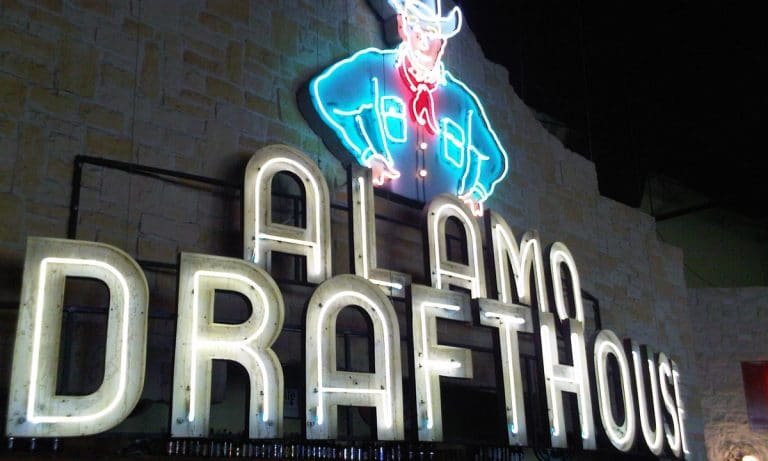
At this point the Alamo Drafthouse is delivering better marketing for Wonder Woman than Warner Bros. or DC Comics. The Drafthouse is an Austin-based theater chain, which serves food and drink during films. They’re renowned for their celebration of all movies, with a strong fondness for genre fare, and often host specialty screenings for movies new and old. These specialty screenings have included military screenings, watching Jaws while floating in a lake, and Quentin Tarantino showing some of his favorite movies.

For DC’s upcoming Wonder Woman, the Drafthouse created a screening event that would be women-only as a way to celebrate the film’s heroine and women everywhere. Even the wait staff and chefs serving delicious treats would be women. The event would be a strict “no boys allowed” club, though men would have various opportunities to see the film at the Drafthouse over the course of its opening weekend.

Some guys did not like this at all. That is, if you only listen to the loudest dissenting voices on the internet anyways.

Trolling comments filled the Alamo Drafthouse’s Facebook when promoting the event. To their credit, they clapped back quite humorously to the silly boys who had a problem with this.

Here’s the thing: You don’t need me telling how outrageous it is these guys are finding offense in this. The attention placed on this women-only screening actually encouraged the Drafthouse to extend the event to their other non-Austin locations nationwide. Why should you care a bunch of women are hosting other women to watch a movie about a bad-ass woman while eating food cooked by women? You shouldn’t.

Imagine a boy who was allowed to eat all the chocolate chip cookies he ever wanted. Friends, family, the government even structured rules around him eating chocolate chip cookies wherever and whenever. Then a girl in this boy’s class threw a chocolate chip cookie party that was “no boys allowed.” The girl would host the party in her bedroom, out of sight and out of mind, and this boy found out. He could still eat all the chocolate chip cookies he ever wanted wherever and whenever—just not in this girl’s bedroom for two hours on a random Tuesday.

Now imagine that boy somehow being upset by this. Imagine a boy being so upset about not eating chocolate chip cookies in this girl’s bedroom for two hours on a random Tuesday he’d protest loudly about it (on the internet) (while eating two boxes of chocolate chip cookies).

This is what’s going on. The outrage is dumb and really a non-controversy whatsoever. I hope the Alamo Drafthouse—my hometown theater of which I’m a huge fan—hosts even more female-only events and continues creating indelible theater experiences for their fans. The Drafthouse is a rare beacon of championing film and deserves all the credit it receives. To the rest of you somehow nonplussed by any of this—shut up and eat your damn chocolate chip cookies in silence.

What Song Are Australians Trying To Make The New National Anthem?

Who better than OutKast to write your country’s national anthem? Just imagine the Star-Spangled Banner OutKast would craft, with Andre 3000’s rhymes and Big Boi’s hooks.

Well some in one country are trying to make that reality recently. A group of Australians are trying to replace their country’s national anthem with OutKast’s 2003 hit “Hey Ya.” You may be wondering how or why “Hey Ya” instills national pride in these folks, but if America’s government announced “Hey Ya” was now our national anthem tomorrow, would you really question it? You wouldn’t rather hear “Hey Ya” before football games and recited every morning in public elementary schools across America?

All we’re saying is we get it, Australia. And while only four petitioners actually signed the bid to replace “Advance Australia Fair” with OutKast’s “Hey Ya,” the government still acknowledged and reacted to it.  The Australian Prime Minister Malcolm Turnbull responded in written letter to Parliament on Monday.

“The Australian National Anthem is widely accepted and popularly supported by a majority of Australians. The Australian Government has no plans to change the Anthem,” reads Turnbull’s letter.

“Thank you for bringing this petition to my attention. I appreciate the important work of the Standing Committee on Petitions in putting community concerns before the Parliament.”

Perhaps you read this as a standard bureaucratic rejection letter. It’s probably intelligent to read it that way. But for the rest of us we’d prefer believing one day OutKast will blare as our national anthem. Until then, Australians will have to settle for this local cover of the national anthem remixed to the melodies and rhythms of “Hey Ya.”

All The Nope: These Dads’ Cringeworthy Gender Reveal Stunts

I’m a millennial who hasn’t had a serious relationship in two years, finds modern romance too often a bankrupt enterprise, believes the world has overpopulation issues, doesn’t plan on or want kids anytime soon (knock on wood), thinks social media encourages humans to treat their lives like theatrical performances, and more. So perhaps take the following sentence with a giant tub of salt. The “Gender Reveal” is super dumb.

The gift of life is beautiful and wonderful, but wanting such applause from learning your child’s gender isn’t. Don’t make us join your cult of joy (or misery) that you’re having a boy.

But I’m clearly in the minority on this one as gender reveal events have only drawn dramatically in competition as a recent VICE article noted. Dads are using their future baby’s designated gender to blow up shit and jump out of planes and build Rude Goldberg contraptions.

And people love them! These videos often rack up more than hundreds thousands of views online, only encouraging future parents to participate in the trend. The most popular fads include Tannerite colored explosions and dads doing burnouts in their classic cars that kick up blue- or pink-colored smoke.

Via VICE:

By 2012, the trend had really taken off, with thousands of gender reveals being posted to social media. Today, a search on YouTube brings up more than 620,000 results. Right now, we’re at a point where the growing trend, fueled by YouTube views and Facebook likes, has inspired many expectant parents to really up the ante.

We’ve reached the point where Phantom Fireworks has a special Gender Reveal fireworks section on their website. Everyone is trying to make their gender reveal as dramatic and big as possible.

Who knows where this trend will end up? The VICE writer openly wonders whether these “epic gender reveals” could lead to someone being seriously hurt in the process. It’s very possible and that would be very sad. Because then you might miss snapchatting your child’s every waking second, which we all want to see.

This Whiskey Costs $15K And Fans Say It’s Worth It

First: The Old Rip Van Winkle Distillery has announced the release of 710 bottles of  25 year Old Rip Van Winkle Bourbon, bottled at 50% ABV; silver-stoppered 750 ml crystal decanters, each packaged in a hand-crafted presentation box made from the staves of the eleven barrels that made up the dump, for a suggested retail price of $1,800. Yeah. List price of $1,800.

“We are excited to be able to offer something so unique and rare for our most devoted fans,” said Julian Van Winkle, distillery president, at the time of release. The whiskey was distilled at Stitzel-Weller in 1989, aged on low-level warehouse floors there and at Buffalo Trace, and dumped to stainless in 2014. It is unquestionably rare – any 25 year old bourbon is, a drinkable 25 year old even more so – and as time moves on, bourbon distilled at Stitzel-Weller before they closed in 1992 only becomes more rare.

Old Rip Van Winkle 25 Year Old Bourbon

Given the 2009 price of $1,500 for the last reserves of A.H. Hirsch 16 year old (in a similarly lush package), and the current madness for Van Winkle bourbon, it’s not even an unreasonable price. But then, the list prices for Van Winkle bourbons have always been relatively reasonable, which leads us to the next point.

Second: A handful of stores have already advertised this whiskey for sale, at an asking price of around $15,000, an 833% increase over the list price.

My reaction on seeing this amazing announcement was cynically swift and simple: ‘And they’ll get it,’ I thought.

It’s not just Van Winkle, though that’s completely seized the minds of money-laden whiskey noobs. It’s the idea of whiskey as an “investment.” There are bottles that never even touch their buyer’s hands; they just sit at the auction house, appreciating in value. A year later, new auction, cha-ching!

The attraction is compelling. I just read today that someone bought a full set of the Glenfarclas Family Casks when they first came out ten years ago, paying £6,500. Today that set is being quoted at £100,000, a nice round number. That’s a compound annual growth rate of 31.42%. (Wish I’d bought five sets back then, but I’d probably just have empty bottles now.)

But here’s the thing on that. Van Winkle 20 year old went for about $90 in 2007, so just for argument’s sake, let’s double that for an approximate price on the 25 year old – which would have been stratospheric for a bourbon in 2007. From $180 to $15,000 in ten years is a CAGR of 55.63%. Now…realistically, are you going to see that kind of return on a $15,000 “investment?” That’s buying near the top.

Well, I think it is. But then there’s this.

Third: Prices for Japanese whisky continue to break records. Prices for rare Scotch whiskies continue to climb, if not quite at the precipitous rates as before. Bourbon prices are not increasing incrementally anymore; Booker’s doubled, then pulled back to a mere 50% increase. We keep expecting to see some results from the large expansions in distilling capacity in the industry over the past ten years, but it does take time, and the demand continues to increase faster than supply. A freshman Biz major could tell you what that means: rising prices.

But that’s not all of it. Every time a bourbon like this 25 year old unicorn comes out, with a gasp-worthy price tag – and sells for that price or higher – there’s an inexorable tug upward on every tier of the category. I watched it happen over the past 20 years in Scotch whisky, and now it’s happening in bourbon.

I was in Kentucky two weeks ago, and prices are higher, and some old value favorites are simply gone; presumably because the distillers realized that they could make much more money by putting those barrels into the higher-priced blending. I was still able to find good bourbon for well under $20 a bottle, but the choices were much more narrow. The golden age of bourbon bargains is finally disappearing.

Every time one of these monster bottles sells (and yeah, every time one of you guys goes out and buys every single bottle of Booker’s in the store – or the area! – because you heard the price was going up), that’s more gas into the balloon of prices. And there’s nothing to do about it.

That’s because if you don’t buy it, someone else will. That’s where we are. We’re not in our little group of in-the-know people anymore. Everyone knows now, and everyone wants it. Get used to this, because Scotch drinkers did about five years ago. If you like Canadian, you’ve got about five years left.

But here’s the beautiful thing! Whiskey was a stone cold bargain in the 1990s, sure, but it was because the companies were barely staying open. They were running on inertia, on a glide path to obsolescence. We could have that…or we could pay what the stuff’s worth, and think about the fantastic breadth of choices coming as new places open – New Riff, Castle & Key, Lux Row, Bulleit, O.Z. Tyler, Angel’s Envy, Michter’s, Willett, and that’s only some of the big ones – and the old ones expand and experiment.

Yeah, folks. This may not be the golden age anymore, but it’s definitely silver. Let’s enjoy it, and show the new chums how it works. Be generous, and be joyful. We’re drinking whiskey; how bad can it be?

This article originally appeared on The Whiskey Wash.

Don't Miss Your Weekly Dose of The Fresh Toast.

Stay informed with exclusive news briefs delivered directly to your inbox every Friday.

We respect your privacy. Unsubscribe anytime.