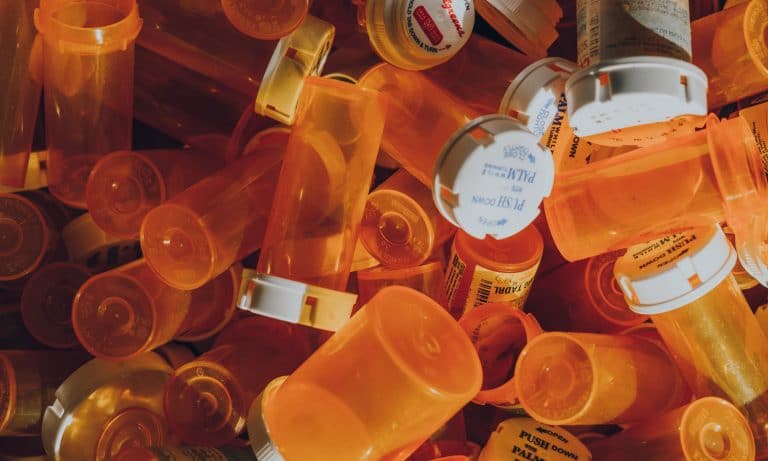
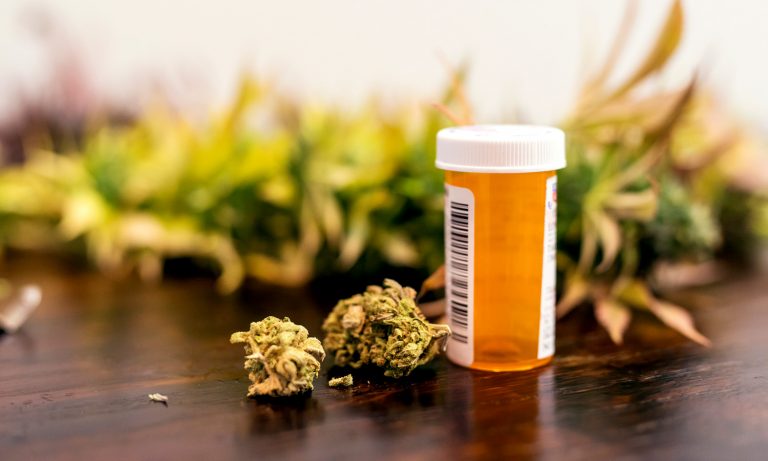
Most Americans never stop to consider just how many “drugs” they actually use regularly, but the list is vast, as it includes alcohol, caffeine, nicotine and even aspirin.
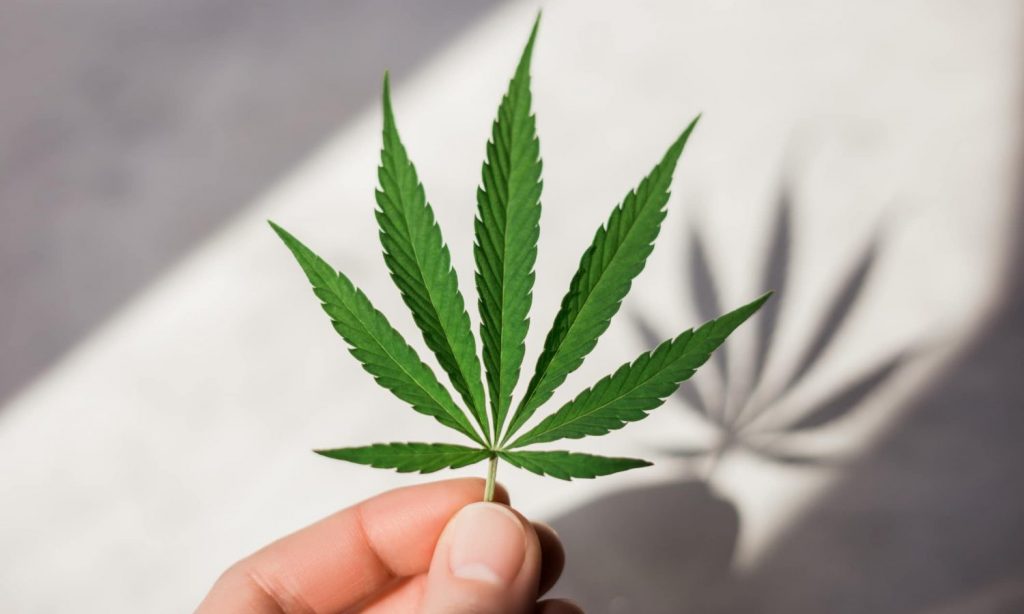
Marijuana is one of the most popular drugs in the world, according to the latest United Nations World Drug Report. That statement, however, really sticks in the craw of those cannabis advocates who argue that the cannabis plant is an herb, not a drug. They believe that drugs are concoctions created by pharmaceutical companies, not something that is natural and from the Earth.
But what is the real answer to this age-old debate? Does marijuana fall into the classification of a drug, or is it something else altogether?
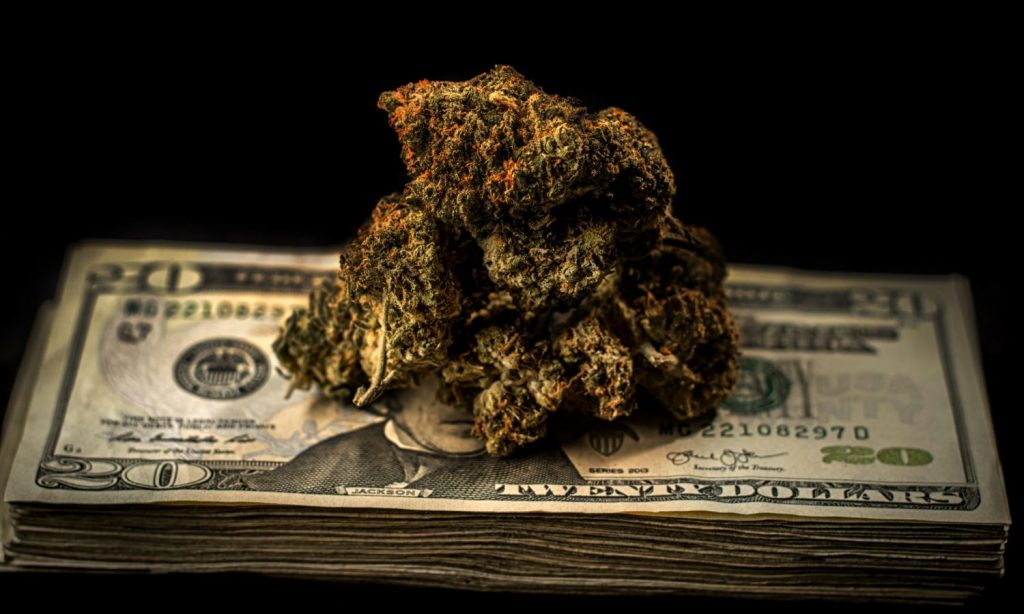
Photo by Olena Ruban/Getty Images
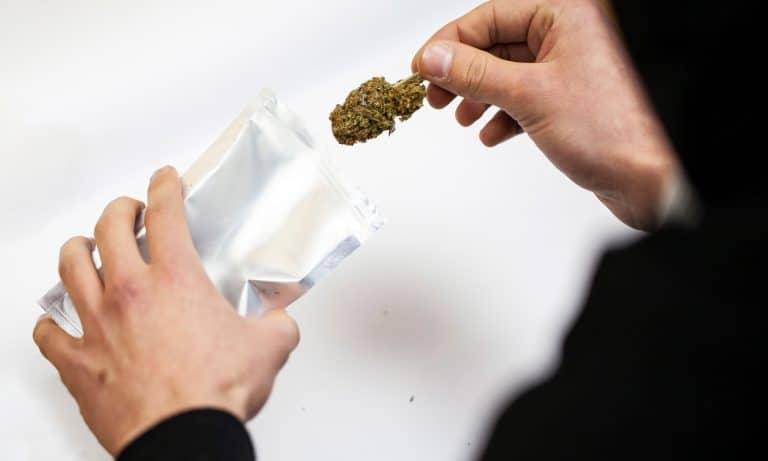
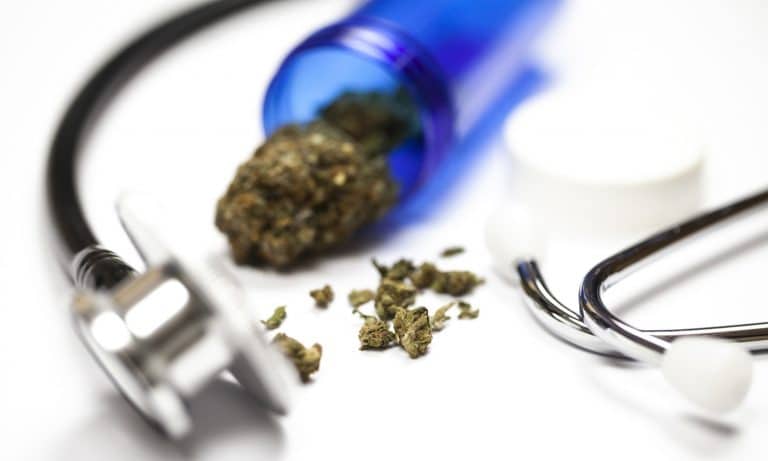
Well, a drug, by definition, is any substance that affects the way the body functions physically or psychologically. Most Americans never stop to consider just how many “drugs” they actually use regularly, but the list is vast, as it includes alcohol, caffeine, nicotine and even aspirin. These substances are ingested into the body and pass through the brain, where they fire off messages that ultimately leads to the desired result. In the case of caffeine, a person might feel more awake, while with something like aspirin, they could notice in time that they no longer have a headache.
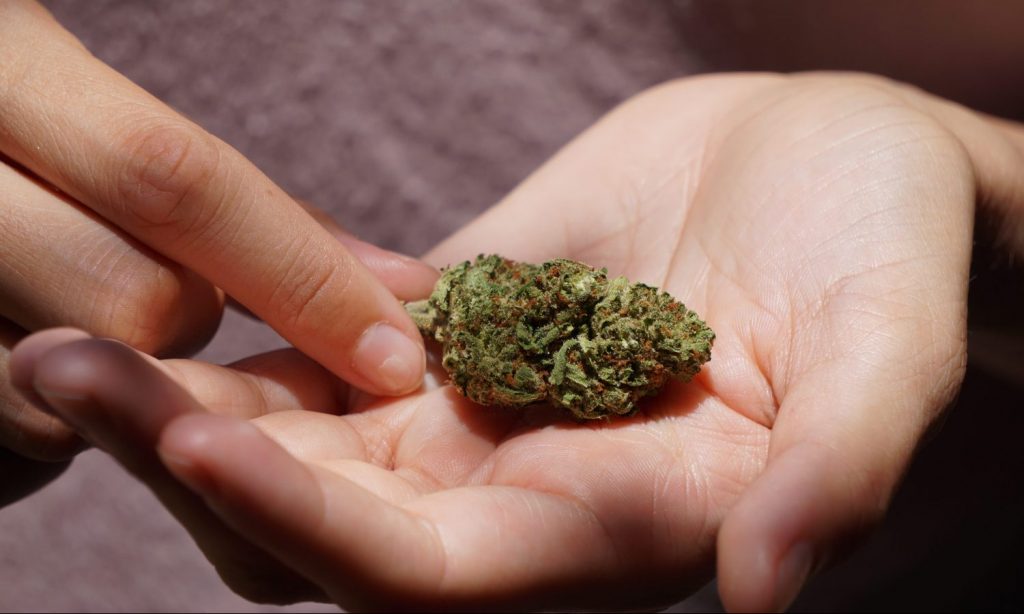
Marijuana actually has a lot in common with mainstream drugs like alcohol and aspirin. It can be used to get high (recreational use) by stimulating pleasure receptors in the brain in the same way as food and sex. It is known for releasing a chemical called dopamine, which makes the user feel relaxed and euphoric.
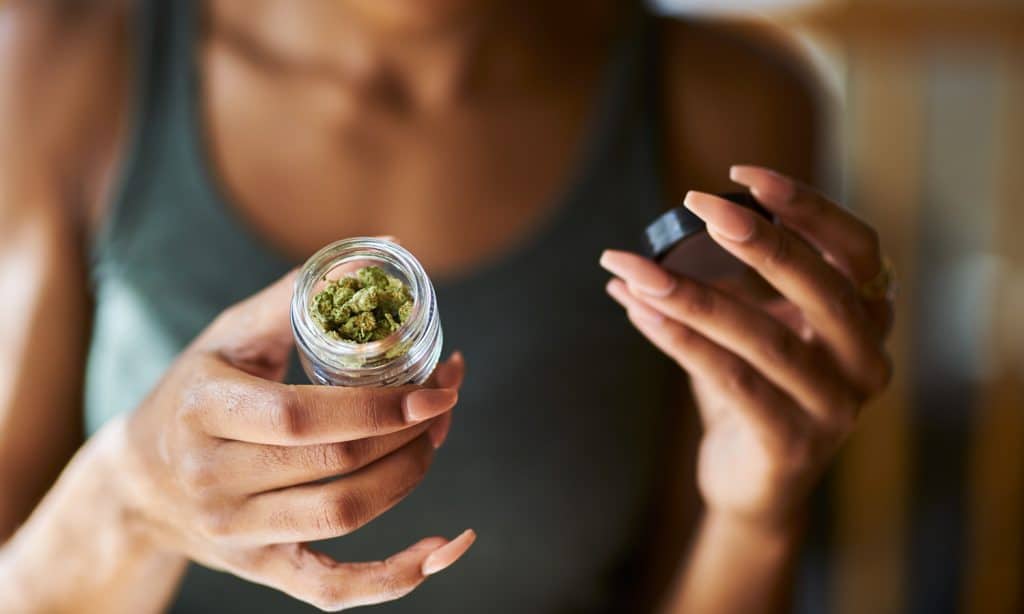
Meanwhile, millions of patients use cannabis for therapeutic benefits. The National Academies of Sciences, Engineering and Medicine, which consists of some of the leading scientific minds in the country, admits that cannabis can relieve some pain conditions, nausea, spasms and insomnia.
Photo by Bill Oxford/Getty Images
So, there are those people who use marijuana in the same way as others might beer — to unwind and have fun — while others lean on it as their medicine of choice.
The federal government considers marijuana to be a Schedule I dangerous drug — ranking right in there with heroin. This classification was determined based on the potential for abuse and a lack of research showing that it has any medicinal value. Still, more than 30 states have legalized the leaf for medicinal purposes. Some are giving access to people with severe health conditions, such as Alzheimer’s and cancer, and others allow participation by those with various pain conditions.
Uncle Sam, however, refuses to fall in line with this trend because federal health agencies say there aren’t enough large-scale studies to show that marijuana can actually help America feel better.
But is marijuana really a drug? By definition, yes, it is. It is certainly not a dangerous drug in the same way as heroin or cocaine, but it still fits the criteria just like alcohol or even aspirin. The fact that weed is only a plant isn’t an argument either. Other vegetation, including peyote, tobacco and ayahuasca, are also drugs. Agree or not, cannabis certainly falls into the classification of a drug.
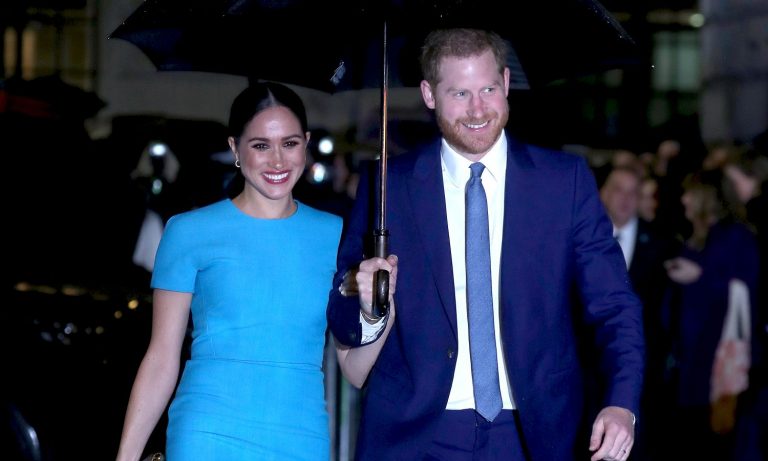
The public announcement of Meghan Markle and Prince Harry’s second pregnancy was made through unconventional methods.
Meghan Markle and Prince Harry recently announced the pregnancy of their second child. This announcement was one that was met with a lot of celebration from all over the world, particularly in light of Markle’s recent openness about the miscarriage she had last summer.
The Duke and Duchess of Sussex announced the big news in the form of a photograph, one that was taken through unconventional methods. While the couple was located in Los Angeles, the photographer was based in London.
“In the age of COVID, it’s impossible obviously for me to be there to shoot it, so technology came to the rescue,” Harriman said. “I was able to remotely take over the iPad and they could hear my voice and it was conversational and the rest really is history.”
Harriman is a close friend of the Sussexes and has had a historic career, being the first Black photographer to shoot the cover for British Vogue‘s September issue. Before that, he rose to prominence while photographing Black Lives Matter protests. He also previously shot the engagement of Princess Beatrice of York and Edoardo Mapelli Mozzi in 2019.
No date has been announced for the birth of Archie Mountbatten-Windsor’s little brother , with a spokesperson for the couple saying: “We can confirm that Archie is going to be a big brother. The Duke and Duchess of Sussex are overjoyed to be expecting their second child.”
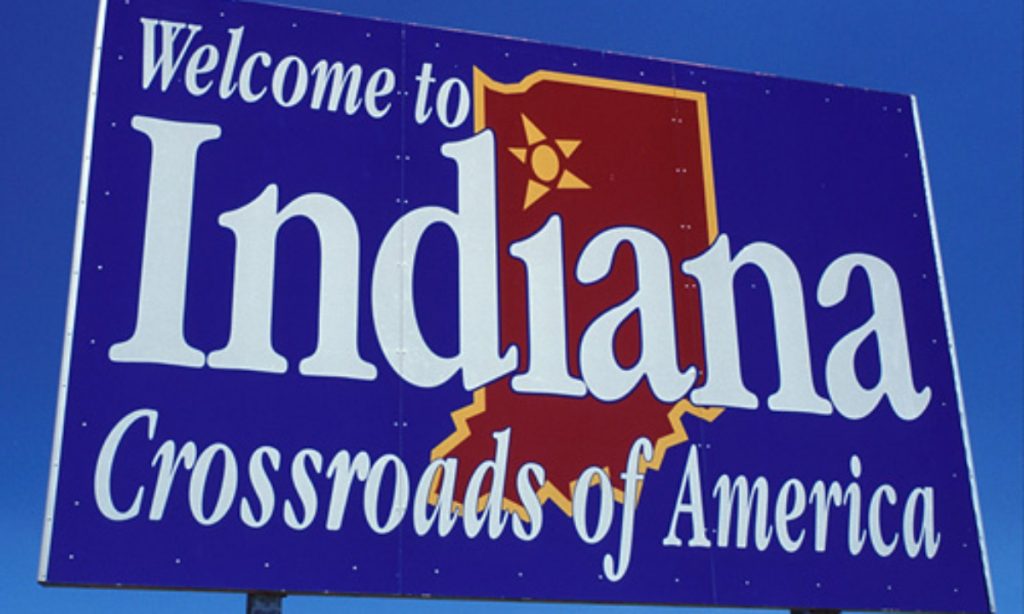
A new bill in Indiana would give more people a chance at beating a flawed system. And police are not happy.
Marijuana decriminalization is the latest buzzword in the weed world. It’s a move that President Joe Biden has said that he would be willing to impose nationwide. The concept typically means the elimination of criminal penalties associated with the possession of marijuana. In most cases, decriminalization lets anyone caught in possession of up to an ounce of weed slide with a small fine. The offender doesn’t get jammed up in the criminal justice system.
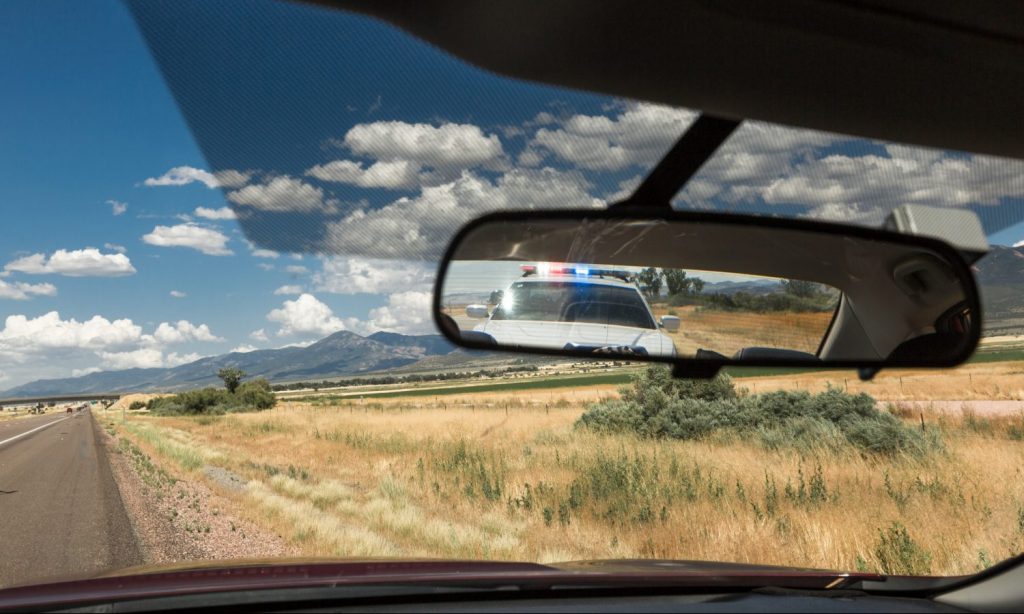
However, in parts of the country, those which remain some of the most militant toward marijuana offenders, the definition of decriminalization has changed. It is now being defined by one Indiana state representative as a way to prevent law enforcement from charging motorists with DUI.
Photo by Jorge Villalba/Getty Images
Indiana has had it tough when it comes to changing its marijuana laws. For years, lawmakers have proposed various bills intended to lessen the criminal penalties associated with low-level marijuana offenses. But the Republican-dominated legislature has seemingly made it it’s life’s work to stop anything pot-related from going the distance. They’re even opposed to prosecutors tossing out pot cases.
Still, lawmakers keep returning to the drawing board in hopes of concocting some version of a marijuana bill that they believe can become law. The latest one, introduced by Republican State Representative Jim Lucas, is a weird “decriminalization” measure designed to increase the THC-blood intoxication limit to 5 nanograms per milliliter of blood while operating a vehicle rather than zero.
As it stands, anyone in Indiana suspected of driving under the influence of marijuana can be asked to take a blood test. Failing to adhere to an officer’s request can result in the immediate year-long suspension of a person’s driver’s license and jail. But by agreeing to the test, a motorist opens themselves up for a DUI charge. It’s not like alcohol, where a motorist must pass a breathalyzer to escape the clutches of the law. The zero-tolerance policy gets innocent people into trouble.
Photo by Flickr user Mark Goebel
Because of how marijuana metabolizes in the body, a motorist could have smoked weed up to a month prior to a traffic stop and still test positive for marijuana. However, that doesn’t mean they were intoxicated at the time. Nevertheless, if a blood test reveals that a motorist has cannabis in their system — any amount — they are going to be prosecuted for DUI, like they were driving drunk.
Lucas’s bill aims to change the zero-tolerance policy. The proposal “requires that the analysis of controlled substances in a person’s blood measure only the controlled substance and not the metabolites of the controlled substance.” It would give more people a chance at beating a flawed system.
Indiana police are none too happy with the proposal. They argue that “it actually inhibits our ability to take impaired drivers off the roads. Plain and simple.” But this isn’t true. The law would only prevent police from relying on junk science to put more citizens under Indiana’s thumb.
Many police forces are presumably peeved about the bill because it could make it more challenging for them to use a new roadside drug detection tool to bust cannabis users for drugged driving.
In December, several Indiana police agencies adopted a roadside saliva test that can detect various drugs in a person’s system within minutes. Under the current law, it could cause an influx in marijuana offenders in the years to come. However, if Lucas’s bill can find a way to pass, police could only use the roadside drug testing tool to establish reasonable suspicion for marijuana intoxication. They would still have to give the motorist a blood test before charging them with DUI. As long as the driver tests within the 5-nanogram perimeter, they would be released.
The bill is gaining traction in the State Legislature. It recently passed a House Committee, and is expected to go up for a full debate soon. It’s not immediately clear whether it will garner enough support to pass legislative chambers. And if it does, it doesn’t seem likely that it would become law. Governor Eric Holcomb has expressed very little interest in siding with cannabis reform.
In four years, the cannabis industry’s job growth has increased 161%, quickly beating predictions from other industries 10 years from now.
Leafly’s fifth annual cannabis jobs report showed the cannabis industry to support 321,000 full-time equivalent jobs in 2021! An incredible number for an amazing and highly-deserving industry.
Cannabis jobs aren’t accurately reported to the Department of Labor because it’s federally illegal, so in partnership with Whitney Economics, Leafly has been filling that gap since 2017! The result is a goldmine of knowledge, and always filled with incredible cannabis job data.
The 2021 report found that there are more legal cannabis industry employees in the United States than:
Electrician engineers
EMTS and paramedics
Dentists (more than twice as many!)
The United States added 77,300 full-time jobs in the cannabis industry in 2020, despite the ravaging pandemic. This represents a 32% year-over-year job growth, which is absolutely phenomenal considering 2020 was the worst year for U.S. economic growth since World War II.
Photo by Ivan-balvan/Getty Images
Cannabis Job Breakdown by State
Medical marijuana has been legalized in 37 US states, and there’s an adult-use market in 15 states and Washington D.C. According to the report:
There are more cannabis employees in Florida than plumbers
Michigan employs more cannabis industry professionals than cops
California employs more cannabis workers than bank tellers
California
Added 23,707 cannabis jobs in 2020
Has 59,970 total cannabis jobs
The state’s industry grew 80% from 2019 to 2020
Colorado
Added 4,338 cannabis jobs in 2020
Has 35,539 total jobs
Executed $2.28 billion in cannabis sales in 2020
Florida
Added 14,981 jobs in 2020
Has 31,444 total jobs
Florida sales more cannabis than any other state besides California and Colorado, despite only being legal medically
Oregon
Added 687 jobs in 2020
Has 17,981 total jobs
Did $1.1 billion in sales last year, putting the state at the $1 billion mark for the first time
Washington
Added 524 jobs in 2020
Has 19,873 total jobs
If cannabis was counted alongside WA’s other agricultural commodities (cherries, apples, etc.), it would rank in the top 10 in economic value
Illinois
Added 8,348 jobs in 2020
Has 16,837 total jobs
Chicago, a city with 1 million Black residents, still doesn’t have even one Black-owned dispensary
Photo by rez-art/Getty Images
Comparing the Cannabis Industry’s Growth to Other Industries
If you’ve learned anything from reading this article, it’s that the cannabis industry is booming. Therefore, job creation is, too.
In four years, the cannabis industry’s job growth has increased 161%, quickly beating predictions from other industries 10 years from now. Leafly’s 2021 report found in 10 years from now:
Speech pathology will grow 25%
Animal caretaking will grow 23%
Data analysis will grow by 32%
Home health aides will grow by 34%
Solar power installation will grow by 51%
Nurse practitioners will grow by 52%
Wind turbine techs will grow by 61%
Even the largest job growth, wind turbine techs, won’t achieve the same growth in 10 years as the cannabis industry already has in just four years!
The COVID Effect: How Cannabis Businesses Thrived During the Pandemic
When the coronavirus began to spread and reached other parts of the world, the cannabis industry was concerned (those of us at The Green Market Report included) that our space would take a massive hit. Most of us were bracing for impact, and waiting for the worst.
Surprisingly, the glorious opposite happened (for most.) Unfortunately, all industries have lost some businesses due to the pandemic, but cannabis businesses were deemed essential pretty much everywhere. Cannabis retailers responded beautifully, and innovative responses included:
Curbside pickup
Delivery
Limited customers inside once indoor service began again
It’s also amazing considering many retailers, like MedMen, faced unmanageable losses when rioters stole and destroyed their storefront during last summer’s protests. Many retailers were forced to start over, yet the industry continued to boom.
Cannabis employment also looks different during the days of COVID, as less employees are required and more people have to stay home for various COVID-related reasons. One business owner reported more staff turnover during 2020 than the last five years.
Massachusetts retailers sold $700 million worth of cannabis products in 2020, compared to $400 million in 2019 – even with Gov. Charlie Baker’s statewide shutdown temporarily halted all retail sales in April. Cannabis stores in Massachusetts still posted a 75% annual sales gain over 2019, despite the shutdown.
The report says:
Cannabis consumers increased their monthly spend by 33%
Sales increased at the beginning of March and continued to rise, then plateaued in April-May
There was a 71% increase in cannabis sales from 2019 to 2020
Americans bought $18.3 billion worth of cannabis products in 2020
Black-Owned Cannabis Businesses Are Still Sparse
A lack of diversity is an issue that has been plaguing the cannabis space since legalization began, and according to this year’s report – we still have much work to do.
Very few states have public data relating to racial or gender diversity in the cannabis space, but Cannaclusive is doing just that. Cannaclusive’s database includes:
500 Black-owned cannabis businesses
Black Americans only represent 1.2-1.7% of all cannabis company owners
Some of the most troubling points for diversity in the cannabis industry:
Illinois added 8,000 cannabis jobs last year. Not a single minority-owned business is a finalist for one of the new 75 store licenses expected to be issued in 2021
Only 1% of cannabis retail stores are Black-owned. This is three stores out of 260 across the state
Though this data is concerning, privately funded equity and incubator programs are answering the call to action and making more funds available to minority business owners.
The further cannabis is legitimized through standardization and the spreading of information, the more likely positive treatment outcomes are.
For decades now, cannabis has been treated as a joke medicine, or worse. Fortunately, since 2020, we’ve seen several groundbreaking studies that have begun dispelling cannabis’s negative reputation.
In a December 2020 study by the University of New Mexico published in the Journal of Cannabinoid Research, researchers reviewed data collected from 2306 self-administered doses of cannabis flower by 670 participants via a cannabis tracking app called Releaf.
From that data, researchers found that decreases in symptom intensity were reported in 95.51% of cannabis sessions. Additionally, higher CBD concentration was not associated with changes in intensity of symptoms while higher THC concentration was associated with reductions in negative symptoms. Yet, cultivars labeled indica provided better results than cultivars labeled sativa. While the labels sativa and indica have been discounted, this study used them to match the consumer’s market options.
Although paranoia has commonly been associated with cannabis, this study found that people were much more likely to report positive effects after ingesting cannabis than negative ones. Due to this, the authors have hypothesized that the classic paranoia may have more to do with the illegality of cannabis than the inherent effects of the plant. They also hypothesize that this positive profile is why many patients choose to substitute cannabis for traditional pharmacological substances such as benzodiazepines, atypical antipsychotics, SSRIs, beta-blockers, and other medications meant to treat negative affect.
In contrast to the idea that THC causes anxiety, the study found that: “…the fact that higher THC appears to confer greater anxiolytic effects in our study at higher THC levels suggests that the whole natural Cannabis plant may act very differently on the brain as compared to synthetic or derived THC isolates.” While there was a lack of absolute control over the experiment, Releaf represents an innovative solution that allows for reliable and comfortably supplied information to be reported.
Researchers concluded that “the side effects reported in the current study were relatively less severe than the more serious medical and sometimes societal problems caused by some conventional prescription (e.g., benzodiazepines and barbiturates) and nonprescription (e.g., alcohol) drugs most used for treating common forms of distress. Our findings suggest that self-directed use of Cannabis flower, especially that with higher THC levels, is associated with significant improvements in at least short-term feelings of distress in many users, likely a contributing factor to its widespread popularity and consumption in the U.S.”
Photo by wutwhanfoto/Getty Images
U Of M and Bridging the Gap Between Physicians And Patients
Kevin Boehnke of the University of Michigan led a recent study published in the Journal of Cannabis Research that focused on the relationship between physician and patient.
Of 275 participants who answered an online survey, about 80% reported that their primary care physicians knew they used cannabis. However, only 14% obtained their medical cannabis authorization from their doctor. Additionally, 86% of participants reported substituting cannabis for pharmaceutical medication, and 69% of those who substitute reported they didn’t immediately tell their doctor. Nearly half (44%) of participants still hadn’t informed their doctor.
Seventy-four percent of participants reported that they never saw the person who authorized them for medical cannabis ever again. And 87% of those who substituted cannabis for another medication reported doing so based on their own experience, while only 18% said their doctor advised them.
Another survey, this time for physicians, found that 34% of doctors knew that cannabis was a Schedule I drug, 68% knew it was federally illegal, and 65% could correctly identify the legality of cannabis in their state of residence. The gap between physicians and patients isn’t only due to a lack of patient education.
However, as the Michigan study reports, further research and treatment should focus on harm-reduction strategies aligned with practical dosing guidance, especially for conditions where data on treatment with cannabis is sparse. Otherwise, the survey found that doctors highly knowledgeable about cannabis were more likely to have patients that were honest and compliant. The more doctors are informed, the higher patient trust is.
Creating such an environment to foster those relationships is difficult when only 9% of medical schools cover medical cannabis and about 80% of physicians reported needing additional cannabis education. Thus, aggressive, particular, and in-depth research is necessary to maximize positive outcomes in a clinical setting.
Legalization Is Proving Cannabis Legitimacy Through Reality
Across the world, research has found that the most common reason people use cannabis is to treat pain. Neither Washington nor Colorado saw an increase in adolescents being treated for hard drugs after cannabis legalization. A D.C. analysis concluded similarly. And a September 2020 study found that cannabis “patients reported medication use less than the general US population overall.”
In an overmedicated world suffering from a litany of chronic conditions, we can only benefit from energetically researching alternative treatment options with milder side effect profiles. Cannabis remains an excellent opportunity for holistic medicine. As the University of Michigan study suggests, the further cannabis is legitimized through standardization and the spreading of information, the more likely positive treatment outcomes are.
In addition to duration, a new study found that antibodies were developed more often by young people, and that the most common symptom associated with the development of antibodies was the loss of taste and smell
There’s been some back and forth on the strength and duration of coronavirus antibodies, with some claiming that they last indefinitely. This misinformation has lent itself to plenty of confusion; those who’ve contracted COVID-19 don’t know whether to increase their public outings or being fearful of the possibility and consequences of a second round of the potentially deadly virus.
But a new study has concluded that, for the majority of people, coronavirus antibodies are present for a period of up to six months.
The study was conducted by U.K. Biobank, one of the U.K.’s largest databases. Researchers looked into how long infected people had antibodies present in their bodies during May 2020 to December 2020. This information was obtained through blood samples and data gathered from over 20,000 participants, including their children and grandchildren.
Photo by Anastasiia Chepinska via Unsplash
Aside from providing us with a larger understanding of how COVID-19 antibodies work, the study also showed that, as the months progressed, the population with antibodies rose steadily. In May, the average was 6.6%, while in December, the average was 8.8%.
The study found that 99% of infected people retained antibodies for a period of three months, with 88% of them retaining the antibodies for a period of six months. These results are encouraging, providing us with more clarity on the virus while also suggesting that the majority of people affected by COVID-19 have some sort immunization and protection for half a year.
“This important study has revealed that the vast majority of people retain detectable antibodies for at least six months after infection with the coronavirus. Although we cannot be certain how this relates to immunity, the results suggest that people may be protected against subsequent infection for at least six months following natural infection. More prolonged follow-up will allow us to determine how long such protection is likely to last,” UK Bionbanks’ chief scientist Naomi Allen told Huffington Post UK.
A further breakdown of the results found that antibodies were developed more often by young people, and that the most common symptom associated with the development of antibodies was the loss of taste and smell, which was reported by 43% of positive tests.
If all of your essential bases are covered (like food, heat and shelter), there’s nothing better than staying high on a snow day.
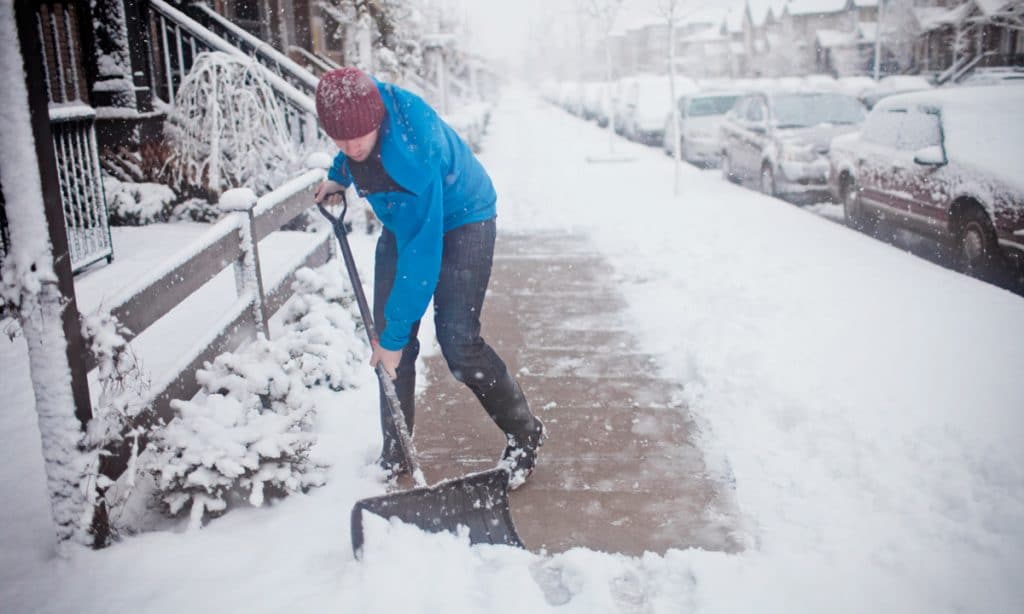
Hundreds of millions of people across the central and southern parts of the United States are presently being hammered by a savage winter storm. Roadways are covered in snow, ice and the treachery level is at ten.
It’s not just an uncomfortable situation that creates gnarly travel conditions; many people have lost power and some have even lost their lives. It’s going to be one of the coldest, sloppiest weeks the nation has experienced in a while. Several states have made emergency declarations, while others are just white-knuckling it and trying to keep it between the mailboxes.
Photo by Christopher Kimmel/Getty Images
Truth be told, we should have seen something horrible was coming when Punxsutawney Phil reared his ugly head earlier this month and predicted six more weeks of the cold season. We had a feeling that old man winter had it in for us. We just didn’t think that he would show up and try to freeze us out in a single week. And while some people may be tempted to brave the elements and get to work, hit the gym, or just get out and be a snow draft socialite, emergency officials urge everyone affected by the storms to stay at home. Seriously, it’s wicked cold out there.
“The safest place to be is in your home, even if you lose power,” one Texas emergency management coordinator told CNN affiliate KPRC. “It’s going to get colder before it gets warmer.”
In other words, batten down the hatches, put on some comfy clothes, and break out the weed.
It might sound irresponsible to suggest waiting out such a serious snow storm in a stoner stupor. After all, there are more important things to worry about in these situations, like: Is there enough food in the fridge? And did we get the heater adequately serviced? But honestly, if all of those essential bases are covered, there’s nothing better than staying high on a snow day.
What else do you have to do? Schools are closed, businesses are shut down, and it’s dangerously cold outside. Even if you could get out, there’s nothing to do right now other than play in the snow. But even that’s a lot more fun to do high, so there’s that. There’s also plenty of shows and films to get into on streaming services. And all of those are going to be a heck of a lot more interesting to watch under the influence of marijuana. All we’re trying to say is that we hope you stocked up on the green before the white came crashing down. If not, you might get bored, depressed and start wondering whether your part of the world will ever see the sun again.
Photo by Filip Gielda via Unsplash
Because the next few days could be some of the most trying hours that some Americans have experienced since the COVID lockdowns began last year. Meteorologists say the snow will continue to drop at a rate of about an inch an hour in some parts of the country, while temperatures will dip down with lows in the negatives. The climate is expected to be somewhere between 25-45 degrees below normal for much of the central and southern plains.
That’s not just cold. According to the National Weather Service Prediction Center, it’s as frigid as it has been in February since 1899 and 1905. However, for those whose third eye inspired them to stock up on plenty of pot before the polar plunge took hold, they should be just fine. Unless there’s nothing to eat when the munchies kick in.
Either way, a snow stranded, stoned America won’t have to sober up until Thursday or Friday. In the meantime, be safe, keep warm and stay high.
The American people have not been voting on medical science, but on criminal law and individual freedom. For that, we don’t need the approval of the cowardly quacks who’ve ignored the suffering of their patients for decades.
Disclaimer:The views expressed in this article solely belong to the author and do not necessarily represent those of The Fresh Toast.
There are some phone calls you just never forget. It was Good Friday morning in 1995. This woman called the NORML office in Washington, wanting information about medical marijuana. Her elderly father was undergoing chemotherapy and the pharmaceutical antiemetics had stopped working, as often happens, and he was vomiting uncontrollably.
One of the nurses pulled her aside and whispered to her, “This happened to my father and marijuana really helped.” My caller said she was astonished, so she asked another nurse who said, “It works for some people.”
So she naturally asked the oncologist. He snapped, “It’s illegal and I don’t want to discuss it.” And he walked away.
However, her father was suffering so much that she had to do something, so she asked around and found that marijuana was really easy to get. She gave some to her father and he stopped vomiting and could sleep.
I said, “That’s wonderful. So how can I help you?”
She responded, “I just want to be sure not to give him an overdose.” I reassured her that wasn’t possible and wished her well.
The other thing that I cannot forget is that she told me she was calling from Baltimore…in sight of Fort McHenry, where Francis Scott Key wrote the words “Land of the Free and home of the Brave.”
Over the decades that I have been involved in the marijuana legalization movement, that is one of the most common stories that I have heard. A friend told me that if he did not have marijuana to get him through the chemotherapy, he would have chosen to die, rather than suffering the violent vomiting. Other people have told me that their doctors simply winked and suggested that they smoke before their chemotherapy. I suspect that most of us past a certain age know people with similar stories.
In any case, this is not about treating or curing some obscure disease. It is simply about immediately alleviating something violently obvious and tragically common. It is hard to imagine that there is any doctor anywhere in America who has not known about this since medical school. And yet…
Last year, Mississippi was one of several states where the people voted overwhelmingly for the legalization of medical or recreational marijuana. Mississippi citizens were actually given a choice between initiatives because law enforcement tried to confuse voters and put up a second initiative “65A”. The voters were not confused.Quoting BallotPedia:
“Voting for Initiative 65 supported approving the medical marijuana amendment as provided by Initiative 65, which was designed to allow medical marijuana treatment for more than 20 specified qualifying conditions, allow individuals to possess up to 2.5 ounces of marijuana at one time, and tax marijuana sales at the current state sales tax rate of 7%.
“Voting for Alternative 65A supported approving the legislature’s alternative medical marijuana amendment, which was designed to restrict smoking marijuana to terminally ill patients; require pharmaceutical-grade marijuana products and treatment oversight by licensed physicians, nurses, and pharmacists; and leave tax rates, possession limits, and certain other details to be set by the legislature.
“Since there were more votes for “either” than for “neither” in the first question, the version that received majority approval in the second question—Initiative 65—was enacted since it also received approval from at least 40% of the ballots cast at the election.”
Photo by Elsa Olofsson via Unsplash
Initiative 65A would have been unworkable, which is why it was written. Initiative 65 got 73.7% of the vote. The people clearly knew what they were voting for… and against.
Last month, outrageously, both the national American Medical Association (AMA) and the Mississippi Medical Association filed suit to overturn the will of the people of Mississippi.
Their lawyers came up with what may or may not be a good legal argument about ballot requirements and they should have let it go with that. Instead they degraded themselves and the medical profession with appalling quackery. According to the AMA:
Both physician organizations oppose legalizing cannabis. AMA policy says that “cannabis for medicinal use should not be legalized thorough the state legislative, ballot imitative or referendum process.” And the brief tells the court that is “for good reasons.”
While it is possible there may be beneficial medicinal uses of marijuana, numerous evidence-based studies demonstrate that significant deleterious effects abound,” the brief tells the court, going on to say that “without question, the public health risks are immense:”
Drug abuse and addiction. Change in brain function. Lung disease. Intoxication and impaired driving. Developmental interference. Impaired cognition. Psychological illness. Cardiovascular abnormalities. Negative social functioning effects. Cancer.
The brief tells the court a “massive amount of future systemic research and controlled-trials” are needed to study the safety and efficacy of cannabis for medicinal purposes.
Initiative burdens physicians Physicians would be in “quite the pinch” under Initiative 65, the brief tells the court. Cannabis is still a Schedule I drug under federal law and has no accepted medical use.
“Yet physicians will be expected by their patients (though perhaps not required by Initiative 65) to sign off on certifications to receive their supply. Perhaps no liability will lie under state law, but what about federal law?” the brief says.
Photo by Pornpak Khunatorn/Getty Images
Not to overburden the intellectual capacities of either the AMA or its state chapter, it is 2021 and Mississippi is a part of the United States where there are already more than 30 states with legal medical marijuana, many of which were passed by initiatives because their state legislatures lacked the courage to do so. Moreover, the US shares the continent with Canada and Mexico which have legalized medical marijuana.
The AMA raises the specter of doctors being in legal liability.
“Physicians would be in “quite the pinch” under Initiative 65, the brief tells the court. Cannabis is still a Schedule I drug under federal law and has no accepted medical use.
“Yet physicians will be expected by their patients (though perhaps not required by Initiative 65) to sign off on certifications to receive their supply. Perhaps no liability will lie under state law, but what about federal law?” the brief says.
The first medical marijuana initiative, California’s Prop 215 has been on the books since 1996, and no doctors have been sued or prosecuted for providing legal cover for patients.
Finally, the American people have not been voting on medical science, but on criminal law and individual freedom. For that, we don’t need the approval of the cowardly quacks who have ignored the suffering of their patients for decades.
I think of the real heroes on the frontlines in our ICUs, risking their lives to save us all, and I think of the AMA and its quackery and I need a powerful antiemetic.
There is so much promise for the cannabis industry, but so much zigging and zagging in search of sustainable profitability.
From the minute that Joe Biden took the oath of office, a new leader perceived to be a cannabis industry supporter, the cannabis industry has seemed ripe for an investor explosion. There has been money on the sidelines waiting for this sort of green light. Now it’s signaling “go.”
Indeed, in the days and weeks leading up to the inauguration, there were clear signs that the cannabis industry was gearing up for a slew of good news to come from the new administration—inspired, in part, by vice presidential candidate Kamala Harris’s sponsoring of the Marijuana Opportunity Reinvestment and Expungement Act (MORE) that the Senate will be discussing soon.
That got the attention of WallStreetBets (WSB) in late January and early February, an investment forum on Reddit with 8.5 million followers doing commission-free trades on the Robinhood investment platform. They wanted to come and play investor squad.
They got into the cannabis stock mix after scaring Wall Street with their GameStop investment run a few weeks ago, where millions of small investors essentially beat Wall Street up, driving up the GameStop stock 1,700% from January 27-29 and pushing the company’s market value up from $2 billion to $24 billion in just a couple of days.
They did the same with AMC, running its stock price from $4.96 to $19.90 on January 27, before dumping stock to lower its price back to $8.63 the following day. AMC is now down to $5.61.
TD Ameritrade restricted trading on both GameStop and AMC stocks while they assessed what WSB was doing. And now the whole process is under investigation.
Congresswoman Maxine Waters (D-CA), chairwoman of the House Committee on Financial Services, announced a full committee hearing to be held on February 18, to include the Reddit and Robinhood CEOs.
WSB was just showing off, in reality, flipping off The Man in what The Economist called “swarm trading”, a new type of financial adventurism.
WSB is basically a loose fraternity of 20 and 30-something tech geeks engaged in “inappropriate behavior” of humiliation and name-calling along with some serious investment advice, wrapped up in a certain delight at the disruptive influence its having over the suit-and-tie investment crowd, according to a study from the Georgia Institute of Technology. Cannabis was just another play day mess for the group.
WSB’s run at cannabis stocks looked promising at first. For example, WSB targeted Tilray in early February. Their stock shot up 148% immediately before crashing hard over the next few days. “Things had got too far ahead of themselves,” Korey Bauer, chief investment officer and portfolio manager of the Cannabis Growth Fund, said in a Market Watch report.
Photo by Karolina Grabowska from Pexels
But the result has been a disaster for regular cannabis business investors, many of whom have been dancing around investing in the industry as it weathers the volatility over the last few years. They heard the new administration hype, they saw the WSB run, and they jumped in. But many did not jump out soon enough.
And they weren’t alone.
The WSB thing got a lot of amateur lookers hooked; their GameStop shenanigans had some investors making thousands of dollars from the stock practically overnight. Surely that same kind of thing would happen with cannabis, an industry poised for explosive growth because of a new administration, with more states legalizing it, and 68% of Americans now OK with legalized cannabis. Right?
Wrong. The New York Timescalled the WSB runs “dumb money.”
These WSB-inspired investors looking for a quick hit on cannabis stocks a la GameStop apparently forgot the quote from Harvard philosopher George Santayana: “Those who cannot remember the past are condemned to repeat it.”
There is still some very necessary due diligence to do before investing into cannabis companies, swarm or not.
Remember Tilray? It was the first cannabis company to do an U.S. initial public offering on Nasdaq in July, 2018, raising $153 million. Its stock shot up initially to $214 a share in September, 2018, then crashed to below its $17 IPO price by December, 2019.
Photo by Darren415/Getty Images
How about Canopy Growth? That’s a Canada-based cannabis business familiar to many first-time investors. The Bruce Linton-built behemoth looked like a leader in the industry, building huge grow facilities. The company lost $487 million in 2019. They booted Linton in July, 2019.
But the company reported a net loss of $829 million for the end of 2020 as a result of “impairment and restructuring charges,” according to its SEC filings. It’s expecting to make $150-$200 million in a “cost savings program” this year, and have a positive operating cash flow by 2024.
Its only redeeming quality is its continued partnership with beer and wine producer Constellation Brands that began in 2017, got bigger in May, 2020, and was reportedly the force behind Linton’s ouster.
And how about Aurora Cannabis Inc., another Canada-based early investor sweetheart? A quick look at the dizzying highs and gut-wrenching lows in its stock chart since April, 2019 shows its volatility.
Managing such a new company in a new industry comes with its own set of usual business challenges that nevertheless blindsided cannabis business managers who still have to deal with other business irregularities growing and selling an illegal drug (especially in the U.S.). For example, Aurora was hacked by a cybercriminal in December which it says could lead to more “substantial costs” to protect its current and future operation.”
Photo by Hillary Kladke/Getty Images
Then there is the ongoing class action lawsuit begun in October 2, 2020 initiated by a group of New Jersey shareholders about false and misleading claims about the company, for which the company warns it can’t “reasonably estimate the possible losses or a range of possible losses resulting from the matters.”
The company’s SEC filing lists over 50 risk factors it has to inform its nearly 200 million shareholders about, including that the company has “a limited operating history and there is no assurance we will be able to achieve or maintain profitability.” That’s just the tip of the iceberg for Aurora’s troubles, as it turns out.
The list of questionable cannabis enterprises goes on and on, no matter how well established or well-branded the business is. High Times, one of the oldest cannabis brands that industry watchers thought would do well at the outset, has hemmed and hawed about the delay of its IPO, which they first announced in October, 2017.
Now the company is trying to duck some of the SEC scrutiny about its 2019 filing, and is now hemming and hawing some more to their 30,000-plus shareholders that they are in a “pause” mode while pushing the new target date for its IPO into late March. Politicolaid out the whole sordid tale of lawsuits, personal fallings out, and clouded future for High Times—another morality tale for the cannabis industry.
There is so much promise for the cannabis industry, but so much zigging and zagging in search of sustainable profitability. The industry is still dealing with operations and management issues all across the board, such as huge inequities in pay between management and hourly workers.
It seems like the cannabis industry just has not found its mojo.
And truly savvy investors are still taking a wait-and-see approach to what has been shown to be a multibillion business that will keep generating revenue. The cannabis industry is forecast to reach $46.8 billion worldwide, even without federal legalization in the U.S.
Meanwhile, the stock market is trying to figure out if the WSB swarm trading episode is a new thing for cannabis business investors to keep an eye on—other stocks have jumped in the wake of the GameStop episode, some based on social media rumors—or just a passing fad that resembles “gambling more than investing”, according to the Georgia Institute of Technology study.
What’s next? Nobody seems to know for sure. But if cannabis gets legalized through efforts of the U.S. Senate, it’s off to the races for real. And chances are, the WSB swarm will be right there in the mix again.
Perhaps McConnell will begin to see that siding with legalization is the quickest way back in control. Sadly, that may be the only hope for solid nationwide cannabis reform.
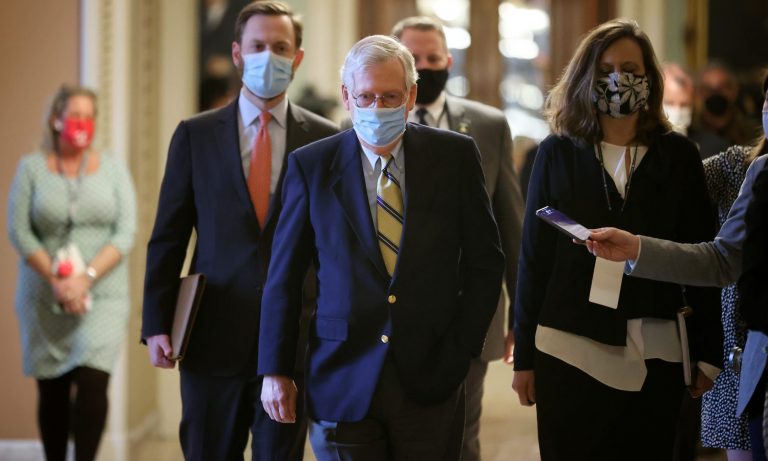
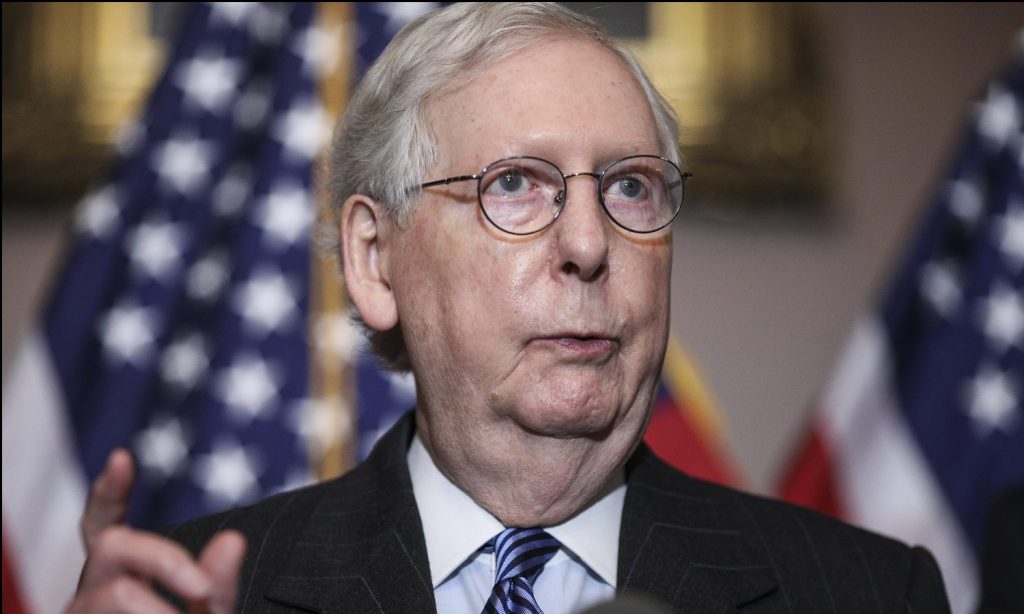
Democrats need to hurry in their pursuit to legalize marijuana nationwide. Senate Minority Leader Mitch McConnell is doing everything in his power to put the Republicans back in control of the Senate in 2022 — potentially putting cannabis reform in a state of uncertainty for several more years. Mitch McConnell wants to oust pro-marijuana senators.
In a recent interview with Politico, the self-proclaimed grim reaper of Capitol Hill explained that he is presently lining up Senate candidates to help reclaim his “Majority Leader” status and launch another reign of terror in the United States.
And make no mistake, McConnell is prepared to win at all cost. Even if it means turning his back on Trump-supported candidates. “My goal is, in every way possible, to have nominees representing the Republican Party who can win in November. Some of them may be people the former president likes. Some of them may not be. The only thing I care about is electability,” The Kentucky Senator told the news source.
If the Republicans happened to take back control of the Senate in 2022, the Democrats would lose what little clout they earned in the 2020 election. The Democrats control Congress by a slim majority, putting the party in control of the legislative agenda.
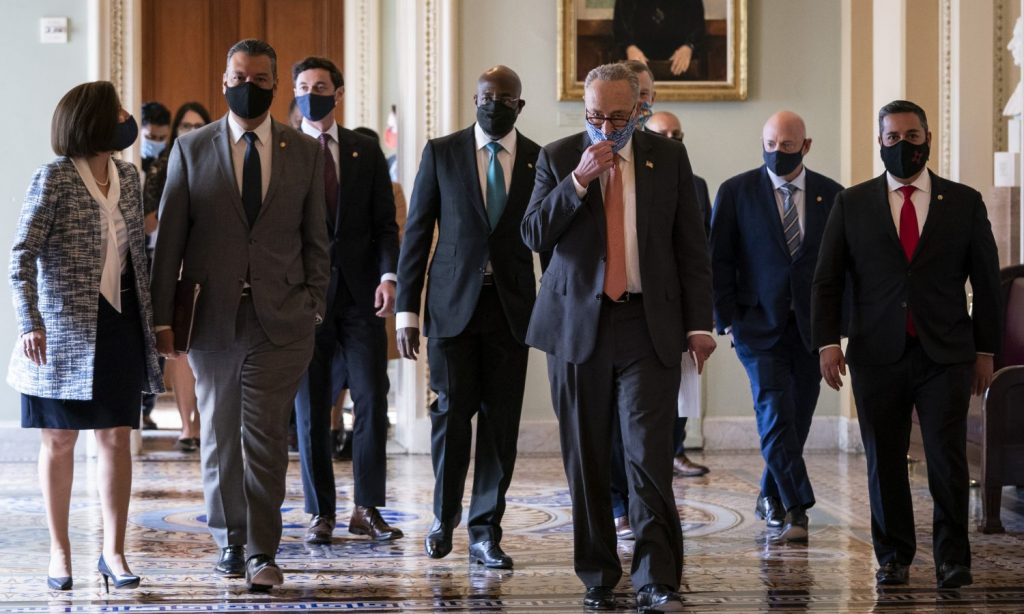
Photo by Tom Brenner-Pool/Getty Images
One issue Senate Democrats have promised to address in the coming months is the federal legalization of recreational marijuana. Senate Majority Leader Chuck Schumer recently announced that he and his Democratic colleagues were ready to hit the ground running on a bill designed to create a taxed and regulated pot market. The legislation, according to Senator Schumer, could be filed in the coming months.
Whether such a controversial bill has the Congressional support to pass is a concern. The Democrats will need some help across the aisle to get it done — and that’s support that they might not have. Schumer and crew have already had a dust-up with Republicans over the way they went about passing President Biden’s COVID-relief bill.
There is also a possibility that the Democrats will try to burn some old Senate rules (filibuster, Byrd Rule) to prevent Republicans from intervening in their legislation. However, any wrong move made by the Democrats could backfire in the end. If they put a stop to the filibuster, McConnell has promised a “scorched Earth Senate.” If they try to pass a cannabis bill (or any other for that matter), it might not have the votes to go all the way.
Furthermore, President Joe Biden isn’t necessarily on board with the Democratic Senate’s plan to fully legalize weed. He’s indicated that he would support marijuana decriminalization (elimination of criminal penalties), but he isn’t sure whether a fully legal market is the way to go. Cannabis advocates, however, believe that Biden would support a federal marijuana legalization measure if it crossed his desk. Vice president Kamala Harris is a big supporter of ending prohibition, even though she has said that persuading Biden to side with her ideologies isn’t in the cards.
Photo by Drew Angerer/Getty Images
If Democrats plan to legalize marijuana nationwide in 2021, they are going to have to get super creative. All Republicans need is one measly vote in the midterms to take back control of the Senate, allowing McConnell to once again wear the crown. Democrats must not only find a way to get the bill through but do it in such a way that the ghost of Senate Majority leader past doesn’t come back to haunt them.
McConnell said recently that ending the filibuster in an attempt to pass the Democratic agenda would only cause Republicans to repeal those measures once they take back control. “We’d be able to repeal every bill that had just been rammed through,” he said. This means legal marijuana today could resurrect prohibition in the years to come.
It’s not immediately clear how Democrats will approach the marijuana legalization debate in 2020. Yet, despite all the positive media attention the party has received for their willingness to change the federal pot laws, they know making it a reality will be a challenge. And even if the Democrats find a way around the opposition and get it on the books, it might not lead to a permanent policy. To say the marijuana issue is more convoluted than ever would be an understatement.
It would be greatly beneficial to the overall scheme of federal cannabis legalization if McConnell found that supporting pro-pot politicians was the way to take back his throne in the nation’s capital. As McConnell said, he is only interested in candidates with “electability,” and marijuana might be the ticket.
Some of the latest national polls show that 68% of the American people believe marijuana should be legalized like beer. More politicians are starting to see the cannabis issue as one way to attract voters with progressive ideas, and it is becoming increasingly bipartisan. Perhaps McConnell will begin to see that siding with legalization is the quickest way back in control. Maybe he’ll abandon his anti-marijuana ways in the future. Sadly, that may be the only hope for solid nationwide cannabis reform.