Sunday, July 12, 2026
Home Blog Page 416

How Cannabis Friendly Is Biden’s New Administration? Part 2: Xavier Becerra’s DOH 

In 2017, Becerra told the LA Times that the federal government needed to “catch up” regarding cannabis law. He is now in a position to do just that.

President Joe Biden’s cabinet is starting to take shape. Those appointed, specifically to the positions of Attorney General (AG) and Secretary of the Department of Health and Human Services (DHHS), have the power to essentially legalize marijuana at the federal level.

The CSA grants the AG and the DHHS Secretary the ability to remove a substance from a given schedule. The Attorney General delegates its power to the Drug Enforcement Administration (DEA) and the DHHS Secretary delegates its power to the Food and Drug Administration (FDA). The CSA places substances on certain schedules based on their danger to society with Schedule I reserved for the most dangerous drugs. Marijuana is a Schedule I substance, alongside heroin and meth.

This is the second post in a two-part series. (Read part one here.) Today we’ll take a look at Biden’s picks for DHHS Secretary the current head of the FDA.

DHHS SECRETARY: XAVIER BECERRA

Xavier Becerra was the Attorney General for the state of California before being selected by Biden to run DHHS. Becerra has strong credentials showing his support for marijuana reform. When Jeff Sessions repealed the Cole Memo in January 2018, Xavier Becerra criticized the move and vowed to uphold California state law with regards to marijuana. Becerra’s office sided with a licensed marijuana business in its lawsuit against Santa Cruz County regarding marijuana delivery. However, Becerra also oversaw a large sale eradication effort focused on illegal marijuana grows in California, which drew praise from California police. Becerra has shown that he is willing to stand up for and enforce California’s marijuana laws.

RELATED: How Cannabis Friendly Is Biden’s New Administration? Part 1: Merrick Garland’s DOJ

In 2017, Becerra told the LA Times that the federal government had to “catch up” regarding cannabis law. Becerra is now in a position to do just that.

ACTING FDA COMMISSIONER: JANET WOODCOCK, M.D.

Dr. Janet Woodcock is the acting FDA Commissioner. According to Politico, the Biden administration considers Dr. Woodcock as the front runner for the permanent job of Commissioner. Dr. Woodcock joined the FDA in the 1980s and has spent decades in the agency, with much of her time focused on the Center for Drug Evaluation and Research (CDER). Her history with CDER has become a point of contention. The Guardian reports that 28 groups fighting the US opioid epidemic have written a letter to President Biden asking him to appoint a permanent Commissioner to replace Dr. Woodcock because she oversaw the CDER and sided with pharmaceuticals who developed opioids leading to the pandemic.

Marijuana Could Easily Be Rescheduled With Biden’s Health Secretary
Xavier Becerra speaks as California Gov. Gavin Newsom looks on / Photo by Justin Sullivan/Getty Images)

Dr. Woodcock also has handled at least one cannabis-related issue in her time at the FDA. In July 2018, Tom Angell reported for Forbes, that the FDA denied a request from an anti-legalization group, Drug Watch International, to place marijuana and its derivates on a list of restrictive substances. Dr. Woodcock penned a letter to Drug Watch International stating that the move is, “not necessary for the protection of public health.” The denial does not indicate that Dr. Woodcock, the CDER, or the FDA were in favor of marijuana legalization. Instead, Dr. Woodcock’s letter pointed to the laws and regulations already in place that could be used to prevent the sale of marijuana for use as a drug, meaning that Drug Watch International’s concerns were already adequately addressed.

RELATED: Marijuana Could Easily Be Rescheduled With Biden’s Health Secretary

Another potential candidate for the permanent FDA Commissioner is Dr. Amy Abernethy. Dr. Abernathy has led the FDA’s work group on regulating hemp-derived cannabidiol. Dr. Abernethy is likely one of the most informed individuals at the FDA on issues relating to cannabis but she also bears some of the responsibility in failing to provide any regulatory framework for CBD products. On that note, the White House Office of Management and Budget recently withdrew the FDA’s proposed enforcement policy on CBD before that policy was ever made public. Hemp Industry Daily reports that this was a result of a memo from Biden telling all federal agencies to withdraw pending rules and policies.

Whoever leads the FDA next will have a lot on her plate as the agency continues to focus on COVID-19. Neither Dr. Woodcock nor Dr. Abernathy appear to be support the removal of marijuana from the CSA, but whoever is appointed will report to Becerra, which may push the FDA’s policy on cannabis in the right direction.

Daniel Shortt is a corporate and regulatory attorney based in Seattle, Washington who works extensively with entrepreneurs in the cannabis industry. This article originally appeared on Green Light Law Group and has been reposted with permission. You can contact Daniel at info@gl-lg.com or (206) 430-1336.

What The U Of Michigan Discovered About Fibromyalgia Patients And CBD

A recent survey reveals that a knowledge gap of cannabis may be holding back millions of people from a better treatment option.

As with many other conditions, fibromyalgia often manifests in more ways than one. a The disorder, which is characterized by widespread musculoskeletal pain, includes symptoms such as mental fog, chronic pain, sleep issues, depression, and more. Two to 4% of the population suffers from this condition, meaning millions of people are feeling less than their best.

Traditional methods for treating fibromyalgia focus on pharmacological options used in combination with alternative therapies. However, as traditional pharmacological use has grown from 10% to 39% among individuals with fibromyalgia, symptoms in the population haven’t generally improved. 

Meanwhile, a recent University of Michigan survey covering fibromyalgia and CBD found that out of 2,701 participants with fibromyalgia, 38.1% had never used CBD, 32.4% currently used it, and 29.4% had tried it. 

Additionally, of those who used CBD to treat the condition, researchers found that the following percentages of participants [treating fibromyalgia with CBD] reported “much” or “very much” improvement for the following symptoms: 30.5% for pain, 40.1% for insomnia/sleep problems, 40.0% for anxiety, 20.0% for fatigue, 32.3% for depression, 21.9% for memory/clarity of thought, and 43.2% for other symptoms.

Of those who never tried CBD, their biggest concern listed was safety. Additionally, cannabis use was the factor most associated with CBD use. Perhaps a knowledge gap is truly holding back millions of people from a better treatment option.

chronic pain
Photo by Yuris Alhumaydy via Unsplash

Where To Go With Our Information? 

By the end of this survey, it’s obvious that further investigation is needed. It could be the case, as previously shown, that CBD in combination with THC or full-spectrum products has more statistically significant effects. Additionally, due to the nature of the survey and the times, the hype behind CBD may be leading people to report more dramatic improvements than they would otherwise. 

RELATED: Guess What? Your Doctor Probably Knows Nothing About Marijuana

The majority of participants generally reported at least trying CBD after feeling like their symptoms weren’t properly managed. This survey included respondents from every U.S. state, Canada, and more. The majority of those who reported using cannabis stated that it was for a medical reason. 

RELATED: A Pain Management Doctor Shares How Marijuana Is Impacting His Patients

The majority said they discussed this choice with their physician, and 48.3% said that their physician was either comfortable or very comfortable with the choice. More than a quarter of patients (27.3%) reported that their physician was either a little or very uncomfortable with it. Regardless of if physicians are attracted to the substance, further research, review, and education are needed. And doctors need to become familiar with discussing this option that only grows in popularity.

5 Virtual Date Ideas That Aren’t Terrible

0

Virtual dates are weird. Here are some ways that can help make them suck less.

This Valentine’s Day, many people will remain isolated, among them couples who live in different countries, states and households. While there are those who have managed to meet up, many others don’t have this opportunity. As much a Valentine’s Day is a made up holiday, it’s normal and expected to experience some extra wistfulness on the date.

Virtual dating has been on the rise out of necessity. No one likes it, but people adapt, getting creative in order to have a date that’s special and that doesn’t leave you feeling like smashing your laptop out of frustration and poor Wi-Fi connection.

Whether you’ve just digitally met someone and hope to have a memorable Valentine’s Day date (very brave), or you’re unable to spend the day with your partner, here are 5 virtual date ideas that aren’t terrible:

Virtual fancy date night

5 Tips To Make Your Virtual Date Less Awkward
Photo by Dollar Gill via Unsplash

The simplest way to make a date feel serious is to dress up a little bit, even if it feels silly to dress up for a night spent in your bedroom in front of your laptop/phone. Still, try your best. Order in food or cook. You can get as detailed as possible, by ordering food for each other or preparing the same meal. Or you can just eat whatever you want; there are no rules.

Take advantage of the new pandemic software technologies

Experts Predict Apple Music Will Destroy Spotify By Summer
Photo by StockSnap via Pixabay

RELATED: 5 Tips To Make Your Virtual Date Less Awkward

New features from Spotify and Netflix allow for more connection, enabling people to get deeper glimpses into the stuff they like. You can plan for a Netflix date night, using Teleparty, which allows you to stream movies or shows together without having to sync up. Spotify’s Group Session feature is also something fun you can try out, giving you the opportunity to share songs as you’re listening to them, or send someone prompts like very stressful one of “Play a song that reminds you of me.” High stakes. Perhaps not first date material?

Online classes

What To Drink If You're Feeling Bloated After Thanksgiving
Photo by Craig Adderley via Pexels

Food is inherently romantic. Since you can’t meet up, you can try taking a virtual cooking class and afterwards have a face time or phone call to talk about what you learned and enjoyed (or didn’t enjoy). This is a date idea that takes some time and prep but that could be very fun and provide something to bond over.

Online games

Photo by Flickr user Mike_fleming

RELATED: 5 Tips To Make Your Virtual Date Less Awkward

Online games are not the first thing that come to mind when talking about romance but, you know, we’re doing what we can. There’s a wide variety of online games, which you can adapt according to your needs. You can have some healthy competition with games like Words With Friends or Cardzmania, which provides hundreds of card game options. You can try a more chill joined digital activity, like chatting and putting a puzzle together via Jigsaw Puzzles.

Mail them something thoughtful

Photo by chuttersnap via Unsplash

We all love presents and getting stuff delivered. A really nice gesture is to mail your date something, whether that’s flowers, a care package or something you know they love and enjoy. If you don’t have any better ideas, you can just mail them a good assortment of alcohol. You can’t go wrong with that.

Should You Clean Your Winter Coat More Often In A Pandemic? Here’s What Experts Say

0

Winter coats are usually worn consistently through the winter, getting a wash or two once the season is over. Should this habit change in a pandemic?

During the first couple of months of the pandemic, people went to great lengths to keep their homes sterile. Before entering, they removed their shoes and coats and sterilized their groceries and delivery packages. Now that we understand more about COVID019, we can forego this painful process and put our priorities where they matter: using a mask that’s in good shape and washing our hands often. But what about our winter coats?

Coats are usually worn actively for about four months out of the year, and then discarded once spring has sprung. Their cleanliness is up to whoever wears them, ranging from a dry cleaning session at the start of the season, to the very diligent and expensive decision to have them cleaned once or twice a week.

5 Ways To Stay Warm This Winter Without Spending Money
Photo by Frederica Diamanta via Unsplash

The Centers for Disease Control (CDC) has explained how the virus is transmitted, claiming that it’s unlikely for you to catch it when having contact with contaminated surfaces, like your coat. The most straightforward way of catching the virus is through the nose and mouth, so unless you normally deeply sniff your coat or lick the sleeves, you should be fine. Even if you did lick and sniff your coat, for it to be sufficiently contaminated, it would have to have been in direct contact with an infected person, who was sneezing or drooling all over it. You get the picture, it’s unlikely.

RELATED: Safe Indoor Dining Is Tricky — Here’s What Experts Think

Still, it pays to be careful with this virus, especially now that there’s new variants to account for. When going out on essential trips, say to the grocery store or to the doctor, you can leave your coat away from your clothes in a hanger, and let it sit there for a couple of days. Wash your hands after interacting with them.

RELATED: You Can Still Test Positive For COVID-19 After Getting The Vaccine

This precaution doesn’t ask much in terms of changing your behavior, but it allows you to be extra safe and for the passage of time to get rid of the bacteria that could be sitting there. By keeping your coat isolated, you’ll ensure that your other clothes stay clean and that the majority of your home remains decontaminated.

This Type Of Music Might Help Your Marijuana Grow

For years, scientists have attempted to get to the bottom of why plants seem to flourish when exposed to harmonious compositions.

Professional cannabis cultivators often tout various techniques that home growers can use to get the highest quality bud. They claim the magic is in superior genetics, utilization of proper ventilation, ample water and lighting, and ensuring that plants are getting the right nutrients. Still, it might not hurt to also set up a couple of speakers next to your grow tent and start blasting heavy metal music at top volume. These tunes have been found to create healthier plants.

A long lost piece of research from expert gardener Chris Beardshaw suggests that exposing plants to heavy metal music, specifically Black Sabbath, works like a bizarre, sonic nutrient that makes them grow larger and more disease resistant. The subject was discussed back in 2013 on BBC Radio 4’s Gardeners Question Time. On the show, Beardshaw told listeners that not only did plants seem to prefer heavier music, but they didn’t care much for pop — so much that they died. 

Now, it might sound like a bunch of bologna to suggest that the sounds of Sabbath can strengthen plants, but it’s hard to argue with the results. 

According to Beardshaw, the experiment began when one of his horticultural students came to him with plans to write a dissertation on the effects of music on plant life. To get to the bottom of it, the team set up four greenhouses, one with no music and the others subjected to various styles. One greenhouse was given classical, another Cliff Richard, and a third got a dose of Black Sabbath. 

“The one that was grown with classical music — a soft, almost a caressing of the plant when it is hit with that sort of sound wave — those grew slightly shorter because of the sound waves bombarding them and were slightly more floriferous and there was slightly less pest and disease,” Beardshaw told The Guardian 

“And the ones with Black Sabbath — great big, thumping noise, rowdy music — they were the shortest, but they had the best flowers and the best resistance to pest and disease. The alstroemerias in the Cliff Richard house all died. Sabotage was suspected but we couldn’t prove it.”

concert
Photo by Sebastian Ervi from Pexels

Although the study only concluded that Black Sabbath appears to help alstroemerias grow into healthier specimens, it would be naïve to discount the potential effects on cannabis. After all, this is not the first study to find that plants respond well to music. Scientists have decades of evidence showing that music can help plants grow stronger. Positive results have been found in agricultural crops, such as peanuts and tobacco, so it only stands to reason that the cannabis plant could also benefit.  

RELATED: Music, Your Brain And Marijuana: Not What You Think

Come on, Black Sabbath didn’t record a song called “Sweet Leaf” for nothing. 

Some skeptics have conducted experiments of their own over the years in hopes of finding holes in the theory that plants like tunes. Interestingly, a lot of them became believers themselves. But Beardshaw’s study is the first of its kind to reveal that plants may actually prefer heavy metal music to any other genre. Now you know why pot is so prevalent at metal shows.

RELATED: Why Music Turns You On The Same Way As Sex And Drugs

For years, scientists have attempted to get to the bottom of why plants seem to flourish when exposed to harmonious compositions. After all, herbs and flowers can’t possibly have rhythm and specific musical tastes, right? Not exactly. Come to find out, it’s not that plants actually like metal music more than pop or classical; they respond to vibrations. Since heavy metal music is likely to produce more beats than other genres, plants listening to it might experience more substantial gains.

Still, there isn’t a lot of concrete evidence showing that putting plants in front of loud electric guitars and pounding drums is a sure-fire way to optimize plant performance. Naysayers argue that music is no alternative to using quality soil, light and water. And we would tend to agree. But, you know, we were going to crank up some Sabbath anyway, so…

This Is The Most Obvious Symptom Of The New COVID-19 Variant

0

New COVID-19 variants are more transmissible, causing some concern for people and health experts. Here’s the most common symptom it produces.

New variants of the COVID-19 strain are in circulation. Having made their first appearances in Britain, South Africa and Brazil, the Britain variant, known as B.1.1.7, is expected to become the main source of COVID infection in America as early as next month. While the strain is more infectious, it’s very similar to the original COVID-19. But there is one symptom that shows up more often in the new variant, which can help provide some clarity for patients hoping to know the strain that’s affecting them.

The Imperial College London lead a study that compared two sets of patient data. The first set was comprised of patients who were treated during the months of November and December 2020, when it was estimated that only 16% of cases were caused by the new strain. The second set was made up of people who sought care during January 2021, where an estimated 86% of cases belonged to the new strain.

How To Stop Coughing So Hard From Marijuana Smoke
Photo by cottonbro via Pexels

According to the study, persistent coughing is the most prominent symptom associated with the new strain of COVID — more common than the loss of smell which has long been associated with the original form of the virus. While COVID-19 has always been linked with coughs, the new variant appears to increase the appearance of these symptoms, affecting patients in ways that are much more frequent and hard to ignore.

RELATED: COVID-19 Variants Are Much More Transmissible — Here’s How You Can Protect Yourself

Other symptoms of the new COVID-19 variant include headaches, muscle aches, loss of appetite and chills, which have long been associated with the original form of the disease.

New variants of COVID-19 are concerning, but experts advise staying calm and diligent with safety measures.

RELATED: You Can Still Test Positive For COVID-19 After Getting The Vaccine

While the variants are more contagious and demand for us to keep vigilant purchasing good quality face masks, wearing them when necessary and maintaining our distance from members outside of our households there’s still an effective vaccine in circulation. Hospitals and medical experts continue to vaccinate more and more people each day, with numbers improving in our advantage. It’s estimated that people of all ages and health conditions will be able to get their vaccines by April of this year.

Cannabis Concentrates: How To Choose The Right Gear

The best thing to do is to start with the basics. Gradually, you can move to more complex gear if you want to take your experience to the next level.

Concentrates are perhaps the trickiest form of cannabis you may come across. They are highly potent, and the consumption techniques are also complicated, whether you choose to smoke, vape, or dab. Still, using the right gear can make things a lot simpler for beginners, and you get better with practice and experience. The choice of equipment depends on several factors, which you need to consider when making your decision. Here are some helpful tips that you can follow while choosing the right gear for using concentrates.

Size and convenience 

You will want to choose your concentrate gear according to your skill level. For a beginner, the simplest is the best because it will be easy to handle and use. Handling the potency and managing dosages for cannabis concentrates may be challenging enough for you, so you’ll want gear that is easy to use. Size also matters because larger pieces can be difficult to operate. Thankfully, there are lots of choices in bongs and bubblers, from large, table-top pieces to small, handheld ones.

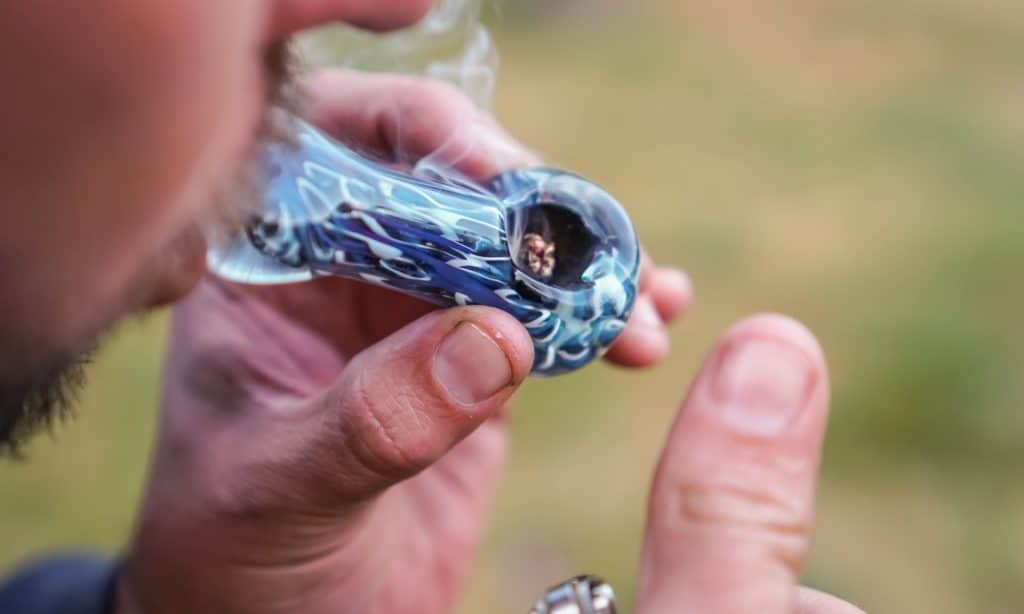
smoking from pipe exposes you to more germs than a toilet seat
Photo by Bill Oxford/Getty Images

Method of consumption

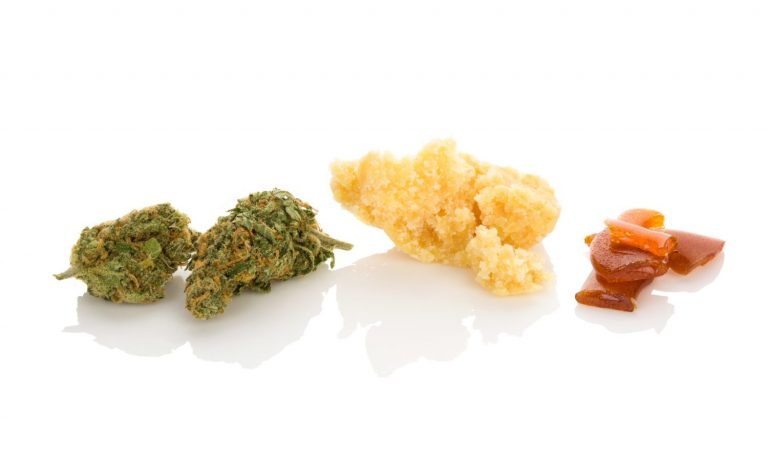
The next factor to consider is the method of consumption and the form of concentrate. When it comes to types of concentrates, there are many, from wax to shatter, resin, rosin, oil, hash, and more. Consumption methods also vary depending on your preference, and the equipment you use will differ accordingly.

RELATED: Can Marijuana Concentrates Go Bad? 

For beginners who want to learn how to smoke resin, a bowl gives you a good start. You can graduate to a bong or bubbler as you learn the ropes. Similarly, you will need a vaporizer for vaping a concentrate and a dab rig for dabbing it.

Quality of smoke

The quality of smoke makes all the difference when it comes to experience, both for beginners as well as seasoned users. You will want cooler, smoother smoke that gets you high without irritating your throat or lungs. A bong with an ice catch is a good option as it helps to cool the smoke before its inhaled. If you are more experienced, you can work with a nail and rig as it lets you control the temperature for an optimal hit. Lower temperatures deliver a smoother vapor, while higher temperatures make it harder-hitting.

Durability

When you spend good money on smoking or dabbing gear, you will want it to last. That’s why durability is another important factor for beginners. Look for gear made with high-quality material, even if it means spending a little more. You need to be extra careful about glass gear because there are chances of dropping the bong when you do not have much experience using it. Always stick to a reputed seller because they go the extra mile with quality and durability.

RELATED: Should You Buy Bongs From Online Head Shops?

These factors will simplify your selection of the right equipment if you are just starting with concentrates. The best thing to do is to start with the basics. Gradually, you can move to more complex gear if you want to take your experience to the next level.

This article originally appeared on Green Market Report and has been reposted with permission.

Barriers To Studying Marijuana: Q&A With Dr. Thorsten Rudroff

Dr. Rudroff recently spoke in depth with The Fresh Toast about common misconceptions and barriers to research currently in place when studying medical marijuana or CBD. 

We need long-term studies! There is a ‘painful’ parallel between medical marijuana and the past and present situation with opioids, where the short-term demonstration of efficacy on chronic pain led to the promotion and broad scale prescription of opioids in the absence of high quality evidence.”  – Dr. Thorsten Rudroff

Recently, The Fresh Toast shared an article about Dr. Thorsten Rudroff’s study in partnership with the National Institute of Health and the University of Iowa that focuses on understanding how aging and mobility is linked to medical marijuana. 

RELATED: University Of Iowa Is Exploring Medical Marijuana’s Effects On Aging

Already garnering attention all over the globe, the study sought participants to discuss if the use of marijuana could increase the risk of falls or cognitive impairments in aging adults.

Dr. Rudroff, whose background includes a PhD in neurophysiology and a degree in physical therapy, recently spoke in depth with The Fresh Toast about common misconceptions and barriers to research currently in place when studying medical marijuana or CBD. 

Q: Other researchers often discuss the red tape that surrounds marijuana and CBD studies. Have you experienced this with your current study?  

A: We have to distinguish between intervention and observation studies. Intervention studies, the investigators tell the subject how to use medical marijuana, are difficult. You need a special license to conduct these studies. To get this license can take more than 2 years. Observational studies, like this one) are easier to perform. We invite users to the lab and test them. However, it took some time to get approval from the UIOWA IRB (Institutional Review Board). For example, we had to make sure that we follow strict Iowa Marijuana laws. Furthermore, my lab is the first at UIOWA who is doing this kind of research. I hope that the next marijuana study will get approval much quicker. 

RELATED: NIH Director Says Marijuana’s Legal Status Is ‘Big Deterrent’ To Research

Photo by Thanit Weerawan/Getty Images

Q: When people are researching CBD/marijuana, what are three things they should know, or better understand prior? 

A: Importantly they should know the effects of THC and CBD. Careful with THC products, the higher the THC the more likely are side effects. Especially older people with heart problems should pay attention to the THC content. I also recommend working with the physician (neurologist) when someone decides to use medical marijuana. Lastly, people should use products from good sources and with correct labelling.

Q: Do you have any advice for researchers new to the market?  

A: New research should critically review the literature. Many things are unknown. What are the long-term effects of medical marijuana? What are the interactions with other drugs? What are the specific effects of THC and CBD on cognitive and motor function?

The longer the FDA waits to remove marijuana from its drug classification, the farther behind the U.S. will stall in producing vital research for the older of vulnerable members of the population. Researchers like Dr. Thorsten are making important strides in creating mainstream conversations around marijuana use while de-stigmatizing weed and CBD in conversations with older adults.

This Word Will Ruin Your Valentine’s Day

0

This word has the potential to ruin your relationship over the long haul. Do yourself and your partner a favor and steer clear of it.

Valentine’s Day is the perfect excuse to enjoy and appreciate your partner and to avoid petty fights. As we all know, relationships aren’t damaged by actions alone. According to experts, there are seemingly harmless words we should avoid whenever possible.

When we’re in a relationship, we quickly learn to steer clear from certain negative words, those that can harm our partners or terminate our relationship all together. But, there is one specific word that rears its ugly head often, and we’ve likely all used it without thinking twice. This word can slowly chip away at our relationships without us even realizing it.

According to experts, this word is “should.”

Your Genes Are Responsible For Your Craving Of Hugs Right Now
Photo by Ketut Subiyanto via Pexels

“Expectations that are attached to ‘shoulds’ are often rooted in unrealistic beliefs, unvocalized needs, or judgments regarding how a partner believes the other person should behave,” sex therapist Natalie Finegood Goldberg explained to Best Life.”The reason this is problematic is ’cause it’s equivalent to finger-pointing, which tends to be critical and elicit defensiveness.”

RELATED: 3 Subtle Relationship Habits That Can Predict Staying Power

While the word is utilized in our daily lives with various people, it’s usually not meant as a “positive” when when used in our relationships; it’s often brought up in negative scenarios, like when one partner isn’t satisfied with the other, or when the state of the relationship is causing stress.

Whether it’s Valentine’s Day or any other day spent in close quarters, it’s important to periodically check in on how you’re communicating with your partner, and whether you’re intentionally or unintentionally harming them with your words. It’s completely natural and beneficial to have expectations in your relationships, but the way in which you communicate this is pivotal.

RELATED: This Is The Most Important Factor When It Comes To Relationship Success

Steer clear of trouble this Valentine’s Day. Buy some flowers and order some food. Try your best to have a good time. But don’t point fingers unless you’re calling dibs on a chocolate truffle.

Here are 5 more words you should avoid using with your partner, according to Best Life.

Will California Really Ban Smokable Hemp?

A total ban on smokable hemp products makes little sense. The state has time to think this through and come up with a better solution.

A few weeks back, I wrote a post entitled “California Tries Again with CBD“, in which I discussed a new piece of legislation (AB-45) introduced to ostensibly provide a regulatory framework for the manufacture and sale of certain hemp-derived products. Those products include foods or beverages that contain cannabidiol (CBD). In that post, I mentioned that provisions in AB-45 contain bans on smokable hemp products, and in this post I’d like to jump a little further into this provision and whether it has any chance of becoming law.

Currently, AB-45 provides in part:

Unless explicitly approved by the federal Food and Drug Administration, industrial hemp shall not be included in products in any of the following categories:

. . .

(3) Processed smokable products, including, but not limited to, electronic cigarettes with nicotine.

(4) Smokable flower, including, but not limited to, hookah and shisha with nicotine.

(5) A product containing nicotine[ or] tobacco . . . .

Unpacking this, virtually any kind of smokable hemp product would be banned, from flower to vape oil. Moreover, even assuming the definition weren’t so broad, the bill would give the Department of Public Health authority to ban other products it deemed to “pose[] a risk to human or animal health through regulation,” meaning other smokable products could be banned. Apparently, public health officials asked for these provisions to be included, so it’s not hard to see how they would regulate other products.

The Future Of Smokable CBD Products Is Not Great
Photo by Christian Wiediger via Unsplash

Notably, the above ban is subject to a major caveat: a smokable product may be allowed if the FDA specifically approves of that product. However, judging by how the FDA has handled hemp-derived products since late 2018, and given the recent vape crises that spurred regulators to implementing all kinds of bans on smokable products, that will probably not happen for many, many years (if ever).

RELATED: California’s 7 Toughest And Worst Cannabis Rules

So, the main issue is the likelihood that AB-45 will pass and include this smokable hemp ban. Perhaps the best place to start is the failed attempt to pass similar legislation in California in 2020, AB-2028. This piece of legislation contained a similar hemp ban which was apparently the source of massive backlash. Ultimately, the bill was unsuccessful because agreement could not be reached on its terms by the conclusion of the legislative session.

AB-45 will undoubtedly face the same kind of opposition this year, and it has much more time to make its way through the state legislature than the hurried AB-2028 did. There have already been reports of complaints from hemp farmers in the state: it’s likely that those will continue, because eliminating an entire product category can reduce the marketability of state-grown hemp.

RELATED: The Future Of Smokable CBD Products Is Not Great

AB-45 is in its infancy so there is plenty of time for the state to remove the smokable hemp ban. If it does not, there is a serious chance that the bill will fail and this will be the third consecutive year where the state has been unable to regulate CBD. If the state does manage to pass a ban on smokable hemp products, it is likely to be subject to immediate litigation like in Indiana and Texas.

All in all, a total ban on smokable hemp products makes little sense. The state has time to think this through and come up with a better solution. Stay tuned to the Canna Law Blog for more updates on California’s battle against smokable hemp.

Griffen Thorne is an attorney at Harris Bricken, a law firm with lawyers in Seattle, Portland, Los Angeles, San Francisco, Barcelona, and Beijing. This story was originally published on the Canna Law Blog and has been reposted with permission.

Don't Miss Your Weekly Dose of The Fresh Toast.

Stay informed with exclusive news briefs delivered directly to your inbox every Friday.

We respect your privacy. Unsubscribe anytime.