A close friend of Harry’s revealed to CBS the one thing the Duke of Sussex has no patience for when traveling.
When you’re royalty, hotels will bend over backwards to make your stay the most enjoyable. And that’s why when Prince Harry makes a request on behalf of the environment, it’s impactful.
During a 2019 interview with “CBS This Morning,” Harry’s good friend Nacho Figueras revealed that the Duke of Sussex has one main request when he travels and it’s a simple, yet important one: don’t use plastic.
Figueras, often referred to as the David Beckham of polo, explained to CBS that he saw first hand what type of guy Harry is when the two stayed at a hotel before a charity polo match last month.
“He talked to a person and said, ‘This morning I got my coffee and I saw that you have a plastic thing on the coffee. And then I also sent my shirt and I got my shirt in a big plastic bag.’ The prince then added, ‘Can we please not use the plastic?’”
“So that’s this guy, okay. I don’t like to talk about that at all, that’s who he is. That’s who they are. No plastic.”
Photo by Chris Jackson/Staff/Getty Images
In January of last year, during a roundtable discussion with Commonwealth young leaders, the then-expectant father said he’s worried about the state of the world that his child will grow up in.
“As someone who is about to become a father, I am acutely aware of our shared responsibility to make this world more resilient and its inhabitants more accountable for the next generation,” he said. “The only way to see real progress is not by chance, it’s by change.”
His father, Prince Charles, echoed those sentiments in November 2018 during a visit to Ghana, when he called the world “damaged” and “destroyed”.
Apartment don’t usually lend a lot of space for working out. Here are a few tips that can help you avoid your neighbor’s wrath.
If you live in an apartment, time spent at home is time spent listening in on your neighbors, whether you want to or not. All of those hours sharing a building translate into hearing more of their steps, their arguments, their furniture moving, and (unfortunately) more. It quickly stops being entertaining.
This year has seen a marked rise in noise complaints, which makes a lot of sense. We’re all at home and kind of sick of being in tune to each other. Now that cases of COVID-19 are rising and lockdown measures are being implemented again, you don’t want to be that neighbor everyone hates for being too loud, even if you’re just harmlessly working out and can’t control the sounds you make when making an effort.
Here are some tips on keeping your workout volume down:
Low impact workouts get a bad rep, but they can be pretty intense while producing less noise. They tend to limit jumps and other loud, annoying sounds. A lot of workout videos and classes feature low impact options, which go easier on the joints and are better suited for your apartment.
Get creative with your cardio
We tend to associate cardio with lots of movement, like running and jumping, but this is not true. Any activity that gets your heart-rate up can be considered cardio. Exercises like squats, push ups, and lunges can be considered cardio when done quickly, and can actually be more effective for getting fit and losing weight when compared to running on the treadmill, since these exercises target specific muscles.
Every time you jump and land, the person who lives below you can feel it. But this can be managed. You can do your workouts and jump without landing heavily, as if you were trying to avoid disrupting someone who is occupying your same space. This modification will likely result in a tougher workout, burning more calories and being more of a challenge. Win win.
Buy the right equipment
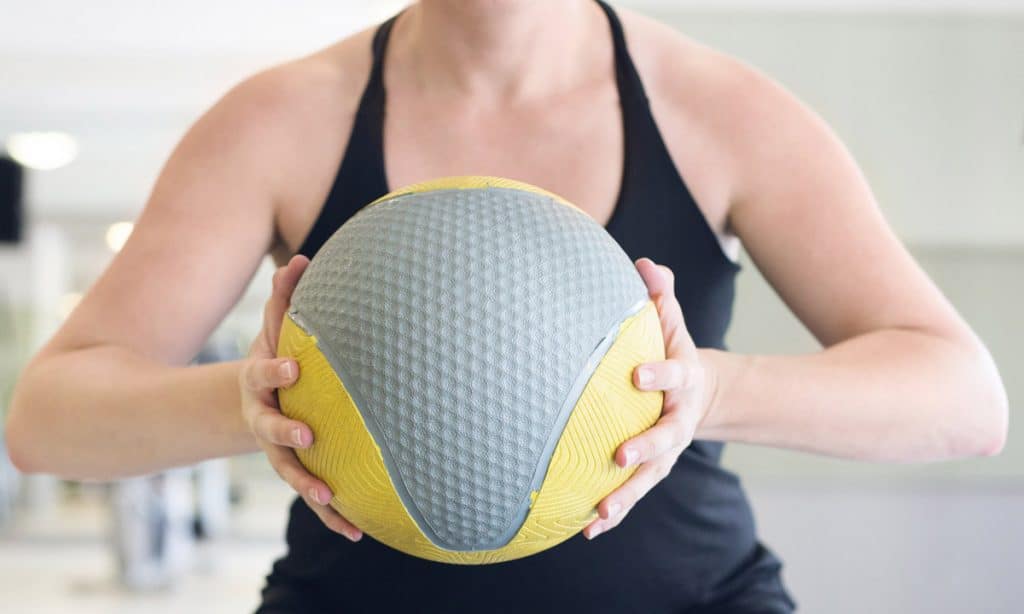
Medicine balls, yoga mats, and resistance bands are all silent and effective when it comes to burning calories and shaping bodies. They’re also pretty silent and accessible, giving you the chance to train other muscles and try out new things. Now that gyms are closing and people are being more cautious, it’s the perfect opportunity to experiment with new equipment. What do you have to lose?
Face masks are one of the fews tools we can use to curb the spread of COVID-19. Here’s how they work and why you should wear them.
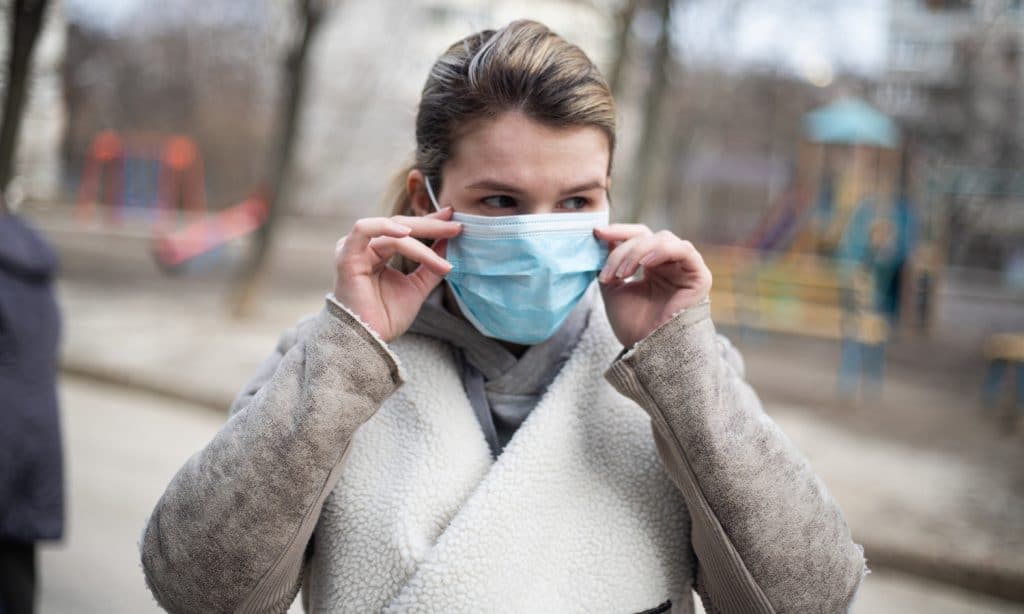
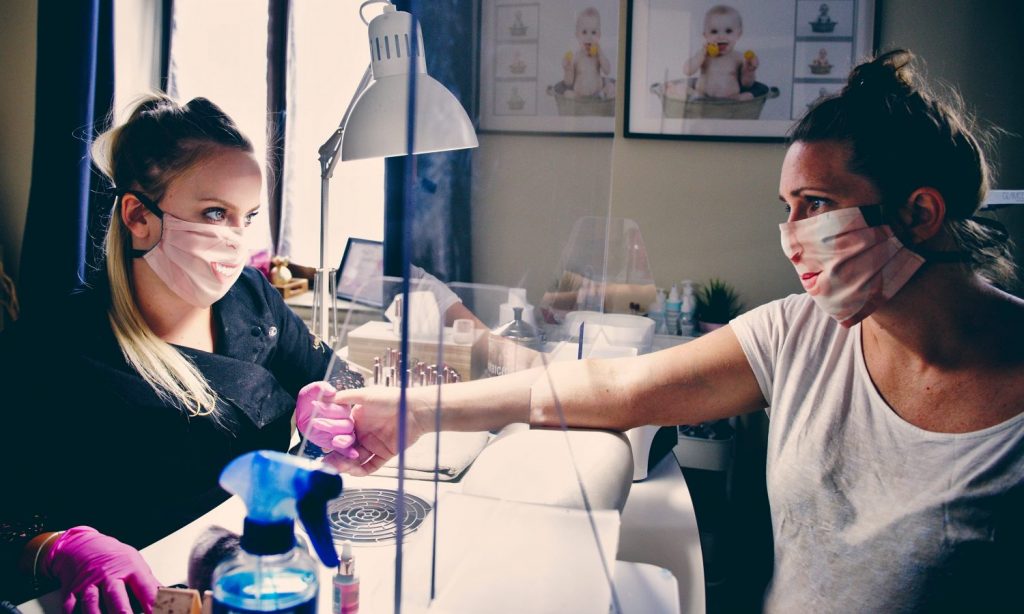
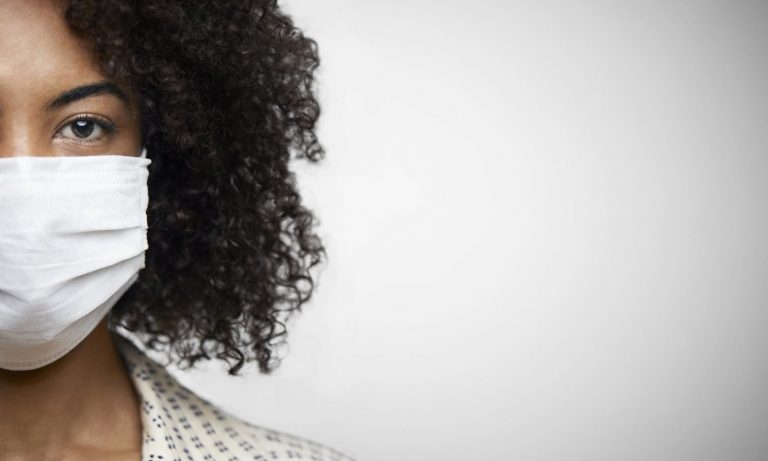
Face masks have had a big year. As one of the most efficient ways of curbing the pandemic, their use has been politicized and highly discussed. While some think face masks are a breach of their freedom (they’re not), many states are asking people to wear their masks in order to keep themselves and others safe.
When it comes to the science, experts are clear on the benefits of face coverings. “The more people who wear a mask, the more the community is protected and therefore the more you individually benefit,” Dr. John Brooks told the New York Times. Still, there’s a lot we don’t know about face masks and it’s a prevention method that’s hard to accurately measure in effectiveness.
Here are some of the most important facts you should know about face masks:
The materials of the mask matter
Photo by EVG photos via Pexels
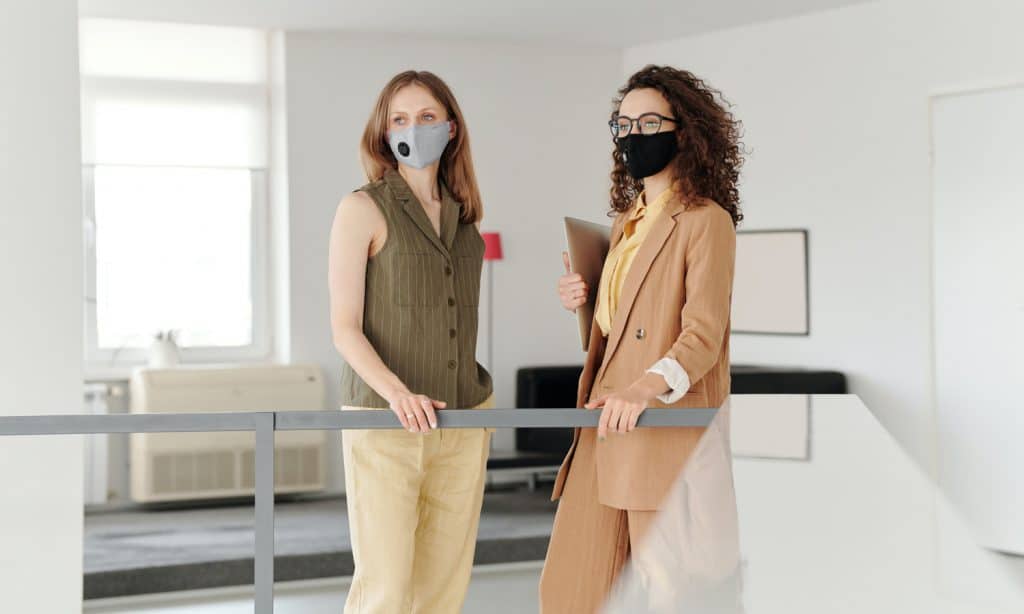
The effectiveness of the face mask depends on how it’s made. The most effective ones, worn by nurses and doctors who are in constant contact with the virus, are N95 masks. When talking about people who aren’t exposed to these pathogens in their daily lives, face masks with at least two layers of cloth should provide sufficient protection.
During the first months of the pandemic any sort of covering was considered effective. Now the goal is for everyone to wear a well-made, effective face mask. These kinds of masks can be washed and reused, which is not the case with surgical and N95 masks.
How does the mask work?
Photo by Filip Bunkens via Unsplash
The masks work best when everyone in a community is using them. The clearest example of virus prevention is when the masks are worn by those who are infected. Their use directly reduces the amount of particles that are spread through talking and coughing. This is especially important when it comes to asymptomatic people, who may be responsible for over 50% of COVID-19 spread without knowing about it.
When it comes to the person who is wearing the mask, data suggests that the mask provides protection from the virus, however, to what degree is unknown. The studies that are available have been conducted under ideal conditions or with the use of mannequins, which don’t account for realistic situations. Still, it’s believed that wearing face masks reduce the viral load of the virus, resulting in less risky cases of COVID-19.
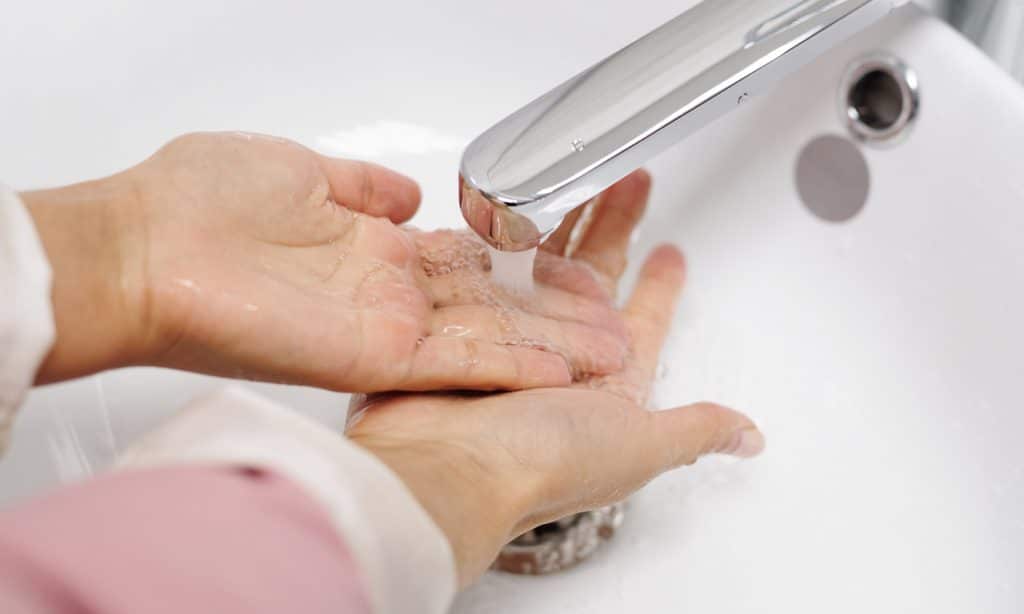
While an entire community wearing face masks regularly will definitely help in curbing the spread of the virus, it won’t do all of the work. Social distancing, proper ventilation and frequent hand washing are also important tools when battling the pandemic. In an ideal situation, people would use all of these tools regularly in order to keep themselves and others safe and in preventing shutdowns.
With results available in 30 minutes or less, the test is set to disrupt others on the market and create less time from test to diagnosis, easing the burden on healthcare providers.
The Food and Drug Administration (FDA) has announced one of the most promising developments in America’s fight against COVID-19: A home-based rapid self-test.“This new testing option is an important diagnostic advancement to address the pandemic and reduce the public burden of disease transmission,” FDA Commissioner Stephen M. Hahn, M.D. said in a statement Tuesday. “Today’s action underscores the FDA’s ongoing commitment to expand access to COVID-19 testing.” Focused wholly on reaching people as they quarantine, disabling the spread of the virus, the FDA greenlit the Lucira COVID-19 All-In-One Test Kitfor individuals without the use of a trained medical professional for individuals over the age of 14. For children under 14, the test is available in clinical settings, such as hospitals, doctor’s offices and urgent care centers when administered by a professional. With results available in 30 minutes or less, the test is set to disrupt others on the market and create less time from test to diagnosis, easing the burden on healthcare providers, as well as communities as a whole. Only available in prescription form, individuals must ask for it from their care provider. Once samples are collected, the swab is placed into a vial that goes into a test unit. Each display uses light to display a positive or negative result, allowing individuals and families a faster, easier path to answering the question if they should quarantine.
The Director of FDA’s Center for Devices and Radiological Health, Jeff Shuren, M.D., J.D., explained the remarkable nature of the test, sharing, “Now, more Americans who may have COVID-19 will be able to take immediate action, based on their results, to protect themselves and those around them.”
Speed is of the essence as the United States is seeing an alarming spread of the COVID-19 virus with little end in sight.As new restrictions and regulations move from state–to–state, leaders are searching for answers in eliminating the threat of a nation-wide lockdown—further hurting businesses. The FDA has expressed since the start of the pandemic that rigorous testing, study of the spread and vaccination could slow Coronavirus’ reach and bring most Americans back to their new normal sooner, though for some, it’s not soon enough. With new rapid testing available at home, the Administration is hopeful that more Americans will have access to knowledge if they are positive, staying home and not infecting workplaces, communities or schools.
Psychologists believe that setting up holiday decorations early might have some mental health benefits.
People have some rules when it comes to holiday decorations. The majority of us wait until after Thanksgiving is over in order to start thinking about Christmas and all of the plans and presents and decorations that you have to account for. But this year, things are a little different. No matter your plans, it’ll likely to be a slower holiday season, leaving you with more time spent at home, which isn’t necessarily a bad thing.
With less family members to account for and less hassle to deal with, a lot of people are considering setting up decorations early. Psychologists don’t think it’s a bad idea.
“People are longing for happiness and joy,” psychologist Melissa Robinson-Brown told the Huffington Post. “This year has been a significant year of grief and loss: loss of freedom, loss of time with family, loss of income and job, and loss of loved ones, just to name a few. As such, people are seeking comfort and even healing.”
Decorating early is a safe and nice way of reminding yourself that it is the holiday season, even when faced with a lot of crazy stuff. HuffPo compiled some of the mental health benefits psychologists say come with getting those decorations up early. Here are some of our favorites:
The holidays flood your brain with childhood memories
For better or worse, the holidays are nostalgic. It’s common to think about your childhood and the excitement you used to feel during this time of the year. For people who may not be celebrating with their family, setting up holiday decorations might help them feel comforted and less alone. “Decorating your home may serve as a cue of positive memories and emotions, which can be really helpful to promote joy and prevent sadness,” explains psychologist Erlanger Turner.
It’s a good distraction
Photo by Erwan Hesry via Unsplash
With less family around, less dinners to attend, and less places to go out and celebrate, decorating seems like a good break from watching Netflix, drinking and cooking. It’s important to be informed and to feel things, but it’s also important to have escapism and time to yourself. Decorating your house can allow for some introspection and some movement, both of which are great for your mental and physical health.
If you’re someone who usually looks forward to the holidays, then you’re acquainted with the excitement and the anticipation that’s associated with them. While this year will be different, there’s no reason why you shouldn’t look forward to them. Having a Christmas tree, preparing holiday foods, wearing holiday themed pajamas and watching holiday movies might sound silly, but they’re simple ways of breaking up the monotony of the year, and introducing some joy into your life.
Although the MORE Act will likely be approved in the House, it remains to be seen what will happen with it once it reaches the Senate.
The House of Representatives is set to vote on the legalization of marijuana sometime in December, according to House Majority Leader Steny Hoyer. It’s a sign the Democrats, who have control over the lower chamber but are still waiting on final votes, are trying to get a jump start on a promise by President-elect Joe Biden to eliminate the criminal penalties for pot offenders.
In a letter published last week, Hoyer explained how the lame-duck session from November through December was going to unfold. He wrote that one of the highest priorities was to put the Marijuana Opportunity, Reinvestment and Expungement (MORE) Act in a position to advance in the next session.
“The House will vote on the MORE Act to decriminalize cannabis and expunge convictions for non-violent cannabis offenses that have prevented many Americans from getting jobs, applying for credit and loans, and accessing opportunities that make it possible to get ahead in our economy,” the letter states.
What is interesting about the MORE Act is that it is sponsored by Vice President-elect Kamala Harris in the Senate. The proposal aims to strike cannabis from the Controlled Substances Act and make it to where people who get caught in possession of weed are never again incarcerated. As it stands, the United States still locks up more than 600,000 pot offenders each year.
The MORE Act is a move that makes sense at the federal level now that more than half the states are allowing marijuana sales in some form or fashion. In the past election, five more jurisdictions joined the legal cannabis trade. The MORE Act aims to legalize the leaf, similar to how it has done with alcohol. It would establish a taxed and regulated system and a portion of that money (5%) would be spent reinvigorating communities brought down by the War on Drugs.
The House was initially scheduled to vote on the MORE Act in early September, but it was pushed back over concerns that moving forward might offend the voters and have a negative impact on the election. It’s not that the population doesn’t agree with marijuana legalization. It does. The latest Gallup poll shows 68% of the population now believes the herb should be legal nationwide. But the country is still struggling with the coronavirus, so House lawmakers felt it was disrespectful to approve legal weed while COVID relief talks remain stagnant. President-elect Biden has made virus control a priority once he takes office in January.
Although the MORE Act will likely be approved in the House, it remains to be seen what will happen with it once it reaches the Senate. For now, it looks as though the Republicans will maintain control of the upper chamber, and that could make passing marijuana reform bills a daunting task. Senate Majority Leader Mitch McConnell has yet to come out in support of full blown legalization. In fact, his last word on the matter is that he remains staunchly opposed to such a thing.
Even if the bill had his support, however, it is still a bit ambitious for Biden. Although he has promised to make marijuana decriminalization a priority for his administration, he doesn’t believe that full-blown legalization is where the nation should go. Whether Kamala Harris can get him to think more progressively, only time will tell. Nevertheless, Democrats want to ensure the MORE Act is on deck once the new Congress gets to work at the beginning of the year.
Green Wednesday could give Black Friday and Cyber Monday some serious competition when the sales numbers come through for 2020.
Though April 20 takes the top prize in cannabis sales year after year, Green Wednesday (Black Friday’s cannabis counterpart) has come in a strong second place since its inception in 2016, and 2020 looks to be no different. As a result of clever moves by retailers to offset pandemic-related impacts on buying behavior, starting deals and discounts earlier in the season than ever before, and tailoring the shopping experience to customer health and safety concerns, Green Wednesday sales for 2020 are poised to hit an all-time high.
A November 16 press release from the National Retailers Federation and Prosper Insights and Analytics cited the results of an annual survey which showed that shoppers are getting an earlier start on purchasing for the upcoming holidays. According to the survey, 59% of holiday shoppers had already started making purchases as of early November — a 21% increase over figures from 10 years ago. Despite the Covid crisis, consumers seem to feel confident in the efforts retailers are making to keep them Covid-free, with 70% saying they feel safe shopping in stores. One such safety measure includes stocking shelves with gift items earlier in the season and offering special deals to avoid overcrowding as the season progresses.
Deliveries Increase
Eaze, a cannabis delivery platform in California, posted new data showing that Green Wednesday 2019 saw a 90% increase in deliveries over a typical Wednesday and a 147% increase in deliveries over the previous year. Cannabis data and analytics provider Headset posted a comparison of Green Wednesday and Black Friday sales from 2019 on its blog, which showed record Green Wednesday sales, although savings lagged behind Black Friday bargains. The study attributes this to bigger discounts and lower average item prices on Black Friday.
Retailers hit hard and early with special deals and holiday gift packages to tempt those seeking to spread some cheer this holiday season and they’re not letting up as the week of Thanksgiving approaches. Beyond the standard pre-rolls, tinctures, and vape paraphernalia, companies like Her Highness, a lifestyle brand based in New York City, offer 25% off gift items like the Grindzilla Cannabis Grinder and the Lip Service Ashtray (shaped like, you guessed it, lips) while Indiana brand Cannabolish is promoting its products with a 30% Green Wednesday deal featuring its popular Odor Removing sprays and gels and candles to make sure cinnamon and pine are the only top notes in your holiday home.
Caliva is also offering a variety of deals on products that will help you survive the season — whether that be teaching grandma how to get on zoom (again) or kickstarting your metabolism for the big Thanksgiving feast. On Green Wednesday (11/25) Caliva is offering up to 40% off select top brands: Caliva, DELI Nickels, Plus Gummies, KIVA, and more! On Black Friday the company said customers will receive an extra deal when they pay through Hypur, the first digital payment solution for cannabis transactions. The promotion will be available through Caliva delivery online and all Caliva / DELI retail stores.
Top Selling Products
Chart provided by Headset
According to LeafLink, a B2B e-commerce wholesale marketplace that connects retailers and brands, in 2019, sales through LeafLink increased by 5.45% during the two weeks leading up to Green Wednesday and the Thanksgiving holiday weekend. What products were the most popular as retailers stocked up for the holiday weekend? Flower was the most popular product category at the time, making up 31.2% of the market share in the week leading up to Thanksgiving. However, Disposable Cartridges and Pre-Rolls experienced the biggest sales lifts, seeing a 29% increase and a 44% increase, respectively.
Photo by Joanna Malinowska via freestocks.org
Here are the top 5 selling Pre-Rolls of 2020, according to LeafLink List:
Caviar Joint from Kaviar (CO)
Mini Fuzzies from Sublime, CA
Wedding Cake Pre-Rolls from Pacific Stone, CA
Relax & Chill Pre-Rolls from Exotic Blendz, OR
Bubble Joints from the Flower COllective, CO
So whether you go for some fancy swag, all-natural home care products, or perhaps a cozy fireside read like Bong Appetit (a weed cookbook from the editors of Munchies), there are ample ways to cross some friends and family off of your shopping list this year. If consumer behavior and favorable legislation continue on their current trajectory and retailers keep ably adapting to these uncertain times, Green Wednesday could give Black Friday and Cyber Monday some serious competition when the sales numbers come through for 2020.
Moderate marijuana users shouldn’t overly worry themselves, though heavy consumption could lead to adverse effects.
Last December, Willie Nelson shocked stoner circles around the world when the Red Headed Stranger announced he had quit smoking weed. A spokesperson later clarified that Nelson still uses marijuana, he just stopped smoking it for health reasons.
“I have abused my lungs quite a bit in the past, so breathing is a little more difficult these days and I have to be careful,” Nelson told San Antonio television station KSAT. “I don’t smoke anymore. I take better care of myself today.”
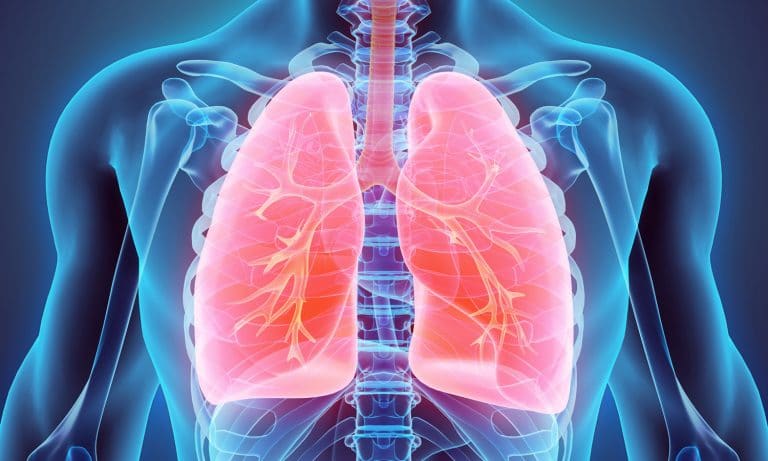
Not many of us smoke as often as Willie Nelson, but it’s worth asking: just what effect does marijuana smoke have on your lungs? The science, unfortunately, isn’t as definitive as you might find with tobacco, due to limited research into cannabis. The American Lung Association “caution[s] the public against smoking marijuana because of the risks it poses to the lungs.” That, however, is a vague sentiment.
A 2013 study published in the Annals of American Thoracic Society provides some more specifics. Smoking marijuana can lead to higher airway resistance, lung hyperinflation, and inflammation in large airways. The study also found regular marijuana use “is consistently associated with an increased likelihood of symptoms of chronic bronchitis,” though, researchers noted, those symptoms “subside after cessation of use.”
“The accumulated weight of evidence implies far lower risks for pulmonary complications of even regular heavy use of marijuana compared with the grave pulmonary consequences of tobacco,” the researchers concluded.
Photo by Hero Images/Getty Images
But a 20-year 2012 study provided even better news for marijuana smokers. Published in The Journal of the American Medical Association, researchers found that individuals who smoked a joint per day for up to seven years didn’t result in adverse lung functioning. While this point is up for debate, the study also reported that moderate marijuana smokers had a wellness advantage, as inhaling provided your lungs and chest muscles an extra workout.
Ultimately, the study’s “findings suggest that occasional use of marijuana for these or other purposes may not be associated with adverse consequences on pulmonary function.” The authors weren’t as high on heavy marijuana users as their research “suggested an accelerated decline in pulmonary function with heavy use and a resulting need for caution and moderation when marijuana use is considered.”
According to the National Institutes of Health, some case studies did report negative associations with marijuana inhalation. Those who frequently smoke cannabis experienced more outpatient medical visit for respiratory problems when compared to those who don’t smoke. Other research indicates that THC may have immune-suppressing effects, which could lead to higher susceptibility to lung infections, like pneumonia.
The good news is that most of us don’t smoke weed as often as Willie Nelson did. Toking on a joint several times a week likely won’t result in serious adverse effects. On the other hand, if you find yourself smoking too much, and coughing up nasty phlegm, it may be time to give your lungs a break.
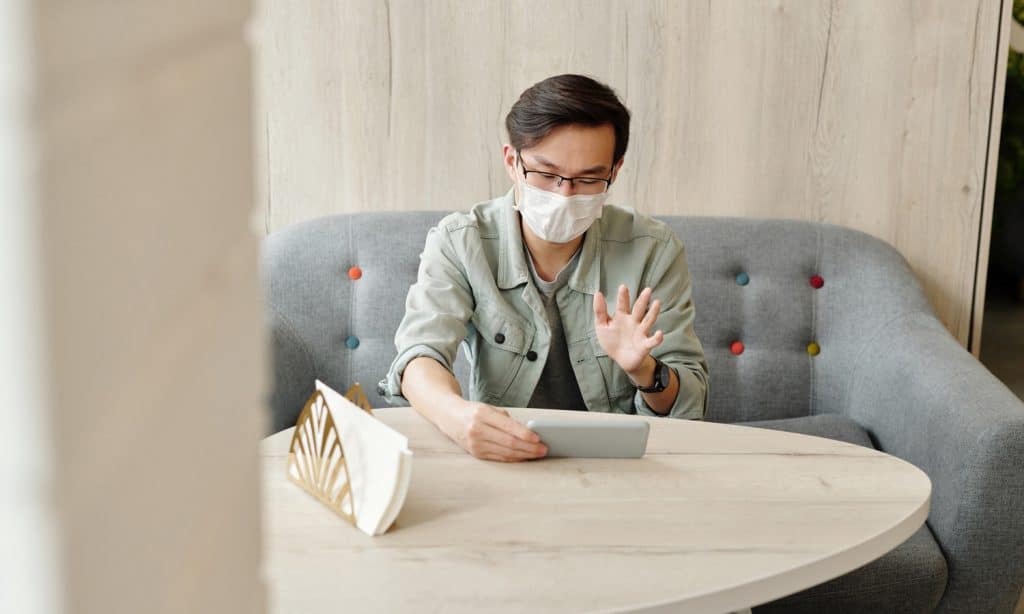
Masks cover a lot of your facial expressions and visual cues, making it more difficult to communicate effectively. Here’s what you can do to be as clear as possible.
As the pandemic marches on into the holidays, face masks have become an integral part of our daily lives as the easiest and most effective way to keep ourselves, our loved ones and our community safe. Aside from the fact that they’re strange and a little clunky, the largest hindrance of face masks is the fact that they add a layer of difficulty to our everyday communication. And that’s not even taking into accounting those who are deaf or hard of hearing.
When speaking to strangers or people on the street, we rely a lot on their expressions. It’s common to find yourself talking more loudly or gesticulating dramatically in order to get your point across. It’s not great.
The use of face masks has altered the way in which we communicate. As is the case with most things, we can adapt and get better at it the more we become accustom to the circumstances. Here are some tips that can make it easier to communicate while using face masks:
Pay attention to body language
Photo by Edmond Dantès via Pexels
Your posture, tone of voice and expressions play a huge role in communicating with others. Since the mask covers about half of your face, it’s important to work with what you’ve got, facing the person you’re talking to and letting your intonation do a bit of the heavy lifting. There’s no need to yell or get too close to people; a simple effort will allow you to pick up on other’s posture, their physical cues and more. These cues are especially important when talking to people in loud spaces, where it’s more difficult to listen to them clearly.
Eye contact is a very helpful tool when communicating with someone. While their words may still be muffled by their face mask, looking into someone’s eyes allows you to narrow your focus on them, tuning out external conversations and sounds, and making it easier to pick up on what they’re saying.
Be as efficient as you can be, eliminating unnecessary words when trying to get your point across. While this all depends on where you are and in the context of your situation, when stressed out and trying to communicate something to someone in a crowded space, it helps to be direct and polite.
We’re entering a strange holiday season. Here’s how to make the most of it if you’re planning to spend it solo.
This holiday season will be unlike others in recent memory. With COVID-19 cases reaching new highs all over the country and the economy tanking, the end of the year will be marked by grim news and developments. Many will hunker down and enjoy small celebrations with the people they live with, or will simply choose to spend the holidays alone.
If you belong to the latter group, you might be pumping yourself up and telling yourself that it’s simply another night. While this is totally true, it pays to be prepared and expect some extra sadness during this holiday season. Choosing to spend these days alone in order to keep your family and friends safe is an empowering decision, one that should help you feel good since you’re actively protecting the health of your loved ones and that of the members of your community.
Here are 5 things that can help you make the most of your solo holidays:
Spending the holidays alone is kind of memorable, so lean into it. Enjoy your space and have fun. Purchase your favorite strain of weed and get high as you go for a walk around the neighborhood, taking in the Christmas decorations and the changes in the weather. You can also try something new, purchasing some edibles that you’ve been looking forward to trying out. A word of advice: take it slow. You don’t want to have a panic attack while you’re spending December 25th alone.
Keep moving
Photo by Julia Ballew via Unsplash
While most of our focus is on family-sized food when discussing the holidays, being alone means that you’ll likely have less temptation around, and likely more incentive to be active. While you should treat yourself, especially during these trying times, moving around and staying active throughout these couple of months will help you cope with your mental health and feel more invigorated. Keep track of the days when you wake up feeling gloomy and like you don’t want to move around much. Push yourself to go on runs, walks, or stretch out in your bedroom. 15 minutes of activity can change the outlook of your day.
House or pet sit
Photo by Andy Omvik via Unsplash
A change of scenery or some companionship can help immensely, especially during the holidays, which can be lonely and melancholic even when surrounded by family. Ask your friends and acquaintances if they’re going to be out of town and offer to pet or house sit. Both will keep you busy fulfilling various tasks, from walking and cuddling an animal to simply keeping a house tidy. Plus, a small part of you might actually feel like you’re on vacation!
Just because you’re spending the holidays alone doesn’t mean you shouldn’t reach out to friends and family. Even if you don’t feel like making the effort or like seeing your family’s face through a screen will make you feel worse, it’s still important to stay within reach. Figure out what works best for you, whether that’s calling, FaceTime or text, and reach out.
Make a plan
Photo by Daria Shevtsova via Unsplash
While a lot of people have no issue with spending their entire day watching holiday movies and ordering take-out, others will prefer to have some kind of plan. If that’s you, get busy checking things off your list, from grocery shopping to outlining which TV shows you want to binge. It may not be the same kind of plan you’d follow when visiting family, but it will help pass the time and keep you from feeling like you’re drifting out to sea.