The legal delivery of marijuana is becoming increasingly more popular. Here are some basics you should know.
One of the great joys of modern life is delivery. The fact that you can order whatever you want from the comfort of your home is extremely convenient, and a perk that has become even more valuable during the pandemic. Marijuana delivery, although not as simple as ordering food or alcohol to go, has grown more popular and hassle free over the years. The pandemic is also helping people get licenses more quickly, gaining faster access to these kinds of perks.
Legal marijuana delivery is not something that a lot of people are aware of. While some know that the option exists, getting their weed from an app doesn’t sound as safe and exclusive as visiting your own dispensary or buying something from your trusted weed guy. Some people also think that legal weed delivery just sounds too good to be true. But it’s not; legal marijuana delivery is 100% legitimate.
Here’s what you should keep in mind when ordering legal marijuana online:
When discussing legal marijuana delivery services, it’s important to keep in mind the state where you live and whether recreational or medical marijuana is legal. Even if it is, you still have to check if marijuana delivery is allowed. States like Washington and Colorado, both known for their big cannabis markets, are still not allowing marijuana delivery. Check periodically since these rules are rapidly changing due to preventative COVID measures.
Do some research
Photo by S. via Unsplash
Depending on what you’re looking for, marijuana delivery services can come in different forms. Some services are fast while others are more expensive and provide high end cannabis and cannabis products. Your safest bet is to look for your nearest dispensary and ask them some questions.
There are different kinds of delivery services
Photo by jesse ramirez via Unsplash
Marijuana is a growing business, one that remains kind of complicated when it comes to learning more about it. While there are apps like Eaze, which provide weed delivery as simply as ordering in pizza, there are also subscription boxes, membership clubs and scheduled marijuana deliveries. These latter options provide higher end products for a more expensive price.
No matter your state, marijuana delivery is picking up steam and so is the legalization of the drug. Although marijuana remains a growing business that is hindered by federal regulations, it pays to get informed. Call your local dispensary and ask about your state’s regulation and whether or not they can provide you with efficient cannabis delivery service.
While the Gov. didn’t always support cannabis, his plan includes funds that would be earmarked for “historically disadvantaged businesses.”
Add Pennsylvania Gov. Tom Wolf to the growing body of state lawmakers proposing cannabis legalization as a way to boost local funding and economies. Wolf called upon the Legislature to end marijuana prohibition in the state as part of his fall agenda.
He also stated that marijuana-related tax revenue will go to help small businesses recover following the pandemic-caused recession, and will also fund restorative justice programs. According to the agenda released online, 50% of existing small business grant funding boosted by legalization revenue “would be earmarked for historically disadvantaged businesses.”
Gov. Wolf requested the Legislature send him a legalization bill in upcoming months as immediate action to boost economic recovery in Pennsylvania.
“Also, the governor wants the General Assembly to pursue criminal justice reform policies that restore justice for individuals convicted of marijuana-related offenses,” the agenda reads.
I'm calling on the legislature to legalize recreational marijuana, with the revenue going to:
🔹 Small business grant funding 🔹 Restorative justice programs
At the same time, we must pursue policies that restore justice for individuals convicted of marijuana-related offenses.
Just two years ago Wolf resisted legalizing cannabis, saying in a radio interview, “I don’t think Pennsylvania’s actually ready for recreational marijuana.” Wolf’s stance changed last September when he announced he would support the action. His change of heart came following a listening tour to the state’s 67 counties by Pennsylvania Lt. Governor John Fetterman, a vocal support of recreational marijuana.
About 65-70% of attendees to the listening tour supported recreational cannabis legalization, a report from the Governor’s Office found. A poll released in May by the Pennsylvania Cannabis Coalition also found two-thirds of state voters would support legalization. A majority of conservative voters also approved such action, with only 9% of Republicans saying they would vote out a legislator for voting in favor of cannabis reform.
Don’t expect legalization to happen overnight however. The Republican-controlled General Assembly needs to create cannabis legislation requested by the Governor, and House Majority Leader Kerry Benninghoff responded critically to Wolf’s fall agenda.
Said Benninghoff in a statement released yesterday, “It is disingenuous for this governor to put forward an unaffordable legislative agenda and require taxpayers to bail him out of his unilateral mandates that have devastated their lives and livelihoods.”
Many creative people claim cannabis plays a key role in their creative process, but whether it boosts creativity probably depends on the personality of the creative person.
“Where the drugs are concerned, and alcohol, they do seem to open a window for you. They do seem to broaden the vistas—at first,” comedian George Carlin once said.
Steve Jobs claimed that smoking cannabis made him feel relaxed and creative, while Alanis Morissette said that it helps keep her creative juices flowing. And you probably already knew that Charles Baudelaire, Amedeo Modigliani, and Louis Armstrong used cannabis too.
It begs the questions, is there something special about the most popular illicit substance in the world that makes it more conducive to creativity? And, is a lack of creativity a treatable condition?
One hypothesis is that, because drugs can lower our inhibitions, they help to silence the self-editor that tends to harshly criticize what we create, allowing us to overcome writer’s block or simply the fear of creation.
A 2017 study previously published in the journal Consciousness and Cognition brought us closer to that conclusion using cannabis smokers who creatively outperformed non-smokers over the course of two tests. The researchers used the Big 5 model of personality to primarily assess 979 undergraduate student participants. They then asked the group to rate their own levels of creativity and followed that up by objectively measuring creativity among the students one test for divergent thinking and a separate test for convergent thinking.
Divergent thinking helps us generate all kinds of possible solutions to a problem; brainstorming is one method of divergent thinking. Convergent thinking helps us arrive at one “correct” answer, such as in a multiple choice test.
The results indicate that, while there was no significant difference between the two groups on the divergent thinking test, cannabis users outperformed non-users on the test that measured convergent thinking.
According to the study, cannabis users may be more creative than non-users, but cannabis is not a creativity booster. The psychoactive compounds in the cannabis plant are stimulating and thus boost output of all kinds. Ultimately, the results suggest that marijuana use has no effect on creativity but on the perception of one’s own creativity.
What to do with leftover cannabutter weed
Cannabis in the Creative Process
Cannabis users tend to have different personality traits — for instance, being more open to experience than non-users — something associated with both cannabis use, and heightened creativity.
Many creative people claim cannabis plays a key role in their creative process, but whether it boosts creativity probably depends on the personality of the creative person. A very sensitive creative person may get some benefit from cannabis, but for someone who’s already in the zone, it might push them into a place of being too “couch locked.”
And what do we do when science finds that, yes, cannabis does unlock creative potential? Could using cannabis eventually be recommend as a way to overcome “writer’s block” or one’s lack of a muse? The results of studies that suggest creative process can be facilitated by drugs might be construed to imply that a lack of creativity indicates a “brain deficiency” that requires drugs.
Understandably, speculations on the involvement of particular brain regions in the creative process are of scientific interest, but what’s most evident is that more research is necessary.
And do we really want to believe that cannabis is necessary to our creative output, or the only way to meet the muse? Perhaps it is better to leave the impetus to creativity a mystery and accept that cannabis is only one of many possible veins to creativity worth opening.
According to Leafreport, only 4 out of 22 products tested actually contained the levels of CBD that were advertised.
CBD marketplace and brand reviewer, Leafreport, conducted independent lab testing on 22 CBD beverage brands to determine just how much CBD is actually in these products. Their findings were shocking, and showed many of these brands to be entirely misrepresenting their true CBD content, whether intentional or not. Some brands contain far less CBD than advertised, while some actually contain more CBD. The company ordered 22 COAs form these companies in order to accurately compare their findings.
Out of the 22 products that Leafreport tested, 54% (12 products) tested out at less CBD than the brand advertised, while two of the CBD beverage products contained no CBD at all! Additionally, the report reads that 81% of beverages (or 18 products) actually had CBD levels that were 10% higher or lower than advertised, while 14 products, or 64% of all the products tested, contained CBD levels that were 40% higher or lower than advertised.
This means that only 18%, or 4 products, tested actually contained the levels of CBD that were advertised. 64% of the total products tested by Leafreport were graded as an F and placed in the fail category. Only the 4 products that actually contained the marketed levels of CBD were graded as an A. Among the A rated products are Wyld’s Blood Orange beverage, Savage CBD Revive shot, and Dram Beauty Bubbles. Products like Refresh CBD Water, Sunday Scaries YOLO, Sweet Reason Sparkling Water, Oki Cucumber Mint, and more all received a failing score, or an F.
Looking at Wyld’s Blood Orange, Leafreport reported that they only had a variance of 5.67%. The brand advertises the drink to have 25 milligrams of CBD and they tested out with Leafreport at 26.42%. This is not a huge variance and usually deemed as acceptable by most. Oki’s Cucumber Mint water is advertised as having 20 milligrams of CBD. According to Leafreport’s findings, it only contains about 6.3 milligrams.
This is a staggering 68% variance. Blue Label Naturals CBD Water claims to contain 5 milligrams of CBD, but the tests show that their products contain no CBD at all. The same goes for Sativa CBD Water, who markets a CBD content of 25 milligrams, but Leafreport found no traceable CBD in their beverage.
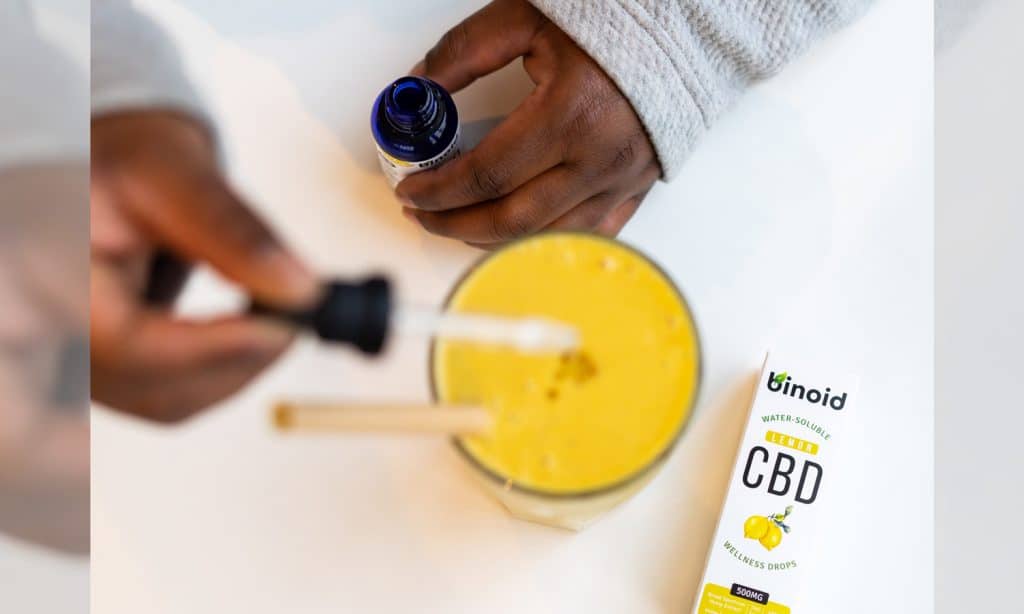
Photo by Binoid CBD via Pexels
Leafreport said that unlike the first report they conducted, they did not see a positive association with the company’s overall reputation and their test results. This means that leading CBD brands were not more likely to score well on their test results compared to lesser-known brands. Leafreport’s research signals a huge problem in the CBD beverage industry.
“This is in line with our expectations because CBD beverages are difficult to formulate and contain relatively small amounts of CBD, which means that variations of even a few milligrams can have a big effect,” said Lital Shafir, head of product at Leafreport.
Another study conducted by Leafreport highlighted inaccuracies in CBD tinctures. This study showed that some CBD oil brands sell products that contain much less or more CBD than advertised. Cannabis industry experts claim that plus or minus 10% CBD is a reasonable amount of variance for cannabis products. This means that a high-quality CBD product is expected to have CBD levels that are within 90-110% of what is stated on the label.
Leafreport’s goal is to bring transparency to the emerging cannabis industry. “The CBD industry is completely unregulated and there have been many cases of companies selling products that contain little to no CBD. That’s why third-party testing is important for brands in this industry,” added Shafir.
From health implications to value, there are a lot of reasons why vaping is better than smoking. Here are just some of them.
Vaping has become a leading topic of conversation among smokers in recent years. While there are still many unknowns about vaping, initial studies show that it’s better than smoking in a variety of ways.
If you’ve been considering the switch from smoking to vaping, you may have a few questions. Here are four things you need to know about vaping before making the switch.
Vaping is Less Harmful than Smoking
While inhaling anything other than oxygen into your lungs isn’t optimal for health, vaping is better for you than smoking. The primary reason for this difference is that vaping has a lower combustion point than smoking. In many vaping apparatuses, you can alter the combustion point to your preference.
The lower combustion means less heat entering your lung tissue. There’s also reason to believe that the lower combustion point limits the release of tar and ash, which are toxic to the lungs.
Additionally, the lack of second-hand smoke and residue makes vaping safer for the people around you as well. For these reasons, vaping is a safer alternative to smoking.
You Can Control Dosing and Output
Another compelling feature of vaping is the control over your dosage and output. When you vape, you can control the amount of nicotine that you inhale. If you’re using vaping as an alternative to smoking, you can slowly decrease nicotine dose to assist with smoking cessation. The vaping experience replicates smoking to trigger muscle memory— a common complaint when people use patches or gum.
You are also able to control the vapor output when vaping. While some people prefer the showy puff of vapor, many people prefer a more discrete approach. Opt for a vape pen that allows you control over the output, and you’ll be able to vape without people noticing.
Photo by Flickr user Ecig Click
Vaping Can Save You Money
Vaping tends to be more accessible and financially sustainable than smoking. You can get an affordable vape pen at Atomic Blaze and use it for years without worrying about having to buy papers, lighters, cigarettes, etc.
Some studies indicate that vaping delivers the product more efficiently than smoking as well. One study on vaping marijuana for cancer patients indicated that those vaping got better results than those smoking. Scientists believe this effect has to do with the lower combustion point. In essence, you get more bang for your buck when vaping.
Vaping apparatuses come at a variety of price points. When purchasing a vape pen, remember that you get what you pay for. You may not need a $400 vaporizer to suit your needs, but buying the cheapest option on the market isn’t worth the inevitable replacement fee in a few years.
Vaping Leaves No Residue or Odors
As mentioned before, you can control the output with vaping in a way that you can’t with smoking. This feature contributes to vaping being healthier and more aesthetically pleasing than smoking, as it leaves no lasting residue.
In addition to the more notorious first and second-hand smoke emitted from smoking, there’s also a thing called third-hand smoke. Third-hand smoke is the residue left in furniture, curtains, and even the walls when someone smokes inside. In smoking homes, you can often see the tinge of yellow and, on humid days, see the walls purging tar.
With vaping, you don’t have to worry about going outside during a rainstorm to prevent the lingering odors of smoke in your home. You can protect your security deposit or resale value and still enjoy yourself.
From health implications to value, there are a lot of reasons why vaping is better than smoking. Take some time to explore your options and find the right vaping apparatus for you.
While Senate Majority Leader Mitch McConnell promotes hemp-based protective masks, businesses that sell CBD are being denied PPEs. What gives?
A federal program that provides personal protective equipment (PPE) to small businesses is being denied to businesses that sell CBD products.
Denver currently holds 4,500 PPE kits that include important protection for frontline workers, like face shields, disinfectants, surgical masks, thermometers, and hand sanitizer. But Denver-based headshop Meadowlark 64 can’t receive any of those kits because a federal grant doesn’t allow federal funds to help cannabis-related businesses.
Meadowlark doesn’t sell any THC products, but that doesn’t make a difference. Neither does the fact that cannabis is legalized and regulated in Denver.
“We can’t use federal dollars to support certain industries, sadly,” Susan Liehe, Denver’s Office of Economic Development and Opportunity marketing director, told KDVR.
“For folks who are in the cannabis industry, the fact that they are caught sideways between local and federal governments is not exactly news, right? This is by no means the first time they’ve heard this and regrettably probably not the last,” she added.
Like other businesses, the coronavirus pandemic has hurt the company financially. Owner Damon Miller said Meadowlark 64 lost 20% in business due to COVID-19. He hoped having some relief through the PPE package could reverse the trend. Although Denver handed out less than half of its PPE kits, Miller or his customers won’t receive one.
“A business such as myself that does not dispense THC, but we do happen to dispense CBD. We were denied our PPE package just because of those parameters, apparently,” Miller said.
“A customer is a customer, a life is a life,” he added, “and in this day and age, anything we can do to help those folks out while they’re navigating this uncertain time, you know, that’s what we were expecting to get from the City of Denver.”
Photo by Anna Shvets via Pexels
Although cannabis companies still must pay federal taxes, they were ineligible to receive any coronavirus-related funding by the Small Business Administration program earlier this year.
This week, Senate Majority Leader Mitch McConnell used his platform to promote hemp-based protective masks. McConnell, a major thrust behind the 2018 Farm Bill that legalized hemp production in the United States, has also mocked House Speaker Nancy Pelosi for including cannabis banking legislation in the next wave of coronavirus federal relief.
“The coronavirus is not gone,” McConnell said while visiting a Kentucky-based hemp company. “And in the meantime, I recommend a hemp mask as one of the best.”
From homegrown hemp masks to distilleries making hand sanitizer, Kentuckians are leading by example. We’re going to keep working together to beat this virus. pic.twitter.com/ll44Cdk9k5
— U.S. Senator Mitch McConnell (@SenMcConnell) August 24, 2020
The DEA’s definition of “synthetic” suggest that the hottest cannabinoid currently found on the U.S. market, Delta-8 THC, would probably be treated as a schedule I controlled substance.
On Friday, the Drug Enforcement Administration (“DEA”) released an Interim Final Rule (the “Rule”) that, as we discussed, threatens the hemp industry by treating partially processed hemp extract not intended for consumption (also known as “intermediary hemp”) as a Schedule I controlled substance. This is hugely problematic because intermediary hemp is an essential and necessary component of the industry.
In addition, the Rule addresses the legality of “synthetically derived tetrahydrocannabinols,” which could also impact the hemp industry. Specifically, the Rule provides that:
“For tetrahydrocannabinols that are naturally occurring constituents of the plant material, Cannabis sativa L., any material that contains 0.3% or less of D9 -THC by dry weight is not controlled, unless specifically controlled elsewhere under the CSA. Conversely, for tetrahydrocannabinols that are naturally occurring constituents of Cannabis sativa L., any such material that contains greater than 0.3% of D9 -THC by dry weight remains a controlled substance in schedule I. The [2018 Farm Bill] does not impact the control status of synthetically derived tetrahydrocannabinols (for Controlled Substance Code Number 7370) because the statutory definition of “hemp” is limited to materials that are derived from the plant Cannabis sativa L. For synthetically derived tetrahydrocannabinols, the concentration of D9 -THC is not a determining factor in whether the material is a controlled substance. All synthetically derived tetrahydrocannabinols remain schedule I controlled substances.” (Emphasis added)
Neither the Rule nor Federal law, including the federal Controlled Substances Act (the “CSA”), expressly define “synthetically derived tetrahydrocannabinols.” However, some of the DEA regulations address the issue of “synthetic THC” in the context of (1) “synthetic marijuana,” also known as “Spice” or “K2,” which is listed under Section 812(c)(d) of the CSA; and (2) the schedule I listing of “Tetrahydrocannabinol” (“THC”), under Section 812(c)(c)(17) of the CSA.
In the context of “synthetic marijuana,” which the DEA describes as a “synthetic version of THC,” “synthetic THC” refers to a mixture of plant material sprayed with synthetic psychoactive chemicals. In a 2017 Resource Guide, the DEA further explains that “[s]ynthetic cannabinoids are not organic, but are chemical compounds created in a laboratory.” (Emphasis added).
In the context of the schedule I listing of “Tetrahydrocannabinol,” the DEA revised its regulations in 2003 to specify that the term refers to both “natural” and “synthetic” THC; however, the agency’s clarification did not touch on the actual meaning of “synthetic.”
Therefore, based on the information found in the DEA regulations and publications, it appears the agency refers to the ordinary meaning of “synthetic,” which the Merriam-Webster Online Dictionary defines as a substance “relating to, or produced by chemical or biochemical synthesis.” As a result, this definition suggests that the Rule, specifically the text in bold above, may extend to hemp-derived THC cannabinoids with a Delta-9 THC concentration that does not exceed 0.3%.
Photo by Eric Kayne/Stringer/Getty Images
This, in turn, would mean that the hottest cannabinoid currently found on the U.S. market, Delta-8 THC, would probably be treated as a schedule I controlled substance by the DEA. This is because Delta-8 THC, which is not expressed in sufficient concentrations in most hemp cultivars to make its extraction economically viable, is produced through a chemical reaction initiation by a catalyst that converts hemp-derived CBD (“Hemp CBD”). As such, Delta-8 THC would be a “synthetically derived THC” substance, in accordance with the Rule.
Although such interpretation of the Rule would suggest a total disregard of the 2018 Farm Bill, which legalized hemp, including hemp derivatives (a “derivative” is defined as “a substance that can be made from another substances”), it is also fairly clear that the 2018 Farm Bill did not intend to legalize any form of cannabis that gets users high. And that is where the provisions regarding Delta-9 THC come in.
Moreover, given the similarities between Delta-8 THC and Delta-9 THC’s chemical structures, molecular formula and molecular weight, their psychoactive effects, and the DEA’s position on and its historical control of all forms of THC, the Rule only confirms what many of us expected: that hemp-derived cannabinoids with psychoactive effects, even if less potent than those of Delta-9 THC, would be deemed unlawful by federal enforcement groups.
Ultimately, the Rule and the issues raised in this blog post reveal that lingering confusion and statutory ambiguities should be addressed by Congress or by the courts before the DEA gets to adopt such regulations.
Consequently, hemp stakeholders should comment on the Rule through October 20 and reach out to their elected officials to help them understand the importance of these issues and the need to clarify the legality of all hemp-derived substances, including hemp-derived THC cannabinoids produced through a chemical synthesis, to help the hemp industry follow its course and succeed.
CBD is a popular skincare additive, with many brands creating expensive products that highlight the compound. Here’s what dermatologist think about that.
CBD’s good reputation and pervasiveness is a good sign because it represents the progress that cannabis has gone through in recent years, but it also raises some red flags, particularly for skeptics. How can a compound that treats pain and provides stress relief also be used to treat skin when applied topically?
To make matters worse, CBD products in the beauty industry tend to be expensive, with some small bottles of cream and serums starting at $100. Ouch.
Celebrity endorsed brands that feature CBD in their products make broad claims, highlighting the fact that the compound is a calming agent and that it can reduce stress and irritation on the skin. While anti-inflammatory results have appeared in different tests conducted on CBD (mostly when its ingested), there’s no sufficient research available on CBD’s effect in skincare.
The Huffington Post spoke with several dermatologists and asked for their opinion regarding CBD skincare products. Most of them agreed that while CBD does sound promising, there’s no way of knowing right now if the compound does what the brands are saying.
Photo by Aleksandr_Kravtsov/Getty Images
“I would be cautiously optimistic about adding CBD to a skin care routine,” said New York dermatologist Michele Farber. “Although there is definite evidence that CBD has beneficial effects, studies are preliminary and CBD typically is not the strongest option available.”
She also said that while there’s no scientific data, CBD “has been shown to reduce inflammation, aid in pain relief, improve hydration and reduce oil production.” The anti-inflammatory agent and anti-oil effect may also help people in treating and managing their acne.
Jordan Wang, another New York dermatologist, echoes this sentiment, explaining that more research is necessary in order to draw definitive conclusions regarding CBD. “Claims for anti-aging benefits deserve the most scrutiny, but consumers should know that current research is still exploring the benefits of CBD,” he said.
Despite the skepticism, dermatologists are carefully optimistic about CBD and its effect on skincare. While certain beauty brands may oversell CBD’s effect in their product, topicals remain one of the safest ways of getting to know the compound, especially if you purchase well-established products or ones sold through respected retail stores.
Unfortunately, when you use weed and beer at the same time, the situation can escalate to a lot more than a bad high.
Mixing weed and beer is pretty common practice. The combination results in a very specific kind of high. Commonly called a crossfade high, those who have experienced it report feeling especially relaxed. This appears to be because alcohol increases the absorption of THC, ramping up the effects of the high, according to Drug Alcohol Dependence.
Here’s the thing: The feel-good nature of this high isn’t the only outcome of mixing marijuana and alcohol. Instead, a lot of people have a really, really unpleasant high. This could be in the form of greening out, which is basically getting really nauseous, vomiting, and even getting sweaty and pale. Others might get really paranoid.
Unfortunately, when you use weed and beer at the same time, the situation can escalate to a lot more than a bad high. In some cases, the user could wind up with alcohol poisoning, which can sometimes lead to death. Here’s what happens when you mix weed and beer.
Weed Changes The Way Your Body Process Alcohol
The reason why some users have such a terrible time after mixing beer and weed is because marijuana totally changes the way your body deals with alcohol. According to older research published in the journal Neuropsychopharmacology, it seems that marijuana impacts to bioavailability of alcohol, or how much actually absorbed by the body. In this study, this resulted in marijuana users having a lower blood-alcohol level than they would have if they had skipped the weed and stuck with just drinking.
It makes sense that this could result in excessive drinking, which could in turn cause alcohol poisoning with symptoms like passing out, hypothermia, slowed breathing, and seizures.
Photo by martin-dm/Getty Images
Marijuana Helps With Vomiting, Which Can Be Dangerous When Drunk
Another issue to consider is that marijuana is known to reduce vomiting and nausea. This might be a good thing in some circumstances, like when you’re dealing with the side effects of chemo, but when you’re drinking it can have serious consequences.
When we consume excessive amounts of alcohol, our body often responds by making us throw up. As much as it sucks, that’s a good thing and a way to prevent alcohol poisoning when we’ve had too much. Weed could prevent this from happening, increasing the risks of the dangerous consequences of excessive drinking.
Should You Mix Beer and Weed?
So, should you completely avoid the mixing of beer and weed ? That’s kind of a hard question to answer. Careful consumption of the two may produce the desired crossfade high, but over-doing could be incredibly dangerous.
It is probably best to just be really careful, to stick with a small amount of alcohol and a small amount of weed and stick with a controlled environment, like you’re home, to make sure you’re safe.
While marijuana may be a factor in some accident deaths, there is no evidence that it is a significant factor when compared with other substances, such as alcohol … or dog bites.
Disclaimer:The views expressed in this article solely belong to the author and do not necessarily represent those of The Fresh Toast.
We often overlook things we don’t want to see, so when we debate public policies, we can be misled by not knowing the context. Consequently, when we hear about the harms associated with something we may want to outlaw it.
For example, there is something that caused 6,323 hospital admissions in 2017 with a mean age of 6.63 years. Almost one third underwent a surgical procedure. Open wounds of the head, neck and trunk were the most common injury and decreased in prevalence with increasing age. Open wounds of the extremities were the second most common and the prevalence increased with increasing age. Children aged 1–4 and 5–10 years were both more than three times more likely to be admitted than those more than age 11. Think of the children!
Victims 50 years and older suffered the most, accounting for 75% (18) of all adult fatalities. Death by adult age groups show: 19-29 years, 13% (3) deaths; 30-49 years, 13% (3) deaths; 50-69 years, 38% (9) deaths and 70+ years, 38% (9) deaths. Think of us old folks!
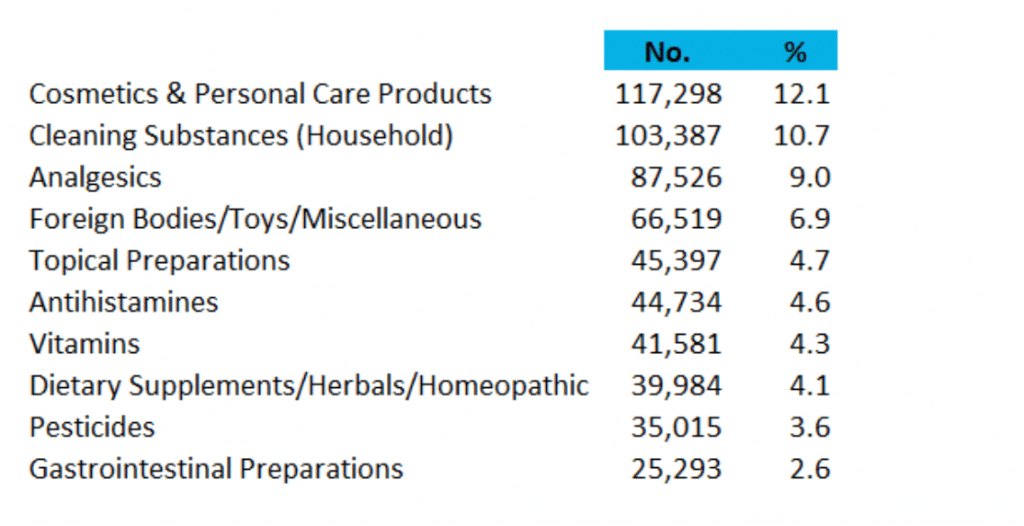
But now consider that every day, over 300 children in the United States ages 0 to 19 are treated in an emergency department for accidental poisonings. Children younger than 6 years comprise nearly half of poison exposures (44.2%), followed by adults (40.5%), then teens (8.2%).
Cosmetics and personal care products lead the list of the most common substances implicated in pediatric exposures (children younger than 6 years, NPDS, 2018). Cleaning substances and pain medications follow. Nothing exotic or illegal here.
Of course, I cannot resist pointing out that there are no deaths directly attributable to marijuana, because it has no effective lethal dose. The number of people in the U.S. who died from an accidental drug overdose in 2018: almost 68,000, but, again, none from marijuana.
And while it may be a factor in some accident deaths, there is no evidence that it is a significant factor when compared with other substances, such as alcohol … or dog bites.
And consider the context. That is greater than the total arrests for all violent crimes. Maybe we should end the Drug War and spend the money on dog catchers.
Richard Cowan is a former NORML National Director and co-founder of the CBD vs FDA Hemp Blog.