Tuesday, May 12, 2026
Home Blog Page 514

5 Things To Know Before Hiking With Weed

Hiking is a great summer activity on its own, but it’s especially satisfying when you add in a little extra.

Now that summer is upon us, it’s time to get back to one of the world’s best pairings: marijuana and the great outdoors. This simple pairing brings out the best in weed, getting you in touch with nature and allowing you to relax and enjoy your trek in surprising ways.

While there are many approaches to get high on a hike, some are less complicated and fumbly than others. We’ve compiled a brief list of things you should consider before going on your hike to make the process easier, safer and more fun. Here are 5 things to know before hiking with weed.

Pack all the necessary tools

Before you leave your house, make sure to pack all your necessary items in discreet and convenient places. If you’re taking a pipe, pack one that you wouldn’t mind losing or breaking, since accidents (tripping, falling, etc.) are common while hiking. If you’re planning on smoking a joint, make sure you’ve prepared it ahead of time and stored it somewhere that protects it and keeps the smell contained.

Be discreet

Women Have More Intense Marijuana Cravings Than Men, Study Finds
Photo by Denys Nevozhai via Unsplash

RELATED: The Role Marijuana Legalization Can Play In Fighting Racial Injustice

No matter the state where you live, cannabis is still considered a Schedule I drug, meaning that if you’re caught with it in a national park, you’re still breaking the law. Also, not everyone enjoys the smell of weed so be considerate of others and smoke in an area that’s secluded and private.

Pack water and snacks

You should always pack water when hiking, but you should do so especially if you’re considering bringing weed. Remember to pack your favorite snacks in case you get hit with the munchies and still want to be able to enjoy your hike.

Always travel with someone

https://unsplash.com/photos/JOoOPt8tTPY
Photo by Eddy Billard via Unsplash

RELATED: Your Genes Have A Surprising Impact On How Marijuana Affects You

No matter how experienced you are with marijuana, it’s really important to be with someone if you’re planning on consuming somewhere other than your house; you don’t want to get too stoned and then be unable to make your way back home.

If you’re an inexperienced hiker or if you’re trying out a new trail, being with a companion is even more important. It’s also more fun to converse with someone, high or not, while on the trail.

Don’t litter

After you’re done smoking, snacking and hiking, make sure to take your trash with you and leave the space as you found it. Remember that fires are particularly easy to start in the summer, never mind when you add in a half-lit roach to the equation.

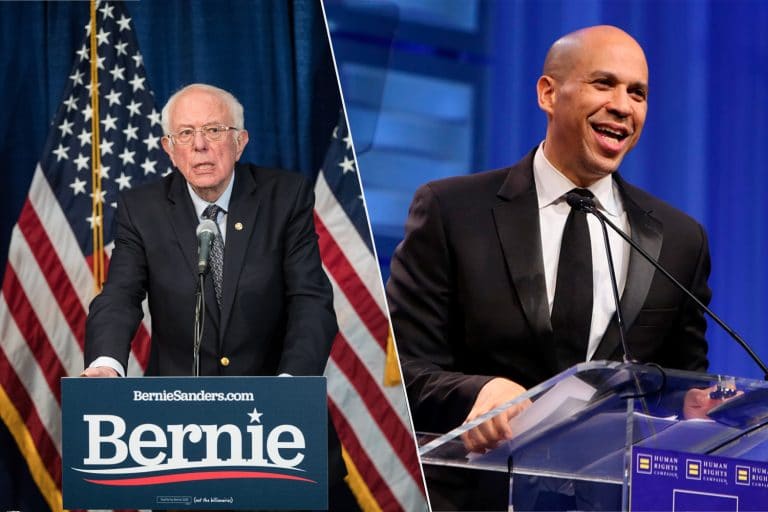
Cory Booker: Marijuana Enforcement Typifies Same Racist Inequalities Spurring Protests

Black Americans were four times as likely to get arrested for marijuana possession as white Americans in 2017, despite similar usage rates, Booker noted.

In a new interview with MSNBC, Sen. Cory Booker underlined racial disparities in marijuana enforcement as just one example of the failings in America’s current justice system. Booker’s response comes as Americans have protested against police brutality and social inequities in multiple cities this week following the death of George Floyd at the hands of Minneapolis police officers.

These protests highlight deep, institutionalized flaws in our current system, Booker stated, and require ongoing efforts by Americans to correct.

“I’ve seen this pattern play out where you see an uproar of outrage, but then we get back into a regular system where we don’t understand that this is not a sometimes thing,” Booker said. “This kind of racism, this kind of bigotry is so institutionalized that it puts so many of our fellow countrymen and women at risk every day.”

These disparities play out in issues like the enforcement of drug policies. One example, as the American Civil Liberties Union (ACLU) has noted, is the minimum sentencing gap between possession of crack and cocaine. Distributing just 5 grams of crack results in a minimum 5-year federal prison sentence. That same sentence is applied to anyone distributing 500 grams of cocaine.

RELATED: Marijuana Store Owners Targeted By Looters Say They Support Protests

“Because of its relative low cost, crack cocaine is more accessible for poor Americans, many of whom are African Americans,” the ACLU writes. “Conversely, powder cocaine is much more expensive and tends to be used by more affluent white Americans.”

Cory Booker: If Marijuana Is 'Essential Business,' Legalize It Federally
Photo by Randy Shropshire/Stringer/Getty Images

Booker noted similar imbalances in marijuana enforcement, which disproportionately targets black Americans.

“There are no differences between blacks and whites for using the drug, but there was more marijuana arrests in 2017 than all violent crime arrests combined, and blacks were four times more likely to be arrested for it,” Booker said.

RELATED: The Role Marijuana Legalization Can Play In Fighting Racial Injustice

“Each one of those data points impact the lives of people that are being destroyed — can’t get a job, can’t get a loan from the bank — for doing things that two of the last three presidents admitted doing,” he added.

Booker has sponsored legislation that would legalize marijuana at the federal level. The bill includes social equity programs that include expunging the majority of marijuana-related arrest records. The National Organization for the Reformation of Marijuana Laws (NORML) released a statement earlier this week that while marijuana legalization will not solve racial injustice in America, it can be “an important part of this emerging discussion.”

England Is Banning Sex Between People Who Don’t Live Together

England has released some measures intended to protect people from the coronavirus, prohibiting gatherings between people of different households.

The coronavirus continues to provide new challenges for governments around the globe. One of the most unusual cases comes from England, which recently released a rule prohibiting indoor gatherings of two or more people belonging to different “households.” This loose terminology means that people not living under the same roof can’t meet up with friends or acquaintances. Presumably, this includes sex.

Although the law is being called by media as a “sex ban,” the rule never specifically mentions the word sex, probably because of the outrage it would cause. The rule came into effect on June 1, under the Health Protections Regulations 2020 bill which defines the prohibited gatherings as “when two or more people are present together in the same place in order to engage in any form of social interaction with each other, or to undertake any other activity with each other.”

RELATED: 37% Of Americans Would Give Up Sex And Porn For This During Pandemic

london england
Photo by Uncoated via Pexels

Sex, unless you live with your sexual partner, is implicitly included in these social interactions. And if you break this rule, you can be prosecuted.

“Changes to Coronavirus Regulations mean people can spend time outdoors, including private gardens and other outdoor spaces, in groups of up to six people from different households. However, everybody should act responsibly and continue to strictly observe social distancing rules,” the Department of Health and Social Care said in a statement to Mashable.

RELATED: What Is ‘Quaranteam’ And Is It Safe?

While these measures are temporary, they’re alarming and could lend themselves to misinterpretation. According to the Independent, the police can arrest and fine people a minimum of 100 pounds, however, they can’t come inside your home. So, if someone rats on you, you might be fined for having sex, but at least no one will come barging through your bedroom door.

Marijuana Legalization Plays A Role In Fighting Racial Injustice

Though NORML said marijuana legalization will not solve racial injustice in America, the organization believes it can be “an important part of this emerging discussion.”

The Fresh Toast – It has benefits from PTSD to pets. And the Feds should note marijuana legalization plays a role in fighting racial injustice.

The National Organization for the Reformation of Marijuana Laws (NORML) released a statement this week detailing how marijuana advocates can play a role in enacting racial justice in America. Following George Floyd’s death at the hands of Minneapolis police, voices across the nation have protested against police brutality and policies that disproportionately target communities of color.

Racial inequalities have long existed in enforcing drug policies. According to analysis by the American Civil Liberties Union (ACLU), African Americans are close to four times as likely to get arrested for marijuana possession compared to white Americans, despite the group consuming marijuana at similar rates. In some states, black people were up to six, eight, or almost ten times more likely to be arrested. From 2010 to 2018, racial disparities actually increased in marijuana enforcement.

“As protests continue to take place across our nation, more Americans are beginning to publicly demand action from their local, state, and federal leaders to end the policies and practices that promote, enable, and drive systemic racial injustice,” NORML executive director Erik Altieri said in a statement.

“In these conversations about policy solutions, many will include in their demands an ending to the war on drugs — or, at a minimum, an ending to marijuana criminalization. But while ending cannabis prohibition is both important and necessary, we must also recognize that doing so is but a single piece of a much larger puzzle.”

NORML detailed how marijuana prohibition is rooted in racial and xenophobic histories. Harry Anslinger Jr. was the Commissioner of the Federal Bureau of Narcotics and architect behind cannabis prohibition. He was known to label most marijuana users as “Negroes, Hispanics, Filipinos and entertainers,” and stated cannabis “causes white women to seek sexual relations with Negroes, entertainers and any others.”

“The primary reason to outlaw marijuana is its effect on the degenerate races,” he also said.

NORML referenced the death of Philando Castile by Minnesota police officers as the lineage of this kind of rhetoric. When police pulled him over, Castile’s car smelled like “burnt marijuana” smoke. The officer who shot Castile said the aroma made him fear for his life.

RELATED: The Surprising Effect Marijuana Legalization Has On Police Traffic Searches

“I thought, I was gonna die,” officer Jeronimo Yanez told investigators from the Minnesota Bureau of Criminal Apprehension 15 hours after he shot Castile. “And I thought if he’s, if he has the, the guts and the audacity to smoke marijuana in front of the five year old girl and risk her lungs and risk her life by giving her secondhand smoke and the front seat passenger doing the same thing then what, what care does he give about me. And, I let off the rounds and then after the rounds went off, the little girls was screaming.”

Yanez was later acquitted of all charges.

Marijuana Legalization Could Get A Boost Post Coronavirus
Photo by krblokhin/Getty Images

NORML also criticized the cannabis industry at large. In 2017, a Marijuana Business Daily poll found that less than 10% of cannabis businesses were founded by Hispanic or African American owners. Though states and cities have instituted cannabis equity programs, they have often led to mixed results.

Altieri stated the cannabis industry need to carry more responsibility of social justice moving forward.

“We must not ignore the reality that while a handful of venture capitalists are now engaging in licensed cannabis sales in systems that largely exclude minority ownership while millions of others — most of them young, poor, and people of color — continue to face arrest and incarceration for engaging in much of the same behavior,” Altieri said.

RELATED: How Social Reform And Cannabis Legalization Are Linked

NORML stated specifically that marijuana legalization is not a cure-all for racial injustice in America. The organization also emphasized the need to continue discussion around these issue after the protests end.

“NORML believes that calls for cannabis legalization need to be an important part of this emerging discussion — but only a part,” Altieri said. “Black and brown lives matter and we owe it to our country and to ourselves to take tangible steps toward dismantling many of the power structures that perpetuate injustice. Marijuana prohibition is simply one of them.”

Are Amazon, Uber, Etc. The Future Of Post-Pandemic Cannabis?

There are hints that cannabis delivery using mainstream widespread delivery services could happen someday in the same way that alcohol is delivered.

It’s hard to say where we are in the COVID-19 pandemic right now, as infections and deaths continue to rise. But there have been movements in the cannabis industry that are changing the way the industry operates amid the pandemic that may stay post-pandemic.

Being allowed to operate as an “essential” business — which had a few bumps in the road between including both medical with recreational as essential businesses in states such as Colorado (that state quickly changed and added rec) and Massachusetts — was one positive result that gave the industry some needed comeuppance and respect.

Sales have been strong, and delivery options were expanded as well.

Many states with legal medical and recreational cannabis have been allowing deliveries since they legalized. But because of COVID-19, dispensaries are now adjusting to curbside or drive-thru window sales to adapt to the new contactless, social distancing way of conducting business. 

California licenses over 150 legal cannabis delivery companies, the most of any state, including Eaze (now scaling back operations),  Puffy, CaliExpress and more. The scaling back of Eaze may be just a delivery service experiencing hard times during the pandemic, or it may represent a harbinger of things to come, leaving the door open for more of these adapted dispensary-centered curbside/drive-thru sales.

In some states, dispensaries are operating under temporary rule changes about how to purchase cannabis product that consumers hope will stay after the pandemic passes.

Those temporary rule changes include Oregon, where the state’s regulators underline that this will not become a permanent rule; that if any one bad player creates a problem the rule will be suspended for all dispensaries; that medical cannabis consumers or caregivers can buy up to 32 oz. of flower instead of the 24 oz. previously allowed by law; and further advises delivering product to a person in the parking lot of the store, a person at the front entrance of the store, or a person at a walk-up or drive-thru window of the store.

RELATED: Harsh Marijuana Delivery Restrictions Being Eliminated Due To COVID-19

In Washington state, curbside delivery is also allowed in an area as close to the dispensary as possible. But the state does not allow a drive thru window.

What about Amazon, and Uber Eats, and other mainstream delivery services like FedEx, which was and is still the old school way of delivering cannabis?

Are Amazon, Uber, Etc. The Future Of Post-Pandemic Cannabis?
Photo by Kai Pilger via Unsplash

Amazon has been caught up in some llegal deliveries, demonstrating people are already using the service illegally, and the company currently delivers hundreds of hemp products — hemp oil, hemp prerolls, hemp flower — along with almost anything else needed to operate a legal cannabis business (except the cannabis) which may be testing some state’s laws.

So it seems like it could be a quick transition for Amazon to deliver cannabis, if and when that happens.

RELATED: Dispensary Job Market Still Strong Despite Lockdowns

The reality is that chances are still slim for those mainstream delivery services to deliver either medical or recreational cannabis as long as federal prohibition continues. A mainstream delivery company would be opening a can of worms and courting business disaster if it began delivering a substance still listed as a U.S. Drug Enforcement Administration Schedule 1 worst-drug-on-the-plant.

Ah, we can dream, right? Well, all is not lost.

There are hints that cannabis delivery using mainstream widespread delivery services could still happen someday in the same way that alcohol is delivered. Drizly, an e-commerce alcohol delivery service, promises delivery of under one hour to customers in places like Arlington, Virginia and about half the other states in the country. Virginia has some of the country’s toughest liquor laws, but in Virginia, there are regulations and a precedence set about delivering intoxicating, heavily regulated substances.

Time will tell. This year has seen much turbulence, and much change on both a business and societal level. That Amazon box on your porch may someday have a special green Amazon logo, representing something different and revolutionary inside. Puff-puff-pass.

Marijuana Store Owners Targeted By Looters Say They Support Protests

Despite looters stealing their cannabis products, numerous dispensary owners have announced they stand behind the protests.

Legal cannabis dispensaries across the country have been targeted by violent looters, who have used protests against police brutality to their advantage. Big-name West Coast retailers, like MedMen and Cookies, had storefronts smashed and merchandise stolen. Pure Oasis in Boston, the only black-run marijuana store in Massachusetts, lost more than $100,000 in stolen cannabis products.

Pure Oasis co-owner Kobie Evans described the robbery as a “targeted attack,” in comments to The Boston Globe, and said looters were using protests as cover. Ironically, Evans noted, Pure Oasis is a black-owned company — comedian Kevin Hart is also a co-owner — and employs people with prior drug convictions. The marijuana store was created as a solution model to address discriminatory police policies in drug enforcement, which disproportionately targeted communities of color.

Photo by Scott Olson/Staff/Getty Images

“Kevin [Hart] and I stand in solidarity with all the people protesting the injustice in Minneapolis and elsewhere,” Evans told the Globe. “In no way do we draw any connection between what happened to us and people protesting for a good cause. This is a somewhat isolated incident where a few people exploited the situation for personal gain, because someone wanted a free pair of Jordans and some weed to go with it.”

RELATED: The Surprising Effect Marijuana Legalization Has On Police Traffic Searches

Protests have gathered in numerous American cities in the wake of George Floyd’s death at the hand of Minneapolis police. But public officials like New York Gov. Andrew Cuomo have been careful to differentiate looters as a separate group from protesters. Social media users have documented which cannabis stores have been targeted by looters, with many burglaries occurring in major cities.

Despite the stolen goods, numerous dispensary owners have announced they stand behind the protests.

https://www.instagram.com/p/CA3f_9ghyAa/?utm_source=ig_embed

The rapper Berner, who owns the well-known Cookies cannabis brand, posted on Instagram that he “understand[s] what’s going on in the world right now.”

https://www.instagram.com/p/CA12SRwFJbb/?utm_source=ig_embed

“It’s extremely unfortunate what happened to our store tonight on Melrose. But as a human living in the world we’re living in today, I can’t expect anything less until justice is served,” Berner said in a video posted to Instagram. “We can rebuild our store but you can’t bring someone back to life.”

“How can I worry about a store when there’s so much more going on in the world right now?” he added. “So much hate, so much anger, so much pain and a lack of justice. Please take care of your families and stay safe.”

https://www.instagram.com/tv/CA1ugR9ntWk/?utm_source=ig_embed

37% Of Americans Would Give Up Sex And Porn For This During Pandemic

While people are experiencing a lot of loneliness and stress during this time, they’d be willing to give up sex, social media and more for this much needed event.

The past couple of months have been extremely stressful, filled with uncertainty and loneliness. Predictably, our mental and physical health has been affected, with people reporting more time spent browsing social media, looking up mental health resources, eating more junk food and having trouble sleeping.

Conducted by Sleep Standards, a survey of 1,000 people across the U.S. found that the average American would pay a significant amount of money for a good night of sleep during the pandemic. Some would even give up sex.

The survey sampled men and women, ages 18 to 73, and found that, on average, they’d pay $328 for a perfect night of sleep — a significant sum of money cashed out during a very stressful financial period in people’s lives.

RELATED: How To Prepare Your Dog For A Post-Lockdown World

Other interesting results show that survey respondents would give up social media, alcohol, video games and even sex and porn for a good night’s sleep (41%, 40%, 39% and 37% respectively).

Why Do We Procrastinate Sleep Even When We're Tired?
Photo by rawpixel.com

The average American is clocking in 6.6 hours a night, compared to 7.2 hours before the lockdown.

RELATED: 5 Things You Can Do To Feel Normal Again

Despite data collected through self-reporting, which allows for exaggeration and underestimation, the sample size is significant. While the percentage may vary, sleep is altered right now and it may take us a while to get back on track.

You can check out the results of the full survey here.

Ask Mister Manners, Thomas P. Farley: ‘Will They Call Me Racist?’

Help! How do I tell my neighbor I’m offended by their “Black Lives Matter” sign without sounding racist?

Etiquette tips on how to interact in today’s world. Have a question for Mister Manners? Send your queries to info@whatmannersmost.com and look for replies in the coming weeks. 

A MATTER OF LIFE AND DEATH

Q: My next-door neighbors have a “Black Lives Matter” sign on their front yard. I find it troubling that anyone—regardless of race—would promote the message that skin color can make someone superior. Is there a proper way for me to ask them to reconsider promoting this slogan without sounding to them like a racist? 

A: If you sat down with your neighbors, I believe you’d come to discover Black Lives Matter has an entirely different meaning from the one you think it does. The message is not “Black Lives Are Superior…All Others Are Insignificant.” Rather, it’s a succinct conveyance that for far too long, men and women of color have suffered reprehensible wrongdoings in America.

If there was any doubt of our persistent, systemic problem, one in which lives are being lost due to scarcely covert racism, the killing of George Floyd is proof positive. 

Does every life matter? Most certainly. Does the placard on your neighbor’s lawn insinuate otherwise? Absolutely not. The message on that sign is a testament to the fact that despite the reality of how things all too often play out, people of color have as much right to life, liberty and the pursuit of happiness as any other human being.

For our culture to reach the place where every life is considered precious and valuable, we must commit ourselves to eradicating prejudice and hatred once and for all. And that begins with listening.

Regardless of one’s pigmentation, socioeconomic stratum, immigration status, gender or sexual orientation, we are grieving as a nation right now. Still feeling vulnerable in the midst of a stay-at-home pandemic that has already claimed a mind-numbing 100,000 lives, we are mourning the senseless and brutal taking of one particular man’s life. 

RELATED: Ask Mister Manners, Thomas P. Farley: ‘A Home-Wrecker Lives In The Apt. Above Me’

George Floyd didn’t need a vaccine to still be alive today. He required only respect and consideration. And though manners and etiquette may seem like dainty tools, weak precepts that would crumble in the face of an issue as heavy as racism, don’t count them out. 

The core components of good manners—kindness, compassion, selflessness, empathy—are among the most powerful weapons we have against the sorts of painful acts that have been tearing at the heart of our nation for the past 400 years. 

If you consider yourself a person who cares—and as a reader of this column, I hope you do— recall the words of Martin Luther King, Jr.: “History will have to record the greatest tragedy of this period of social transition was not the strident clamor of the bad people, but the appalling silence of the good people.” 

Ask Mister Manners, Thomas P. Farley: ‘Will They Call Me Racist?’
Photo by Olia Nayda via Unsplash

CREAMY, NOT CHUNKY

Q: I’m a senior citizen who’s been quarantining due to the coronavirus and have been fortunate enough to have several neighbors offering to grocery shop for me. I do appreciate this, though there are always one or two items they get wrong. The latest example was getting chunky peanut butter instead of creamy. I’m on a budget and would rather not have items in my cabinets I know I’ll never use. Would it be rude of me to bring these quibbles to their attention?

A: A much-used phrase of my sister’s when my niece and nephews were choosy toddlers was: “You get what you get and you don’t get upset.” And though I feel your pain on the peanut-butter front, even on a fixed budget, surely the creamy versus chunky debate is a First World problem. 

RELATED: Ask Mister Manners, Thomas P. Farley: ‘Can I Hit The Door-Close Button On An Elevator?’

Rather than discourage these neighbors—whom I gather are shopping for you out of kindness as opposed to doing so for an hourly fee—I would simply be as specific as possible. No longer should your grocery slate include line items such as “bottled water.” Instead, you’ll need to indicate “lemon-flavored sparkling water in a 24-ounce bottle” if such things make a difference to you. Additionally, in the nicest of ways, alert the neighbor that if the store does not have certain items exactly as written, to skip them and move on to the next thing on the list.

Lastly, if despite your due diligence an incorrect item still makes it to your home, don’t knock it till you’ve tried it. You may be pleasantly surprised.

Mister Manners, Thomas P. Farley, is a nationally regarded expert who appears regularly in the media to discuss modern-day etiquette dilemmas — from how to split a check fairly to how to get a word in edgewise. Follow Thomas on Facebook, Twitter and Instagram. And for more insights, listen to his brand-new podcast, “What Manners Most,” which will be focused exclusively on Coronavirus-related etiquette for the foreseeable future.

Study: Prenatal Marijuana Use Doesn’t Really Affect Cognitive Development

Researchers worry previous studies have created an oversimplification between prenatal cannabis exposure and cognitive impairment.

We often forget marijuana research is in its infancy. Look no further than studies examining the relationship between marijuana and pregnancy for proof. There are many studies linking marijuana (specifically THC) use during pregnancy to infant development problems, but some researchers point out that many of these studies don’t differentiate between smoking marijuana and non-combustible consumption, such as edibles or tinctures.

So what risk does prenatal cannabis exposure present to a child’s brain development? Scientists at Columbia University, Swinburne University, and the New York State Psychiatric Institute analyzed numerous studies for six years to answer exactly that. According to their research, published last month in the journal Frontiers in Psychology, the risks associated with prenatal marijuana use have been overstated in how it impacts a baby’s noggin.

“The current review of the literature found that there are relatively few cognitive alterations noted in offspring exposed to cannabis prenatally,” the study’s authors wrote.

RELATED: Marijuana & Pregnancy: What We Know

This systematic review didn’t find much significant difference between children with prenatal cannabis exposure and those without. More specifically, less than 5% of comparable studies showed such differences. Most surprising, these studies measured both increases and decreases in children’s scores on cognitive tests, suggesting more variance than previously believed.

Parents Can Now Choose The Sex Of Their Baby
Phogo by Lisa Johnson via Burst

One major study in particular was given special attention, because it found that children exposed prenatally to marijuana had test scores that dropped outside the normal range for cognitive functioning. But this 2008 study was criticized for its lack of external sociodemographic factors, such as parent’s cognitive abilities, poverty levels, and home environment.

Researchers worry an oversimplification between prenatal cannabis exposure and cognitive impairment has occurred. Media and lawmakers too often use the results from one negative study to summarize the entire relationship, researchers noted. This can lead to harsh policies that divide children from their families, which can have worse consequences in some cases.

RELATED: Why Would-Be Dads Should Reconsider Marijuana Use In Quarantine

“The rationale for such policies is, in part, that prenatal cannabis exposure causes persistent deleterious effects, especially on cognitive functioning,” researchers wrote. “Findings from this review suggest that this assumption should be reevaluated to ensure that our assumptions do not do more harm than the drug itself.”

Can CBD Help Seniors With Insomnia

Insomnia in seniors doesn’t differ from the insomnia in younger people, but they are at higher risk for developing the disorder. Here’s how CBD might help.

Insomnia can affect people of all ages and fitness levels. It’s a condition that arises due to myriad reasons. The cause can be internal (disease) or external (stress). One of the main problems with insomnia is that it directly impacts your performance and health; when people don’t sleep, they have problems staying productive and keeping a balanced mood. It can also affect your cardiovascular health and immune system.

Could CBD provide a healthy option for seniors with sleep issues? The answer depends on the problem that’s causing their lack of sleep in the first place.

As people age, they naturally experience changes with their sleep patterns, mainly because aging bodies produce smaller amounts of growth hormone. This change results in less deep sleep, waking up during the night, and often waking up too early, before the body is fully rested.

RELATED: Educating Older Adults About CBD — What You Need To Know

Aside from biological reasons, insomnia in seniors doesn’t differ from the insomnia in younger people, but they are at higher risk for developing the disorder. Causes like stress, depression, anxiety, trauma and medications that people are consuming might all affect how well they sleep. It’s this area that CBD proves to be a helpful tool. 

How CBD Helps Seniors Exercise
Photo by Caiaimage/Trevor Adeline/Getty Images

The relationship between CBD and sleep hasn’t been rigorously studied, but CBD’s effect on stress, anxiety and PTSD does have some documentation. In a 2019 study examining CBD, anxiety and sleep, researchers found that patients battling these conditions improved their sleep habits by a large margin once they started consuming CBD. It’s worth noting that this study was conducted in a controlled setting, with patients consuming CBD in addition to their traditional medications.

RELATED: Senior Citizens Are The Biggest Marijuana Users In Canada

When it comes to treating insomnia, it’s very important to try to pinpoint the source of the problem. No matter someone’s age, quality of sleep tends to reflect their state of mind and the possible problems they might be facing, whether this includes a mental condition or a stressful moment in their lives. While CBD might not directly affect sleep, it could indirectly provide relief for conditions that are keeping seniors up at night.

Don't Miss Your Weekly Dose of The Fresh Toast.

Stay informed with exclusive news briefs delivered directly to your inbox every Friday.

We respect your privacy. Unsubscribe anytime.