Dolly Parton is a country music legend who has close relationships with famous tokers, including Miley Cyrus and Willie Nelson. But does she smoke weed?
Dolly Parton is an American icon. From starring in movies to winning all kinds of music awards, Parton’s first album debuted in 1967 and she continues to make great music to this day. But, does she smoke weed?
Despite Parton’s long and successful career, she’s been a celebrity with a relatively private life, never getting too personal in interviews or disclosing more information than necessary. She’s been married since 1966 to Carl Dean, a man who’s rumored to have only seen her perform once in all of their time together. Finding information on her marijuana habits — or lack there of — isn’t the easiest of tasks.
Still, Parton is close to people who are kind of marijuana icons themselves: Willie Nelson and Miley Cyrus. Nelson even has his own marijuana brand called Willie’s Reserve. The relationship between Nelson and Parton spans decades, with both of them starting their careers in Nashville.
Photo by Ian Gavan/Staff/Getty Images
“Back in 1964, ’65, ’66, we both were writing for Combine Music. … And we used to hang out a lot together, different people. Even Kristofferson back in those days! We all knew each other, and we used to sit around and write different songs,” Parton said of the relationship. Then, when speaking of the challenges of singing with someone with his talent, she said: “I called him up and said, ’Willie, you should have sent me a sack of dope if you thought I was gonna keep up with you!’” Which is probably just a figure of speech but it suggests that she also might be open to the idea of trying out new things.
Her relationship with her goddaughter Miley Cyrus, with whom she’s collaborated several times, is more telling of her stance on marijuana. When asked about Cyrus’s behavior and sudden divorce to Liam Hemsworth, Parton said: “Lord, I’ve done everything, and what I ain’t done, I intend to. She’s going to do that, too. But Miley’s smart; Miley knows what she’s doing.”
So while Parton might not have spoken up about issues regarding marijuana, we all just kind of know that she’s okay with it and has likely given it a shot. I mean, it’s Dolly Parton.
Companies are stepping up and looking inward to create lasting solutions for a more agile healthcare community.
With states all over the U.S. on lockdown and COVID-19 not yet reaching its peak, many in the healthcare and pandemic field are looking at ways to verify numbers of those infected against those who have recovered or perished. Digital epidemiology tools are on the rise as state and federal healthcare teams look to the power of data to not only predict a stress on resources, such as ventilators, staff, beds and masks all beyond the capacities of what current systems in place can accomplish.
While tools hitting the market continue to revolutionize the way in which data educates, many health systems find themselves under-staffed or unprepared to manage an influx of not only COVID-19 patients, but the learnings their shared experiences bring.
Researchers at the University of Oxford released a paper on March 31 that identified gaps in tracking numbers due to data lacking agility and personalization. They found in their research, “Traditional manual contact tracing procedures are not fast enough for the new coronavirus.” Citing digital technology as one way to stay-ahead of the virus, researchers found that incorporating real-time technology could make patient tracking and notifications, “instantaneous.”
“Hospitals and health systems need to work with their physicians and clinicians to efficiently share information. This crisis will hopefully lead to managing any future pandemic much more effectively utilizing tools that will help us quickly address the challenges across our entire healthcare ecosystem, but these tools must also fit into the natural clinical workflows that physicians and other clinicians use today,” says, Dr. Nancy Auer, emergency physician and former Swedish Medical Board Chair.
The always-evolving data of healthcare technology
With many healthcare organizations still feeling the sprint of the Electronic Medical Records (EMR) Mandate in 2014, many are recognizing that EMRs are in place, they offer little flexibility and personalization. Hoping to elevate better data-sharing between organizations, the EMR mandate seems to offer little accommodation to “on-the-fly” adaptation by providers and staff looking for one, key number or diagnosis.
Seeking the need to both personalize EMR data and lessen physician burnout, companies are stepping up and looking inward to create lasting solutions for a more agile healthcare community. Doug Cusick, CEO for TransformativeMed explained, “While EHRs are highly optimized for high-volume routine workflows, they tend to be inflexible and unaccommodating to ‘on-the-fly’ adaptation by providers and staff – the need to be able to ‘personalize’ the EHR by specialty and disease specific workflow is never greater than in a pandemic.”
Photo by Gilles Lambert via Unsplash
Apps that integrate COVID-19 data
TransformativeMed, founded by Dr. Erik Van Eaton, is a new healthcare company based in Seattle, Washington. It’s seeking tochange the future of pandemic cases with the ability to offer predictive and adaptive data that not only illustrates current strains on resources through tracking of patients infected but can help offer insight to the future as well.
Through a partnership with UW Medicine, TransformativeMed created a comprehensive COVID 19 screening and tracking app that is embedded within the Electronic Health Records and is EMR-compliant. Their application, Core Work Manager offers strategic insight to the COVID crisis through actionable data and real-time patient information on COVID-19 status, pertinent risks, labs, comorbidities, radiology finding, and analytics can immediately assist clinicians in providing more effective and efficient care. Non-disruptive to physician’s natural clinic workflow, the app’s ability to map patients and manage surges has offered calm in the chaos.
Dr. VanEaton, a trauma surgeon at UW Medicine’s Harborview Medical Center, believes the time has come to use a new type of data to recognize patterns and develop solutions to better equip facilities and staff on the front lines. He states, “Our electronic health record systems were not designed to provide an at-a-glance understanding of the burden of COVID-19 disease in our hospitals, but over the last 5 weeks, we’ve already learned countless lessons and best practices in Seattle that we can apply across the nation.”
With COVID-19 appearing to gain more momentum, now is the perfect time for companies and healthcare organizations to come together to utilize both patient data tracking for a better outcome for all.
Although the odds may not be favorable, these are the five best places to look around the house for lost weed.
The threat of catching coronavirus has millions of people hunkered down all across America. Some of this solitude is forced by states that have been hit the hardest by this disease, while other parts of the country are doing it out of sheer paranoia. Because while the virus was initially thought to only affect older people with underlying health conditions, we have since learned that it does not discriminate. The latest prediction shows that 200,000 Americans could die from this thing. So, for now, civilization is better off being placed on hold while science finds a cure.
For some people, being removed from society for months on end can make finding marijuana difficult. Sure, some legal states have allowed dispensaries to stay open, an effort intended to keep the masses from completely bugging out in this doomsday scenario. But pot lovers living in areas of prohibition — and, make no mistake about it, there are a lot of them — are not so lucky. These people’s dealers might be doing what they’re supposed to by practicing social distancing. Some of them may have even been forced into early retirement by this gnarly bug. This can bring on some tough times for the cannabis user in need, but what can they do if nobody’s holding?
It has been our experience that longtime marijuana users typically misplace a nugget or two at times. Although the odds may not be favorable, these are the five best places to look around the house for lost weed. We suggest going on a search and rescue mission before starting to panic.
The Couch
Photo by StockSnap via Pixabay
It may have happened months ago, maybe even years, but there is a distinct possibility that, at one time or another, you dropped some weed into the couch cushions, leaving it to mingle with the popcorn, escaped change and other unidentifiable crumbs. If you happen to find a piece of weed in there, never fear, it is typically safe to smoke — that is unless it was left in damp conditions (maybe spilled beer) and has started to mold.
It is also worth mentioning that, when not stored properly, marijuana degrades over time. This causes the bud to lose some of its potency. So don’t expect to get too ripped on it if, by some stroke of genius, you manage to pre-date it to the early 90s. We’re not saying it won’t do the trick in a pinch, just don’t expect any miracles.
The Kitchen Floor
Photo by Alex Cooper via Pexels
For those of you who keep your kitchen spotless, there probably isn’t much of a chance at finding weed on the floor. But the other group, the ones who avoid sweeping and sanitizing in between the cracks of countertops and other nooks and crannies, there is a slight possibility that marijuana can be found in there along with god knows what.
If you think back to those kitchen hangs where you and your buddies were in there packing bowl after bowl while a frozen pizza was baking in the oven, you might recall a time when someone might have said, “Oops, dang, where did the weed go?” Maybe you and your crew were too high to sniff out the lost bud at the time. Maybe the pizza was distracting. All we’re saying is that it wouldn’t hurt to investigate further to see if it’s still possible to resurrect it from pot purgatory.
Sure, the five-second rule has come and gone, but maybe you’ll get lucky and find it resting on a perfectly clean area on top of some dried pasta or something.
The Refrigerator
Photo by nrd on Unsplash
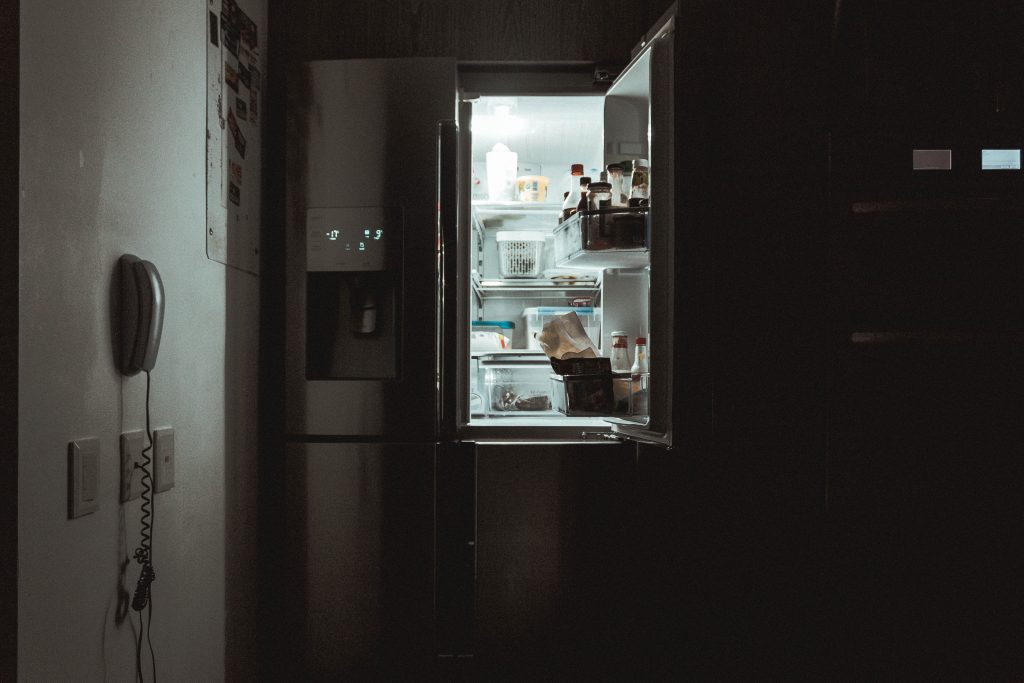
As long as you’re in the kitchen, you might as well check the refrigerator to see if there’s any weed in there. It is possible you dropped some pot inside the butter dish or vegetable crisper one night while scouring the fridge for munchies, but it’s not likely. There is a chance, however, that you’ve got some edibles in there that you forgot about.
They might have been tossed in the fridge over the summer after you took too big of a bite and then spent the rest of the weekend with a weed hangover. You might have even sworn off cannabis edibles for good, but being the weed fan that you are, you didn’t have the guts to just toss them in the trash.
Try looking in the side panels where people keep all the condiments they never use. But be forewarned: If you find some old marijuana edibles, be sure to check for an expiration date on the packaging. Some of them contain milk and eggs and can go bad over time. We’re already dealing with the coronavirus, we don’t need another strange virus popping up because someone ate bad weed.
Underneath The Bed
Photo by Westend61/Getty Images
No, it’s not likely that you’ve been smoking weed in your sleep. We don’t know anyone who does that except for maybe Tommy Chong. But underneath the bed is one of the best places to find lost marijuana, and that’s because of the wake and bake factor. For some, this daily ritual is the only thing getting them out of bed in the morning. They might load a bowl or bong before hitting the sack, just to have it waiting on them when the alarm goes off, or they may wait to load it at the crack of dawn.
One way or another, though, some weed has probably escaped their clutches in those less than lucid moments and fallen under the bed. It doesn’t hurt to give it a look-see. And while you’re in there, go ahead and grab a nap. All of this weed hunting can be tiresome.
The Computer Room or Home Office
Photo by Alexey Suslyakov via Unsplash
Maybe you always smoke weed there in the evenings when scouring your social media feeds for the latest news and gossip. Perhaps you keep a bowl of buds close by to inspire you to finish that novel you’ve been working on for the past few years. It doesn’t matter why, it’s just important to understand that the home office or computer room is a prime spot for finding lost nuggets of missing weed.
There might be some on the floor, underneath a stack of tax papers, or hidden in an old box, folder or sunglasses case. When it comes to the average toker’s office space, there is no telling where weed might be discovered. Sadly, if you don’t find any smoke in this spot, we regret to inform you that you’re SOL (Stoner Out Of Luck). It might be time to offer your dealer hazard pay.
A study conducted on different subjects says that marijuana use created opportunities for intimacy, ranging from the emotional to the physical.
Not a lot of studies have been conducted on personal marijuana use, much less about the effect that the plant can have on couples. Legalization and an evolving perspective on marijuana has opened up the industry to more studies, giving scientists and researchers the chance to examine the plant more thoroughly by looking into the effect it has on people and relationships.
A study published in the journal Cannabis claims that, unlike alcohol, cannabis has a positive effect on couples when consumed together, increasing the odds of intimacy and providing more opportunities for bonding.
The study was a small one, collecting data from just 183 married or co-habitating couples, all of them claiming to be active marijuana users. Authors of the study asked the couples to monitor their cannabis intake for a period of 30 days, with participants reporting their experiences through their smartphones before and after consuming cannabis.
Couples were asked to write a brief report each morning, indicating whether they’d consumed marijuana and if they’d had an “intimate experience” with their partner, specifying the time of this encounter. The study’s definition of an intimate experience was wide, ranging from sex and meaningful conversations, to interactions that expressed love, support and care.
Photo by Felix via rawpixel.com
After the 30 days passed and participants’ input on the study concluded, researchers analyzed the data and found that smoking cannabis increased the couples’ likelihood of having an intimate experience, especially within two hours of consuming the plant. This increased intimacy remained even if only one partner used marijuana, disproving other studies that claim that personal drug use adds stress to a relationship.
In order to comprehend the full extent of marijuana’s influence on relationships and intimacy, more studies need to be conducted, particularly ones that focus on larger samples of couples and monitor their progress over longer periods of time.
This isn’t the first time that marijuana has been associated positively with relationships; many call the plant an aphrodisiac and a 2019 study found that it improves sex and the likelihood of orgasms, particularly when it comes to women.
“What we don’t need in this situation are companies preying on consumers by promoting products with fraudulent prevention and treatment claims.”
Unfortunately, in times of crisis and hardship there will always be companies attempting to take advantage of people, playing off of fear and desperation. Earlier this month, the FDA sent out a round of warning letters to companies that were selling fraudulent COVID-19 products. We’ve written extensively about what CBD companies should not do if they want to avoid FDA scrutiny, as well as the scrutiny that CBD companies have already received. And although none of the letters sent out in this round of FDA enforcement specifically referenced CBD products, at least one of the companies targeted does sell CBD products, and we have heard anecdotal reports of CBD companies making dubious statements related to the coronavirus that may or may not rise to the level of medical claims.
In light of the foregoing, we thought it would be helpful to lay out the nature of the claims being made related to COVID-19 that the FDA will not tolerate, and to review the basics of labeling and advertising related to medical claims as they pertain not just to CBD companies, but to any company in the health and wellness space. Here’s what the FDA had to say in its March 9, 2020 news release:
The FDA considers the sale and promotion of fraudulent COVID-19 products to be a threat to the public health. We have an aggressive surveillance program that routinely monitors online sources for health fraud products, especially during a significant public health issue such as this one,” said FDA Commissioner Stephen M. Hahn, M.D. “We understand consumers are concerned about the spread of COVID-19 and urge them to talk to their health care providers, as well as follow advice from other federal agencies about how to prevent the spread of this illness. We will continue to aggressively pursue those that place the public health at risk and hold bad actors accountable.”
“There already is a high level of anxiety over the potential spread of coronavirus,” said FTC Chairman Joe Simons. “What we don’t need in this situation are companies preying on consumers by promoting products with fraudulent prevention and treatment claims. These warning letters are just the first step. We’re prepared to take enforcement actions against companies that continue to market this type of scam.”
One of these letters was issued to Herbal Amy Inc., a company out of Idaho that also sells CBD products online. Herbal Amy was selling “Coronavirus Protocol” products including “Coronavirus Boneset Tea, Coronavirus Cell Protection, Coronavirus Core Tincture, Coronavirus Immune System, and Elderberry Tincture.” This is some of the language included with the products that the FDA deemed unlawful:
“Corona virus treatment. Stephen Buhner has analyzed how corona viruses infect tissues, what tissues they infect, and the herbs that are useful to interrupt that process, as well as the herbs useful to shut down the cytokine cascade they create. Here is his protocol.… [T]his is a rather extensive protocol because the particular corona virus that is now spreading world wide is exceptionally potent in its impacts. All the herbs are specific in one way or another for this virus. A number of the herbs are strongly antiviral for corona viruses .…. The formulations are preventative as well as specific for acute infections ….”
“Stephen Buhner has used this with other corona virus infections, including SARS, it works well.”
Photo by Javier Zayas Photography/Getty Images
These types of statements are extremely misleading, and illustrate the purpose for which the FDA was created. Our blog archives contain a multitude of resources for companies in the CBD space regarding what you can and cannot say in marketing your products. Generally speaking, products that are not approved by the FDA for the “diagnosis, cure, mitigation, treatment, or prevention of any disease” cannot be marketed as drugs, meaning that these products cannot be marketed with health claims or structure/function claims. If you make health claims regulated by the FDA related to CBD or other cannabis products, you are risking federal enforcement action.
If you are unsure as to whether or not your labels, websites, social media, or other marketing materials contain statements that could be construed as health claims (and it’s important to remember that even vague or general statements could constitute health claims), you should consult with your attorney. We advise many clients on these very issues. And in closing, a reminder from the FDA:
“There are currently no vaccines or drugs approved to treat or prevent COVID-19. Although there are investigational COVID-19 vaccines and treatments under development, these investigational products are in the early stages of product development and have not yet been fully tested for safety or effectiveness.”
Alison Malsbury is an attorney at Harris Bricken, a law firm with lawyers in Seattle, Portland, Los Angeles, San Francisco, Barcelona, and Beijing. This story was originally published on the Canna Law Blog.
Thinking about purchasing a bottle of this hyper popular edible? Before you swipe that card, here are some important facts you should know.
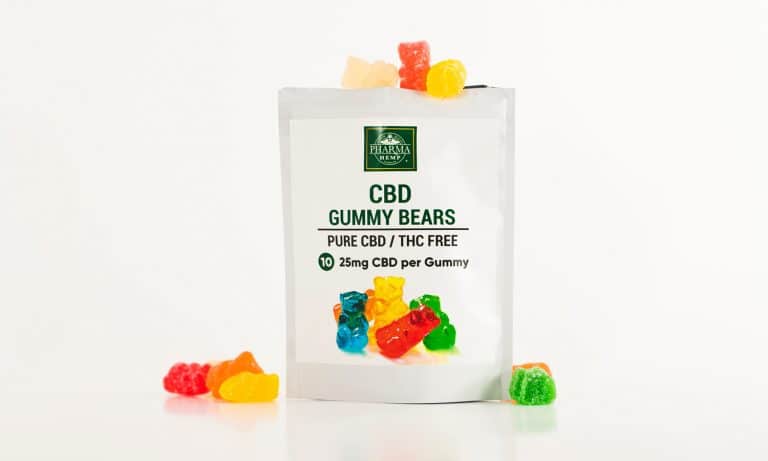
More individuals than ever before are looking to different methods of utilizing CBD gummies to help with everything from pain, to anxiety and beyond. And since there are multiple varieties and potencies of gummies to choose from, we broke down the common myths and misconceptions about this popular portal of CBD you should know before you purchase. So here are the myths vs. facts about CBD gummies.
Myth: Gummies have the same ingredients but only vary by flavor
Not all gummies are created equal. In fact, the amount of CBD in gummies can vary from one company to another as each company mixes its proprietary blend. The potency of CBD within each gummy can range anywhere from 5mg to over 15mg. It’s best to look at the information on the bottle and ask questions up-front to know the CBD dosage. Product formulations are complex, as is the process of extracting the CBD oil from the hemp plant. Knowing where the hemp is grown and how its extracted can help you better understand the product you’re taking and all that’s involved.
Myth: CBD gummies offer fast relief
This isn’t always the case. First-time users often don’t know what to expect and many don’t realize that gummies first must be broken down in the stomach and then filtered through the body to take effect. Because of research heavily regulated by the Food and Drug Administration (FDA) and Environmental Protection Agency (EPA) many claims of CBD aren’t irrefutably proven.
Like most concoctions, CBD gummies can take on elements in their environment which can have negative effects (think pesticides, chemicals, etc.) Kazmira, LLC. claims that many companies try to dilute chemicals like pesticides out of the gummy instead of removing them completely. They cited a report from 2016 where Steep Hill Laboratories found that almost 85% of cannabis samples had pesticides present. Kazmira explains the issue with diluting pesticides like this:
“Think about it this way, if a basic food product like an egg tested positive for a pesticide above the legally established tolerance limit, it would be removed from the shelves immediately. This happened on a massive scale in Europe when millions of eggs were removed from the shelves for having high levels of an insecticide. Egg producers cannot cut the egg in half or mix it with clean eggs before testing to lower the amount of pesticide in the egg. Whatever is in the egg cannot be modified. CBD oil, however, is a different beast. There is no standardized “unit” of CBD, such as “one egg” or “one apple.” Therefore, formulators can mix contaminated oil with clean oil to mask contaminants from analytical instruments.”
Whether you’re a first-time user of CBD products, or someone who is curious about their effect, it’s wise to ask these 5 questions before you purchase or order:
Can you explain the process of where the hemp is grown, how the CBD oil is extracted and what methods are in place for testing to ensure safety and accuracy?
Does your company use any fillers or products not listed on the package?
In what methods can you certify that the ingredients are clean and free of pesticides and chemicals?
Are you bottling your own products or purchasing products from another manufacturer and white-labeling them as your own?
Being an informed consumer will help you be better educated and knowledgeable about CBD products and the way they fit into your lifestyle.
“It doesn’t seem consistent as to why a liquor store would be essential, but a dispensary wouldn’t,” said Rep. Alexandria Ocasio-Cortez.
A YouGov poll reported last week that 53% of Americans believe medical marijuana dispensaries are “essential businesses” amid the global coronavirus pandemic. Another 26% of the more than 5,000 Americans surveyed disagreed while 21% answered they “don’t know.”
In an Instagram Q&A this week, Rep. Alexandria Ocasio-Cortez was asked a similar question: “Do you think marijuana dispensaries should be considered essential businesses?” As first reported by Marijuana Moment, her response came with a caveat.
“I’d say that if your state is deeming liquor stores to be an essential business—it doesn’t seem consistent as to why a liquor store would be essential, but a dispensary wouldn’t,” Ocasio-Cortez said. “You’ve got to make a decision one way or another.”
This question has been ongoing throughout various shelter in-place orders and quarantine lockdowns. The majority of legal states have continued to allow medical marijuana dispensaries to run, so long as strict social distancing and sanitization protocol is met. State lawmakers have also loosened restrictions on marijuana delivery and curbside pickup to help keep businesses open
Photo by nattrass/Getty Images
Recreational states like California and Colorado have followed AOC’s lead, but when Massachusetts Gov. Charlie Baker closed all non-essential businesses last week, he included adult-use marijuana stores. The decision caused mild anxiety for residents, who rushed to stockpile cannabis in response. Some admitted they will resort to the black market should the closure continues. Baker said this week re-opening marijuana stores is a “non-starter.”
NORML (The National Organization for the Reformation of Marijuana Laws) sent a memo to lawmakers like Baker this week, urging that access to legal, regulated cannabis goes uninterrupted during the pandemic.
“In this era of tremendous uncertainty, it is crucial that policymakers use every tool in their toolkit to promote public health and safety,” NORML Political Director Justin Strekal said in a statement. “The enactment of various marijuana policy reforms can assist in these goals by reprioritizing law enforcement resources, mitigating interpersonal contact in our communities, and by ensuring that the elderly and more vulnerable patients continue to have uninterrupted access to state-regulated cannabis products via home delivery or curbside pick-up.”
In an unusual turn, NIDA will pay researchers up to $100K per year to find out if smoking weed impacts COVID-19 symptoms.
Earlier this week, Canadian doctors announced their interest in researching whether properties found in the cannabis plant, including cannabinoids and terpenes, could cure COVID-19 symptoms. Now, the American government also wants scientists to study the relationship between marijuana and coronavirus, though not in the same way.
The National Institute on Drug Abuse (NIDA) issued a Notice of Special Interest last month that they would provide funding for research into how individuals with substance abuse disorders are affected by COVID-19. The letter specifically called for research into individuals who smoke tobacco, marijuana, and/or vapes and whether those behaviors poses a serious threat against the coronavirus.
“As people across the US and the rest of the world prepare for what could be a pandemic of the 2019 novel coronavirus, or COVID-19, the research community should be alert to the possibility that it could affect some populations with substance use disorders or HIV particularly hard,” NIDA wrote. “Because it attacks the lungs, COVID-19 could be an especially serious threat to those with histories of smoking tobacco or marijuana or of vaping.”
Photo by Wanida Prapan/Getty Images
The letter also mentions those using opioids or methamphetamines, as those drugs compromise immune systems and impacts respiratory health. Other research requests include how homelessness, incarcerations, and other environmental factors, as well as if overcrowded hospitals could change how the treatment of pain patients and opioid use disorder.
NIDA will accept applications through March 31, 2021 and will give projects up to $100,000 per year in funding. One caveat exists: Studies must be able to be completed within two years. Though federal agencies have typically avoided drug research in the past, that has slowly been changing in recent years.
A federally backed study found that medical marijuana dispensaries attract less crime than tobacco or alcohol stores. In addition, the Drug Enforcement Agency (DEA) will finally review 37 applications to grow more marijuana for medical research after a four-year wait.
The munchies affect us all in different ways, which is why we’ve compiled a list of highly adaptable precautions.
The munchies are one of the most consistent side effects of consuming marijuana. While this side-effect does a good job of magnifying the most delicious tastes in food, it also taps into our lizard brain, bringing out the animal in us when we so much as hear the crinkling of a Doritos’ bag. Here’s some ways to stay healthy once the munchies hit.
This is fine for occasional marijuana smokers, but problematic for regular consumers who need to find a way of controlling the munchies before they take a toll on their waistline.
There are all sorts of imbibers out there, all with different strengths and weaknesses, which is why we’ve compiled this list with individual methods that people can commit to. Here’s what you should do in order to stay in shape and still find joy in your munchies:
If you’re someone who’s active and and smokes occasionally, this method shouldn’t be much of a stretch. Plan your smoking session in advance and start your day off with a good workout, preferably one that gets your heart pumping, activating your body and allowing you to burn calories as you go about your day. Once breakfast and lunch hits, focus on eating healthy, consuming filling foods with low calories, like veggies and grains. This method gives you a pass for the day and allows you to enjoy your munchies to the fullest.
If you’re organized
Photo by Priscilla Du Preez via Unsplash
The most mature thing you can do before you smoke is to clean out your home, throwing away cookies and ensuring that there’s nothing dangerous in your kitchen. Stock up on healthy snacks like fruits and granola bars. Make sure you have stuff that can be eaten easily, skipping the cooking process, preventing you from ordering delivery and destroying your hard work. Sure, this method robs some of the fun out of the smoking process but it’s the most reliable thing that regular cannabis consumers can do, changing their habits from the ground up.
Before opening the door to the munchie monster, try having a satisfying meal. Then get ready to distract yourself as much as possible, perhaps engaging in an activity that inspires brain power, like watching an engrossing TV show, writing or painting. Careful, though. Even if you’re distracted, this method has no way of ensuring that you won’t forget your promise and end up eating whatever is in sight.
The coronavirus has prompted lots of people to stock up on booze.
The coronavirus has caused the closure of millions of businesses around the world, leaving people to their own devices for entertainment and comfort. Predictably, the pandemic has inspired people to not only smoke weed, but to drink. In fact, people are drinking gallons of alcohol during lockdown.
According to Nielsen data, alcohol sales have risen 55% in the United States. There’s been a 75% increase in sales of hard alcohol, such as gin, tequila, spirits and premixed cocktails. Wine and beer have also received attention, with wine sales reporting an increase in 66% and beer 42% when compared to data from last year.
The vice president of Nielsen explains that the reason why these numbers are so high is because they specific reflect the week of March 21, when strict stay at home measures were implemented across the country. Data from the following weeks will probably show a more accurate depiction of alcohol consumption through the pandemic.
Drinking is often an activity enjoyed in social situations, while out at a bar or party or enjoying the company of a friend. So it makes tons of sense that people are turning to alcohol for comfort during these times of isolation. While it’s definitely okay to indulge and to have fun while stressed out, it’s also important to avoid drinking all day, every day.
Try to frame your drinking with friends through Zoom and other virtual chat apps, or as an end of the day/weekend activity. Make the most of your down time by pursuing hobbies, cooking, working out and checking in with family and friends. Alcohol is certainly a good thing to have during these stressful times, but it’s also important to focus on the long game and to not burn out during the first couple of weeks spent in self-isolation. Yes, it’s only been a few weeks, not years!