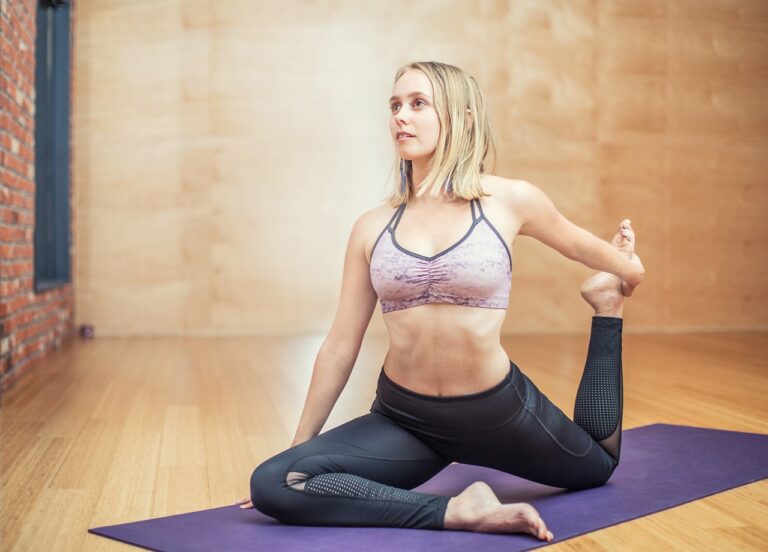
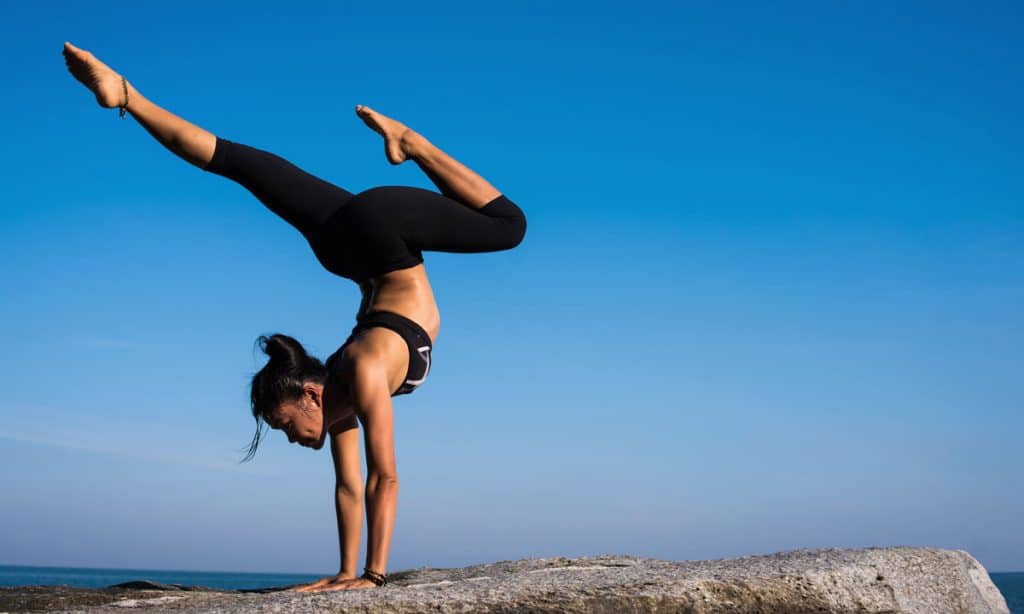
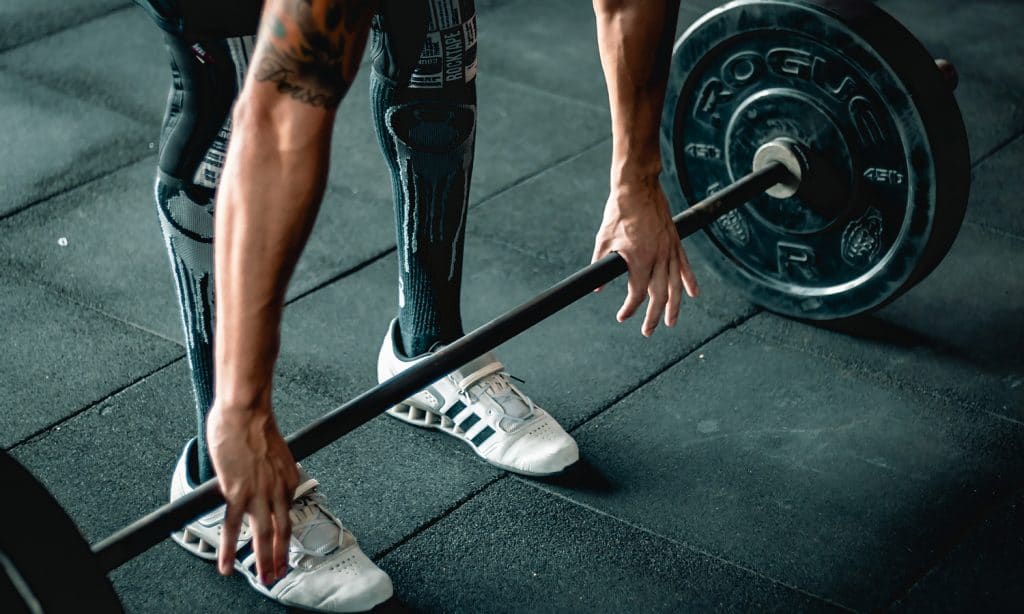
Flexibility is a skill that can be improved upon by focusing on the right muscles and completing different kinds of workouts.
Flexibility is one of those skills that people believe they’re born with. You either have it or you don’t, which, if you’ve ever done yoga or pilates, you know is untrue. While some people are definitely more flexible than others, even if you have the flexibility of a rock there’s plenty of ways you can improve your skills and range of mobility.
Exercises for improving your flexibility can be practiced every day or a few times a week, showing positive results within a couple of months. Here are 5 ways that can help you improve your flexibility:
Don’t skip on the cool down process
It’s very common for people to walk out of a spinning or boxing class before completing their post-workout stretches. This is bad for your joints and muscles, and will likely leave you in pain during the day after. Stretches help in speeding up your recovery process while also increasing your mobility and flexibility. Once you’ve completed your cardio, your body is warm and more likely to stretch than during other times of the day.
Stretching is boring for most people because you have to hold these positions for long periods of time for them to have an effect. Try to hold your stretches for a minimum of 30 seconds, really feeling the strain in your muscles. To make this process more manageable, focus on completing that amount of time and on not pushing your muscles too hard. If you can’t hold a pose because it hurts too much, try applying less pressure.
Consume your proteins
Foods and shakes that are rich in proteins can help your body post work out, preventing pain and muscle loss during the recovery process. These elements are also necessary for building muscles and repairing the tissue that was damaged. Proteins are filling and help you stay mobile as you age and lose body mass.
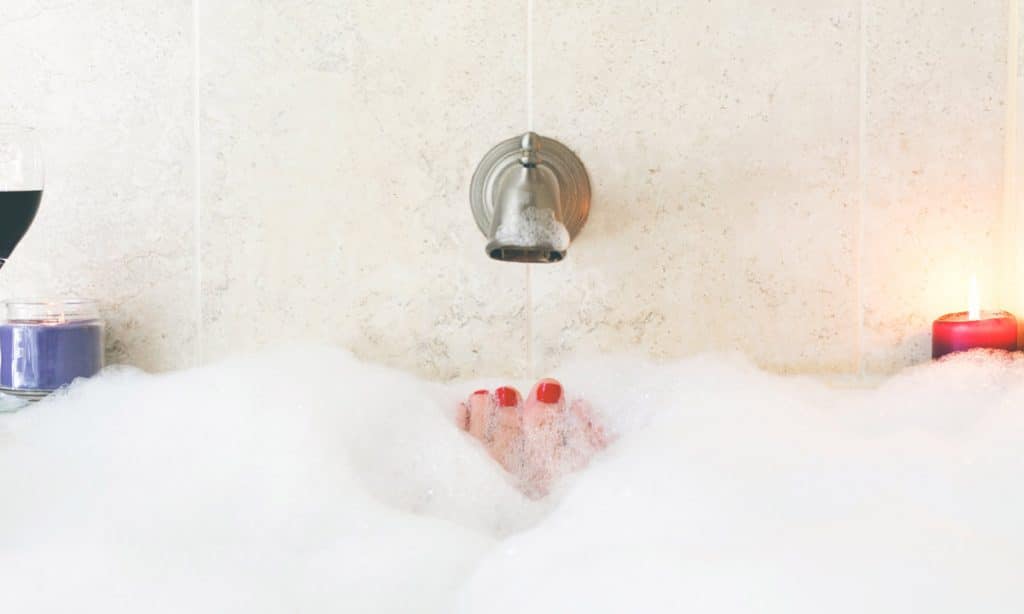
While warm baths alone won’t help you become more flexible, they will trick your body into feeling relaxed, which is key for developing flexibility. When trying out a new stretch or putting strain on a muscle you rarely use, your body’s natural response will be to clamp up. A warm bath can help you stay relaxed and put your muscles in a more willing mood that will allow you to push yourself when you stretch at the end or beginning of your day.
Try new workouts
The easiest way to work on your flexibility is to practice a workout that targets these muscles and skills, such as yoga, Tai Chi or pilates. These exercises can add some variety to your workout schedule and can even add more to your performance on other activities, improving your jogging, boxing or spinning skills.
Taylor Swift is one of the world’s biggest celebrities. Does she smoke weed?
Taylor Swift is one of the most successful performers of all time. At age 30, she’s sold over 50 million records and has won dozens of prestigious awards, including Grammys, Emmys & Brits. Over the past year she’s released another extremely successful record and a Netflix documentary. Now, to the big question: does she smoke weed?
Taylor Swift is a pretty private person, having the kind of privacy that only extremely successful people can afford, like Jay-Z and Beyonce. While a couple of years ago all tabloids could do was discuss her dating habits and analyze the hidden meaning of her songs (they still do that), as of late Swift has wisely decided to steer clear of the spotlight. Her relationship with Joe Alwyn only shows a couple of Google images, and there’s a lot of obvious photoshop.
Finding information on her and marijuana is very difficult. In an interview with “60 Minutes”, Taylor Swift openly spoke about marijuana and said that she didn’t smoke since that could mess with her vocal cords. But this was in 2011 and her attitudes could’ve changed, right?
Photo by Mark Davis/Staff/Getty Images
More recently, with the release of her last album, some keen eyed fans thought she was referencing marijuana in her song “Paper Rings.”
“The moon is high like your friends were the night that we first met.”
Taylor Swift first referenced alcohol on Reputation. In Lover she references weed. By 2030 I think we can get a ketamine reference in a Taylor Swift song.
The lyric isn’t even suggesting that Swift was smoking weed herself, but we’ll take what we can get here.
As a last resort, I went to Quora, the last place one goes when you can’t find another answer on the web. I clicked on the question “Does Taylor Swift smoke weed?” and found this answer:
“No.
Proof: Weed ruins your life. Tay Tay has a career.”
After some research, my educated guess is that Taylor Swift has probably consumed some kind of weed at some point in her life, because she’s young and rich and lives in Los Angeles. She’s not open about it though. Could her fans digest that kind of news if she was?
The International Narcotics Control Board also said national governments may want to take the responsibility to interpret the treaties in a way that is less draconian.
Author: Mark Taylor
The International Narcotics Control Board (INCB), responsible for monitoring compliance with global drug treaties, has admitted it may have to water down its hardline approach to cannabis regulation to stay relevant.
The agency released its annual report on Thursday, and with a new president in charge, it finally appears ready to listen to the rest of the world on cannabis reform.
“We have some fundamental issues around the conventions that state parties will need to start looking at,” he said. “We have to recognize that the conventions were drawn up 50 and 60 years ago.”
He said now is the right time to begin rethinking the treaties such as the 1961 Single Convention on Narcotic Drugs, which turns 60 next year.
The INCB also said national governments may want to take the responsibility to interpret the treaties in a way that is less draconian.
“The conventions provide states with the possibility of applying alternative measures to conviction, punishment, and incarceration, including education, rehabilitation or social reintegration,” de Joncheere said. “The international community faces numerous and complex drug challenges and the drug control treaties remain the foundational stone to address those challenges.”
Photo by FatCamera/Getty Images
Despite the president’s remarks, the contents of the report are much the same as in previous years, noting where advances in medicinal cannabis are being made and criticizing any jurisdiction that is allowing non-medical use of marijuana.
Globally, cannabis “continues to play the most prominent role” among both adolescents and adults, the INCB said of its research.
The report found that substance abuse and associated health consequences are highest among young people, with cannabis being the most widely used substance. The highest rate of use, in young people aged 15-16, is in Europe (13.9 percent), followed by the Americas (11.6 percent), Oceania (11.4 percent), Africa (6.6 percent), and Asia (2.7 percent).
“We pay special attention to this development […] and highlight our concern over the situation in a few countries that have moved to permit the use of controlled substances, namely cannabis, for non-medical use contrary to the provisions of and their obligations under the drug control treaties.”
Photo by Pedro Lastra via Unsplash
Illinois became the 11th US state to legalize recreational cannabis on January 1 and recorded a tax intake of more than $10m in a single month.
The regulator references Illinois’ decision, reminding the US of its obligations to align with international law. “The INCB reiterates that measures that permit the non-medical use of any controlled substance, including cannabis, are in contravention of the legal obligations incumbent upon States parties.”
It also rebuked the European Union state of Luxembourg for its plan to allow residents to use cannabis recreationally and warned off other areas of Europe from attempting the same.
“An increasing number of European countries were exploring or had established medical cannabis programs in keeping with their obligations under the 1961 Convention as amended by the 1972 Protocol. In a few countries, there were indications of steps underway towards the legalization of the non-medical use of cannabis that included the legalization of the cultivation, distribution, and use of cannabis for such purposes, notably in the Netherlands and Luxembourg.”
Sex is fun, but it pays to be prepared and to clear your mind before you do it.
Sex is great, but much of it depends on how you’re feeling and external factors, such as stress. While there’s no way of stopping your brain from running wild during your first time having sex with a new partner, there are effective and simple ways to prepare your brain for a more positive experience.
Several sex experts gave advice to help new and tenured couples have better and more pleasant sex. Here are 6 things you should before being intimate.
Make a to do list
If making a pre-sex to-do list doesn’t sound like an exciting prospect then you’re not a to-do list person and you’re seriously missing out. To-do lists are awesome tools, helping you organize your thoughts, keeping them contained and preventing them from popping up at random times, like when you’re trying to have fun. You don’t want to be having sex while thinking about the fact that you need to buy more milk and clean out the fridge. Trust the list.
While spontaneous sex in random places sounds super fun, more often than not, you’ll be having sex in your bedroom. Keep all the things you need close by. That way, you never run out of condoms, lube, or anything else you need that helps you have better and more intimate sex.
Stimulate your brain
“Sex begins in the brain” is an expression that’s very popular for a reason. Your brain manages your sex drive, so it’s important to pay attention to it and to try to get it involved in the process. “The brain is a more powerful sexual organ than genitalia, because it’s where sex drive stems from, so reading erotica or visually imagining sex play will do wonders to heighten senses in preparation for sex,” says sexologist Sunny Rodgers.
Take a few deep breaths
It may seem like a simple suggestion but deep breathing helps your mind calm down and your body settle. This practice can also help you feel more mindful, thus increasing your attention to details and allowing you to have a more pleasant and sensuous experience.
Hinting at sex with a text or a passionate kiss can really build up the tension and help you get in the mood, letting your imagination wander. According to sex researcher Sarah Hunter Murray, anticipation pays off in the long term and makes for much better sex.
Have it for the right reasons
Before you have sex with someone, whether you’ve slept with them a hundred times or you’ve just met them, it’s important to check in with yourself and see how you’re feeling. If you feel at all pressured into having sex with them or like you don’t want to follow through with it, know that you can always change your mind and stop.
Medical marijuana programs vary from state to state. Here’s what you need to know before obtaining a patient card.
Plenty of states have programs for medical marijuana, but these tend to change significantly from place to place, making the process of obtaining a card very different depending on where you live. In general, in order to qualify for one of these programs, patients need to have an ailment that appears on a list from the state. While some states are lenient, others are strict and it’s important to know the rules on where you live.
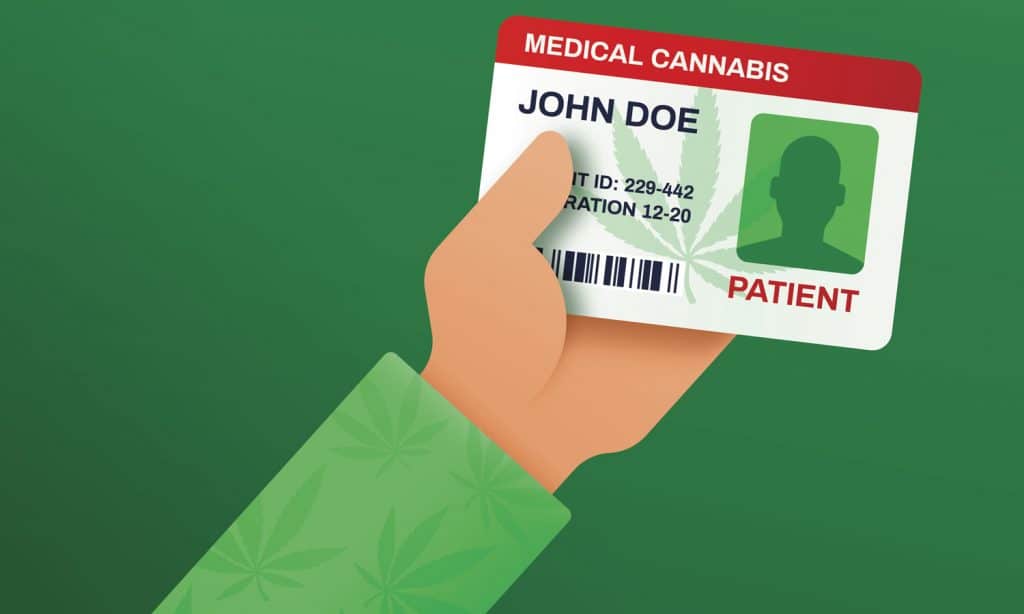
A medical marijuana card is tied to where you live, allowing you to purchase different products from dispensaries. They could even allow you to grow plants in your home, use cannabis delivery services, provide marijuana to someone else, and more.
Medical marijuana programs tend to curate their cannabis, ensuring that the product you get is safer than the one you get from an illicit market. There should be no negative side effects to owning one of these cards, except for the fact that you may have to wait a bit for them and pay a fee.
Here are 4 things you should know before getting a medical marijuana card:
Plenty of states have legal marijuana programs, with all them varying in terms of how quick the process is and the amount of documents you need to apply. Google your state and read about their policy on medical marijuana; if they have a program in place, you should quickly find a list of qualifying ailments. Be sure to read up on the matter before you make an investment of time and money.
Get a letter of recommendation from a doctor
Most states require medical records that prove your condition. One of the things that can prove your ailment without a doubt is a letter of recommendation from your doctor. They might even contact your state’s medical marijuana program and do part of the work for you.
Medical marijuana cards are individual to each state, meaning that you need to prove that you live there in order to reap the benefits they provide. Without some form of ID, be that a passport or a driver’s license, it’ll be hard to get your license.
Remember that each state is different
While medical marijuana cards used to be limited to each state, legalization has changed things, with some states allowing the use of medical marijuana cards from other states. You might run into some issues depending on the condition you have or the product you’re looking for but it’s worth investigating.
1 in 3 Americans say that consuming cannabis prior to the gym increased their workout productivity.
Some wellness trends seem too good to be true, while others appear counterintuitive to healthy living. Consuming marijuana prior to working out — a growing pairing in the fitness community — is a little bit of both. But, you may be wondering, doesn’t weed make you lazy? Wouldn’t you worry about passing out during yoga classes? Won’t being high give you the munchies after hitting the gym?
It depends on who you ask. According to exclusive research by FitRated, 65% of people believe an active, healthy lifestyle can include marijuana. About 1 in 3 Americans add that consuming cannabis prior to the gym increased their workout productivity, while the majority (60.4%) say it remains the same. Just under 10% of Americans say it decreases productivity, with explanations like feeling hungry or sluggish while exercising serving as the most common reasons why.
Previous studies show that marijuana can reduce inflammation following working out, as well as providing pain relief. Though a comprehensive 2011 review, which included scientists from the World Anti-Doping Agency and National Institute on Drug Abuse, found that examine how marijuana affects athletes found “the use of cannabis as doping will not help to gain a competitive edge by any means,” it indicated marijuana plays a potential role in training.
Photo by Victor Freitas via Unsplash
“Cannabis improves sleep and recovery after an event, reduces anxiety and fear and aids the forgetting of negative events such as bad falls and so forth,” researchers wrote. “Cannabis enhances sensory perception, decreases respiratory rate and increases heart rate; increased bronchodilation may improve oxygenation of the tissues.”
Participants in FitRated’s survey agreed, with 45% of respondents saying their workouts were more relaxing and 38% were more excited from exercise. Perhaps more interesting is that 20% said consuming marijuana helped them work out longer and made them less sore in the long run.
Two important notes before you light up and pump weights. Using marijuana causes your heart rate to increase, so those with heart health issues or participating high-intensity exercises, which already elicit elevated heart rates, should use caution. Don’t forget smoking is just one option for consumption. Sub-lingual strips, low-dose edibles, or tinctures might make sense for your lifestyle, or if you’d rather protect your lungs while working out.
FDA Commissioner said that the agency is working towards regulating hemp-derived CBD products and admitted that the agency’s approach to Hemp CBD is not sustainable.
According to Hemp Industry Daily reporter Laura Drotleff, it was an eventful week for hemp regulation at the National Association of State Department of Agriculture (NASDA) meeting in Arlington, Virginia. Drotleff reported on two major developments at NASDA. These developments came from the Food and Drug Administration (FDA) and the US Department of Agriculture (USDA), respectively, which are the primary regulators of hemp and its derivative products. In a pleasant surprise it seems the FDA and USDA will start making sense on hemp CBD. Both are analyzed below.
FDA Changing Its Tune on Hemp CBD?
FDA Commissioner Stephen Hahn, M.D., said that the agency is working towards regulating hemp-derived CBD (Hemp CBD) products and admitted that the agency’s approach to Hemp CBD is not sustainable:
We’re not going to be able to say you can’t use these products. It’s a fools errand to even approach that[.] We have to be open to the fact that there might be some value to these products and certainly Americans think that’s the case. But we want to get them information to make the right decisions.
Finally! The FDA is finally taking a rational approach to Hemp CBD. This is a major departure from the FDA’s recent messaging on Hemp CBD and it’s coming from the head of the agency.
It was only three months ago, on November 25, 2019, that the FDA sent out a whopping 15 warning letters to companies selling CBD and issued a consumer update stating that CBD was dangerous and could harm people before they even knew the harm occurred. Now, Dr. Hahn is admitting that the agency sees value in Hemp CBD and wants to make sure that consumers get enough information to make the right decision. Good! That’s what the FDA should be doing instead of constantly repeating that most Hemp CBD products are unlawful.
Now I know what you’re thinking: Aren’t you getting a little over-enthusiastic about a single statement on Hemp CBD? It’s not as if the law has changed or the FDA’s actually issued any regulations on Hemp CBD. Plus, hasn’t the FDA made positive statements on Hemp CBD before?
Yes, it’s true that Dr. Hahn has not established a regulatory framework for Hemp CBD with his statements, or convinced Congress to alter the Food, Drug and Cosmetic Act (FDCA) to accommodate Hemp CBD. It’s also true that before leaving his post, former FDA Commissioner Scott Gottleib, M.D., testified to Congress that “[w]e believe [CBD] does have therapeutic value and has been demonstrated[.]” That being said, there is reason to be excited the statements made in Arlington because of who said it and who heard it.
Photo by Tinnakorn Jorruang/Getty Images
Let’s start with Dr. Hahn. The FDA’s issue with Hemp CBD stems from the FDCA’s “Drug Exclusion Rule” which, simply put, means that an article that has been approved or investigated as a drug cannot be a dietary supplement or be added to food unless the article was marketed as a supplement or food before it was investigated. CBD has been approved as an article in the drug Epidiolex and the FDA does not believe that CBD was marketed as a food or supplement prior to that investigation. But, the FDCA grants the FDA Commissioner can override the Drug Exclusion Rule by issuing “a regulation, after notice and comment, finding that the article would be lawful under [the FDCA].” As head of the FDA, Dr. Hahn has the ability to regulate Hemp CBD so his statements are important.
Now, let’s talk about the audience which was made up of representatives from state departments of agriculture across the country. We’ve been doing a series on how states treat Hemp CBD and if you’ve been following it you know that states have been struggling to regulate Hemp CBD in light of the FDA’s position. Some states have regulated Hemp CBD despite the FDA’s slow movement, others are locked into the FDA’s policy, banning Hemp CBD in foods and dietary supplements. Many are somewhere in between, trying to figure out how the FDA will act. A positive statement like this from Dr. Hahn, made directly to the NASDA is likely to have ripple effects on enforcement policies across the state. This doesn’t mean that everything will change overnight, but I think it does portend a change in Hemp CBD policy across the US.
USDA Ditches DEA Registration
Drotleff also covered a very promising statement from USDA Undersecretary Greg Ibach, who told the NASDA that the USDA has reached an agreement with the Drug Enforcement Agency (DEA) to remove the requirement that only DEA-registered labs test hemp for THC. The DEA wrinkle was not part of the 2018 Farm Bill but was included in the USDA’s interim hemp rules issued in October.
Update: Drotleff’s story was updated on February 27 to clarify that DEA registration will not be required in 2020, but DEA expects states to work with its labs in the 2021 season.
The DEA registration was widely opposed by the agriculture community. Requiring DEA registration on all labs testing hemp creates a huge potential for a bottleneck as all hemp must be tested 15 days before harvest and there are less than 50 DEA-registered labs that could even undertake these tests. Many state departments of agriculture saw this as such a burden that they decided not to even submit a hemp cultivation plan to the USDA, electing to run out the clock with the 2014 Farm Bill, which expires October 31, 2020, rather than operate under the USDA’s interim rules and 2018 Farm Bill. The DEA Registration was a big part of this.
There are still challenges in THC testing, including the need to test for Total THC (delta-9 THC and THCA), which has caused some cultivars of hemp that would have been legal under the 2014 Farm Bill to fail under the 2018 Farm Bill. Still, this is a step in the right direction and quite promising, considering that the USDA will again accept public comments after the 2020 season.
Conclusion
The USDA and FDA are the two federal agencies directing the domestic hemp market. This process is far from over, but the NASDA meeting indicates that policy is moving in the right direction. If nothing else, these agencies are cognizant of how their decisions are perceived by the public and by state regulators. If you’re interested in hemp and Hemp CBD, stay focused on the FDA and USDA and make sure to participate in the public discourse.
Practicing a healthy flow of emotions and thoughts while being aware that pain and suffering are a part of life enhances gratitude in everyday moments.
Turn on any television or Facebook feed and the emotional assault starts. With so many injustices, political divides, a worldwide health crisis getting ever-nearer, finding a non-toxic positivity seems out of reach. Here are tips on how to practice gratitude in times of grief and uncertainty.
The Psychology Group, based in Fort Lauderdale, Florida, believes there’s a place for positivity every day of our lives — if it’s not toxic or judgmental in nature. Suppressing emotions, allowing shame to take hold or masking true feelings are all indicators of toxic positivity. They explained:
“Being a healthy human being involves being conscious of ourselves and how we show up in the world. Instead of practicing toxic positivity, aim for balance and the acceptance of both good and bad emotions rather than all-or-nothing thinking.”
Joseph Burgo Ph.D. writes on shame for Psychology Today. He believes grief and gratitude, “are the hallmarks of mental health” and often coexist in the same space in people of all ages. He often asks clients, “Can you grieve for the damage that you’ll never completely transcend but at the same time feel grateful for the actual good in your life?” That’s the ticket to recognizing how loss can be overcome, he says.
But do gratitude and grief go hand-in-hand? Researchers think so, including a 2011 study featured in the Journal of Positive Psychology, which found that participants who reflected on death showed enhanced gratitude compared to individuals in a control group. Researchers believe this supports the theory that practicing a healthy flow of emotions and thoughts while being aware that pain and suffering are a part of life enhances gratitude in everyday moments.
Photo by McKinsey via rawpixel.com
Learning from our community
Robyn Kaiser, a Housing Management Consultant in Florida, sought healing after grief through finding gratitude, saying, “Turning my grief into helping others helps me to escape the reality of my situation while also still being able to handle the gravity of it all.” She recently spoke with The Fresh Toast about one very personal and painful experience in her past.
While undergoing chemotherapy, Kaiser met a little boy named Leroy who shared with her how she could check out music devices during treatment. Kaiser and the Leroy kept each other company through the lens of sharing music during their treatments. One day, when Leroy didn’t show up, Kaiser found out that he had passed on the night before.
By channeling her pain and grief into action, Kaiser learned Musicians On Call was behind the availability of the music devices available, so she worked to volunteer with the organization to serve others in remembrance of the little boy. She explained that enriching the lives of others gave her deep purpose. “While it may seem that I’m being selfless, I feel I’m being selfish — because doing things that better myself make me feel stronger and better-equipped to help other people.”
Photo by rawpixel.com
Kaiser isn’t alone in her thinking.
Mark Hendricks started GrieveWell after losing his son, Brady. He found that by channeling gratitude it elevated his mindset, without erasing the loss of someone he loved most. Hendricks writes in GrieveWell, “I have found that by summoning an image of that tilted gratitude-versus-expectations scale, I can sometimes work up the feeling that I am at least a little bit more grateful to have had Brady for the time he was with me than I am disappointed in my expectation that he would outlive me.”
So how can each individual practice gratitude in uncertain times (or on a never-ending negative Facebook feed?)
1.) Practicing good boundaries: Step away when it becomes too much and give your brain and heart a rest.
2.) When in moments of grief, know that joy and love will come again and one of the healthiest ways to work through feelings is to speak with a professional.
3.) Practice a lifestyle of mindfulness, focused on having true gratitude for people, experiences, and items in your life.
After all, our journey here is temporary. Finding a way to recognize there is good with bad is one of the best ways we can evolve our thinking and leave toxic positivity behind.
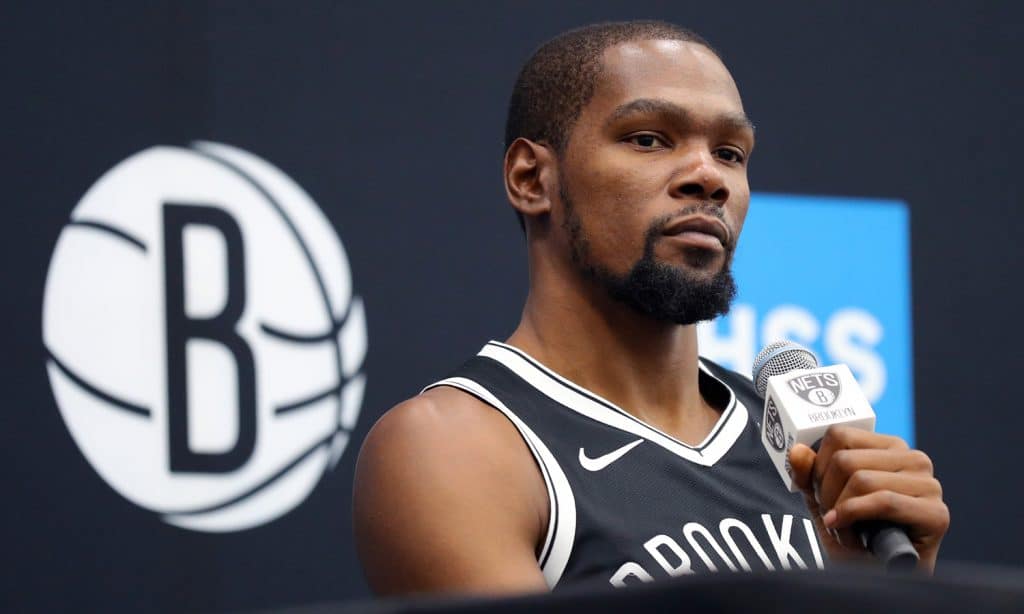
Kevin Durant compared smoking marijuana to drinking wine after work, and believes NBA players should have access to the plant.
NBA superstar Kevin Durant hasn’t exactly hid his relationship to cannabis over the past several years. Through Thirty Five Ventures, an investment firm he co-founded with business partner Rich Kleiman, Durant announced last year a partnership with Canopy Rivers, which specializes in marijuana investments.
It should come as little surprise then that Durant has begun publicly advocating for the NBA to remove marijuana from its banned substances list. Former players have discussing past marijuana use while playing in the league and how players should have access to it, but Durant is among the only current players to state so publicly. He’s also one of the NBA’s biggest stars.
“It’s one of those plants that’s an acquired taste. If you love it, you love it. If you don’t, you’re not even going to be pick it up. It shouldn’t even be a discussion these days,” Durant said on a recent episode of Showtime’s All The Smoke. “It’s just like, marijuana is marijuana. It’s not harmful to anybody. It can only help and enhance and do good things. I feel like it shouldn’t even be a huge topic around it anymore.”
Often among the cannabis advocate community, individuals will compare marijuana use to drinking a glass of wine at the end of the day to relax. Durant, you will notice, made the same comparison about his co-workers.
Photo by Mike Lawrie/Staff/Getty Images
“Everybody on my team drinks coffee every day. Taking caffeine every day. Or guys go out to have wine after games or have a little drink here and there. Marijuana should be in that tone,” Durant said. “Why are we even talking about? It shouldn’t even be a conversation now.
“So hopefully we can get past that and the stigma around it and know that it does nothing but make people have a good time, make people hungry, bring people together — that plant brings us all together.”
In a previous interview, NBA Commissioner Adam Silver stated a change to the league’s substance abuse policy is a conversation currently happening within the league. He did remind players, though, that any changes would have to occur in the collective bargaining agreement between the NBA and its player union.
“We start getting people out of jail for marijuana. That’s the next step,” Durant said. “And just keep going. But it’s a plant that’s put here for a reason, and that’s to bring us together. Hopefully it happens (removing marijuana from the banned substance list), especially in the NBA.”
Mornings aren’t easy. Here’s how you can make them a little less awful.
One of the world’s most common discomforts is waking up early in the morning. While there are morning people out there (please share your secrets), most of us find mornings stressful. Sleeping in for ten more minutes can throw off the rest of your day, potentially forcing you to skip out on breakfast, a shower, or more importantly, making you forget an important document or some other critical piece of information that you needed for the day.
The act of waking up is complex, with dozens of different apps and alarms trying to crack the code on how to make it a little less awful. There are devices that wake you up with smells and apps that wake you up according to your circadian rhythms, but it’s all pretty relative; you don’t need to go fancy in order to have a good morning, you just need some organization and a decent amount of sleep.
Here are four way to make your mornings more pleasant. Believe it or not, it is possible:
Stretch
Once you get over how boring it is, stretching is kind of nice. It’s a relaxing activity that makes you feel like you used your muscles and that provides tons of positive things for your body. While everyone benefits from stretching, it’s a good activity to take up if you’re not the most active kind of person. Stretching can be conducted easily, with the orientation of a few YouTube videos or a Yoga app. By allotting 15 minutes of your morning to this, you’ll go to work feeling like a new and much limber person.
You want to have an alarm that allows you to take a shower and have breakfast, but that also gives you some additional minutes for extra sleep and lounging around. Figure out what’s most important to you: if you treasure your sleep, shuffle your schedule around, taking showers at night and preparing your breakfast beforehand. If you can’t function without your morning routine and are feeling like you’re waking up too early, then you’ll have to go to bed at an earlier time.
Do things that are relaxing for you
Kicking off the morning positively influences the rest of your day by allowing you to feel more productive and to get your work done faster and effectively. Figure out what relaxes you, whether that’s listening to music, listening to a good podcast or reading before your day begins. Find ways to sneak in stuff you enjoy early on in the mornings to help you feel inspired and ready to take on the new day.
Most of us love to scroll through social media as soon as we wake up but this is not a good habit to have, because it encourages laziness and it takes up precious moments that could be spent doing more productive things. Try to get out of bed as soon as the alarm sounds and get started with your day.
Get the right amount of sleep
Being tired every morning probably means that you aren’t getting enough sleep. Try to commit to your sleep schedule, even if you have to get a little strict with it. Avoid checking your phone in bed, having coffee or caffeine during the evenings, and over drinking and eating right before you sleep.