Despite voter approval, the marijuana ballot initiatives face stiff opposition among state leaders, including Governor Kristi Noem.
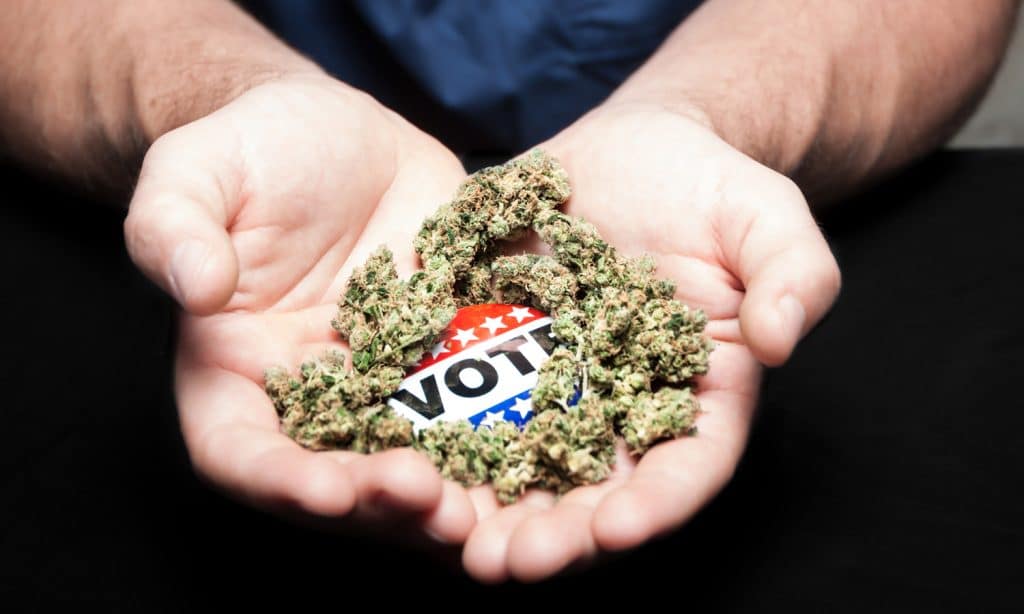
For the first time in United State history, a state will vote on both medical and recreational marijuana legalization in the same election. This week, South Dakota’s Secretary of State Steve Barnett certified an adult-use marijuana initiative, stating there were enough valid signatures to add the proposal to the November ballot.
The initiative would legalize recreational marijuana for adults 21 and older in the state, while also creating a system for regulated sales of marijuana. In addition, the proposal would force the state legislature to establish a hemp cultivation law in South Dakota. The Marijuana Policy Project and New Approach PAC, two national marijuana advocacy groups, have announced support for both the medical and recreational marijuana initiatives.
“The adult-use legalization initiative will greatly benefit the people of South Dakota by ending the injustice of arresting otherwise law-abiding adults for marijuana offenses,” Matthew Schweich, deputy director at MPP told The Fresh Toast. “It will focus law enforcement resources on fighting serious crime, generate new tax revenue for the state, and create jobs.”
Photo by KellyJHall/Getty Images
South Dakota ranks among the most punitive states with regards to cannabis, despite voter proposals like the ones now on the 2020 ballot. All forms of CBD oil and industrial hemp are illegal in the state, except the FDA-approved drug Epidiolex, a cannabis-derived drug that treats rare forms of epilepsy.
In March of last year, Governor Kristi Noem vetoed a bill legalizing hemp production in the state. Noem added later in the year that she would veto any hemp bills in 2020 as well. In the past, she has cited concern that legalizing hemp was a gateway to eventual recreational marijuana legalization and would undermine law enforcement’s ability to enforce marijuana laws in the state. Marijuana-related prosecutions have dropped by more than half in Texas, as prosecutors now must prove in possessions cases that defendants were carrying cannabis with THC levels above 0.3%, which requires expensive lab testing.
“At this point, it appears increasingly unlikely that Congress will pass legislation this year to fix our nation’s broken federal marijuana laws,” Schwein said. “Therefore, it is crucial that our movement win as many ballot initiative campaigns as possible this November and increase the pressure on Congress to take action. That is how we will ensure success at the federal level in 2021.”
Forty-three percent of investors have the impression that the marijuana industry is growing at a rapid pace and 34% believe there’s a lot of uncertainty in the cannabis stock market and the industry as a whole.
Opposition to cannabis legalization has been on a decline for years, with a majority of Americans in favor of some form of legal marijuana, recreational and/or medicinal. Surveys such as Pew’s are often used as a barometer for the subject of legalization, but the sentiment surrounding cannabis’s status can be measured through a different lens — investor confidence.
A recent survey by personal financial news site GOBankingRates.com found that 1-in-10 people have already invested in marijuana companies and another 40% would consider it in the future. About a third of respondents said they would consider investing in pot stocks if marijuana were made federally legal, with 35% saying they’d never invest regardless of legal status.
The sentiment against marijuana stocks was highest among those aged 65 and older, and a higher proportion of men compared to women respondents would consider investing in cannabis. Over 64% of investors aged 65 and over said they would never consider investing in cannabis stocks and forty-one percent of women responded that they would never consider pot stocks, while only 32% of men felt the same way.
The volatility of the current cannabis market is not lost on investors; only 10% of those surveyed considered marijuana stocks as safe investments. Much of the uncertainty is likely due to the continued criminalization on the federal level. This status casts a pall of uncertainty on any firm operating in the U.S., despite complying with local marijuana laws.
Photo by Bloomberg Creative Photos/Getty Images
Forty-three percent of investors have the impression that the marijuana industry is growing at a rapid pace and 34% believe there’s a lot of uncertainty in the cannabis stock market and the industry as a whole.
Other reasons holding investors back from putting money into pot stocks include the current stigma surrounding the industry, the small number of public companies, profitability, and lack of recommendation from friends, family, or a financial advisor.
Even if open to investing in cannabis stocks, most, about 57%, would invest under $5,000 in the sector. So while two-thirds of respondents felt marijuana should be federally legal, not all of those pro-pot investors are quite yet ready to include cannabis in their financial portfolio.
Even if it’s a hassle to have different devices for professional and personal use, it’s important to have some boundaries. Here’s why.
It’s easy to blur our professional and personal worlds, since most people spend the majority of their days in an office, surrounded by coworkers. It doesn’t get much more private than your computer, which, when it’s work-issued, becomes a problem of sorts. This device, which we use to access everything, is also one of the easiest to trace and keep tabs on.
You don’t have to be doing anything scandalous or crazy to want to have some sort of privacy on the digital realm, especially when it comes to sensitive information such as your passwords and log ins. Here are 5 things not to do when using your work computer. And it will keep you information safe from your employer, at least.
Avoid Google Docs, Slack, Teams, etc.
Some of these sites, which are online and not stored as apps on your computer, can be accessed by your employer. Wirecutter explains that administrative users of G Suite, popular software that includes services like Gmail and Google Docs, can look and search through emails and documents. Although it’s unlikely that your employer will be actively looking through your stuff, it’s embarrassing if someone were to stumble upon your texts whining about work. Use your personal device for all of that personal stuff and save yourself the hassle.
Although it’s tempting to save your log ins and passwords in the computer you spend eight hours of the day interacting with, security experts advice against this. Glassdoor explains that many companies have a clause in their computer, email and internet policies that explain that employers have the right to look through all the communications and data stored in the device.
Avoid public Wi-Fi
Public wi-fi is always problematic, but it’s even more troublesome when you’re using your work laptop and are accessing sensitive information. You could install a VPN, which will protect your browsing and internet activity from third parties, and, of course, lock your computer when you’re away from it.
This is like the case with personal passwords and log ins, only it makes even more common sense. There’s no need to store your personal documents, photos and data in your work laptop. Why would you want anyone to see them? Also, if you get fired or quit you’ll likely have to return your devices; transporting this data to your personal laptop or phone is a pain. Save yourself the worry and create some boundaries as soon as you can.
Don’t work on your side job while at the office
Nowadays, it’s very common to have several jobs that can be accessed remotely, but it’s important to not fulfill these duties while in your primary work office. Most of the activity you do on your work computer can be monitored and accessed by your IT department, creating a possible problem if your superiors feel that you’re slacking off at work of if you work for someone who is not very nice.
Customers feeling cheated by CBD are suing some of the largest companies in the industry.
Despite controversies and plenty of people predicting the end of the CBD industry — or at least a decrease in its popularity — the world’s interest in the cannabinoid continues to grow. But now, there are lawsuits being thrown around, and this might actually mean trouble for the industry.
Just like the other dietary supplements that came before them, lawsuits are targeting companies that sell CBD products without any scientific evidence that supports the medicinal benefit claims that accompany CBD.
According to a report from Stat, the companies that have been targeted include two of the largest in the industry: Charlotte’s Web and CV Sciences. These lawsuits use a language that demands a refund for all American customers who’ve purchased a product from one of these companies.
Photo by IRA_EVVA/Getty Images
Plaintiffs argue that the products sold are illegal because they contain CBD, which, having no scientific support, is a sham. If judges were to agree with this opinion, manufacturers would have to issue refunds for all the profits made from CBD products, a surely devastating blow for these relatively new companies.
Consumers who issued the lawsuit explain that the targeted companies engaged in “false, fraudulent, unfair, deceptive, and misleading” marketing of their CBD products by suggesting that the cannabinoid was similar to a dietary supplement.
“The implications are huge,” says Daniel Fabricant, CEO of the Natural Products Association. If the companies were to lose the lawsuit, he speculates that the blow would be catastrophic. “I’m not going to say [the CBD industry] goes away, but I think it gets pretty close to going away.”
While it’s hard to find an unbiased opinion regarding CBD — most people are either for it or against it — this is a problem that has been influenced by the FDA’s inability to make a decision regarding the compound. As long as there’s no legal framework for CBD, the industry will remain on shaky ground and subject to plenty of more accusations and lawsuits.
Though marijuana-related arrests have risen in recent years, those cases aren’t being prosecuted at the same rate.
Data complied by the FBI suggested last year that the War on Drugs wasn’t over. Using numbers submitted by 18,586 law enforcement agencies at the federal, state, and local level, the data showed that drug-possession arrests were on the rise following a nine-year decline. Furthermore, the New York Police Department released data to the public that found New York cops still disproportionately arrested people of color for marijuana-related offenses, despite mainstream acceptance of marijuana in all communities.
As disheartening as these statistics may be, indicating the War on Drugs may never end, something curious happened at the same time. Another piece of data tucked away in a federal report by Supreme Court Justice John Roberts indicates that history may not be repeating itself. In the report, he reviewed the trends of various crimes tried at the federal level and noted this about marijuana.
“Drug crime defendants, who accounted for 28% of total filings, grew five percent, although defendants accused of crimes associated with marijuana decreased 28%,” Roberts wrote.
Let’s break that down. The number of people charged with drug-related federal crimes is on the rise, which is commensurate with the FBI’s data. But Roberts reveals that federal prosecutors aren’t pursuing these charges at the same rate. Instead, federal prosecutions of marijuana-related crimes dropped significantly.
Photo by FatCamera/Getty Images
A couple educated guesses as to why that’s happening. One, even though cannabis remains illegal at the federal level, various states have legalized recreational and/or medical marijuana. Two, support of marijuana reached an all-time high last year despite concerns over the national vaping crisis. There’s also the complication of the 2018 Farm Bill, which allowed for the production of hemp at the federal level, creating a loophole for the proliferation of CBD products.
This complication has caused marijuana prosecutions to plummet in Texas as well, when lawmakers legalized hemp last year in the state. Prosecutors now must prove in possession cases that defendants were carrying cannabis with THC levels over 0.3% and that requires expensive lab testing. Marijuana prosecutions in Texas have dropped by more than half as a result. According to the Texas Tribune, there were 5,668 marijuana misdemeanor cases in May 2019 (right before the state legalized hemp on June 10) to 1,919 cases in November of the same year.
Katharine Harris, a drug policy fellow at Rice University’s Baker Institute for Public Policy, told the Tribune that “it means that there are fewer Texans that are getting slapped with a criminal record for marijuana possession, something that is already legal in other states.”
A recent study found that psychedelics proved to have a strong effect on nature relatedness, promoting a prolonged appreciation for nature in the two-year follow-up.
The world is hurting right now, and many are feeling the pain of a planet in destruction. We’re dealing with climate change (and climate change denial), forest fires are ravaging homes and destroying nature around the world, and we all know that Mother Nature sure likes to toss a giant natural disaster in there from time to time. Humans have both lost control of and lost touch with their natural environment.
It’s time to get back to nature, and psychedelics may be what get us there.
Researchers in London, England, investigated the association between psychedelic use and a concept they termed “nature relatedness,” or one’s level of self-identification and subjective sense of connectedness with nature.
The study entitled “From Egoism to Ecoism: Psychedelics Increase Nature Relatedness in a State-Mediated and Context-Dependent Manner” was published in December 2019 in the International Journal of Environmental Research and Public Health. The study was conducted at the Centre for Psychedelic Research’s Department of Brain Sciences at Imperial College in London, UK, and was led by Hannes Kettner and Sam Gandy.
While the study wasn’t restricted to one psychedelic, the researchers looked at the “healing and divination purposes” for which substances like DMT, LSD, psilocybin (“magic mushrooms”), mescaline, ayahuasca, iboga, and salvia are used, hypothesizing that the use of these substances, especially in the long term, are strongly correlated to nature relatedness or that feeling of being “one” with our natural environment. The researchers cite “ego-dissolution” as one of the catalysts of this connection between psychedelics and nature relatedness and further hypothesize “a positive effect of natural settings on psychological outcomes following psychedelic use.”
The Methodology
The researchers conducted their study through an online survey, asking people who planned to use psychedelics in the near future to complete a survey. The beginning 634 participants received baseline assessments looking at demographics, psychological well-being via the Warwick–Edinburgh Mental Wellbeing Scale, a nature relatedness scale, and the amount of lifetime psychedelic use.
One day after the psychedelic experience, participants were asked to complete surveys that looked at some pretty incredible things about the human experience. These measures included a mystical experience questionnaire, which assessed positive mood, perceived transcendence of time and space, a sense of ineffability, and mystical feelings as key components of mystical-type peak experiences; the ego-dissolution inventory, measuring acute disintegration of the sense of self; and the challenging experience questionnaire, which includes items about fear, grief, physical distress, insanity, isolation, death, and paranoia.
The audio-visual effects of the psychedelics were also measured to understand the extent to which the substance altered sight and perception. Participants were asked to identify whether their psychedelic experience took place in nature, with an additional item measuring to what extent access to nature was perceived to have influenced the overall quality of the experience.
Photo by RapidEye/Getty Images
The participants also were invited to complete surveys two and four weeks after the psychedelic experience, and then two years after that, for the researchers to understand the longitudinal effects of nature relatedness. Sixty-four participants participated in the two-year follow-up.
Psychedelics Increase Nature Relatedness
“Our primary hypothesis of increased nature relatedness following a psychedelic experience was confirmed,” concluded the researchers in the Discussion section of the study; the researchers “providing the first empirical evidence for a causative role of psychedelic use in the enhancement of nature relatedness in a large sample of healthy participants.”
Across all participants, psychedelics proved to have a strong effect on nature relatedness, with this sentiment being elevated directly post-use and promoting a prolonged appreciation for nature in the two-year follow-up.
Why Is This Important?
We all know that taking time to be in nature is part of a healthy lifestyle. You can’t deny that taking time to feel the sun on your face, breathe in the smells of nature, and sit still in the quietness of solace stimulates serotonin and makes you feel simply incredible. However, not enough of us take time to connect — truly connect — to our natural environment as a method of healing and self-discovery.
As the authors note, previous researchers have argued that “experiences in natural settings can foster an empathic connection to nature and the humble positioning of one’s self within it, which is less likely to apply to man-made environments.” The authors note that previous accounts of psychedelics in nature represent the opportunity to find “profound levels of identification or merging with the natural world.”
Other researchers have uncovered that those who use psychedelics within a natural setting experience “dissolution of boundaries and awe-inducing feelings of unity with nature during peak psychedelic effects.” The authors have also observed that even one experience with psychedelics can produce an “enduring” change in one’s perception of nature.
Spending time in nature and its benefits for health have been studied for years, with meta-analyses pooling data from almost 150 studies, looking at 290 million participants, showing that time in nature can have significant physical health benefits, including reduced risk of type II diabetes, cardiovascular disease, premature death, preterm birth and reductions in stress, high blood pressure and cholesterol.
Photo by Wikipedia user Erik Fenderson
In addition to these physical benefits, exposure to nature also produces incredible mental health benefits, including increases directed-attention abilities, increased attentional capacity and positive emotions, and the ability to reflect on a life problem. Nature exposure has been associated with decreased anxiety, decreased stress, a decrease in rumination, increased vitality, psychological restoration, and enhanced prosocial orientation.
Researcher Conclusions
The researchers conclude that their data “imply a reliable and robust positive association between psychedelic use and nature relatedness” with the correlation between psychedelics use and nature relatedness getting stronger with continued use among nature experience.
They observed increase in nature relatedness correlated with increases in psychological wellbeing, which remained significantly elevated two years after the psychedelic experience. The researchers finally conclude that “these findings point to the potential of psychedelics to induce enduring positive changes in the way humans relate to their natural environments.”
The Way Forward with Psychedelics
The psychedelics industry, as we know it, is relatively new, and some insiders of the psychedelic movement credit cannabis as what paved the way for psychedelics to gain momentum.
Green Market Report has been following the psychedelics movement closely, eagerly watching our friends in psychedelics make amazing strides. Late last year, we reported on Field Trip Ventures, co-founded by cannabis industry veteran Ronan Levy, which announced that they’d be opening a psychedelics research center in Jamaica. We also reported on Orthogonal Thinker, who had announced a capital raise of $4 million to help bring psilocybin to more people.
We are yet to see a projected worth of the emergent psychedelics industry, but if the buzz is any indication, this new industry is one to get in on while it’s just beginning to take hold.
Simply put, kids like weed, and they are finding ways to get their hands on it, just like you did with booze back in the day.
It’s officially 2020, so it’s time you finally realize that much of the puff, puff, pitch spewing from the mouths of die-hard cannabis advocacy groups is just talk. They may tell you that the legalization of marijuana is a sure-fire way to keep your kids from getting stoned on the regular, or that establishing a taxed and regulated market makes weed unappealing to whippersnappers. In reality, little Timmy and Janie are more interested in pot than ever before.
That’s right, the secret is out. Parental figures from all walks of life should consider themselves warned. The cold hard fact of the matter is that teens are destined to get more red-eyed and ripped in the new year because, well, it’s a trend that has been swelling ever since Colorado and Washington became the first states to go green. Simply put, kids like weed, and they are finding ways to get their hands on it, just like you did with booze back in the day.
For a while, it was starting to look as if the claims that legal weed was boring in the eyes of the great American adolescent were valid. In fact, a National Survey on Drug Use and Health published in 2017 showing pot use in teens (ages 12-17) indicated that they were smoking less marijuana in all but one of the five states that had ended prohibition. This was the tale of the tape spanning from 2014 to 2016 — right when adult use was first starting to take hold across the country.
Of course, this gave the pro-pot folks some vindication because all of the sudden, there was finally some validity to the claims they had been feeding everyone from the public to politicians in their fight to bring weed to the mainstream. The stats also reported that teens were losing their lust for alcohol, tobacco and heroin, too. And parents rejoiced that the kids of today were becoming a little more straight edge and boring than when they were coming up in the world.
Photo by OlegMalyshev/Getty Images
But then it happened. Teens, all of a sudden, started getting high. Reports began to surface a couple of years ago showing that while the kids of today were, in fact, smarter about avoiding the dangers of booze and cigarettes, that wasn’t stopping them from exploring the wastelands of inebriation with the help of our old friend Mary Jane.
Researchers from Columbia University said in 2018 that kids have bought into the “marijuana is safer” hype and are now dabbling in the doobie more than anything else. The study showed that while the youth from the 1990s was most curious about cigarettes, that all changed over the past decade. They have since kicked the Marlboro man down the dusty trail, and now, cannabis has become the nitty-gritty of teenage rebellion.
Even the latest Monitoring the Future survey from the University of Michigan, which is paid for by the federal government, shows the youth has gone wild for weed. Pot use among high school seniors has nearly doubled from where it was 30 years ago. And Wall Street investment firms are telling their investors that juvenile weed consumption is a solid reason to stay the course when it comes to their pot-infused portfolios. Because, as it was so eloquently put by Cowen and Company, “teenage cannabis consumption has interestingly remained fairly steady.” Therefore, they will likely grow up to become the cannabis industry’s customers of tomorrow.
Photo by rawpixel.com
So, while everyone is making predictions for 2020, mine is that we will continue to see higher rates of teenage pot consumption sweeping the country. The black market is still too strong to prevent kids from getting their hands on weed. It’s like they always say, where there’s a will, there’s a way. Now, that doesn’t mean that increased pot consumption in this demographic is going to create a population of zombie burnouts and ultimately contribute to the demise of civil society. There’s still no evidence that pot use is a gateway to harder drugs, and the rate of dependency is extremely low. That means parents shouldn’t flip their script if they discover their teen is part of this new toking trend.
It’s just a shift in the scene. Still, it’s one they say could stunt the growth of their maturing brains. But considering that these fiends are already intellectually stifled by cell phones, social media, video games and other digital lesions of the soul, I’m going out on a limb and saying that not much more damage can be done. We’ve always known that times were a-changing, but nobody ever promised it would be for the better.
The many layers of marijuana reform laws often hit those experiencing devastating illnesses particularly hard, especially given the fact that marijuana research is still stalled in the US.
Emily* is an up and coming professional in the east coast, living with an invisible chronic illness that not only causes pain, but makes working 40 hours a week nearly impossible. The solution that Emily believes has saved her career, comes in the form of a vaping “pen” and THC. Living in a state without medical marijuana access, Emily feels torn.
On one hand, she believes marijuana has helped her elevate her career by allowing her to show up to the office, but on the other, she lives in a constant fear that she describes as an entity slowly circling above her head. “There are days I don’t know how I could function without the help of my vaping pen,” Emily explains. “At some point, I might have to move, leaving my family to be able to have access to a drug that my lawmakers believe only harms me.” And Emily isn’t alone.
Todd*, a 57-year old in Indiana recently shared his story about being a first-time cannabis user. After a debilitating illness, Todd experienced a severe reaction from a pharmaceutical medicine which caused pain that was almost intolerable. Todd tried cannabis as a last resort for the excruciating nerve pain and soon found it worked better than any alternative.
Todd explained, “I immediately noticed two things when I started lighting up: First, the nerve pain was gone within minutes. Secondly, my ulcerative colitis symptoms were alleviated.” In fact, Todd’s restroom frequency went from 7 times each day to three per week. While his condition will follow him for the rest of his life, cannabis seemed to quiet hid digestive system. His care team was baffled, and with a strict diet in place, Todd has found a life-changing alternative to expensive and often side-effect-ridden pharmaceutical medicines.
However, as a business owner, Todd is forced to take a massive risk for both his business and health which has placed him in an impossible situation: He must either move to Michigan or Illinois, (where marijuana is accessible,) or break the law. “The reality is, I’m off all medicine right now,” Todd noted, “It’s really unbelievable.”
What Todd describes is well-known in research circles and those who experience similar effects on their gastrointestinal condition with THC. The Crohn’s and Colitis Foundation issued a statement in 2018 in support of research and findings around marijuana’s impact on the gut.
Long-studied for its effect on CB1 and CB2 receptors in the gut, the journal Gastroenterology and Hepatology explained the importance of studying THC and CBD for those struggling with colitis and other gastrointestinal issues, stating that:
“The most-studied receptors, CB1 and CB2, are expressed in the gastrointestinal tract, enteric nervous system, brain, and immune cells, which are areas of interest in patients with IBD. Activation of these receptors may result in gastrointestinal effects. A 2009 study in a mouse model of colitis found that when the CB1/CB2 receptors were activated, there was a decrease in inflammation. This provides a potential rationale as to the role of cannabis in the management of IBD and IBD-related symptoms.”
Photo by Tinnakorn Jorruang/Getty Images
Health equity starts with accessibility
Todd may have reprieve. One reform bill in Indiana is changing the conversation around marijuana, and aims to research underlining effects of marijuana criminalization. Led by State Senator Karen Tallian (D-Ogden Dunes) the bill hopes to decriminalize possession for smaller amounts of marijuana (under one ounce.) State Senator Karen Tallian (D-Ogden Dunes) shared exclusively:
“It’s clear Indiana has to address its outdated and confusing cannabis laws. Our state legislature has been afraid to confront the entire cannabis question and takes every opportunity to stop debate. In 2018 alone, there were more than 22,000 arrests for marijuana possession in Indiana. We have to stop spending our community money, time and efforts on this issue when there are so many more pressing priorities. Given the fact that our neighbors in Illinois and Michigan have both legalized marijuana, it certainly makes no sense for Indiana to continue with its obsolete policies. Decriminalization is the minimum that we should be doing to stop putting Hoosiers behind bars for something that is legal in our neighboring states.”
Senator Tallian is gaining support quickly with NORML, which is mobilizing in Indiana on the heels of both Illinois and Michigan electing to decriminalize marijuana within the past month. A study completed in November 2019 by Pew Research Center, showcases that over two-thirds of Americans support legalization of marijuana. Among its findings, Pew noted:
The share of U.S. adults who oppose legalization has fallen from 52% in 2010 to 32% today.
An overwhelming majority of U.S. adults (91%) say marijuana should be legal for medical use while 59% of individuals polled stated it should be legal for recreational use.
Only 8% of those polled stated it should remain illegal in all circumstances. The silent generation, (born between 1928 and 1945) had a rate of opposition at 64%.
Photo by Zummolo/Getty Images
Dispensary drought
Even more worrisome, a lack of access tends to leave those already marginalized with lower incomes without options, even when dispensaries are in place. Dr. Julia Arnsten, chief of the Division of General Internal Medicine at Albert Einstein College of Medicine and Montefiore Health System penned a piece that described in detail the barriers to new methods of care and health disparities that are beginning to take place. She said:
“Without a more equitable system, this new health care disparity will become entrenched alongside so many others, leaving many of those most in need of medical cannabis without access to it.”
Describing how marijuana can be used to avoid dependence on opioids, Dr. Arnsten explains that data gathered from the last two years of New York’s Medical Marijuana program pinpoints an important finding:
“More than 70% of registered patients seek medical cannabis to treat chronic or severe pain, often in an effort to avoid prescription opioid medications.”
While the doctor advocates for patients to purchase marijuana from legal dispensaries, many still obtain marijuana from other unregulated sources. The reasons, the doctor explains, have to do with cost, transportation woes, a lack of insurance coverage and the inability to pay via credit card.
The many layers of marijuana reform laws often hit those experiencing devastating illnesses particularly hard, especially given the fact that marijuana research is still stalled in the United States due to the drug’s classification. Whether drought of inaccessibility, the effect of marijuana legislation has real-world effects on family, neighbors and those in the community.
*The names have been changed to protect the identities of those interviewed for this article.
This week’s column: Justin Bieber’s much awaited return, Usher’s collab with Ella Mai and a new song from Raye.
This Week’s Music is a weekly column that discusses the weeks’ best, worst, and most interesting songs. We try to select songs of different artists and genres to keep things interesting and to please a variety of music fans.
This week features Justin Bieber’s much awaited return, Usher’s collaboration with Ella Mai and a new song from Raye. Check them out!
Pop
Justin Bieber – Yummy
After a year-long hiatus, Bieber is back and, if this is the kind of work he’s making now, he should have stayed gone. “Yummy” is awful, a rip-off of all of the worst aspects of modern hip hop without adding a personal twist or even some coherence. It’s three minutes of sound torture.
Another artist making a comeback is Usher, who, unlike Bieber, seems to be more aware of his musical surroundings, partnering with Ella Mai and making something that’s fun and sexy. Mai and Usher’s voices compliment each other, creating an old school R&B song that capitalizes on each of their talents.
Raye – Please Don’t Touch
The best song of this week’s column conveniently comes from its least famous artist. Rachel Keen, aka Raye, is a British 20-something-year old who’s primed to make a big splash in 2020. “Please Don’t Touch” is melancholic and woozy in all the right ways, smart enough to trick you into dancing your heartbreak away. The song’s sad and reflective lyrics are perfectly hidden behind a glossy production that’s accessible and fun.
The ban would barely impact the use of vaping devices among the youth, according to one analyst, and will simply burden adults who are trying to switch.
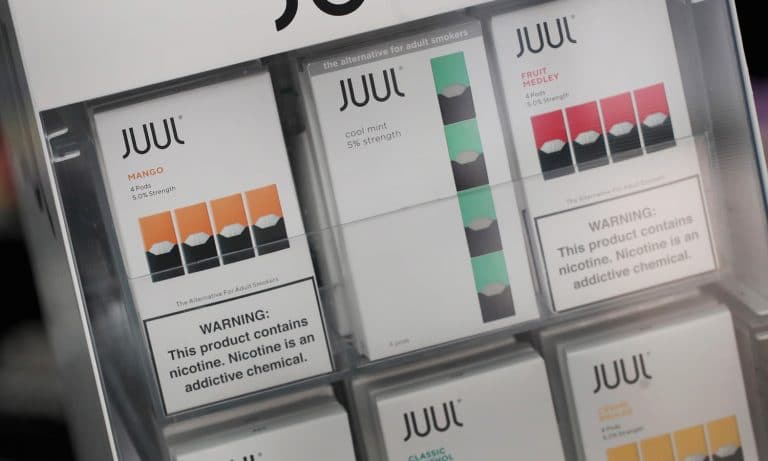
The Trump administration is set to ban most fruit and mint-flavored vapes in an attempt to curb teen usage.
The modified policy would pull pod-based flavored vaporizers off the market that are made by companies such as Juul, NJOY Holdings and Reynolds American.
The policy would still allow menthol- and tobacco-flavored e-cigarette pods, as well as “open-tank” vaping devices.
Analyst Says Ban Will Have Hardly Any Impact On Use
Reason Foundation policy analyst and Young Voices tobacco policy contributor Jacob Rich commented on the news for Fox Business.
Only 23% of teens say that flavors play any role in their choice, with curiosity being the No. 1 reason for trying vaping by far, Rich said.
Vapes have helped reduce smoking rates among all age groups, he said.
The ban would barely impact the use of vaping devices among the youth, in Rich’s view, and will simply burden adults who are trying to switch, he said.
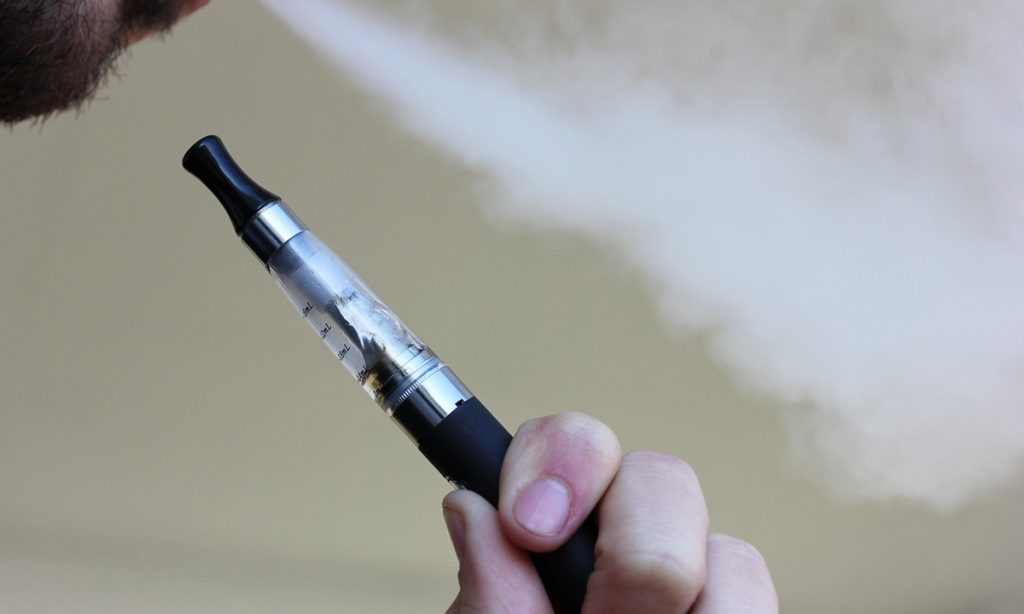
Photo by lindsayfox via Pixabay
Siegel Asks Whether Ban Is Comprehensive Enough
American physician Dr. Mark Siegel also joined Fox Business to talk about the ban, and said that it almost goes far enough, referring to so-called “puff bars,” or disposable imitation cartridges that are flavored and include nicotine.
“There’s a culture of vaping, and a lot of the same people who are vaping e-cigs are also turning around and vaping marijuana-based products, but before they used to have a joint, and now they have vaping devices. So I think it can have a carryover and indirect effect.”