Thursday, December 18, 2025
Home Blog Page 715

Meme Of The Week: JK Rowling Can’t Stop Talking About Harry Potter And The Internet Can’t Stop Making Fun Of It

After the publication of Harry Potter’s seventh and last book, author J.K. Rowling announced that Albus Dumbledore, one of the saga’s most beloved characters, was gay. At first, fans were excited and happy to have such representation, but then they began to question the fact that Dumbledore was made gay after the series ended and that there was no support of this information in the text.

Although the books ended many years ago, the Harry Potter world is still strong, with a Universal theme park, an award winning play, and a series of five movies based on Newt Scamander’s journeys, which supposedly concludes with the  epic wizard fight between Dumbledore and Grindelwald. It’s 2019 and we’re two movies into the saga, yet there’s still nothing gay about Dumbledore except the fact that he’s not dating women. And that’s kind of gay, right?

RELATED: Meme Of The Week: Facebook Has Global Meltdown, People Make Jokes

Rowling has used Twitter as a way of covering up holes in her stories, claiming that there were Jewish and gay people in Hogwarts, even if they don’t make appearances in the books. It’s kind of cute but also completely unnecessary. Some story gaps are best filled in by fans’ imaginations.

J.K. Rowling’s last comments on Dumbledore’s sexuality pushed the internet over the edge, making her the subject of this week’s meme. Here are some of the funniest Harry Potter sex memes:

RELATED: Meme Of The Week: Ellen DeGeneres Goes Dark On This Week’s Most Popular Meme

NHL Marijuana Policy Role Model For Other Sports


NHL marijuana policy a role model for other sports. With thirty-three states and the District of Columbia legalizing marijuana in some form or another in the United States, it is safe to say marijuana use is gaining social and cultural acceptance. But as public acceptance of marijuana use continues its mainstream march forward there are still bastions of resistance that maintain a dissimilar approach to marijuana and see it as a detrimental element to their organizations. These holdouts prohibit marijuana use and take punitive measures against members of their organization that engage in marijuana use. One such stronghold is professional sports.

The top four sports in the United States are American football, basketball, baseball, and ice hockey. Each sport approaches marijuana policy through their respective collective bargaining agreements as negotiated between the team owners (usually the league or association) and the players (as represented by a player’s association.) These various collective bargaining agreements create contractual obligations between the league and the players regarding controlled substance abuse policies and expiration dates whereby the contract expires. As the expiration dates approach, the league and players engage in negotiations to form the next collective bargaining agreement and it is during these negotiation periods that present opportunities for the various leagues to modify their controlled substance abuse policies; specifically, marijuana use amongst the players.

RELATED: The NHL Might Commission Study On Marijuana’s Therapeutic Benefits

To date, each major sport (with the exception of ice hockey) has taken a punitive approach towards marijuana use by players and has structured the collective bargaining agreement to impose severe sanctions, suspensions and possibly expulsion should players use marijuana. But we are now in an era where these restrictive marijuana policies in sports need to be reviewed and revised in light of the legality of the substance in a growing number of states and countries and the negative effects a ban on marijuana is having on the players themselves. By banning marijuana use, players are forced to forego marijuana as a viable and effective source of pain relief, anti-inflammatory treatments and anti-anxiety measure merely because its use will subject the player to fines, game suspensions and possibly expulsion from the league should the player test positive for marijuana. The players only options are medical treatments that don’t violate the league substance abuse provisions despite the possible harmful side effects of these treatments; thus, removing the player’s choice of medical treatment over an antiquated view of what marijuana is and what it does to the human body.

RELATED: Op Ed: It’s Time To End The Ban On Marijuana In Sports

The governing organization in North American that organizes professional hockey is the National Hockey League and they have taken a very progressive approach towards marijuana policy. The NHL’s substance abuse policy, as it is applied to marijuana, has a focus on confidentiality and treatment; not punishment. Players are confidentially tested for performance-enhancing drugs and the name of the player is kept confidential from the NHL, Players Association and the player’s team should that player test positive for marijuana as a byproduct of drug testing. Upon testing positive for marijuana, the anonymity of the player is only revealed to the doctors that administer the NHL drug testing program and those doctors only contact the player directly. These medical professionals take this opportunity to determine what role marijuana plays in the player’s career and, as a team, work with the player on any alternative treatments should the player desire alternative treatment. If the player declines to enter the treatment program there are no negative repercussions to the player’s decision and the player’s name, test results and treatment decision are kept confidential from the NHL, the Players Association and the player’s team.

The only negative repercussions to a player’s positive test result are if the medical professionals determine the levels of THC in the player’s system are “dangerously high level…such that is causes concern for the health or safety of the Player or others…”   Even under these circumstances, the player’s name is kept confidential from the NHL, Players Association and the player’s team and the player is referred to mandatory evaluation and treatment as directed by the medical professionals. At that point, the player’s penalties are only administered to the player should the player enter into terms and conditions for treatment and then violate those terms and conditions.

The National Football League, National Basketball Association and Major League Baseball (with a particular focus on Minor League Baseball) should all look to the National Hockey League when restructuring their archaic policies regarding players marijuana use. As science advances our knowledge of marijuana’s effect on the human body and cultural stigmas against marijuana users become less and less prevalent, professional sports associations continually have opportunities to conform their marijuana policies to better reflect the medical benefits of marijuana and stop punishing players for engaging in behavior that society has deemed acceptable and legal.

RELATED: NFL Players Are Demanding Medical Marijuana As Alternative To Opioids

The NFL is first of these professional sports to have their collective bargaining agreement expire after their 2020 season. Marijuana policy reform has momentum in many areas of society and culture, but we can look toward the next NFL collective bargaining negotiations as a litmus test to see how far we have come and how far we have left to go.

Craig Small is a Senior Attorney at Hoban Law Group. Mr. Small is a Past President of The Boulder County Bar Association and is an active member of the Colorado Bar Association and the National Organization of the Reform of Marijuana Laws. 

This article has been prepared for informational and general guidance purposes only; it does not constitute legal or professional advice. You should not act upon the information contained herein without obtaining specific professional advice. No representation or warranty (express or implied) is made to the accuracy or completeness of the information contained in this publication. Hoban Law Group, its members, employees, and agents accept no liability, and disclaim all responsibility, for the consequences of you or anyone else acting, or refraining to act, in reliance on the information contained in this publication or for any decision based thereupon.

Craig SmallHoban Law Group, is a guest legal contributor to The Fresh Toast.

CBD Regulations Could Take Years, Warns Outgoing FDA Chief

While the cannabis industry was hoping the U.S. Food and Drug Administration would make some quick tweaks to its policy that would allow edible CBD products to be sold across the country, outgoing commissioner Scott Gottlieb said earlier this week that, consistent with the other bureaucraptastic methods that make up the federal government, it could take years before these regulations are hashed out. The only tried and true way to solve the problem promptly, he said, is for Congress to intervene. Then there would be no question on the matter of CBD’s legality.

Gottlieb understands there is a lot of pressure right now from every angle to make some sense out of the debacle surrounding hemp-derived CBD products, but the problem is “CBD didn’t previously exist in the food supply, and it exists as a drug under the statute,” he explained this week at a Brookings Institution event. However, the law gives the FDA the ability to put the substance through the rulemaking process to change that, but that’s a process that can take some time.

RELATED: Is FDA Behind The Latest CBD Crackdown?

This is because CBD is different than any other chemical the FDA has ever been forced to contend with. Yes, it is a hemp-derived substance, but it is also something that is associated with the cannabis plant itself. Toss in the fact that the FDA approved a CBD-based epilepsy medicine last year called Epidiolex and the problem becomes even more complicated. “We’ve never done this before,” Gottlieb said.

So, how long might the rulemaking process take? Try three years.

Until then, Gottlieb says the agency is working on assembling a team that will try to uncover some potential legislative pathways that could be taken to nip this predicament in the bud, so to speak. Essentially, these findings would then be submitted to the boys and girls on Capitol Hill where they could pass a bill that gives the FDA some direction on how CBD can become a food additive.

“I think the most efficient way to get to a pathway would be through legislation, probably that would just be legislation that would specifically address CBD,” he said.

RELATED: Is FDA Commissioner Scott Gottlieb’s Resignation Good Or Bad For Marijuana?

But as long as the issue remains the sole responsibility of the FDA, it’s going to be a while before it gets sorted out.

There are also other critical roadblocks preventing CBD from being recognized as a legitimate substance. Specifically, even though the 2018 Farm Bill eliminated the hemp plant from the Controlled Substances Act, the DEA still hasn’t removed it. It’s still a banned substance on the books, and Gottlieb has recognized this discrepancy. In fact, the agency is still “considering licenses for importing and exporting hemp,” according to some reports. So until the nation’s leading drug enforces get right with the law, there is going to be trouble.

Ideally, Congress should step up and provide some clarity on this matter, but whether it will remains to be seen.

Cindy Crawford Shows Her Makeup Routine, Admits Husband Hates It; Why Kylie Jenner’s Baby Won’t Appear On ‘KUWTK’

Kylie Jenner on Why Stormi Webster Won’t Appear on Keeping Up With the Kardashians

The cosmetics mogul has decided that she’s going to let her daughter decide whether or not she appears on the show. “I am going to wait until she is old enough to make that decision for herself,” Kylie recently told Interview Germany. She didn’t specify, however, what age that would be.

Two years ago, though, Jenner spoke out about how she was too young to have made the decision on her own when the show started. “I started filming Keeping Up With the Kardashians when I was 9 years old. I don’t think any of us knew what we were getting ourselves into,” she told the cameras on her short-lived solo show Life of Kylie, before adding, “When you grow up on camera, everybody feels like they know you, but they don’t… I think a lot of people have misconceptions of who I am.”

One part of her identity that is solidified now is how seriously she takes motherhood. “I always knew I wanted to be a young mother,” Jenner said in her recent Interview Q&A. “I remember people used to ask, ‘Are you ready for this?’ And I always knew I was ready, but you don’t know what that love and that feeling is like until after you have a child. She really comes before me, so that is a lot to take in at a young age, but I feel like I was definitely made for this and she has changed my life for the better.”

One of the ways she’s changed is that she puts a greater importance on the consequences of her actions now. “The way that I look at things is a lot more positive, and I really feel like my life didn’t start until I had her,” she said, adding, “I feel like I felt a lot more pressure to become a role model when I had my daughter because I know she’s going to look up to me and I want to be the best example I can be.”

As for whether or not Jenner and Scott plan to grow their family, she said, “I do want more kids but I do not have any plans in the near future to have children right now.” After all, she has plenty of nieces and nephews to spend time with, in addition to Stormi.

Cindy Crawford shows her makeup routine to Vogue, admits her husband ‘hates makeup’

As Cindy explains in the video below, as she’s gotten older, she wears less makeup, not more, saying: “I have found as I’ve gotten older I wear way less makeup. I would say that’s the biggest evolution for me which is kind of counter intuitive, but that also means that taking care of your skin is more important because you’re not covering it up with makeup.”

She’s no longer a big fan of powders, because she thinks they make an older woman’s face look too creasey. Cindy also says, “My husband hates makeup, so this is already too much makeup for him. But I do explain to him that women do makeup for other women, not men.” Which is partly true, I guess. I think most men like their wives and girlfriends to go for a more natural look, but I’m not positive that women wear makeup for other women.

Joe Alwyn, Taylor Swift’s boyfriend, ‘has zero interest in being a celebrity’

Joe Alwyn isn’t in Hollywood for the fame. In the new issue of PEOPLE, a source opens up about the actor’s serious, under-wraps romance with Taylor Swift.

“Joe has zero interest in being a celebrity,” a source close to Swift tells PEOPLE. “Their personalities are very compatible, and they’re respectful of each other’s careers.”

Indeed, since they began dating more than two years ago, Alwyn, 28, and Swift, 29, have purposefully kept their relationship out of the spotlight while focusing on their respective work — and supporting one another along the way. The Swift source notes that the privacy has only strengthened their bond.

“Keeping it private from the beginning really helped their relationship,” says the source. “They were able to get to know each other in peace.” Adds the source: “They have a very special relationship. Joe adores Taylor.”

People Who Drink Black Coffee Are Likely To Have This

Coffee is a staple for millions, if not billions. But people who drink black coffee are likely to have this tendency. An Australian study published in the journal Appetite found that people with bitter tastes have higher odds of exhibiting psychopathy and “everyday sadism,” which is a terrifying phrase.

Researchers gathered this data by surveying 500 men and women and then showing them images of food and drinks labeled as bitter, sweet, salty and sour. These participants were asked to rate these images on a six point scale and to later complete some personality questionnaires. The tests analyzed different characteristics such as aggressiveness, personality traits like psychopathy and narcissism, and “Big Five” personality traits like openness, neuroticism, agreeableness, and more.

RELATED: If You Order This Drink You Might Be A Psychopath

“General taste preferences—unlike preferences for specific food items—develop very early in life. Moreover, these early taste experiences are likely to influence taste preferences throughout the life span,” explains the study.

Results found that people with bitter preferences are “positively associated with malevolent personality traits, with the most robust relation to everyday sadism and psychopathy.” Phew, you’ll never look at coffee the same way anymore.

Black coffee has been associated with various health benefits. It is a significant source of polyphenols and phenolic acids, which act as antioxidants and can help reduce the risk of heart disease, inflammatory diseases, and cancer Moderate coffee consumption has also been linked to a reduced risk of Parkinson’s disease, cardiovascular diseases, type 2 diabetes, and certain types of cancer. Additionally, black coffee may help improve brain function, cognition, gut health, and aid in weight loss

Many people enjoy the stimulating effects of caffeine found in black coffee. Caffeine can help increase alertness, improve focus, and provide an energy boost. It can also enhance athletic performance and improve reaction times, memory, and visual-spatial reasonin

Sadly, it’s not all good news for us sweet coffee drinkers. The study’s list of bitter tastes includes drinks like tonic water and beer, so we could be psychopaths too.

Could DMT Psychedelic Treat Anxiety And Depression?

Psychedelic trailblazer Timothy Leary once described Dimethyltryptamine, or DMT, as the “nuclear bomb of the psychedelic family.” In Leary’s estimation, this was because its effects went from 0 to 100 real quick, with a force on par with that of a nuclear explosion. The drug also only lasted 20 to 30 minutes, unlike longer lasting psychedelics like LSD or psilocybin mushrooms. But could DMT psychedelic treat anxiety and depression?

But a new study published in The American Journal of Drug and Alcohol Abuse by Johns Hopkins researchers suggest that one strand of DMT could provide a potential breakthrough for its anti-depressive qualities. That strand would be 5-MeO-DMT, which is found naturally in some plant forms as well as in the venom of the Bufo Alvarius toad. Johns Hopkins studied a group of subjects who have experimented with the drug and found reports of “extraordinarily positive improvements in well-being,” reports New Atlas.

RELATED: Magic Mushrooms Could Be Legal Medicine By 2021

An astounding 80 percent o the 362 adults researchers studied found striking improvements in both anxiety and depression. What’s potentially more interesting for researchers it that a majority of the adults (63 percent) had only used 5-MeO-DMT between one to three times. While scientists have studied other psychedelics for its possible clinical benefits, DMT has mostly escaped a similar attention.

“Research has shown that psychedelics given alongside psychotherapy help people with depression and anxiety,” Alan Davis, one of the researchers working on the project told New Atlas. “However, psychedelic sessions usually require 7-8 hours per session because psychedelics typically have a long duration of action. Because 5-MeO-DMT is short-acting and lasts approximately 30-90 minutes, it could be much easier to use as an adjunct to therapy because current therapies usually involve a 60-90 minute session.”

In a landmark moment last year, the FDA fast-tracked research by Compass Pathways on psilocybin, the psychoactive ingredient in magic mushrooms. While Johns Hopkins researchers have previously endorsed psilocybin’s ability to treat anxiety, depression, and addiction, Compass Pathways will focus on the drug’s effects on treatment-resistant depression. By fast-tracking the research, the FDA stating a belief “the drug may demonstrate substantial improvement over available therapy.”

RELATED: How Cannabis Can Help Psychological Adjustment Disorder

However, DMT has a significant way to go before any similar endorsements come regarding its effectiveness in treating anxiety and depression. But early research like that by Johns Hopkins indicates promise.

“It is important to examine the short- and long-term effects of 5-MeO-DMT, which may enhance mood in general or may be particularly mood enhancing for those individuals experiencing clinically significant negative mood,” Davis said. “Regardless, this research is in its infancy and further investigation is warranted in healthy volunteers.”

3 Body Language Signs That Prove Meghan And Harry Will Be Good Parents

It’s nearly time for the world to be introduced to the next royal. Prince Harry and Meghan Markle are expecting their first child any week now.

From reading all of the magazine and tabloids out there, we know Meghan plans to breast feed (in public!), eschew traditional gender stereotypes (no blue or pink!),  potentially hire a manny, and possibly name her kid Victoria or Diana if it’s a girl, and Albert if the rumors are true that she’s having a boy.

RELATED: Does This Video Prove Meghan Markle Is Having A Baby Girl?

But all signs point to Meghan and Harry being great parents as well. Good Housekeeping spoke to Patti Wood, body language expert and author of SNAP: Making the Most of First Impressions, Body Language, and Charisma, to find out what the couple’s body language suggests about their parenting style.  Here are 3 signs that they’ll be great at it!

The way Meghan cradles her bump

The way Meghan cradles her bump is important, says Wood. “I love that she has one arm on top and one arm on bottom, both holding up and cradling her bump. It says that she’s going to support — all that energy underneath is supporting — and then on top, she shows tenderness and protection.” Wood also says Meghan’s bump cradling style shows she’s totally centered on her baby. “The hands come out from the heart, so they symbolically represent where the heart is, so the fact that she has her arms and hands wrapped around the baby, on both top and bottom, says, ‘This is where my heart is right now.'”

https://www.instagram.com/p/BrTc4f9HXNH/

Harry naturally connects with children

Even though he has reservations about bringing a kid into the world, Harry is often seeing chatting it up with the younger set. He is able to quickly bond to them. The way he gets down on the ground to be eye-level with kids says a lot, according to Wood. “The playfulness comes through in the fact that he’s going to get down on the ground and put his hands on the ground, even as a royal. And you can tell it’s spontaneous. The energy is forward energy: he’s forward on his feet, he’s forward at the knees, and his fingers, head, and shoulders are forward. Forward motion shows where you want to be. He wants to be connected to that child.”

https://www.instagram.com/p/BvO9Xu8lPe0/

RELATED: Body Expert Explains Difference Between Meghan Markle’s Ex And Prince Harry

They get down to kid level

“It just seems to be very easy for them. If you look at the eye focus, it’s very naturally on the children,” says Wood, who takes notices that both Meghan and Harry always seem very focused on the children they meet. “Even though their bodies are down on the ground, their upper bodies are stretching up and forward to the kids. It shows that they’re going to be able to stay in the moment with their future child.”

Wood adds that because the couple is able to tune out the paparazzi easily shows that they’ll be able to do the same when they become parents. Keeping the focus on their baby, not the cameras.

https://www.instagram.com/p/Bo_QEK5nLor/

Artist To Carve Giant Wooden Bong For Australian Town

In unexpected but understandable news, an artist is to carve a giant wooden bong for an Australian town. Paul Pearson who creates wooden bongs in the town of Woodenbong. He wants to build a giant wooden bong as a giant Woodenbong tourist attraction to save the town, but the residents of Woodenbong aren’t all that amused at the idea of a wooden bong representing Woodenbong. This might sound like a stoner’s Dr. Suess story, but it’s all very true, according to the Australian Broadcast Company.

“I’ve always had an interest in bong-making and art,” Pearson told ABC last week. “I’ve been doing it all of my life.”

“Tourism is our only option for survival [in] this dying village,” he added.

Screenshot via ABC North Coast/Facebook

While Pearson tried to create a petition for residents to support his project of building a humongous wooden bong, the town only has a population of 361 residents and most of them lean toward the conservative side. For some reason, they do not think the idea of a wooden bong in Woodenbong is so hot, even though it seems like the most obvious proposition in the world.

“I haven’t spoken to one person that thinks it’s a good idea,” Chris Reid, the head of a local fundraising group, told the New York Times. “We don’t want to promote drug use.”

RELATED: This Small Town Accidentally Legalized Cannabis

“It’s quite a conservative community,” added Mayor Danielle Mulholland.

In addition, the wooden bong concept has also offended some indigenous Aboriginal tribes in the area. Apparently, Woodenbong is a westernized version of an Aboriginal word that loosely translates to “duck on the water.” In fact, “the name Woodenbong has nothing to do with a bong,” a Githabul elder told the Times.

Pearson, however, is undeterred in realizing his dreams of a giant wooden bong in the town, possibly one that towers higher than 50 feet in the air. Should the town not agree to pay for the project to draw tourism, Pearson has considered finding funding other ways. “I don’t think I need to convince people,” he told ABC. “It’s pretty obvious.”

On your weekly bingo card, but you didn’t have artist to carve giant wooden bong.

Your Pet On Pot Or CBD: Not A Good Thing, A Vet Toxicologist Explains

My family and I were on vacation in Florida recently and took advantage of a free afternoon to do some gift shopping for local memorabilia – not your ordinary T-shirts and key chains. Our adventure took us to St. Armand’s Key, part of Sarasota, and the many unique shops there.

While meandering between shops around the outdoor circle, my daughter, 14, was often quick to ask the locals, “Can I pet your dog?” She was missing her dog, Belle, who was being boarded back home and thought it would be a good idea to get her something too.

In our efforts to find Belle a gift, we stumbled upon the most unlikely of shops – a store that proudly advertised CBD (cannabidiol) for you and your pets. CBD is a chemical derived from the cannabis plant, but it does not contain THC, the chemical in pot that makes people high. Nonetheless, CBD appears to be the molecule of the moment after the Food and Drug Administration approved a drug in June 2018 that contains a CBD derivative to treat some forms of epilepsy.

Now, in all honesty, I was quite hesitant to make my way in, but there were quite a few dogs and their owners entering and exiting with various products – not all appearing to be CBD-related. So, I looked at my wife and said, “Why not?”

As a board-certified toxicologist at a major veterinary diagnostic laboratory, I have had experience working with a broad spectrum of poisoning incidents in all types of animals, including our companions. Recently, our lab has seen an increase in the number of positive tests for marijuana in dogs, many of whom may have accidentally ingested edible forms of marijuana. The American Society for the Prevention of Cruelty to Animals has reported a more than 700 percent increase in calls related to marijuana to its poison center in 2019.

As a dad and as a toxicologist, I welcomed the idea of answering my daughter’s questions about CBD and other chemicals in marijuana that are making their way to our pets. But, of course, I had to start with providing her with some context.

‘Why would people give it to their pets?’

Bottles of CBD labeled as ‘pet tincture.’  Jonathan Weiss/Shutterstock.com

Several items caught my daughter’s attention and, of course, she chuckled with amusement. In that moment, though, she began to ask some great questions: “What is CBD and hemp, and why would people give it to their pets?”

I first reminded her of the most recent election. In 2018, we saw the number of states that legalized marijuana for medical and recreational use expand to 33, including our home state, Michigan. Because of this legalization, there was also a marked expansion in the quantity and types of marijuana-related products available to people and pets, including hemp and CBD oils and pet treats.

RELATED: The Truth About CBD For Your Pets

So, what is the difference and significance of these products? Marijuana – also known as Cannabis sativa – is comprised of somewhere between 66 and 113 different cannabinoid compounds. Of these, recreational use of marijuana is sought after for the psychotropic “high” produced by delta-9-tetrahydrocannabinol, or THC. Humans either smoke marijuana or convert it into butters or oils for baked products – most notable of these are the often joked about “brownies” – or other edibles such as candy, or they may use the oil itself.

These edible formulations are more problematic for our household companion animals as these are more likely to contain higher concentrations of THC. And, they often include other ingredients that may independently cause harm to your pet such as chocolate, sugar and xylitol, a sugar substitute.

We have received cases at the veterinary diagnostic laboratory in which animals have been either inadvertently or intentionally exposed to marijuana products.

THC is known to be toxic to dogs. According to the Merck Veterinary Manual, common signs of marijuana toxicosis that owners may notice include inactivity; incoordination; dilated pupils; increased sensitivity to motion, sound or touch; hypersalivation; and urinary incontinence. A veterinary exam can reveal depression of the central nervous system and an abnormally slow heart rate. Less common signs include restlessness, aggression, slow breathing, low blood pressure, an abnormally fast heart rate, and rapid, involuntary eye movements. In rare cases, animals can have seizures or become comatose.

Hemp differs from marijuana in that it has a significantly lower THC content with predominantly more CBD. In a sense, this lessens the chances that an individual or pet will experience the negative side effects of THC, as CBD doesn’t exert the same psychoactive potential. However, there are no regulations on the chemical makeup of hemp products and therefore no way of really knowing, apart from relying on manufacturers’ labels for batch-to-batch variability in THC content. Additionally, very little is known regarding the long-term health effects of chronic exposure to these products, or about their use in conjunction with other medications.

Last, many CBD oils have claims of even higher purity than hemp. Similarly, though, these products are not regulated and therefore may still exhibit variability in chemical makeup. Additionally, many of the claims about cannabinoids’ effectiveness are anecdotal and have not yet been scientifically proven. This means that doctors of humans and animals remain somewhat skeptical about the potential benefits to their patients.

Why you shouldn’t give pot to your pets

So, why do people give these products to their pets?

For marijuana itself, my answer to my daughter was blunt. It is simply ignorance, or an abusive behavior that spawns from negligence. There are no good reasons to give your pet a “high” regardless of whether the product is legal for human medical or recreational purposes.

Pets are not people. Many prescription and over the counter drugs as well as foods that are safe for humans are not safe for pets. For example, alcohol is also toxic to pets and while some owners may think it’s funny to let their pets drink their beer or liquor, it can in fact be quite dangerous for the animal.

RELATED: Vets Cannot Recommend Medical Cannabis For Pets, But Love It Anyway

As for hemp and CBD oils – as a toxicologist, I am skeptical at best.

It is difficult to watch our pets suffer through anxiety or pain from ailments such as cancer. However, although these products have been touted for their therapeutic potential, none of them have gone through the rigor of an FDA approval. Anecdotal findings and limited case studies in humans do not constitute the wealth of information that is needed to establish these products as “safe” for our pets.

For people, there is an inclination to deem products that originate from plants as being “natural,” and thus rather arbitrarily “safe.” This, too, can be harmful. Simply put, “natural” does not always equal “safe.”

There is something to be said about the doctor-patient relationship in treating the whole patient – this goes for pets and their veterinarians as well. When we choose to use supplements, this needs to be disclosed to a licensed professional so as to allow for conversations about risks and continued health monitoring. It is not wise to bypass our trained professionals for the ill-trained Dr. Google.

As I continue to see more of these products show up in veterinary diagnostic samples, our interpretations will continually be guided by future scientific studies and case-based outcomes. Hopefully, a fuller understanding of these products and their associated benefits and risks will be had.

As for Belle – we purchased her a brightly colored new collar. The Conversation

The author’s dog, Belle, with her new collar from St. Armand’s Key. Dr. John Buchweitz, CC BY-SA

John P. Buchweitz, Toxicology and Nutrition Section Chief, Michigan State University

This article is republished from The Conversation under a Creative Commons license. Read the original article.

Older Marijuana Users Are More Productive

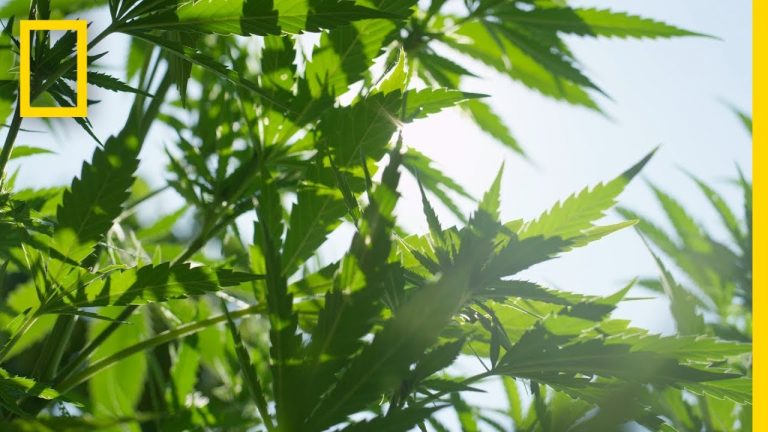
Data seems to indicate, older marijuana users are more productive. Research conducted in states where marijuana is legal found that users aged 51 and older experienced a significant reduction of pain and an increase in their work productivity.

The study, conducted by the John Hopkins Bloomberg School of Public Health and Temple University, looked into the effects of marijuana legalization in labor and work environments. The research had a particular focus on older adults,  a sector that is often ignored in most medical marijuana studies and who could theoretically reap the majority of benefits of medical marijuana treatments.

The survey was conducted in over 100,000 patients over the age of 51 who qualified for medical marijuana programs. Subjects reported a 4.8 percent decrease in pain and a 6.6 percent increase in “excellent health.” Researchers concluded that medical marijuana in legal states increases productivity in full time jobs, with the positives outweighing the negative side effects of legalization.

RELATED: 5 Ways Cannabis Can Improve The Life Of Seniors

“Three principle findings emerge from our analysis: First, active state medical marijuana laws lead to lower pain and better self-assessed health among older adults. Second, state medical marijuana laws lead to increases in older adult labor supply … Third, the effects of medical marijuana laws are largest among older adults with a health condition that would qualify for legal medical marijuana use under current state laws,” reveals the study.

These results are promising for marijuana legalization, especially now that people are expected to work more and that retirement age is being pushed back significantly. According to a survey conducted by the AARP, financial stress is at an all time high, with half of respondents having trouble sleeping at night because of their debts and worries. 11 percent of them believe that they’ll have to continue to work well past their 80s. Yay, legal marijuana?

Don't Miss Your Weekly Dose of The Fresh Toast.

Stay informed with exclusive news briefs delivered directly to your inbox every Friday.

We respect your privacy. Unsubscribe anytime.