Saturday, December 27, 2025
Home Blog Page 757

Cannabis Bills Filed In Missouri And Texas

The 2019 Legislative session for the state of Texas is about to start, and when it does, 12 bills among the pre-filed selections will focus on marijuana legalization for medical use. Of those bills, the two which hold primary focus are SB90 and HB209. SB90 would allow doctors to prescribe marijuana as they do any other drug useful for the treatment of an illness or for pain management assistance. Meanwhile, HB209 is related to the legalization of medical marijuana and the use of homegrown marijuana for medical treatments.

Texas remains one of the few holdout states when 33 others have legalized some form of marijuana. Federal law still categorizes the drug as a Schedule 1, but with the legalization of hemp with the 2018 Farm Bill, marijuana advocates are hopeful that the tides are changing related to federal classifications and related prohibition as well.

Various patients who live in Texas are hopeful that the bills will pass if only to allow them easier access to a drug treatment option that has proven very effective for issues from anxiety to chronic pain.

RELATED: What States Will Legalize Marijuana In 2019?

Efforts to legalize marijuana for medical treatment made a major step forward in 2015 when a bill sponsored by former nurse and State Rep. Stephanie Klick passed the House on a vote of 108-38. The bill permits products with high levels of CBD and low levels of THC to be used, primarily by residents who have epilepsy and are not responding to other legal forms of medical treatment.

Source: https://grizzle.com/medical-marijuana-legalization-texas/

Texas Cannabis Report

Texas legislators begin their 2019 legislative session on Tuesday this week with over a dozen cannabis-related bills having already been filed for consideration.

With eight pieces of legislation in the House, five in the Senate, and possibly more in the works, there will be no shortage of items to discuss before the session ends on May 27, 2019.

Topics include marijuana penalty reduction, changing how concentrated forms of cannabis are measured for legal charges, legalizing whole plant medical cannabis, affirmative court defenses for medical patients, hemp legalization, and adult consumption legalization.

Read more at http://txcann.com/legislative-session-to-begin-with-over-a-dozen-cannabis-bills/

Missouri  

News Leader

Over the next 12 months, the state Department of Health and Senior Services has the job of implementing Amendment 2, which brought medical marijuana to the Show-Me State after a big win at the ballot box Nov. 6.

That work is already happening. On Monday, the department will start taking application fees for dispensary, manufacturing and cultivation licenses. It is to start taking completed applications in August, so licenses can be awarded later this year. The amendment requires that licenses go out no later than Dec. 31.

The goal is to set up a system of nearly 200 dispensaries, spread evenly through all parts of Missouri, that qualifying patients can use to access legal marijuana for health treatment.

RELATED: Missouri Police Not Sure How They Will Deal With Medical Marijuana

If the number of Oregon-based companies hiring registered Missouri lobbyists since November is any guide, state-regulated medical cannabis promises to be a strong business opportunity here, as it has been elsewhere.

Meanwhile, lawmakers are slated to get back to work in Jefferson City on Jan. 9. During the off-session, legislators have been pre-filing bills on a long list of topics. Ten of them cover marijuana in some way, some more directly than others.

Here’s a roundup of those bills, recapped by the News-Leader from bill language posted online by the Missouri House and Senate. They’re listed in order of the date they were submitted, according to LegiScan and the legislature’s websites.

Lawmakers haven’t taken any action yet. These bills would need to be passed by majorities in both houses of the legislature, then signed by Gov. Mike Parson, to become law.

Source: https://www.news-leader.com/story/news/local/ozarks/2019/01/05/10-weed-laws-amendment-2-missouri/2433194002/

Two bills propose affirmative action for marijuana license applicants

Senate Bill 2: Requires the Department of Health and Senior Services to make certain considerations when granting medical marijuana licenses and certifications.

This bill was pre-filed Dec. 1 by Sen. Shalonn Curls, a Kansas City-area Democrat. It would require state government to give a 10-percent scoring bonus when evaluating marijuana license applications from companies owned by women or minorities. The Department of Health and Senior Services will begin evaluating applications for those potentially lucrative dispensaries, cultivation and manufacturing licenses beginning in August — eight months after it starts taking the application fees. Then, the state has until Dec. 31 to award licenses, per Amendment 2. This Senate bill also requires state government to “take into consideration” policies maintained by local governments that promote businesses owned by women and folks of minority backgrounds.

A similar bill, House Bill 440, was filed Jan. 3 by another Kansas City-area Democrat, Rep. Barbara Washington. Its text was not posted online as of Saturday afternoon.

Controlled substances including CBD, marijuana, opiates

Senate Bill 6: Modifies provisions relating to controlled substances, including the Schedules and criminal provisions involving controlled substances.

This bill was pre-filed Dec. 1 by Sen. David Sater, a Republican representing parts of Barry, Lawrence, McDonald, Stone, and Taney counties. It updates Missouri law regarding drugs placed on controlled-substance schedules. The schedules list opiates, “bath salts” and other drugs prohibited by law. The bill changes criminal penalties to include fentanyl. Part of the bill language relates to CBD products, should the federal government make more of them legal in the future. That’s significant because in June, the federal government approved a CBD drug for epilepsy for the first time. Meanwhile, the yearly farm bill signed by President Trump on Dec. 20 took hemp off the list of controlled substances.

Increased penalties for selling heroin

Senate Bill 93: Increases penalties for the distribution of heroin.

If this bill passes, it would increase penalties for selling heroin that are listed alongside penalties for illegal sales of marijuana and other substances. Street sales of 35 grams or more of marijuana outside of the Amendment 2 system will still carry significant criminal consequences. This bill was introduced by Sen. Scott Sifton, a Democrat from St. Louis County.

Legalizing marijuana, with limits

House Bill 157: Establishes provisions regarding the limited legalization of marijuana.

Three days before Amendment 2 took effect on Dec. 6, Rep. Brandon Ellington, a Kansas City-area Democrat, pre-filed a bill that would legalize marijuana for Missouri adults 21 and older. But like Amendment 2, HB 157 would come with some strings: Under this bill, adults could sell and transport up to two ounces of cannabis. They could have six plants per person, provided only three of the plants are mature, flowering ones. The plants would have to stay in the “interior” of a residence; you wouldn’t be able to grow them outdoors on the family farm.

The bill prohibits the sale of marijuana plants, along with driving under the influence of marijuana, and it allows landlords to prohibit marijuana-growing on their property. It also allows employers to restrict marijuana use among employees and forbid weed in the workplace. It prohibits government from denying any service or program to someone due to marijuana activity that this bill would make legal.

Prohibiting Missouri from sharing medical marijuana registry with feds

House Bill 238: Prevents the state government from sharing medical marijuana user or registry info with the federal government.

Introduced Dec. 13 by Rep. Nick Schroer, a St. Charles County Republican, this bill is short. Privacy advocates and libertarians might find it sweet, too.

“Notwithstanding any other provision of law to the contrary, no state agency shall disclose to the federal government the statewide list of persons who have obtained a medical marijuana card,” the bill states.

It contains just one more sentence, making any violation of the proposed law a Class E felony.

Expunging marijuana offenses

House Bill 292: Requires the court to expunge certain marijuana offenses.

Introduced Dec. 18 by Washington, the Kansas City-area Democrat, this bill would require Missouri courts to expunge marijuana possession convictions — for 35 grams or less — provided the convictions came after Dec. 31, 1997 and before Aug. 28, 2019. After Aug. 29, possession for convictions would be expunged on the date of the conviction.

Expunging marijuana offenses for people who have patient cards

House Bill 341: Allows certain marijuana-related offenses and violations to be expunged if the offenses or violations occurred in Missouri prior to the issuance of a patient identification card.

Introduced the day after HB 292, this bill from Rep. Ron Hicks, a St. Charles County Republican, would expunge marijuana misdemeanors from the records of those with medical cannabis patient cards, so long as the misdemeanor was entered before the patient was approved for the card. The bill allows for just one expungement per cardholder.

This article originally appeared on Green Market Report.

Migos Deny Stealing ‘Walk It Talk It’; Watch R. Kelly Celebrate His Birthday At Chicago Nightclub Amid Controversy

Migos Deny Stealing “Walk it Talk It” From Rapper

theJasmineBRAND exclusively reports, Migos is denying that ripped off their hit single ‘Walk It Talk It’. Founded in Lawrenceville, Georgia, in 2008, the group is composed of three rappers known by their stage names Quavo, Offset and Takeoff.

“Walk It Talk It” is featured on the trio’s third studio album, Culture II (2018). After the album’s release, it debuted at number 18 and later peaked at number 10 on the Billboard Hot 100 after its release as the third single.

The group recently responded to the case filed by a musician named Leander C. Pickett who goes by the rap name M.O.S.. He claims that he released a song by the same name as the Migos hit back in 2007, way before the band did in 2018.

RELATED: Police Find Exactly 420 Grams Of Marijuana On Migos Tour Bus

Take a listen to M.O.S.’s track below.

Take a listen to Migos’ track below.

The group’s legal team states that the musician has not shown one “substantial” similarity in songs and can’t prove any of the band members came into contact with his work at any point.

Migos lawyer points to the musician suing filed to copyright months after his client released their song. They will request the lawsuit be dismissed.

R.Kelly Celebrates Birthday At Nightclub, Tells Clubgoers: “I don’t give a f*ck what’s going on!”

Singer R. Kelly has managed to come and go as he pleases as a free man for many decades amid accusations of child molestation, sexual assault, and holding women against their will in a sex cult. He, apparently, isn’t hiding from the public to this day. Lifetime’s “Surviving R. Kelly” documentary aired many instances of his predatory behavior, sparking masses of people – even celebrities – to #MuteRKelly. But, the singer had a clear message for those naysayers at Club V75 in Chicago last night (1/09/2019).

After singing the a capella opening to his 90’s hit, “Bump and Grind,” R. Kelly shouted this to the clubgoers:

https://www.instagram.com/p/BsdSI2Vlu-8/

Both he and the party people of Chicago seemed to be obliviously enjoying themselves.

https://twitter.com/CMartinezTB/status/1083278266646102017

Meanwhile, Chicago’s CBS affiliate recently reported that the local police department performed a “business check” at his studio where captives are allegedly being held, after they received reports that a party was held there for his 50th birthday.

Frank Ocean On His Skincare Regime Making Him Feel Beautiful & How “Love & Hip Hop” & MSNBC Are Similar 

Frank Ocean hasn’t released music since 2016, but he has found a way to remain a private, but visible entity within entertainment. One way, was during the midterm elections. Ocean offered free merchandise to fans in swing states who could prove they voted.

As fans still await new music from the artist, he has given an interview (to GQ) as a brief update to what’s been going on in his life. He shares how uses social media as an advantage, his skin care routine, why he decided to make his Instagram public, and why he moved to New York. Check out a few excerpts below.

https://www.instagram.com/p/BsdBaBtFgb5/

Why he decided to put his Instagram on public:
 I feel like there was dissonance between how I was seen by the audience and where I was actually, so that contributed to the decision to make my Instagram public, for sure. But there’s also the idea of dialogue and discourse and conversation—like theater where the audience can interrupt you versus the television.

How he uses social media to his advantage:

That dissonance—the word being a big container for what I was feeling…the way I was seen was not even close to correct. It’s still not correct, either.

With some pop stars, the idea of them is maybe more balanced or fully formed: a half-dozen magazine covers, x amount of interviews, a daily influx of media. There’s a way you wanna be in the visual press, although you could potentially be misrepresented; when you’re completely minimal with media, there’s a lot of pressure on whatever one thing you’re doing, the stakes are higher. Social media helps that, ’cause you’re fully in control and can message that how you want.

RELATED: Why Frank Ocean Is The Perfect Star For Our Digital Age

How he feels about living in New York:

In New York, it’s the first time in a minute that I’ve had my own space that’s not a hotel and not some rented home, where everything around me is mine, and that’s been really cozy and comfortable this past year.

His skin care routine:

Man, listen…some days, like today, I feel very beautiful. But some days, like in the winter, when I wear a lot of knit hats, my skin doesn’t like that. My mom told me years ago that you gotta get somebody to stitch the silk inside the lining of the cap so it doesn’t irritate your skin, ’cause your skin is sensitive. I didn’t listen to my mom, but I really do believe in a night cream. I feel like men just go to sleep. They may wash their face or they don’t even bother—they go to sleep with the day face on. You really need to do a gentle wash and put a night moisturizer on. You can’t have the retinol in your creams in the day because it makes you more sun-sensitive, so you wanna throw that on at night. I need the night cream because when I wake up I feel very beautiful, moisturized and ready to have people making eye contact with me, ready to look above my eyebrow, below the eyebrow. [laughs] That’s the life hack right there. It’s been all these years, and Pharrell still hasn’t given us the keys yet. He just says “exfoliate,” but it’s not just “exfoliate”: We need more keys.

His favorite vices:

Maybe my vice is that I watch way too much TV news. I know that I’m not getting real information, but I still watch it. I wish my vice was VH1 reality-TV shows, but it’s not—it’s MSNBC. MSNBC is Love & Hip Hop with better vocabulary and more range, but it’s the same thing. Very much entertainment.


DSW Shoe Chain To Sell CBD Personal Care Products

Green Growth Brands (CSE: GGB) (OTCQB: GGBXF) has capitalized on its prior relationships with the DSW (NYSE: DSW) shoe chain to reach an agreement to sell its Seventh Sense Botanical Therapy brand at select stores in the U.S.

DSW stands for Designer Shoe Warehouse and the company has 515 warehouses in 44 states. Many of the Green Growth executives previously worked at DSW, so the relationship between the two has been expected. Accessories, including beauty and wellness products, is a growing category for DSW and the company said that it will continue to be a component of its growth strategy.

RELATED: 5 Ways To Incorporate Effective CBD Products Into Your Everyday Life

The agreement is for 54,960 units and covers sales in 96 U.S.-based DSW stores. The Seventh Sense brand offers  CBD-infused products including muscle balms, body lotions, body washes and foot creams. The two companies tried a test phase last autumn in which Green Growth Brands sold select Seventh Sense products in 10 DSW stores. Green Growth said that during the first 10 weeks of the test period, 74.4% of product presented on shelves was sold, significantly exceeding expectations.

“DSW is the number one full line adult footwear specialty retailer in North America1,” said Peter Horvath, CEO of Green Growth Brands. “They have revolutionized shopping for shoes and accessories and we are thrilled they chose to partner with our company, allowing us to introduce a new product category to their customers.”

RELATED: 5 Spas That Use CBD Topicals For Holistic Well-Being

“The Agreement, and the deepening relationship with DSW, is the first step in our strategy to expand sales of personal care CBD products through external partnerships, in mall kiosks, and through a growing number of stores and online,” added Horvath.

“We have seen recent shifts in consumer behavior accelerate changes in the retail industry,” said Roger Rawlins, CEO of DSW Inc., “North America’swidespread adoption of the use of CBD products is one of the best examples of these shifts, and we could not be more excited about our partnership with Green Growth Brands and the introduction of their products to our customers.”

This article originally appeared on Green Market Report. 

Creepy Crackdown On Netflix Password Sharing May Be Coming Soon

0

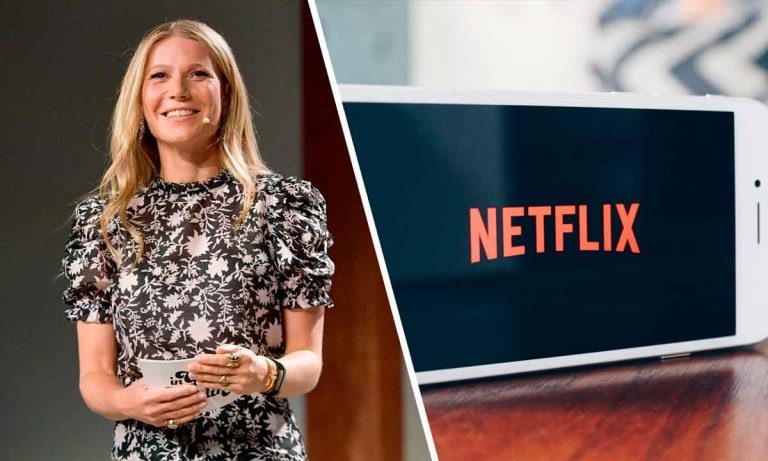
If you’re not sharing your Netflix password, are you really watching Netflix? Sharing your streaming passwords is as common as binge watching your favorite show. But one of our society’s last bastions of internet freedom could soon come to an end, Big Brother style.

At CES 2019 in Las Vegas earlier this week, video software provider Synamedia unveiled a new AI-based service designed to crack down on password sharing. This means your mom, dad, aunt, second cousin, significant other, roommate and anyone else you’ve let dip into your account will need to be cut off.

RELATED: Netflix Addiction Is Real And Clinics Are Addressing The Disease

According to a recent press release:

For example, the solution can determine whether users are viewing at their main home and a holiday home, or whether they have shared credentials with friends or grown-up children who live away from home.  If the latter, then subscribers are offered a premium shared account service that includes a pre-authorized level of password sharing and a higher number of concurrent users.

“Using AI, behavioral analytics and machine learning, Synamedia Credentials Sharing Insight identifies, monitors and analyzes credentials sharing activity across streaming accounts,” says the press release. “Real-time dashboards highlight unusual sharing activity including alerts and trend analysis.”

Recent research suggests roughly 26 percent of millennials share their streaming passwords with other people, a practice the market research company Parks Associates estimates to be worth around $10 billion by 2021.

RELATED: You’ll Definitely Want These 5 Cool Tech Items From CES 2019

But this new software won’t just be able to track down small time crooks, like your friends and family; it can also be used to detect and shut down large-scale, for-profit credentials sharing accounts.

https://www.instagram.com/p/BsR3X4iAHu3/

Says Synamedia CPO Jean Marc Racine:

Casual credentials sharing is becoming too expensive to ignore. Our new solution gives operators the ability to take action. Many casual users will be happy to pay an additional fee for a premium, shared service with a greater number of concurrent users. It’s a great way to keep honest people honest while benefiting from an incremental revenue stream

Synamedia says its AI has already begun trials.

New 420 Bill Would Regulate Marijuana Like Alcohol

A federal lawmaker who vowed last year to get the ball rolling to end federal marijuana prohibition in the 2019 legislative session is already making strides to get it done. Representative Earl Blumenauer of Oregon, one of the founders of the Congressional Cannabis Caucus, has introduced what is being referred to as the “420” bill, which is designed to eliminate marijuana from the confines of the Controlled Substances Act and allow it to be taxed and regulated like alcohol. It’s the first step to full-blown legalization nationwide, and to taking the cannabis industry to the next level.

Although it sounds like the kind of fake news the cannabis community might find in their social media feeds on April Fool’s Days, the proposal has, in fact, been filed as H.R. 420 (aka “Regulate Marijuana Like Alcohol Act). It calls for marijuana regulation to overseen by the Bureau of Alcohol, Tobacco, Firearms and Explosives and essentially opens up the cannabis trade to becoming part of American commerce.

RELATED: Kamala Harris Now Supports Marijuana Legalization And Ending War On Drugs

“While the bill number may be a bit tongue-in-cheek, the issue is very serious,” Blumenauer, told Willamette Week. “Our federal marijuana laws are outdated, out of touch and have negatively impacted countless lives. Congress cannot continue to be out of touch with a movement that a growing majority of Americans support. It’s time to end this senseless prohibition.”

This move is precisely what some cannabis advocates have been fighting for all of these years, yet others would prefer to see it go legal with fewer regulations – like tomatoes. But like it or not, this is where marijuana legalization is heading in the United States. It was never going to shake out any other way, certainly not in a manner that treats weed like a vegetable. There is just too much money to be made in the inebriation sector – some predictions put the market at $80 billion by 2030 — and let’s face it capitalism and corporate greed have been humping it out too heavy for too long to have it any other way.

RELATED: Minorities Accounted For 90% Of New York Marijuana Arrests In 2018

Representative Blumenauer introduced his “Blueprint to Legalize Marijuana” to Democratic leadership in October of last year. His plan, according to the document, was to take advantage of Democratic control is the House of Representative by taking steps to end prohibition by the end of the year. This would begin with a series of proposals to legitimize marijuana banking and provide veterans with hassle-free access for medical use. The big guns were not supposed to come out until around September.

There is a lot of hope that Congress will take the marijuana issue seriously in 2019. Many believe that the recent changes on Capitol Hill will allow the issue to fit in more with legislative agendas and become the subject of an honest debate. One thing is certain, we will get to gauge the Hill’s enthusiasm for legal weed a little easier now with the early introduction of the 420 bill. The measure will either earn the support necessary to give nationwide legalization a fair shot in the coming months, or it will become the poster child for legislative hype, much like the CARERS Act and STATES Act did during their respective 15-minutes.

Lady Gaga Apologizes For Collaborating With R. Kelly; The Moment Nicole Kidman Knew Keith Urban Was ‘The Love Of My Life’

0

Nicole Kidman knows the moment she knew Keith Urban was ‘the love of my life’

Nicole Kidman had known Keith Urban for less than six months when she knew.

“It was my [38th] birthday, and he stood outside with gardenias at 5 a.m. on my stoop in New York,” Kidman, 51, tells PEOPLE exclusively in this week’s cover story.

“That is when I went, ‘This is the man I hope I get to marry.’”

Urban, 51, took her to Woodstock, N.Y., the site of the 1969 music festival, on a motorbike for a getaway (“My kind of guy!” she says), and she’s never looked back.

RELATED: Cannabis Cream Saving Celebs On Red Carpet This Awards Season

“It was pretty intense,” says Kidman, whose gritty drama Destroyer will be released wide this month. “I believed by that point he was the love of my life. Maybe that’s because I am deeply romantic, or I’m an actress, or I have strong faith as well, but I just believed, ‘Oh, okay, here he is.’”

The two married a year later at a romantic wedding in Manly, Australia, and have since settled down in Nashville, where they’re happily raising their two daughters, Sunday, 10, and Faith, 8.

For his part, Urban was always equally smitten with his Oscar-winning bride. He tells PEOPLE, “I could sum up Nic as a wife, mother and human being in three words: She’s all heart!”

Lady Gaga apologizes for collaborating with R. Kelly back in 2013

Lady Gaga collaborated with R. Kelly on “Do What U Want,” and she also defended him publicly, telling journalists:

“R. Kelly and I have sometimes very untrue things written about us, so in a way this.”

Melissa McCarthy says ‘blood drained out’ of her when interviewer asked about her ‘tremendous size’

The 48-year-old actress recalled several times reporters’ comments made her feel uncomfortable. Specifically, McCarthy said she’s constantly been prodded about her body — a subject, she points out, that men don’t often face.

“I do remember another interview I did for ‘Bridesmaids’ with somebody who later lost his job for a conversation he had on a bus with someone else. I won’t mention names, but just think about it. He kept asking, ‘Are you shocked that you actually work in this business at your tremendous size?’” McCarthy, who credits the 2011 romantic comedy for helping boost her career, told InStyle magazine.

RELATED: 8 Celebs Who Were Food Shamed For No Good Reason

“He kept asking, ‘Are you shocked that you actually work in this business at your tremendous size?’”

At that moment, McCarthy said “all the blood drained out of [her]” but she kept her composure as cameras rolled.

“I thought, ‘With my tremendous size, I could tackle you so quickly.’ There were two cameras on him, and one was on me, and he went back to that question three or four times,” she added, noting these types of questions “happen all the time.”

“…It’s fascinating because they don’t do it to men. Not to be a jerk or single him out, but when John Goodman was heavier, did anybody ever talk about his girth?” McCarthy asked.

https://www.instagram.com/p/BsbaxH3BvKp/?utm_source=ig_embed

CES Bans Marijuana Products At Convention, Pax Pushes Back

Every year CES shows off the latest developments and products from the tech and electronics world. What consumers won’t find at the annual trade show, however, is the new gadgets and equipment from the world of cannabis. Though CES takes place in Las Vegas, where adult-use cannabis is legal, the trade show has a ban on marijuana.

According to Barron’s, a CES spokesman said cannabis and e-cigarette products simply don’t have a category on the trade show floor. Hence the ban. That leaves a company like PAX Labs in a tough spot. As PAX Labs CEO Bharat Vasan told me, the company wishes to brand itself as the “Apple of Marijuana.”

RELATED: How PAX Plans To Truly Become The ‘Apple Of Marijuana’

But how can you be the Apple of anything when you can’t display your product at one of the most vital tech conventions in the country? Let alone one residing in a state with legal marijuana? Though PAX Labs will maintain a presence at CES, the full product can only be sampled at a nearby dispensary, Barron’s reports. Placebo pods, with flavors like blueberry cheesecake, will instead be on display at official CES events.

“We are a technology company in the pot field,” Vasan told Barron’s. “We want to bring more and more acceptance to the field.”

RELATED: Sorry, But Malcolm Gladwell Is Plain Wrong About Marijuana

PAX Labs spokesman Jeff Brown also revealed the company intends to work directly with CES ahead of next year’s convention to allow more inclusivity for the cannabis industry. Brown did confide he finds the CES ban on cannabis products “odd” due to the plant’s legal status in the state. And, as he told Barron’s, “there’s no shortage of beer, wine and alcohol poured and consumed at CES.”

PAX Labs is far from hurting. The San Francisco-based company closed a $20 million round of funding last October and could soon enter another round of funding. Vasan told Barron’s PAX Labs could be headed to a potential IPO in the near future.

Everything You Need To Know About TikTok, The Next Big Social Media App

Never heard of TikTok? What about Vine? If you’re familiar with the latter, TikTok is very similar to the dearly departed app. But with more controversy.

Launched in 2017, TikTok is a Chinese invention that rapidly became a viral sensation, accumulating over half a billion users in that short amount of time, beating out Twitter, Snapchat and having more downloads than Facebook and Youtube.

Its parent company, ByteDance, is now valued at $75 billion. This makes it the most valuable startup ever, beating the likes of Uber, Airbnb, and hundreds of other famous and long lasting companies.

RELATED: Gen Z Teens Are Ditching Their Smartphones For Flip Phones

TikTok functions similarly to Vine in that it consists of 15 second videos that are recorded and uploaded by users, who are mostly teens (aren’t they all?). The app’s layout is simple: each user has a timeline, a search function and some hashtags where they can find popular and new content. TikTok has been recognized as a “joyful” and positive app, highlighting goofier content that ranges from lip sync videos to memes and dance challenges. So, it’s basically Internet humor at its best.   

Despite the app’s huge popularity, it has encountered some controversy. An investigation conducted by Motherboard found that there’s a community of users who request explicit videos and content from minors, with a few bios requesting nudes, such as this one spotted by Motherboard:

(guy) looking for vids and nudes, and add me to groups I share vids

Charming.

Although abusers and trolls have always found ways to sneak into all sorts of social media sites, TikTok has a thriving community of children and teens and less security measures than its competitors. “When a young girl dances in skimpy clothes or imitates sexy dances, you’re sure to find people in the comments either asking them to continue making these kinds of videos, saying they’re sexy or asking for their Snapchat or DM,”  YouTuber Le Rois des Rats tells The Times.

RELATED: Instagram Adds New Feature That Detects Bullying And Hateful Content

As a response to these criticisms, TikTok has started a community well-being series with the purpose of educating users on how to use the app’s filters and security measures.

All in all, TikTok sounds like a good app that may or may not have some staying power. Still, social media and kids aren’t always a good mix, especially if the platform in question relies on video content.

The Battle Between Gun Ownership And Medical Marijuana In Conservative States

Marijuana is now legal for medicinal use in more than 30 jurisdictions across the United States. Unfortunately, for the gun owners who participate in these legal programs, this means forfeiting the right to bear arms. It’s one of many downsides stemming from conflicting state and federal cannabis laws.

Uncle Sam is of the opinion that as long as a person chooses to disregard the government’s anti-pot policies, they should no longer have the same freedoms as everyone else when it comes to the liberties contained in the Second Amendment. But there is some hope that the plight will eventually be hashed in the courts, according to a recent report from Cannabis Wire.

A guidance letter from the Bureau of Alcohol, Tobacco, Firearms and Explosives (ATF) indicates that any person who “admits” to using cannabis must surrender the right to purchase firearms. A person really only has two options in this matter: They can just forget about owning a gun or simply lie on the federal form that asks, “Are you an unlawful user of, or addicted to, marijuana or any depressant, stimulant, narcotic drug or any other controlled substance?”

RELATED: Your Guns Or Your Ganja? The Choice Is Yours

But many are concerned that fibbing could cause them to encounter the wrath of federal law enforcement, which is something that most people would rather avoid. As it stands, nobody has been busted for lying, but it could happen. And so far ATF officials have not clarified their intentions on this subject.

There is a federal lawsuit happening right now that could help sort out the situation. It is one involving a Pennsylvania medical marijuana patient by the name of Matthew Roman, who claims his Second Amendment rights were violated as soon as he was refused a gun based on his admission of participating in the state’s medical marijuana program. The outcome of this case is being monitored closely by cannabis advocates nationwide, as more conservative states are moving toward legalization. Gun ownership is up across the board, so it stands to reason that this issue is becoming more problematic.

Legal experts argue that medical marijuana patients should not have to choose between weed and guns and that it should be no different than prescription drugs.

RELATED: Former NRA President: Let Medical Marijuana Patients Have Guns

“While you may be increasing some sort of a problem with society with recreational use, you’re clearly not with medical marijuana use,” said John Weston, a Philadelphia-based attorney handling Roman’s case. “You’re perfectly legal treating yourself with Ambien or Percocet, and even though those are far more dangerous drugs, they don’t deprive you of any constitutional rights.”

In many cases, traditional gun-totters like veterans and hunters are simply opting out of medical marijuana programs because they do not want any snags with gun ownership. This leads them treating their health conditions with prescription painkillers and anxiety medication, all of which can lead to addiction issues and overdoses. Therefore, cannabis advocates are hoping to see some clarity on this issue through the courts. Yet, it could be years before a decision is made.

Still, legal experts say that the only way to combat this debacle is for Congress to eliminate cannabis from the confines of the Controlled Substances Act. Once it is legal at the federal level, guns and weed will go hand in hand.

Minorities Accounted For 90% Of New York Marijuana Arrests In 2018

Though marijuana arrests in New York City in 2018 dropped by more than half of 2017’s totals, the racial disparity of those marijuana arrests have never been more glaring. According to statistics from the Mayor’s Office of Criminal Justice, 89 percent of those arrested for smoking marijuana were either black or Hispanic while whites comprised only 7 percent of the arrests.

The de Blasio administration addressed the figures in a statement, admitting more need to be done to address criminal justice reform.

“This administration has taken a dead aim at disparity by dramatically reducing marijuana arrests, and developing a plan for legalization that aims to right historic wrongs,” said mayoral spokeswoman Olivia Lapeyrolerie. “But it’s naïve to think that an issue as old and complex as this can be unraveled and solved by the snap of anyone’s fingers.”

“It’ll be a challenge that this administration, the next administration and those who follow will have to constantly focus on—and we will continue to do so,” she added.

RELATED: New York Gov Pushing Marijuana Legalization In 2019

According to the New York Daily News, total marijuana arrests for 2018 sat at 7,348 as of Nov. 23. This represented a dramatic decrease from the previous year, as there were 17,121 marijuana arrests in 2017.

Last year, de Blasio announced plans to overhaul the NYPD’s procedures regarding marijuana arrests. In most cases, those caught with marijuana receive a ticket that carries a maximum fine of $100. However, those with past convictions or arrests will still be arrested by the NYPD. As the New York Times wrote when the plan was announced, “because it exempts from the no-arrest policy certain people with criminal records, many of them black, it is unlikely on its own to shift the focus of marijuana enforcement away from the nonwhite New Yorkers who have for decades been the targets of arrests.”

The numbers released this week support that hypothesis and drawn blowback from City Councilman Rory Lancman, a longtime critic of the de Blasio administration’s lack of criminal justice reform.

“People of color are over-policed and disproportionately brought into the criminal justice system for low-level offenses,” Rory Lancman said Monday, according to the New York Daily News.

RELATED: Will Legal Cannabis Save New York’s Subway?

Lancman asserted that the city must do more to protect minorities. While prior arrests or convictions exclude citizens from receiving a summons for marijuana possessions, other exceptions include smoking while smoking or seated in the driver’s side of the car. In addition, if a person cannot recall their ID or address, police may pursue an arrest.

“We’ve created a world where a stunning number of people of color have some criminal justice involvement,” Lancman told the New York Daily News. “The pool of people who are going to get arrested are more heavily black and Latino to begin with.

“We are policing marijuana use in communities of color more aggressively than we are in white communities,” he added. “That has not changed.”

Don't Miss Your Weekly Dose of The Fresh Toast.

Stay informed with exclusive news briefs delivered directly to your inbox every Friday.

We respect your privacy. Unsubscribe anytime.