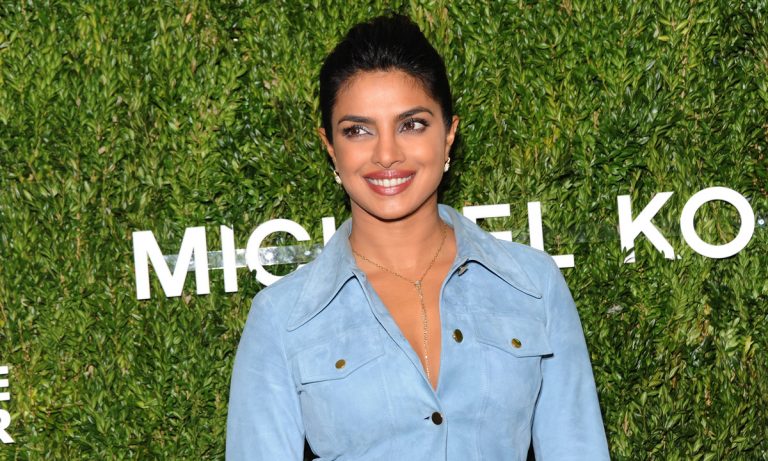
“This is the first time I was comfortable with being with someone who is such an incredible partner, so it just felt natural,” Chopra told PEOPLE at the Bumble India launch on Monday (the actress is an investor in the company). “And plus there was a ring on it! I always said that when there’s a ring on it I’ll talk about it because you’re single until you’re married.”
“I’ve never been public about my relationships. But that was a decision I took when I was very young,” Chopra explained. “Especially in entertainment because women have such public lives, we always end up being reduced to a plus one or ‘blahblahblah’s’ girlfriend. And I wanted to give myself enough time where I’m able to stand on my own two feet and have my identity as well.”
Dewan’s new fling is Broadway actor and singer Steve Kazee. Dewan and Kazee have been dating for a couple of months now, and if their romance were a musical, it would be scored with peppy music. “[Jenna’s] really happy,” said a source close to the dancer and actress.
The duo was allegedly spotted together at the Casamigos Halloween party in Beverly Hills, where they “showed off PDA.” Then, on October 29, Dewan and Kazee had a festive date at the Los Angeles Haunted Hayride. Already celebrating Hallloween together, eh? Must be serious!
In the meantime, Channing is reportedly dating singer Jessie J, who — again, just sayin’ — bears some resemblance to his ex. Here’s evidence.
The singer is ready to keep fighting her addiction, with the 26-year-old planning to stay in rehab ‘for the remainder of the year’ according to ET Online.
‘Demi is thankful she’s still alive and is doing whatever she can to never get to that point again,’ a source told the website Tuesday. Demi recently celebrated 90 Days of sobriety.
November’s new moon is occurring on the 7th, landing in Scorpio. And according to astrology, it’s a perfect time to embrace the dark and bright aspects of your life, because it encourages you to do some clean up in order to kick off the month with positive vibes.
Elite Daily explains that new moons in Scorpio bring out the lightest light and the darkest dark, which sounds confusing, but sort of understandable. It’s a very intense mix of energies, lending itself for meditation and introspection. Bustle compiled a list of meditations that pair perfectly with November’s new moon. Check out 5 of our favorites:
This guided meditation is all about helping you let go of things that are angering you and holding you back, encouraging you to forgive those that have hurt you. Even if you think you’re over something on a surface level, this meditation was built in order to help people heal wounds and issues they may still exist on your subconscious.
Self love
This 10 minute guided meditation encourages you to face your personal problems and embrace them, encouraging you to come to terms with your past, the issues you’ve faced, and the things you’d like to accomplish in the near future.
Dealing with conflict
This short guided meditation encourages you to face the conflicts you’ve had with important people in the past, especially those that still weigh on you. This meditation encourages you to calm down, especially during the times when you feel like your emotions are getting the best of you.
This three hour meditation helps you let go of negative vibes and embrace peace and relaxation. Since it’s so long and relaxing, it’s a great way to let go of the day and help you go to sleep.
New moon
This meditation was designed for new moons, encouraging change and manifestation, helping you visualize your goals and how you can achieve them.
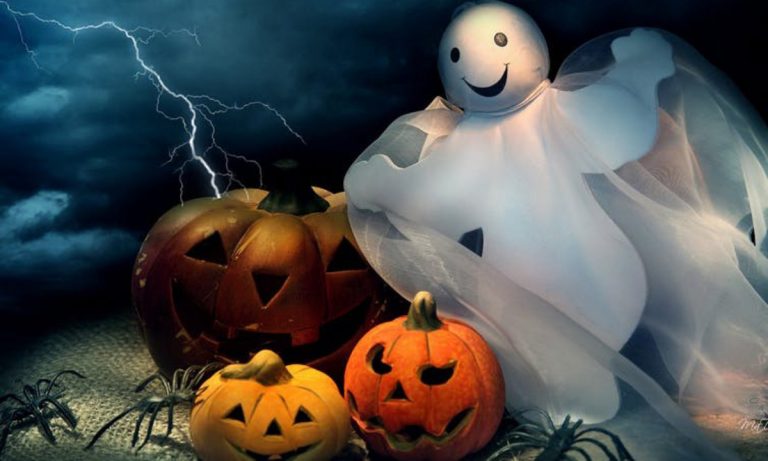
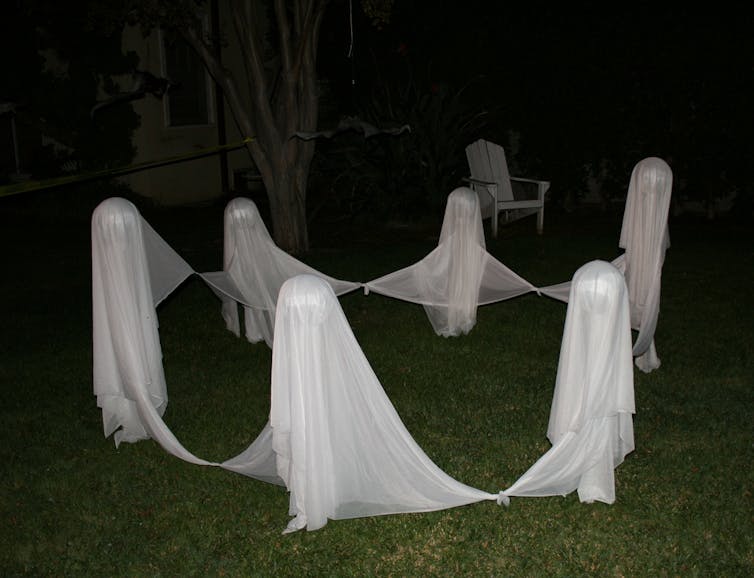
Halloween is a time when ghosts and spooky decorations are on public display, reminding us of the realm of the dead. But could they also be instructing us in important lessons on how to lead moral lives? Here is how believing in ghosts can make you a better person.
Roots of Halloween
The origins of modern-day Halloween go back to “samhain,” a Celtic celebration for the beginning of the dark half of the year when, it was widely believed, the realm between the living and the dead overlapped and ghosts could be commonly encountered.
In 601 A.D., to help his drive to Christianize northern Europe, Pope Gregory I directed missionaries not to stop pagan celebrations, but rather to Christianize them.
Accordingly, over time, the celebrations of samhain became All Souls’ Day and All Saint’s Day, when speaking with the dead was considered religiously appropriate. All Saint’s Day was also known as All Hallows’ Day and the night before became All Hallows’ Evening, or “Hallowe’en.”
Christian ghosts
Not only did the pagan beliefs around spirits of the dead continue, but they also became part of many of early church practices.
During the Middle Ages, beliefs around souls trapped in purgatory led to the church’s increasing practice of selling indulgences – payments to the church to reduce penalties for sins. The widespread belief in ghosts turned the sale of indulgences into a lucrative practice for the church.
It was such beliefs that contributed to the Reformation, the division of Christianity into Protestantism and Catholicism led by German theologian Martin Luther. Indeed, Luther’s “95 Theses,” that he nailed to the All Saints Church in Wittenburg on Oct. 31, 1517, was largely a protest against the selling of indulgences.
Subsequently, ghosts became identified with “Catholic superstitions” in Protestant countries.
Debates, however, continued about the existence of ghosts and people increasingly turned to science to deal with the issue. By the 19th century, Spiritualism, a new movement which claimed that the dead could converse with the living, was fast becoming mainstream, and featured popular techniques such as seances, the ouija board, spirit photography and the like.
Although Spiritualism faded in cultural importance after World War I, many of its approaches can be seen in the “ghost hunters” of today, who often seek to prove the existence of ghosts using scientific techniques.
An elaborate model house is being guided into the ocean as an offering to wandering ghosts during the beginning of the Ghost Month Festival in Taiwan. AP Photo/Chiang Ying-ying
Along with many Asian countries such as Japan, Korea, China and Vietnam, Taiwan celebrates a “Ghost Month,” which includes a central “Ghost Day,” when ghosts are believed to freely roam the world of the living. These festivals and beliefs are often tied to the Buddhist story of the Urabon Sutra, where Buddha instructs a young priest on how to help his mother whom he sees suffering as a “hungry ghost.”
As in many traditions, Taiwanese ghosts are seen either as “friendly” or “unfriendly.” The “friendly” ghosts are commonly ancestral or familial and welcomed into the home during the ghost festival. The “unfriendly” ghosts are those angry or “hungry” ghosts that haunt the living.
Role of ghosts in our lives
As a scholar who has studied and taught ghost stories for many years, I have found that ghosts generally haunt for good reasons. These could range from unsolved murders, lack of proper funerals, forced suicides, preventable tragedies and other ethical failures.
Ghosts, in this light, are often found seeking justice from beyond the grave. They could make such demands from individuals, or from societies as a whole. For example, in the U.S., sightings have been reported of African-American slaves and murdered Native Americans. Scholar Elizabeth Tucker details many of these reported sightings on university campuses, often tied in with sordid aspects of the campus’s past.
In this way, ghosts reveal the shadow side of ethics. Their sightings are often a reminder that ethics and morality transcend our lives and that ethical lapses can carry a heavy spiritual burden.
Yet ghost stories are also hopeful. In suggesting a life after death, they offer a chance to be in contact with those that have passed and therefore a chance for redemption – a way to atone for past wrongs.
This Halloween, along with the shrieks and shtick, you may want to take a few minutes to appreciate the role of ghosts in our haunted pasts and how they guide us to lead moral and ethical lives.
Who needs Halloween to binge on scary movies (nothing is scarier than bad acting and even worse hair)? Many of our favorite celebrities of today got their start in these cheesy horror flicks — many of which live solely online. Here are 14 movie stars that would probably like to forget these roles ever existed. When Thanksgiving rolls around, they can all be thankful social media didn’t exist back then.
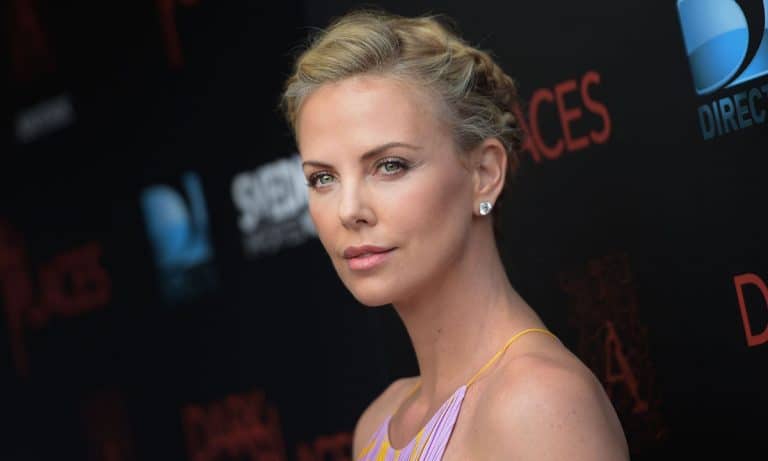
Charlize Theron
“Straight to video” is not a phrase this Oscar winner is accustomed to, but her very first film appearance in Children of the Corn III: Urban Harvest (1995) never saw a theatrical release, which is why it’s so hard to find a clip online. Theron was also uncredited — something she might actually be thankful for today. Here’s some super grainy video of her, lest she forget where she came from.
Eva Mendes
Five years after Charlize Theron took a turn in the fields, Eva Mendes followed-up with the (also) straight to VHS Children of the Corn V: Field of Terror.
Kevin Bacon
Not many people knew Kevin Bacon before Footloose (1984), but he had one of the more dramatic death scenes four years prior in the original Friday the 13th (1980).
Jack Black
Before his breakout role in Shallow Hall (2001), he had an uncredited role as Titus Telesco, who meets an untimely death in I Still Know What You Did Last Summer (1998). Check out that hair!
Leonardo DiCaprio
Who knew back in 1991 that Critters 3 would lead to leading man status for Leo? This “horror” flick was his very first movie appearance.
Johnny Depp
An young, pre 21 Jump Street Johnny Depp got his very first movie gig in a small indy film nobody’s ever heard of called A Nightmare on Elm Street (1984). Back when mullets were hot.
George Clooney
Between leaving his role as hot commodity George Burnett on The Facts of Life and getting cast in Return of the Killer Tomatoes! (1988), Clooney landed his second movie role in the hugely forgettable Return to Horror High (1987). Here he is getting killed off. And he looks good doing it.
Tom Hanks
Right before Bosom Buddies debuted, Hanks got to purge his serious acting chops in the low budget He Knows You’re Alone (1980). It was his very first acting gig on screen. And one that is easily forgotten.
Jennifer Aniston
The year prior to Friends, Aniston starred as Tory Redding, a less spoiled Rachel Green who goes up against an evil leprechaun in what has been called “the worst movie” in her career: Leprechaun (1993). It was her very first credited movie role.
Chloë Grace Moretz
She was only 8-years old when she landed her first movie role as Chelsea Lutz in The Amityville Horror (2005) co-starring Ryan Reynolds as her father. Not a bad first gig.
Julia Louis-Dreyfus
Thank goodness Louis-Dreyfus landed the role of Seinfeld’s Elaine Benes in 1990, otherwise people might still remember her less famous role as Jeanette “the Nymph” Cooper in her inaugural roll in Troll (1986), alongside her real-life husband Brad Hall.
Skeet Ulrich
Before Riverdale (2017), As Good As It Gets (1997), and his breakout role in Scream (1996) there was The Craft (1996), Ulrich’s first credited appearance in a movie.
Renée Zellweger And Matthew McConaughey
This is a twofer. And not really a “start” for either actor. But it’s interesting to note that both Zellweger and McConaughey had roles in Dazed and Confused in 1993 and reappeared the following year n Texas Chainsaw Massacre: The Next Generation. It was the fourth movie appearance for both.
Everyone has a fantasy, it starts when you are developing and grows from there. There is an entire online world given to talking about, theorizing, sharing and pictures. Most are on the dull average side, and some are at bit more “complex”. Here are common sex fantasies according to experts. Sex workers get to know a side of their clients that the world is generally not shared. These professionals get to know hidden impulses of their clients, coming face to face with feelings that their friends or romantic partners don’t get to see.
Forced feminization is the practice where male clients pay to be forced into adopting traditionally female behaviors, such as cross-dressing and taking on a more passive role in sex. “The process would involve humiliation, as the label itself is indicative of emasculation. I’d put these men in bras, panties, sometimes I’d put makeup on them and parade them around in high heels,” explains Dominatrix Aleta Cai.
Male clients interested in this practice come to an agreement with their female escort in order to create a scenario where they’re “forced” to perform sexual acts with men as their escort watches and directs them. According to Kitty Striker, a dominatrix and writer, men get turned on by this fantasy because they get to explore a taboo subject. “I think part of the eroticism is in the forbidden nature of the fantasy for men, who are often pushed into hyper-masculine toxic ideals, but often they hadn’t even considered they could experience this in a way that was affirming,” she explains.
Role plays can involve all sorts of dynamics, typically those where there’s an imbalance of power, such as teacher and student, doctor and patient, or boss and employee. Sex workers explain that these fantasies are so attractive because clients get to explore taboo and potentially dangerous scenarios in a way that’s safe and removed from real life.
Escorts also say that a lot of men are interested in having threesomes with two women, which is not that surprising. “Since they’re attracted to women, obviously the more there are, the better it is for them,” says Hayley Jade. She explains that sometimes men aren’t even interested in participating and are just happy to watch.
Strangely enough, blackmail is also a common fantasy for people, who come up with elaborate scenarios that result in them being “outsmarted” and “accused” of something. Since a lot of fantasies rely on taboo subjects, it makes sense that exploring them in a way that’s completely safe and fictitious would be a turn on.
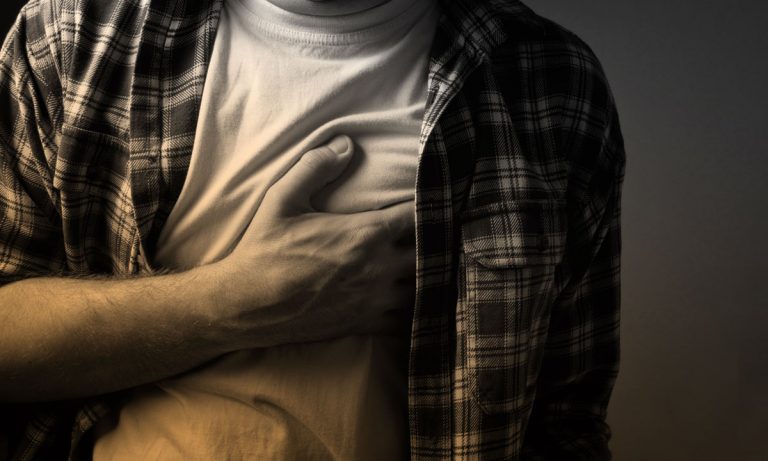
A study from a private healthcare network in Pennsylvania sent shockwaves and questions through the cannabis community. Led by Dr. Aditi Kalla, it used the National Inpatient Sample (NIS) database to scrutinize the medical records of patients from more than 1,000 hospitals in the U.S.
The study focused on patients ages 18-55 years who were released from hospitals in 2009 and 2010. Marijuana use was “diagnosed” in roughly 1.5 percent of the study sample. Researchers concluded that the marijuana users had a 26 percent increase in the risk of stroke and a 10 percent increase the likelihood of later heart failure.
It’s what the study does not emphasize which may be of greatest importance to question further. Ironically, the medical records used were from a time when no states had regulated recreational marijuana and most states were not allowing medical marijuana. So, at best, most respondents probably were using illegal market marijuana. Additionally, researchers did not know how patients ingested it, when they last used it or even how much they used.
Only 1.5 percent of the sample identified as cannabis users, while National Institute on Drug Abuse found that at least 5.8 percent of Americans used marijuana in 2007, a number that continued to grow even before the study’s data set was created.
Just because two data points line up, it doesn’t infer causality. To do so incorrectly is officially known as questionable cause logical fallacy. A well known case involving women and hormone replacement therapy, HRT, inferred from correlation of facts that women on HRT had lower incidence of heart disease. However, upon closer inspection and further research showed that the women who could afford the HRT were also from a higher socioeconomic standing, allowing for better diet and exercise.
We had the opportunity to speak to Dr. Kalla about these findings:
“This is not an ‘anti-cannabis’ study and none of the researchers involved in this study, including myself, have a political agenda. All drugs typically undergo studies to determine if there are any side effects. If any are found, then researchers try to first narrow down which organs are affected and subsequently look for a dose-dependent curve. “
Although some may assume otherwise, Dr. Kalla pointed out that she is not against medical marijuana:
“Cannabis use has benefits. I would like patients consuming cannabis for medicinal and/or recreational purposes to be aware that cannabis use may have cardiovascular side effects. Informing your physician about any cannabis use will allow your physician to appropriately monitor you for potential cardiovascular complications.‘
Like all research, these early findings and assumed correlations must be tested further and in a way that is specifically targeted at examining relationships between stroke, cardiovascular disease, heart attacks and cannabis use. Until then, as Dr. Kalla noted, informing your physician about cannabis use affords you a professional opinion on the matter.
Horror in TV is not as common as it is in the movies. While you can expect a scary movie to pop out once every couple of months, it’s hard to find horror-themed shows aside from American Horror Story, which, in it’s eighth season, feels more like a parody of pop culture. Still, there are some amazing horror episodes out there, which is why we’ve compiled this short list.
If you’re not feeling like leaving your house for a crowded, sweaty party this Halloween, these TV episodes are available on streaming services and come from very different shows with different tones, so you can have your pick of the type of horror you want to experience. The one thing they all have in common is that they’re super, super creepy.
Days Gone Bye: “The Walking Dead”
You’ve probably seen this episode and yes, we know that The Walking Dead is awful right now, but a few years ago, when Frank Darabont was still running things, the show played a big part in revitalizing zombies in entertainment while also paving the way for well respected genre television. This episode is peak Walking Dead, featuring deadly zombies, powerful character drama, and scaring the crap out of you, all while still being super sad and depressing. Who can ever forget the nonsensical line “Don’t Dead Open Inside”?
Black Mirror is a pretty horrifying show, a modern take on the Twilight Zone but worst because it tackles technology, which every day seems more and more pervasive. While most episodes of Black Mirror are disturbing, Playtest stands out because it feels like a one hour horror movie. Directed by Dan Trachtenberg, who also directed the super scary 10 Cloverfield Lane, this episode is filled with jump scares, twists, and of course, a very horror movie-like ending that tricks you into thinking that everything might just be okay. Nope, this is Black Mirror.
Piggy Piggy: “American Horror Story”
American Horror Story had a pretty great and even first season, taking us into a haunted house and introducing us to all the characters that lived there throughout the years. What worked best about this season was the fact that you didn’t know what to expect, which characters were real, and what was going to happen in the future of the show. Piggy Piggy is a stand out, because even though it’s extremely scary (The Piggy Man!!!!), it’s the episode that reveals how awful everyone’s internet boyfriend Tate was.
Buffy The Vampire Slayer was an amazing show that had it’s ups and downs throughout it’s 7 season run, but one thing it did was to continuously challenge itself in order to make groundbreaking TV. Hush is one of Buffy’s all time stand out episodes, being the first episode of the show to get to get several Emmy nominations, while featuring almost no dialogue and sound. In the episode, The Gentlemen come to town and steal people’s voices right before they kill them and cut their hearts out. They’re also extremely ugly and scary, so there’s that.
https://giphy.com/gifs/btvs-nY4fWynnSDaAo
Lonely Souls: “Twin Peaks”
Lonely Souls is the seventh episode of the second season of Twin Peaks, and it’s so scary because it finally reveals the answer to the first question the show proposed: Who killed Laura Palmer?
This episode wouldn’t be half as scary if it weren’t for the fact that the audience had been waiting for this moment for so long, and also because David Lynch executes it so well. The music, the surrealism, the stillness, the giant — everything that happens here shows that David Lynch is in total control. There’s never been anything scarier than Bob crawling through that couch. Spoilers ahead!
How much candy is too much candy? There is a big bag of candy sitting on the counter staring at you, haunting you, really. So, is there actually a limit before death by sugar? Or can we keep shoveling those “fun-sized” Kit Kats into our faces with impunity?
The American Chemical Society (ACS) provided research on how much candy could potentially be lethal. The calculation is based upon “LD 50,” which is the quantity of sugar that could kill half of an animal test population.
For those of us that like to live life on the edge, the danger really comes from consuming a heap of candy all at once. So, when you grab a few pieces to satisfy your sweet tooth – and then a few more – you’re not putting yourself at risk of death, just maybe type-two diabetes. You’d have to chow down 5.4 pounds of sugar – read: 262 pieces of candy – to put yourself at risk of a 50/50 chance of death.
If math is not your strong suit, the New York Post breaks down calculating the exact number you can eat based on weight into simple terms: take your body weight and multiply it by 13.5 and then divide that by 9.3, giving the total amount of “fun-sized” candies your body can handle.
The science behind dying from sugar, according to professor of chemistry at American University, Matt Hartings, comes down to the high levels of sucrose changing the balance of water in your body’s cells. The tummy ache you’re bound to experience might also be cause for death.
Don’t worry, for those of who prefer traditional Halloween candy, the ACS didn’t forget about you. According to their research, the average American, at 180 pounds, can handle 1,627 pieces of candy corn. So, go ahead and enjoy those 1,626 pieces.
The hotel industry is in a scuffle with a growing trend: guests who violate the smoking policies by toking up or vaping in the room or inside the hotel itself has his credit card charged for additional dollars for the violation.
It used to be that guests were routinely asked whether they would prefer a smoking room or not. But today the number of hotels offering smoking rooms is vanishingly small.
According to the American Hotel and Lodging Association, a trade group, the share of hotel rooms that are non-smoking has steadily risen from 74 percent to 97 percent over the past ten years. The proportion of hotels that only offer non-smoking rooms has jumped from 38 percent in 2008 to 85 percent since then.
What many of us don’t know is that the cleaning crew is not just sniffing for evidence but looking for it in the trash receptacles and they are savvy enough to look for more than the very typical signs of pot smoking.
There are a few techniques and devices used to promote the illusion of a smoke-free environment that might help in this situation. And at least three of these can be used if you have a strict landlord or are living with the parents.
1) Tip the cleaning crew daily, even if you haven’t made much of a mess beyond the lingering odour of some dank Pink Kush. Always tip your cleaning crew daily.
2) When comedian Doug Benson saw that some hotels were using the AirGuard device to detect anyone smoking tobacco or weed in their hotel room, he declared a boycott on those hotels. To keep toking without the expense, he uses a Smokebuddy to filter the air he exhales into it.
3) Make a sploof—the poor man’s Smokebuddy—with a plastic bottle, dryer sheets, and scissors. Rinse the bottle out, puncture the base several times and stuff it with dryer sheets until full but not packed. Poke a hole into the cap and add a final dryer sheet under the cap as you screw it back on. Exhale your weed-filled lungs into the bottle and turn skunky smoke into Mountain Fresh Linen Breeze.
Do not throw this out in your trash can in case it reeks or the cleaning crew cotton on to what it is.
4) Turn the bathroom into a steamy hotbox. Turn the shower on full-blast hot and seal the space at the bottom of the door with a towel. Once your bathroom is sufficiently steamy, spark up and enjoy. The smoke will convolve with the steam, neutralizing the smell. Once you’ve finished your joint, flush the roach down the toilet. By the time you leave the bathroom, there will be no odorous evidence of you ever having smoked. The steam will have masked the smell of marijuana smoke.
5) Joints and blunts leave behind the most offensive and detectable odour. Use vape pens and avoid having to follow some of the above tips. Except for number one: tip the cleaning crew daily.
In the small community of Rye, Colorado, 30 miles outside Pueblo, a battle is taking place that made its way to the federal court and could ultimately impact all of Colorado, as well as set a precedent for other states. What that precedent might be will all depend on the ruling.
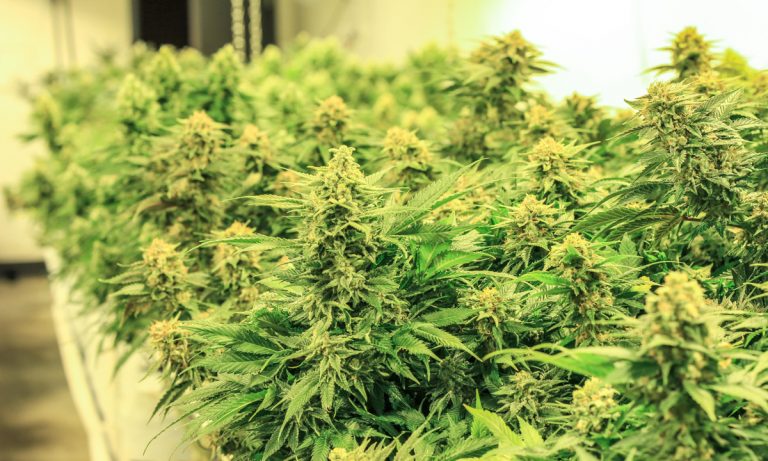
The meat of the suit is the question as to if federal law should outweigh, and thus crush, state law. The owners of Meadows at Legacy Ranch filed a civil suit 3 years ago claiming that the Canna Craft growhouse “next door” was lowering their property value and should be forced to move.
Parker Walton, owner of the grow op, told FOX31 that, “I thought it was ridiculous. They were making claims, complaining about odor, decrease of their property value all based on an operation that didn’t even exist yet.” He went on to say that he chose the particular 40 acre location to put his facility on, having received clearance from Pueblo County and with all permits needed.
Walton didn’t think he’d run into any problems because of the lack of neighbors, but unfortunately the stigma against cannabis still lingers in all parts of the land, and as soon as his closer neighbors, Hope and Mike Reilly, got wind of the operation, they objected vocally through the court of law, with the case still ongoing.
The ranchers have financial backing via “Safe Streets,” a D.C. based group that hates cannabis and tries using anti-racketeering laws to bring down cannabis businesses in legal states that are technically breaking federal law.
Walton stated what the cannabis community knows and both fears and abhors. “It sets a precedent. It creates a blueprint for anyone else who wants to take down cannabis.” While he waits to find out the fate of his location and ability to move forward, his business hanging in the balance.
“I take compliance very seriously and I have since day one,” said a beyond frustrated Walton. “We had no problems going through the process and the issuance of a license.” The Reilly’s charges that federal racketeering is going down is based on a law enacted in the 1970s to try and prosecute the mafia and drug cartels.
Unfortunately, if Walton’s operation has to close due to lawyer fees, Walton says there could be a domino effect and that the same thing could propagate across Colorado. We’ll find out if Safe Streets has any real traction in legalized cannabis when this case is solved.