Here’s some good news: Medical marijuana is helping people with arthritis improve their quality of life.
Most of us know someone — an aunt, uncle or grandmother — suffering from arthritis. It is one of the most common health ailments in the world, with more than 50 millionpeople affected in the U.S. alone.
The term “arthritis” is actually a category that includes over 100 conditions and diseases affecting joints and surrounding tissue. Symptoms of pain, stiffness and swelling aching joints are common. Arthritis can seem inescapable and changes people’s quality of life. There is no known cure.
Despite anecdotal evidence about efficacy of marijuana for arthritis, physicians simply don’t know enough about it to engage their patients about it as a treatment option. In one study, 70 percent of physicians said they would not know how to discuss possible interactions with other meds or suggest dose.
That is a great shame since cannabis has a better safety profile than the NSAIDS, steroids and opiates that are often employed to reduce arthritis discomfort but come with increased risk of heart attack, stroke, weakening of bones and addiction. Even if patients were able to use cannabis as a complementary therapy, they could very potentially cut back on the use of harder, more dangerous meds.
It’s no surprise that cannabis could offer arthritis sufferers relief. After all, cannabis is known to be as much as 20 times more effective than aspirin at reducing inflammation and can be an effective sleep aid. Some research certainly supports those decisions.
An Israeli study found that 90 percent of medical marijuana patients stayed on their medicine regimen and most reported reduced pain and function. Researchers at the University of Nottingham noted that targeting cannabinoid receptors with medical marijuana products may help bring pain relief to knee joint pain associated with osteoarthritis.
The first Health Canada approved cannabis clinical trial studying arthritis began in 2016. The CAPRI Trial (Cannabinoid Profile Investigation of Vaporized Cannabis in Patients with Osteoarthritis of the Knee) will compare the effects of different ratios of THC and CBD as well as the short term safety of vaporized cannabis. Results have not yet been published.
Similar to other ailments, a gap exists between physician knowledge base about cannabis and patient interest. Some patients and physicians will wait until there is irrefutable evidence before trying cannabis as an alternative therapy. Others will not wait for more information and seek to improve their quality of life with cannabis now
What we do know is that as more states come online with regulated medical marijuana, more patients will have an alternative to consider, and having options is good news.
The skin is our largest organ and one that is taken for granted when functioning properly. But anyone who has experienced severe sunburn or allergic reactions knows how unpleasant life can be when the skin is damaged, itching or swollen. For over 30 million Americans living with eczema, this challenge is all too familiar.
Itching is a primary symptom of eczema. For many it is mild and can be treated with over the counter lotions and topicals to reduce the discomfort. Others can have a more severe reaction, sometimes leading them to scratch so much they bleed, causing further aggravation and pain.
In addition to itching, people may experience dry, sensitive and even inflamed skin, dark, leathery or scaly patches of skin and even oozing and crusting for some. The pain and visible symptoms can impact the quality of a person’s life and cause them embarrassment.
Although many children with food allergies also have eczema, doctors do not believe it is caused by an allergic reaction. Rather, it is suspected to be a combination of factors including genetics, irregular response from the immune system, moisture control problems in the skin and certain triggers like stress, detergents and hot water.
Typical treatments include hydrocortisone lotions, salves and shampoos, antihistamines, prescription corticosteroids and ultraviolet light therapy for more severe cases. But, what about cannabis? Can it help?
The endocannabinoid system produces naturally occurring cannabinoids in the bodies of all vertebrate animals. They are closely related to the phytocannabinoids produced by marijuana and hemp plants. These compounds are known to help moderate bodily systems such as appetite, sleep, pain, auto-immune response and others.
It is the immune system that is of particular interest to some scientists. Researchers at the University of Bonn in Germany conducted a study with mice and found that “mice lacking both known cannabinoid receptors display exacerbated allergic inflammation.” While eczema may not be an allergic reaction, being able to calm the immune response from the body could possibly bring many sufferers relief they are seeking.
That makes sense to Ah Warner, owner of Cannabis Basics, that produces a full line of CHABA, cannabis health and beauty aids. These are topicals with less than .3 percent THC and are non-psychoactive. They are currently only allowed in Washington State, but patients are swearing by them. Says Warner:
“There are hundreds, if not thousands, of people using CHABA for skins conditions including eczema. Unfortunately as a manufacturer I am prohibited by the FDA to make any curative or treatment claims. However, Cannabis Basics now has Washington State MD’s, ND’s, LMP’s, Herbalists and Estheticians recommending our products. Almost every inquiry I get from a medical practitioner was prompted because their patients have turned them onto these types of products.”
Lisa Buchanan is a cannabis nurse (RN and OCN) and the owner of Paisley Nursing Group. She has seen great interest in this option. Her patients have reported positive feedback and believes cannabis or products containing it could be an “important addition to a patient’s toolkit for managing their eczema, along with avoiding triggers, reducing stress, and ongoing medical management provided by their healthcare team.”
For the patient new to the idea of cannabis therapy, Buchanan suggests:
“Topicals are a great starting point for new users. Start using a single isolated area to check for reaction. If no problems, continue to use on affected areas. Many people don’t realize the value of a topical until they have discontinued it. Be patient and evaluate over time.”
As always, we recommend working with a professional healthcare provider familiar with cannabis. While it may not be an herbal cure all, it certainly holds promise in the area of eczema and related skin conditions. That alone is enough to make millions of Americans take notice.
This weekend signals the end of summer, and no matter how crazy the weather is and how unnaturally warm it’s getting for this time of year, this weekend just may be your last chance to have a warm cookout in 2018.
Fresh and spicy dishes are perfect for this occasion, including simple ones that take just a few minutes to make and that’ll keep everyone happy and satisfied with something that’s delicious and filling. Here are 5 Labor Day weekend recipes for the final days of summer.
Spicy Hummus
Hummus is a great dip for large crowds and each one of these four styles lends itself to different occasions. A classic spicy hummus dip takes almost no time to prepare, while a more elaborate Italian hummus demands more ingredients, time and effort.
Chicken skewers are perfect for all sorts of cookouts, offering a new dimension to the otherwise predictable tasting chicken. The charred flavor that can only come from a grill provides a meal that’s easy and fun to eat. Who needs cutlery during a barbecue?
Few drinks are better suited for a cookout than a Bloody Mary. A cool drink loaded with veggies is just what you need when you’re standing out in the sun for hours. This simple recipe asks for a Bloody Mary Mix that you’ll spice up according to your own heat preference.
Ingredients:
Bloody Mary Mix 1 cup
Texas Pete Hot sauce 2 tsps
Ice ¼ cup
Vodka 1 ½ oz
Texas Pete Dust/tajin Spice mix 50/50 Dusting
Shrimp Skewer, optional
Celery Stick, optional
Directions:
Mix in cocktail shaker first 4 ingredients and shake
Rim glass with lime juice or water and dip in dust mixture
This filling and fresh salad works as a side or a meal. While this recipe is very simple, it’s also flavorful, packing a bunch of different layers that perfectly blend together. The recipe includes almonds, feta cheese, and whole wheat pasta, which is also healthy and won’t leave you feeling too heavy. You can check out the full recipe here.
Dessert tends to be forgotten during barbecues, but this peach cake is something else, especially during the summer when the peaches are in season. It’s a simple enough recipe that you can check out here. It also won’t demand too much of your time in the kitchen.
The ease and ubiquity of wi-fi makes it that much easier to be plugged in at all times. In fact, it’s often expected. Many people who commute by bus, train or other public transportation usually find themselves checking work email during their journey into the office. And now new research out of the U.K. says this commuting commonality could actually ease rush hour traffic if it was considered part of the work day.
During a 40 week period from 2016-17, researchers at the University of the West of England examined 5,000 passengers and how they use free internet on their commute to work. During this time, British train company Chiltern Railways incrementally increased the amount of free wi-fi available to its customers on its mainline route.
Results show that by the end of the 40 weeks, commuters had made the most of the rise. On the Birmingham to London route, the proportion of commuters connecting to the free Wi-Fi rose from 54% when 20MB was offered to 60% when 125MB was offered. In comparison, connection by mobile data fluctuated around 48%.
Passengers who were interviewed for the study said they considered their commute as time to catch up with work outside of office hours. This transit time, according to the study, also enabled people to switch roles; for example, from being a parent getting the kids ready for school in the morning to a business director during the day.
In Norway, some commuters are actually able to count travel time as part of their working day. How nice would that be?
Very nice, according to researcher Dr. Juliet Jain, who spoke at a conference on Thursday, saying, “If travel time were to count as work time, there would be many social and economic impacts, as well as implications for the rail industry. It may ease commuter pressure on peak hours and allow for more comfort and flexibility around working times. However it may also demand more surveillance and accountability for productivity.”
Alan Riley, Customer Services Director at Chiltern Railways, said that the results just reinforce how wi-fi on trains increases productivity.
The Green, a gathering place in New Haven, Connecticut, near Yale University looked like a mass casualty zone, with 70 serious drug overdoses over a period spanning Aug. 15-16, 2018. A clear example of why synthetic marijuana is risky.
The cause: synthetic cannabinoids, also known as K2, Spice, or AK47, which induced retching, vomiting, loss of consciousness and trouble breathing. On July 19, 2018, the Food and Drug Administration warned consumers that another batch of synthetic marijuana had been laced with rat poison. In 10 states and the District of Columbia, hundreds of people were hospitalized with severe bleeding, and four people died.
Many parts of the country have seen episodic crises due to synthetic marijuana, the largest occurring in Mississippi, where 721 adverse events were logged between April 2-3, 2015.
As an intensive care pharmacist and clinical pharmacologist, I have been researching street drugs for over a decade to help emergency room, critical care and poison control clinicians treat overdosing patients.
Why is using synthetic marijuana risky?
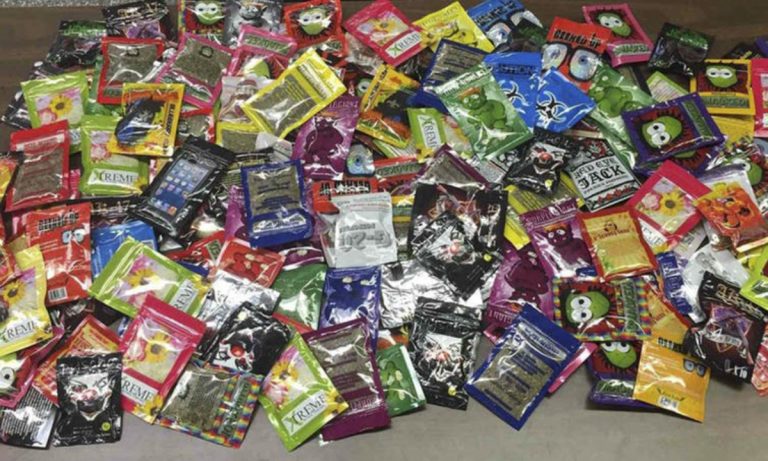
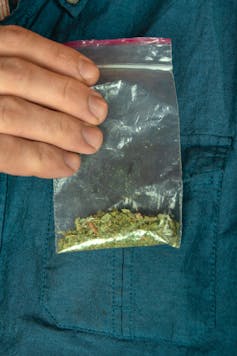
When you open a packet of a synthetic cannabinoid like K2 or Spice and pour the dried vegetation into your hand, it looks like marijuana. These dried leaves and stems can be inert or come from psychoactive plants like Wild Dagga. Some of these plants are contaminated with heavy metals, pesticides, mold or salmonella.
However, synthetic cannabinoids are anything but natural. They are mass-produced overseas and then shipped in bulk to the U.S., where they are dissolved and then mixed with dried vegetation, which absorbs the liquid. This process is very imprecise, so the dose in one packet can differ greatly within or between batches.
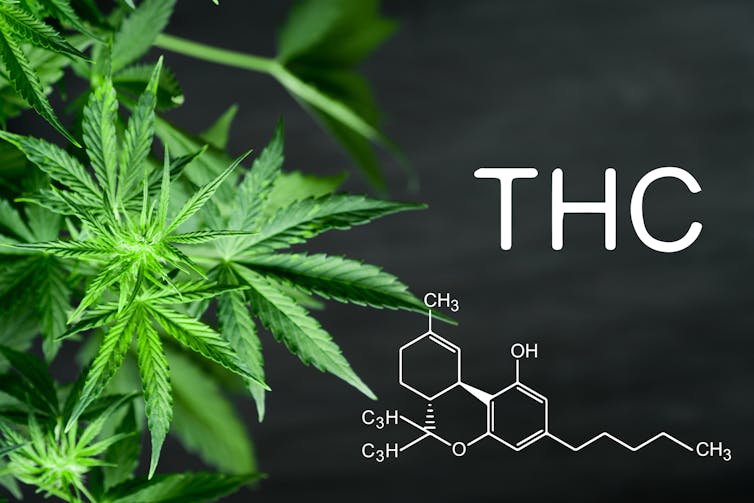
There are several hundred synthetic cannabinoids in existence, and they all stimulate cannabinoid type 1 receptors (CB1), just like the active component in natural marijuana, THC, that provides the high. But they do so with different intensities and for differing periods of time. Some incorporate the central ring structure of the THC molecule before laboratory modification, but many others do not. More problems arise because some of the synthetic cannabinoids stimulate non-cannabinoid receptors and can cause unanticipated effects as well. There is no way to know which synthetic cannabinoids are actually in the product you purchased.
The molecular structure of THC, the active component of marijuana. Many chemists producing synthetic cannabinoids in the lab use the three hexagonal rings as the scaffold to generate new molecules that produce a similar high. Lifestyle discover/Shutterstock.com
Natural marijuana does not comprise only THC. The other constituents in natural marijuana such as cannabidiol actually help to temper the negative impact of THC but are absent in synthetic cannabinoids. In addition to these myriad risks, there is also a risk that synthetic cannabinoids can be adulterated with other chemicals, ranging from opioids to rat poison.
Synthetic cannabinoids were initially designed by legitimate researchers in the U.S. and around the world who were looking to explore the function and structure of cannabinoid receptors. They did not intend for illegal drug labs to use their recipe to mass-produce these synthetic cannabinoids.
What are the consequences of using these drugs?
In addition to giving the user a high, the primary psychological and neurological effects of synthetic cannabinoid use include anxiety, agitation and paranoia, although psychosis and seizures have also occurred. The anxiety and psychosis can cause the heart to beat fast and even trigger heart attacks or strokes when the body’s adrenaline gets flowing. Many people suffer upset stomach with synthetic cannabinoids, and vomiting is also common (which is paradoxical, since medical marijuana is used to prevent vomiting). Finally, there is a risk that synthetic cannabinoids can damage both the muscles and kidneys.
Rarely, people reported having trouble breathing, but in some cases this is due to adrenaline release. In other cases, the butane that was used to extract THC from marijuana before laboratory alteration was not removed. The butane ignites during smoking and damages the lungs. Early detection and aggressive treatment for all of these adverse events can help to prevent severe adverse events or death.
What can we do to protect ourselves?
Ben Kovler, CEO, Green Thumb Industries poses for a portrait at the company’s office in Chicago. Green Thumb Industries had a business plan, expertise and plenty of ambition, but didn’t have access to enough capital to grow its marijuana business. Last month, the company with US$20 million in revenue from pot shops in seven states turned its gaze north and went public in Canada, where marijuana soon will be broadly legalized nationwide. Charles Rex Arbogast/AP Photo
Many of the risks of synthetic cannabinoids and other illegal drugs of abuse arise because of contamination, adulteration, substitution and inconsistent dosages. As long as people are able to manufacture, transport and sell these drugs secretly, there is no way to assure buyers of a consistent quality product. Public health personnel, teachers and parents need to educate adults and students alike about the inherent risks of the drugs in their pure form but should also include the risks associated with poor manufacturing practices.
People generally prefer natural marijuana to synthetic forms, but as long as natural marijuana remains illegal, highly desired, easily detected and periodically unavailable, the desire to purchase synthetic forms will persist.
Finally, synthetic cannabinoids are primarily manufactured overseas. Foreign governments, especially in Asia, need to crack down on illegal drug factories and better scan freight for illegal drugs. In addition, all shipping companies need to do more to detect the illegal transport of drugs into the United States. There are hand-held detectors that can help identify some but not most synthetic cannabinoids. However, detection will still be painstakingly slow.
This week Buzzfeed News published an explosive report on the White House organizing a committee with the design to negatively shape the narrative around marijuana and its legalization. The Marijuana Policy Coordination Committee, as it’s been named, asked the Drug Enforcement Agency as well as 14 other federal agencies to collect information on the “negative impacts of marijuana use, production, and trafficking on national health, safety, and security.” How are politicians responding to Trump’s anti-marijuana committee?
The committee’s mission stands in stark contrast to the overwhelming support from the public over marijuana legalization. Currently, 30 states plus Washington D.C. have legalized some form of medical marijuana while a Quinnipiac poll in April showed that 63 percent of Americans support legalization. In addition, three quarters of Americans want Attorney General Jeff Sessions and Trump to leave state marijuana laws alone, and one out of four young Americans say they “regularly” consume cannabis, according to a Gallup poll.
Perhaps what is most perplexing from the outside looking in, is how the committee’s goals stand in contrast to public statements that Trump has made regarding marijuana. The President has voiced support for the STATES Act, bipartisan legislation co-sponsored by Sen. Cory Gardner (R-CO) and Elizabeth Warren (D-MA) that would protect state laws regarding marijuana from federal interference.
This news has left many in and outside Washington struggling to understand whether the Marijuana Policy Coordination Committee will generate serious momentum to roll back progression cannabis reform or the final rattles of marijuana prohibitionists. We collected the various statements politicians have made to media to better understand what’s really going on.
Regardless of the accuracy of the story, Senator Gardner remains confident in the commitment the President made to him to support a states’ rights solution to the current disconnect on marijuana law. […]
Forty-seven states have now acted in a way that is contrary to the Controlled Substances Act and there are more initiatives on the ballot this year. Whatever their decision, these states ought to be respected.
I don’t think Trump was being disingenuous when he said he supported reform. I genuinely believe that there’s a lack of control of what’s going on in the executive branch as it relates to marijuana policy. Now people who want to use this against the president will, but the reality is the person who can oversee all of this attentively probably doesn’t exist.
Those who seek to maintain the oppressive policies of cannabis criminalization are grasping at straws in their effort to undo the public policy progresses that have now been enacted in a majority of states, and that are widely supported by voters of both major political parties.
I just don’t understand: Why would they make this full court press on trying to stop what’s going on out there? What happens when you try to lie to people about marijuana? It just makes them want to use it all the more. So I’m really baffled by this.
[…] It feels like it fits into an unfortunate narrative about this administration believing that it’s okay to lie to get an end result that you’re trying to achieve. That’s the opposite of what we expect whether it’s out of the DEA or the FDA—we count on the federal government to provide us honest, unbiased information.
At a time when we should be investing in objective and peer-reviewed scientific research on marijuana and the effects of legalization, the White House is instead using taxpayer money to spread a politically-driven narrative. What’s perhaps most unfortunate is that my state and others stand ready to work as partners with the federal government to gather the data and research necessary to ensure we are protecting public health and safety.
We’ve always been challenged, because the failed war on drugs is very deeply embedded in the federal government. You still have agencies that are getting in the way of thoughtful research. You’ve had zealots who have made a career out of this.
Though the premiere of the “Game of Thrones” series finale is still several months away, speculation has never been fiercer. From analyzing Maisie Williams’ cryptic Arya tribute to breaking down every second of teaser footage HBO has released, fan anticipation has never been higher.
Part of this stems from the show’s actors dribbling out morsels of gossip in interviews. Like Nikolaj Coster-Waldau, who discussed Season 7’s plotlines and teased what we might expect next year in an interview with the Huffington Post. What did he say that has everyone so excited on social media?
Well after he finished reading the final “GoT” scripts, Coster-Waldau told the writers, “I don’t think you could’ve done a better job at finishing this story.”
“To me, it was very satisfying but also very surprising and all the things that I was hoping for,” he said. “It still made sense. It wasn’t like one of those where the killer is suddenly revealed in the last act and you go, ‘Oh! I didn’t see that coming.’ Here, they’ve done a really, really good job.”
But the biggest nugget the actor who plays Jaime revealed was about his character’s relationship with Brienne of Tarth. Together the characters have shared one of the more fascinating relationships on the show, exhibiting respect and sexual tension where it might not be expected. When the interviewer asked what we might expect from Jaime this season, here’s what he said:
“Well, he is heading north. I don’t think you can assume that he’s going to make it up there, but who knows. For sure, we see him head north. He might be eaten by dragons, you never know. Or he might just stumble, things happen. Or he might find the love of his life and suddenly he’s like, ‘God, this is it. No more.'”
When the reporter suggested that Brienne was the “true love” of Jaime’s life, Coster-Waldau didn’t deny that possibility, saying, “Ohhh, well, who knows? [Laughs] I don’t, well, I know how it ends but … no, I can’t comment on that,”
Don’t worry, we’ll only have to wait until early 2019 to know if there’s validity to this rumor, or if Coster-Waldau is having some fun with fans.
US territory sends cannabis legalization bill to Governor. Deep in the Pacific, lawmakers in the Commonwealth of the Northern Mariana Islands (CNMI) sent a bill to the governor to legalize marijuana. The legislation was voted in at 6-0, which speaks volumes to popular opinion.
Governor Ralph Torres has 28 days to sign the bill or if he doesn’t, it becomes law automatically. If the bill is enacted, it will make CNMI the first U.S. jurisdiction to go from having outright prohibition straight to legalization.
It’s the most progressive bill ever concocted by lawmakers and if it passes it will be the first true example of legalization via legislation. Eight of the nine states plus D.C. all voted in their measures for legalization and, though Vermont passed a lower level law for possession and growing your own, it didn’t allow for sales.
Let’s not get ahead of ourselves on the potential for this latest legalization just yet though. Gov. Torres has expressed concern over public wellbeing if cannabis were to be legalized. Still, advocates and activists are hoping that he will either sign the bill into law or simply do nothing, thereby enacting the law.
After three years in the Senate, Gerry Palacios Hemley of the advocacy group Sensible CNMI told Marijuana Moment that, “The only thing left to do was act on it and vote.” Said vote took less than 7 minutes to pass.
Karen O’Keefe, Marijuana Policy Project’s state policies director, said the following in a statement,“This is a historic moment, as it is the first time a governing body in the U.S. has ever enacted legislation to both end marijuana prohibition and establish a system of regulation to replace it. Adults and medical cannabis patients will finally be able to access marijuana safely and legally, and products will be regulated and controlled to ensure they are safe for consumers. This legislation will allow for the establishment of new businesses that create jobs and generate new tax revenue that can support important programs and services.”
If the bill were to be enacted, it would also mean that those over 21 years of age and those who are younger, but qualify for medical, will be able to possess up to an ounce, and also carry and imbibe in infused products and extracts. Growing your own ganja will be allowed and state licenses will be issued by regulators for cannabis manufacturers, lab testing facilities, retail and wholesale operations and lounges.
There’s a chance that the Governor will sign the bill immediately, there’s a chance he’ll just say no and there’s the chance that he’ll stay neutral and let the bill pass on its own. It’s an exciting time for CNMI, and will be especially so if the law is enacted.
“To All The Boys I’ve Loved Before” was an overnight Netflix sensation. The movie made a star out of its two leads, reintroduced the YA source novel to the public, and sparked a legion of devoted fans that are begging for a sequel. Even though the movie was released a couple of weeks ago, you can still catch a couple of references and mentions of it on any social media site.
That’s where the “To All The Boys” meme comes in. It’s taken over Twitter with sweet, funny, sad and sometimes very thoughtful confessions from users who consider this an opportunity to get creative and make a good joke.
The meme uses the movies’ rambling title to make a self-deprecating comment on people’s past experiences with the boys in their lives. It’s kind of complex once you think about it, and very versatile, best illustrated with a real example.
To All The Boys I’ve Told My Friends About Too Soon
While sometimes these confessions are honest and cute, the best versions of the meme come from people who have a lot of fun with it, making some sort of commentary that results in laughs, but mostly a depressing feeling because it’s so damn relatable and truthful.
To all the boys I’ve loved before they ghosted me as soon as they realised I had ~feelings~ for them, because apparently my type is “emotionally unavailable”
To All The Boys Who Made Me List The Star Wars Moves In Release Order Because They Didn’t Believe Me When I Said I Was A Star Wars Fan And Yet They Didn’t Know That Han Solo Is Corellian https://t.co/xPfedyo390
To All the Boys Who Bought Me A Copy of Watchmen Because They Were Aghast I’d Never Read Watchmen Before: I Still Haven’t Read Your Copy Of Watchmen https://t.co/NtnVFAsxuJ
To All The Boys I Thought I Loved Before I Realized I Was Actually Gay And Just Performing Heteronormativity Because It Was All I Saw Represented In Media, So Loving A Girl Didn’t Seem Like An Option, I Mean I Guess It Was Shown On “The L Word” But We Didn’t Have Showtime Becaus
It’s strange when one meme gives you the ability to vent about your personal problems, comment on toxic masculinity and the nature of sad relationships — sometimes combining all of these things using less than 280 characters. Situations like this prove how adept we’ve become at these types of communications. And that’s pretty deep for a meme.
Charlotte’s Web, the producers and distributors of the hemp-based wellness products that first convinced Dr. Sanjay Gupta of the medicinal properties of cannabis, went public August 30 with a projected $100 million initial public offering in the Canadian exchange (CWEB).
It’s an astounding number that speaks volumes to the weight behind not only the inspirational story of little Charlotte Figi, whose seizures were ceased by this specific strain of cannabis based medicine, but of the substance added by a rightfully famous doctor of medicine.
According to a press release, “The offering included a treasury issuance by the Company of Common Shares…and a secondary offering of Common Shares…for total gross proceeds of C$115,115,000.”
Charlotte’s Web Holdings, Inc., is the producer of Charlotte’s Web, created by Stanley Brothers. While it is certainly not the only high-CBD breed of cannabis on the market, it is the one that’s best known and has garnered a sort of infamy.
With Charlotte’s Web now bringing the full hemp extract into the public sector, they’re solidifying that successful breeding and branding and using that success, notoriety and good medicine to parse out shares to the public.
Charlotte’s Web sold 13,312,150 Common Shares under the Offering, for total gross proceeds to the Company of C$93,185,050. The Selling Shareholders sold an aggregate of 3,132,850 Common Shares pursuant to the Secondary Base Offering and the Over-Allotment Option for total gross proceeds to the Selling Shareholders of C$21,929,950. The Company, however, did not receive any proceeds from the Secondary Base Offering or the Over-Allotment Option.
Charlotte’s Web completed its Initial Public Offering at C$7.00 per share per the Company’s closing press release the morning of August 30 and is now officially being publicly traded in Canada.
This marks a large occasion for the non-psychoactive strain of cannabis and its products that are now ready to take the market by storm. Should so much ride on a strain’s origin history and public opinion? Should other CBD strains be gaining in notoriety themselves? Perhaps to both, but no matter the case, the cards fell in the favor of Charlotte’s Web and now the world is watching with dollar-signs in their eyes.