Friday, June 19, 2026
Home Blog Page 874

Rethinking Your Work Emails

0

It’s 8 p.m. and you hear the sound of an email notification. You run to your laptop, as you’ve been conditioned to do, and see a work email sitting in your Inbox. What do you do? Many of us wouldn’t hesitate to answer the email, assuming it’s expected. In an age of social media, texting and FaceTime, it’s implied that we’re all within arm’s reach of our mobile devices. Why wouldn’t be respond to an email that we clearly saw?

According to a new study, this habit could ruin your relationships outside of work.

Researchers at Virginia Tech surveyed the health of nearly 300 university employees and found that all of them had varying levels of anxiety that could be damaging to their health.

Related: Woman Fired For Consuming Cannabis After Work Is Not Going Down Without A Fight

The kicker is that the employees didn’t even need to be spending actual time working in their off-hours to feel the effects; they were negatively affected simply by the mere expectation of being available.

These “flexible work boundaries” create a slippery slope in which the smallest task, like checking an email, could turn into “work without boundaries” with bosses expecting their employees to be “on” all the time, according to the study.

And this stress, says researchers, can easily spread to family and friends, who are witness to the inability of their loved one to psychologically detach from work-related issues.

“The competing demands of work and non-work lives present a dilemma for employees, which triggers feelings of anxiety and endangers work and personal lives,” said study co-author William Becker.

Employees today must navigate more complex boundaries between work and family than ever before. Employer expectations during non-work hours appear to increase this burden, as employees feel an obligation to shift roles throughout their non-work time.

Becker adds, “Efforts to manage these expectations are more important than ever, given our findings that employees’ families are also affected by these expectations.”

How To Pick The Perfect Marijuana Retail Store For You

Are you among the 60 percent of Americans living in one of the 29 states that has legalized medical marijuana? Or are you among the lucky citizens residing in one of the eight  legal recreational states?  If so, chances are there is a dispensary within driving distance to your home. But before selecting your “go-to” cannabis retailer or dispensary, you should do a little homework and see which establishment is right for you. Like wine shops, craft beer outlets or other niche retailers, dispensaries vary widely. Here are seven questions to ask yourself when finding the perfect marijuana retail store for you:

1. Is It Conveniently Located?

Your go-to dispensary should be along your regular daily route. Ideally, it will be near your home, your place of work, or on located along your regular commute.

If getting to the store is a hassle (or if parking is impossible), you may want to think twice before making this your regular spot.

But just because the store is the closest one to your home, it doesn’t necessarily mean it is the right one for you. Location is just one of the criteria, but it is an important one.

Note: In some states, deliver service is an option. So for patients unable to easily travel, this may be an option.

2. How Knowledgeable Is The Staff?

An experienced budtender is extremely valuable. Even if you are a cannabis connoisseur, it’s important to talk with someone familiar with all the products available in the store. A good budtender will walk you through the buying experience. He or she will listen to your questions and inquire about your needs.

If the budtender seems to be pushing you something you don’t want or dismisses your questions, walk out.  Sometimes, it’s worth calling before going to the store to see assess the customer service.

3. Does The Vibe Jibe With You?

For some customers, a modern, high-tech aesthetic is the thing. For others, the old-time feel of a Berkeley headshop feels right. Some patients prefer a more antiseptic, medical environment. Different strokes for different folks.

What is the background music? What artwork is on the wall? How does it smell? It may sound trivial, but it’s important to feel comfortable inside the store. If you feel like a stranger, it may be worth checking out other retailers.

4. Is The Product Tested?

Ask the budtender to see the testing results of the product. If they don’t test, ask why. As more states regulate the selling of cannabis, testing for potency and pathogens is becoming standard. Most states require testing of some kind.

As a consumer, you have a right to know what you are putting in your body. Ask to see the testing results before purchasing.

5. Is The Price Right?

Some states regulate the price (and tax rate) of legal cannabis. But prices do vary from store to store.

Many stores have an online menu with prices. Do a little homework before venturing out. Compare stores in your area to see the variance. Remember, there is a wide range of products available, from edibles to beverages to bud to concentrates. Find out what works best for you and shop around.

Buying in bulk is an option for some smart shoppers. For others, searching for weekly deals may be the answer.

6. Is The Retailer Involved In The Community?

I like to shop at stores that give back to the community. Does your dispensary donate to charities like food banks, senior homes or local events?

There are some dispensaries that provide deep discounts to patients unable to afford medicine. Some offer educational classes, yoga or other wellness opportunities.

7. What Do The Neighboring Businesses Say?

Talk to nearby stores and see what they have to say. Is the dispensary courteous and respectful of its neighbors? Is there tension in the community? Try to get an holistic view of the store and assess its reputation.

4 Simple Ways To Get Marijuana Out Of Your System

Drug tests are a necessity sometimes. An annoying one, but still, inescapable, especially if you work for the Federal Government. Maybe you need because you handling dangerous equipment or it’s a requirement for your new job. Whatever the case, it’s important to understand what a drug test entails and how it works. And here are 4 simple ways to get marijuana out of your system. 

When you consume cannabis, THC stays in your body long after the “high” feeling goes away. Things get even more complicated because there’s also no clear cut way of knowing how long the THC will stay in your system, considering that every person’s body is different and factors like metabolism, weight, body fat, physical activity, frequency of use, potency of the strain, etc., carry an important weight.

You must also know which drug test you’ll take because results fluctuate depending on what sample the test is analyzing. Saliva tests have a short reach, measuring the presence of THC consumed a couple of days ago, while hair samples can show THC that was consumed over 3 months ago. This particular test is quite expensive, so unless you’re getting some big wig government job, you’re in the clear. If not, sorry. And congratulations on the cool job.

Now, for the important part: Here are 4 ways that’ll help you get clean for a drug test. Be aware that the more time you have to prepare, the more successful these methods will be. They’ll help your body get rid of toxins, but they also can’t work miracles.

Dilution Method

https://giphy.com/gifs/angry-snape-severus-slpBOxNwDUuS4

This method works best for urine tests, because it’ll dilute the concentration of THC metabolites in there. You must have at least 3 days before the test, so you can build up your creatinine by eating a lot of red meat – sorry vegans – and taking supplements.

You must also drink lots of water, so you get rid of toxins, and then, when taking the test, be sure to deposit your urine “midstream”, which is a fancy way of saying that you must pee first into the toilet and then into the cup. Really complex stuff. 

Alter Your hair

https://giphy.com/gifs/georgemichael-george-michael-channel-4-xUNda4FFb49OTibnEc

If someone’s testing the follicles in your hair, you can simply shave it off and claim to be an olympic swimmer, or some sort of athlete. This isn’t a very smart move if the interviewer has already seen you with a head full of hair, so if this is your method of choice, be cautious and consistent. Go to your interview bald. You heard it from us.

Stall For Time

https://giphy.com/gifs/gilmoregirls-netflix-gilmore-girls-l2YWx3gtrWLKSQjcc

Try to postpone or reschedule your test if you still feel like you’ll fail it. Every extra day gives you more time to get yourself clean.

Be Wary Of What’s Online

https://giphy.com/gifs/cartoons-comics-sea-reading-WoWm8YzFQJg5i

There are a million methods and marijuana detox kits that seem silly at best and dangerous at worst. Don’t fall for them and do your research. Most importantly, if you have a drug test coming up soon, get clean a few weeks in advance and be healthy for a little while. It’s not forever, and it’ll do your body good to take a break and eat right for once.

How Trump’s Trade War Will Affect The Cannabis Vape Market

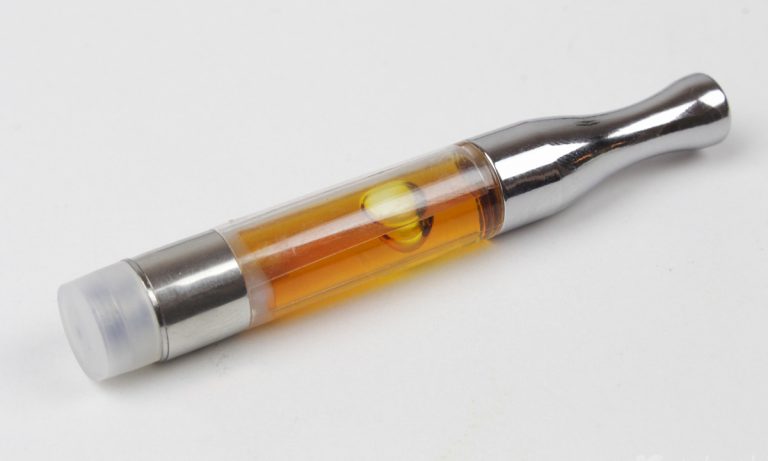
As China and the U.S. exchange blows in an all out trade war, many products, including the vape pens that we use for cannabis oil, will face taxes of up to 25 percent. While there are different ways for companies to deal with the financial blow about to be dealt, the most likely outcome is that consumers will be the ones absorbing the expense.

Another option is vape companies themselves absorbing the cost of the additional tax to remain competitive, but the profit margin on pens isn’t going to always be broad enough to justify said absorption. Thus, a price hike could be seen in the near future.

Thirty states and the District of Columbia have either implemented medical or recreational laws to protect cannabis imbibers from punitive penalties. Since then, a new market has opened up and one of its best sellers is the vape pen.

Vape pens are amazing in many ways. First of all, they look like e-cigs and have little to no odor, so they’re stealthy and ready to come with you to an outdoor concert, walking around the neighborhood, taking a hike or even flying because they themselves fly right under the radar.

There’s no telling what a price increase will do to the vaping market, but if prices do go up there’s bound to be some grumbling at the very least. It’s doubtful people will put down their pens due to the additional tax, but it’s an expense that patients especially don’t need.

Estimates are that by 2020, the cannabis industry will be pulling in $20-$30 billion dollars. When vaping devices and other parts and pieces that relate to the cannabis industry are factored in, they will contribute to a kushy tax revenue for Chinese importers.

At least it can be said that the product that goes into cannabis pens – ones with THC in them and some CBD ones as well – is grown and manufactured in the U.S., where the oil will only be subject to the taxes already implemented. California, however, is already facing challenges keeping up with projected growth and profit, so the trade war could affect their economy, the fifth largest in the world, the most.

Unfortunately, the compassionate care program is already greatly impacted by high California taxes on seed to sale cannabis. Which is to say all of their cannabis, as every bit of marijuana is now accounted for from the time of embryo to fruition and taxes apply at every stage. Just another reason why the latest Trump moves in the China/U.S. trade wars really stink – and not in that good, skunky way, at all.

Moldy Marijuana Is The New Reefer Madness

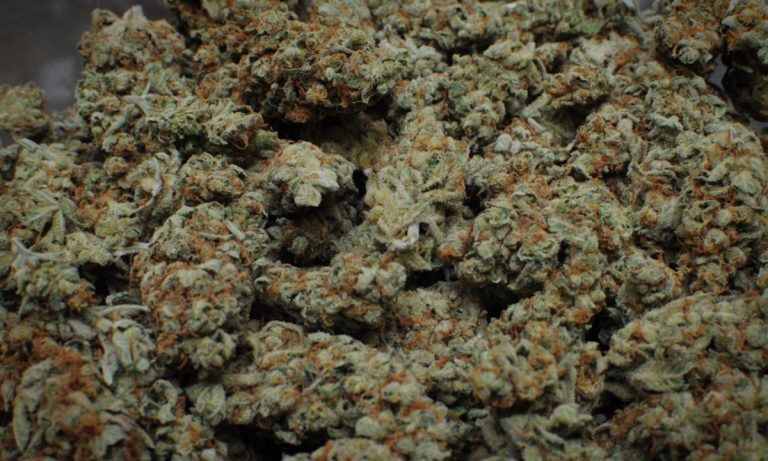
There has been a lot of buzz in the cannabis industry lately about mold. The threat of mold is the primary, invasive scare tactic used to drive black market cannabis consumers into the legalized market. Obviously, nobody wants mold in their weed, but how much of a threat really is it? Is it worth paying up to four times as much for marijuana that has been lab tested? Can marijuana get moldy after it leaves the lab?

Mold is a part of life on this planet. It is everywhere. There is probably microscopic mold growing on some part of your body or visible mold on expiring fruit in your fridge at this moment. Spoiled veggies are easy to spot and discard. Anyone might have accidentally eaten a piece of moldy bread in your lifetime, and it did not kill them. One of your crusty roommates might have even removed the moldy part and eaten around it. Then there is black mold – the deathly scary kind. So what kind of mold is in your weed and how bad is it?

Have you ever coughed your brains out after a bong hit? A “kif cough” can be an indication that you inhaled too deeply or held the smoke in for too long. However, lingering chest pains can also be a sign of potentially contaminated weed, not just mold, but perhaps chemical-laden pesticides and fertilizers; which are the real danger.

Scott’s Miracle-Gro is not organic, and they have delved deeply into the weed market, especially in California. Miracle Gro’s ingredients might not matter to someone growing tulips, but it is definitely not meant for consumption in any form.

According to Mike Leiberman of Urban Organic Farmer, “The majority of Miracle-Gro’s product line is filled with chemicals and synthetics. They do have some product that is organic and certified by OMRI. Scott’s, the parent company of Miracle-Gro, is in bed with Monsanto and are the exclusive agent of Round-Up. … It’s not just about being organic.”

The current antithesis of antiquated “reefer madness” is the marijuana mold madness. We are hearing executives say that compliant cannabis is the healthy thing and grey-market, Prop 215 cannabis is dangerous, while six months ago the story was the complete opposite.

R.J. Falcioni, CEO of outspoke.io agrees, “The mold issue is something of a marketing ploy and not always accurate because I have gone into dispensaries post-legalization and found powdery mildew in cannabis.”

There are definitely moisture issues with growing plants meant for consumption, especially in outdoor environments and in mixed site cultivation. It is going to be a growing problem with cannabis, no pun intended.

Sometimes, even the healthiest, purest harvests from ital,  Jamaican Rastafarian-grown cannabis, for example, won’t be adequately cured because the humidity can cause mold can to accrue post-harvest.

“People are zeroing in on mold and honing it as a marketing ploy that ‘we test the cannabis, so it has to be better for you.’ It is a quagmire. The Labs are arbitrary, and the baseline is an arbitrary concept. There is no federal lab testing standard,” says Falcioni.

This situation occurred recently with Lowell Smokes. Cannabis flowers they purchased from one of their partner farms was tested by two separate labs, who couldn’t agree on its purity. The discrepancy ended with them conscientiously issuing a recall of two strains.

With the way cannabis is cultivated under the new licensing standards, the mixed light “hoop house” or greenhouse type of growing environment is desirable. The mold issue is being blamed more on off-the-grid farmers, than in highly invested operations.

“Even in highly stylized grows, sometimes there isn’t sufficient airflow in those tubes or tunnels which can create bud rot or mold,” says Falcioni. “

Now that pesticides are illegal, and use of them prohibits the bud from being sold, cannabis companies either accept a bud product with either mold or bud rod and process the cannabis into a concentrated form through the remediation process; or spray it with pesticides and hope it isn’t detected; or is organic enough to pass the testing process.

If a crop of bud fails the test, it can be processed, scrubbed and re-tested for compliance. Depending on how reliable a cannabis company is, the final option would be to for them to destroy the contaminated bud and accept the inventory loss, as was the case with Lowell Smokes.

Naturally, this drives up the cost of the final product, which is why Californians, in particular, are experiencing skyrocketing prices.

Either way, nobody wants contaminated cannabis in their body.

“I don’t think there are too many farmers left these days that spray their crops with Eagle or Avid, unless they are black market,” Falcioni says hopefully. “That came from a place of just not knowing the long-term effects on people’s health.”

There are also companies such as Trifecta, that make organic “pesticides” from other natural herbs that are a healthier alternative to crop dusting.

The long-term effects of pesticides on the human body can be just as detrimental as some types of mold,  if not moreso. Mold thrives in moist environments, like lungs. Some adverse health issues that aggressive mold causes can be successfully treated with antifungal medication, while other mold infections can be fatal. Treating cancer is tenacious as well.

Have you gotten sick from moldy bud?  Let us know!

Introducing Doja Cat, Who Raps About Being A Cow And Inspires Memes

If you’ve been wondering why people keep saying “Bitch I’m a cow” on your timeline, look no further than internet rapper Doja Cat. Perhaps you’ve already seen the zany NSFW music video for her new song “Mooo!” and read the cheeky description for the video — “My hide is not your prom dress”— and are here for necessary explanation.

After listening to “Mooo!” and hearing Doja Cat repeat how she is actually “a cow,” you’re likely struck by how catchy the tune is. It is completely nonsensical and yet the type of content engineered to go viral in 2018. The first time I watched it, my initial reaction wasn’t about cows or the giant anime chests bouncing in the background. Nope. My first reaction was, “This is going to blow up.”

The song’s momentum is already growing. Even Chance the Rapper and Sango are tweeting about it.

https://twitter.com/CharlyBGay/status/1028854297478483968

You can’t help but be reminded of similar aggrandizing moments from quote-unquote Soundcloud rappers like Lil Yachty or Lil Pump, whose work appeals to the flippant ironic stance of a younger generation and simultaneously rankles hip-hop elders with misguided purist sensibilities. Doja Cat is inviting all of these reactions.

“I like to disappoint woke-hip-hop people,” she wrote on Twitter as the song blew up this past weekend. “I love that the majority of you guys are healthy and normal and then all of the people who don’t like moo are taking their lives and a song I wrote about cows all too seriously, losing hair over it. MOOOOOOOOOOOO,” she added.

Doja Cat isn’t all jokes, though. She signed to RCA Records back in 2014 has released two different projects, including her debut album Amala in March of this year. She is “equal parts Tumblr kid, Los Angeles Black hipster, and aspiring pop-rap diva,” as Uproxx described her. On her Soundcloud, Doja Cat allows her true quirk to shine through with tracks like “Muffin Man” and “Nintendhoe,” the latter of which samples the Nintendo Gamecube’s start-up screen. (Warning: The cover art for “Nintendhoe” is also NSFW.)

Whether you can’t get past the joke or find yourself randomly saying, “Bitch I’m a cow,” Doja Cat’s song and music feels very appropriate for 2018. Let’s hope this moment inspires everyone to moooove on to greener pastures. (Sorry, couldn’t resist.)

North Dakota Full Marijuana Legalization Measure Officially Makes November Ballot

Thanks to activist-led petition drives, North Dakota will officially vote on full cannabis legalization this November. Enough signatures were collected by activists to qualify the ballot initiative that would allow adults 21 and over to legally consume marijuana recreationally, said Secretary of State Al Jaegers.

Dave Owen was part of the group that got medical marijuana on the ballot two years ago in North Dakota but told the Bismarck Tribune “that its implementation got bogged down in too many details, leading to delays involving the Legislature.” Patients still don’t have access to medical marijuana, according to local media.

Owen is the chairperson for Legalize ND, the group that sponsored the recreational marijuana initiative. Though the group submitted 17,695 signatures submitted to the state’s office, only 14,637 signatures qualified as valid. However, that surpassed the necessary figure of 13,452 signatures for the measure to make the ballot.

The North Dakota ballot measure is somewhat radical, as it does not set limits on the amount of marijuana citizens can possess or grow, unlike the legislation found in states that have legalized recreational cannabis. In addition, the measure has framework that would approve the commercial cultivation and legal sales of cannabis. Owen told the Bismarck Tribune that he wrote a “very simple” measure that would be “implementable on day one,” partly in response to the current holdup over medical marijuana in the state.

“This (measure) is basically a referendum,” Owen said. “Do you want recreational marijuana? Yes or no.”

Erik Altieri, who serves as executive director of the National Organization for the Reform of Marijuana Law (NORML), “applaud[ed] the hard work and dedication from the campaign and countless volunteers” who made the ballot initiative possible.

“Marijuana legalization is no longer a regional or partisan issue,” Altieri said. “Well over 60 percent of all Americans support ending our nation’s failed prohibition and I expect North Dakota voters to send shockwaves across the country this fall when they join the growing contingent of states who have chosen the sensible path of legalization and regulation over prohibition and incarceration.”

In June, a poll found that a plurality of North Dakotans supported full cannabis legalization, with 46 percent voting in favor and 39 percent voting against. The key constituency this November will be the 15 percent of North Dakotans who were undecided about full legalization at the time.

Starbucks Introduces Vegan Protein Blended Cold Brew

0

Starting today, you can grab yourself a Starbucks blended cold brew with zero animal products and loads of plant-protein. . The new vegan smoothies come in two flavors: almond and cacao.

In addition to cold brew coffee, the protein blended drinks are made with non-dairy milk and plant-based proteins. A grande (16 oz) sized Protein Cold Brew tops out at 270 calories and costs $5.95. According to Starbucks, the beverage was “inspired by our customers’ love for Starbucks Cold Brew and a growing interest in plant-based proteins.”

https://www.instagram.com/p/BmbPbwenBQE/

The Almond Protein Blended Cold Brew is made with almond milk, plant-based protein, almond butter, Banana Date Fruit Blend and ice. A grande size contains 12 grams of protein.

The Cacao Protein Blended Cold Brew also includes plant-based protein, Banana Date Fruit Blend and ice, but is made with coconut milk and cacao powder. A grande packs 10 grams of protein.

If you want to customize your drink, you can swap a whole banana for the Banana Date Fruit Blend and adjust the amount of almond butter or cacao powder (or even add a little bit of both!).  You can also add an extra packet of plant-based protein or additional shot(s) of espresso.

So Far, This Is the Best Performing Marijuana Stock Of 2018

While Canada has a corner on the cannabis stock market, the U.S. is beginning to produce its own hot stocks. This year the NASDAQ beauty to watch seems to be MariMed (OTC:MRMD). MariMed helps cultivation centers and dispensaries with everything from design to funding solutions.

Their site describes the services they provide as, “Helping build gold standard medical cannabis facilities and programs, one state at a time.” So though they don’t grow cannabis themselves, they do everything needed to help others do so in the best way possible.

Another thing that sets this company, and thus stock, apart is that it also helps to procure state licenses, which can be a hurdle for many. The application process is often so involved and complicated that potential dispensary owners and cultivators need the help of a professional. It just so happens that these professionals also provide turnkey solutions.

It’s a big deal to be the top performing pot stock for the first half of 2018, and that success could be in part that MariMed is so multifaceted while keeping a sort of cohesion. They sell infused edibles under their umbrella along with all of the services at the ground level of creating a successful cannabis business.

As MariMed continues to expand their reach “one state at a time” we’ll see if they can keep momentum. As any good trader knows, past performance isn’t a guarantee of future prosperity in the stock market.

From 2017 to 2022 the cannabis market is set to increase threefold to upwards of $22 billion. This bodes well for any cannabis stock worth its salt, but it’s not an end all be all of a statistic, investing in MariMed or any other pot stock has its own set of particular risks.

The biggest risk for any marijuana stock is cannabis’ Schedule I status, meaning that it’s completely illegal at the federal level and seen as a drug with no medical value and a high potential for abuse. Though the benefits of medical marijuana are by now beyond well documented, the U.S. government carries on with old, failed drug war remnants.

The other risk is that though they continue to expand, MariMed is in a lot of debt. And they continue to lose money. They’re paying down said debt, however, and while we can’t predict what the future holds for any of us, “MariMed continues on a solid trajectory of year over year growth that it has achieved each quarter since 2015,” according to MariMed CEO Robert Fireman.

UN Reviewing Marijuana’s Place With International Drug Treaties

Just two months after the U.N.’s World Health Organization published a report calling marijuana a “relatively safe drug” that only seems to lead to “euphoria, laughter and talkativeness,” the intergovernmental organization as a whole is reportedly diving in to determine whether it is even necessary to restrict the herb under international law. The outcome could force the United States to reconsider marijuana’s Schedule I classification on the Controlled Substances Act, according to a report from Marijuana Moment.

In June, the WHO’s Expert Committee on Drug Dependence (ECDD) found that cannabis is a “relatively safe drug” and not substance that has the power to lead to fatal overdoses. It went on to explain that there is very little evidence pointing to the herb as a threat to cardiovascular health, and it even suggested that marijuana had the ability to slow the growth of cancer cells.

Most of the health concerns related to cannabis consumption, the reports states, are from smoking. But “increasing use of vaporizers and other non-smoking modes of delivery is likely to reduce” health complications.

Overall, WHO said the only adverse reactions of marijuana are “euphoria, laughter and talkativeness.”

In response to that report, WHO Director-General Tedros Adhanom Ghebreyesus wrote this week that, “The Committee recommended that preparations considered to be pure CBD should not be scheduled within the International Drug Control Conventions” and that “there is sufficient evidence to proceed to a Critical Review” of all things marijuana.

The organization will conduct its first-ever in-depth review of the cannabis plant in November. Scientific experts will look at the chemistry, pharmacology, toxicology, epidemiology, and therapeutic use of marijuana to determine if it belongs under international control.

“This initial evaluation is also an opportunity to identify gaps in the available scientific data,” a WHO document reads. “A critical review is carried out when there is sufficient scientific evidence to allow the ECDD to make informed an recommendation that the substance be placed under international control, or if its level of control should be changed.”

Essentially, the U.N. plans to look at both CBD and THC to make a determination as to whether the compounds still fit the dangerous drug criteria as outlined in the international drug treaties.

“Several countries permit the use of cannabis for the treatment of medical conditions such as back pain, sleep disorders, depression, post-injury pain, and multiple sclerosis,” the document reads. “The evidence presented to the Committee did not indicate that cannabis plant and cannabis resin were liable to produce ill-effects similar to these other substances that are in Schedule IV of the 1961 Convention on Narcotic Drugs. The inclusion of cannabis and cannabis resin in Schedule IV may not appear to be consistent with the criteria for Schedule IV.”

If the U.N. moves to change the status of the cannabis plant, the United States government would be required to review its Schedule I status.

Don't Miss Your Weekly Dose of The Fresh Toast.

Stay informed with exclusive news briefs delivered directly to your inbox every Friday.

We respect your privacy. Unsubscribe anytime.