Wednesday, June 17, 2026
Home Blog Page 921

St. Louis Drastically Softens Penalty For Marijuana Possession

St. Louis prosecutors will stop pursuing low-level cannabis offenses effectively immediately, joining a host of other metropolitan areas across the nation that have decided to spend their law enforcement dollars on serious crimes.

Circuit Attorney Kim Gardner sent an email to her staff informing them that her office will review about 1,200 cases currently on the books in which suspects are accused of possessing less than 100 grams (3.5 ounces) of cannabis. Most or these arrests will be dismissed, except those with aggravating circumstances, according to Gardner’s email.

“Today, after reviewing our data relating to drug possession cases, I have determined that these cases are hampering our ability to administer justice for the people of the city of St. Louis,” Gardner’s email reads. “Effective immediately we will no longer issue possession of marijuana cases under 100 grams as the lead charge!” Gardner’s email concluded.  

Gardner, a Democrat elected in 2016, told the Associated Press that lower-level marijuana crimes make up about 20 percent of the prosecution docket in a city where the murder rate is among the highest in the nation. “This frees up our resources to focus on those more serious cases,” Gardner told The Associated Press. “I think that we need to address how we better utilize our resources.”

St. Louis joins a growing list of other cities that have made similar moves over the years. Last month, Manhattan District Attorney Cyrus Vance Jr. said his office plans to stop prosecuting citizens for marijuana possession, except in for cases involving “demonstrated public safety concerns.” According to Vance, the significant policy change will reduce marijuana prosecutions in Manhattan from roughly 5,000 per year to about 200.

In February, Philadelphia, District Attorney Larry Krasner dismissed more than 50 cannabis cases and put law enforcement officials on notice that his office will no longer prosecute low-level marijuana cases.

Gardner’s announcement was applauded by most city officials, but there are those critical of the move.  Despite the edict, St. Louis police officers “will continue to enforce the Missouri Controlled Substance Laws as they are written,” according to Schron Jackson, a police department spokeswoman.

Jeff Roorda, the business manager for the St. Louis Police Officers Association, also disagreed with Gardner. “We’ve got a name for somebody riding around with 100 grams of marijuana in their car — a drug dealer,” Roorda said.

On The Fence About Marijuana Legalization? Watch This Video

The decades-long War on Drugs —like all wars — is fought with a variety of weapons, including government-sponsored propaganda. From D.A.R.E. to Nancy Reagan’s “Just Say No” to Jeff Sessions’ “Good people don’t smoke marijuana,” the American public have heard it all.

Sometimes, a piece of information appears at the right time. This video episode from the YouTube channel “Kurzgesagt — In a Nutshell” examines the three primary arguments why marijuana should stay illegal. The viral video was published on June 14 and is already approaching 2.5 million views

According to the YouTube account’s administrators:

The idea of this video is to specifically reach people who are against decriminalization and to take them seriously. There is an abundance of pro arguments and content on the internet – and while they are correct, they tend to marginalize the negative effects of smoking weed.

So we wanted to show that even if you think that nobody should ever smoke, you still can support a public policy approach that protects more people, than by keeping cannabis illegal.

Sometimes it is annoying to hear things that don’t match what we already think. Researching our videos in depth often does the same thing to us. In this case, we decided that was more important to reach people, who would not have watched another video that is obviously pro-liberalization.

The creators of the video provided an exhaustive list of studies and reports used to support the arguments made in the 9 minute, 40 second video. No matter what side of the aisle you are on, you should find this video worth the time.

Michigan Is Being Childish About Marijuana Labeling And Branding

Some of the first states to legalize marijuana, like Colorado, Oregon, and Washington, embrace the plant with open arms. Institutions in these states welcome anyone curious or invested in cannabis, while also providing the necessary nomenclature and systems for marijuana industries to succeed.

But not all states engage in such top-down integration. Florida is perhaps the most egregious example, where the state is fighting legal battles on various fronts because lawmakers remain antagonistic toward the plant despite a 71 percent majority of state residents approving medical marijuana back in 2016.

What appears to be a more benign example of this lingering cannabis reluctance can be seen in Michigan. For example, did you know that the state still refers to marijuana as “marihuana” in all legal documentation? That’s because the state ascribes toward the Marihuana Tax Act of 1937 for its official proceedings. As you may know, the Marihuana Tax Act was unscrupulous legislation motivated by racially-motivated anxiety toward Mexicans—who smoked the “devil’s lettuce”— and the paper industry’s desire to phase out hemp. Though it would be later deemed unconstitutional in 1969 and repealed a year later, it birthed the Reefer Madness that we still feel today in Donald Trump’s White House.

So it’s kind of strange that Michigan defers so strongly toward that legislation. It’s an anachronistic spelling that virtually no one uses. Even those who reference the 1937 law today usually spell it with the modern spelling as the Marijuana Tax Act.

“As governing state laws spell marihuana with an ‘h,’ communication from BMMR (Bureau of Medical Marijuana Regulation) in relation to the Medical Marihuana Act or facility licensing and the applicable administrative rules will use an ‘h’ in the spelling of Marihuana,” the Michigan Department of Licensing and Regulatory Affairs said in a statement to the Detroit Free Press.

But wait, that’s not all. In what appears to be a first, medical marijuana retailers can’t officially call themselves “dispensaries.” They also can’t brand themselves as a “pharmacy,” “drugstore,” or “apothecary”.  Only specific people who meet the qualifications under Part 177 of the Michigan Public Health Code can use those terms. Instead, LARA has ordered medical marijuana retailers to rebrand as “provisioning centers.” How sexy is that?

“The term ‘provisioning center’ includes any commercial property where marihuana [sic] is sold at retail to registered qualifying patients or registered primary caregivers,” LARA posted in its advisory bulletin. (There’s that “marihuana” spelling again.)

Again, this appear benign on the surface. But it’s another example of prickly attitudes state governments can embody when the people vote for medical marijuana. It reminds one of a boy taking his ball and going home after losing a kickball match. Of course, the state can stop the residents from using these terms, but it’s certainly a bureaucratic intrusion if we’ve ever seen one.

Scram, Scale: Here’s How To *Really* Tell If You’re Overweight

You’ve likely heard that obsessing over the number on the scale is a great way to sabotage weight loss. Now, a growing body (no pun intended) of evidence says weighing yourself isn’t even an accurate way of telling if you’re gaining weight.

Instead, studies suggest that you should be using a…measuring tape.

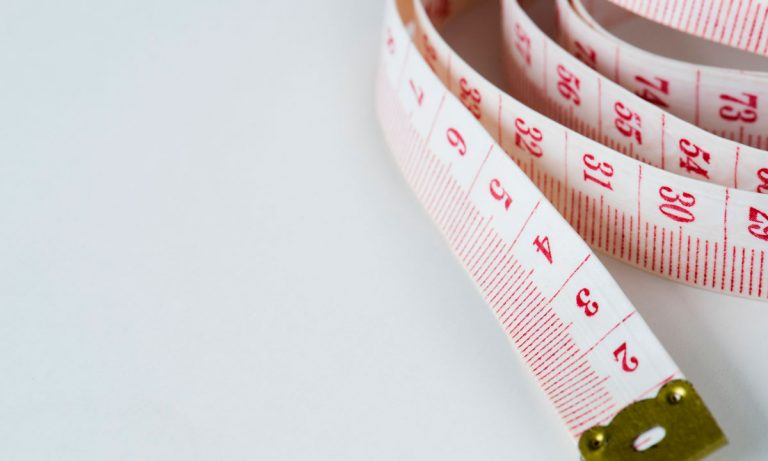
Here’s what you do: instead of stepping on a scale, take a tape measure and wrap it around the area of your belly that’s roughly two inches above your hips. Business Insider did some digging on this subject and found that your waist circumference is more accurate in determining your risk of developing diabetes, having a heart attack and dropping dead.

Unlike your body mass index, which doesn’t take take into account your body fat or muscle composition, your belly measurement does.

According to Business Insider:

In general if you’re a woman, you want a measurement that’s less than 34.5 inches. If you’re a man, a number below 40 inches is ideal.

A measurement that’s higher than those isn’t a death sentence, but it has been strongly linked with a higher risk of several serious diseases including type 2 diabetes. A study published in March in the Journal of the American Heart Association suggested that a high waist circumference may also be linked to your risk of heart attack.

So, what’s the connection between a large waist circumference and poor health? Scientists are still trying to figure that out, but the consensus seems to be that the fat inside your body may be keeping your internal organs from functioning properly.

This New Paint Absorbs The Smell Of Marijuana And Cleans The Air

Getting that familar skunky, dank smell out of your home after you smoke up just got a ton easier. A new paint has hit the market that claims to get the weed stench out of your walls, while also cleaning the air. Say, what?

The incredible new product comes from Ecobond Paint. And it not only works on marijuana smell, but also cigarettes, fire, pets and anything else that comes with a distinct smell that tends to permeate a room.

It’s called OdorDefender and it’s made with all-natural ingredients.

As Paul Barthel of EcoBond explained via press release:

The formulation includes resins, food-grade mineral additives, and alginate from seaweed; nature’s most effective absorber of toxic pollutants. This powerful combination gives the peace of mind that odor issues will be sealed and blocked, while protecting human health.

The seaweed is the ingredient that cleans the air because it gives off oxygen.

According to the press release:

  • In 2016, the CDC reported that 37.8 MILLION U.S. adults were current cigarette smokers. This represents an estimated 14,590,800 households impacted by cigarette smoke.
  • In 2016, Gallup reported that over 40 MILLION U.S. adults say they smoke pot. This represents an estimated 15,440,000 households impacted by pot smoke.

https://giphy.com/gifs/weed-wiz-khalifa-smoke-KpAPQVW9lWnWU

“Our intention was to help homes where the smoker might still be living, or that has been vacated,” Barthel explained to Green Rush Daily.

GRD reports that in the process of developing the paint, Ecobond performed years of testing, and that “at one point, they left marijuana burning for days to test the paint would absorb the smell.”

This Is Why Kate Middleton May Go Into Hiding Until October

Last weekend, Kate Middleton was front and center at the Trooping The Colour festivities in honor of the Queen’s “official” birthday, but it may be autumn before we get to see the Duchess of Cambridge again.

After giving birth to her third child, Prince Louis, in late April, Kate now gets six months of maternity leave, which she hasn’t even cracked the surface of.

Speaking exclusively to Express.co.uk, Royal expert Richard Fitzwilliams said:

Kate will be resuming Royal duties after taking extended maternity leave as expected after Louis’s birth, probably in the autumn.

That means it may be October before Kate is seen publicly, not counting family events, like Harry and Meghan’s wedding, which she attended less than three weeks after giving birth. And if we don’t see Kate until October, we likely won’t see her new bundle of joy until then, either.

“His Christening, reportedly in the summer, is likely to be when he is next seen,” Fitzwilliams told Express.

Prince William will be traveling solo for awhile, picking up the slack of royal duties, charity engagements and tours, while Kate takes care of their son.

South Carolina Voters Want Medical Marijuana

Although the legislative grind in South Carolina has shown very little interest in the legalization of marijuana, there is a desire, among the taxpayers, to bring the herb out of the underground for medical purposes.

Earlier this week, voters in the Democratic primary tendered their support for a non-binding measure asking “Do you support passing a state law allowing doctors to prescribe medical marijuana to patients? An impressive 82 percent of the voters responded favorably, while less than 20 percent were opposed, according to the Post and Courier.

Although the outcome of this vote does not change the law, nor does it require lawmakers to take any action, it does send a clear message to legislative channels that medical marijuana is something the majority of the citizens can get onboard with.

So far, this opinion has not been represented in the State Capitol, where lawmakers have managed to introduce legislation designed to put a medical marijuana program on the books but failed to take anything comprehensive to the next level. All of the proposals aimed at allowing patients to use marijuana for therapeutic purposes were completely disregarded this year by the South Carolina House and Senate. This means it is a dead scene for 2018.

But the latest ballot question could be the pressure lawmakers need to take medical marijuana seriously next year. Advocates believe the ballot question was a necessary move to put them in good standings for this reform next.

“It will show the legislators at the State House that their constituents support this issue and they should vote for it,” Janel Ralph of Conway, executive director of the Compassionate South Carolina patient advocacy group, told The State prior to the vote.

While taking the “temperature of the electorate,” as it was explained by former U.S. Attorney General of South Carolina Bill Nettles, turned out a positive result for medical marijuana, there was some concern that the numbers would be close. A poll published earlier this year showed only 53 percent of South Carolina was in favor of medical marijuana, while 35 percent is opposed.

Still, the latest figures from this week’s ballot measure represents immense support on this issue. A similar ballot measure was put to the voters in Illinois earlier this year, tuning up a similar outcome with respect to full legalization. Sixty-three percent of the voters responded “yes” when asked in a referendum, “Shall the State of Illinois legalize the cultivation, manufacture, distribution, testing, and sale of marijuana and marijuana products for recreational use by adults 21 and older subject to state regulation, taxation and local ordinance?”

It remains to be seen what lawmakers plan to do with the voice of the people.

Are Sore Breasts Normal

When your period comes around, your boobs get unpredictable. A minute ago everything was normal and now your back and your chest hurt, and your boobs look weirder than usual. You feel sore and you know your period is on its way. You wave your fist angrily at the sun and reach for a bottle of Advil.

Cosmopolitan spoke with Rebecca Brightman and Alyssa Dweck, two OBGYNs from New York who gave their takes on breast health. They discussed painful breasts, what you should expect when your period comes around, and when the symptoms are strange and you should go to the doctor. Check out some of the most useful bits of information:

Why Are Your Boobs Swollen And Tender And You Want To Cry?

https://giphy.com/gifs/crying-omg-kid-3ohzdMk3uz9WSpdTvW

Premenstrual symptoms can be felt throughout your entire body because of hormonal changes. Your progesterone levels start to rise, and that can make your body all sorts of weird, including your breasts. Some women experience pain while some don’t. Most women will probably experience it in their forties, when their estrogen levels are very high. You can’t escape that boob pain.

Related: 5 Scary Things That Can Happen After An Orgasm

Dweck claims that you can expect most swelling and tenderness over the course of the week before your period, between day 14 and 28 of your cycle. “Breast soreness typically occurs right before the period is about to come on. It’s part of the whole PMS phenomenon, and can be up to a week’s worth of swelling to the point where your bra size might change,” she says.

Why Does One Boob Hurt?

https://giphy.com/gifs/breakingbad-breaking-bad-walter-white-3oFzm9r8nz1CmqYtmU

While pain in both breasts is fine and normal, you should be on the lookout for pain on one breast since it could be a sign of a health issue. An infection can be the cause of this pain and it could also cause some discharge. A cyst could also be the cause discomfort and it should go away once your next period starts.

Why Do My Boobs Hurt All The Time?

https://giphy.com/gifs/90s-90210-beverly-hills-hgTA9xpnoE2EE

A change in birth control could cause constant boob pain, especially during the first month or two while your body is getting used to the new hormones. Tender breasts could also be a sign of pregnancy.

If the pain in your breasts is too much or if it impairs you in one way or the other, then you should definitely talk to a doctor.

How Can You Make The Pain Less Awful?

https://giphy.com/gifs/genius-zara-larsson-l3q2DN1zmiNlWUl8Y

While there’s not a lot of things you can do to treat breast pain, Dweck and Brightman recommend a tight and comfortable fitting bra that’ll eliminate bouncing and that will bring relief to your poor chest. Cold or hot compresses provide relief for some women, even though there’s not a lot of science behind it, and drinking lots of water can also keep your body hydrated and make you feel better. Then there’s Advil and prayers.

Legal Hemp: Coming Soon Nationwide?

Senator Mitch McConnell (R-KY) recently introduced S.2667, a bill which would allow states and tribes to regulate hemp production. The proposed law is appropriately titled the “Hemp Farming Act of 2018” (the “Act”). As the Senate Majority Leader, McConnell is one of the most powerful politicians in Washington, so it goes without saying that this is a big deal. In addition, the Act is being fast-tracked through the Senate, bypassing the standard committee review process.

The Act is currently in draft form and the details are subject to change. As written, “hemp” would be defined as:

the plant Cannabis sativa L. and any part of that plant, including the seeds thereof and all derivatives, extracts, cannabinoids, isomers, acids, salts, and salts of isomers, whether growing or not, with a delta-0 [THC] concentration of not more than 0.3 percent on a dry weight basis.”

This proposed definition is significant, because it specifically includes the term “extracts”, thereby undermining the DEA’s much-maligned “marihuana extract” rule, which broadly defines any extract from the cannabis plant as “marijuana” and not hemp. The proposed “hemp” definition also includes “cannabinoids” contained in hemp which could add much needed legal certainty to the already booming CBD market. The Act would also explicitly remove hemp from the Controlled Substances Act’s definition of marijuana.

The authority to regulate legal hemp would be placed in the U.S. Department of Agriculture. One major issue with the current federal “Industrial Hemp” program is that the 2014 Farm Bill, which established the program, does not name a federal agency to oversee it. Feel free to debate whether government regulations help or hurt an industry, but at least this bill provides some guidance as to who is responsible for the program.

Speaking of the 2014 Farm Bill, the Act would repeal and replace the “Industrial Hemp” section of that the 2014 Farm Bill one year after Act is passed into law.  The 2014 Farm Bill allows states to enact pilot programs for hemp research making hemp legal within the state’s borders. Hemp cultivated in compliance with a State’s program is expressly legal under the Farm Bill. The Drug Enforcement Administration (DEA) and other federal agencies have issued a joint Statement of Principles claiming that the commercial sale and/or the interstate transfer of Industrial Hemp is outside the scope of the Farm Bill and therefore unlawful. However, Congress has limited the DEA’s ability to use federal funds “to prohibit the transportation, processing, sale, or use of industrial hemp” grown in accordance with the 2014 Farm Bill.

Ultimately, the Act would require that states and tribes submit a plan to the US Department of Agriculture in order to cultivate hemp. The plan must include details on how to track the land where hemp is produced, a procedure for testing the THC concentration in hemp, a procedure for disposing of products that are not in compliance, and procedures for enforcing the Act. The Act would also allow hemp researchers to apply for grants from the and make hemp farmers eligible for crop insurance.

McConnell introduced the Act in the Senate on April 12, 2018, and it was co-sponsored by Oregon senators Ron Wyden and Jeff Merkley. That same day saw Representatives James Comer of Kentucky introduce companion bill H.R. 5485 in the House of Representatives with and Rep. Jared Polis of Colorado co-sponsoring.

McConnell hails from Kentucky and it’s no surprise that lawmakers from Kentucky, Oregon, and Colorado would support hemp legalization. In 2014,  we predicted Kentucky would lead the nation in industrial hemp as it was one of the first states to implement a hemp cultivation program under the 2014 Farm Bill. Kentucky was also one of the first states to legally obtain hemp seeds after it stepped up to fight the DEA in federal court in order to obtain those seeds. Since then, farmers in Kentucky have been happily producing hemp as a replacement for tobacco crops. McConnell and Kentucky Agriculture Commissioner Ryan Quarles highlighted Kentucky’s hemp program in announcing the Act:

McConnell: Hemp has played a foundational role in Kentucky’s agricultural heritage, and I believe that it can be an important part of our future. I am grateful to join our Agriculture Commissioner Ryan Quarles in this effort. He and his predecessor, Jamie Comer, have been real champions for the research and development of industrial hemp in the Commonwealth. The work of Commissioner Quarles here in Kentucky has become a nationwide example for the right way to cultivate hemp. I am proud to stand here with him today, because I believe that we are ready to take the next step and build upon the successes we’ve seen with Kentucky’s hemp pilot program.

Quarles: Here in Kentucky, we have built the best Industrial Hemp Research Pilot Program in the country and have established a model for how other states can do the same with buy-in from growers, processors, and law enforcement. I want to thank Leader McConnell for introducing this legislation which allows us to harness the economic viability of this crop and presents the best opportunity to put hemp on a path to commercialization.”

In addition to Kentucky’s leadership on hemp, Oregon has reconfigured its hemp program and is a national bellwether in this space. Oregon hemp growers and handlers are able to sell their products to state-licensed marijuana businesses (as well as anyone else in the country). The merger of Oregon’s hemp and marijuana markets is unique and other states will likely follow suit, especially if the Act becomes law. Finally, Colorado has more acreage dedicated to hemp cultivation than any other state at present.

As mentioned above, it appears that McConnell is flexing his considerable political muscle to get this bill fast-tracked through Senate. McConnell is using procedural Rule 14 which allows a bill to skip over the committee process so that legislation may be brought up on the Senate floor. This doesn’t guarantee that the Hemp Farming Act will get a vote, but it does indicate that McConnell means business.

Daniel Shortt is an attorney at Harris Bricken, a law firm with lawyers in Seattle, Portland, Los Angeles, San Francisco, Barcelona, and Beijing. This story was originally published on the Canna Law Blog.

Has Psychedelics Changed Your Life? These Scientists Want To Hear From You

You might react suspiciously upon hearing that an institution wants to talk with you regarding your experience with drugs, but no need to act all paranoid, dude. That institution would be Johns Hopkins University and they want to hear from you if you’ve had any experience with substances like psilocybin mushrooms, LSD, DMT, or any other hallucinogenic substances.

The university is currently “working on a research study about psychologically insightful experiences that occurred after taking a psychedelic substance.” Those who’ve taken hallucinogenic substances and wish to participate will be asked to submit a completely anonymous survey with specific emphasis on “psychological insight,” and its short-term and long-term effects.

Previously, as VICE’s Motherboard noted, the groups studied those who might have experienced extraterrestrial or extra-dimensional entities while using DMT. But the group is now investigating something called quantum change.

“Quantum change is a theory that states that psychological insight or mystical experiences can bring about powerful changes in mood, behavior, thoughts etc,” Alan Davis told Motherboard. “When psychological insight and mystical experiences occur together they might produce even more profound changes. The importance of this quantum change model is incredible as it will expand our current framework of psychedelic therapy models and help provide evidence that mystical and insightful experiences that are brought about by psychedelics might explain why they are so powerfully associated with positive behavioral, emotional, and cognitive change.”

This study runs in conjunction with a newfound interest from scientists into the world of psychedelics, a substance previously shunned in the 20th century. Just last month, researchers in the United Kingdom found that psilocybin mushrooms could help those with treatment-resistant depression. In addition, two new books from well-known writers have recently explored the world of psychedelics—Michael Pollan’s How To Change Your Mind and Tao Lin’s Trip.

If you’re interested in participating in the Johns Hopkins study, you can check more out here.

Don't Miss Your Weekly Dose of The Fresh Toast.

Stay informed with exclusive news briefs delivered directly to your inbox every Friday.

We respect your privacy. Unsubscribe anytime.