Wednesday, June 17, 2026
Home Blog Page 920

Spotify Releases Playlists For Each Queer Eye Guy

One of the coolest things about Spotify is how it markets the world’s most popular TV shows by making playlists for our favorite characters and designing algorithms that decide if your musical taste is the same as, say,  Jon Snow’s. And OMG now Spotify releases playlists for each Queer Eye guy!

Spotify has done this several times, with “Game Of Thrones”, “Stranger Things”, and now with “Queer Eye”. These playlists allow you to get into the psyche of these characters and people, even though the characters from “Game Of Thrones” probably don’t have a lot of time to listen to Kanye. Spotify marketing doesn’t make a lot of sense, but it’s very fun.

With “Queer Eye”, Spotify has partnered with the cast to curate some playlists to get you in the mood for ugly crying, while watching these guys fix sad apartments along with the self-esteem of people who really need it. You won’t get new clothes or beauty tips, but at least you’ll get some awesome workout music.

To use this feature, you must visit this link, where a plug-in will prompt you: “Which of the fab five do you listen like?” It sounds confusing, but it really isn’t. After you sign in, the website will provide an answer, and you’ll figure out which of the fab five has the same musical tastes as you. When you get your answer, your guy will pop up onscreen and explain why they love that type of music. You can then click on “Listen to Playlist,” where you’ll get to see their entire song selection.

“Queer Eye” returns for it’s second season on Netflix tonight (June 15).

New Study Claims Millennials Prefer To Drink At Home

Joining the list of articles professing that Millennials are ruining the world is this new study, announcing that 28 percent of this demographic prefers to drink at home instead of going out. “From dating through apps and online shopping to working from home, it seems Millennials prefer to do nearly everything from the comfort of their couch,” reads the sermon-like opening paragraph.

The article, published in Mintel, compares these results from Millennials with other generations, such as Baby Boomers (ages 54 to 72), who prefer to party it up. Only 15 percent of them believe that drinking somewhere besides home takes too much effort.  But then again, Baby Boomers are older and on average make more money and have better jobs.

The stay at home trend is affecting all of America, where 55 percent of the population agrees that yes, going out is tiring and takes a whole lot of effort. In-home drinkers believe that staying in is more relaxing, cheaper and personal, and that it also helps them keep tabs on how much alcohol they consume. The study claims that bars and restaurants are going to have to step up their game and take these stats into consideration, finding creative ways to lure Millennials into their establishments. An analyst suggests creating “‘Instagramable’ pop culture pop-up bars.”

While these stats are interesting for people to know, and something that restaurant and business owners should definitely take into account, it would be nice if news outlets could cut Millennials some slack.

Maybe, instead of focusing on the fact that Millennials are couch potatoes who only enjoy Netflix and avocados, the article should also mention the poor economy and the fact that some of these people are not making enough money. Or that they have tons of student loans, and prefer to do something else with their $14 instead of having one drink that they could make at home. Just a thought.

Congressional Committee Blocks Marijuana Banking Measure

A measure that would have protected banks from federal regulators when dealing with marijuana-related business has been rejected.

On Wednesday, the House Appropriations Committee defeated the Safe Banking Amendment offered by Congressman Dave Joyce (R-OH).

Before the vote, Joyce said that the issue is “not whether or not one approves of marijuana. This is about public safety and financial transparency.”

According to NORML:

The defeat of the Safe Banking Amendment was not a vote about marijuana, but rather it was about normalizing a nascent industry that serves hundreds-of-thousands of customers in the majority of US states where cannabis is currently regulated. Once these companies have an easier time conducting their day-to-day operations, then they should be willing to offer more consumer-friendly prices instead of inflating them at the point of sale to cover backend costs associated with operating as an all-cash business.

Currently, hundreds of state-legal, licensed, and regulated businesses do not have access to the banking industry and are unable to accept credit cards, deposit revenues, or write checks to meet payroll or pay taxes. This situation is untenable. No industry can operate safely, transparently, or effectively without access to banks or other financial institutions.

Earlier this week, the Fraternal Order of Police urged House lawmakers to reject the cannabis banking move:

It’s now up to congress to adopt some sort of federal policy to allow these law-abiding businesses (and their consumers) to operate just like any other commercial business.

Cannabis Users At Low Risk For Developing Mental Health Issues

The impact marijuana has on mental health is still somewhat of an anomaly in the grand scheme of what we know, understand and appreciate about the cannabis plant. There are some who believe that cannabis use can bring on an increased risk for psychosis, while some studies have shown a relationship between pot consumers and schizophrenia. Yet, some of the latest research finds that cannabis could be a safer and more effective way to treat depression than prescription medications, which are doled out to 1 out of 3 people, according to a report from NPR.

It stands to reason that with more states moving to legalize the leaf for medicinal and recreational purposes, we need to get a grip on its impact on public health. But this is difficult to do, especially since the herb is still considered an outlaw substance in the eyes of the federal government. This roadblock continues to prevent scientific minds from digging deep into the cannabis plant, to understand more about its therapeutic benefits and potential downfalls. Still, when it comes to the cannabis plant and psychotic disorders, the research we do have suggests that it is not a cut-and-dry issue.

“A frequently cited adverse effect of cannabis use is increased risk of psychosis, where the user experiences disordered thinking, hallucinations and delusions,” reads a new report from the World Health Organization. “There are frequent reports of acute cannabis intoxication precipitating a short-lasting psychotic state that reverses once the effects of the drug have abated.”

Although some studies have shown that tetrahydrocannabinol (THC), the main psychoactive compound in marijuana, can bring about increased paranoia, anxiety – all of which are connected to psychosis – cannabidiol (CBD) has been shown effective as an anti-psychotic. Some of the evidence points to dosage as being the real key to whether marijuana serves as medicine or causes a person to suffer from mental woes.

“The relationship between cannabis use and risk of schizophrenia appears to be dose-dependent,” the report says. Yet, “sharp increases in global cannabis use in recent decades has not increased the incidence of schizophrenia.”

But it also depends on the age of the user.

“Most of the evidence that cannabis causes schizophrenia comes from studies of during-adolescence users, and adolescence is the period of highest risk for developing schizophrenia,” the report reads. “The rates of cannabis-induced psychosis may be lower in patients who commence cannabis use in adulthood.”

While there is a lot to be learned about marijuana and its impact on mental health, WHO says most people have nothing to worry about. “The vast majority of people who use cannabis will never develop a psychotic disorder, and those who do are likely to have some genetic vulnerability to cannabis-induced psychosis,” the report reads.

Why Did Kylie Jenner Delete All Images Of Her Daughter From Instagram?

Kylie Jenner has decided that social media is too negative for her daughter, Stormi, after trolls wrote hateful messages and rumors on her posts.

Without making a statement, Kylie decided to delete all Instagram images featuring her daughter’s face from her profile. According to Cosmopolitan, fans started to notice this after Kylie uploaded a selfie featuring the corner of her baby’s head. A user commented that she cropped her baby out and Kylie replied “yeah, I cut my baby out. I’m not sharing photos of my girl right now.”

Via People:

Kylie felt so protective of her baby when she was pregnant. This is why she didn’t share any bump pictures while she was pregnant. After Stormi was born, Kylie was the proudest mom.

She couldn’t wait to show off Stormi to her fans. She posted pictures, because she was so excited to be a mom. Unfortunately, social media is a crazy place. People have been making nasty comments.

Kylie is shocked and doesn’t want her daughter’s pictures to be a part of something negative. She might reconsider in the future, but for now, she won’t post any more photos of Stormi’s face.”

Many fans believe Kylie yanked her daughter off of social media after rumors started to swirl questioning Stormi’s father. People were uploading images of Stormi and Kylie’s former bodyguard, Tim Chung, suggesting that he’s the real father.

Chung denied these rumors via social media. “I am a very private person and would normally never answer to gossip and stories that are so ridiculous that they are laughable,” he said. “Out of deep respect for Kylie, Travis, their daughter together and their families, I would like to set the record straight that my interactions with Kylie and her family have been limited in strictly a professional capacity only.”

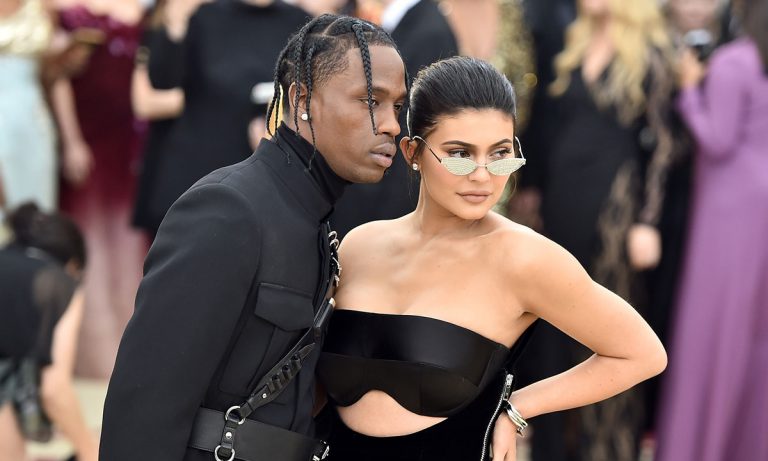
While Kylie hasn’t addressed the rumors directly, she uploaded a picture of herself and Scott on Instagram with a caption that says, “Stormi’s parents.”

Target Sold CBD Online, Was It Legal?

BuzzFeed recently reported on Target’s short-lived effort at selling cannabis-based products online. By the end of the day on which the story ran, the major retailer had already removed the product from its website. The question is when Target sold CBD online, was it legal? The Phoenix New Times quoted Target spokesperson Kate Decker as saying, “We started carrying Charlotte’s Web hemp extract items last week on Target.com. After further review, we have decided to remove it from our assortment.” However, the Phoenix New Times reported earlier in September that Target was selling CBD products online. Decker could not confirm exactly when Target started selling CBD. The only certainty is that it ended the same day as BuzzFeed’s article.

The thing is that many online retailers (WalMart, Groupon, and Amazon) sell or have sold CBD online. This is in part likely because of the complex legal status of CBD. The Drug Enforcement Agency’s (“DEA”) stance is that CBD, and other cannabinoids derived from cannabis, are Schedule I substance under the Controlled Substances Act (“CSA”), regardless of their source. Last year the DEA created a rule defining “marihuana extract” as an extract “containing one or more cannabinoids derived from any plant of the genus Cannabis,” as marijuana, a Schedule I controlled substance. Use of “any” means it applies to any derivative of the cannabis plant including, CBD and other cannabinoids found in cannabis. This far-reaching definition, on its face, purports to make parts of the cannabis plant that were seemingly legal illegal.

Setting aside the Rule, there are three scenarios in which cannabis extracts are arguably legal under federal law. The first being when extracts are derived from the “mature stalk” of the cannabis plant because the CSA’s definition of marijuana “does not include the mature stalks of such plant, fiber produced from such stalks, oil or cake made from the seeds of such plant, any other compound, manufacture, salt, derivative, mixture, or preparation of such mature stalks (except the resin extracted therefrom), fiber, oil, or cake, or the sterilized seed of such plant which is incapable of germination.” 21 USC § 802(16). The DEA has clarified that the Rule does not include portions of the plant specifically exempt from the CSA’s definition of marijuana but also maintains that products that contain any meaningful amount of CBD can be derived from the mature stalks.

The second scenario is when extracts are derived from an industrial hemp plant lawfully grown in compliance with section 7606 of the 2014 US Farm Bill (“the Farm Bill”). The Farm Bill allows states to enact pilot programs for hemp research making hemp legal in the state’s borders. Hemp cultivated in compliance with a State’s program is expressly legal under the Farm Bill. Extracts from compliant hemp are legal in the State in which they were derived though the sale of these products in other states is not explicitly allowed.

The final scenario is when products are derived from imported hemp. In the early 2000s, two cases out of the Ninth Circuit, Hemp Indus. Ass’n v. DEA, 357 F.3d 1012 (9th Cir. Cal. 2004) and Hemp Indus. Ass’n v. DEA, 333 F.3d 1082 (9th Cir. 2003) determined that the DEA cannot regulate hemp products simply because they contain trace amounts of THC. This is because some portions of the cannabis plant are explicitly outside the scope of the CSA and the DEA was not permitted to expand its scope to encompass all parts the plant. At the time of the ruling, it was illegal to grow hemp so it only applied to hemp imported from outside the USA. However, its holding could also apply to hemp grown pursuant to the Farm Bill. In other words, marijuana extracts from non-psychoactive (industrial) hemp with only trace amounts (or less) of naturally occurring THC are permitted under the Ninth Circuit’s ruling.

The Hemp Industries Association has sued the DEA over the “marijuana extract” rule and that case is still pending and until it is decided, uncertainty remains as to the legality of CBD products. The DEA may very well lose because the Rule appears to conflict with the Farm Bill and the Hemp Industry cases from the early 2000s.  Nonetheless, despite potential legal flaws, the Rule is currently in place and anyone who distributes “marijuana extracts” is a potential target of the DEA. This is likely why online retailers like Target have flirted with selling CBD products online but often end up pulling products.

Daniel Shortt is an attorney at Harris Bricken, a law firm with lawyers in Seattle, Portland, Los Angeles, San Francisco, Barcelona, and Beijing. This story was originally published on the Canna Law Blog.

Parents Face Jail Time For Giving Their Son Cannabis To Treat Seizures

The parents of a 15-year-old boy with near-constant seizures are fearing for their son’s life after the couple lost custody of the teen because they gave him marijuana to treat his condition.

In February, Macon, Georgia, residents Suzeanna and Matthew Brill decided to give their son, David, cannabis to smoke after pharmaceuticals failed to halt the devastating seizures the teen suffered every day.

The couple claims that for 71 blissful days, David was seizure-free and Suzeanna and Matthew thought they had found the miracle cure they had so desperately tried to find.

“Nothing else was working,” Suzeanna told WMAZ-TV. “I can’t have my kid dying because nobody wants to listen.”

Their joy and relief ended abruptly on April 20 – 4/20, of all days – when the Twiggs County Sheriff’s Office showed up on the Brills’ doorstep. Someone had tipped off the state, and a sheriff’s deputy was there to remove David from the family’s home.

The couple were arrested and charged with reckless conduct and the Georgia Division of Family and Children Services (DFCS) took custody of David.

The very same day that law enforcement removed David from his parents’ custody, he had a seizure and had to be rushed to the hospital.

“We complied, and within 14 hours of complying we were rushing our son to the hospital,” Suzeanna told The New York Times. “And it was one of the most horrific seizures I’ve ever seen.”

In Georgia, doctors are not allowed to prescribe cannabis, and it’s illegal to both sell and possess the drug. Those who have a state-issued medical marijuana card can possess low-THC cannabidiol (CBD) oil, but the substance is notoriously hard to come by in the state.

Twiggs Co. Sheriff Darren Mitchum has expressed little sympathy for the family, telling reporters at a press conference following the arrests that “It’s important to say, in my position as a sheriff, it doesn’t matter if I agree with the law.”

He later added, “The fact is, marijuana is not legal in the state of Georgia.”

In the wake of Mitchum’s remarks, the Twiggs County Sheriff’s Office has been bombarded with phone calls from residents near and far who are outraged by the arrests. A number of threats have been leveled against the sheriff and his deputies, according to Mitchum. He told WGXA that he finds it “sad” that so many people “think it’s OK to give your son drugs.”

David Brill remains in DFCS custody, where he is away from the beloved service dog who was able to sniff out the boy’s seizures, the bicycle he so enjoyed riding during the 71 days he was free from convulsions, and, most importantly, the mom and dad who were only trying to do their best to help their child.

David also continues to have seizures, and Suzeanna and Matthew know their son’s life is in grave danger.

The distraught couple says that despite everything the family has been through, they would do it again, if it meant saving David’s life.

“We look at our child in a ball in the middle of the floor unable to do anything, but their entire body is convulsing tensed up and you have to pick your child up, carry them to your vehicle because you live 45 minutes away from help,” an emotional Suzeanna told WGXA. “I hope no parent ever has to do that.”

She added, “There’s no words to describe the hopelessness.”

The Brills are scheduled to appear in court on June 14, at which time David’s status could be decided.

Study Suggests Kitchen Towels Could Give You Food Poisoning

0

We all know something’s up with our kitchen towels, we just avoid lingering on the thought. People use them for multiple purposes that range from cleaning up spills from varying sources to wiping our hands after we’re done cutting something. There’s just no way for kitchen towels to be clean. And now we know just how unclean they are.

A recent study claims that kitchen towels contain a lot of bacteria, which increases with family size and amount of meat consumption.

According to CNN, researchers cultured bacteria from 100 different kitchen towels that were regularly used and washed for a month. They discovered there was bacteria growing on 49 percent of them. Almost three quarters of the 49 towels had E. Coli and Enterococcus bacteria. (Those are the ones you find on your intestines.) “Those are bacteria that are concerns for foodborne illnesses,” said Paul Dawson, food scientist and professor from Clemson University.

While all of this information is gross and freaky, Popular Science claims that none of this is new nor all that alarming. Bacteria surrounds us constantly, and is mostly harmless. The study suggest that families with kids and/or elders should be extra careful with their kitchen towels, and that all people should avoid using the towels for multiple purposes, since that increases the risk of spreading bacteria around. Aside from that, users should just be careful when handling their food, especially raw meats. But you already knew that, right?

People should also wash their kitchen towels regularly and allow them to dry out after cleaning up a spill. Moisture is one of those things that bacteria loves.

Cannabis Does Not Lead To An Increase In Suicidal Behavior

“We know there is a high rate of cannabis use among this population and wanted to better understand any potential correlation to suicidal behavior.”

For decades, one of the major talking points among anti-cannabis pundits is that patients of psychiatric disorders who consume it have an increased risk of suicidal behavior. But a study released this week finds no evidence to support the claim.

Research conducted by scientists from McMaster University in Canada refuted pre-existing data that shows the herb is linked to an increased chance of suicidal behavior in the general population. The study was published online this week in the journal Biology of Sex Differences.

“In what we believe to be a first, this study seeks to understand how cannabis use impacts suicide attempts in men and women with psychiatric disorders who are already at a heightened risk of attempting suicide,” said Zainab Samaan, the lead author. “We know there is a high rate of cannabis use among this population and wanted to better understand any potential correlation to suicidal behavior.”

The researchers analyzed data from 909 psychiatric patients: 465 men (112 who had attempted suicide) and 444 women (158 who had attempted suicide). The average age of the patients was 40.

“While there was no clear link between cannabis and suicide attempts, our findings did show that among participants with psychiatric disorders, having a mood disorder or being a woman correlates with an increased risk of suicide attempt,” said Leen Naji, one of the authors of the report. “Meanwhile, having a job is protective against suicide attempts.”

The Canadian government is expected to legalize cannabis nationally later this summer. “Our study is both timely and relevant, especially in light of the impending legalization of recreational cannabis with an expected increase in access in Canada, and there remains uncertainty about the full effect of cannabis on those living with psychiatric disorders,” she said.


Trailer Park Boys Go Legit In Canada’s Legal Marijuana Market

After years of failing on the black market, the “Trailer Park Boys” are setting their get-rich-quick schemes in a different venue — the legal cannabis industry. As the foundation of Canada’s legal recreational cannabis industry blooms, we’re seeing new and old players alike emerge to take advantage of the new opportunity. Thankfully for “TPB” fans, that means they will soon enjoy expertly-crafted cannabis products from Trailer Park Buds, the TV show’s new weed line.

Trailer Park Buds fits under the umbrella of Organigram, the licensed medical marijuana brand in Canada. Back in 2016, Organigram announced a partnership with TPB Productions, which is owned by the real-life actors who play Ricky, Julian, and Bubbles, to become the “Trailer Park Boys” official strategic partner. That means Organigram would “develop branding, packaging, and a competitive product portfolio targeted towards recreational marijuana consumers.”

RELATED: Canadian Military Can’t Ban Troops From Smoking Weed

Through that existing partnership came Trailer Park Buds, which is being marketed as “a cannabis brand with a wink that speaks to consumers who appreciate a sense of humour and don’t take themselves too seriously.” Those consumers can enjoy flowers, as well as blended and pre-rolled products with the “TPB” stamp on it.

“This relationship solidifies one of our strategic building blocks as we plan for the legalization of recreational use in Canada. The team at Trailer Park Boys have an aligned vision to develop a National brand with our assistance and we’re incredibly excited at how the partnership will come to life,” Ray Gracewood, Chief Commercial Officer at OrganiGram, said in a press release announcing the initial partnership.

However, Canada isn’t too keen on celebrity endorsement in the cannabis space. In a draft of the rules released ahead of legalization, cannabis packaging will only be allowed to include one other brand element beside the product’s name. Additionally, that other brand element must be smaller than the government’s warning label about the possible dangers of smoking marijuana.

RELATED: 8 Ways to Enjoy Marijuana Without Smoking It

But Trailer Park Buds likely won’t need any extreme form of publicity or promotion. As Gracewood said to The Daily Hive, “packaging is a critical element of the brand mix but certainly isn’t the only element. There are other ways for us to bring a brand to life outside of packaging.” That’s because the Trailer Park Buds logo exists as a natural extension of the “Trailer Park Boys” brand, which is instantly recognizable to fans of the show. If they spot the ballonish red lettering, there will be no mistaking who’s behind the product.

Instead, they’re more likely to quote an iconic Rickyism from the show, “Cory, Trevor, smokes let’s go.” Budtenders are surely anticipating hearing that 10 times a day.

Don't Miss Your Weekly Dose of The Fresh Toast.

Stay informed with exclusive news briefs delivered directly to your inbox every Friday.

We respect your privacy. Unsubscribe anytime.