Tuesday, December 16, 2025
Home Blog Page 925

PA Approves Landmark Marijuana Research For State Universities

Often the argument you hear regarding anti-cannabis legalization proponents involves a lack of research. There isn’t enough scientific information available to decide whether marijuana legalization will inflict more harm or good. The catch-22, however, is that marijuana’s status as a Schedule I drug limits any federal dollars flowing into fund studies at research institutions.

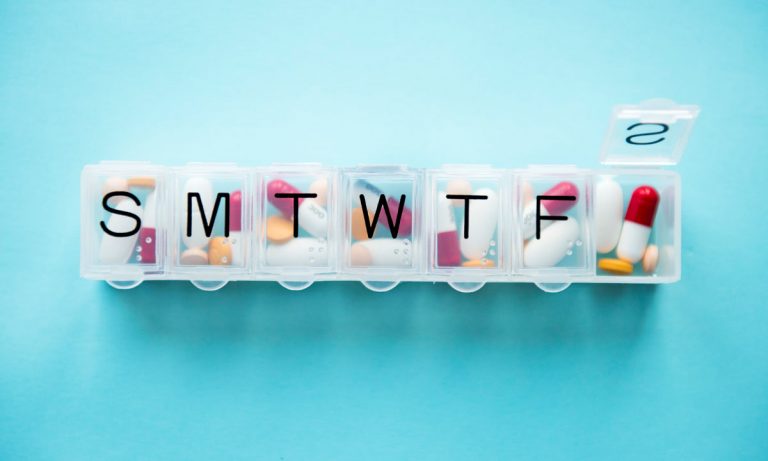
But Pennsylvania Governor Tom Wolf announced this week that eight medical schools—including the Perelman School of Medicine at the University of Pennsylvania, the University of Pittsburgh School of Medicine, and Penn State College of Medicine—have been approved by the state to conduct medical marijuana research.

JJ Abbott, a spokesman for the governor revealed the schools were selected above other as Certified Research Centers by the state’s Department of Health.

“The goal here is to get the process started today so that these eight institutions can start looking at how medical marijuana helps patients, and hopefully it will lead to more and better outcomes for patients in the future,” Abbott told WESA FM.

Added Wolf: ““Pennsylvania’s premiere medical schools will be able to help shape the future of treatment for patients who are in desperate need not just here, but across the country.”

School officials from Pitt said in a statement this program would be the first of its kind in the country. The schools will also be protected by state medical marijuana laws signed by Wolf in 2016 against any potential persecution from the notoriously anti-marijuana Attorney General Jeff Sessions.

“Everything that these institutions will do going forward will be within the confines of state law, and they’ll be protected under state law to do that,” Abbott said.

Prince Charles To Walk Meghan Markle Down The Aisle

Prince Charles is taking his role as future father-in-law pretty seriously. It’s been announced that the Prince of Wales will be walking Meghan Markle down the aisle Saturday in her father’s stead.

In a statement released today, Kensington Palace stated that: “The Prince of Wales is pleased to be able to welcome Ms Markle to the royal family in this way.”

Charles is taking the place of Markle’s real father, Thomas Markle Sr, who’s been at the center of some unwanted media attention as of late. Some staged, yet adorable, photos of him prepping for his daughter’s wedding left him embarrassed. However, the “official” reason he bowed out was due to his  told his health, having undergone heart surgery this week.

Related Story: Let’s Really Talk About The Mess Meghan Markle’s Dad Made By Selling Those Fake Photos

On Thursday, Kensington Palace confirmed he would not be attending:

Oddly enough, those who keep tabs on gossip rags probably know Mr. Markle better than his future son-in-law; Prince Harry has not yet met the man, who lives in Mexico.

Markle’s mother, Doria Ragland, is slated to accompany her daughter in the bridal car, while also staying with her Friday night at the Cliveden House hotel in Taplow.

As The Daily Mail reports, Prince Charles walked Alexandra Knatchbull, goddaughter of the late Princess Diana, down the aisle at her 2016 wedding to Thomas Hooper.

A family friend was quoted as saying, “It’s very unusual to be given away by someone else at your wedding – even if it’s the Prince of Wales.”

Might be unusual, but it certainly will be memorable.

Technological Advancements That Are Changing The Cannabis Industry

The cannabis industry is unfurling fast and part of its momentum is due to the tech world’s involvement. There are applications and sites now that streamline cannabis businesses to the max — for now. As tech gets more savvy and cannabis continues into the mainstream, further advancements are sure to follow.

So far, 30 states and the District of Columbia have legalized either medical marijuana or full-on recreational. With this rapid expansion has come opportunities for tech innovators. Now more than ever, cannabis is being monitored from seed-to-sale and that trek requires meticulous tracking and organization.

With the federal status of Schedule I still looming, there are still hurdles, especially for uniform tracking and quality assurance. So far, there are variances from state to state, but that’s also not necessarily a bad thing. It’s state’s sovereign rights that have gotten the cannabis movement as far as it’s come. That and a lot of love and hard work from activists and advocates who will always be remembered.

We’ve moved away from the outlaw culture that brought us here and are moving at a rapid clip toward regulation and compliance. Not only do they lend that extra boost of legitimacy to the movement on a broader scale, they also provide for safer, cleaner medicinal and recreational pot.

Regulation and compliance may be high on the list, but they are in the company of topics that are largely agreed upon for further cannabis advancement. Tracking seed to sale not only tracks and forces accountability, it also keeps drug cartels from having a hand in any of the processes. It keeps teenagers at bay and provides a safer approach.

Soon, dispensaries, grow operations, processing facilities, delivery services and every other aspect of the marijuana industry are going to be basically controlled by tech. Now is the race to find the best and brightest apps, sites, databases and programs to keep the market fluid, honest and impeccably in line.

We have a lot to owe to the Wild West way of doing things that got us most of the way here, but it’s time to batten down the hatches and let tech lead the way to a sustainable future in which cannabis holds the respect and accountability of the major industry that it already is.

Pittsburgh Decriminalized Cannabis Two Years Ago, So Why Are Arrests Up?

In December 2015, with much fanfare and political grandstanding, the Pittsburgh City Council announced it had passed an ordinance decriminalizing cannabis. After more than two years later, the law appears to be failing.

Shortly after the vote more than two years ago, Pittsburgh City Councilor Daniel Lavelle told City Paper, “From a social perspective, it will really help a lot of young men and women’s lives from being destroyed or caught in sort of the hamster wheel of prosecution through governmental means,”

But earlier this week, City Paper, Pittsburgh’s leading alternative weekly newspaper, reported that marijuana-possession arrests skyrocketed in 2017 after going down the first year of the legislation.

According to detailed reporting from the award-winning weekly:

Chris Goldstein of marijuana-advocacy group Philly NORML compiled statistics from the Pennsylvania Crime Reporting System over the past few years. Goldstein counted the arrests filed under Pennsylvania statute 18F, which signifies misdemeanor possession of less than 30 grams of marijuana.

In 2016, the first year of decriminalization in Pittsburgh, marijuana-possession arrests dropped to 494 for the year (down by 160). But in 2017, marijuana-possession arrests increased to 772. In fact, 2017 arrests for possessing less than 30 grams of marijuana even surpassed the 2015 totals by 118 arrests (before a decriminalization ordinance was in place but recognized as necessary by city officials).

This, obviously, was not the intent of the law. The goal of the ordinance was that the city would save taxpayers’ dollars because fewer resources would be employed to arrest and prosecute citizens. Even more important, the city council was hoping to reduce the disproportionate arrests of black people.

Instead, marijuana advocates are up in arms over the fact that “the ordinance has had virtually no effect on shrinking the disproportionate gap in which black and white people are arrested for marijuana possession,” according to City Paper’s reporting.

Pittsburgh political leaders are aware of the law’s failure to work as intended and are exploring ways to fix the problem. But arrests will only drop again, cannabis advocates say, if changes are made to the existing law. More problematic, some people argue, is the anti-marijuana attitude of law enforcement officers in the city.

Patrick Nightingale, of marijuana-advocacy group Pittsburgh NORML,  told City Paper that possession arrests are still overwhelmingly affecting African Americans in Pittsburgh. Out of the 772 people arrested on misdemeanor marijuana-possession charges in 2017, 551 of them were black. That means in a city where African Americans make up just 24 percent of the population, black residents made up 71 percent of these marijuana arrests. That percentage has seen virtually no annual change since 2013.

“You are still bringing 700 people into the court and fingerprinting them, and that is 700 people that still need their records expunged,” Nightingale told City Paper. “All of these cases are still being withdrawn. Why are these people getting fingerprinted?”

Martha Stewart Can’t Believe Oprah Smokes Marijuana

Oprah loves her weed, or at least that’s what close friend Gayle King says. During an interview with Ellen DeGeneres, King said that she’s never smoked marijuana before but that Oprah has done so in the past. And in the present. And then things got awkward so she changed the subject because she didn’t want to incriminate her friend on live TV. It’s California, Gayle. It’s okay. Also, it’s Oprah: we’re pretty sure it’s illegal to charge her with any sort of crime.

No one cares about all of this information except maybe Martha Stewart and the paparazzi who were stalking the outside of her building. Martha seemed very confused when a photographer from TMZ suddenly asked her about Oprah’s new smoking habits. We understand her confusion; it’s a jarring transition.

At first, Martha responds, “Cigarettes?” playing coy, as if she didn’t co-host a show with Snoop Dogg where they cook marijuana-infused everything. After the paparazzi makes it clear that Oprah smokes weed and not cigarettes, Martha responds, “Weed?!” and then she says “End of Oprah,” because she’s either evil or a comedic genius. We’re betting on the latter one.

This Town Has A New Giant Marijuana Leaf Flag

In the Estonian language, the literal translation of the word “cannabis” is “kanepi”. Earlier this week, the rural Estonian town named Kanepi voted to adopt a marijuana leaf as its official logo.

The Fresh Toast – As marijuana becomes legal and more mainstream, this town has a new giant marijuana leaf flag!

The vote also means the municipality will proudly fly a new flag adorned with the marijuana leaf, local officials said. Centuries ago, the southern Estonian town was known throughout the region for hemp oil processing and hemp fabric industries. Hemp, of course, is a type of marijuana for its industrial applications and contains nearly undetectable amounts of psychoactive THC.

The Kanepi municipality was formed last summer after merging with two other districts under a single government. The citizens of the new official town voted on a new emblem, according to ERR. There were seven different options to vote on and the silver marijuana leaf garnered 12.000 of the 15,000 votes. Earlier this week, the Kanepi Municipal Council voted to endorse the vote. That vote was much closer: 9-8 in favor.

Related: Little-Known Health Effects Of Medical Marijuana

According to Mayor Andrus Seeme, the panel didn’t support the design exactly as it was presented in the referendum — while the cannabis leaf will remain, the committee recommends stylizing the leaf somewhat. Seeme said the leaf has been used as an official logo by locals for decades.

“Today the cannabis leaf is seen primarily as a recreational drug, but in fact, hemp-type cannabis has been used in practical ways for years and it has hundreds of uses,” Seeme told AFP, adding that he saw “nothing wrong” with the town’s new logo. “We have a few local businesses producing organic hemp oil and flour,” Seeme said, adding that a local bakery also sells bread with hemp seeds while another business produces concrete using hemp.

Cannabis is illegal in Estonia, but possession and use of small quantities for personal use is a misdemeanor punishable with a fine.

NY Daily News – It’s Time To End Reefer Madness

In New York, it’s getting real. You can almost taste it. Cannabis legalization appears to be getting closer to reality.

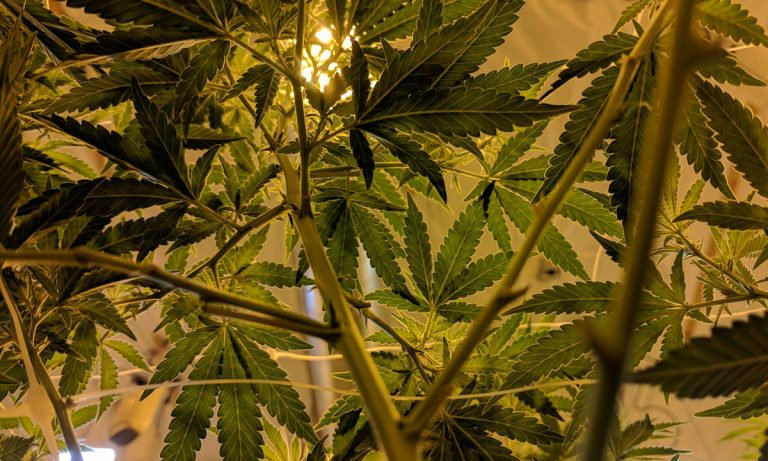
On Friday, the New York Daily News front page featured a pair of marijuana leaves with the headline blaring: “WEED THE PEOPLE.” Readers were told to turn to page 24 of the tabloid to read their editorial in full-throated support of legalizing the herb.

The jaw-dropping front page and 684-word editorial is just the latest salvo in the half-century-old War on Drugs. In just the last few weeks:

  • New York Mayor Bill de Blasio announced that he will work with the NYPD to slash marijuana arrests by mid-June.
  • The New York Times reported that people of color are STILL arrested at much higher rates than whites. In Manhattan, black people were arrested at 15 times the rate of white people, according to the Times’ investigation.
  • Councilman Rory Lancman, head of the City Council’s justice committee, urged the city’s five district attorneys to stop prosecuting low-level cannabis possession cases.
  • Actress and activist Cynthia Nixon is running for governor with cannabis reform as a major plank in her platform. Her surprising early momentum has out incumbent Andrew Cuomo, no friend of cannabis activists, into a difficult political position. His anti-marijuana position will most likely have to shift if he has any chance for re-election.
  • The state’s Democratic party has already staked out its pro-marijuana position and is expected to endorse legalization at next week’s annual party convention.

There have been other subtle changes in the Big Apple, but Friday’s front page editorial endorsement in the Daily News may be a tipping point.

“Ending marijuana prohibition and establishing a system to tax and regulate marijuana for adult use is the smart choice for New York communities because it will alleviate one of the biggest causes of negative interactions with law enforcement,”said Kassandra Frederique, New York state director for the Drug Policy Alliance, “Legalizing marijuana will also provide an opportunity, due to the revenue it will generate, for the communities that have been most devastated to start to repair the harms of the drug war.”

We are part of this awakening, which is why we welcome the push to legalize and regulate marijuana. By every honest measure, the substance has more in common with alcohol and tobacco than it does harder drugs that are rightly illegal.

The editorial reminds readers that way back in 1977 — 31 years ago! — the city decriminalized possession of 25 grams or less of marijuana, making it an infraction with a $100 fine. But, as the piece points out:

In the intervening 40 years, hundreds of thousands of people have been arrested. Police in the five boroughs continue to make some 17,000 arrests annually for pot possession.”

And despite the fact that research shows marijuana is used in about equal numbers by whites, blacks and Latinos, blacks and Latinos make up 86 percent of arrestees. Those two groups account for just 51 percent of the city’s overall population. Even the NYPD’s chief of crime control strategies has said this gulf “should be troubling to anyone.”

 The New York Daily News editorial board concludes its argument simply: “We’ve gained little, and lost plenty, in waging this misbegotten war. It’s time to try another way.”

How Much Sex, Violence And Hate Speech Can Facebook Control?

Like most social media websites, Facebook has a problem with hate speech and trolls. Unlike other social media websites, Facebook was involved in a scandal that’s rumored to have swayed the results of the US elections, while accessing millions of people’s privacy and information. For the past couple of months, Facebook co-founder Mark Zuckerberg has been in charge of providing damage control for his company, and finding ways of filtering out questionable content and preventing a situation like Cambridge Analytica from happening again.

With over 2 billion active monthly users, filtering out hate speech, violence, and sex is a complex issue. The current state of the world, filled with racial and political tensions, makes things even harder. According to WIRED, when it comes to preventing terrorism, Facebook is capable of identifying over 95 percent of content that promotes the behavior. Alex Schultz, Vice President of Analytics, claims that the state of the world influences the content that’s on the site. “When there’s a war, more violent content is uploaded to Facebook,” he says.

When it comes to nudity, sex, fake accounts, and spam, Facebook is capable of flagging over 95 percent of these posts. For graphic violence, the company is capable of controlling over 85 percent of it. When it comes to hate speech, the company faces a larger problem, being capable of stopping just 38 percent of it. Hate speech is a tough problem for Facebook to solve because it’s hard to know exactly what it is and what was the original intent of the person who made the post.

According to the transparency report, covering October 2017 to March 2018, Facebook took down more than 860 million pieces of questionable content from the website in the first quarter. Blake Reid, associate clinical professor at Colorado Law, believes that while these reports are good, it’s more important for governments to be aware of Facebook’s influence and power, because the company’s proven that its size and scale are capable of having real world repercussions. With absent government supervision and action, Facebook will have a significant hold on a large amount of the world’s population.

A Poop Sample Can Tell This Scientist All About Your Health

Have you ever wondered what’s going on in your poop? Perhaps not. But this is precisely what we think about every day at the American Gut Project, the world’s largest microbiome citizen science effort, located at UC San Diego School of Medicine. And we don’t just think about it. We develop new cutting-edge analytical methods — in the lab and on the computer — to analyze the DNA and molecules that microbes make while living in your gut. Anyone can send us their poop, and we’ll tell them what’s going on!

But this probably still sounds pretty weird. Why would we want people to send us their waste? After all, normally you just flush it down the toilet. As it happens, the microbial ecology and molecular landscape of poop is incredibly complex, and we’re just starting to discover which microbes are critical to your health and why. Microbes are responsible for breaking down the fiber in your diet, and they produce critical nutrients, including one called butyrate that feeds the cells lining your gut. In the past decade, we and other researchers around the world have uncovered the consequences of disrupting this community of microbes on the incidence of disease.

Diseases linked to the gut microbiome now include obesity and Kwashiorkor (a severe form of malnutrition), liver disease, heart disease, and perhaps most surprisingly, even depression and Parkinson’s disease.

However, these studies focused on carefully selected individuals, which potentially excludes other kinds of microbes found in more diverse populations of people. And so we’re actively seeking out as many different kinds of poop samples as we can, collecting the lifestyle and health details from each participant, so we can uncover unknown connections between microbes and health and disease.

What Lives In Your gut Depends On The Foods You Eat

In our first major publication, we describe what we learned from more than 10,000 participants. For these samples, we decoded the DNA of the bacteria and archaea, another microscopic inhabitant, in each stool sample to get an idea of the types of microbes present and their relative abundance. On a few hundred especially interesting samples from participants that spanned extremes of plant consumption and antibiotic use, we also examined the types of genes and molecules present. After stripping all personal identifiers, we then deposited the data into the public domain so any researcher, student, educator, physician or patient can reuse them and build on the results.

One of the most exciting discoveries was that the greater the variety of plants in someone’s diet, the greater diversity of microbes in their guts. Even more exciting was that not only were the microbes dramatically different between those who ate few versus many plants, but the repertoire of molecules these communities produce varied wildly. The gut bacteria of those who eat more types of plants could breakdown foods using alternate routes of metabolism and produce different types of molecules. This is a big deal because we didn’t think that consuming a variety of plants had a significant impact on the gut. But the data show otherwise.

Antibiotics And The Microbes In Your Gut

We also took a close look at individuals who reported taking antibiotics the week before sending us their sample, and compared them to stool from individuals who hadn’t consumed antibiotics in the past year. Unsurprisingly, the microbial diversity from recent antibiotic takers was drastically reduced. But, unexpectedly, there were more types of molecules present. In this case, these molecules appear to be linked to exposure to antibiotics. We need to understand what these chemicals are and what are they doing to our bodies and to our microbes. We aren’t sure why there is a jump in the diversity of chemicals when there are fewer types of microbes present. That’s just another one of many mysteries we must now explore.

But we found something even more unexpected and disturbing. We could detect agricultural antibiotics — those fed to animals like chickens and cows — in many people who claimed they hadn’t taken antibiotics in the year prior to their sample collection!

This means that antibiotics, used to fatten up animals raised in industrial farming operations, may be ending up in our bodies where they could potentially alter or harm the microbes in our gut. That certainly would be an unintended consequence.

British Versus American Poop

Although most of our analyses focused on individuals within the United States, individuals in the United Kingdom could participate through a sister project called the British Gut. During our work we realized that having multiple populations to examine was incredibly powerful.

For example, using these two distinct Western populations, we were able to detect significant differences in the diversity of the samples: People in the UK seemed to harbor a more diverse collection of microbes.

One of our findings described in our paper explored a link we discovered between the composition of the microbiome and individuals with depression. Samples from both sides of the Atlantic proved consistent in the US and UK populations. This shows that disease-microbiome relationships hold true across different populations, at least when you use the same consistent methods. (The American Gut Project is part of the Earth Microbiome Project, and we use the same peer-reviewed and well-tested protocols.)

Unfortunately, although we have at least one sample from each of dozens of countries, for most countries we have few or no samples for this project. So we’re actively working with collaborators all over the world right now, so we can figure out how to translate results between populations in general and address some of the most important chronic diseases facing humanity today, such as metabolic disorders. To do this, we’re starting a new effort called The Microsetta Initiative, of which the American Gut and British Gut Projects will be a part.

So please join us in our effort to help advance microbiome science — maybe your poop holds the key to saving lives!

Daniel McDonald is Scientific Director for American Gut Project at the University of California San Diego.

This article was originally published on The Conversation. 

Instagram Influencer Literally Does Not Exist

Lil’ Miquela is a social media influencer who, like most tween influencers, has social media feuds, thousands of followers, and hundreds of portraits. But this Instagram influencer literally does not exist.

Miquela Sousa is presented as a Brazilian-American 19-year-old. She advocates for DACA and posts about equal rights. She’s a singer with a couple of auto-tuned pop songs on Spotify that have acquired over 1.5 million streams. She looks like a cartoon but she also looks real enough to make you wonder for a few seconds if maybe she’s just a weird looking human. A cousin of the Kardashians, maybe?

Related: 9 Adorable Dogs That Have A Better Instagram Account Than You

According to The Cut, her avatar is controlled by Brud, an L.A.-based start-up of “engineers, story-tellers, and dreamers” who specialize in artificial intelligence and robotics. While you may wonder who on Earth would be interested in this sort of content and why, the answer is millions of people for unknown reasons.

Like Miquela, there are other avatars and characters that have personalities and elaborate backstories that pull and hook viewers in, making them press that follow button and stick around for all of their posts and stories. These avatars represent an ideal that millions of people cling to and try to emulate. According to WIRED, CGI influencers have “serious money-making potential,” and will rule the future.

A post shared by ?LAWKO (@blawko22) on

While these virtual influencers are extremely confusing, the most famous ones at least stand for positive things. Like Miquela, Lawko, another CGI model from Brud whose trademark is to cover half of his face, is concerned with equal and LGBT rights, and with representing races other than white. These characters are not real but, if you think about it, neither is social media. Maybe their influence could serve a purpose and be used for good.

Don't Miss Your Weekly Dose of The Fresh Toast.

Stay informed with exclusive news briefs delivered directly to your inbox every Friday.

We respect your privacy. Unsubscribe anytime.