Wednesday, July 1, 2026
Home Blog Page 943

A Poop Sample Can Tell This Scientist All About Your Health

Have you ever wondered what’s going on in your poop? Perhaps not. But this is precisely what we think about every day at the American Gut Project, the world’s largest microbiome citizen science effort, located at UC San Diego School of Medicine. And we don’t just think about it. We develop new cutting-edge analytical methods — in the lab and on the computer — to analyze the DNA and molecules that microbes make while living in your gut. Anyone can send us their poop, and we’ll tell them what’s going on!

But this probably still sounds pretty weird. Why would we want people to send us their waste? After all, normally you just flush it down the toilet. As it happens, the microbial ecology and molecular landscape of poop is incredibly complex, and we’re just starting to discover which microbes are critical to your health and why. Microbes are responsible for breaking down the fiber in your diet, and they produce critical nutrients, including one called butyrate that feeds the cells lining your gut. In the past decade, we and other researchers around the world have uncovered the consequences of disrupting this community of microbes on the incidence of disease.

Diseases linked to the gut microbiome now include obesity and Kwashiorkor (a severe form of malnutrition), liver disease, heart disease, and perhaps most surprisingly, even depression and Parkinson’s disease.

However, these studies focused on carefully selected individuals, which potentially excludes other kinds of microbes found in more diverse populations of people. And so we’re actively seeking out as many different kinds of poop samples as we can, collecting the lifestyle and health details from each participant, so we can uncover unknown connections between microbes and health and disease.

What Lives In Your gut Depends On The Foods You Eat

In our first major publication, we describe what we learned from more than 10,000 participants. For these samples, we decoded the DNA of the bacteria and archaea, another microscopic inhabitant, in each stool sample to get an idea of the types of microbes present and their relative abundance. On a few hundred especially interesting samples from participants that spanned extremes of plant consumption and antibiotic use, we also examined the types of genes and molecules present. After stripping all personal identifiers, we then deposited the data into the public domain so any researcher, student, educator, physician or patient can reuse them and build on the results.

One of the most exciting discoveries was that the greater the variety of plants in someone’s diet, the greater diversity of microbes in their guts. Even more exciting was that not only were the microbes dramatically different between those who ate few versus many plants, but the repertoire of molecules these communities produce varied wildly. The gut bacteria of those who eat more types of plants could breakdown foods using alternate routes of metabolism and produce different types of molecules. This is a big deal because we didn’t think that consuming a variety of plants had a significant impact on the gut. But the data show otherwise.

Antibiotics And The Microbes In Your Gut

We also took a close look at individuals who reported taking antibiotics the week before sending us their sample, and compared them to stool from individuals who hadn’t consumed antibiotics in the past year. Unsurprisingly, the microbial diversity from recent antibiotic takers was drastically reduced. But, unexpectedly, there were more types of molecules present. In this case, these molecules appear to be linked to exposure to antibiotics. We need to understand what these chemicals are and what are they doing to our bodies and to our microbes. We aren’t sure why there is a jump in the diversity of chemicals when there are fewer types of microbes present. That’s just another one of many mysteries we must now explore.

But we found something even more unexpected and disturbing. We could detect agricultural antibiotics — those fed to animals like chickens and cows — in many people who claimed they hadn’t taken antibiotics in the year prior to their sample collection!

This means that antibiotics, used to fatten up animals raised in industrial farming operations, may be ending up in our bodies where they could potentially alter or harm the microbes in our gut. That certainly would be an unintended consequence.

British Versus American Poop

Although most of our analyses focused on individuals within the United States, individuals in the United Kingdom could participate through a sister project called the British Gut. During our work we realized that having multiple populations to examine was incredibly powerful.

For example, using these two distinct Western populations, we were able to detect significant differences in the diversity of the samples: People in the UK seemed to harbor a more diverse collection of microbes.

One of our findings described in our paper explored a link we discovered between the composition of the microbiome and individuals with depression. Samples from both sides of the Atlantic proved consistent in the US and UK populations. This shows that disease-microbiome relationships hold true across different populations, at least when you use the same consistent methods. (The American Gut Project is part of the Earth Microbiome Project, and we use the same peer-reviewed and well-tested protocols.)

Unfortunately, although we have at least one sample from each of dozens of countries, for most countries we have few or no samples for this project. So we’re actively working with collaborators all over the world right now, so we can figure out how to translate results between populations in general and address some of the most important chronic diseases facing humanity today, such as metabolic disorders. To do this, we’re starting a new effort called The Microsetta Initiative, of which the American Gut and British Gut Projects will be a part.

So please join us in our effort to help advance microbiome science — maybe your poop holds the key to saving lives!

Daniel McDonald is Scientific Director for American Gut Project at the University of California San Diego.

This article was originally published on The Conversation. 

Instagram Influencer Literally Does Not Exist

Lil’ Miquela is a social media influencer who, like most tween influencers, has social media feuds, thousands of followers, and hundreds of portraits. But this Instagram influencer literally does not exist.

Miquela Sousa is presented as a Brazilian-American 19-year-old. She advocates for DACA and posts about equal rights. She’s a singer with a couple of auto-tuned pop songs on Spotify that have acquired over 1.5 million streams. She looks like a cartoon but she also looks real enough to make you wonder for a few seconds if maybe she’s just a weird looking human. A cousin of the Kardashians, maybe?

Related: 9 Adorable Dogs That Have A Better Instagram Account Than You

According to The Cut, her avatar is controlled by Brud, an L.A.-based start-up of “engineers, story-tellers, and dreamers” who specialize in artificial intelligence and robotics. While you may wonder who on Earth would be interested in this sort of content and why, the answer is millions of people for unknown reasons.

Like Miquela, there are other avatars and characters that have personalities and elaborate backstories that pull and hook viewers in, making them press that follow button and stick around for all of their posts and stories. These avatars represent an ideal that millions of people cling to and try to emulate. According to WIRED, CGI influencers have “serious money-making potential,” and will rule the future.

A post shared by ?LAWKO (@blawko22) on

While these virtual influencers are extremely confusing, the most famous ones at least stand for positive things. Like Miquela, Lawko, another CGI model from Brud whose trademark is to cover half of his face, is concerned with equal and LGBT rights, and with representing races other than white. These characters are not real but, if you think about it, neither is social media. Maybe their influence could serve a purpose and be used for good.

British Cops Threaten To Arrest Facebook Users For Mocking Drug Bust

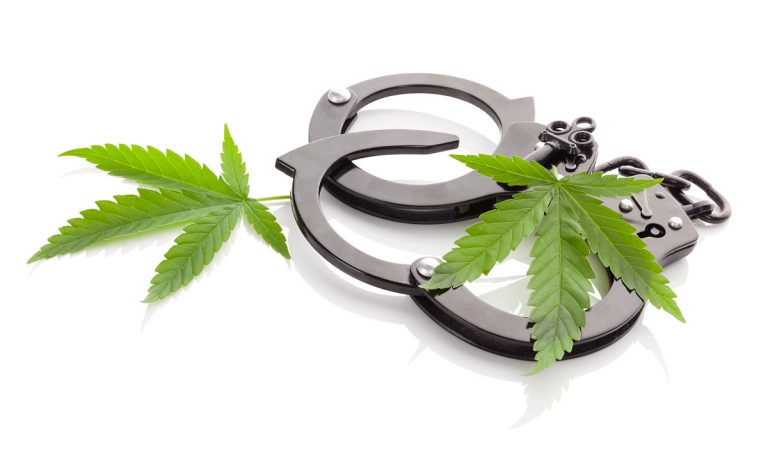
Let it be known that trolling a police department’s Facebook page won’t put you in good standing with the law. The West Yorkshire Police Department threatened to arrest users who were poking fun at a Facebook post from the law enforcement agency. According to the Daily Mail, West Yorkshire officers posted a picture regarding a laughably small amount of marijuana they’d picked off a young man.

“You’re a clown,” wrote one user. “Hope you manage to nail Pablo Escobar this afternoon” added another.

One user sarcastically commented, “Wow that’s put a dent in the war on drugs lol.”

As you might imagine police were none too pleased about the jokes. Individuals were banned from Facebook page and anyone who was “insulting, abusive, or offensive” would be located and prosecuted.

“Unfortunately we have had to ban a number of people from using this page today,” read the PD’s statement.

“I would like to remind everyone that this is a Police page and whatever your thoughts on one of my officers seizing drugs in the community, being insulting, abusive or offensive can and will result in a prosecution under the Malicious Communications Act 1988.”

You can no longer access the police department’s Facebook page, so maybe the trolls won this one?

Study: The Most Harmful Drugs Are Legal

While the great American population has been sold a spiel for decades that suggests legal drugs, like alcohol and tobacco, are safer than the bud and dust found on the black market, a new report serves to reiterate that we’ve all been had. Although the effects of both legal and illegal substances can bring about a variety of health problems, some of which are even life threatening, a paper from the society for the Study of Addiction shows that it is those people who smoke and drink in excess who are at the most risk of succumbing to the terrors of substance-related decline.

Researchers, however, were quick to point out that their findings are in no way intended to imply that drugs like cocaine and heroin are safer than beer, only that society’s cavalier attitude toward legal substances, those where the potential risks are masked by clever advertising and attractive labeling, is leading to more health problems than street drugs. This is not a supernatural occurrence, they said. It only stands to reason that the legal drugs consumed on a regular basis by the majority of the population are contributing to more of a downfall than those illicit substances used by few.

Nevertheless, from cardiovascular issues to cancer, alcohol and tobacco are driving more of the population to an early grave.

“Their health burden is accompanied by significant economic costs, namely expenditure on healthcare and law enforcement, lost productivity, and other direct and indirect costs, including harm to others,” researchers said. “Estimating the prevalence of use and associated burden of disease and mortality at the country, regional, and global level is critical in quantifying the extent and severity of the burden arising from substance use.”

Interestingly, contrary to what the headlines read, the American opioid junkie is not the biggest contributing factor to death and destruction among a culture of substance abusers. The largest portion of debauched society is actually taking place in Europe, researchers say, where the population is drinking and smoking itself into oblivion. But make no mistake – Americans are doing their best to fill the Earth with young corpses.

Although opioids are now responsible for killing off more than 60,000 people in the United States every year, the combined casualty list for booze and cigarettes still tops it – coming in at around 568,000 dead every year. This figure has stayed fairly consistent over the past several years. But it is getting worse. Yet, this death rattle of genocidal proportions has not prompted the federal government to declare a national emergency. It only offers a warning from the Surgeon General telling those people who dabble in these products, or use them on a regular basis, that smoking and drinking could cause health problems. The overall message of the latest study, which was published in the journal Addiction, is legal does not mean safe.

Poll: Most People In Georgia Support Marijuana Legalization

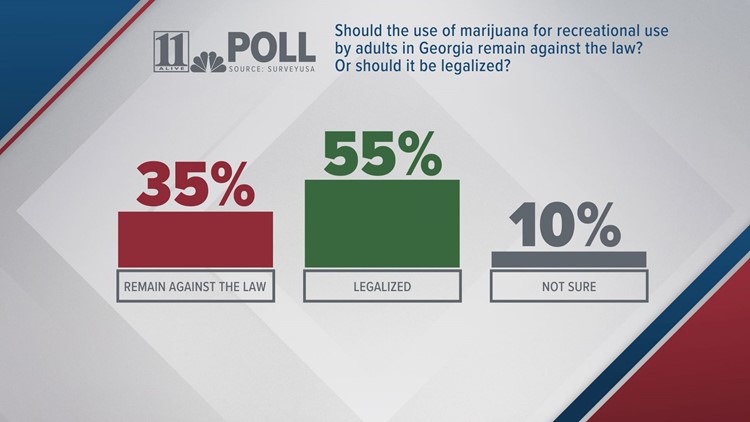
A new poll out of Georgia reveals that most voters in the peach state are in favor of legalizing recreational marijuana.

In the exclusive poll commissioned by 11Alive News, 55 percent of state voters want weed legalized, up from 48 percent two years ago. Thirty-five percent think marijuana should remain against the law, down three percent from two years ago.

According to 11Alive News:

Voters also overwhelmingly support the idea of state-regulated cultivation of marijuana in order to produce legal medical cannabis oil, according to the poll, with 71% saying they’d be in favor. Only 16% said they don’t support state-regulated cultivation, and 12% said they weren’t sure. It is currently illegal to grow marijuana for any reason in Georgia.

It helps that medical marijuana has already laid the footwork since the state’s first medical marijuana bill was passed in 2015. And that Georgia Gov. Nathan Deal recently signed a bill expanding the law to include those suffering from PTSD.

Not only is marijuana possession in Georgia a criminal misdemeanor, the state has some of the harshest laws in the country when it comes to this offense, with those getting busted for less than an ounce of marijuana running the risk of being sent to jail for a year and paying fines reaching $1,000, as The Fresh Toast has previously reported.

How Technology Is Helping To Wipe Marijuana Convictions Off The Books

As more and more states jump on the cannabis legalization bandwagon, one sticky problem is slowly being addressed: How does society make things right again for those who were previously convicted of marijuana possession? Individual states — and, indeed, individual cities — have come up with creative ways to solve the issue.

In San Francisco, the historic home of the medical marijuana movement, the district attorney’s office is turning to high-tech to erase the crime from the records of War on Drugs victims.

According to a report published in Fast Company, a machine-learning algorithm developed by the nonprofit Code for America “can read through charging documents, identify codes for various crimes, and then automatically determine which felony convictions can be downgraded to a misdemeanor (those who also committed violent crimes, for example, can’t have their records downgraded). Then the tool automatically fills out required forms that the district attorney can file with the court.”

When Californians overwhelmingly voted in 2016 for the Adult Use of Marijuana Act(Proposition 64), it also meant that citizens with previous non-violent marijuana convictions could petition to have those crimes removed from their criminal record or downgraded to lower-level crimes. But it was a hardship for many Californians because of red tape, bureaucratic hoops — and the need to hire a lawyer to handle the paperwork.

But, thanks to the code for America’s algorithm, the city’s district attorney’s office can quickly scan the records and do the bulk of the heavy lifting.

“If you have a felony conviction, or in many cases, if you have a misdemeanor conviction, there are many employers who will not hire you,” George Gascón, San Francisco district attorney, told Fast Company. “There are many landlords that will not allow you to rent or lease a place for them. There are certain types of student loans that you would not qualify because of the felony conviction. So we know that having a felony conviction – for offenses that have been legalized – still holds back a lot of people. Mostly, quite frankly, poor people, and people in communities of color.”

Federal government data shows that, although rates of marijuana use are similar in black and white populations, someone who is black is nearly four times as likely to be arrested for possession. In California, until marijuana use was legalized, black people were more than twice as likely to be arrested.

For Gascón, this is a matter of social justice — and just being a good citizen. “There are two major components to reducing the likelihood that people will commit crimes. One is employment and the other one is housing. If you have a steady job and you have housing, you’re less likely to engage in other criminal activity.”

San Francisco plans to share the program with district attorneys throughout the nation. “This entire system will be put in the public domain so anybody can use it,” says Gascón.

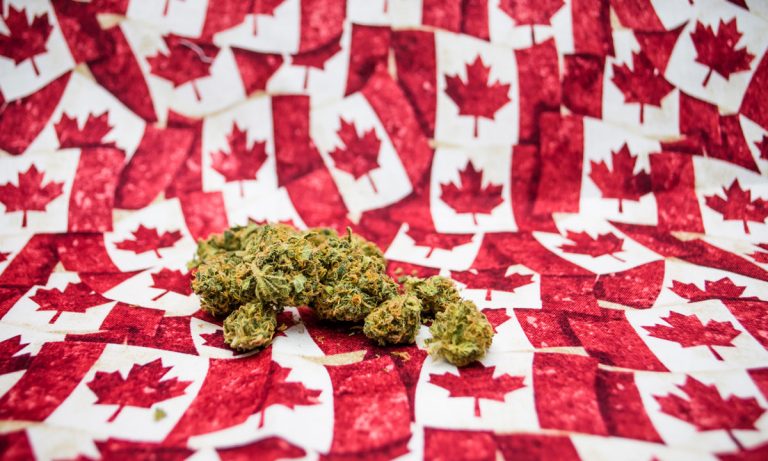
How Canadian Cannabis Will Help Fuel 2022 Beijing Olympics

Over the years, cannabis has helped fuel some Olympic athletes, most notably British Columbia snowboarder Ross Rebagliati. But here’s a first: Cannabis will help build Olympic venues for the 2022 Beijing Winter Games.

The Calgary Herald reported this week that industrial hemp fiber grown in Alberta will be a main structural component of the bobsled and luge runs.

According to the Herald, 360 pounds (163 kilograms) of hemp was shipped last week to China to reinforce the concrete used to build the runs in Xiaohaituo, just outside of Beijing. Canadian Greenfield Technologies is the company responsible for growing and processing the hemp product called NForce-Fiber l.

Canadian Greenfield Technologies Corp. is led by an award-winning team of engineers and has been in business for more than 30 years, but this will be the company’s first Olympics. According to the company’s website, its hemp fiber products is a one-of-a-kind product currently being used in swimming pools and skateboard parks across North America.

But the Olympics are a big deal for Stephen Christensen, the company’s general manager. “I thought we’d be successful, but there aren’t a lot of concrete projects like a bobsled track,” he told the Herald. “We’re getting some international acknowledgment.”

A third-party testing process demonstrated hemp fiber’s superiority over plastic or glass as a reinforcement for concrete structures. “They tried doing it without fiber and got quite the number of cracks and came back to us,” he said. “They’ve got very stringent quality control.”

The company began researching hemp applications six years ago and produces gardening items, food preservers, beauty products and even cat litter.

Alberta is the hub of Canada’s $200-million hemp industry, which is an international export leader. The type of cannabis grown to yield hemp contains nearly undetectable traces of THC, cannabis’ psychoactive component.

6 Simple Tips For Super-Successful Online Dating

No, but really — how does a person have have better sex or a better relationship? The Fresh Toast has enlisted Rachel Krantz, a sex writer and proud canna-enthusiast, to help readers out with some answers as its sex columnist. No question is off limits, and all questions will remain anonymous. Please send your sex and relationship inquiries to freshlove@thefreshtoast.com. Now, onto this week’s topic: simple tips for online dating

Q: Hi. I’m a guy who got out of a long relationship a few months ago. I’m ready to get back out there, and I signed up for OkCupid, but I feel like I’m not having the best luck. Do you have any tips for online dating successfully?

A: As it turns out, I met my partner on OKCupid. I’m a big fan of the site’s algorithm for finding matches — and I continue to use it, since we have a non-monogamous relationship and have kept up profiles for dating outside the relationship. Whatever you’re looking for, I think that certain tips for online dating could prove useful no matter what. Here are mine.

Solicit Feedback From Your Most Honest Friend

via GIPHY

Especially if you like women and are a man, I’d suggest that friend be your sister or other best female buddy who won’t mince words. Have her look over your pictures and what you’ve written, and ask what she’d change, or what doesn’t read as authentic. Tell her to be as honest as possible, and change anything you think is legit (though don’t let her convince you to do anything that feels inauthentic, either).

Answer Questions Authentically, Not Aspiration-ally

I think this is the only way to make OKCupid’s algorithm work for you — but it is also true for other sites with personality questions. You have to answer at least 100 questions as honestly as possible, based on how you actually feel and how you know you are — not the way you think others would want you to be, or you wish you were. Otherwise, the algorithm won’t work. On OKCupid, it’s also important to select “very important” to your preferred partner responses more often than you might think. If you say their answer is “irrelevant” or “only a little important” for each question in an effort to be accommodating, the algorithm won’t work as well. The more questions you can answer, the more accurate your matches will be.

If You’re Using An App That Pulls From Facebook, Be Sure Your Profile Is Up-To-Date

via GIPHY

Lots of apps like Tinder and Bumble pull from your Facebook to match you with people. They also note what pages you’ve liked and use that information to match you, so make sure any likes and groups on your Facebook are up-to-date. You’ll also want to be careful to consider whether you want your place of employment to be featured on the app, since that’s also pulled from your Facebook.

Don’t Use The Words “Baby,” “Sweetie,” Or Otherwise Be Lazy

I can’t tell you how many times guys open by calling me their “baby,” “sweetie,” “honey,” or otherwise opening with an empty physical compliment. You need to personalize each message based on actual ideas in the other person’s profile — the time you put in will mean a lot, especially to women, who are often overwhelmed by messages. Be confident, concise, polite, and always ask a question that could lead to further conversation. Make any compliment implicit.

For example, when my partner messaged me the first time, he said (among other things), “I’m curious about the sound of this unselfconscious laughter,” something I’d noted “I was good at” on my profile. The compliment, that he’d love to hear me laugh, was subtle and effective, and communicated he’d read my profile in full.

Don’t Try To Rush Into A First Date

via GIPHY

Exchange messages for a while. Wait till you get their number and text before asking them out. Suggest talking on the phone to see if there’s chemistry, even. Either way, the less you rush things, the more interested the other person will likely be. Keep the interest and effort going, but avoid seeming desperate or like all your eggs are in one basket. If the other person isn’t reciprocating with questions or enthusiastic responses, they might not be interested, and your time is better spent elsewhere.

Think Of Dating Like You’re Being Recruited

via GIPHY

I find it’s best to think of online dating like being recruited for a job — you’re not desperate for hire, but if you’re interested, you want to represent yourself well, be considerate, and ask plenty of questions to sense whether this would be a good next move for you. Thinking of a first date in this light — rather than as if you’re unemployed and desperate for work — will set you up for the most success in the longterm. Everyone wants to feel like they’re getting a good deal, but no one wants to deal with someone who’s arrogant, either. Sexiness lies in being confident in what you have to offer, demonstrating it, listening, and demonstrating deliberate, earned interest.

Best of luck to you, and remember: as much as it might feel otherwise sometimes, a message reply doesn’t determine your self-worth. Only you can do that.

US Supreme Court Gambling Decision Works In Favor Of Marijuana Reform

It seems the United States is finally catching on to Aleister Crowley’s ages old ethos of “Do what thou wilt shall be the whole of the Law.” Well, perhaps the governmental grind isn’t quite ready unleash its citizens into an borderline anarchist society, but the people have been given a little more freedom than what they’ve had in the past.

Earlier this week, the U.S Supreme Court overturned the country’s prohibition on sports gambling. This means it might not be long before American citizens have the ability to wager on every sporting event imaginable. Interestingly, not only does the ruling serve to beef up the $100 billion gambling industry, removing it from the hands of criminal organizations, it is an encouraging in the grand scheme of marijuana reform.

In the case of Murphy vs. NCAA, the Supreme Court voted 7-to-2 to end the ban on sports gambling in the Untied States. “The legalization of sports gambling requires an important policy choice, but the choice is not ours to make,” the nation’s highest court declared. “Congress can regulate sports gambling directly, but if it elects not to do so, each State is free to act on its own.”

The last part of Supreme Court’s verdict is important, as a move to uphold the outlaw status on sports gambling would have blown the states rights issue right out of the water. This could have been bad news for those jurisdictions that have legalized marijuana.

Although there are no guarantees that a weed war would have been waged, the decision could have given the federal government the ability to step in and shakedown the cannabis trade. But because the decision went in the appropriate direction, the marijuana issue is now less susceptible to challenges by the federal government.

It is possible for Congress to ban sports gambling nationwide, but it cannot dictate those terms at the state level,” legal experts say. States have the authority to essentially “do what thou wilt” without the risk of catching any heat from national law enforcement agencies. This includes marijuana legalization. The federal government cannot force states back into a prohibitionary standard. Although it has always been this way, the Supreme Court decision provides some much-needed clarity.

It’s funny how this case, which was filed by former New Jersey Governor Chris Christie, ended with some wise words from the one of the most ardent opponents of marijuana legalization in the country. Christie posted to Twitter on Monday: This is “a great day for the rights of states and their people to make their own decisions. New Jersey citizens wanted sports gambling and the federal Gov’t had no right to tell them no.”

Sharks Can Differentiate Between Different Types Of Music

The best and most delightful news you’ll read today is the fact that sharks can chill out to jazz.

Mashable reports that researchers from Australia’s Macquairie University have demonstrated that sharks have a complex ear, being able to differentiate between different types of music. The study used baby sharks that were trained to associate music with food. The scientists would play jazz for the animals and they would swim towards their feeding station.

Sound has always been a big deal for aquatic animals, which is used to lead them to food and helping them avoid obstacles and other objects.While some animals, like dolphins, have particularly layered hearing, sharks’ capabilities have been less studied. Still, hearing is very important for them because they’re capable of listening to sound frequencies from 90 to 250 meters away.

This newest study consisted of playing different types of music on different stations, with jazz being the one where sharks get their food. While the experiment wasn’t a total success, 5 out of 8 sharks were able to recognize jazz and associate it with their food. If researchers played classical music then the sharks would simply get confused.

Via Animal Cognition:

It was obvious that the sharks knew that they had to do something when the classical music was played, but they couldn’t figure out that they had to go to a different location”

While sharks have always been perceived as simple animals, this study proves that there’s a lot more going on, and that maybe they’re smarter than what we give them credit for. They also like jazz, which is weirdly fitting.

Don't Miss Your Weekly Dose of The Fresh Toast.

Stay informed with exclusive news briefs delivered directly to your inbox every Friday.

We respect your privacy. Unsubscribe anytime.