Friday, December 26, 2025
Home Blog Page 991

Watch The Girl From ‘The Ring’ Actually Crawl Out Of A TV

Augmented reality is a pretty cool thing. Using a screen to change our perception of reality is a pretty awesome responsibility, and left in the wrong hands, could produce something quite creepy. Like this guy.

Gizmodo reports on programmer Abhishek Singh, who took the scene from The Ring, the one where the creepy girl crawls out of a TV, and made it actually happen. Sounds cool, but it ruined the day for a bunch of people who saw it on Twitter.

He left a bunch of freaked out viewers in the wake of his Tweet:

Singh uploaded a video of the reenactment to YouTube, in case you need to see it on a larger screen. Somehow, the ghoul is able to follow Singh around? That can’t be right. (Please, let this not be right).

CBD Kief: Why You Need It In Your Life Immediately

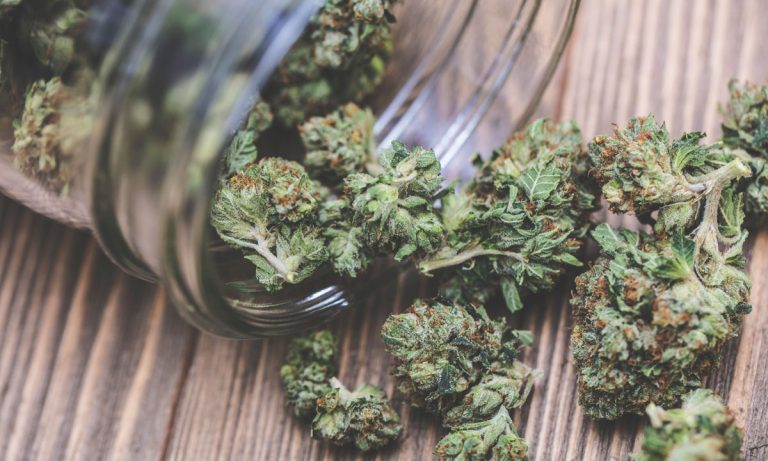
Most cannabis connoisseurs have seen and likely even discussed, in great length, the crystal-like formations that often cover marijuana buds, but not everyone knows what they are called.

This sticky residue that makes flower look so majestic is Kief. It is essentially the resin glands at work to protect the buds from pot-hungry herbivores. But kief is also a product in and of itself. These glands contain large concentrations of terpenes and cannabinoids. Because of this, Keif is one of the most potent components of the cannabis plant.

But is it possible to get CBD kief?

One of the primary reasons that mother nature puts these resins to work is to deter herbivores. The trichomes on the plant protect it by sending the creature on a hardcore psychoactive trip. The animal essentially gets stoned and confused after consuming the crystals, which is supposed to prevent it from moving on to consume the rest of the flower. Of course, this isn’t always a fail-safe shield. But that’s how the system is designed to operate.

Kief is extracted by sifting the crystals through a screen. And since the majority of the plants are THC dominant, it makes sense that kief from these buds is going to be higher in THC than any other compound. But hemp is now a vital part of the medical marijuana market. These plants come with higher levels of CBD and only the smallest traces of the psychoactive.

Yet, extracting CBD-rich kief is not something the average person can do successfully in their home.

“Sifting through the buds of those hemp plants would obviously produce some amazing CBD-rich kief, but you’d also be collecting THC and any other cannabinoids present on the plant,” according to Westword’s Ask a Stoner column. The piece goes on to explain how the extraction process is far more difficult than with cannabis plants.

“The only way to ensure that a concentrate has little to no THC is to separate the cannabinoid from the concentrate during molecular distillation, making it more like wax than kief. Otherwise, manual separation, which is virtually impossible at home, would be needed to remove the THC from the kief. If you want a pure CBD concentrate, try CBD isolate, which comes in crystalline form and can be 99 percent CBD,” the column reads.

CBD isolate is the purest form of cannabidiol. It comes in the form of a white powder, which some law enforcement officers in legal states have mistaken for cocaine. But it is the strongest form of CBD that a person can get his or her hands on.

Experts say this is the go-to product for patients looking to get the most out of their CBD experience.

Judge Dismisses Federal Marijuana Lawsuit, Says Weed Can Be Beneficial

US District Court Judge Alvin K. Hellerstein, while acknowledging the powers of cannabis, has dismissed a lawsuit challenging the federal ban of the plant.

According to Forbes, Hellerstein said he ruled in opposition to the plaintiffs because he believes they ought to pursue “administrative remedies” first, and that marijuana’s medical value is something for the Attorney General to consider, not a federal court of law.

The plaintiffs in the case are former New York Jet Marvin Washington, 12-year-old  Alexis Bortell and 7-year-old Jagger Cotte, disabled military vet Jose Belen, and the Cannabis Cultural Association, a New York-based non-profit.

According to Marijuana Moment, the judge had this to say:

I emphasize that this decision is not on the merits of plaintiffs’ claim. Plaintiffs’ amended complaint, which I must accept as true for the purpose of this motion, claims that the use of medical marijuana has, quite literally, saved their lives. One plaintiff in this case, Alexis Bortell, suffers from intractable epilepsy, a severe seizure disorder that once caused her to experience multiple seizures every day. After years of searching for viable treatment options, Alexis began using medical marijuana. Since then, she has gone nearly three years without a single seizure. Jagger Cotte, another plaintiff in the case, suffers from a rare, congenital disease known as Leigh’s disease, which kills approximately 95% of those afflicted before they reach the age of four. After turning to medical marijuana, Jagger’s life has been extended by two years and his pain has become manageable.

Hellerstein said he highlighted the plaintiffs’ experience to emphasize that his decision should not be understood as a factual finding that marijuana lacks any medical use in the United States and “for the authority to make that determination is vested in the administrative process.”

US Attorney General Jeff Sessions is a vocal opponent of marijuana, even saying that “Good people don’t smoke marijuana.”

And that’s not making it easy on medical marijuana users who are trying to get their cases heard; the administration process, on average, comes with a nine year wait.

Marijuana Moment talked to Joseph Bondy, an attorney on the case, who said the legal team is considering their next steps.

“We believe the court didn’t properly consider our arguments, even declining to allow us to be heard on some points—particularly our equal protection argument,” said Bondy. “We are exploring all options in furtherance of winning this case, whether through direct appeal or reconsideration, and will keep the community abreast of all developments. The legal team remains committed to the case and the cause, and thanks everyone for their unwavering support.”

Federal Judge Dismisses Marijuana Lawsuit by tomangell on Scribd

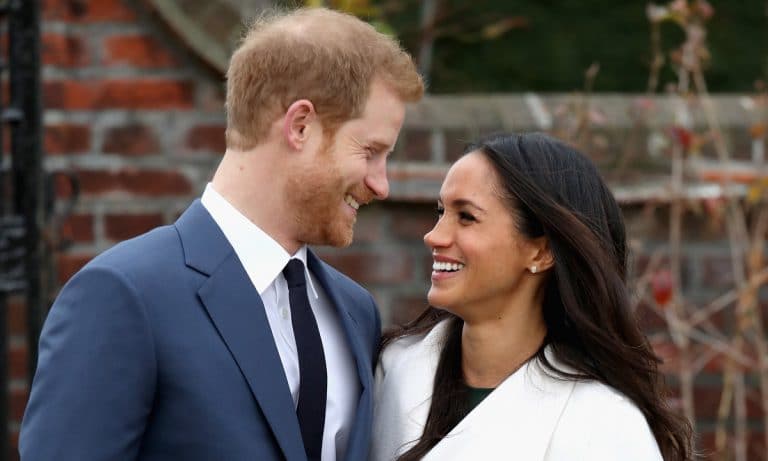
Prince Harry & Meghan Markle’s Lifetime Movie Just Cast William & Kate

Production for Meghan Markle & Prince Harry’s Lifetime movie began this year in Vancouver, B.C., and the awfully titled Harry & Meghan: A Royal Romance is planned to be released in the Spring.

People confirms that William and Kate were recently cast, and so were their children. Prince William will be played by Burgess Abernathy and Kate will be played by Laura Mitchell. Neither actor is British, so the one thing you can expect from this movie is really bad accents.

The real Prince William and Kate Middleton have inspired not one, but two movies: one from Lifetime and another from the Hallmark Channel.

Other royal family members that were cast in A Royal Romance include Bonnie Soper as the late Diana, and Maggie Sullivan as Queen Elizabeth II.

According to People, the movie will start with the couple’s first date, when they were set up by a mutual friend, and will follow through with their engagement. Hopefully more happens in the movie than both of them going to charities and, you know, getting married, because that’s a snooze.

Nevada Is Making So Much Money Off Legal Weed That Other States Want In

For financial proof of what marijuana legalization can do to boost a state’s coffers, look no further than Nevada. The state’s incipient legal marijuana program has generated more than $30 million in tax revenue in its first six months. Nevada has reported almost $11 million in wholesale tax and $19.5 million in retail tax, according to the Nevada Patch.

Another interesting nugget: Legal marijuana sales exceeded more than $1 million a day on average. Nevada’s legal marijuana sales have already passed Colorado’s, despite how much longer the latter state has enjoyed legal marijuana. A major contributing factor of Nevada’s success can be explained by the friendly tourist environment found in Las Vegas.

In fact, the city made trending news recently as marijuana “drop boxes” were installed at Las Vegas’ McCarran International Airport for tourists with leftover marijuana. Nevada’s legal marijuana market is expected to be worth $622 million by 2020, according to Forbes.

Those numbers have made some states’ officials revisit their position on legalizing marijuana.

Via Forbes:

All of that tax revenue has caused some cash-strapped states to consider legalizing marijuana. The potential of legal cannabis to help balance the budget has been key to the legalization debate in Connecticut. While state Governor Dannel Malloy has been an opponent to legalizing cannabis, he included the possibility of recreational legalization as an option to consider for balancing the budget.

While legalizing marijuana for tax revenue purposes instead of weighing how its criminal status adversely affects citizens may be a cynical view, the evidence is there. Marijuana money is there, if politicians are willing to listen.

This Denver Coffee Shop Will Be Nation’s First Cannabis Club

A Denver coffee shop has received the first license from the city for its patrons to openly consume marijuana on its premises. Patrons will be charged a $5 fee and only will be allowed to use marijuana in edible or vaporizer form. The Coffee Joint is the first social club to receive permission for open marijuana consumption in the nation.

Back in 2016, Denver voters approved a measure for a social use pilot program.  The Coffee Joint was the first business to file an application under the initiative this past December. Though businesses that apply must meet some bureaucratic requirements—the business must have the backing of a neighborhood group and can’t serve alcohol—no one opposed the Coffee Joint’s proposal at a Feb. 9 meeting.

Via Denver Post:

Northern California cities have allowed smoking lounges inside several medical marijuana dispensaries for years, and that state’s recent legalization of recreational marijuana sales expanded access to some of them. But Denver’s program will be the first nationally to allow marijuana use by patrons of regular businesses of varying types that are open to the public, as long as they get licensed and follow several rules set by the city.

This program could potentially solve a long-standing problem in Denver as well. While cannabis legalization has drawn in many of curious visitors, those tourists don’t have any legal place to consume their purchases whereas residents can consume in the privacy of their homes.

This program will be the first of its kind in the country, though other states like Alaska, Nevada, and Massachusetts have discussed similar initiatives, according to Forbes.

Revealed: Leaked Images Of Apple’s New iPhone X Plus

According to recent leaks, the new version of the iPhone, a remodel of the iPhone X, will be bigger than ever. This news confirms rumors that Apple has been redesigning their devices as a way of appeasing the public and creating a product that features what people really want: bigger screens.

These leaks come from MacRumors, a well regarded site where concept images of the upcoming iPhone were published. These rumors fit previous leaks that claimed the device would have a 6.5 inch screen, making it the largest phone out of all the competitors on the market.

A post shared by Tato (@the_t3ch_geek) on

According to Forbes, these photos were leaked from the LG headquarters in Vietnam. Although Samsung has traditionally made the parts for the previous versions of the iPhone, Apple reportedly invested $3 Billion in LG in 2017 to develop OLED panels as a way of reducing Samsung’s strong influence over the iPhone.

This 6.5 inch phone will be launched alongside a cheaper model of the iPhone that’ll feature a smaller display of 6.1 inches and that supposedly uses LED display instead of OLED. If you’ve been dissatisfied with Apple’s screen sizes in the past, this news should please you. Just be sure to invest in jeans that have really large pockets.

Why You Should Just Say No To Trump’s Drug War Budget

It is said that the President’s budget is the clearest indication of an Administration’s policy priorities. An analysis of Trump’s proposal shows that a key priority of this White House is the escalation of the drug war. Enforcement and interdiction are back with a vengeance, and while more funding is proposed for treatment and prevention, these measures are overshadowed by a President who believes that being tough on crime is the way out of the overdose crisis.

Despite decades of failed drug policy and academic evidence showing that enforcement and incarceration are counterproductive approaches to drug policy, Trump has opted to provide more funding than ever for programs of this ilk. Under Trump’s plan, the Drug Enforcement Administration (DEA) – an agency synonymous with the drug war and plagued with scandals –receives almost $2.9 billion, around $400 million more than it received from Congress in 2017. Other drug enforcement programs also receive steep increases.

Trump’s approach contrasts sharply with the final year of the Obama administration where the President’s budget included more money for treatment and prevention than enforcement and interdiction for the first time. The Trump administration’s claim that it is requesting $13 billion to “combat the opioid epidemic” is misleading for two reasons. First, much of this money will be dedicated to enforcement and will do nothing to slow overdose deaths. Second, the amount may seem substantial, but it is eclipsed by a request of $18 billion to build a wall, showing where Trump’s priorities lie. Trump claims his wall will stop the flow of drugs, despite all evidence to the contrary. The reality is that the wall is an astonishing waste of money that serves only to stoke racial tensions and xenophobia.

The fingerprints of drug war hardliner Jeff Sessions are all over Trump’s budget. Sessions’ push for tougher sentencing for drug offenses has meant a need for more prison funding, and an internal memo leaked last month shows that Sessions is likely to increase the use of private prisons. A multi-million dollar grant program for law enforcement to do counternarcotic operations – the High Intensity Drug Trafficking Area (HIDTA) program – will move from ONDCP and be under the control of the DEA, which Sessions oversees. And the Sessions Justice Department, having recently revoked guidance allowing states to set their own marijuana policy, appears poised to dedicate part of its budget to cracking down on cannabis.

Trump’s attempts to take the country backwards on drug policy are best embodied by his attempts to revive Nancy Reagan’s “Just Say No” campaign, via $50m for an anti-drug media strategy. This is despite evidence that such campaigns may actually increase the likelihood of drug use among youth.

The silver lining is that the President’s Budget is merely a proposal, and ultimately Congress decides what is funded. In recent years, there has been a bipartisan consensus that the war on drugs has failed. Both parties have come together to work on marijuana reformcriminal justice reform, and to treat the opioid overdose crisis as a public health – not enforcement – challenge. Congress must continue on this path, and support initiatives that move us away from the war on drugs.

The Trump Budget is the President’s latest attempt to escalate the drug war. If fully approved, expect more mass incarceration and misery, particularly for communities of color. Instead, we must reject this approach, move away from this failed drug war model, and “just say no” to this budget.

Michael Collins is Deputy Director of Drug Policy Alliance’s Office of National Affairs and author of the forthcoming report: “Defunding the Drug War”.

This story originally appeared on the Drug Policy Alliance website. 

Cannabis Tea Made With Leftover Marijuana Stems? We Have A Recipe!

Tea is a great option for those who want to avoid smoking and who want to have a better control when it comes to managing their cannabis intake and its effect.

Cannabis tea is a popular way to consume, and can treat asthma, chronic pain, nausea, anxiety and other ailments in a safe way. Consuming cannabis in the form of tea affects you faster than when you consume a fat-based edible, which is why this method is so popular among medical marijuana patients.

Tea is also a great option for those who want to avoid smoking and who want to have a better control when it comes to managing their cannabis intake and its effect. Of course, if you want to enjoy some light cannabis tea, you have to prepare it in that way. It is possible to get very high if you brew a super strong cannabis infused tea. It’s all up to you. 

Check out an amazingly customizable cannabis tea recipe below: 

https://giphy.com/gifs/tea-shai-chai-uQaQAVW3QkcLK

Ingredients:

  • ⅓ or ¼ of marijuana stems.
  • 3 cups of water.
  • Regular tea, to add some flavor
  • Coffee filter, for easy brewing

You can also add marijuana to your preference, to increase the potency of the tea.

Binding Agent:

Two or three tablespoons of the alcohol of your choice or ½ cup of milk and dairy substitute that suits you. You can also use ½ tablespoon of butter or coconut oil. 

Preparation:

You can grind the stems, break them up with your hands or simply leave them as such. There’s no real difference in the effect they produce on the tea. Grinding the stems makes the process a little messier, so if you want to simplify your brewing process you should just break the stems up into manageable pieces.

Fill up your teapot with the three cups of water, then you can add the binding agent of your choice. To increase the potency of the weed tea, alcohol works really well, but you should add it after the boiling process is over so that it doesn’t evaporate.

Once your concoction has reached a boiling point, add the stems and let them boil and simmer for 10 minutes. You can put the stems inside a large teabag, to facilitate the straining process. If you want to add a kick of strength to your tea, add some extra marijuana trims.

After these 10 minutes have passed, remove your tea from the heat. If alcohol is your binding agent, then pour those tablespoons in. 

Now just remove the stems and your tea is ready to drink! If you didn’t use a teabag, you must strain the tea with the help of the coffee filter, so that you don’t find any twigs in your cup. After your tea is poured and ready to drink, you can add some honey or raw sugar to improve the taste, or maybe a bag of your favorite tea. This drink is very customizable, so be creative and enjoy!   

These Are The Most Lusted After Olympic Athletes On Tinder

If your idea of a winter sport is trying to rack up as many dates as you can, you’re in good company. During the Olympics, the village is en fuego with burning skin from people swiping right like it was, well, an Olympic sport.

Tinder has revealed exactly which athletes are getting the most attention. And it’s not at all surprising. During the winter games, the folks getting the most right swipes are male bobsledders and female snowboarders.

https://giphy.com/gifs/games-olympics-l1IBjpSqIY0zAhzO0

Following  bobsledders, the most right-swiped male athletes, according to Tinder, have been hockey players, snowboarders, alpine skiers, and skeleton racers.

And the most right-swiped female athletes after snowboarders were alpine skiers, bobsledders, lugers and freestyle skiers.

Tinder said it has seen a 348 percent increase of usage in the city of PyeongChang, compared to its usage in the area prior to the games.

“Every Olympics we hear that Tinder is on fire in the villages and we notice our usage increase significantly when people from around the world gather for an event,” said a Tinder spokeswoman.

Tinder also reports that app users based in the United States, Sweden and Great Britain are trying the most to connect with Olympians in Pyeongchang.

The company tells ABC News that since the Olympics began, its app usage in Pyeongchang has increased 348 percent with an uptick in right swipes by 565 percent. They say there’s also been an increase in matches by 644 percent.

https://giphy.com/gifs/games-olympics-3ohc123mXuJ74azJ4c

It’s also worth noting that PyeongChang broke an Olympic record of its own—for condoms. Time reports that 110,000 condoms were provided for athletes attending the Games. That’s more than 37 condoms per athlete for the 16-day competition. How do they have the energy to compete?

Don't Miss Your Weekly Dose of The Fresh Toast.

Stay informed with exclusive news briefs delivered directly to your inbox every Friday.

We respect your privacy. Unsubscribe anytime.