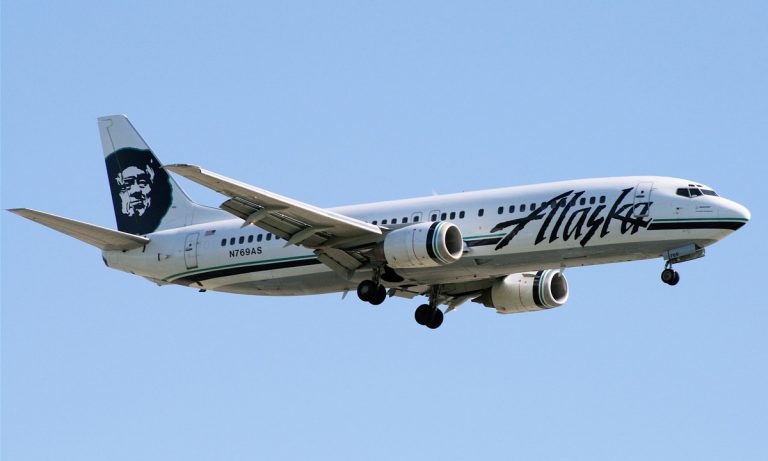
If you like to pick up a bottle or two (or case) of wine when you’re on vacay, Alaska Airlines has got your back. They just made it super easy to check your wine…for no extra charge.
Their “Wine Flies Free” program, which launched in 2007, has expanded to include 18 extra airports.
But there is a catch: those taking advantage of having a free wine passenger must sign up for Alaska’s frequent flyer program, which is easy and totally free.
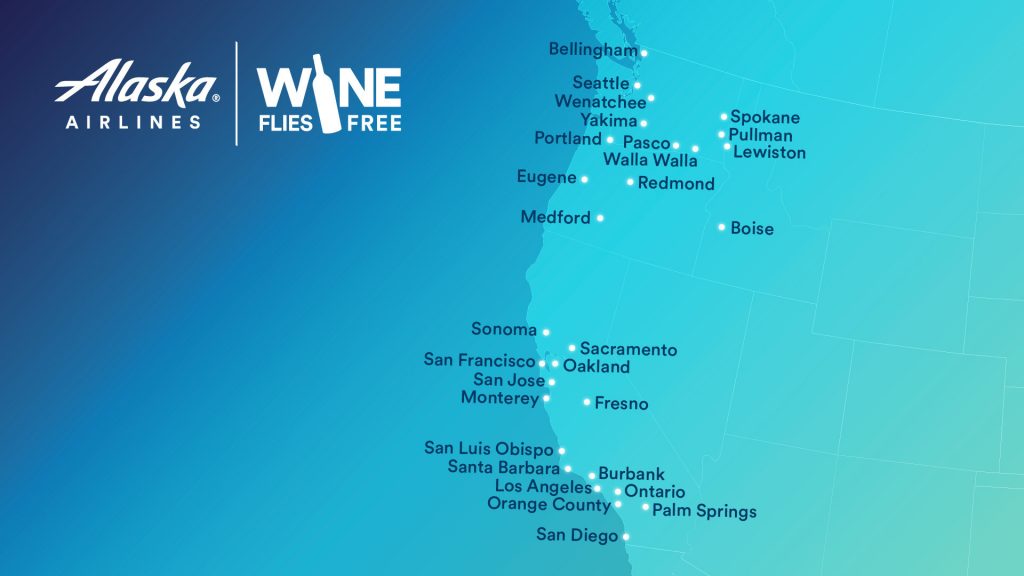
“Wine Flies Free” was created to encourage people to bring back wine from California wine country. Initially only available in 11 cities, the airline expanded the program to include 29 over the weekend, which just happened to be National Drink Wine Day (Feb. 18).
Here are the participating cities:
Alaska Airlines says it will be working closely with regional winegrowers’ associations, individual wineries and destination marketing organizations to promote the offering throughout wine regions along the West Coast.
“Wine and food are huge passion points for travelers when choosing their next travel destination,” said Natalie Bowman, Alaska Airlines’ managing director of marketing and advertising. “Our Wine Flies Free program makes it easier for our guests to experience some of the country’s best wine regions and take their favorite wines home. We look forward to…continuing to work with our partners to welcome visitors to these premier wine destinations that we serve.”
In order to fly your wine for free, it has to be “packed and sealed for transport in a protective shipping container.”
Our cellphones are one of our most important belongings, and something we take everywhere. Through your phone, you can access all sorts of maps, accounts, information, social media, and communications. No wonder we guard them with our lives.
This is a great tip for when you’re going to a concert, you don’t feel like carrying a purse, or you’re going some place where you’ll be on the move. As long as you don’t stuff too much…stuff…between your phone case and your actual phone, you’ll be fine. Plus, you’ll have easy access to your most important documents.
When It’s Raining, Put Your Phone In A Ziploc Bag
The bag will protect your phone from the dust, rain and all sorts of outside influences, while also allowing you to interact with the touchscreen.
When Traveling, Screenshot Directions And Turn Off The Internet
Google maps is probably the most battery consuming app on the planet, which is really annoying because it’s one of the most necessary and useful ones. To remember where you’re supposed to go, screenshot Google maps’ written directions and turn off internet access so you’re battery will last for as long as necessary.
When you’re in concerts or packed places, download this app with your friends, helping you find each other if you guys get separated. Everyone who downloads the app shows up on the app’s map, which is definitely creepy but also useful.
When it comes to marijuana use, it’s not a matter of pain relief, but Jeff Sessions that worries the head of the NBA Players Association.
In the words of Michele Roberts, “we have to protect our players from—my words—a crazed attorney general who says he will prosecute violations of the law involving marijuana and he doesn’t care what individual states say.”
In a recent interview with SB Nation, she opened up about the NBA’s stance on marijuana and the internal conversations they’ve been having regarding player usage.
Last year, former NBA commissioner David Stern admitted to Al Harrington, a former player who owns his own marijuana company, that marijuana “probably should be removed from the banned list” in the NBA and clinically studied by hospitals.
“As you might imagine,” Roberts said, “I got some phone calls and we began discussions internally with our players and to some extent with the league to at least look at it.”
But Roberts also talked about how the league wants a collection of information on its medical value before moving forward.
Everyone claims to have done their own independent study. What we want to do is agree on some experts that can sit down and talk to us. My own view is that there are substantial signs that support its efficacy and the value that it has for us, especially pain management. We’re in talks with the league to see where we can go with it.
The obvious future is that marijuana will be decriminalized probably throughout the country in short order. Don’t forget our current attorney general [Jeff Sessions], who has taken a very different approach to his tolerance for this. That makes it a little more difficult.
So, like everyone else, even NBA athletes are experiencing the obstacle that is Jeff Sessions. NBA players, they’re just like us!
Prince Harry took some time out from wedding planning to meet with one of the UK’s largest inclusive rugby clubs: the Manchester Village Spartans.
Four Spartans were on hand to represent the charity Try For Change, which seeks to use the power of the rugby union to improve the lives of disadvantaged and marginalized people in England and across the world.
Upon being introduced to a friendly and encouraging HRH Prince Harry, we discussed our club history as one of the world’s first gay rugby clubs; Our shared passion for rugby; Our club ambitions to help increase the number of young people engaging in Rugby Union from within our local straight and LGBT communities and; The personal impact the “Try For Change” project and rugby has had on players.
Shortly after, we followed the Royal entourage down the Twickenham tunnel to the stands and joined Prince Harry in watching the England squad’s open training session, in front of a 10,000 crowd of spectators made up of grassroots clubs from across the UK.
https://www.instagram.com/p/BfQpHy1ARMI
Pink News quotes Gareth Longley, a Try For Change project coach at Manchester Village Spartans, as saying, “To be able to chat with HRH Prince Harry about our history as one of the world’s first gay and inclusive rugby clubs; the huge growth in International Gay Rugby that we passionately support and how positive an impact inclusive rugby can have on the mental and physical health of players from within our gay community was a truly valued and unique opportunity.”
After the meeting, the Spartans, along with Prince Harry, watched the England International squad’s open training session in the stands.
Said Longley, “Prince Harry’s passion and enthusiasm for the game was abundant throughout our ten-minute chat.”
It was so motivating to be part of a gay rugby team chatting to such an important member of the British Royal Family and being encouraged to help other LGBT and straight members of our communities give rugby a try. To receive such generous funding, support and active encouragement from the bosses and superstars of rugby makes us feel really valued and positive about the future of LGBT engagement in rugby.
Longley continued, saying the visit was “a masterclass to other sporting bodies in being proactive about inclusivity and getting more players from LGBT communities to fear less and try team sport.”
Over the past few years, Prince Harry and his brother William have helped to shatter the decades-long Royal silence on LGBT issues, speaking to their mother’s legacy on AIDS/HIV issues. Last October, Prince Harry collected a posthumous award from gay lifestyle magazine Attitude on behalf of Princess Diana.
Meghan Markle’s not officially a royal yet, but she’s well on her way! Ahead of her May 19 wedding to Prince Harry, Meghan Markle has just been given an official aide, a right-hand woman to help with her royal schedule.
On Monday, the announcement was made that former Kensington Palace press officer Amy Pickerill will now be an assistant private secretary in Prince Harry’s office working on Markle’s official diary and handling any correspondences that the royal-to-be receives.
A Kensington Palace spokesman said Pickerill “will be working on Meghan Markle’s programme”. The news of the official help should come as no surprise as the former Suits star’s royal obligations have been ramping up. She’s already done four public visits with her fiancé.
She was photographed with Pickerill during the couple’s recent royal trip to Edinburgh, Scotland earlier this month. Pickerill was photographed standing next to Markle and holding a bouquet of tulips that had been given to American by a fan. As for Pickerill’s pedigree, she went to former Nottingham University history and previously worked for the Royal Bank of Scotland in a number of roles in the press office department.
Jennifer Aniston And Brad Pitt Are Talking
They ARE speaking! Jennifer Aniston and Brad Pitt recently opened up the lines of communication, and even though the two have an amicable friendship, we’re told a romantic reboot is not going down.
Sources close to the former husband and wife tell The Blast Pitt has recently “been in touch” with Aniston, but that there is absolutely “nothing going on between the two.”
We’re told the two have actually communicated a few times over the recent months, and even after Pitt’s breakup with Angelina Jolie, but that the conversations were never romantic or about each other’s marriages.
One source doesn’t put it completely out of the question for the future though, telling us “something crazy could happen,” but “at this point nothing is going down between them.” It’s also unclear if Pitt knew details of Aniston’s rocky relationship with Justin Theroux, because our source says there “there wasn’t any communication about Jen’s split with Justin.”
Love the fresh dirt we bring over daily from Naughty Gossip? Let us know in the comments!
Many, many people—from celebrities to politicians—have expressed strong distaste and opposition to Attorney General Jeff Sessions. Why? Mostly because of his continued assault on marijuana, which escalated when he rescinded the Cole Memo, an Obama-era document that protected states with legalized marijuana from federal prosecution.
But the latest reveal in who stands against Sessions’ policies is perhaps the biggest political name thus far. That name would be the Koch brothers, who hold significant clout in conservative circles.
Because the people have voted to legalize cannabis in states like California, Maine, and Colorado, the Koch brothers believe the Justice Department should reverse course and “choose to be on the side of individual liberty and states’ rights.” As their statement reads, “citizens have spoken on marijuana” and the government shouldn’t interfere.
“That Attorney General Jeff Sessions, a Republican appointee in a Republican administration, is undoing a Democratic appointee’s work from a Democratic administration is irrelevant,” the statement reads. “Republicans and Democrats alike have criticized the decision, and for good reason: It does little to improve the lives of people in our communities.”
The Koch brothers hold considerable influence within the Republican party, as they are some of its wealthiest donors. For the 2018 midterm election cycle alone they’ve pledged $400 million in donations. This statement could be monumental in swaying conservatives to vote in favor of legalizing marijuana in the coming elections. As Westword writes, “The Kochs’ public disagreement with the Trump administration over marijuana could offer Republican electives more leeway to support legal marijuana at the state level without risking major GOP donor support.”
But what’s more is the statement from the Koch brothers doesn’t only use states’ rights as a reason to support marijuana efforts; the statement also condemns the war on drugs.
Resources spent fighting a misguided war on drugs should instead go toward programs for those reentering society, including rehabilitation, treatment and job training. Instead of prosecuting non-violent drug offenders for doing what has already been legalized in half a dozen states and decriminalized in several others, the administration would be better suited working with members of Congress to reform outdated sentencing laws. However well-intentioned these laws were upon implementation, they have ruined lives, torn apart families and communities, and have burdened taxpayers, doing little to keep people safe.
It’s odd when Bernie Sanders and the Koch brothers stand in unison against a Republican-initiated cause, but those are the political times we live in.
“My job was to seek and destroy the enemy and essentially neutralize or kill them… I basically became a war machine and had to detach… I did a lot of fighting, I lost friends, I endured what I had to and I’d do it again in a heartbeat, but war changes you. You become emotionless, ice cold, so with combat I just turned into something else.” And so began the stirrings of PTSD in Jose Belen, one of the plaintiffs suing Attorney General Jeff Sessions in order to deschedule cannabis.
Belen is a member of what he calls “The Justice League.” Not only because there are five plaintiffs, but because as Belen puts it, “we’re all coming for justice.” Along with Belen is twelve-year-old Alexis Bortell who suffers from epilepsy, Marvin Washington – a former Super Bowl champion, a 6-year-old child who is on hospice and a New York non profit called the Cannabis Culture Association.
They are represented by a set of five lawyers in a league of their own as well. The notorious attorneys Joseph A. Bondy, Michael Hiller, Lauren Rudick, Fatima Afia and David C. Holland are all on the case. Holland describes their collaboration as thus, “[We] met during several meetings of the New York Cannabis Bar Association where we discussed putting together such a challenge. We are all litigators with various backgrounds and interests as it pertains to the legalization of cannabis.”
Holland’s own interest began in 2004 when he began what would be a 12-year collaboration with the late Michael Kennedy, Esq. representing High Times Magazine and serving as legal advocates to NORML. Holland has participated directly and indirectly in several potential and actual litigation challenges to the Schedule I status of marijuana and sees this as a formidable challenge to declare the CSA’s designation of marijuana unconstitutional.
Belen likes to use the following analogy regarding coming back from the battlefield, “You get put into combat and you become a lion, you’re in the jungle warfare, kill or be killed type of thing, so it’s like taking a lion out of the jungle literally and trying to put him in a city.” When he came home there was no place for a warring lion’s mentality. He suffered from nightmares, combat withdrawal, mood swings, anger, depression and over a decade of suicidal thoughts that too often came too close to fruition.
Photo by Kevin Schumacher
Five years ago, Belen’s wife Danielle was forced to write him a letter stating that she’d do anything in her power to help him, but that the constant threat of suicide was her limit. They went out to dinner that night and decided to give the VA another try. Belen’s initial experience with the VA had not been positive, riddled with pills that held side effects that just drove him closer to the edge. The second time around proved more helpful, but again they pressed the pills and again the Belens had to wean Jose off of them. Luckily, Belen had been using marijuana intermittently since his return home and knew that when he used it he found relief, but even that relief came with a price tag.
“I didn’t want to ruin my honorable career with a police record,” said Belen, “because I’m using medicine that helps me rather than the pills I’m flushing down the toilet. Over the last 13 and a half years it’s been intermittent, because I had a corporate career and was one of the number one insurance professionals in America. I was torn. I’m an honorable citizen, but I’m a criminal. Simply put, [cannabis] allows me to function, to find my smile again, to tap into that 19 year old pre-combat soldier individual person and allows me to interact with my family better. It’s just a complete turnaround.”
On February 14 they took their case to the courts. Presiding Judge Hellerstein expressed exasperation with the Government’s persistence in the claim that there is no valid medical use for marijuana, according to Holland, who went on to say, “Judge Hellerstein emphatically stated that the plaintiffs themselves were proof that cannabis works for them as they are alive and enjoying a quality of life not experienced before medical cannabis usage.”
Holland found many positive aspects to the appearance and said the next steps, though unclear until the Judge rules on a motion to dismiss, include, “If the motion is denied in its entirety then the court will set up a discovery schedule where both sides obtain and build their evidence and proceed towards trial. The Court could grant the motion to dismiss which would terminate Plaintiffs case and surely we will take the matter up on appeal. Or last, the Court could create a hybrid dismissing some things and permitting other claims to move forward towards trial. Given some of the discussion in court I am of the belief that the third scenario is most likely and we will see what comes next with the decision.”
In the meantime, the Belens will continue to work on Mission Zero, their own fight to bring the veteran suicide epidemic to a halt and to show veterans that, as Danielle Belen emphatically declared, “Pharmaceuticals are NOT the only option.”
I’m 11 weeks into my pregnancy and suffer from some pretty bad morning sickness. Can marijuana help with my nausea? Is is safe? Can I use marijuana during my pregnancy? — Erica L., Spokane, Wash.
Dear Erica:
Pregnancy can be such a wonderful time, but unfortunately at least 70 percent of women have some form of morning sickness that can be mild or severe. During pregnancy, my wife had such severe vomiting that she had to be admitted to the hospital twice.
We try to keep treatment of this condition very conservative so that the developing fetus is not affected. These treatments can include changing your diet, herbal teas, aromatherapy, fresh air, acupuncture or an acupressure band. If the conservative measures are unsuccessful, we consider medications which do not cross the placental barrier to the blood supply of the fetus.
I have multiple concerns about the use of cannabis during pregnancy. There are studies which have linked its use to miscarriage, low birth weight and premature birth. We have also seen in studies in the monkey that THC will pass through the placental barrier into the fetus, however the fetus does not readily metabolize the THC.
There is considerable concern about THC in the developing brain of young adults and I have significant concern about damage in the developing fetal brain. Cannabis has been found to be associated with developmental delays, behavioral and learning difficulties.
Therefore, I do not feel it is worth the risk of using cannabis during pregnancy.
This information is intended only to complement, and not to replace or contradict, any health or medical advice or information provided by healthcare professionals. If you have any questions, please contact your doctor or other healthcare professional.
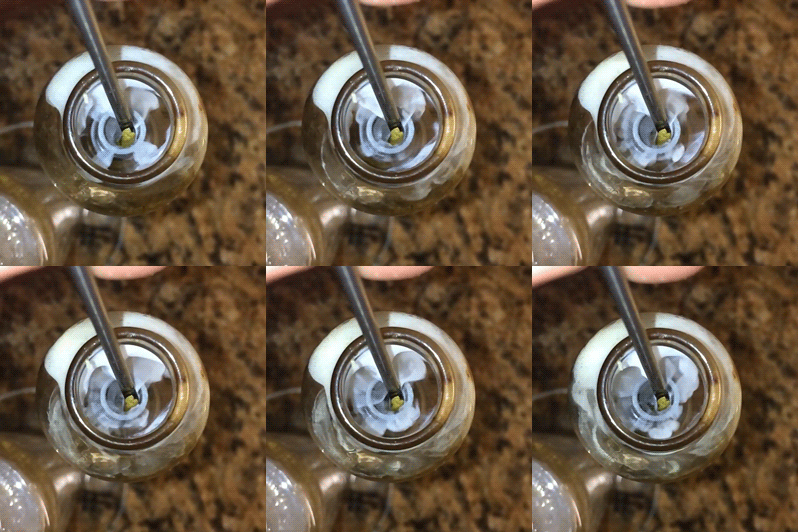
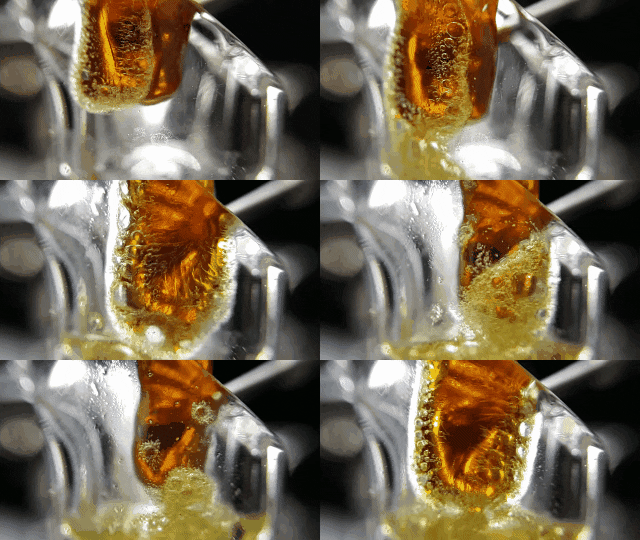
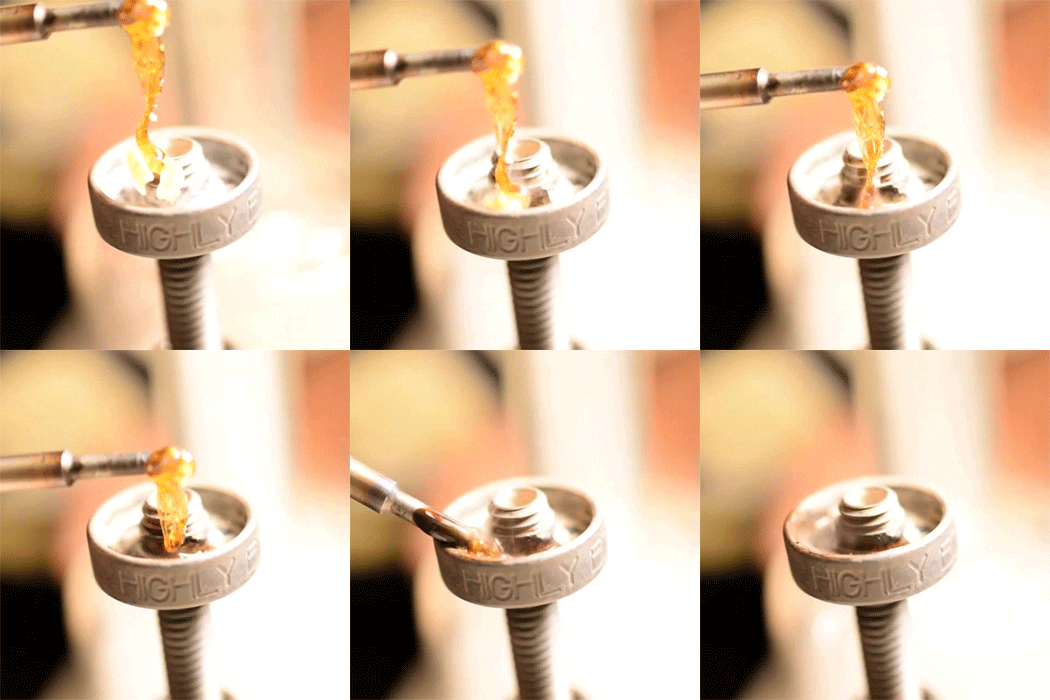
The CB Distillery out of Colorado surveyed their social media followers about why they like to dab CBD versus other methods and by far, most people prefer to dab for instant relief.
Here are our 5 favorite, most revealing responses:
Related Story: What’s The Deal With Dabbing And Should You Do It
Immediate Results
@zensual.nature: Dabbing CBD seems to have far more pronounces and often times more immediate results that other forms of administering the cannabinoid. I like the tinctures and I like the topicals, but most of the time, they are not as noticeably/instantaneously effective for managing my symptoms. I think tinctures/edibles will generally address body/mind in a slower/less distinct manner, topicals address specific sites of pain, and smoking/dabbing will bring relief to the body, but targets mental affliction, in my experience.
Inexpensive
@droppinslabs: Low cost (not paying for material for cartridges and accessories every time you buy, just raw medicine) and it allows me to have a delivery method that is fine-tuned and exactly how I want it, I know exactly how I like to dab and that is why it’s my favorite delivery method. Also almost immediate effects in a strong delivery
Flavor
@ryantreat4 It feels natural and in my opinion tastes amazing. I love CBD and will never go back. As far as physical pains, as I said, no experience with smoking CBD and gaining relief, however, rubbing CBD topicals like Salve or lotion has given me almost immediate comfort/relief as well.
Balance
@drewishdrews Dabbing gives me a nearly instant balancing effect after smoking THC.
Other Benefits
@fourdeeounce I myself don’t think it takes all my pain away when dabbing it, I would say 60% relief, but that being said, there are so many other benefits it gives me that are just truly astonishing.
The history of cannabis is fraught with smear campaigns and negative propaganda. Many antiquated associations of cannabis consumers remain prevalent throughout pop culture and politics, despite growing tides of evidence to the contrary.
For example, when you use the word “pot” to describe cannabis, it typically conjures stereotypes of headshops and stoner culture. And while stoners are a subculture of cannabis, they aren’t the prevailing representation of what cannabis culture and the cannabis industry has become. I mean, many legal weed shops look more like Apple stores aimed at education and assisting those with medical ailments.
This is why The Fresh Toast, as a guiding principle, doesn’t use “pot” when we write about cannabis. We don’t want those negative “stoner” associations to distract from the important work of the cannabis revolution.
But now Alejandro Albo of NowThis News has produced a video explaining the historically objectionable roots of the term “marijuana.” He believes those roots should be enough reason for you to never say the word “marijuana” again.
The word 'marijuana' is rooted in racism — here's why you should say 'cannabis' instead pic.twitter.com/7FD7qEz9Ac
“Now the word itself isn’t inherently racist. But it was used by prohibitionists to exploit racism and xenophobia. So by using the ‘M word,’ you’re ignoring a long history of oppression against Mexican immigrants and African Americans,” Albo says.
He later dives into the earlier history of cannabis in America, explaining how it was consumed by the “American elite” since the 1840s, often sold as over-the-counter medication to treat symptoms like insomnia, migraines, and rheumatism (sound familiar?). But when millions of Mexicans migrated to the U.S. after the Mexican Revolution in the early 1900s, they brought “marihuana” with them.
These Mexicans would smoke it casually and regularly, which was reason enough for Harry Aslinger, the director of the Federal Bureau of Narcotics from 1930 to 1962, to launch the original War on Drugs.
“Anslinger believed marijuana influenced Black and Brown people to commit murder and other violent crimes,” Albo explains. “Which is ridiculous because all I see people do when they smoke is sit on their couch, watch TV, eat munchies, and fall asleep.”
“So his solution was to launch a vicious propaganda campaign against marijuana and associate it with all inferior races and social deviants. Anslinger traveled across the country to convince people that marijuana was something that was invading the U.S. He even pronounced the drug as ‘marihuana’ to make it sound Hispanic and foreign and scary to white people.”
Anslinger’s campaigns were instrumental in convincing Congress to pass the Marihuana Tax Act of 1937, which was the first step to cannabis sales and usage becoming illegal. Efforts made by Anslinger will be familiar to anyone who has listened to the rhetoric of Attorney General Jeff Sessions, though many activist groups and media have helped counteract the spread of such miseducation.
While Albo contends that “marijuana lost its prejudice bite years ago,” he asserts that “you can’t ignore the racial implications of its introduction to the American lexicon.”
That much we agree with. However, some words’ meanings change over time. Marijuana is, in many ways, distant from its racially contentious roots. Though it’s important to remember it as representative of how cannabis prohibition was started as a racially motivated action, it doesn’t mean the word “marijuana” is still used in such a derogatory way, like “pot” can be.
As always, to play it safe, referring to the plant as “cannabis” remains the most technically correct method. Just don’t forget the complicated history of where marijuana came from.