Saturday, December 27, 2025
Home Blog Page 1074

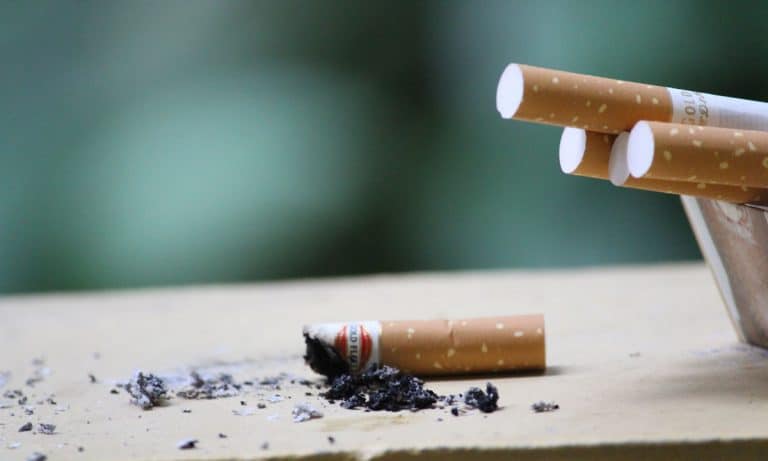
Get The Skunk Out: 4 Ways To Eliminate Marijuana’s Scent

The skunky aroma associated with marijuana is unmistakable — and it’s becoming more common as an increasing number of states legalize weed.

Terpenes are to blame for that intoxicating odor; the essential oils responsible for fragrant foods and herbs — and also that peppery smell you’ve probably experienced in red wine.

But how do you get rid of that scent when you want to hide the fact you’ve been smoking weed? Here are four common ways to combat the smell:

1. Vape

Compared to a joint, vape pens can cut down on the smell of marijuana almost entirely. They’re also a discreet way to smoke weed around anyone.

2. Filter Your Smoke

Something like the Smoke Buddy (available on Amazon) lets you blow smoke directly into it. The haze is filtered by charcoal, just like a Brita. It’s also super handy, so you can carry it with you anywhere.

https://giphy.com/gifs/arnold-schwarzenegger-smoking-7oMx9hEaUaMZa

3. Find A Walk-In Freezer

Freezer tokes are popular with people who work at restaurants, fast-food joints, and grocery stores. It’s safe to assume the fans inside will make sure the smell doesn’t linger. Plus, smoke and cold air both look the same coming out of your mouth, right?

4. Use Deodorizers

Commercial deodorizes are always a great trick. Here are three to try:

Cannabis incense doesn’t smell like weed. The name either implies how well it does at covering up the smell or how relaxed it makes you feel. As one user review says: “The most awesome scent, event if you are not a pot smoker, this is awesome! A calming, not over powering incense, a favorite of mine for years.”

Ona Breeze is basically an air circulator you attache to a jar (or pail) of Ona air freshener. It provides odor neutralization in rooms up to 1500 square feet.

The Cannabis Killer candle won’t just mask the smell of weed, it will remove it all together. It will also burn for up to 90 hours. Amazon reviews are mixed. Some say it loses its effect quickly and is too expensive to use daily, while others, like this guy, seem to think it’s pretty great: “I smoke in my Apartment pretty much all day. I have tried everything from Nagchampa to the Aerosol can and…..this Candle actually works pretty well and i am going to buy again.”

Wait A Minute: Did The FDA Just Approve Marijuana’s THC?

It’s official: The US Drug Enforcement Administration granted Schedule II status to THC. Well, not exactly.

Last week, the DEA finalized the approval of making a synthetic THC substance developed in a pharmaceutical laboratory.  The drug, Dronabinol or Syndros, will be an FDA-approved liquid dronabinol drug developed by Insys Therapeutics, a controversial Arizona-based company.

Just last month, John Kapoor, the founder of Insys was arrested on fraud and racketeering charges. Other company executives were also implicated in a scheme to provide illegal kickbacks to doctors who prescribe Subsys, the company’s fentanyl-based medication. Fentanyl is a highly addictive opioid painkiller that has helped fuel the nation’s opiate crisis.

Syndros, which debuted in July, is marketed by Insys as a treatment to help chemotherapy patients with nausea symptoms and to assist those suffering from wasting syndrome and anorxia-related ailments. Company documents reveal that Syndros added $700,000 in revenue in its first two months.

What makes the federal ruling unusual is that Insys is the only pharmaceutical company allowed to use Dronabinol in medication. The DEA ruled:

“… any form of dronabinol other than in an FDA-approved drug product remains a Schedule I controlled substance, and those who handle such material remain subject to the regulatory controls, and administrative, civil, and criminal sanctions, applicable to schedule I controlled substances set forth in the CSA and DEA regulations.”

Other Schedule II substances include Vicodin, cocaine, oxycodone and Adderall.

But let’s be clear: the DEA did not approve THC, only a synthetic version of it. As Snopes reports:

Although it is factual to say that the DEA approved a synthetic version of THC — legally giving it medicinal value — while keeping plant-based THC a Schedule I drug with “no currently accepted medical use,” this ruling applies only to dronabinol, and not to recreational products like K2 or Spice. And while there are arguments to make about logical inconsistencies in the DEA’s treatment of synthetic versus natural THC, such arguments are not a new feature of the debate around marijuana legalization, as they have been proffered since dronabinol was first approved for use by the FDA in 1985.

Meet The Guy Who Shut Down Trump’s Twitter Account

For 11 minutes on November 2, 2017, the world was restored to a moment of peace when Donald Trump’s Twitter account went silent. It had been mysteriously deactivated.

Turns out, it was “inadvertently deactivated” by a man on his last day at Twitter. And now we know it was an accident. Sort of.

TechCrunch tracked down the contractor responsible for deleting Trump’s account. His name is Bahtiyar Duysak and he said he never thought the President’s account would actually get suspended.

What happened is that on his last day of work, someone reported Trump’s account for violating Twitter rules. He flagged the account for deactivation, closed his computer, and left the office. The next day, some people were calling him a national hero.

“I didn’t hack anyone. I didn’t do anything that I was not authorized to do,” Duysak told Techcrunch from his hometown in Germany. “I didn’t go to any site I was not supposed to go to. I didn’t break any rules.”

“It was definitely a mistake…I really apologize if I hurt anyone. I didn’t do anything on purpose.”

According to Techcrunch:

Duysak tells us that it started when he was approached by a woman whom he didn’t know very well. According to Duysak, the woman said that she had been contacted by someone asking about Duysak in connection with Trump’s Twitter account. After a moment of disbelief, he said he then looked at the news and realized what had happened.

As to why Duysak decided to go public with his identity: “I just want to continue an ordinary life. I don’t want to flee the media. I want to speak to my neighbors. I want to speak to my friends. I had to delete hundreds of friends because reporters are stalking me…I had to delete so many pictures.”

Watch the full interview below.

Medical Marijuana and Idiopathic Intracranial Hypertension

A great number of medical patients whom begin using cannabis as a legitimate medicine due so out of necessity. Along this line of thought, there are a myriad diseases which modern medicine can’t seem to supply remedies for—with prescription meds often times providing more debilitating side effects than remedies. That being said, for many individuals afflicted with the neurological disorder idiopathic intracranial hypertension, a natural medicine with relatively mild side effects is long overdue. As medical marijuana is slowly becoming accepted by mainstream medicine the world over, sufferers of idiopathic intracranial hypertension are taking notice and beginning to experiment with the herb.

Those afflicted with idiopathic intracranial hypertension often times confuse the ailment with that of a brain tumor, as both diseases present similarly with physical symptoms. While the root cause of idiopathic intracranial hypertension remains unknown, the disease expresses itself with an increased amount of cerebral-spinal fluid in the space between the brain and the skull. This over-excessive amount of cerebral-spinal fluid causes intense compression on the brain, known as intracranial pressure, that results in symptoms of “headache, transient vision loss, tinnitus, and diplopia”. Moreover, long-term intracranial pressure on lower portions of the brain can sometimes lead to optic nerve damage and eventually blindness. As a result, pro-active curative relief from the cranial pressures of idiopathic intracranial hypertension is essential to avoid permanent blindness in patients.

There are a number of case studies in which the use of medical marijuana provides profound relief from idiopathic intracranial hypertension. To begin with, the New York Psychiatric Institute reports an instance in which a lady with a “longstanding history” of idiopathic intracranial hypertension found great relief from symptoms with cannabis smoking. This study is quite noteworthy as all symptoms of idiopathic intracranial hypertension are directly related to increased intracranial pressure—meaning that cannabinoids actually helps relieve a cause of the disease, rather than just the symptoms. In another case study, the American Academy of Optometry reports that a 37 year old female victim of idiopathic intracranial hypertension smoked marijuana to alleviate headaches when she unexpectedly ran out of her prescription medications. After the cannabis provided her substantial relief from the symptoms of the disease, she began using the “synthetic cannabinoid dronabinol” as a full-time medicine. Remarkably, the use of dronabinol works so effectively to curb her intracranial pressure that doctors consider her to be in remission from idiopathic intracranial hypertension as a whole.

Dronabinol

As medical marijuana becomes more modernized and sophisticated through western medicine, the chemical compounds within the herb take on novel forms and uses through human intervention. That being said, the modern cannabis medication dronabinol is comprised of synthesized cannabinoids encapsulated into pill form. Dronabinol, also known as marinonl, was originally created to help with the nausea, vomiting, and loss of appetite that arises in people undergoing chemotherapy as well as suffering from aids. As aforementioned, doctors are beginning to find other uses for dronabinol, namely that of idiopathic intracranial hypertension. Currently, for patients with extremely serious afflictions dronabinol is a legal medicine in all 50 states and is only accessible through a doctor’s prescription.

Kent Gruetzmacher M.F.A. is a Colorado based freelance writer and the Director of Business Development at Mac & Fulton Executive Search and Consulting (www.mandfconsultants.com), an employment recruiting firm dedicated to the indoor gardening and cannabis industries. He is interested in utilizing his M.A. in the Humanities to critically explore the many cultural and business facets of this youthful, emergent business by way of his entrepreneurial projects.

Marijuana Edibles For Dogs? This Company Thinks That’s The Future

This takes feeding the dogs table scraps to a whole new level. While Americans continue to fight for the right for humans to consume cannabis, this Canadian marijuana company plans to sell cannabis-infused dog chews.

Believe it or not, True Leaf Medicine International Ltd. is kind of already in the doggie weed market. The company currently produces hemp seed-infused products for canines that aim to ease inflammation, anxiety, and joint pain. Now it wants to raise around $8 million USD to build a production facility to extract cannabidiol. True Leaf intends to do so through equity crowdfunding and believes the CBD can treat medical ailments in humans and animals.

“People are spending more money to look after their pets, specifically as they get older,” CEO Darcy Bomford told the Financial Post. “A lot of the drugs that are available in the veterinary market are effective and they work but they also have a lot of side effects. There’s a big market there for natural products.”

The CBD oil will ease the process for older dogs as they jump on the couch or can’t endure the longer strolls around the neighborhood like they used to.

Two years ago, True Leaf announced their hemp-based pet products and has expanded the line to include chews and oils. Their items reach about 1,600 North American stores and more than 300 Europe locations. As holistic medicine becomes the preferred method to treat humans and pets, it could grow into a $1.6 billion market, Bomford estimated to FP.

“We’re really focused on making their quality of life as good as possible,” Bomford said. “We’re trying to return the love we get from our pets.”

Electro-Stimulation Is A Sex Thing And There Are Toys That Help

0

Sexual practices can get crazy and adding electricity into the mix can reasonably imply that it’ll get crazier. Possibly a little painful, too. Electro-stimulation consists of stimulating your genitals with electricity, or, to paint the picture more clearly, it’s the practice where people attach electrodes to their genitals and hit the on switch.

The truth is that Electro sex is not as crazy as all that. It can be, but there are also a wide range of sex toys that are able to provide electric stimulation, including vibrators, butt plugs and dildos. The people at Metro.co.uk wanted to know why this sexual practice was such a big deal, so they decided to try out one of these products and write their thoughts on the matter. For research, of course.

For starters, they contacted ElectraStim, a company that develops these sort of products, to be provided by a kit. The company also explained why people want to engage in electro sex, providing an experience that can’t be replicated by other sex toys.

By stimulating the nerve endings with electrical pulses, electro sex toys can provide a deeper and more satisfying range of sensations as your muscles involuntarily clench. Some people can even achieve ‘hands free orgasms’ with ElectraStim products as the internal stimulation does the hard work for you. One of the best parts of electro-sex is that you can share it with a partner in such a tactile way.

The kit they received was the Electrastim Flick, a set of devices that can be shared with partners. It contains wires, electrodes, sticky pads, a conductive gel, a dildo that can be used by men and women, and a control unit that, all piled up together, probably looking very intimidating.

Via Metro.co.uk

There’s no getting away from it – it is a very strange feeling indeed to have one’s internal muscles clenching without any conscious effort. Imagine the slimming pads rolled up and shoved where the sun don’t shine – but instead of your six pack pulsing, it’s your nether regions.

If you’re curious and want to give it Electro-sex a shot, then be sure to do the proper research and invest in a toy that suits your needs and, maybe, your partner’s. Also, you should probably start out by using the lowest setting. You want to dip your toe in the pool, not drown in it. 

Science: Here’s Proof Marijuana Can Help Battle Opioid Addiction

  • Every day, more than 80 people with opioid addiction die in the United States from an overdose opiates.
  • About 2.5 million Americans have been diagnose with an opioid use disorder — and many more have been undiagnosed.
  • It is overwhelmingly clear that the gateway drug to heroin is opioid prescription painkillers: 80 percent of heroin users started the habit after taking pharmaceuticals.
  • Each year, 2oo million prescriptions for opioid painkillers are written, roughly the same number of the entire U.S. adult population.
  • The economic costs for this epidemic is estimated conservatively at $78 billion a year in the U.S.

With these staggering data points in mind, a neurobiologist conducted a study to see if cannabis could reduce the cravings and ease withdrawal symptoms of heroin users.

“It is my opinion that bold steps are also required to escalate the pipeline in developing creative and innovative treatments to help curb this epidemic,” said Yasmin Hurd of the Icahn School of Medicine at Mount Sinai, who studies how both cannabinoids and opioids act on the brain. Her research was published on Thursday in in Trends in Neurosciences.

Marijuana’s Underexplored Potential For Helping Opioid Addiction translates into cannabinoids having, for example, a stronger effect on inflammation-based chronic pain. Meanwhile, opioids are particularly good at relieving acute pain, which is why they are used in surgery. The problem is that opioids can quickly lead to a deadly addiction.

“If you look at both drugs and where their receptors are, opioids are much more dangerous, in part because of the potential for overdose–the opioid receptors are very abundant in the brainstem area that regulates our respiration, so they shut down the breathing center if opioid doses are high,” Hurd says. “Cannabinoids don’t do that. They have a much wider window of therapeutic benefit without causing an overdose in adults.”

Evidence in animal models supports that cannabinoids could have long-lasting therapeutic effects. A specific cannabinoid, cannabidiol, has been seen to reduce heroin cravings in animals more than a week after abstinence, and seems to restore some of the neurobiological damage induced by opioid use. A small pilot human investigation led by Hurd mirrored these findings in rodents. In the study, cannabidiol particularly helped relieve anxiety related to cravings in heroin users abstaining from use.

Politicians are only beginning to acknowledge that an epidemic of opioid addiction overdoses is taking place across the United States, particularly in suburban and rural areas, and the National Institute on Drug Abuse is asking researchers to think creatively about new strategies for pain relief. Marijuana has been a neglected option because there are restrictions on studying its effects in humans. While there has been a growing interest by the scientific community in cannabinoids since the legalization of medical marijuana, it means that we still don’t know much about how it could be used therapeutically, despite at least a million people having prescriptions.

“We have to be open to marijuana because there are components of the plant that seem to have therapeutic properties,” Hurd said.

She concludes with a call to action for scientists and medical professionals:

Although significant momentum in the general public has moved the pendulum regarding marijuana, the scientific and medical communities now need to play a more leading role via evidence-based studies. In this way, scientific and medical evidence will once again serve to inform the public and to develop efficacious and safe therapies. However, such advances will require significant and immediate actions to be taken by the National Institutes of Health and other federal agencies to help develop a structure for fast-tracking the clinical use of ‘medical CBD’.

Read the full report here.

Marijuana Instantly Calms This Girl With Cerebral Palsy

0

On bad days, Kara Zartler slams her fist into her face 3,000 times. Over and over, uncontrollably inflicting pain on herself. Three. Thousand. Times.

Kara, 17, suffers from cerebral palsy, and autism. By the age of 4, she exhibited self-injurious behavior and by the time she reached 6, the self-abuse became a daily occurrence. Her parents, Mark and Christy Zartler, tried everything to provide relief for their daughter, a twin whose sister is healthy.

They tried antipsychotics. enzymes and sleep aids — nothing the doctors prescribed failed to put an end to the misery. Until one day, Mark’s beer-drinking neighbor buddy threw out the idea: Why not try medical marijuana?

“We were truly at a crossroads,” Mark told The Fresh Toast. “We live in Richardson, Texas (a suburb north of Dallas) and we knew it was illegal. But we felt there was no other choice.”

” title=”" title="

Watch: This Company Will Decorate Your Beard For Christmas

Have you ever thought to yourself, “You know, trimming a tree isn’t enough at Christmas. I need more things to hang stuff on,” your holiday dreams have come true! There’s a company that specializes in decking out beards for the festive season, complete with glitter and clip-on bulb ornaments.

Beardaments has a kit you can buy online that contains all sorts of accoutrement, including string lights! And it’s pretty easy to apply. Just  brush your facial hair of choice (if you have more than two options on your face, it’s time to shave something off) with some nourishing oil to keep the glitter in place, shake on said glitter (red, green, silver), add whatever extra flair you’re in the mood for, and then dare one of your friends to buy you shots if you’re actually brave enough to be seen in public with your new face embellishments.

According to the Beardaments website, “Beardaments are great for: lumberjacks, Grizzly Adams, fishermen, Abraham Lincoln, bearded ladies, pets, thickets of chest hair and anyone else proud of their facial hair!”

So if you’re tired of watching Love Actually on a loop in hopes of getting your facial hair in the holiday spirit, check out this video and then do your beard a solid by gifting it what it’s always wanted: a long overdue “eff you” to your face.

https://www.facebook.com/Insiderbeauty/videos/517492198621183/

$5 Billion In California Cannabis Revenue But No Place To Deposit It

Here’s some good news and bad news for California cannabis entrepreneurs. First the good news: Financial analysts estimate the state will generate $5.2 billion in cannabis-related revenue in 2018, the first year of legal recreational marijuana sales. Now the bad news: There still is no place to deposit all these billions of dollars.

Forbes reporter Julie Weed reports:

Banking is severely limited for cannabis industry businesses. As a “Schedule I” substance, cannabis is categorized to be as harmful as heroin and banks risk losing their federal charter if they work with cannabis companies. Financial institutions need to go on record with the U.S. Treasury Department’s Financial Crimes Enforcement Network (FinCen) when they establish a relationship with a known Marijuana Related Business, and Karnes estimates that just 5% of all banks have done that. He believes that fewer than 1% of all banks in the United States are currently working with cannabis-related companies.

The lack or institutional banking exposes these businesses to the risk of operating as a cash-only enterprise. Because of the onerous and outdated laws, cannabis businesses are required to fork over extra money for safes, security guards, extensive video camera systems and other safety measures. Many companies, fearing criminal behavior, are purchasing firearms.

Forbes reports that some cannbusinesses are turning to cryptocurrencies, which have their own sets of problems.  Cryptocurrencies have a “questionable ability to pass regulatory scrutiny,” because they are so complex, according to Matt Karnes, industry analyst and managing partner of New York’s GreenWave Advisors.

Greenwave Advisors recommends that the federal government step in and resolve the issue:

Investors continue to be concerned that their interests may not only remain vulnerable to existing legal impediments, but also that they could face an additional threat if the federal government were to claim superseding law enforcement jurisdiction over state mandates.

We believe that until such time as the federal government ends prohibition or passes legislation to change existing laws that the cannabis industry will be impelled to seek out temporary solutions to facilitate banking transactions. It is hoped that some of these work-arounds will be suited for longer term viability and will (or continue to) stand the tests of regulatory scrutiny.

Accordingly, there will remain some level of ambiguity as to whether a true cannabis banking solution exists in the marketplace today. There is no one answer and we think there will continue to be a patchwork of alternative offerings.

Don't Miss Your Weekly Dose of The Fresh Toast.

Stay informed with exclusive news briefs delivered directly to your inbox every Friday.

We respect your privacy. Unsubscribe anytime.