Sunday, December 21, 2025
Home Blog Page 1135

5 Reasons Why Those In Happy Relationships Still Cheat

0

We tend to relate cheating to those who are involved in unhappy relationships, but a surprising statistic reveals that a large percentage of cheaters (50 percent of men and 30 percent of women) considered themselves to be happy and in love with their significant other.

The truth is that even though we might not want to admit it, cheating is extremely common and people don’t have to be unhappy or evil to do it.

Here are 5 reasons why happy and normal people could cheat:

Boredom

It’s easy to second-guess monogamy and the idea that you have to be with one person for the rest of your life. Everyone has these feelings, but the difference is marked if people decide to talk about it openly with their partners rather than looking for another relationship. 

Big life changes

Deaths, fear, big opportunities, and growing older may push people to cheat. Research suggests that people are more likely to cheat if they’re entering the “danger age:” ages 29 and 39.

Other studies suggest that people who are about to be parents and those who are facing big moments or changes in their lives are also more likely to cheat.  

The Thrill Of It

The idea of cheating and having something you’re no supposed to have is a huge aphrodisiac, even if you love your partner to death. The fact that you can’t see the person you’re having an affair with all the time feeds into that desire and makes each encounter more treasured and passionate. 

The Cheating Gene

Dopamine receptors play an important role in cheating. A study showed that 50 percent of people with the long allele variant of the gene cheated on their partners while only 22 percent of people with the short alelle variant had cheated. The first group also demonstrated risky behavior and a vulnerability to drug and substance abuse.

Society Says It’s Okay

After being married for long periods of time, many believe cheating is inevitable and allow themselves to have that one-time fling. This type of thinking absolves part of the guilt and makes the cheater feel better about themselves.

Statistics on cheating are very hard to measure, but an estimate claims that 60-70 percent of married couples stay together after one of them has an affair, which proves that cheating is more common than we think and that, for some, it’s not a deal breaker.

That One Time Lady Gaga Gave Beyoncé A Panic Attack

Lady Gaga’s new Netflix documentary Five Foot Two offers an intimate portrait of the massive pop artist. It delivers glimpses of her life, including her struggles with fibromyalgia and her relationship with ex-fiancé Taylor Kinney.

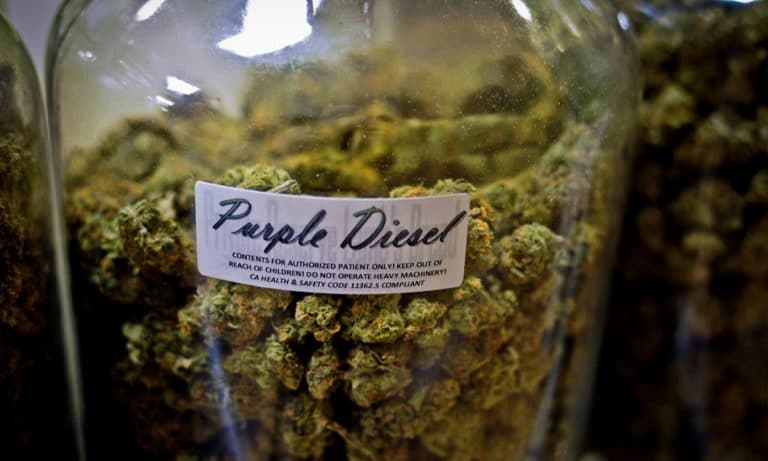
And it also tells a story: That one time Gaga smoked too much weed in front of Beyoncé and gave her a panic attack. Seriously.

During the ending credits of the film, Gaga relays the story of making Bey uncomfortable with her marijuana smoking to a friend. “That was the night I gave Beyoncé, like, a panic attack,” Lady Gaga says, as unearthed by The Cut.

When her friend inquires how she did that, Gaga explains:

I don’t know, I just always feel like when I’m with her and Jay-Z, I’m always like hanging out in the corner with like nine joints hanging out of my mouth being like “Whaaaaat’s up?!” and she’s like “You’re not a lady but why? How is this working?”

Good news, though. It appears the night didn’t damage her and Beyoncé’s relationship. Gaga had to reschedule the European part of her tour because of her chronic pain. As she tries to get better, Beyoncé sent her some Ivy Park gear as well as a bouquet of red roses wishing her to get well soon.

https://www.instagram.com/p/BZgpoKAAv_1/

https://www.instagram.com/p/BZg_enggnF_/

See, even when you give your friends mild panic attacks from your marijuana habits, they’ll still be your friends after all.

A Compelling Argument Against Twitter’s New 280-Character Limit

0

Twitter announced this week that it would be rolling out a new feature that gives certain users a new 280-character limit, doubling the previous 140-character restriction. Though Twitter initially installed the 140 character-limit because of SMS text messaging’s 160-character limit, the whole constraint is now from a bygone era.

Many Twitter users would argue that the character limit was part of the hilarity and brilliance on the platform. Brevity is the soul of wit, after all. And in a world surrounded by deafening increases in noise, we possibly didn’t need more word boosts. We can think of one presidential man who definitely doesn’t need the extra Twitter characters.

Anyway, Twitter CEO Jack Dorsey announced the news on Twitter with a 280-character tweet. It was meant to be informative and a bit cheeky, showcasing the platform’s new ability to users.

The move backfired on Dorsey. Users were quick to point out that Dorsey’s tweet included unnecessary word padding and with editing, could be significantly reduced.

PhD student Brian Barone edited the tweet down to 179 characters. Meanwhile, Vice editor Caitlin Kelly whittled the message to 139 characters, just under the previous restriction’s limit.

https://twitter.com/brianrbarone/status/912788388150960130

https://twitter.com/caitlin__kelly/status/912795950476857344

In both instances, Dorsey’s message remains unchanged in meaning and function while removing the wordiness. And sure, Dorsey might have been adding some character just to prove a point regarding the new Twitter feature, but the point remains—280 characters is kind of excessive.

To be fair, Dorsey was a good sport about whole thing. He admitted he was getting used to the feature like the rest of us.

We can still go back, Jack. It doesn’t seem to be generating new positive attention on the platform whatsoever. Remove it and all will be fine. Though, this is the internet so I’m sure someone will have a problem with that, too.

Gossip: Scott Disick Security Closes Down Bathroom; Jennifer Aniston Is After Gwyneth Paltrow

Scott Disick demands privacy when he pees in public – which makes us wonder what little problem the Kardashian sidekick is trying to hide.

“After Phillip Plein’s fashion show I went into the men’s room just before DJ Khaled came in,” one witness tells Straight Shuter. “Scott’s security closed the bathroom down and didn’t allow anyone else in until Scott left. But security were not smart enough to wait for the people already inside to leave before Scott and DJ started taking. Scott was plotting on how and where to pick up girls to bring home. I had no idea they were tight like that.”

But ladies, consider yourself warned – after what little our spy saw you shouldn’t get too excited!

Jennifer Aniston Is After Gwyneth Paltrow

Jennifer Aniston is in talks with business partners to open a wellness center that will provide facialists, workouts, meditation classes, and even a café with healthier versions of delicious foods.

“Jennifer has dreamed about opening a center for a long time and is now getting serious about it,” sources tell Straight Shuter. “Jen knows that this is Gwyneth Paltrow’s area of expertise but that isn’t going to stop her. Over the years Jen has learned a huge amount of information relating to living a better life and she wants to make a business out of it. It will not be a website like Paltrow’s, but rather a physical building where guests can go and get services.”

Love the fresh dirt we bring over daily from Naughty Gossip? Let us know in the comments!

High Taxes On Marijuana Will Keep California’s Black Market Thriving

When California finally allows sales of recreational marijuana next year, retailers will still be competing with illicit growers for customers.  The Golden State’s high cannabis taxes will keep black marketeers in business and stifle government revenues from this new market, according to Fitch Ratings, a credit ratings and research firm.

Fitch Ratings’ research, made available earlier this week, finds that the effective tax rates on non-medical cannabis will be as high as 45 percent when accounting for both state and local levies. Taxes include a 15 percent state excise tax, state cultivation taxes of $9.25 per ounce for cannabis flowers ($2.75 per ounce for leaves), and state and local sales taxes ranging from 7.75 percent to 9.75 percent. Oregon, by way of comparison, taxes non-medical cannabis at about 20 percent and Alaskan taxes range from 10 percent to 20 percent.

According to the Fitch Ratings:

“California’s high taxes are likely to keep black market prices competitive into the long term. The state’s black market will also benefit from its long history as a supplier to states where non-medical cannabis remains illegal. Retail sale of non-medical cannabis is set to begin on Jan. 1, 2018 following California voters’ approval of the Control, Regulate and Tax Adult Use of Marijuana Act (Proposition 64) in November 2016.”

California won’t be the first state to grapple with a massive black market after voting for legalization. The report notes that “Colorado, Washington and Oregon each lowered their cannabis taxes following legalization to address black market competition.”

Tawnie Logan, chairwoman of the board of the California Growers Association, an advocacy group for small-scale marijuana producers, told the New York Times that the black market price for an eighth of an ounce of marijuana is around $20, compared with $50 in current medical marijuana dispensaries.

“All of a sudden they are calling their buddy again,” Logan told the Times, referring to black-market vendors who have thrived in California in recent decades. The only effective remedy to the problem is increased law enforcement who will be tasked with cracking down on established black market outlets, which are prevalent throughout the state but dominant in Northern California.

“You would be turning these law enforcement agencies against their own communities,” said Terry Garrett, a manager at Sustaining Technologies, a marketing company that researches the cannabis market in Sonoma County.

“That’s the conundrum for California.”

Nevada Wins Big With Over $27M In Recreational Sales The First Month

Nevada is winning big when it comes to recreational cannabis. Dispensaries had over $27 million in sales in July alone, which is double what Oregon and Colorado brought in their first months respectively and seven times what Washington procured.

According to the Nevada Department of Taxation, Nevada made $10.2 million during that first month of sales. Of that, $3.68 million came from taxes.

Gov. Brian Sandoval projected that with its now two-year-old medical cannabis industry and now recreational that the state stands to make over $100 million over the next two fiscal years from fees and taxes.

A new projection, though, by the Department of Taxation is that over $120 million will be generated.

Originally, Sandoval had proposed that the sales tax revenue go to schools, but later shifted some of the moneys to the state’s rainy day fund, which can be spent anywhere, but is normally reserved for emergencies.

The revenue from the 15 percent wholesale tax, taxed at the cultivation level for both recreational and medicinal marijuana, goes to state and local government for costs incurred. The remainder of the money goes into the School Distributive Account, which hands out money to schools based on the number of pupils.

Money rolling in is a good thing, but is it enough to make us forget the distribution kerfuffle Nevada first experienced? Not likely. The state is still deep in the courts with alcohol distributors, who have circumvented all state efforts to distribute new marijuana licenses.

From July, only a handful of new licenses have been distributed and only to cannabusinesses allowed to deliver the recreational and medical products to dispensaries to sell, resulting in many dispensaries struggling to stay stocked.

Of those 250 licenses that have been issued, over 200 are in Clark County and the remaining are distributed throughout Carson City, Nye and Washoe Counties. Just around a dozen dispensaries conduct business in the Northern Nevada. The application fees recreational cannabis licenses is $5,000 and the license fees range from $10,000 to $30,000.

Taco Bell, McDonald’s Cashing In On Legal Marijuana

McDonald’s inescapable jingle “I’m Lovin’ It” never really reveals the actual meaning of “it.” The fries? Big Macs? Or maybe the it refers to legal marijuana.

A new study published on Wednesday sheds new light on the fast-food giant’s slogan. According to “Green Market Report and Consumer Research Around Cannabis,” 43 percent of Americans who bought legal marijuana chose McDonald’s as their go-to place to eat fast food when experiencing the munchies.

The survey found 18 percent of respondents cited Taco Bell as their preferred munchie hotspot and 17.8 percent went to Wendy’s.

“McDonald’s wins by virtue of the sheer number of locations — by default really,” said Jeff Stein, vice president of Consumer Research Around Cannabis. “Those competitors which better understanding of cannabis users and their consumer habits can certainly close the gap by integrating what they learn through their marketing efforts.”

The online survey recorded the fast food preferences of 27.500 pe0ple and was conducted over several U.S. marketplaces with a base population of 55 million.

Burger King finished fourth with 17.6 percent and Subway was fifth with 8.7 percent.

Kentucky Fried Chicken hit the list at number six with 5.5 percent going to eat there over the past four weeks. The rest of the top 1o were Arby’s, Chick-Fil-A, Jack-In-The-Box and Carl’s Jr. (in that order).

As the study notes:

As cannabis is known for its appetite inducing side effect, which is one of its most beneficial qualities for those suffering from diseases that hinder appetite or take medication that make it difficult to eat, understanding the spending habits of consumers is critical.

Consumer Research Around Cannabis is a Houston-based research firm that tracks the demographics of the marijuana industry. The Green Market Report, meanwhile, focuses on cannabis financial and economic information.

A Little Mickey D’s Trivia

The “I’m Lovin’ It” ditty was recorded in 2oo3 by Justin Timberlake. and  written by rapper Pusha T. Timberlake mace a cool $6 million to sing the jingle. That’s a lot of Big Macs. At 14 years it is the longest-running campaign in McDonald’s 76-year history.

Can Marijuana Help With Antibiotic-Resistant Superbugs?

In the 1990s, we had the Super Predator—the ice-blooded, crack-addled, and mostly imaginary child gangbanger who murdered for sport. (Sorry, Hillary, but that was not your finest moment, or haircut.)

Now, in the first decades of the third millennium we have the Super Bug, antibiotic-resistant germs making the world unsafe for us all.

Unlike the super predator, the super bug is not an urban legend, but altogether too real: Each year antibiotic-resistant bacteria sicken some two million of us, kill another 23,000, and inspire countless medical scare-pieces—just like this one!

One of the more common superbugs is MRSA—short for methicillin-resistant Staphylococcus aureus, which delivers a supercharged version of the humble staph infection. Staph is all over the place. Right now, one in three of us has it up their nose. Under normal circumstances, it doesn’t do much harm, but if your immune system is compromised—say you are very young, or very old, or recovering from surgery—these minor infections can have life-threatening complications. And there’s nothing we can do to stop them.

Antibiotic overprescription is one culprit in the rise of the super bug. Another is the fact that we’re simply not developing any new antibiotics. In fact, over the past 40 years, only one new class of these drugs has been introduced.

Bet you’ll never guess what, though: Cannabis just might provide an answer!

Researchers in Italy and the UK tested the five most common cannabinoids in Cannabis savita—THC, CBD, and three more exotic compounds: cannabinol, cannabigerol, and cannabichromene (which, incidentally, are also the names of Cinderella’s three ugly stepsisters). All five showed “potent antibacterial activity,” even against the supercharged, multidrug-resistant form of staphylococcus sometimes known by the initials MRSA. Lead researchers Giovanni Appendino and Simon Gibbons concluded that these cannabinoids “compare highly favorably with the standard antibiotics.” Even if they do say so themselves.

The team doesn’t know whether these cannabinoid could make a viable injectable antibiotic; that would entail extensive testing. However, a topical application “to reduce skin colonization by MRSA” might be a shorter-term possibility.

You can read an interview with Drs. Appendino and Simon at MIT Technology Review.

FBI Interns Host Twitter Q&A And Things Go South Quick

What started out as an innocent tweet by the FBI quickly escalated into a Twitter troll session of epic proportions. And one that will either have people clamoring for an internship or calling CPS to check on the mental state of one of the agency’s young workers.

Initially, it sounded like a great idea. The FBI gave several eager interns the opportunity to host their own Q&A on Twitter regarding the agency’s internship program.

https://twitter.com/mattbfarwell/status/913120293643792390

But it was a woman named Kathryn who definitely got the brunt of the trolling.

Oh, Kathryn. You had no idea what you were getting yourself into, did you?

It wasn’t long before a tweet storm of hilariously inappropriate questions hit, with Kathryn presumably hiding under a desk. Questions, of course, focused on Breaking Bad, X Files, cop shows and anonymous “asking for a friend” illegal activities.

https://twitter.com/OBryDavid07/status/913126254647357440

https://twitter.com/SopanDeb/status/913122215985598464

https://twitter.com/ElPolloLoco60/status/913119367138865153

https://twitter.com/WillWhitson/status/913120924609781761

https://twitter.com/wnvann/status/913136957840134144

At press time, “Kathryn” (if that’s her real name) hasn’t answered a single question.

https://twitter.com/ViewFromMN/status/913196384471408640

This Adorable Dog Exchanges Money For Treats

Holly is a smart dog who enjoys scavenging and snooping around the house, but from a very early age she demonstrated an affinity for money, which is weird for a dog, right?

When Holly was a puppy she used to rummage through her owner’s bag, finding dollar bills, stash them in different places, and run around the house with them as if they were toys. Casi Cook explains that the only way to stop her from destroying the money was to offer her treats and to then exchange them for the bills. Which is a genius move from Holly’s part. For her owner, we suggest a little more organization? It’s not cool to keep your bills laying around in your purse.

Cook works at a restaurant, which explains why Holly grew up surrounded by so much cash. According to the Huffington Post, Holly is able to recognize the sound of her owners counting dollars.

“When Holly hears us counting money, within seconds she is sitting with her head right on your lap nudging your hands until you give her a dollar.”

Holly is so cute that her owners can’t resist her strange quirks, which has led to her having two piggy banks laying around the house for her pleasure, which she uses to “pay” for her treats.

“When we are at the dinner table, she will quietly walk up to one of us and just gently place a dollar on our laps and look at us with that puppy face”

Aside from being a pretty savvy business dog, Holly also enjoys to sit down on the dining table surrounded by her family. Pretty adorable.

Don't Miss Your Weekly Dose of The Fresh Toast.

Stay informed with exclusive news briefs delivered directly to your inbox every Friday.

We respect your privacy. Unsubscribe anytime.