Sunday, June 14, 2026
Home Blog Page 1177

Cannabis Mug Cake For Those Who Don’t Have Time For Sheet Caking

Microwaving a cake seems like a counterintuitive disaster, but going to the store or baking an entire cake, even the boxed kind, takes at least one hour from packet to pie hole. If you can’t stand to wait that long and you possess a microwave, you can inject a simple single serving cake recipe with the cannabis you crave and be on the couch enjoying Outlander before you can say JAMIE.

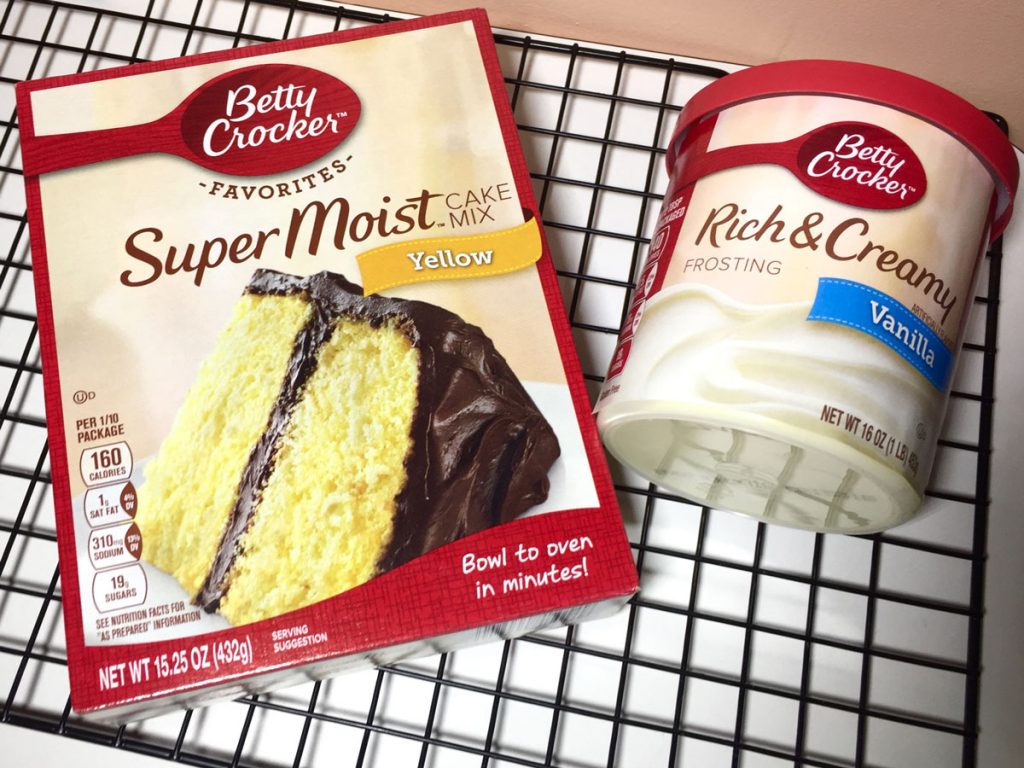
You can approach this with a from scratch (or necessity) angle, or you can portion out boxed cake mix to suit your taste. Either method will give you something that is as cake-like as it is quick. Throw a jar of icing in the fridge to mete out with impunity and boom, instant cake craving fix.

Cannabis​ ​Yellow​ ​Mug​ ​Cake

Adapted from Betty Crocker box mix
Makes one mug, 10mg THC estimated

  • 6 Tbs boxed yellow cake mix
  • 1 tsp cannabutter*
  • 2 Tbs softened unsalted butter
  • 2 Tbs water
  • 2 Tbs beaten egg
  • Frosting if desired
Photos by Danielle Guercio

Take a microwave safe mug and grease well with either nonstick spray or butter. In a small bowl, mix the wet ingredients and the softened butters until it makes a thick goop. Store the extra egg in a sealed container for breakfast or breading and make sure the cake mix is closed up tight until you use it again.

Photos by Danielle Guercio

Add the cake mix and beat well for at least a minute to aerate the mixture. Go for longer if you can stand it, the more air in the batter the better it will rise and the more uniformly it will cook as the microwave heat fluffs it up.

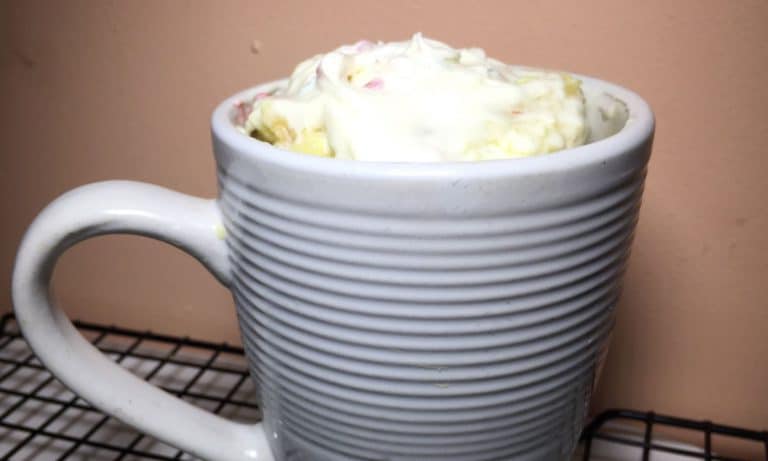
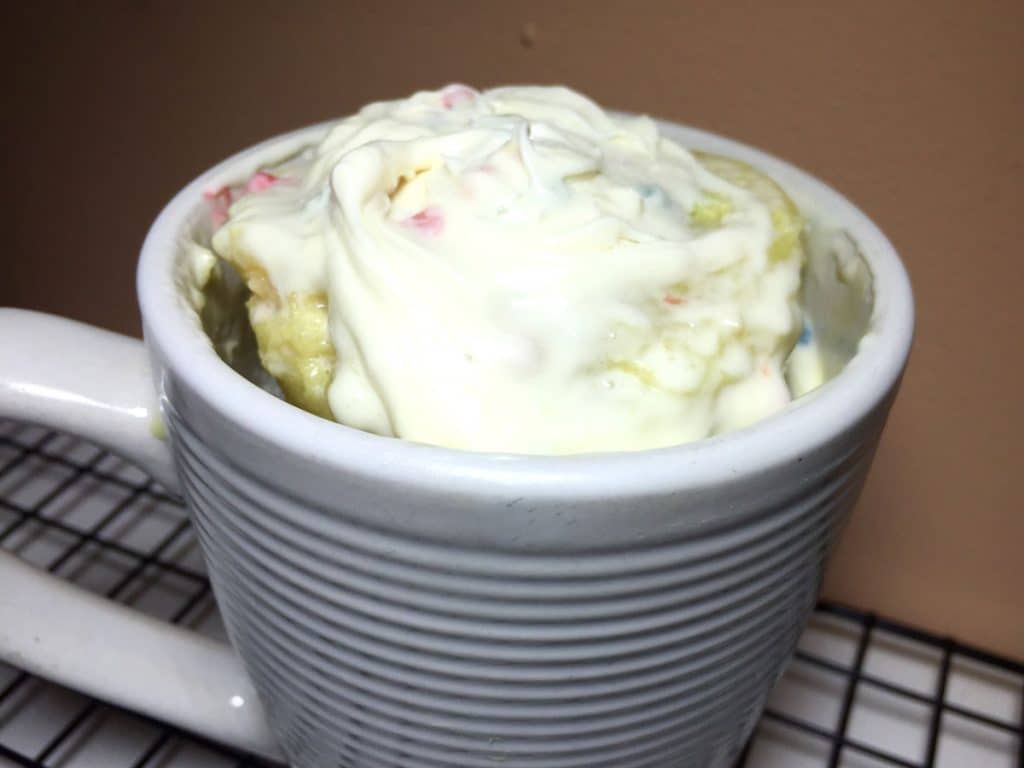
Transfer into the mug and scrape the bowl with a spatula, you don’t want to waste the small amount of batter you have. Microwave for 1 minute, allow to stand in the microwave for 5 seconds after as it will be quite hot. Top with a scoop of frosting and you’re literally golden!

Photos by Danielle Guercio

*Cannabutter

Decarboxylate 3.5g of finely ground cannabis at 225 degrees for 20 minutes in a tightly sealed, oven safe container. Put cannabis in lidded mason jar or vacuum sealed bag with cannabis and one stick of butter. Heat in water bath just under boiling for at least 1 hour. Strain and chill to use in recipes.

You’ve got the keys to success now, and it’s up to you to use them to your maximum enjoyment. Sure you can bake a whole cake to have for a week, but you’d have to heat up each serving and commit to waiting the full hour to bake it, plus cleanup. With mug cake’s minimal prep, you don’t have too much to worry about re:cleaning. Plus, if you’re bored and uninspired, you can add chocolate, toppings nuts, and spices without potentially ruining a full size cake if it doesn’t come out as planned.

Photos: Danielle Guercio 

‘Grow Op’ Episodes 10 – 12: A Web Series About Winging It In Cannabusiness

What happens when the government grants a Tier-3 cannabis grow license to an illicit marijuana dealer? What happens when a bon vivant like Kevin suddenly becomes a ‘legitimate’ businessman? What will this process look like? 

Well, luckily for you, an agin’ smoker is filming the whole thing and making it into a reality show.

‘Grow Op’ is a web series for those who are winging it.

Episode 10 – I’m Sorry Charles

The episode begins with Charles meeting Kevin in a park. The cameras are far away but we’re able to listen to everything that they’re saying. Kevin explains that things haven’t been going too well for him and that he’s considering selling his license. Charles wants to keep on following him on the show, but Kevin doesn’t want that. Charles kind of begs for Kevin to stay, but he doesn’t.

Episode 11 – The Show’s Over

Charles goes back to Crispin’s place and he looks pretty depressed because the show’s apparently over. He explains that all his work was for nothing and Crispin looks concerned and a little awkward. He offers him some sort of weed drink that looks hella strong.

Episode 12 – Be There

Crispin is trying to save the show. While manning the camera, he looks for Kevin and finds him getting high in his car. Crispin taps on the glass and hands him an address, asking for Kevin to be there and to not fuck things up. 

Possibly Nefarious Marijuana Clinics Are Appearing In Florida

In states with new medical marijuana programs, the bureaucratic red tape some patients must navigate to receive proper medical can prove difficult. While some may be honestly curious in how marijuana can treat their illnesses, others use patients’ lack of information in a nefariously opportunistic manner.

This exact dilemma has recently played out in Florida, where the state continues to sort out the functionality of its medical marijuana program. As the Miami Herald reported, a bevy of medical marijuana clinics have sprouted up in the region. Stories abound of “predatory offices and clinics that act more like certification factories than medical practitioners,” writes the Herald.

Florida voters passed an amendment in 2016, expanding the state’s medical marijuana programs from the extremely limited one approved in 2014. Statewide estimates of patients seeking medical marijuana are around the 500,000 mark. This has created a swath of individuals seeking valuable specialized medical advice they may not receive from their general practitioner.

Via the Herald:

While any licensed physician can become trained and qualified to recommend marijuana, these clinics offer a specialized service. Often, their physicians review a patient’s existing medical records to determine whether the client qualifies for medical marijuana treatment under Florida law. Typically, the experience is quick and costs between $200 and $300 inclusive of the certification and follow-up visits.

One patient learned the hard way that some of these clinics are focused on your dollars, not your health.

“These clinics want to take your money. They don’t really care,” Cathy Paget told the Herald. “I felt like I was in a card mill and nobody wanted to take care of me.”

Frustrated by the experience, Paget went on to open her own clinic, where she properly educates clients in a fair and honest manner.

Ben Pollara, however, sees it differently. Pollara was a political consultant who helped push the medical marijuana amendment through in Florida. He believes the medical marijuana clinics serve an important function while health care providers wait to see the decision from the state government.

“It’s tough to say that these guys are just purely craven and profit-driven because there’s just not a whole lot of profit in this [market] right now. You can’t do this in any real way without being a little bit of a true-believer,” Pollara said. “It’s the nature of the business and industry. […] There’s better ways to be greedy than opening up a chain of marijuana offices.”

It’s worth mentioning John Morgan’s views on Pollara. Morgan, the Orlando lawyer and marijuana activist, was a major player in driving medical cannabis to an approval vote in Florida. Many saw them as a team, but Morgan now blames Pollara for the state failing to pass legislation that would have created a system to enact the approved constitutional amendment. Quite frankly, Morgan told FloridaPolitics.com, “Ben Pollara fucked the patients.”

But it was Pat DeLuca, executive director of Compassionate Cannabis Clinic near Sarasota, who summed up the situation in Florida succinctly: “There are good actors and bad actors. Unfortunately, with the recent forward progress [of medical marijuana] in the state, there have been a lot of nefarious practices that have popped up. We call them parasites. And there are people operating within the space that don’t deserve to be.”

Got The End-Of-Summer Blues? Here’s How Marijuana Can Help

The possibility that a woman could have painless labor became an idée fixe of H. L. (“Doc”) Humes, a literary wunderkind and MIT science prodigy who developed some intriguing theories about cannabis. When his wife was giving birth at their home on July 4, 1977, they tried an experiment involving marijuana, breathing exercises, and massage. Humes gave her some marijuana to inhale just before each contraction and this helped her immensely.

Marijuana is “among the most forgiving medicines we know,” said Humes, who described cannabis as a “neurological laxative” that “acts to surface anxiety which the user holds within himself.” Doc touted the weed as the best remedy for stress, “the necessary medicine for the nation’s anxiety-tension problem.” “America is so sick,” he declared, “and cannabis is the specific medicine for the disease that afflicts us.”

Chronic “anxiety-tension,” Humes explained, “is a state of general blockage that shows up most obviously at an individual’s ‘weakest link,’ so it can have a wide variety of physical and emotional symptoms, as well as being generally debilitating … Most of the common elements from which people suffer are really symptoms of anxiety-tension, including headache, backache, insomnia, fatigue, irritability, GI disturbances such as constipation and ulcers, overweight, arthritis, and so on. Anxiety-tension has also been very clearly implicated in more deadly disorders such as high blood pressure, heart disease, cancer proneness, and premature aging … Depression is frequently a symptom of anxiety-tension.”

Ganja’s biphasic qualities allowed smokers to “equilibrate” the nervous system, according to Humes. Consumed in appropriate quantities, the herb could calm the hyper or invigorate the sluggish. The medical use of cannabis depends precisely on managing its psychoactive properties,” Doc counseled. “In heavy dosage, it functions like a hypnotic. In a light dosage it functions like an illuminant.”

Humes saw early on that the widespread “recreational use of cannabis is also a form of self-medication,” even if most marijuana smokers did not acknowledge this to themselves. He lamented the fact that hundreds of thousands of young people are arrested each year for using the most efficacious and least harmful medication available to cope with the stress of living in the modern world.

Source: H. L. Humes, “Notes on Painless Detoxification from Narcotics Addiction,” unpublished manuscript. 

An excerpt from Smoke Signals: A Social History of Marijuana – Medical, Recreational and Scientific by Martin A. Lee

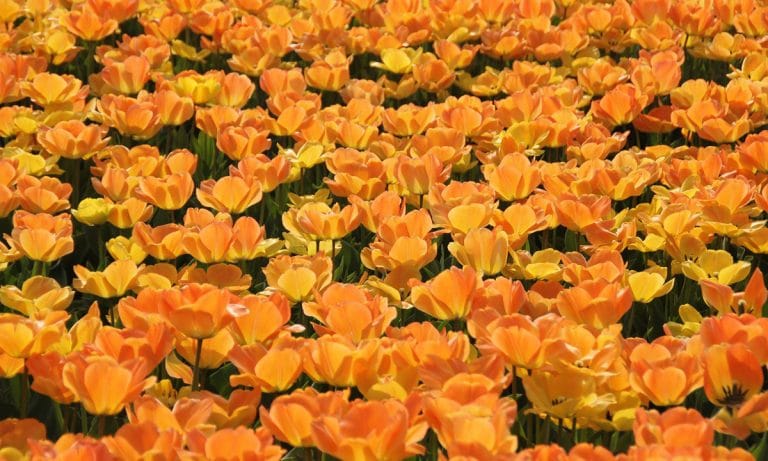
Prince’s Sister Says His Favorite Color Was Orange

I know few things in this world. I know that pizza tastes delicious always. I know that even though the internet really loves cats, dogs remains man’s best friend. And I know that dabbing isn’t that cool anymore, yet I still ironically dab, fully knowing everyone can see through my ironic posturing, and that I’m really dabbing because, deep down, it still makes me feel cool. And I also know that Prince’s favorite color was purple. Or at least I thought I knew Prince’s favorite color was purple. Then Prince’s sister Tyka Nelson revealed that we had it all wrong in an interview with the Evening Standard.

Prince’s favorite color wasn’t purple. It was orange.

Via the Evening Standard:

The stand out piece for me is his orange Cloud guitar. It is strange because people always associate the colour purple with Prince, but his favourite colour was actually orange.

Wait, what? You’re telling me the guy who starred in Purple Rain, wrote the best movie soundtrack of all time called Purple Rain, and recorded one of his signature songs called “Purple Rain,” a track that’s more musical scripture than pop ballad, didn’t love the color purple? You’re telling me the guy who rocked this purple suit, this purple suit, and this purple suit, plus this fresh-as-hell sleeveless, sequined purple hoodie, and whatever the hell you call this dope purple clothing apparatus only Prince could pull off, didn’t consider purple his favorite color?

If I texted 1,000 people what Prince’s favorite color was right now, you know what they’d say? Purple. Even the ones who read Prince’s sister’s comments would be like, “Eh. I know she’s his sister and all but….pretty sure the dude loved purple.”

Please don’t get it twisted. This post does not intend to discredit Tyka Nelson whatsoever. She could be right. And I know some of you reading this might think, Did this weirdo really just write “She could be right” with some higher-minded authority compared to Prince’s sister? Which is totally fair. But I want you to know how incredibly burdensome it was to admit even that. Like I want to throw up. Plus, based on what I ate today, my puke would probably be orange, which would make me want to throw up even more. (Totally unnecessary and disgusting sidebar: Has anyone ever puked purple before? Please at me, if so.)

I know, I know. Some contrary evidence supporting Tyka’s claim exists. When Prince appeared at the Grammys in 2015, he pulled up in this shimmering orange blouse and some fly beads. And when he performed at the Super Bowl in 2007 amidst a damn downpour, he rocked this orange collared shirt (though I’d like to mention he did play his iconic purple guitar). This picture of Prince wearing an all-orange suit getup also exists on the internet, but I’m not particularly happy about it.

You’ve seen the evidence. So believe what you want. I mean, this is the fake news era of media and pop culture, where traditional values and facts just don’t matter anymore. I’m serious. If Prince’s favorite color wasn’t purple I don’t know what to believe anymore.

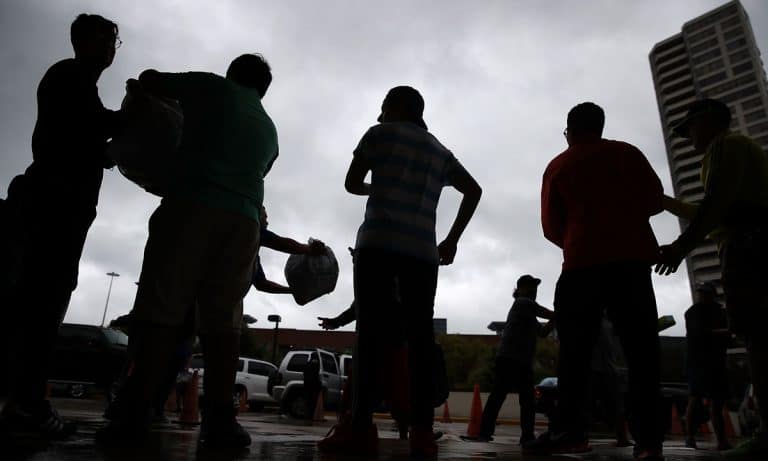
5 Tips For Maximizing Donation Dollars To Hurricane Harvey Victims

Many Americans want to help the people suffering from Hurricane Harvey and its unprecedented floods. There’s no shortage of media reports listing which groups are taking donations, often with scant guidance about what kinds of relief these organizations can offer.

Having researched giving in the wake of disasters and taught students how to be effective philanthropists, I’ve learned that it’s hard to make good decisions regarding donations – especially when there are many urgent needs and countless ways to spend charitable dollars. Here are some best practices you may want to consider before you contribute.

1. Give Money, Not Goods

The ideal way to show your compassion is to donate money to a charity that you respect, rather than shipping cartons of diapers and cases of canned chili.

It’s easy to think of disasters in personal terms: “What if it were me or my family?” and picture what you’d need if you suddenly became homeless: clothes, food or toys. But goods given during emergencies often go to waste. These donations can even do more harm than good when they interfere with disaster response efforts.

Besides, you aren’t likely to know what people on the (drenched) ground need.

2. Donate To Organizations Operating On The Scene

But where should you send that money? It’s generally a good idea to support groups operating in the midst of the disaster. They can give money and other aid to the people who need it directly.

But first, do your homework to learn about an organization’s past performance. Established organizations are usually your best bet because they are the most apt to have staff, experience, infrastructure and roots in affected communities. National organizations like the Red Cross and the Salvation Army have long track records in disaster response.

Every disaster raises questions about established organizations’ relief efforts, such as how the Red Cross spent funds donated after Superstorm Sandy on public relations stunts and other activities not directly tied to relief efforts, and the Salvation Army’s decision to hold back relief after that same disaster to spend later on in the recovery process. When you give, it’s important to keep that history in mind.

If you prefer to give locally, support groups firmly rooted in the affected area. In Harvey’s aftermath, that might mean the United Way of Greater Houston and the Greater Houston Community Foundation, which both have established relief funds and a long history of service to the local community.

You can screen organizations using tools like Charity Navigator, which rates nonprofits based on several performance metrics. It has compiled a list of highly rated Texas groups involved in relief efforts. Guidestar is another useful resource. While it does not rate charities, it provides basic financial data about them and allows nonprofits to upload information about their programs and results that you can use to help make your giving decisions. Guidestar also offers guidelines about giving during disasters and a list of groups active in the relief effort.

3. Support Established Nonprofits

Sometimes new groups sprout up to respond to catastrophes like the ones now unfolding in Texas that seem tailor-made for supporting people in distress but have some shortcomings.

When I studied the philanthropic response after the 9/11 attacks, I found that more than 250 new organizations emerged to meet the needs of people affected by that disaster. New organizations can play important roles, particularly those connected to marginalized groups, like immigrants, who may not trust established institutions. That was the case with the Windows of Hope Family Relief Fund, an organization I advised after 9/11.

But it can take time for new groups to get up and running, and in the meantime there’s no track record for donors to check out. While most new organizations are led by people moved to make a difference, some are opportunists committing fraud, like the founders of the Hurricane Sandy Relief Foundation. Fundraising services like the GoFundMe campaigns established to help Harvey victims pose the same risks if they are not tied to established organizations.

If you itemize your taxes and plan to deduct your contribution, note that you can do so only if the IRS has certified the organization’s 501(?)3 nonprofit status. Most contributions to new nonprofits and GoFundMe campaigns aren’t tax-deductible. But gifts to the Hurricane Harvey Relief Fund, which the city of Houston has already established, are.

4. Consider Long-Term Priorities

Photos and video clips of streets transformed into rivers, stranding residents, can create an urge to make a difference immediately. But, as recent disasters like Superstorm Sandy and Hurricane Katrina showed, the needs are sure to mount. That’s why more than one in four of organizations created after 9/11 was still providing relief five years later.

Be mindful that people in Houston, Rockport and other afflicted areas in Texas, and possibly Louisiana, will need our money long after Harvey stops making headlines. Your donation may matter six months or even years from now as much as it does today. Nonetheless, donation forms may offer you the option to indicate how you want your contribution used – including having it spent right away if you feel strongly about it.

5. Maximize The Speed And Size Of Your Gift

Many nonprofits are encouraging people to donate by sending texts, an approach that may seem like the fastest way to give.

But wireless companies tend to wait until you officially cover the donation’s cost – by paying your bill – before passing that money along to the charity. That can delay payments by weeks or even months.

If getting your money to Houston or another community fast is your top concern, make online donations with a credit card or a debit card. Even “a check in the mail” would transmit funds faster than texting, says Brian Mittendorf, who teaches accounting at the Ohio State University Fisher College of Business.

Mittendorf also cautions that giving through crowdfunding can mean that intermediaries skim fees that might otherwise go to disaster relief or another cause you support. Credit card companies also usually collect transaction fees.

The ConversationIn short, being an informed donor is the best way you can start to make a difference for the people who have lost their homes, cars and more.

David Campbell is an Associate Professor of Public Administration at Binghamton University, State University of New York

This article was originally published on The Conversation. Read the original article.

More Than 750 Patients Just Received Medical Marijuana IDs In Arkansas

The Department of Health has gotten and approved over 750 applications for medical marijuana registry identification cards that give residents the rights to Arkansas grown, doctor recommended cannabis and cannabis derived items. Cards will be distributed to patients one month before supplies are at the ready.

Here’s the bad news: zero applications to grow cannabis and only two to open dispensaries have been received by the Arkansas Medical Marijuana Commission since the process opened on July 1st. Now there’s less than three weeks before the deadline approved by state legislature.

Back in May, legislature okayed emergency and regular rules submitted by the state Department of Finance and Administration. June 30th the commission opened to bids for up to eight growing facilities and up to 40 dispensary applications.

By September 18th, all forms must have been submitted to the commission. The applications will be time stamped and applicants must shell out the $15,000 fees. Applicants also must have $1 million in assets, $500,000 of which must be liquid.

Spokesman for the DFA Scott Hardin said state officials receive inquiries every day regarding cultivation and dispensary applications, and that the commission will stay quiet on them, until the September 18th deadline.

Industry experts and a chief legislator expect a rush of applications before said mid-September deadline.

The state Beverage Control board said further rules and policies will be announced by policy makers in the coming months on just how the cultivators and dispensary owners can process, transport and distribute cannabis, rules that will go beyond legislation already approved earlier in the year.

The Arkansas Department of Health started accepting applications for medical marijuana registry identification cards on July 1st. As of August 30th, the ADH told Talk Business & Politics there’ve been 769 approved applications so far. That number, however, isn’t large enough for the department to release demographic information. There will be an annual report with the info.

Until all applications are received for growing and dispensaries, the state Freedom of Information Act exemption will apply. The state open records law keeps the commission from giving out information that may give one bidder an advantage over another.

Once that deadline is passed, however, applications will be available for public consumption, making some applicants wary of leaks ahead of the deadline. Time will tell just how many brave souls will have stepped up to the Arkansas cannabis plate to get medicinal cannabis to those in need right out the gate.

Gossip: Kanye West Accused Of Drug And Alcohol Abuse; Justin Timberlake Wears Men’s Stockings

Kanye West’s insurance company are refusing to pay him because they believe the rapper abused drugs and alcohol prior to his 2016 mental breakdown.

As previously reported, the 40-year-old filed a $10 million lawsuit against Lloyd’s of London this year for failing to pay the money he’s allegedly owed following the cancellation of the Saint Pablo Tour.

Via Revolt TV:

He claimed that Lloyd’s of London failed to pay him money owed after his Saint Pablo Tour cancellation, despite being informed “with sworn testimony from his primary physician…that [he] suffered a debilitating medical condition that required he not tour.”

However, now Lloyd’s has countersued citing insurance policy exclusions that include “pre-existing psychological conditions, possession of illegal drugs, prescription drugs not taken as medically prescribed, and the consumption of alcohol rendering the insured unfit to perform.” Still, they won’t give specifics “in order to protect the privacy of Mr. West from public disclosure of details of his private life.”

Justin Timberlake Wears Men’s Stockings

Straight Shuter recently spotted Justin Timberlake walking alone in Soho in New York City. However, people were not stopping because they recognized the sexy singer but rather because a man was walking around in tight multi colored stockings.

“Justin was wearing a baseball cap, a white hoodie and black knee length shorts. But under his shorts he also had on black stockings that ended just above his knees,” an eyewitness tells Straight Shuter. “We have seen everything in New York but this was a new thing. He wasn’t looking to be photographed or seeking attention, this was just a guy wearing what he was comfortable in taking a walk in the city.”

Love the fresh dirt we bring over daily from Naughty Gossip? Let us know in the comments!

Labor Day Weekend Is Top Holiday For Marijuana Sales

Labor Day weekend marks the unofficial end of summer as Americans (and Canadians) celebrate the labor movement with picnics, barbecues and one last pool party … and marijuana.

According to market research from  BDS Analytics, the three-day North American holiday is the busiest multi-sales period of the year for cannabis retailers. April 20 — the unofficial 420 holiday — remains the the largest retail day for the industry, but this weekend tops all others. Even Christmas takes a back seat to Labor Day weekend when it comes to marijuana sales.

In Colorado, BDS Analytics research shows that cannabis sales between Friday and Sunday of the 2016 holiday weekend brought in $29.94 million in sales of products. The following weekend, by comparison, saw $24.64 million. During last year’s July 4 weekend, dispensaries sold $26.98 million worth of product.

Washington state also saw an uptick in Labor Day weekend sales last year with $8.05 million in sales.

In Washington, September beats all of the months of the year, except for one — December. Washington dispensaries sold $70.68 million worth of cannabis in September; December brought in $72.93 million.

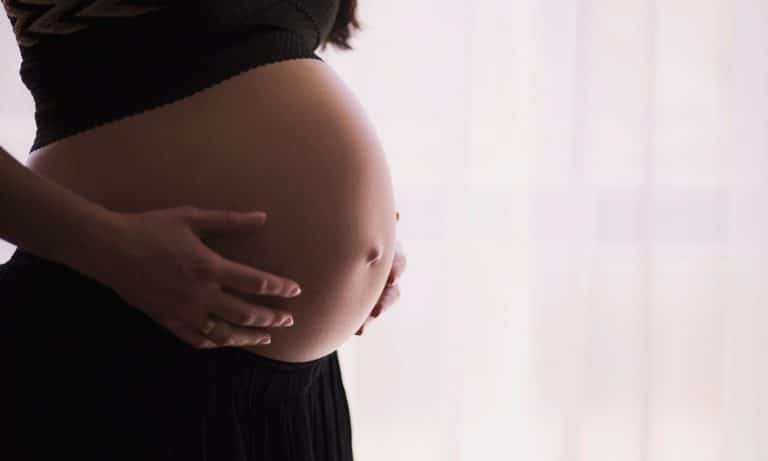
Using Cannabis During Pregnancy: A Doctor’s Advice

Pamela is newly pregnant with her third child. She and her husband think this is going to be their last one because she is having a dreadful time with nausea – morning sickness that lasts all day long. She knows all the tricks. Saltines by her bedside, taking Vitamin B6 and B12, and eating frequently even though her stomach is queasy. She tried ginger. She tried acupuncture. She considered hypnosis.

None of it is working, and the added stress of two little ones who still need her attention is making her pregnancy a miserable experience. She really wants this baby, but lately she’s been having guilty doubts about whether it’s worth going through all the nausea and vomiting.

Pamela consulted her physician. She was offered some prescription medications – droperidol (an antipsychotic), metoclopramide (causes drowsiness & dizziness), Benedryl (drowsiness), or Zofran. Although her doctor reassured her about side effects and effects on her baby, she really did not want to take a pharmaceutical if she could avoid it.

Pamela had used cannabis occasionally for many years. It relieved her stress at the end of the day when the kids were finally in bed and she had time to herself. It helped ease some pain she had in the past, and aided sleep when she had short bouts of insomnia. She knew it could help with nausea, appetite, and stress, but she did not know if it was safe to use it while pregnant. So she searched online for facts.

Online, Pamela found conflicting information. Some sites said it was perfectly fine to use cannabis while pregnant. Others warned of brain damage, early labors, babies with failure to thrive, and other dire consequences. There seemed to be some research on the subject, but was it well done? Was it reliable? How was she to dig down and find the real story?

I am a family physician and have attended hundreds of births during my career. I live in an area of the country (Northern California) where cannabis is used by many of my patients, and when they discovered that they could be honest with me about their use my prenatal records became more complete.

Many mothers were using it for nausea and for stress relief. Some used it because it was simply part of their lifestyle. We discussed this during their visits, and I was clear with them that I honestly did not know if cannabis caused harm because the scientific research was still incomplete.

In my experience, however, I had not seen complications from cannabis – but I had seen complications from alcohol and other drugs. We discussed the difference between ‘use’ and ‘abuse.’ If they planned to use it I, encouraged conscious use; microdosing to treat the need without overusing.

However, my personal and professional experience was not enough to rely on as a source of information for my patients. I began a search and review of the literature, reading the published peer-reviewed articles, and evaluating the study designs and the outcomes.

In this article, we are going to look at the facts. We will look at the research and outcomes, and evaluate their worth. We will look at populations that used cannabis during pregnancy and see how their children are doing now. The information shared may help you make your own decision about using cannabis during pregnancy.

It is important to remember that pregnancy recommendations regarding what to eat, what to drink, what medications to take, and any other outside influences are fraught with caution and fear. If the child does not turn out ‘right,’ who’s fault is it? Pointing a finger of blame can lead to guilt, to lawsuits, and/or a lifetime of regret. Simply being pregnant and carrying a baby for nine months creates unavoidable risks for both mother and baby. But for some, there is no end to the perceived risks or possible harms a mother may cause an unborn child.

Note: The use patterns considered here are limited to well-considered, clearly needed uses of cannabis. This includes using the herb or its constituents for medical reasons such as nausea, pain, sleep, or possibly for stress relief. I encourage any cannabis use to be done consciously, with respect for its power as medicine.

What I Tell My Patients

After all this reading, reviewing, and surveying, I was left with the following points I could share with my patients:

  • Cannabis can be abused. Don’t abuse it.
  • Smoke is an irritant on the airways. If you wish to inhale, vaporize flowers or use an alternate form of the medicine.
  • Federal law prohibits cannabis
  • Hospitals, physicians, and Social Services can have punitive responses to parents who test positive for THC.
  • Babies exposed to cannabis during gestation may weigh less than babies not exposed.

And if you choose to use cannabis:

  • Be clear about why you are using it and re-evaluate those reasons each time
  • Avoid smoking – vaporize herb or use non-smoked products from trusted sources
  • Use organic herb and concentrates that are clear of chemicals and pesticides
  • Be aware of the cannabinoid content and microdose medicine to efficacy
  • Keep your children safe from accidental or passive exposure
  • Avoid dabs, oils, and edibles with unknown content

To read the complete story from Dr. Kerr, continue reading at Project CBD

Don't Miss Your Weekly Dose of The Fresh Toast.

Stay informed with exclusive news briefs delivered directly to your inbox every Friday.

We respect your privacy. Unsubscribe anytime.